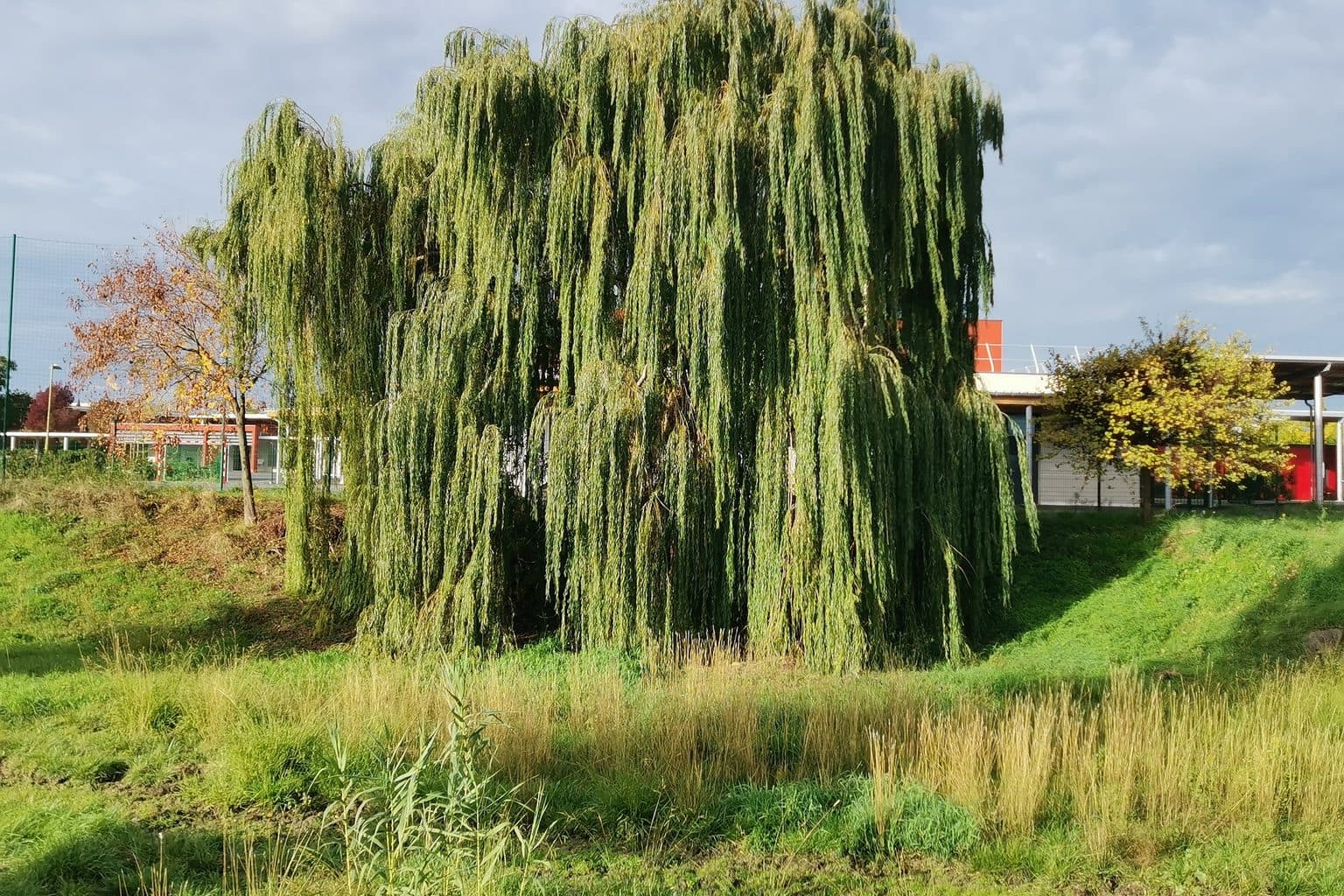
Quick answer: No willow appears on the ASPCA Animal Poison Control Center toxic plant list, and the one Salix the ASPCA does list, Purpleosier Willow (Salix purpurea), is non-toxic to dogs, cats, and horses. A willow tree in your yard is not a poisoning risk. The one real caution is concentrated white willow bark supplements, which are an aspirin-class hazard and a separate issue from the living tree.
People ask about willows because they have heard the bark contains salicin, the compound aspirin was originally derived from. That fact is true, and it is also why the confusion happens. The tree in the ground and a bottle of white willow bark extract are two very different things for a dog.
What the ASPCA says
No willow species appears on the ASPCA Animal Poison Control Center toxic plant list. The only Salix the ASPCA lists at all is Purpleosier Willow (Salix purpurea), and it is on the non-toxic side of the database for dogs, cats, and horses. Weeping willow (Salix babylonica) and black willow (Salix nigra) have no entry either way. You can check any of these at aspca.org/pet-care/animal-poison-control/toxic-and-non-toxic-plants.
The standard caveat applies the way it does to any plant. A dog that chews and swallows a large amount of leaves, bark, or twigs can get mild GI upset, usually vomiting or loose stool that passes. That is a volume problem, not a poisoning. If your dog eats a lot and you see symptoms, call the ASPCA Animal Poison Control Center at (888) 426-4435.
The white willow bark exception
Here is the part worth understanding. Willow bark contains salicin, which the body converts to salicylic acid, the same aspirin-family salicylate class. The bark on your yard tree carries only a small amount, and a dog would have to strip and eat a large quantity to get anywhere near a meaningful dose, which is why the living tree is not an ASPCA concern.
Concentrated white willow bark supplements are the actual hazard. These are sold as human herbal pain and anti-inflammatory products, and the salicin is concentrated far beyond anything in the tree. Do not give your dog a willow-bark supplement without a veterinarian directing it. An overdose of salicylates in dogs can cause vomiting, GI irritation and bleeding, depression, and metabolic acidosis, per VCA Hospitals. It is especially dangerous alongside NSAIDs or other pain medications, which stack the same effect.
Cats are more sensitive still. They metabolize salicylates slowly because they are deficient in glucuronidation, so a dose that a dog might tolerate can be toxic to a cat (Merck Veterinary Manual). If a pet gets into any willow-bark or salicylate product, call the ASPCA Animal Poison Control Center at (888) 426-4435.
| Willow type | Dog Safe? | Notes |
|---|---|---|
| Weeping willow (Salix babylonica) | Yes | No entry on the ASPCA toxic plant list; mild GI upset only if eaten in quantity (ASPCA Animal Poison Control Center) |
| Black willow (Salix nigra) | Yes | No entry on the ASPCA toxic plant list; same mild-GI-in-quantity caveat (ASPCA Animal Poison Control Center) |
| Purpleosier willow (Salix purpurea) | Yes | Listed non-toxic to dogs, cats, and horses (ASPCA Animal Poison Control Center) |
| White willow bark supplement | No | Concentrated salicin; salicylate overdose risk, dangerous with NSAIDs, only under a vet (VCA Hospitals) |
If something goes wrong
ASPCA Animal Poison Control Center: (888) 426-4435 (24/7, fee may apply). If it involves a willow-bark or salicylate supplement, mention that and how much you think was eaten when you call.
Dog-safe native trees for a Texas yard
If you want the graceful, drooping look of a willow without planting a thirsty, short-lived tree, there are better native options for the Edwards Plateau and Hill Country (San Antonio area). None of these appears on the ASPCA toxic plant list, and each is native to the region per the Lady Bird Johnson Wildflower Center.
- Desert Willow (Chilopsis linearis). The standout swap. It has the same slender, weeping leaf shape that makes willows appealing, but it is not a true willow at all, so the salicin question never comes up. It carries orchid-like pink to lavender flowers through summer and stays drought-tough.
- Cedar Elm (Ulmus crassifolia). A tough, well-behaved native shade tree for Central Texas that handles clay and heat and gives you real canopy without the willow's constant dropped limbs.
- Texas Persimmon (Diospyros texana). A small native tree or large shrub with smooth gray bark and dark fruit that wildlife favors, at home in Hill Country yards.
Two common shade trees are worth naming as the ones to avoid here. Oaks (Quercus) and cherries and plums (Prunus) both appear on the ASPCA toxic plant list, so they were left off this list on purpose despite being common Texas choices.
Desert Willow is the pick most people are actually looking for. See whether desert willow is toxic to dogs for the full rundown, and if you are building out a dog-safe yard, start with the Texas yard plants most toxic to dogs.
Checking more than one plant? See the full list of plants toxic to dogs and cats, with native alternatives, covering every plant on the ASPCA list.