Quick answer: For a sunny Colorado Front Range front yard, the most reliable, HOA-friendly natives are Rocky Mountain Penstemon, Blanketflower, Prairie Coneflower, Blue Flax, Sulphur Flower Buckwheat, Blue Grama, Little Bluestem, Rabbitbrush, and Serviceberry. A front planting only needs five to ten of these, kept edged and tidy.
Colorado's Front Range is high, dry, and alkaline, with clay soils and a short, intense growing season. The plants that thrive here without constant water are the natives that evolved in it. Here is a short, dependable list for a front yard that still reads as intentional in an HOA neighborhood.
Native ranges below follow the Colorado Native Plant Society and Colorado State University Extension recommendations for the Front Range and foothills. Most tolerate the alkaline pH common in Denver-area yards without soil amendment (CSU Extension).
Sun-loving perennials
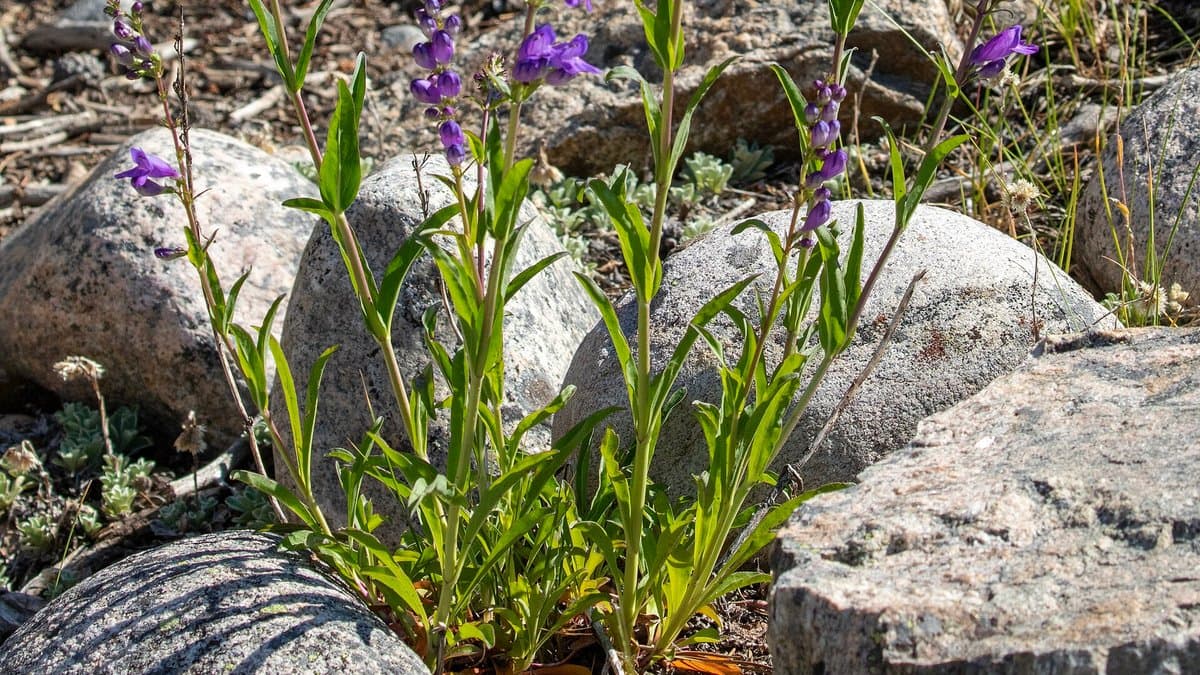
- Rocky Mountain Penstemon (Penstemon strictus). Tall blue-purple spikes in early summer, 1 to 2 feet, full sun. The most reliably performing native perennial for Front Range yards.
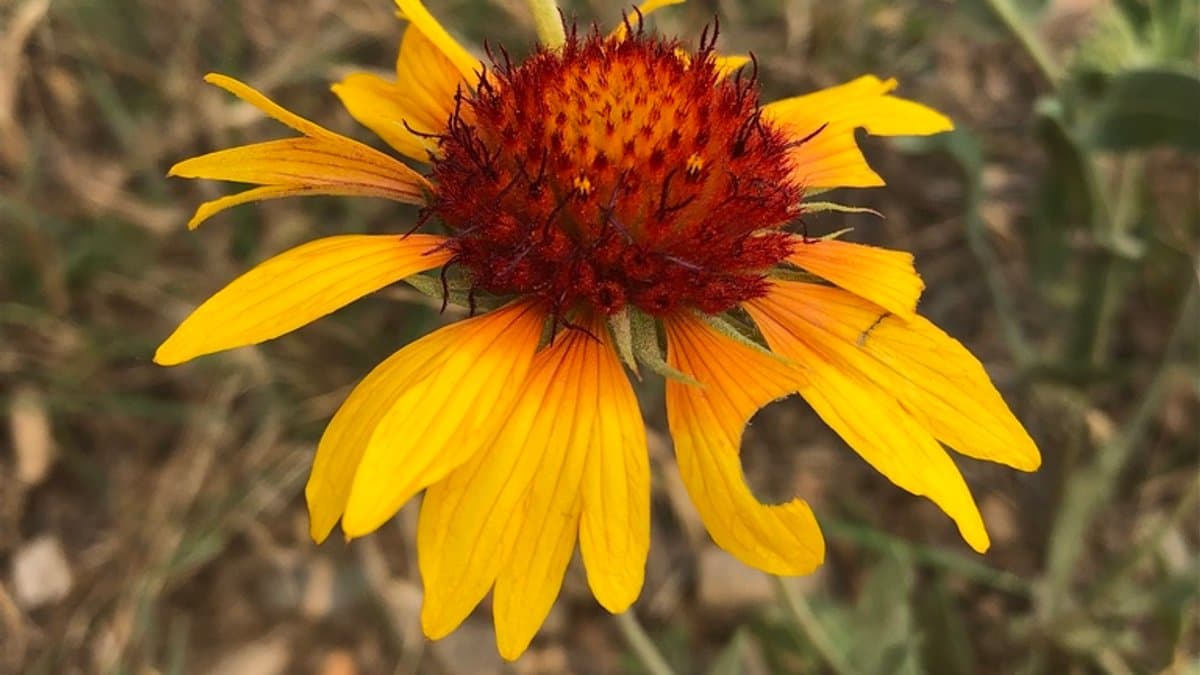
- Blanketflower (Gaillardia aristata). Red-and-yellow daisies all summer, 1 to 2 feet, full sun. Establishes fast, self-seeds, shrugs off neglect.
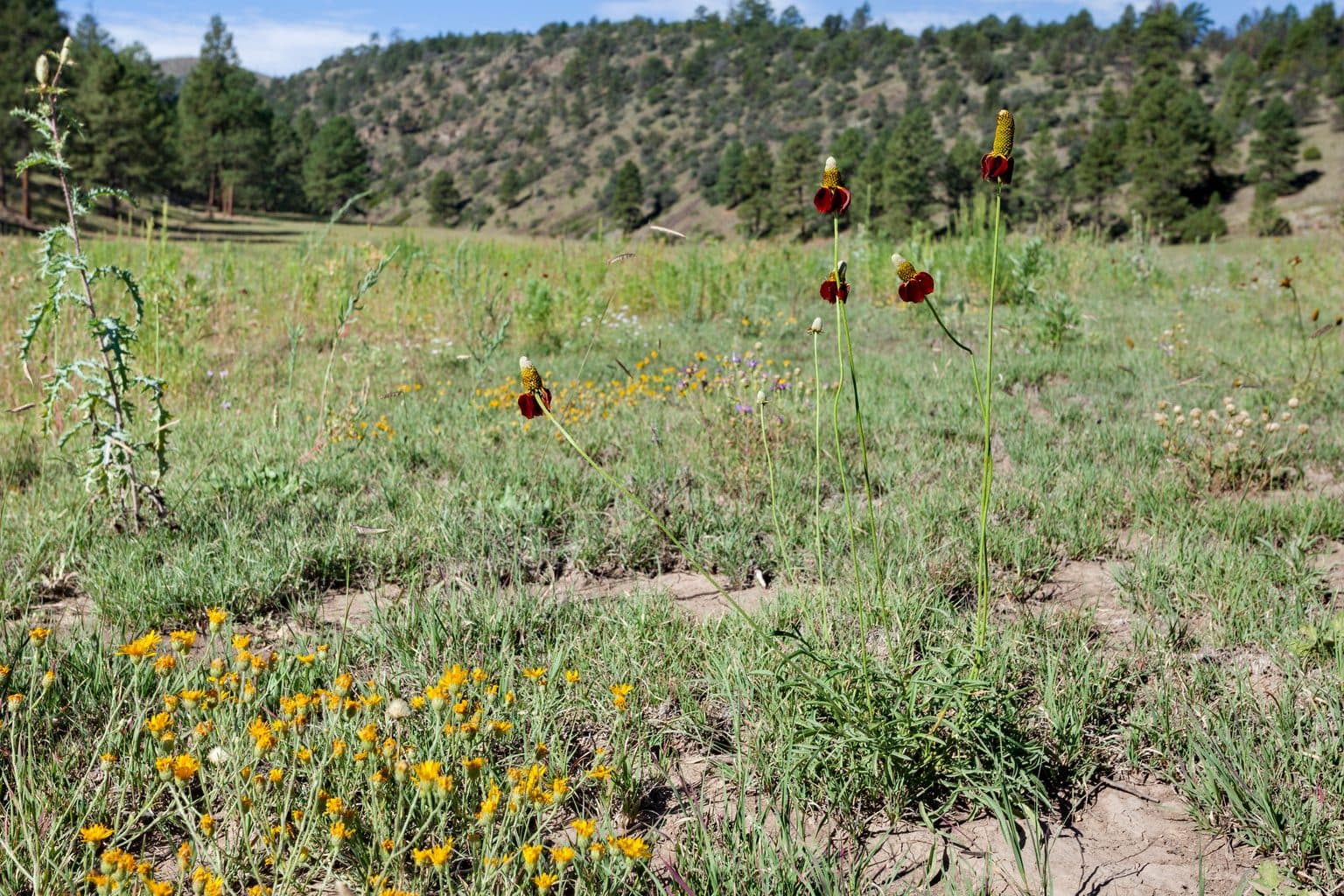
- Prairie Coneflower (Ratibida columnifera). Yellow drooping petals on a tall central cone, summer, 1 to 2.5 feet, full sun. Easy and long-blooming.
- Blue Flax (Linum lewisii). Sky-blue morning flowers on airy stems, late spring to summer, 1 to 2 feet, full sun. Delicate look, tough plant.
- Sulphur Flower Buckwheat (Eriogonum umbellatum). Sulphur-yellow flower clusters aging to rust, low mounding habit, full sun. Excellent for pollinators and very drought tolerant.
Native grasses for structure
- Blue Grama (Bouteloua gracilis). Fine-textured plains grass with eyebrow-shaped seed heads, 1 to 2 feet, full sun, very low water. A Colorado signature and excellent as a low, unmown lawn alternative.
- Little Bluestem (Schizachyrium scoparium). Blue-green summer blades turning copper in fall, 2 to 3 feet, full sun. Upright and well-behaved for a front bed.
Shrubs that anchor the bed
- Rabbitbrush (Ericameria nauseosa). Gold late-summer flowers over silvery foliage, 2 to 5 feet, full sun, extremely drought tolerant. Reads as a clean rounded form when sheared lightly.
- Serviceberry (Amelanchier alnifolia). White spring flowers, edible blue summer berries, good fall color, 6 to 12 feet, sun to part shade. A dog-safe alternative to chokecherry.
- Mountain Mahogany (Cercocarpus montanus). Tough evergreen-ish native shrub with feathery seed plumes, 4 to 8 feet, full sun. A durable screen or anchor in dry, alkaline soil.
Native plants for the Front Range, from Fort Collins to Pueblo
Everything on this list is native to the Front Range and adjacent High Plains (Denver area), USDA zones 4 to 6, and handles the region's alkaline clay without amendment. If your yard sits above 7,000 feet, in the foothills west of Boulder or Golden, favor the shrubs and Blue Flax over Blanketflower, which prefers the plains. East of I-25 on sandier prairie soil, Blue Grama and Prairie Coneflower are the safest anchors (Colorado Native Plant Society).
If low water is your first priority rather than a general planting list, we keep a separate, shorter list of drought-tolerant native plants for Colorado focused on the lowest-water performers and the xeriscape rules.
Keeping it HOA-friendly
Colorado is one of the states with a law on the homeowner's side: HOAs generally cannot prohibit xeriscape or drought-tolerant landscaping. Even so, design still carries the front yard. Give these natives a defined border and fresh mulch, set the taller grasses and shrubs back from the sidewalk, and keep the lower perennials up front. For the legal details and how to submit a plan, see can your Colorado HOA force you to keep grass.
If you have a dog, check the Colorado yard plants toxic to dogs guide before you buy, and look into Colorado turf and water rebates to offset the cost of converting.
Not sure which of these fit your exact yard?
Pollinator Patch matches native plants to your ZIP and Colorado ecoregion, then builds a front-yard plan with the right five to ten species, a layout, and a maintenance schedule you can hand to an HOA.