Quick answer: California homeowners near fire-prone areas face two approval processes: the HOA and the fire department. Plants like California Fuchsia, Yarrow, Deer Grass, and California Buckwheat satisfy both. Keep Zone 1 (within 30 feet of the house) low-growing, widely spaced, and non-resinous. Cite Civil Code §4735 (opens in new tab) in your HOA submission to establish your right to drought-tolerant alternatives.
California homeowners with HOAs and fire department jurisdiction over their property are dealing with two sets of requirements that rarely talk to each other. The HOA wants the yard to look a certain way. Cal Fire wants plants spaced and selected to slow an ember ignition. Most native plant guides address one or the other. Few address both at the same time.
How defensible space zones work
Cal Fire's defensible space requirements divide the area around your home into two zones. Zone 1 is the 30 feet immediately surrounding the structure. In this zone, plants should be low-growing (under 18 inches where possible), widely spaced so flames cannot travel easily between them, and low in oil or resin content. Zone 2 extends from 30 to 100 feet (or to the property line, whichever comes first). Taller plants and more density are acceptable in Zone 2, but vegetation should still be spaced and thinned.
Most residential front yards fall entirely within Zone 1. If your lot is small or your house is close to the street, everything in front may be subject to Zone 1 standards. Check with your local fire department for jurisdiction-specific guidance, since requirements vary between state responsibility areas, local responsibility areas, and Very High Fire Hazard Severity Zones.
Plants that work for both HOA and fire safety
The plants below are California natives or widely accepted native cultivars that are low-water, fire-resistant, and presentable enough to pass HOA review when maintained with clean edges and mulched beds.
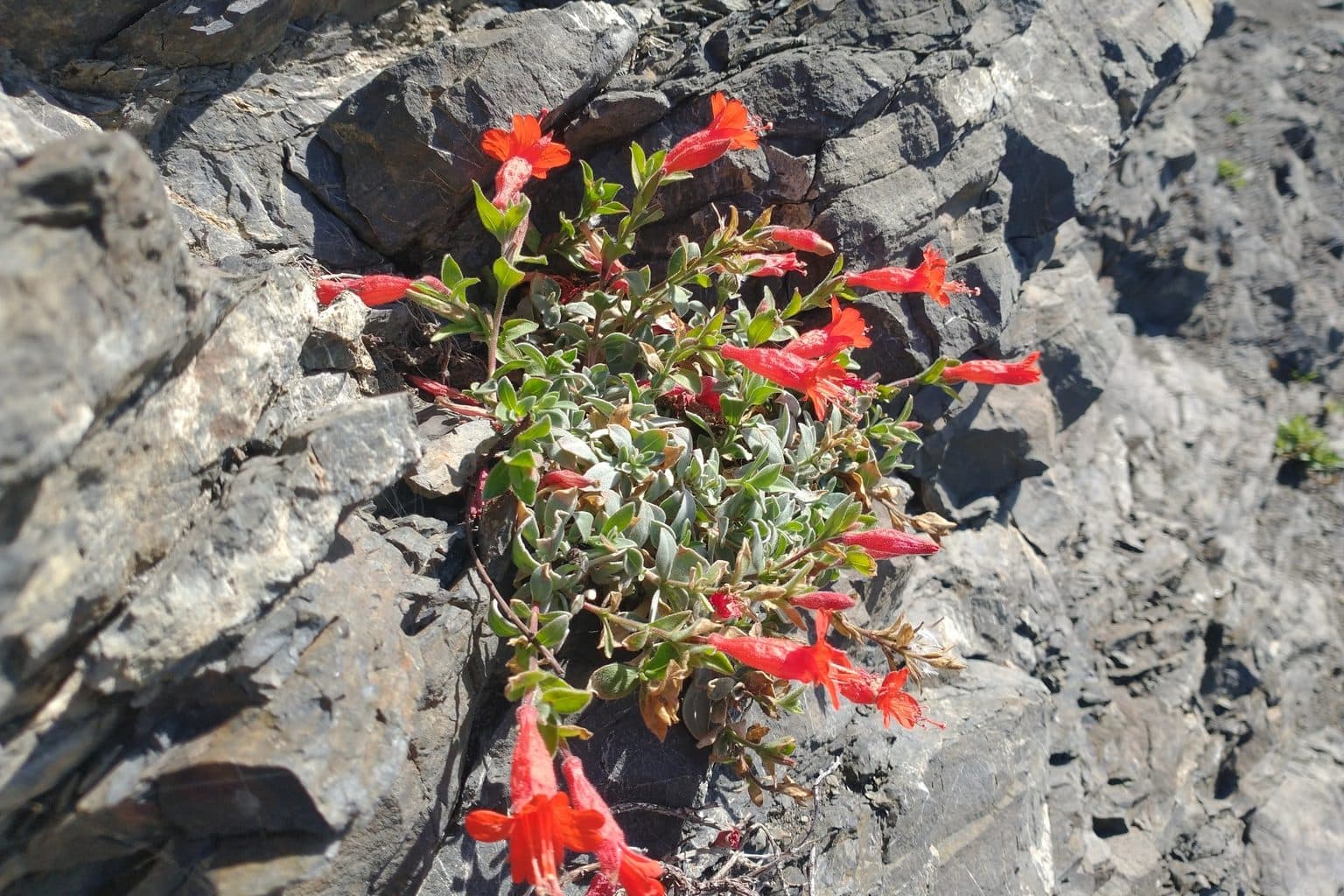
California Fuchsia (Epilobium canum)
Grows 1-2 feet tall, fire-resistant, drought-tolerant after establishment, and covered in red-orange tubular flowers in late summer and fall when little else blooms. Hummingbirds visit frequently. Safe for Zone 1. California Fuchsia is not on the ASPCA toxic plant list. With edging and mulch around it, it reads as an intentional, maintained planting rather than a wildflower patch.
Yarrow (Achillea millefolium)
Low-growing, fine-textured foliage, white or yellow flat-topped flowers. Widely used in fire-resistant garden design across California. Drought-tolerant once established, and a strong pollinator plant through the summer. Yarrow spreads over time, so periodic editing at the edges keeps it contained and maintains the appearance that management company inspectors expect.
Deer Grass (Muhlenbergia rigens)
A clumping native grass that grows 3-4 feet tall and wide. Widely recommended by fire departments and landscape architects for California slopes and dry sites. It does not dry out to a hay-like fire fuel the way ornamental grasses from other regions do. Works in HOA contexts when given space to form a clean clump and kept trimmed of dead interior material each spring.
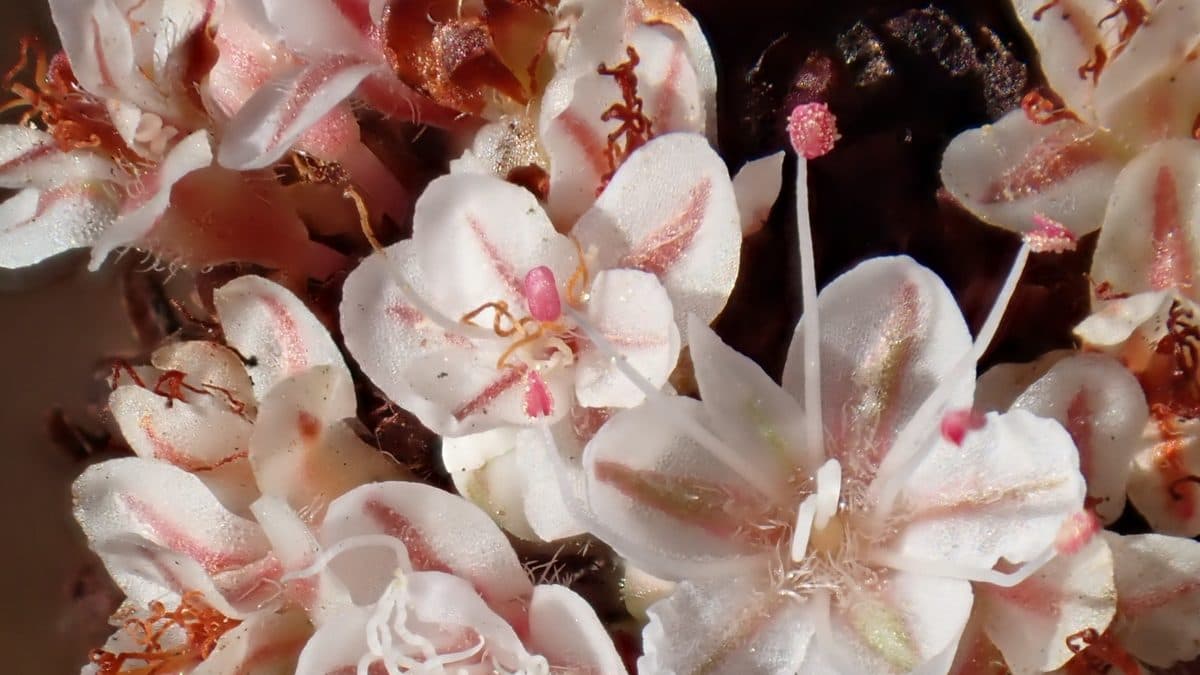
California Buckwheat (Eriogonum fasciculatum)
One of the most fire-resistant shrubs in the California native palette. Grows 1-3 feet tall with small white to pink flower clusters that age to a warm rust color and persist through fall. Extremely drought-tolerant. A pollinator magnet, particularly for native bees. Appropriate for Zone 1 or Zone 2. When planted with clean edges and mulch, it looks tidy and intentional.
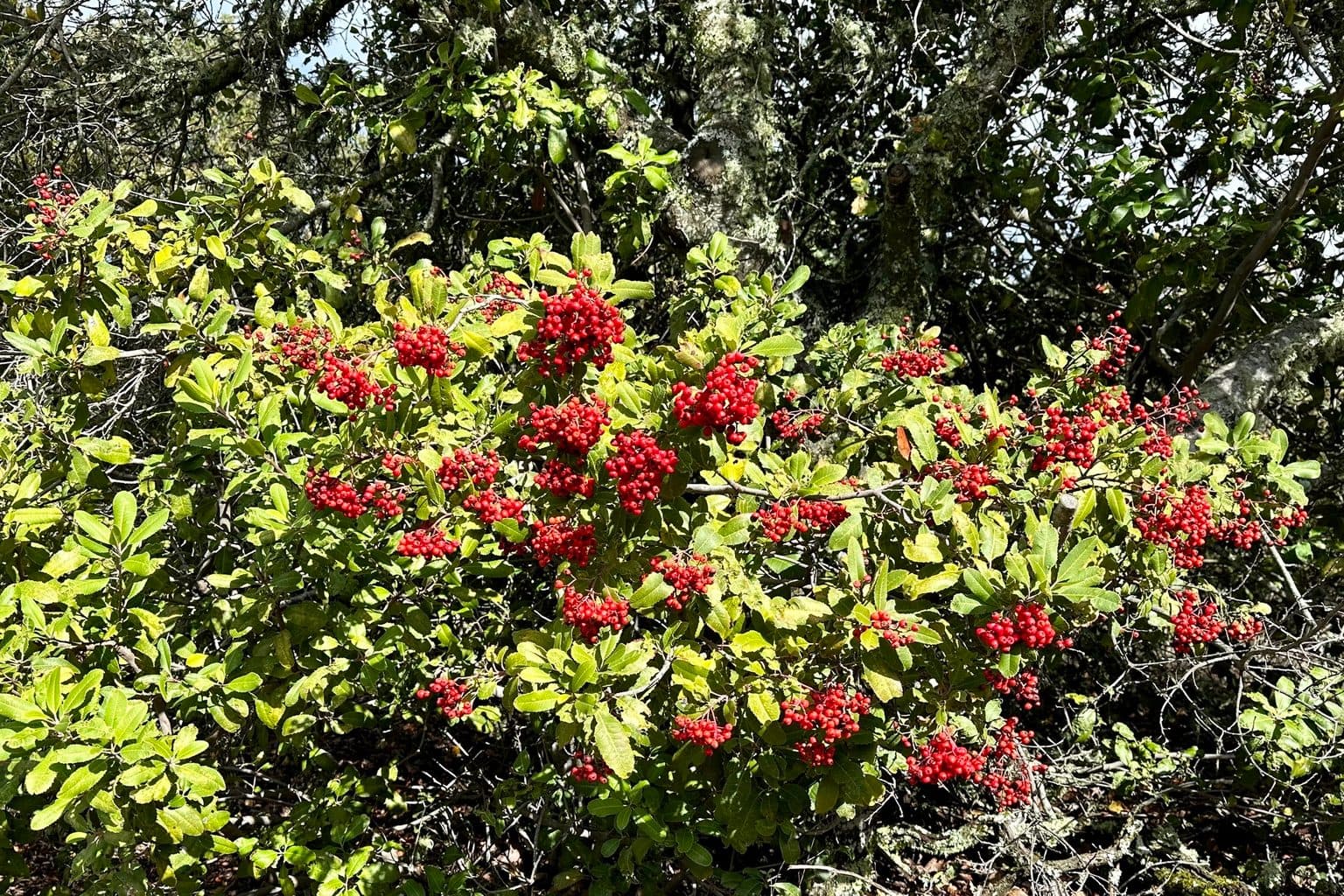
Toyon (Heteromeles arbutifolia)
California's native Christmas berry, with glossy leaves and bright red berries in winter. Naturally grows 6-15 feet but responds well to pruning and can be maintained at 6 feet on residential lots. Fire-resistant. Better placed in Zone 2 or on larger lots where it has room to grow without constant cutting back. Birds eat the berries, which adds visible wildlife activity that photographs well and tells a positive story to neighbors.
Plants to keep away from the house
A few common HOA landscape plants are among the worst performers near a structure in a fire zone:
- •Tall ornamental grasses (Pampas grass, Maiden grass): they dry out completely in summer and act as concentrated fuel. Avoid in Zone 1.
- •Rosemary: high volatile oil content, extremely flammable when dry. A common HOA-friendly plant that fire departments consistently flag. If you have it within 30 feet of the house, consider replacing it.
- •Juniper: one of the most flammable commonly planted shrubs in California residential landscapes. Often required by HOA plant lists from an earlier era. Document its removal in your HOA submission as a fire safety improvement.
The LADWP turf rebate
Los Angeles Department of Water and Power offers up to $5 per square foot for turf replacement with drought-tolerant or native plants. Many fire-safe native conversions qualify. Check ladwp.com for current program status and income-based tier information. The rebate can be stacked with state-level incentives in some cases, so request the current program guide before starting your project.
How to navigate both approval processes
The most effective approach is to submit to the HOA and the fire department at the same time, presenting the same plant list to both. Here is a sequence that tends to work:
- 1.Check your HOA's current plant list against your local fire department's defensible space guide. Note any conflicts.
- 2.In your HOA pre-approval submission, cite California Civil Code §4735 to establish your right to drought-tolerant plant alternatives regardless of the HOA's own list. (§4735 is the operative statute for your own yard. AB 1572 is a separate 2023 law, codified at Water Code §10608.14, that covers nonfunctional turf in HOA common areas, not what you plant on your lot.)
- 3.Include a note that the proposed plants meet or exceed local fire department defensible space standards. Management companies respond better when a change is framed as a safety improvement rather than a personal preference.
- 4.Show the zone layout on a simple sketch: which plants are in Zone 1, which are in Zone 2, and the spacing between plants. This level of documentation pre-empts most objections from both reviewers.
The fire department approval, once in writing, is a useful document to attach to any HOA dispute. An HOA overriding a fire department recommendation on plant placement is a difficult position for a management company to defend.
Plan your yard with Pollinator Patch
Get California native plant plans built around HOA-friendly design principles. Fire zone guidance coming in 2026.
Open the app