Quick answer: Generally, no. Florida is one of the states that protects homeowners here. Under Florida Statute §720.3075(4) (opens in new tab), an HOA cannot prohibit a property owner from installing Florida-Friendly Landscaping, which is defined in F.S. §373.185 (opens in new tab) and includes Florida native plants. Your HOA can still enforce reasonable maintenance and aesthetic standards, but it cannot require an all-turf lawn to the exclusion of water-conserving alternatives.
This is the question Florida homeowners ask before they touch the St. Augustine out front: can the HOA actually make me keep grass? Unlike homeowners in Georgia or many other states, Floridians have a real statute to point to, and it is worth knowing exactly what it does and does not cover before you start.
Several states have passed laws that protect a homeowner's right to plant natives or drought-tolerant landscaping over an HOA's objection. Texas, Florida, Maryland, Colorado, and Nevada are the clearest examples. Florida's protection runs through its Florida-Friendly Landscaping law, so the path here is to frame your project the way the statute is written.
What Florida Statute §720.3075(4) actually says
Section 720.3075(4) prohibits an HOA's governing documents from banning or being enforced to prohibit any property owner from implementing Florida-Friendly Landscaping. A covenant that flatly requires turf across the whole yard, or that bans native and drought-tolerant beds, conflicts with the statute if your alternative qualifies as Florida-Friendly Landscaping.
Florida Statute §720.3075(4)
An HOA's governing documents cannot prohibit or be enforced to prohibit a property owner from implementing Florida-Friendly Landscaping on their land. This applies statewide and regardless of when your covenants were recorded, so a provision in an older deed restriction that requires turf is unenforceable to the extent it bans a qualifying Florida-Friendly design.
For the full question of whether a Florida HOA can prohibit Florida-Friendly Landscaping outright, see our dedicated post on whether a Florida HOA can prohibit Florida-Friendly Landscaping.
What counts as Florida-Friendly Landscaping (F.S. §373.185)
The protection only applies if your landscaping qualifies. F.S. §373.185 defines Florida-Friendly Landscaping as landscaping that conserves water, protects the environment, is adaptable to local conditions, and is drought tolerant. The University of Florida IFAS Extension runs the state-recognized Florida-Friendly Landscaping program that most HOAs already know, so framing your project as Florida-Friendly gives the architectural review committee a familiar standard to apply rather than something to question.
Florida native plants planted under these principles qualify. Florida-Friendly Landscaping does not have to be 100 percent native, but a well-chosen native plan is one of the easiest ways to meet the definition.
What your HOA can still require in Florida
The statute prohibits a flat ban on Florida-Friendly Landscaping. It does not eliminate architectural review. Your HOA can still require:
- Advance approval of landscaping changes through architectural review
- Reasonable maintenance standards: no dead plants, no weeds taking over, defined edges
- Height limits on plants near sidewalks, streets, and sight lines
- Mulch, edging, and clear borders that signal an intentional design
- Consistent aesthetic standards, as long as they are not used as a backdoor ban on Florida-Friendly designs
What actually works in Florida
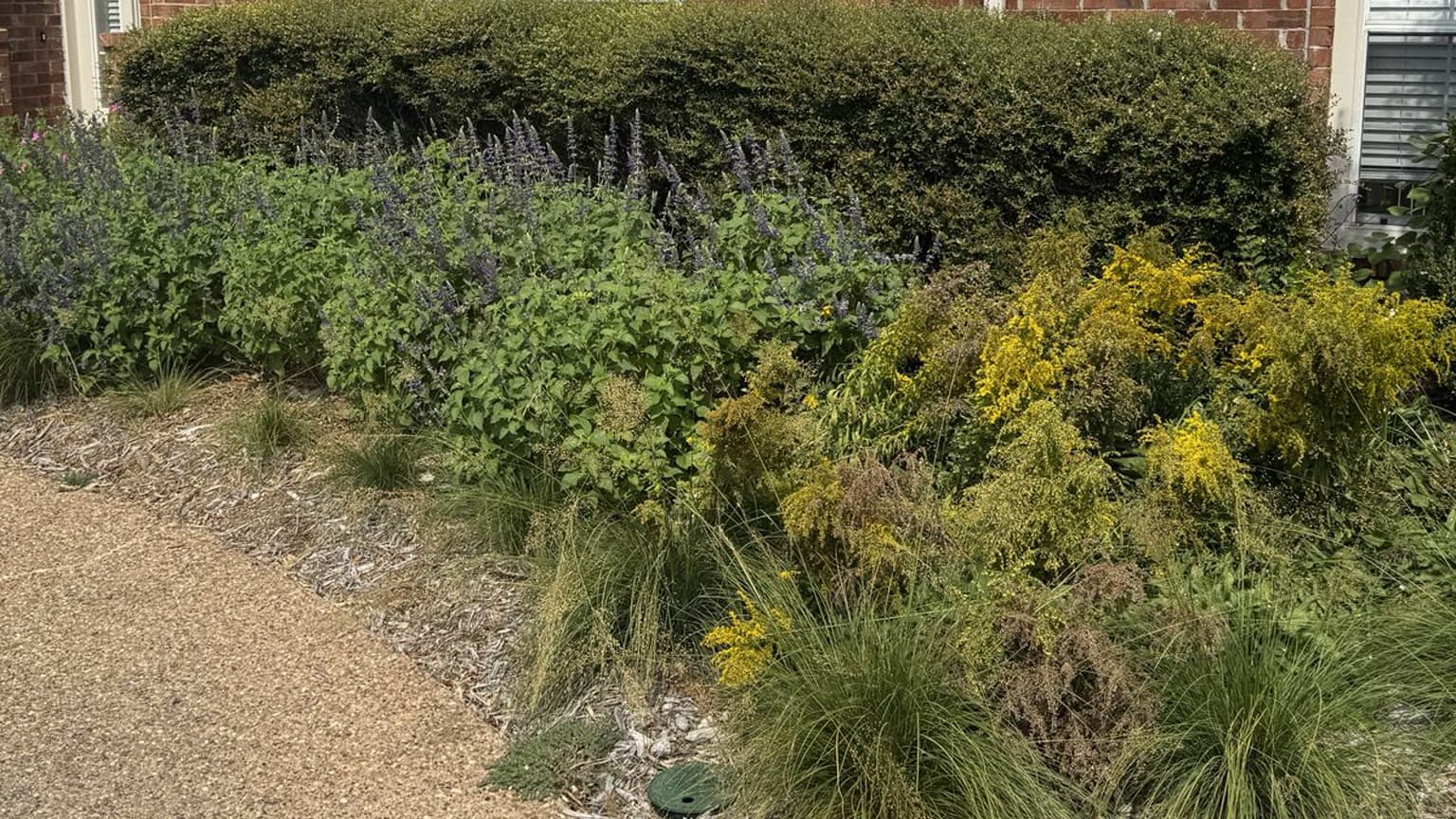
You have the law on your side, but the smoothest path is still a documented plan that reads as intentional. A native bed that looks maintained clears architectural review far more often than a quiet lawn conversion does.
- Get your covenants and any architectural guidelines. Read the landscaping section and note the exact wording.
- Design for cues of care: clean edges, mulch, defined borders, and plants kept below sight-line heights up front.
- Submit a plan before you plant. A proactive submission with a plant list, a layout sketch, a maintenance schedule, and a one-line reference to F.S. §720.3075 gets approved far more often than a surprise.
- If you already got a notice, our guide on responding to an HOA violation letter walks through the calm, written response that resolves most of these.
- Check for Florida water and landscaping rebates that can offset the cost of converting.
Common pushback (and how to respond)
"The covenants require a lawn"
In Florida, a covenant that requires turf sod to the exclusion of water-conserving alternatives runs into §720.3075(4). Cite the statute in writing and propose a Florida-Friendly plan. The law applies even if your covenants predate it.
"Your yard looks unkempt"
This is an appearance objection, and it is the one an HOA can still enforce. The statute protects Florida-Friendly Landscaping, not a neglected bed. The fix is design: add mulch, sharpen the edges, and keep the front planting low and tidy.
"The plant you want is not on our approved list"
An HOA can keep an approved plant list, but it cannot draw that list so narrowly that it effectively prohibits Florida-Friendly Landscaping. If a native you want is missing, ask the board to add it under the Florida-Friendly standard rather than rejecting the project.
This is not legal advice.
We are a gardening app, not lawyers. This post summarizes publicly available Florida law as of mid-2026, including Florida Statute §720.3075 and F.S. §373.185. Your covenants, your county's codes, and your situation are unique. If you are facing fines or a lien, talk to a Florida real estate attorney who handles HOA disputes.
People also ask
Can a Florida HOA force you to keep grass instead of native plants?
Generally no. Under Florida Statute §720.3075(4), an HOA cannot prohibit Florida-Friendly Landscaping, which includes native plants planted under Florida-Friendly principles. An HOA can still require architectural review and reasonable maintenance, but it cannot require an all-turf lawn to the exclusion of water-conserving alternatives.
Does the law apply if my covenants were recorded before it passed?
Yes. Section 720.3075 applies regardless of when your covenants were recorded. If a provision prohibits Florida-Friendly Landscaping, state law overrides it, even in an older deed restriction.
Does Florida-Friendly Landscaping have to be all native plants?
No. F.S. §373.185 defines Florida-Friendly Landscaping by function (conserving water, protecting the environment, adaptable to local conditions, drought tolerant), not by native status alone. Florida native plants qualify, and so do other drought-tolerant species that meet the same criteria.
Can a Florida HOA still fine me for my landscaping?
Yes, for legitimate reasons. An HOA can fine you for failing to meet reasonable maintenance standards (overgrowth, weeds, dead material) regardless of plant type, but it cannot fine you specifically for choosing a qualifying Florida-Friendly design over turf.
Planning a native front yard in Florida?
Pollinator Patch builds a native plant plan matched to your ZIP and Florida ecoregion, with the plant list, layout, and maintenance schedule that Florida architectural review committees actually respond to. All printable.