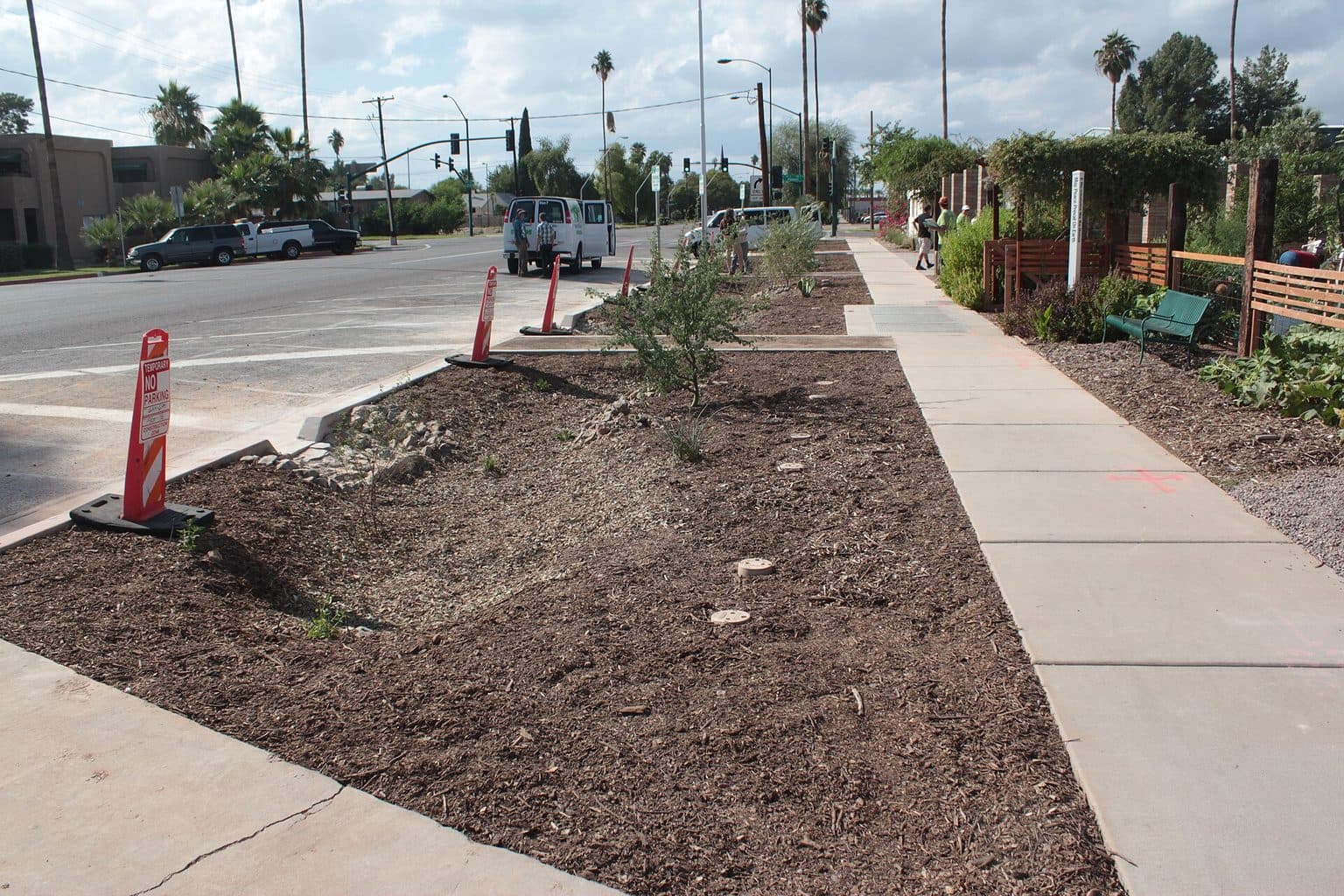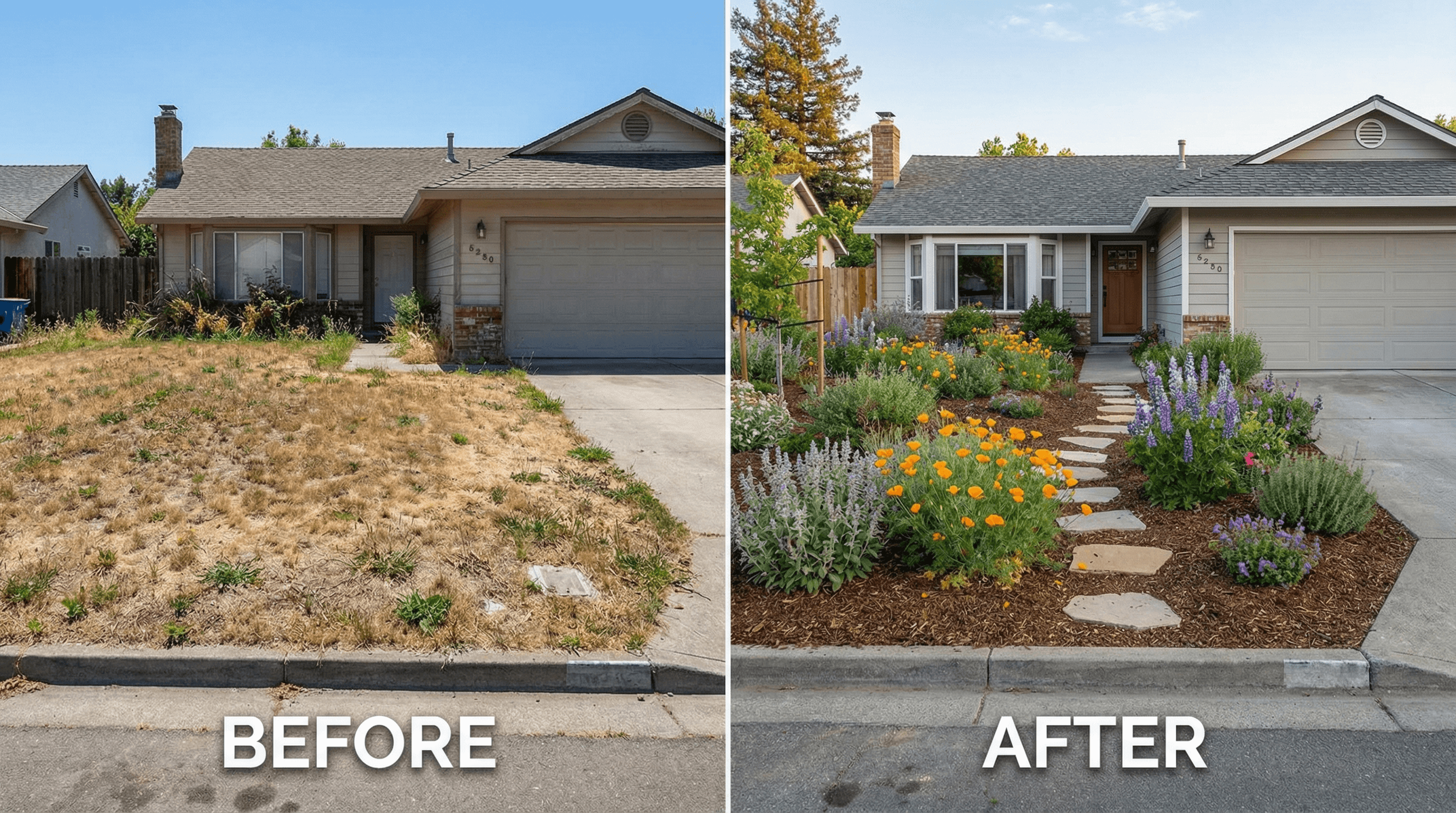
Quick answer: For a Fresno front yard, start with plants that already grow wild in Fresno County: deergrass, California buckwheat, California fuchsia, yarrow, California poppy, and one western redbud as the small tree. All six have recorded populations in the county (Calflora) and are rated very low to moderate water once established (Calscape). If you are replacing lawn to do it, the City of Fresno is paying $4 per square foot for a limited time, but the City has to approve your project before you pull any grass.
The City of Fresno pays homeowners to replace front lawn with water-wise plants, and for now it pays double. The Lawn to Garden rebate rose from $2 to $4 per square foot, funded by a drought relief grant, and the City has to approve your project by December 31, 2026.
The next question is what goes in the ground once the grass is gone. Below are the rebate steps, six plants with a real record of growing in Fresno County, and a simple layout that still looks cared for from the street.
The rebate in one minute
These are the City's own terms, read from its Lawn to Garden program page (opens in new tab) on September 23, 2026:
- $4 per square foot for replacing a front lawn, or a lawn visible to the public, with water-efficient plants.
- Homes can convert up to 10,000 square feet, businesses up to 100,000. The minimum is 200 square feet.
- A City water conservation specialist schedules a required consultation after you apply.
- The City must approve your project by December 31, 2026.
- The $4 rate is temporary, first come, first served, and lasts only while grant funds remain.
At $4 a square foot, the 200 square foot minimum works out to $800, and a 500 square foot front lawn works out to $2,000. Our Fresno Lawn to Garden guide has the full eligibility details and steps.
Before you pull anything
Apply first, do the consultation, and wait for approval. Only then remove the grass. The December 31 date is when approval has to happen, not when the project has to be finished, so the earlier you apply, the more room you have if funds run low.
The timing also suits planting. Calscape's advice for California poppy is to sow seed in fall at the start of the rainy season, so a project approved this fall can go in with the rains rather than against the heat.
Six Fresno County natives for a front yard
This list is anchored to the Fresno area of the San Joaquin Valley. Each plant below has recorded wild populations in Fresno County in the Calflora (opens in new tab) database, and the water, sun, and size figures are from Calscape (opens in new tab), the California Native Plant Society's plant guide.
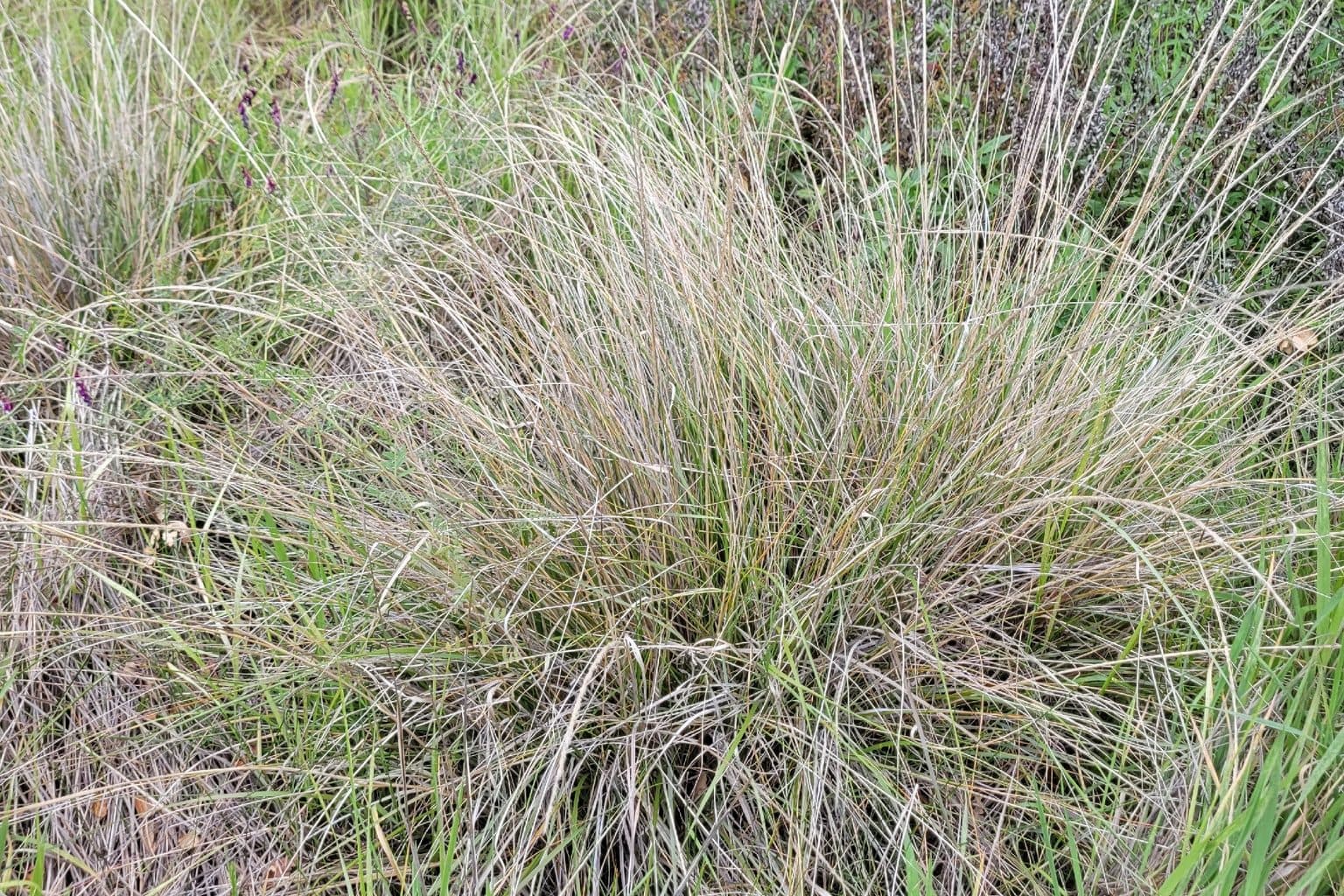
Deergrass (Muhlenbergia rigens)
Start here. Deergrass forms a tidy fountain of fine leaves 4 to 5 feet tall and about 4 feet wide, in full sun, with low to moderate water (Calscape). It is evergreen, and Calscape lists it as a lawn alternative. Three or five in a loose row read as a deliberate planting from the street.
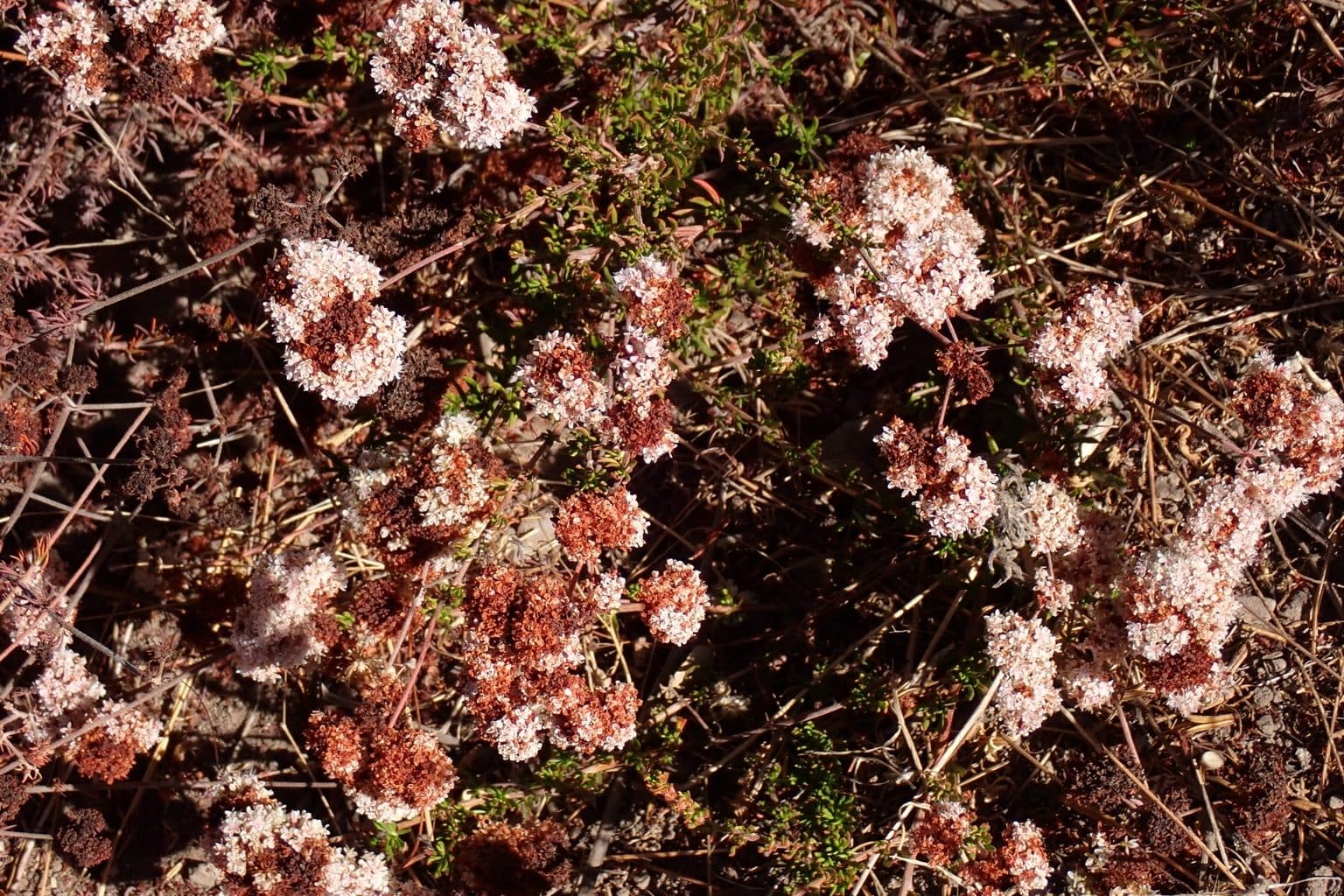
California buckwheat (Eriogonum fasciculatum)
A mounding evergreen shrub with white, pink, or cream flower clusters from spring into fall, and Calscape counts 260 native bee species that visit it. It takes very low to low water in full sun. Size varies a lot, from about a foot to several feet tall, so give it room at the back or middle of a bed.
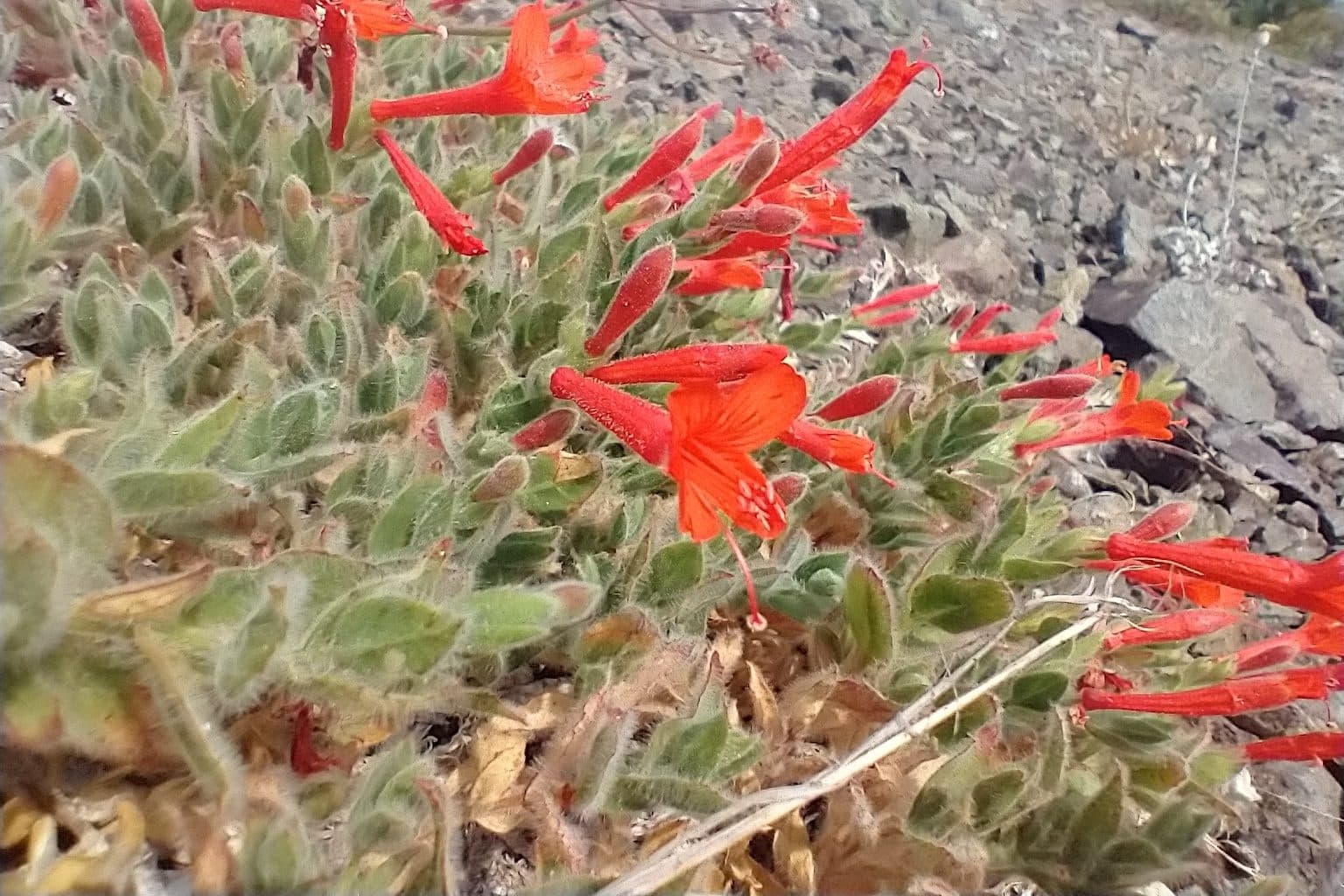
California fuchsia (Epilobium canum)
Red tubular flowers in summer and fall. Calscape calls it probably the best California native for attracting hummingbirds. It stays low, 3 to 18 inches tall and 2 to 3 feet wide, and takes very low to low water in sun or part shade (Calscape). It dies back in winter, so cut it to the base in fall or early winter and it returns in spring (Calscape). Use it along the front edge or where a walkway meets the bed.
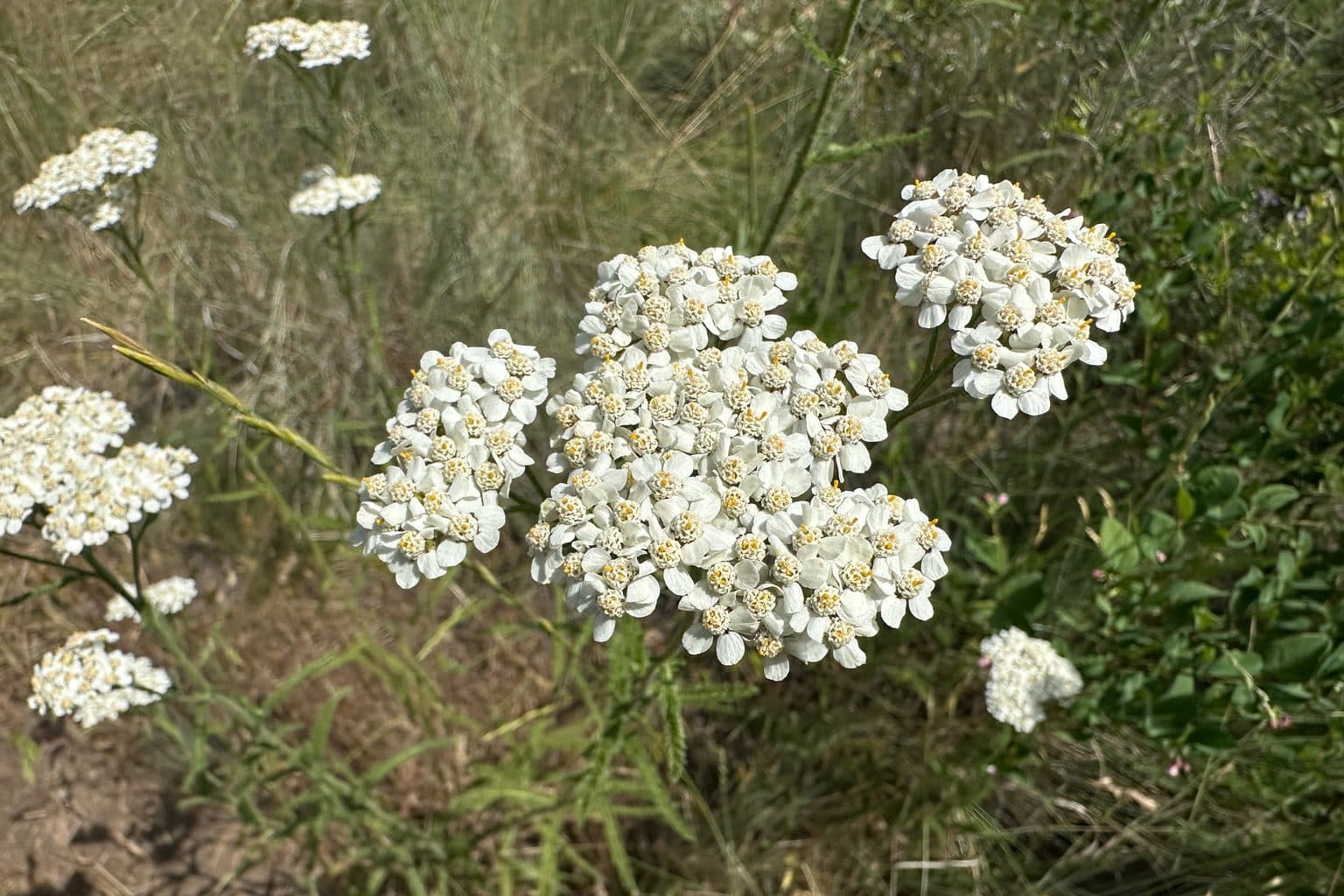
Yarrow (Achillea millefolium)
Yarrow has soft, ferny leaves and flat white flower heads on stems 1 to 3 feet tall, and each plant stays narrow, 6 to 18 inches wide. It takes low water and grows in full sun to deep shade (Calscape), so it is the one plant here that handles the shady side of the yard. Plant several together to fill space between larger plants.
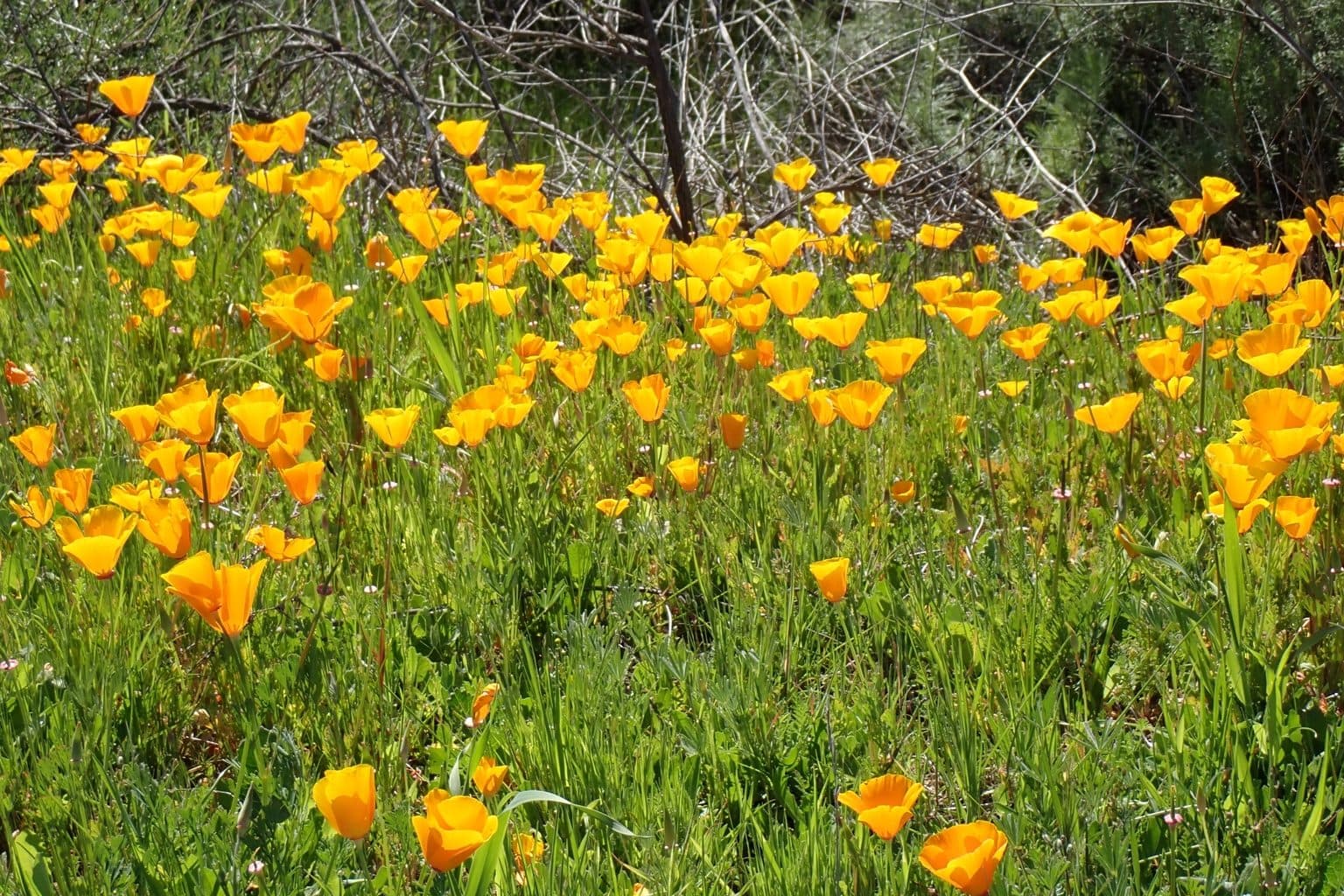
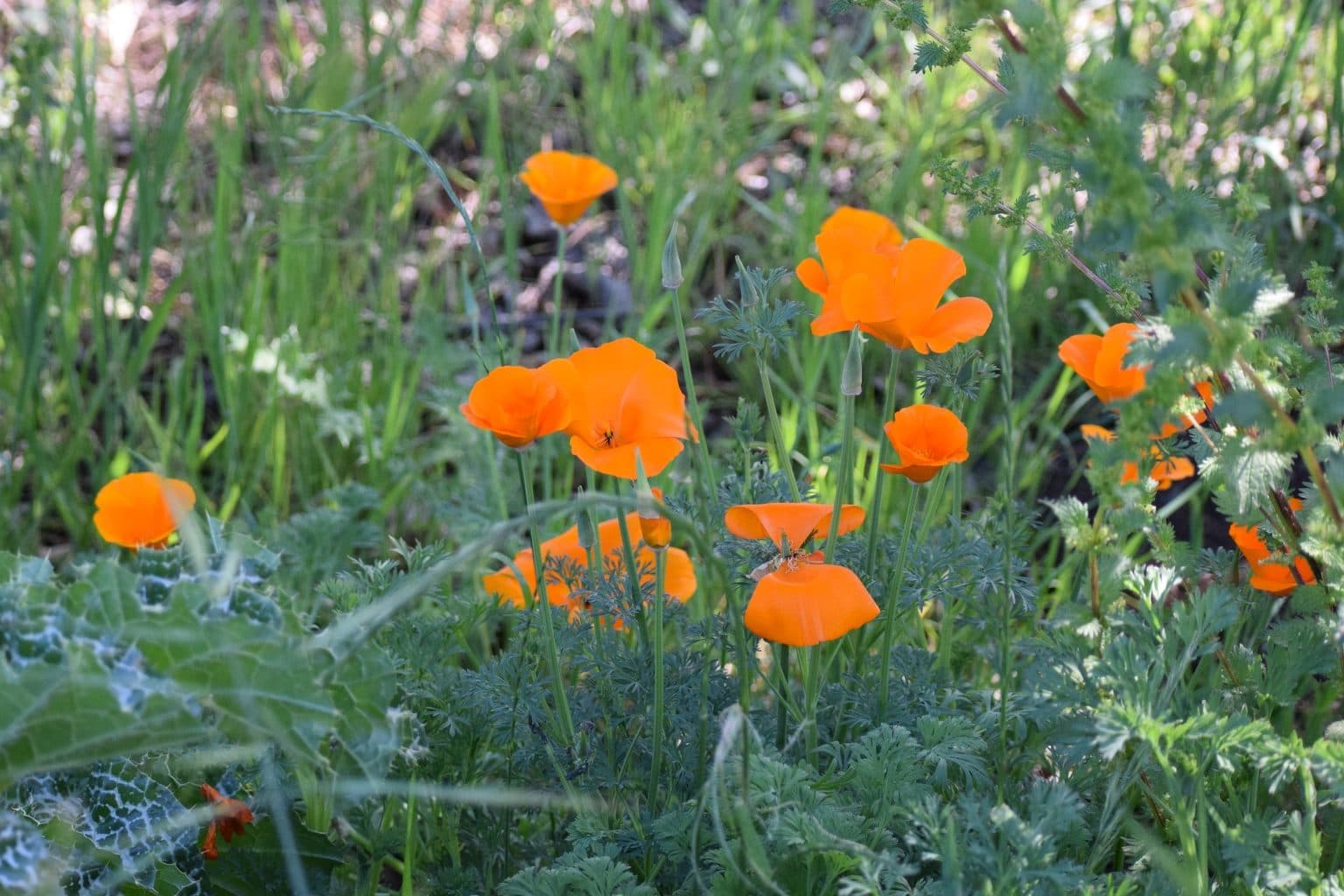
California poppy (Eschscholzia californica)
Very low water, full sun, 2 to 24 inches tall (Calscape). Calscape's advice is to sow seed in fall at the start of the rainy season without covering it, and it self-seeds freely after that. The plants go dormant in summer, so pair them with the fuchsia and buckwheat, which carry color later in the year.
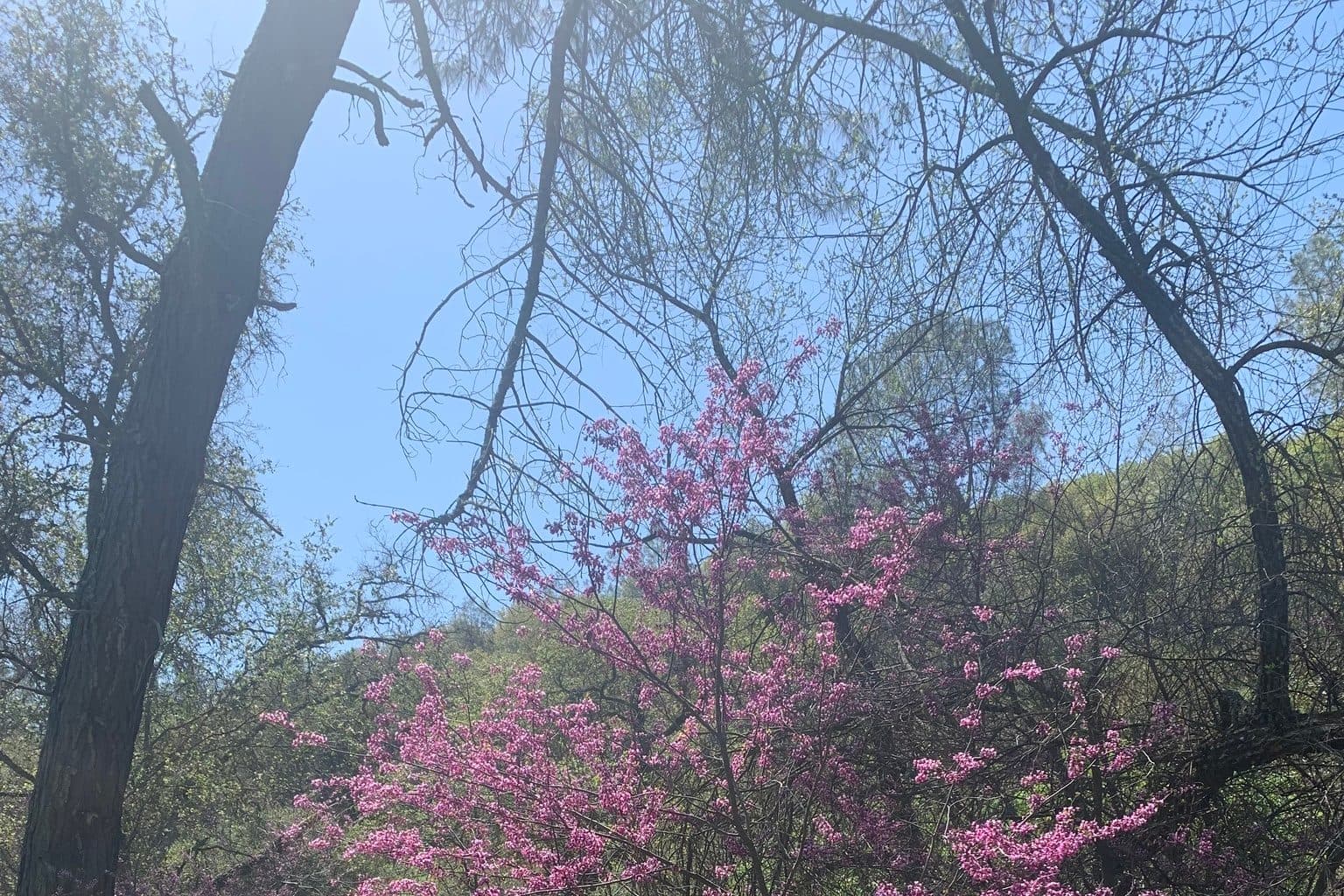
Western redbud (Cercis occidentalis)
If you have room for one small tree, make it this one. Redbud grows 10 to 20 feet tall and 10 to 15 feet wide, covers itself in bright pink to magenta flowers in spring, drops its leaves in winter, and takes very low to moderate water in sun or part shade (Calscape). Keep it well away from the house and sidewalk so it has room to spread.
A simple front-yard layout
A converted yard looks intentional from the street when it has a clean edge, repeats its plants, and steps down in height toward the sidewalk.
- Back or corner: one western redbud, if there is space.
- Middle: deergrass in groups of three or five, with California buckwheat between them.
- Front edge: California fuchsia and yarrow, with poppy seed scattered in the gaps.
- Edge the bed with a crisp line of mulch, stone, or a low border, and keep a path of mulch or stepping stones so it reads as a garden, not an empty lot.
A few plants repeated in groups looks calmer than one of everything, and it is easier to care for.
Sources
Rebate terms: City of Fresno Department of Public Utilities, Lawn to Garden program page (opens in new tab), read September 23, 2026. County records: Calflora observation database, Fresno County. Water, sun, and size: Calscape (California Native Plant Society).
People also ask
How much is the Fresno Lawn to Garden rebate right now?
$4 per square foot for replacing a front lawn, or a lawn visible to the public, with water-efficient plants, up to 10,000 square feet for homes and 100,000 for businesses, with a 200 square foot minimum. The rate is temporary and grant-funded, so it lasts only while funds remain (City of Fresno, September 2026).
Do I need approval before removing my lawn in Fresno?
Yes. The City schedules a required consultation after you apply, and your project must be approved before work begins. Approval has to happen by December 31, 2026.
What should I plant after removing a lawn in Fresno?
Plants with recorded wild populations in Fresno County are a good start. Deergrass, California buckwheat, California fuchsia, yarrow, California poppy, and western redbud all appear in Calflora's Fresno County records and are rated very low to moderate water once established by Calscape.
Planning your Fresno lawn conversion?
Pollinator Patch builds a plant plan for your ZIP code with a layout and a care schedule, so you have something concrete to bring to your consultation.