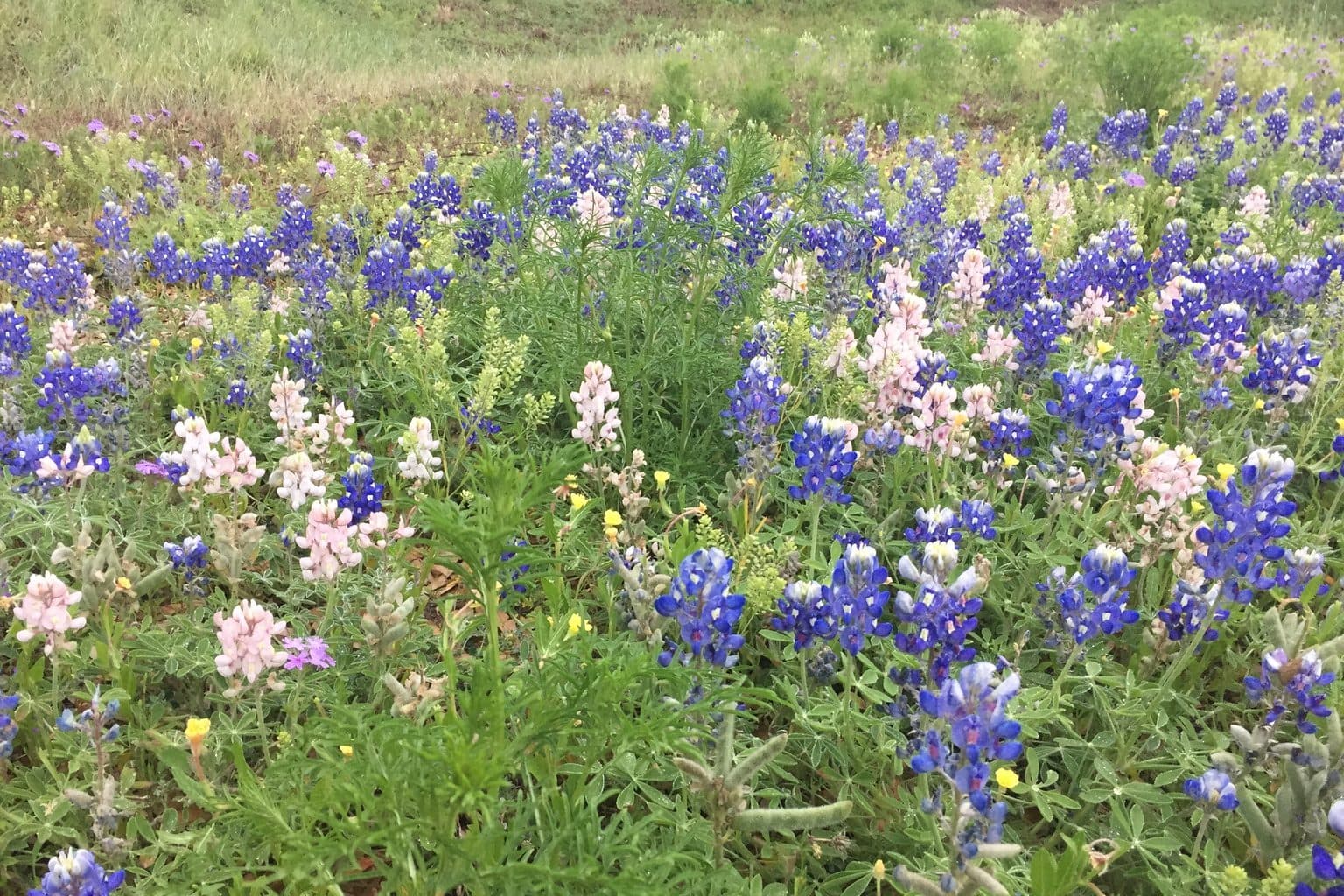
Quick answer: A fruit tree guild in Houston is one fruit tree with native plants set in rings around it. Start with a tree that Texas A&M AgriLife Extension lists for Harris County, such as a satsuma, a fig or a Fuyu persimmon. Keep the first three feet around a citrus trunk clear. Outside that, plant natives from the Native Plant Society of Texas Houston Chapter list: powderpuff, winecup and horseherb low to the ground, scarlet sage and Turk's cap for bloom, and Gulf muhly at the outer edge.
Most fruit tree guild advice online was written for apple trees in cold climates, with comfrey and garlic underneath. A fruit tree guild in Houston looks different. The tree is more likely a satsuma or a fig, the soil is gumbo clay, and the plants around it can be natives that already grow in Harris County.
This guide uses the Gulf Coast Prairie, Houston area, as its worked example. The fruit tree advice comes from Texas A&M AgriLife Extension offices in Harris and Galveston counties. Every native plant below is on the Native Plant Society of Texas Houston Chapter's Top 100 Native Plants for Harris and Adjacent Counties (opens in new tab) (August 2004), and the sizes, light and bloom months come from the Lady Bird Johnson Wildflower Center (opens in new tab).
What a fruit tree guild is
A guild is a small polyculture. One fruit tree sits in the middle, and the plants around it are picked for a job: low plants that cover the soil, flowers that bring in pollinators, a legume or two, and a grass or shrub for structure. The idea comes from permaculture practice.
We looked for an extension trial that tested guilds around fruit trees and did not find one. So treat the guild as a planting pattern, and let extension advice decide anything that touches the tree's health. Where the two disagree in this post, extension wins, most of all at the trunk.
Start with the tree
Satsuma, fig and Japanese persimmon are not native to Texas. Rabbiteye blueberry is the exception, since the World Checklist of Vascular Plants (Kew) gives its range as southeastern North Carolina to East Texas. All four are here because extension guides cover them for this area, and because a fruit tree is what many people want at the center of the bed. Everything planted around them in this post is native.
| Tree | Varieties the source names | What the source says |
|---|---|---|
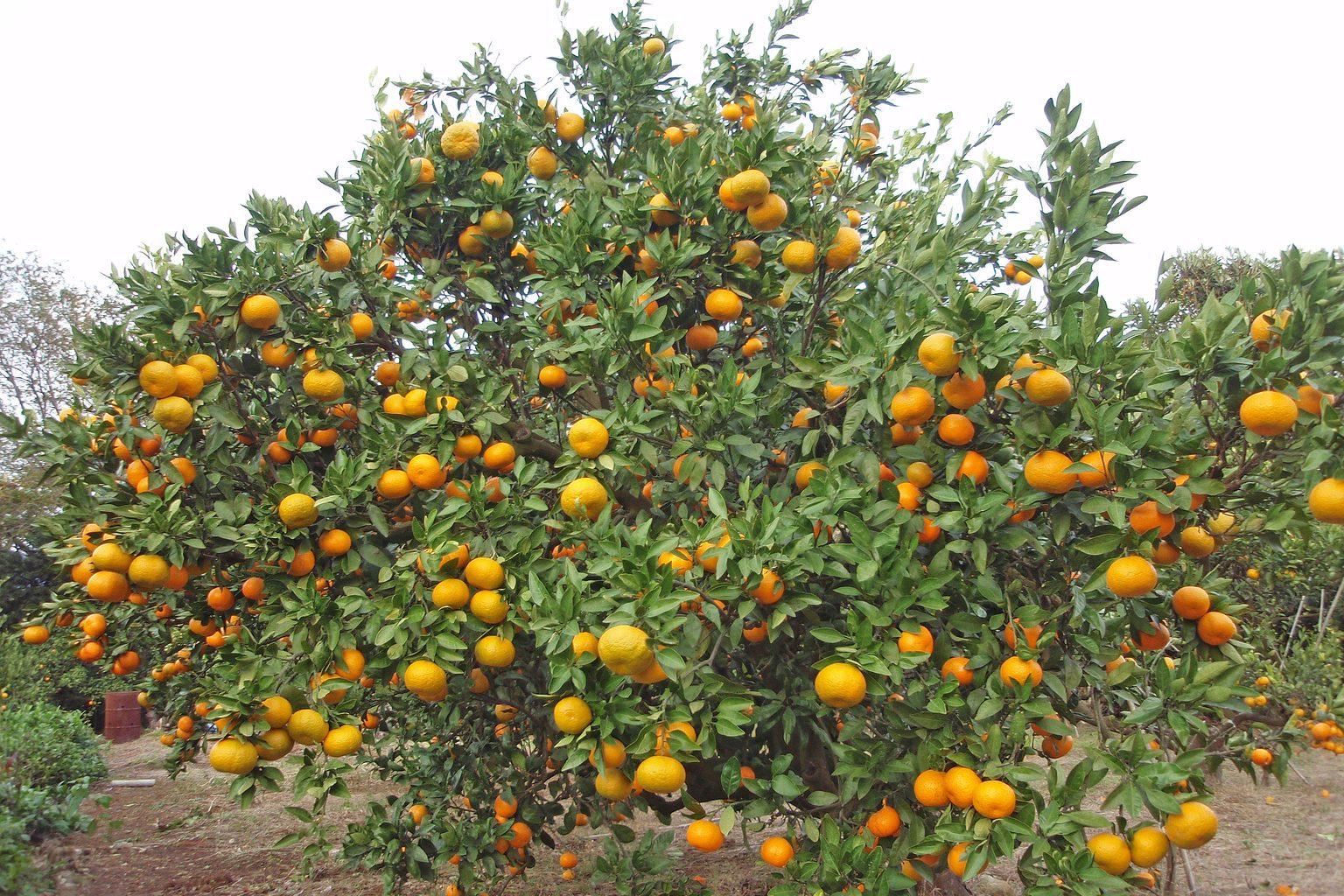
| Satsuma mandarin | Owari, Brown Select, Armstrong Early | Owari is hardy to 22F or lower, Brown Select is slightly more cold hardy than Owari, and Armstrong Early is hardy to 20F or lower (Texas AgriLife Extension, Harris County, Recommended Fruit and Nut Varieties) |
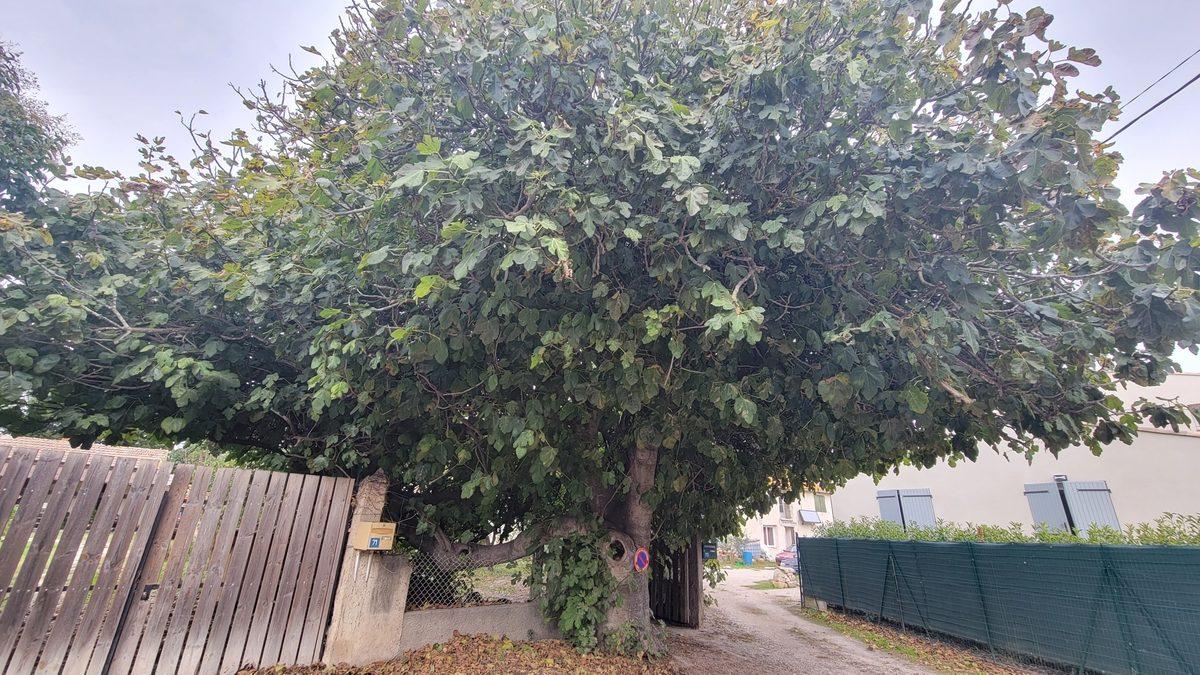
| Fig | Celeste, LSU Purple | Celeste is "one of the best for our area" and both are listed as very cold hardy with a closed eye (same guide) |
| Japanese persimmon | Fuyu, Giombo | Fuyu is non-astringent and needs 200 chill hours. Giombo is self-fruitful and the most cold hardy of the persimmons listed (same guide) |
| Rabbiteye blueberry | Brightwell, Climax, Austin, Premier | Needs soil pH 4.0 to 5.5 and, for most varieties, a second variety nearby as a pollenizer (Texas A&M AgriLife Extension, Blueberries, E-603) |
The Harris County guide (opens in new tab) puts winter chill at about 350 to 450 hours around Pasadena and Galveston Bay, about 450 in downtown Houston, and about 600 in Cypress and Bear Creek. The blueberry guide (opens in new tab) says to choose varieties within 150 hours of your local average. Its chill table lists Brightwell at 400, Climax at 450, Austin at 500 and Premier at 550, which is why those four are in the table.
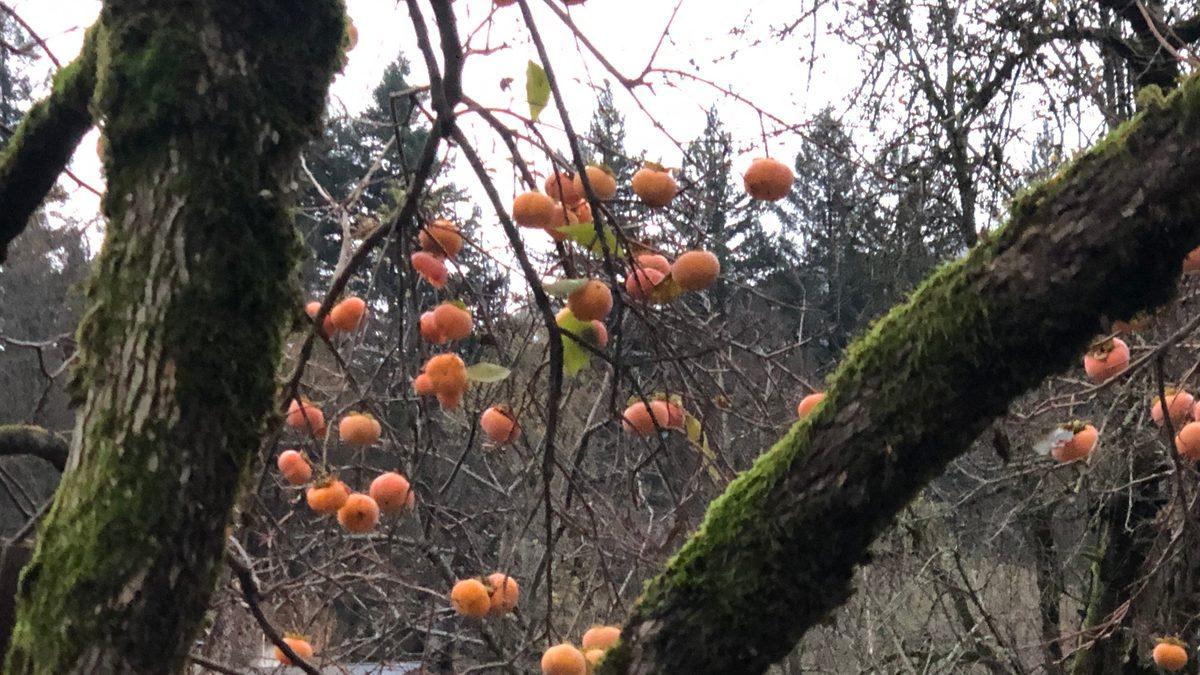
Blueberries are the odd one out. The same guide calls rabbiteyes plants that do not tolerate alkaline soil, says attempts to acidify alkaline ground often fail, and suggests containers or raised beds filled with peat moss and pine bark. In Houston clay that means the blueberry gets its own raised bed, and the native plants go around the outside of it. For a pH reading before you plant, the guide points to the Texas A&M AgriLife Extension Soil, Water and Forage Testing Laboratory (opens in new tab).
Keep the trunk zone clear
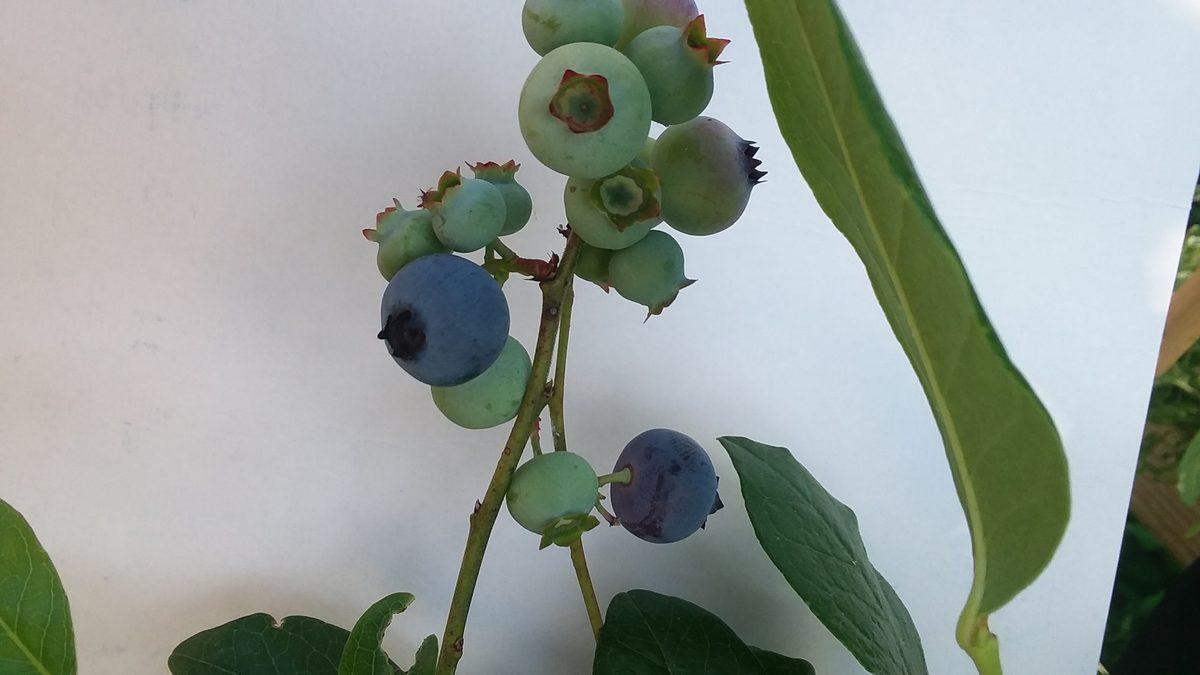
Guild advice and extension advice part ways at the trunk. Many guild diagrams show plants and thick mulch right up to the trunk. For citrus on the Gulf Coast, the Galveston County Master Gardeners say otherwise in Our Edible Landscape (opens in new tab), published through the Texas AgriLife Extension Galveston County office:
- Keep drip or spray irrigation three feet away from a citrus trunk, because watering at the trunk can rot it.
- Do not mulch citrus trees.
- Let St. Augustine grass grow around the base of the tree, but not Bermuda or native grasses.
- Plant citrus in the ground, in a sunny sheltered spot such as the south side of a house.
- A raised bed is not needed if water does not stand for more than 24 hours after rain.
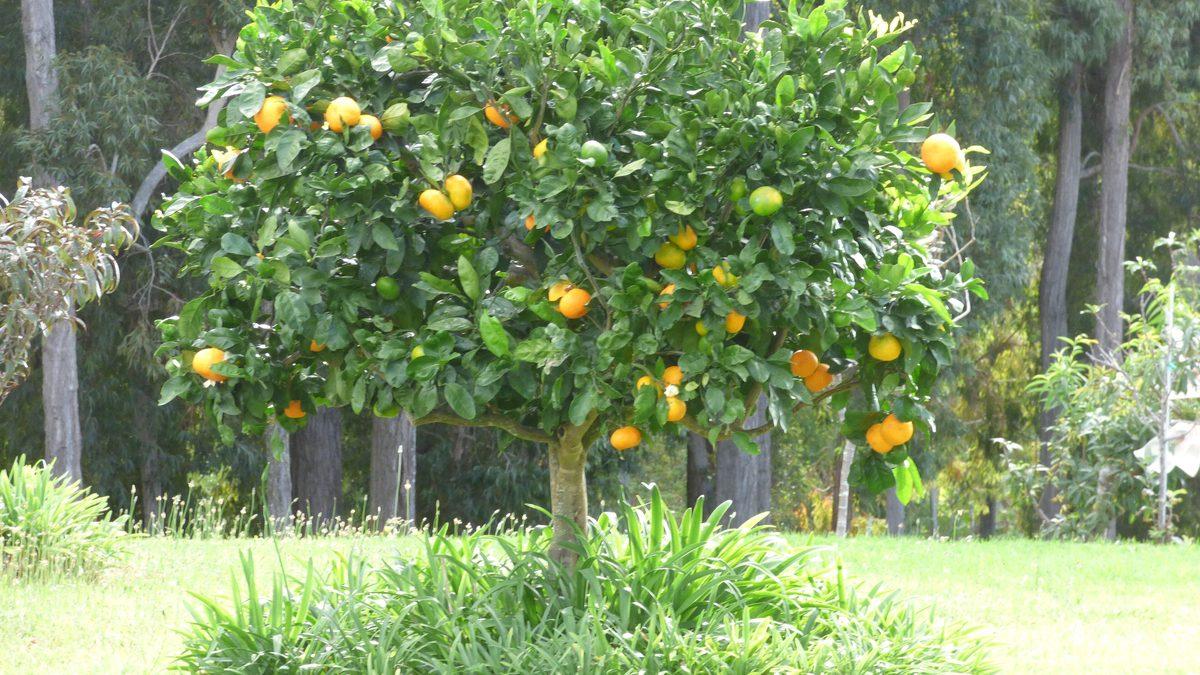
So a citrus guild has a clear collar. We use three feet, to match the irrigation distance, and start the native plants outside it. The same booklet says figs are different: they need a lot of water and should be mulched heavily. We did not find an extension source on what to grow at the base of a persimmon, so we keep the same three-foot collar there as the cautious choice.
The native layers
Worked example: Gulf Coast Prairie, Houston area. All nine plants are on the Houston Chapter's Top 100 list, which says its plants grow well in the soils of Harris and surrounding counties, including gumbo.
| Plant | Where it goes | Light | Size and bloom (Wildflower Center) |
|---|---|---|---|
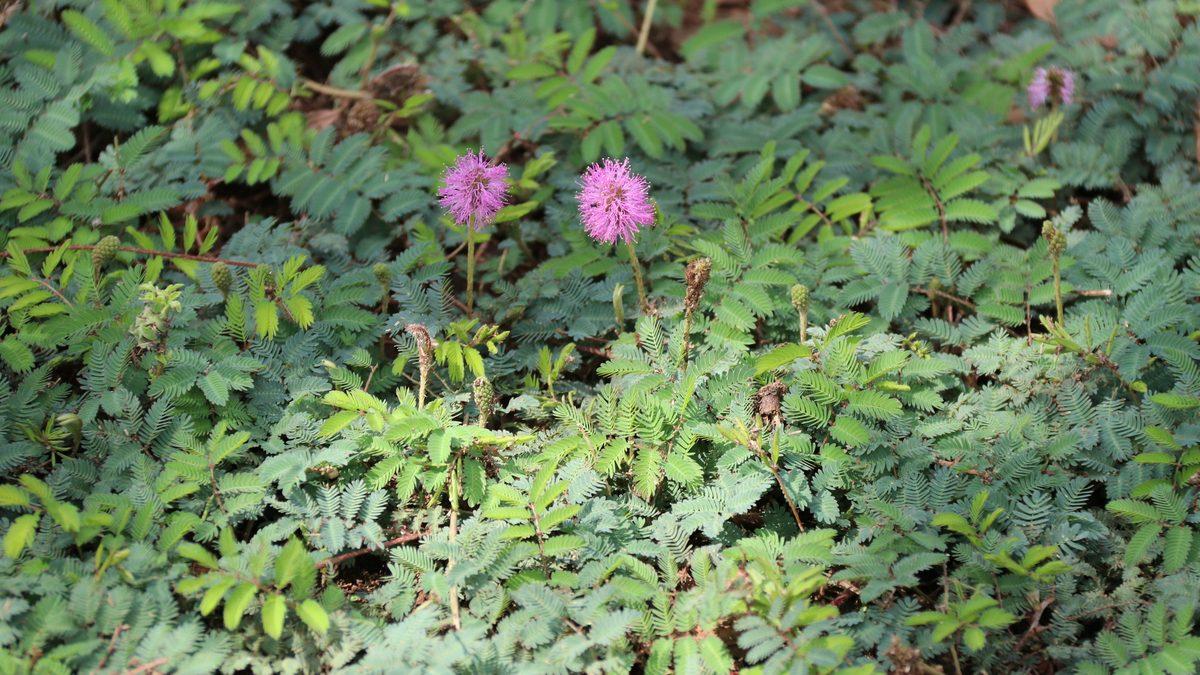
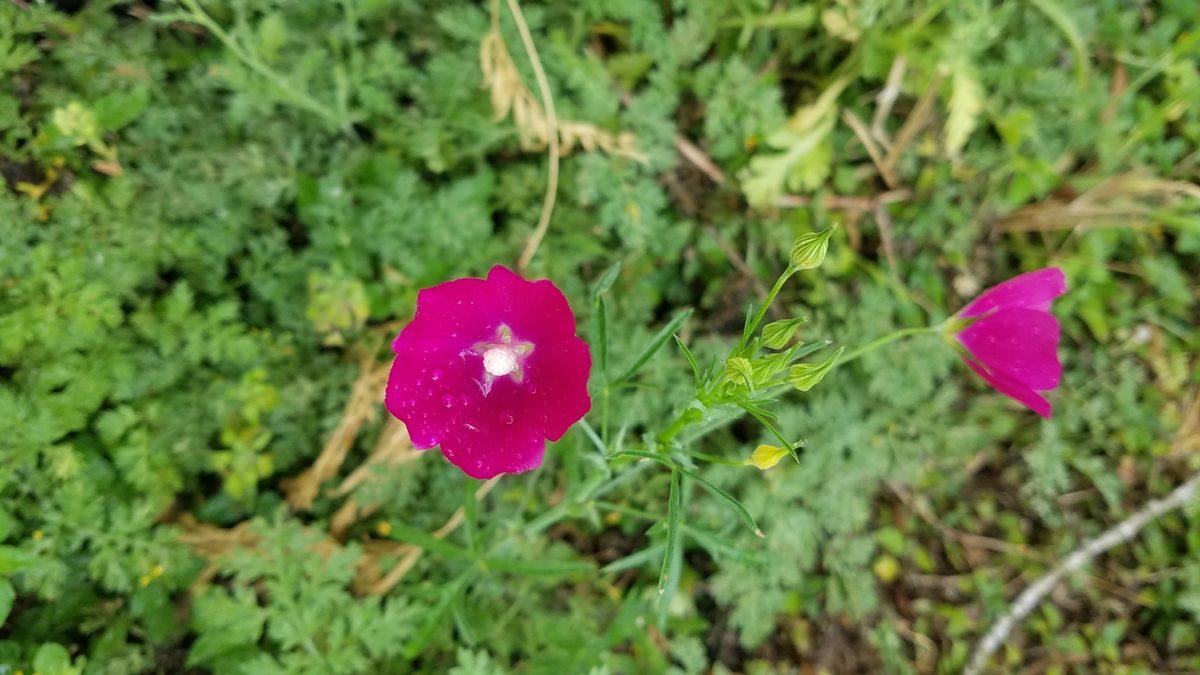
| Powderpuff (Mimosa strigillosa) (opens in new tab) | Sunny ground layer | Not stated on the Wildflower Center page | To about 1 ft in flower, pink, March to August. Stems root as they spread |
| Winecup (Callirhoe involucrata) (opens in new tab) | Sunny ground layer | Sun, part shade | 8 to 12 in tall, spreading to 3 ft. March to June |
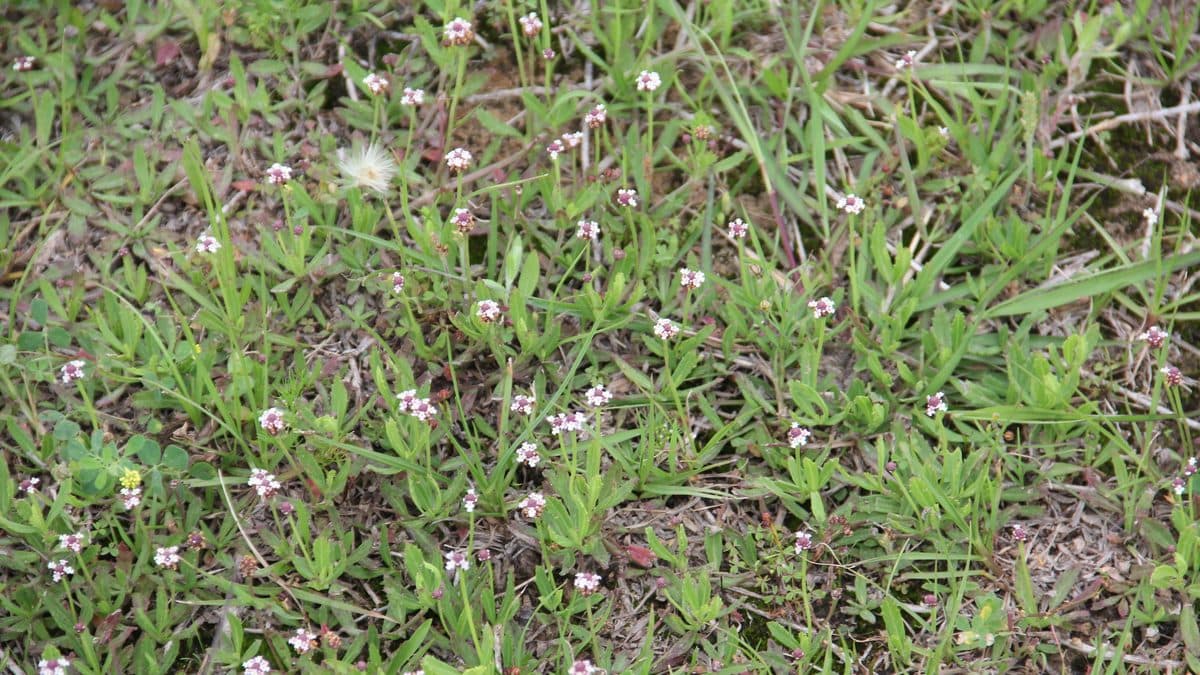
| Frogfruit (Phyla nodiflora) (opens in new tab) | Sunny ground layer, back yards | Sun, part shade | To about 6 in. May to November. Poor drainage okay |
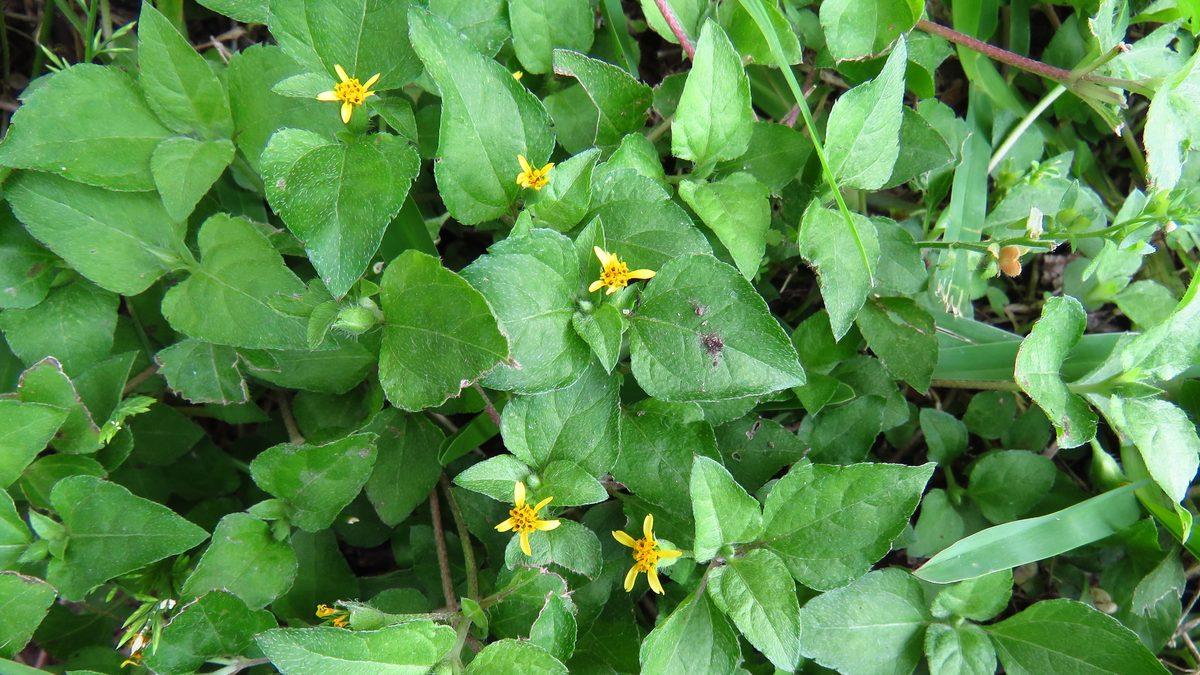
| Horseherb (Calyptocarpus vialis) (opens in new tab) | Ground layer on the shaded side | Sun, part shade, shade | 6 to 12 in. Yellow, March to November |
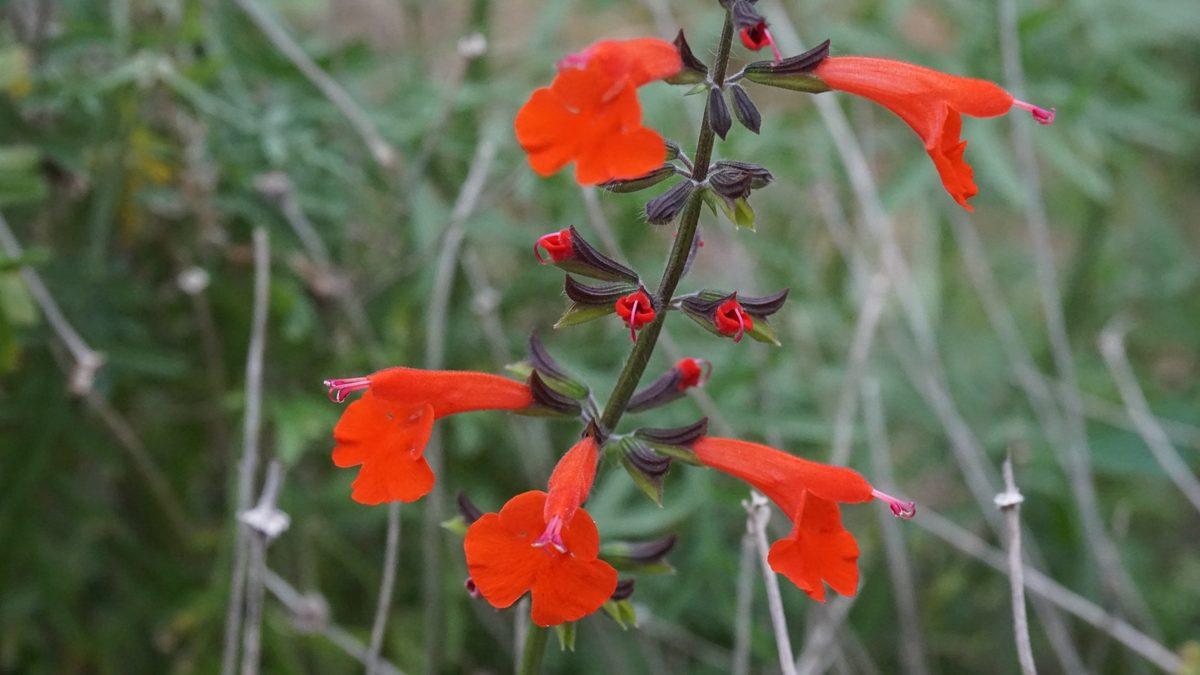
| Scarlet sage (Salvia coccinea) (opens in new tab) | Flower ring | Sun, part shade, shade | To about 30 in. February to October |
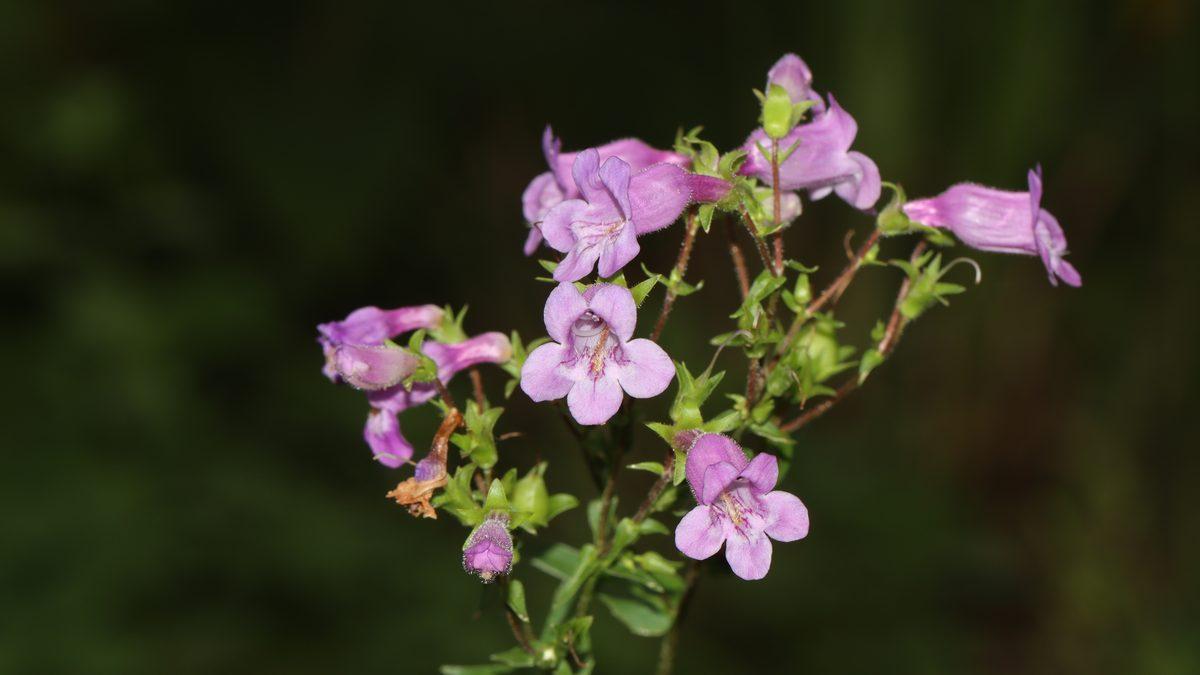
| Gulf Coast penstemon (Penstemon tenuis) (opens in new tab) | Flower ring | Sun, part shade | To about 30 in. Purple, March to June. Poor drainage okay |
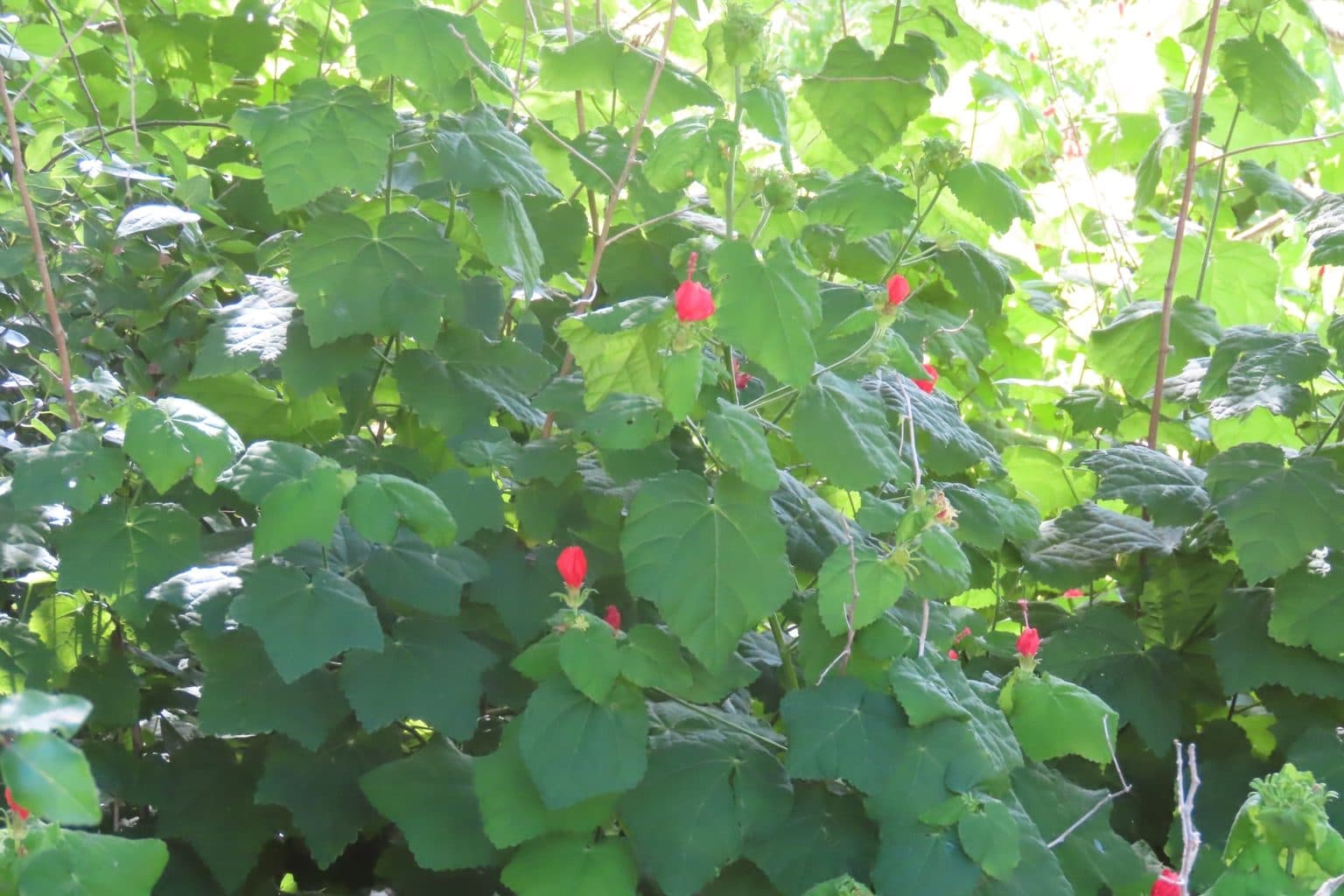
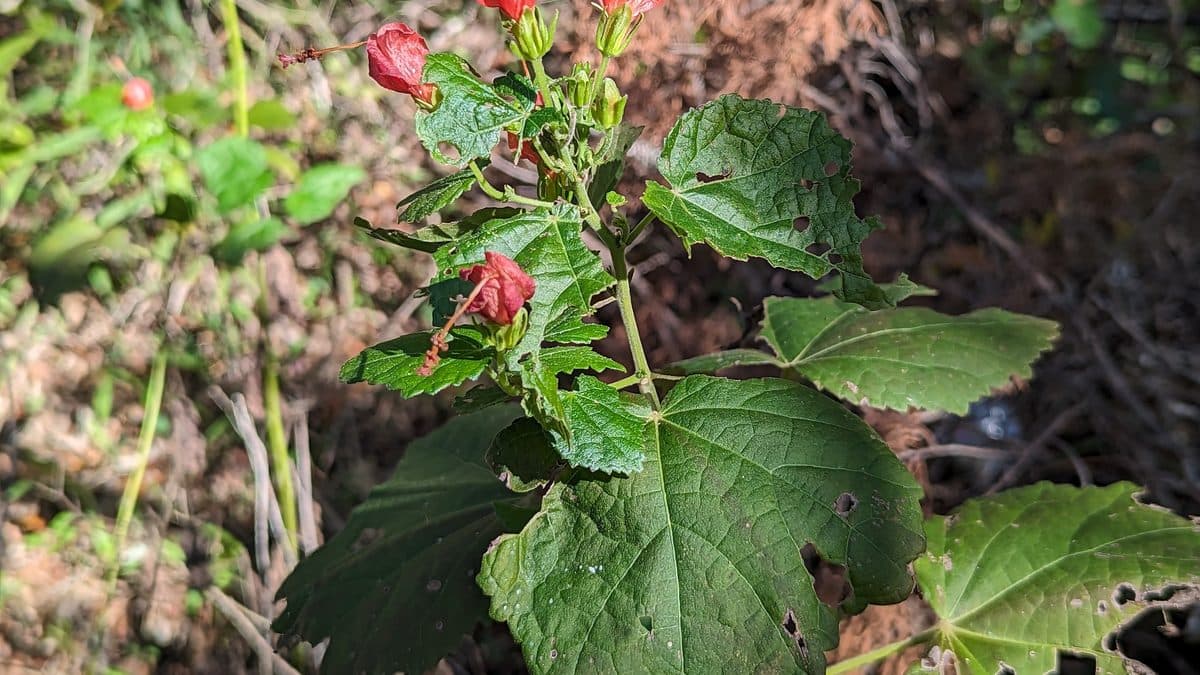
| Turk's cap (Malvaviscus arboreus var. drummondii) (opens in new tab) | Shaded side, under the canopy edge | Part shade, shade | 2 to 3 ft, sometimes taller. May to November |
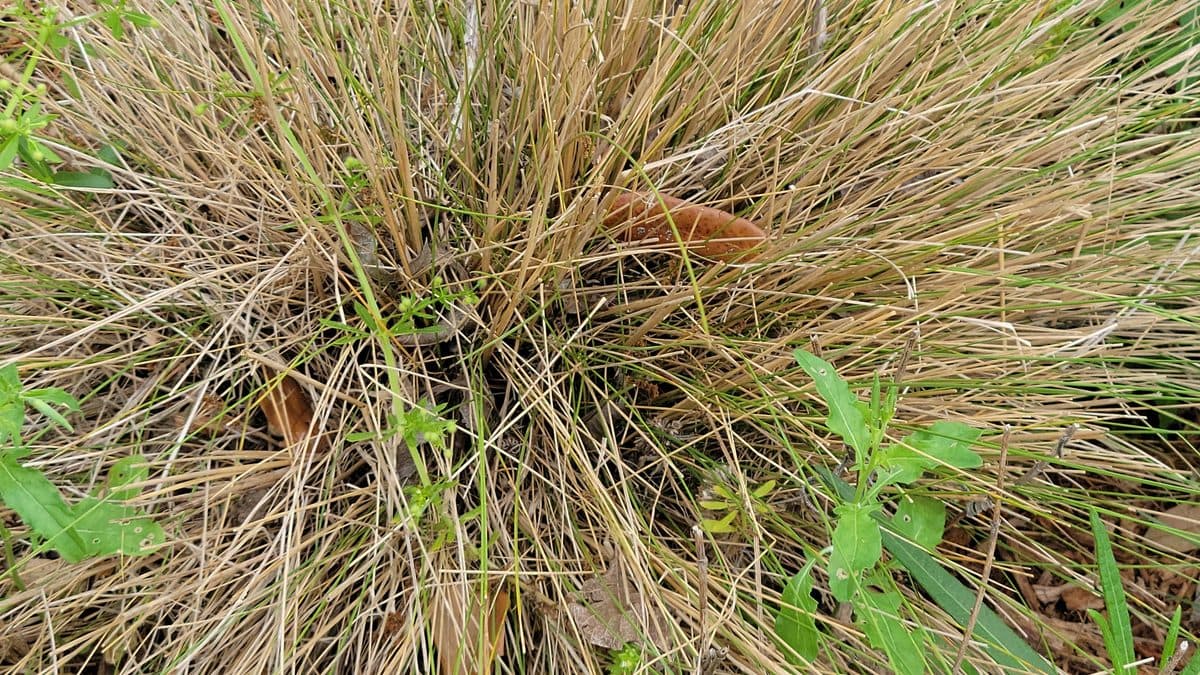
| Gulf muhly (Muhlenbergia capillaris) (opens in new tab) | Outer edge | Sun | 1.5 to 3 ft. Pink in October |
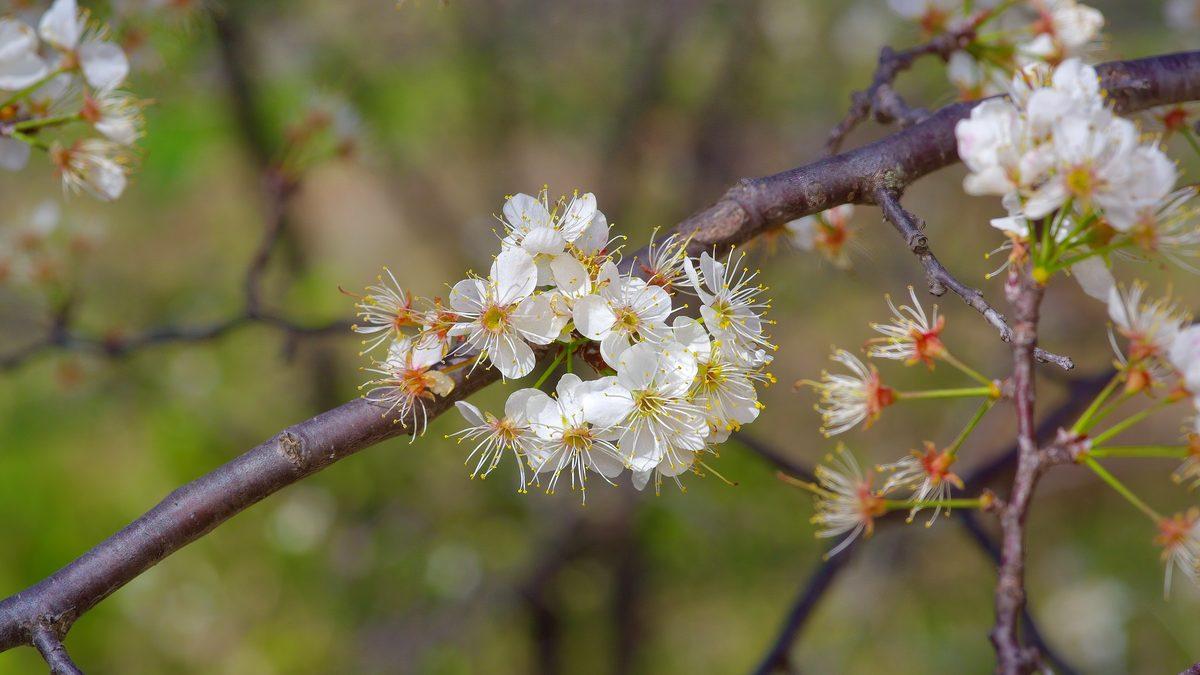
| Mexican plum (Prunus mexicana) (opens in new tab) | A second tree, on its own | Sun, part shade | To about 35 ft, often much shorter. White flowers, February to April |
The ground layer
Powderpuff, winecup and frogfruit cover open soil on the sunny side. Powderpuff is in the pea family (Fabaceae), per the Wildflower Center. Guild writers add legumes for nitrogen. The Wildflower Center page does not say how much nitrogen powderpuff adds, so we are not putting a number on it.
Frogfruit is a larval host for the Phaon crescent, buckeye and white peacock butterflies (Lady Bird Johnson Wildflower Center). It also spreads vigorously, and the page warns not to mow it while it is blooming. That makes it a better fit for a back yard than a front bed with a tight edge.
On the north side, where the tree casts shade, horseherb does the same job. The Wildflower Center calls it a good shade groundcover.
The flower ring
Scarlet sage blooms from February to October and draws butterflies and hummingbirds, according to the Wildflower Center. Gulf Coast penstemon fills March through June. Between the two, something is open for most of the year.
Turk's cap goes where the canopy will shade it. The Wildflower Center lists it for part shade and shade, and says it attracts birds, butterflies and hummingbirds. It gets bigger than the others, so give it the spot under the canopy edge on the shaded side.
The outer edge and a second tree
Gulf muhly makes a clean line at the outside of the bed and turns pink in October. Keep it at the edge. The Galveston booklet's warning about native grasses at the base of citrus is the reason it does not go any closer.
Mexican plum is on the Houston Chapter list as a small tree. The Wildflower Center says its plums ripen from July to September and are eaten fresh or made into preserves. It is a tree, so it gets its own spot in the yard and its own ring of plants.
How to lay it out
- Pick the spot for the tree first. For citrus, the Harris County guide suggests the south or southeast side of the house, sheltered from northwest cold fronts.
- Mark the tree's mature spread on the ground. The bed should reach at least that far.
- Mark a three-foot circle around the trunk and leave it unplanted.
- Plant the ground layer nearest the collar, sun lovers on the south side and horseherb on the north.
- Set the flower ring outside that, with Turk's cap on the shaded side.
- Finish with Gulf muhly along the outer edge, and repeat it so the edge reads as one line from the street.
We did not find an extension source that gives ring widths or a guild radius, so there are no ring measurements here. Use each plant's mature size from the table and leave room for it.
For planting dates, see our fall planting guide for native plants in Texas.
Citrus in Houston: the quarantine
Harris, Fort Bend and Montgomery counties have been under a citrus greening quarantine since 2016, and Brazoria and Galveston counties were added in October 2019 (Texas A&M AgriLife Extension, Gulf Coast Citrus Greening Quarantine (opens in new tab), PLPM-PU-109, May 2024). Citrus plants cannot be moved out of the quarantined counties, and citrus bought inside the quarantined area has to stay inside it.
The disease is spread by the Asian citrus psyllid, and the same publication says there is no known cure. Nothing planted around a citrus tree changes that. Buy your tree from a local nursery, and check the Texas Department of Agriculture's citrus greening quarantine page (opens in new tab), which has the map, for the current boundary before you move any citrus plant.
Freezes
The Galveston County office of Texas A&M AgriLife Extension recommends protecting citrus when temperatures are expected to go below 27F for an extended period (Dr. William M. Johnson, Cold Weather Damage on Citrus (opens in new tab), January 13, 2021). Properly hardened, bearing satsuma trees withstand temperatures as low as 20F without appreciable wood damage, Johnson writes, while the fruit freezes at 26 to 28F when those temperatures last several hours.
It also cites Louisiana State University data showing that trees on bare ground are more likely to survive than trees growing in turf, because heat from the soil rises into the canopy. That is one more reason for the clear collar. And wait to prune freeze damage until spring growth shows how far it went.
Front yards and HOAs
Texas Property Code §202.007 (opens in new tab) limits an association's power to prohibit drought-resistant landscaping, and it lets the association require a plan for review. We read the section on the official Texas statutes site and found no mention of fruit trees, vegetables or food plants. So do not assume a fruit tree in the front yard is covered. Check your deed restrictions, and submit a plan before you plant.
A guild can look intentional. Use a defined edge, keep the plant list short, and repeat each plant in groups. Winecup, horseherb, scarlet sage, Gulf Coast penstemon, Turk's cap and Gulf muhly are the HOA-friendly picks from the table. Our guide to getting an HOA to accept native landscaping walks through the plan submission.
Texas sources to keep open
Nearly all of this post comes from Texas sources, and each one goes deeper than we do here.
- Texas A&M AgriLife Extension, Harris County (opens in new tab). The county office behind the fruit and nut variety guide. Its site has an Ask the Horticulture Agent page and a guide to taking a soil sample.
- Aggie Horticulture Fruit and Nut Resources (opens in new tab). Texas A&M fact sheets for citrus, figs, persimmons and blueberries.
- Aggie Horticulture citrus fact sheet (opens in new tab), by Extension Horticulturist Julian W. Sauls. It lists satsuma among the cold-hardy types and covers freeze protection for home citrus.
- Native Plant Society of Texas, Houston Chapter, Native Plant Guide (opens in new tab). Plant information pages, Houston-area plant lists, and a list of local native plant sources.
- NICE Native Plant Partners (opens in new tab). The Native Plant Society of Texas program that lists participating nurseries by chapter, Houston included.
- Lady Bird Johnson Wildflower Center (opens in new tab), in Austin. The plant database behind every size, light and bloom figure above.
- Urban Harvest (opens in new tab). The Houston nonprofit that helped reissue the Harris County fruit guide in 2006, and runs gardening classes.
- Texas Department of Agriculture, Citrus Greening Quarantine (opens in new tab). The quarantine rules and map. Its Gulf Coast area covers Brazoria, Fort Bend, Galveston, Harris and Montgomery counties.
Where the app fits
The Garden Planner in the Pollinator Patch App matches native plants to your ZIP and ecoregion, then helps you lay them out by sun and height. Use it to pick the layers for the bed around your tree. For the Houston native list on its own, read best native plants for Houston yards.
People also ask
What do you plant under a fruit tree in Houston?
Leave the first three feet around a citrus trunk unplanted, which matches the irrigation distance the Galveston County Master Gardeners give. Outside that, natives from the Native Plant Society of Texas Houston Chapter list work as the layers: powderpuff, winecup and horseherb as groundcovers, scarlet sage and Turk's cap for bloom, and Gulf muhly at the edge.
Which fruit trees work for a guild in Houston?
The Texas AgriLife Extension Harris County guide lists satsumas such as Owari and Brown Select, figs such as Celeste and LSU Purple, and persimmons such as Fuyu. None of them is native to Texas, though the plants around them can be.
Should you mulch a citrus tree in Houston?
The Galveston County Master Gardeners say not to mulch citrus trees and to keep irrigation three feet from the trunk. The same booklet says figs are different and should be mulched heavily.
Will a fruit tree guild protect citrus from citrus greening?
No. Texas A&M AgriLife Extension says citrus greening is spread by the Asian citrus psyllid and has no known cure. Harris, Fort Bend and Montgomery counties have been under quarantine since 2016, and citrus plants cannot be moved out of the quarantined counties.
Want the native layers picked for your yard?
The Pollinator Patch App matches native plants to your ZIP and ecoregion, then helps you lay them out by sun and height.