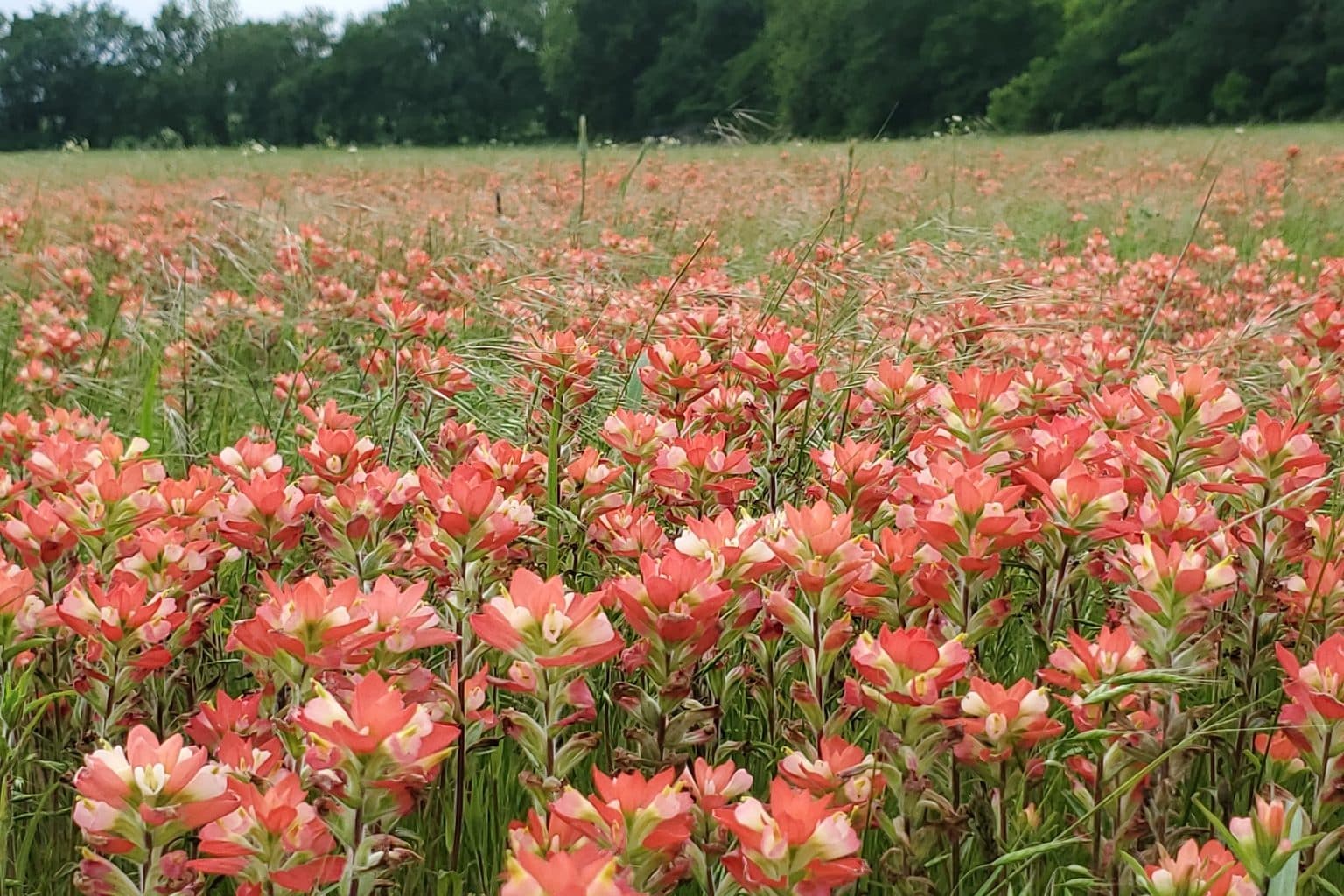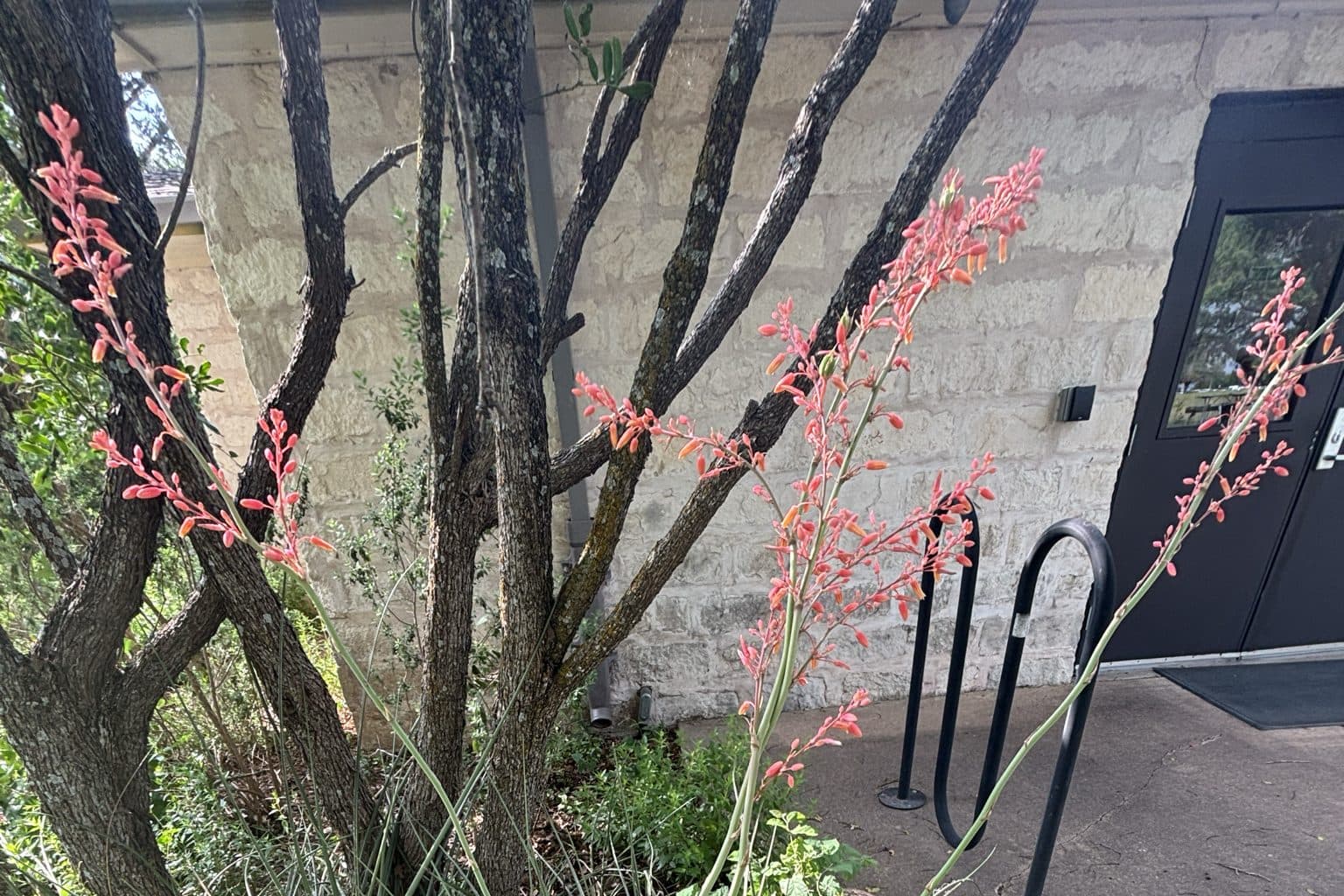
Quick answer: For native plants in Houston, start with six that the Native Plant Society of Texas Houston Chapter lists for Harris County and nearby: Turk's cap, Gulf muhly, American beautyberry, coral honeysuckle, Texas lantana, and inland sea oats. The Wildflower Center lists clay among the soils for five of them. Texas lantana is the exception, since it prefers poor, well-drained soil. Match each plant to its light.
Anyone planting native plants in Houston is working with heavy clay, a lot of rain at once, and summers that dry the same ground out. Native plants listed for this area are the sensible place to start.
This list is anchored to the Gulf Coast Prairie, Houston area. Every plant below appears in the Native Plant Society of Texas Houston Chapter's Native Plant Guide (opens in new tab) (updated March 2022), and the size, light, and soil figures come from the Lady Bird Johnson Wildflower Center (opens in new tab) unless a different source is named.
What Houston soil and weather ask of a plant
The Houston Chapter's Top 100 list for Harris and adjacent counties is built around plants that grow well in the local soil, which the guide says includes gumbo (NPSOT Houston Chapter). Gumbo is sticky clay. It holds water after a storm and cracks when it dries.
So a Houston plant list has to answer two questions. Will it sit through a few wet weeks without rotting, and will it get through a dry August without a daily hose? The table shows each plant's soil note.
| Plant | Light | Soil note | Size |
|---|---|---|---|
| Turk's cap | Part shade to shade | Sandy, loamy, clay, limestone | 2 to 3 ft tall, sometimes to 10 ft, often as broad as high |
| Gulf muhly | Sun | Sandy, rocky, and clayey soils | 1.5 to 3 ft |
| American beautyberry | Part shade | Adapts to many soils, including clay | 4 to 8 ft |
| Coral honeysuckle | Sun to part shade | Sand, loam, or clay, even poor drainage | Vine, up to about 20 ft |
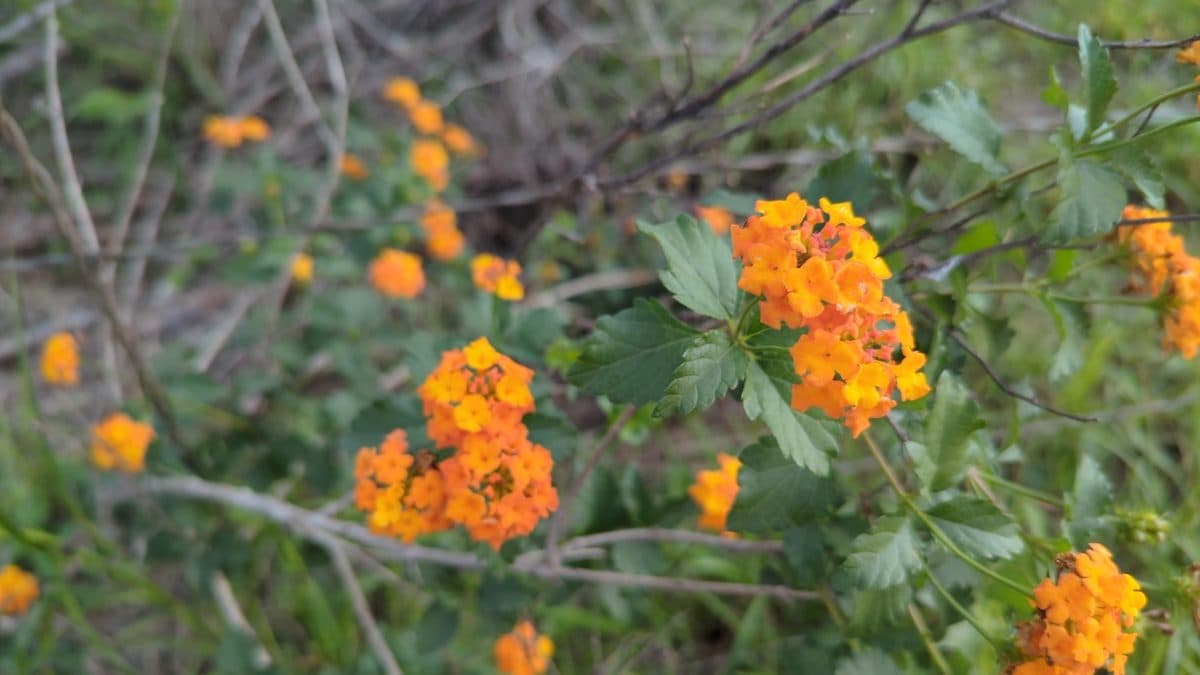
| Texas lantana | Full sun | Poor, well-drained soils | Up to about 6 ft |
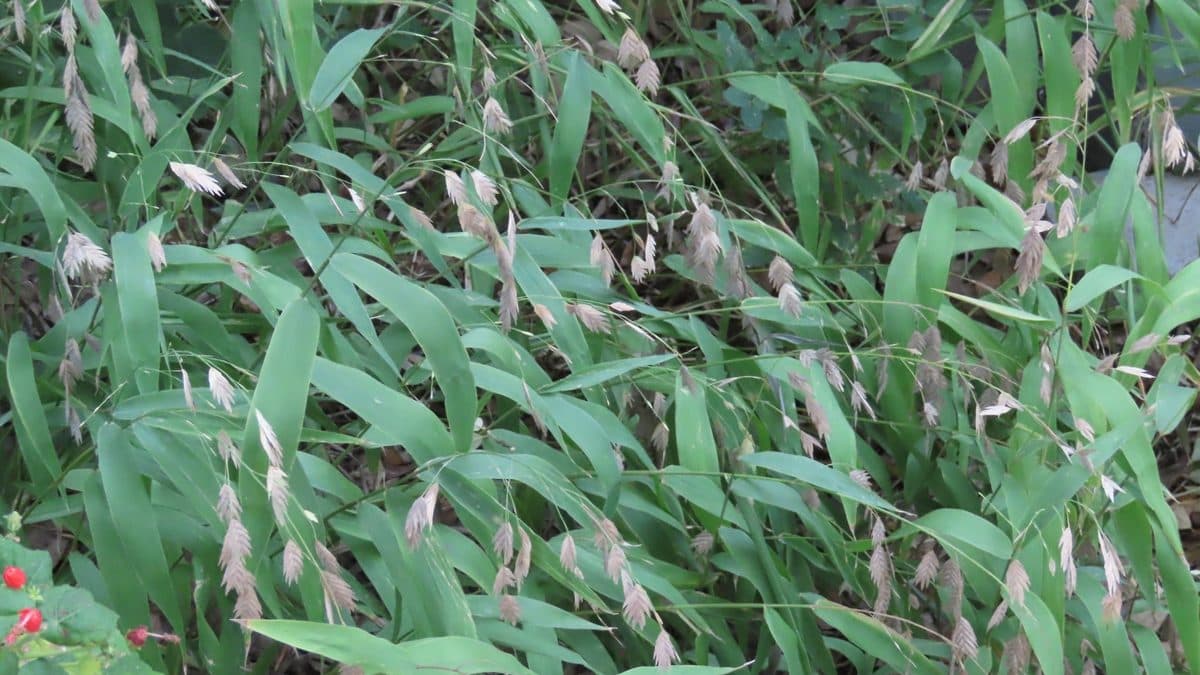
| Inland sea oats | Part to full shade | Moist clays, poorly drained is fine | 2 to 4 ft |
Six native plants for Houston yards
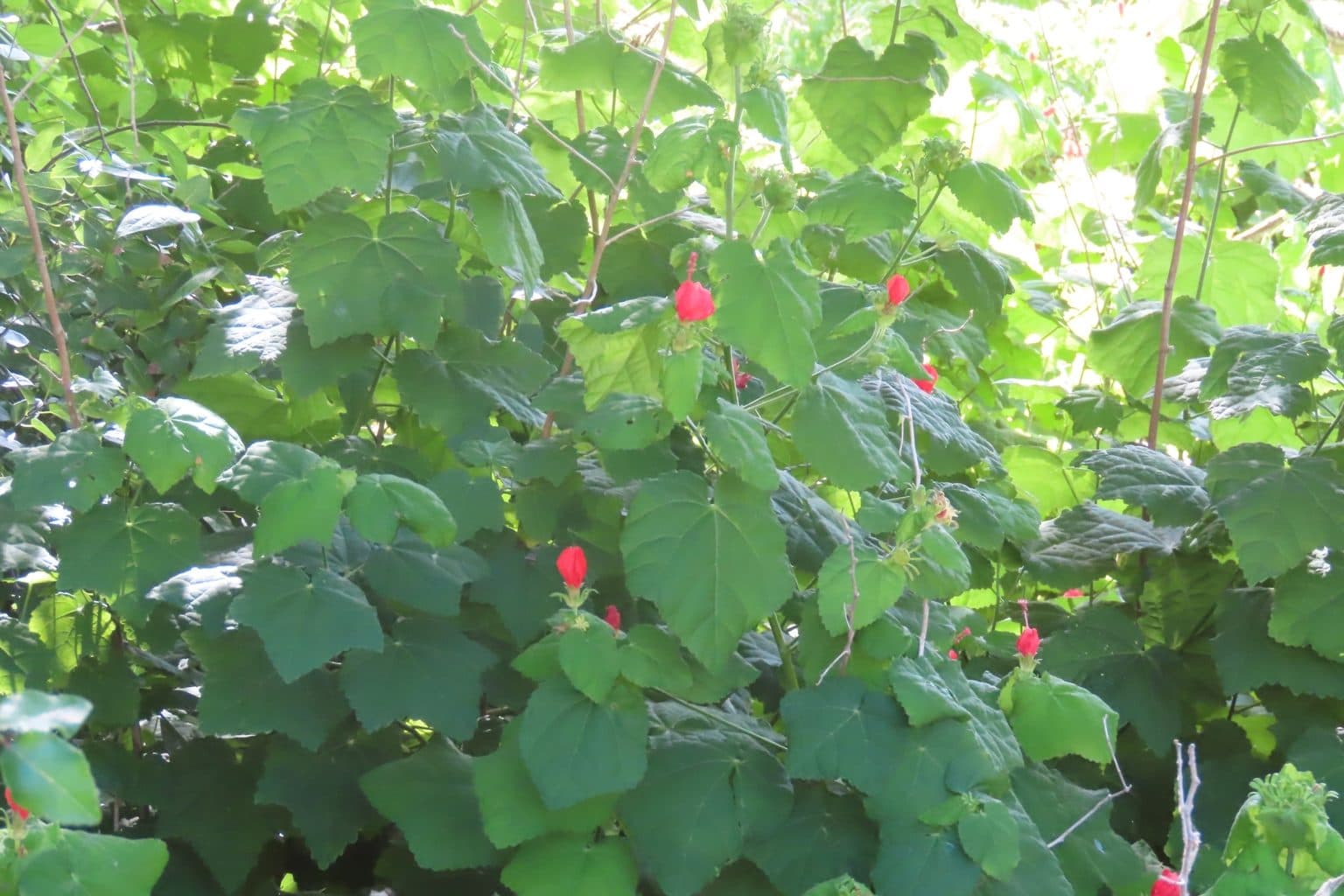
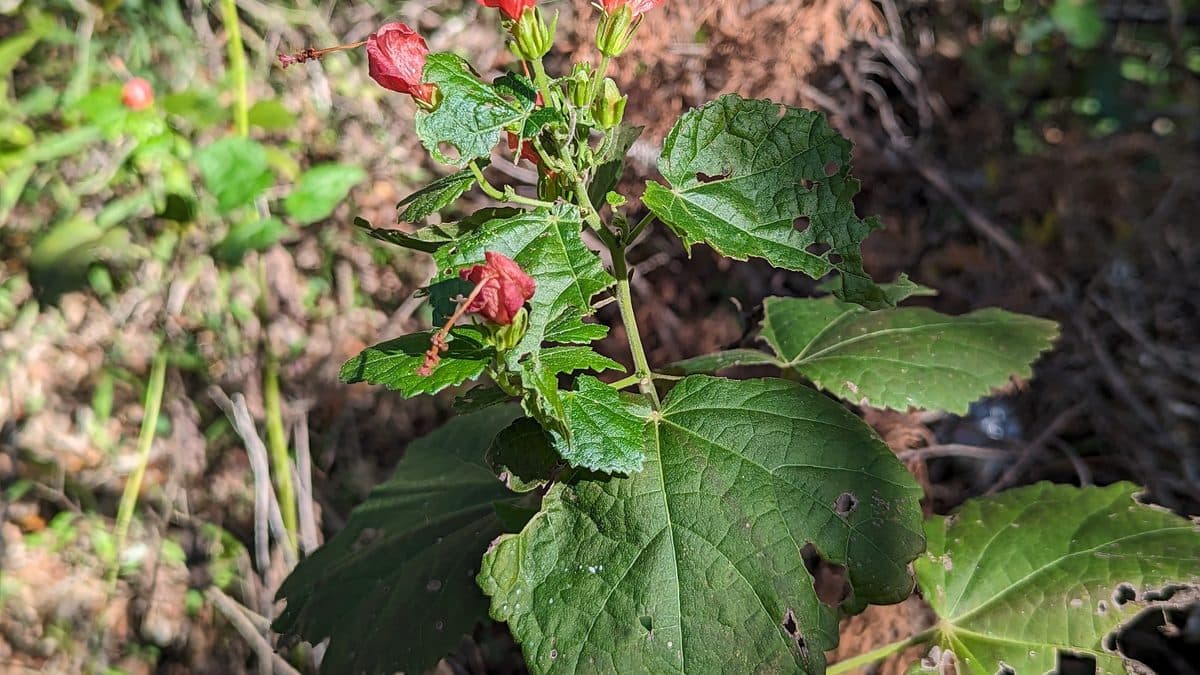
Turk's cap (Malvaviscus arboreus var. drummondii)
The one for shade. The Houston Chapter describes a deciduous perennial shrub 2 to 4 feet tall with branches that spread 8 to 12 feet, and calls it a favorite nectar source for hummingbirds and swallowtails. It blooms May through November per the Wildflower Center (opens in new tab), and the Chapter notes bloom can start in March after a mild winter. It freezes back somewhat in winter and spreads if you let it, so give it room or prune it. See our guide to protecting Texas natives in a freeze.
Gulf muhly (Muhlenbergia capillaris)
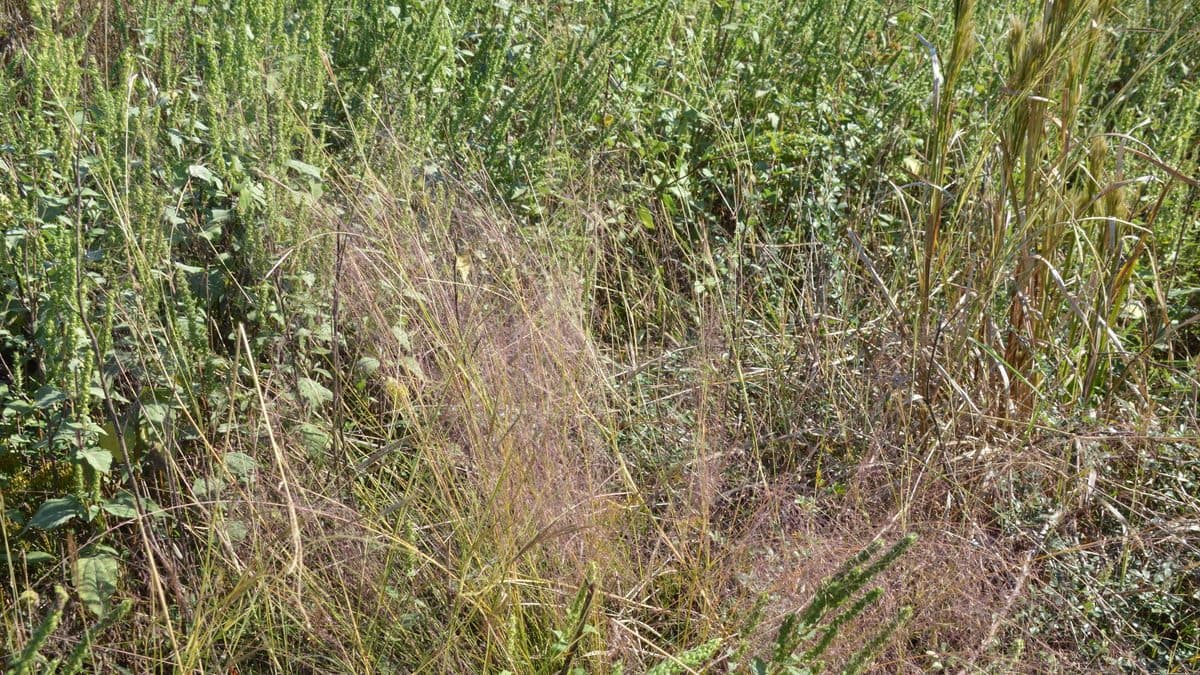
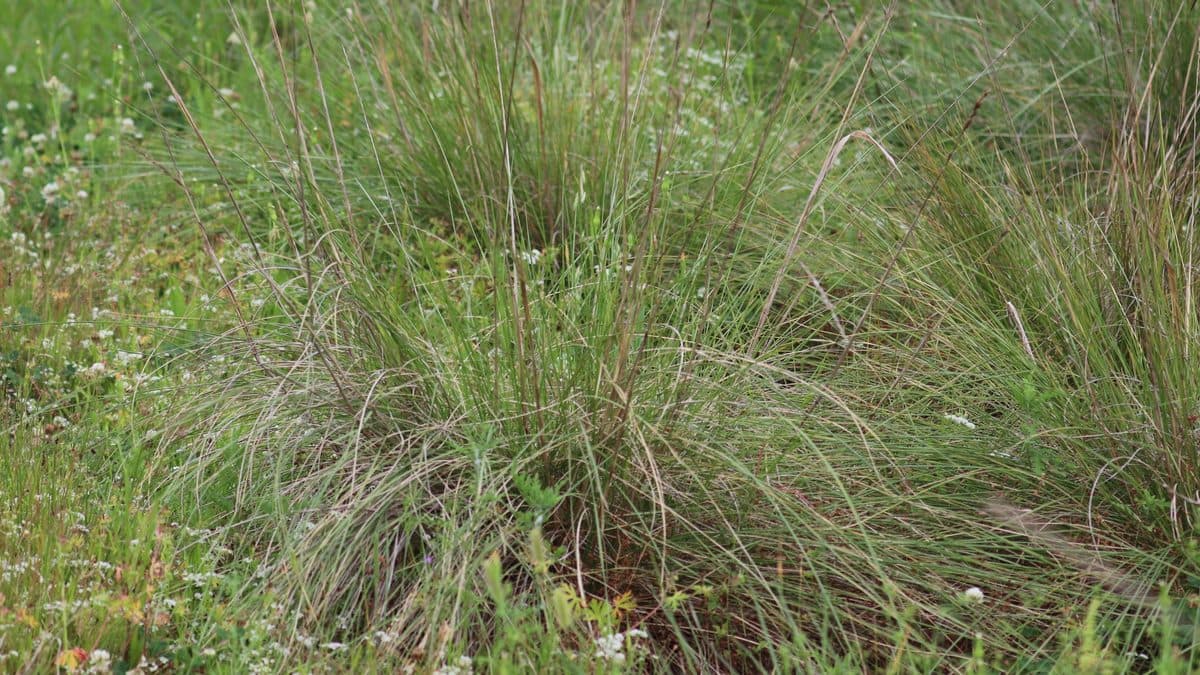
A knee-high grass that the Houston Chapter says you can see growing wild around Houston. It blooms in October with pink and purple plumes (Wildflower Center, which also rates it highly deer resistant), then fades to cream by winter. It likes sun and the Wildflower Center lists clayey soils among the ones it grows in. We also have a note on Gulf muhly and dogs.
American beautyberry (Callicarpa americana)
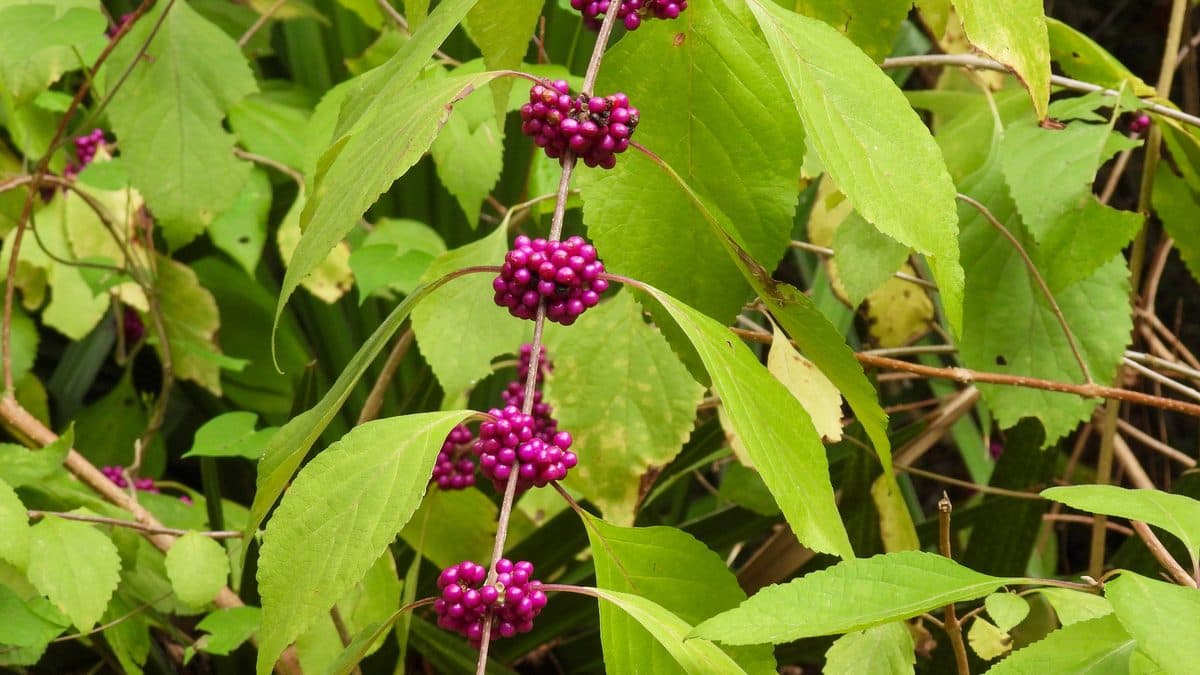
The Houston Chapter says it does well in shade, adapts to many soils including clay, and carries bright magenta berries from late summer until the birds finish them. Robins, cedar waxwings, mockingbirds, and blue jays all go for the fruit (NPSOT Houston Chapter). One caution from the Wildflower Center (opens in new tab): the foliage is a favorite of white-tailed deer. It can also drop leaves in a long summer drought. Our beautyberry and dogs page covers pets.
Coral honeysuckle (Lonicera sempervirens)
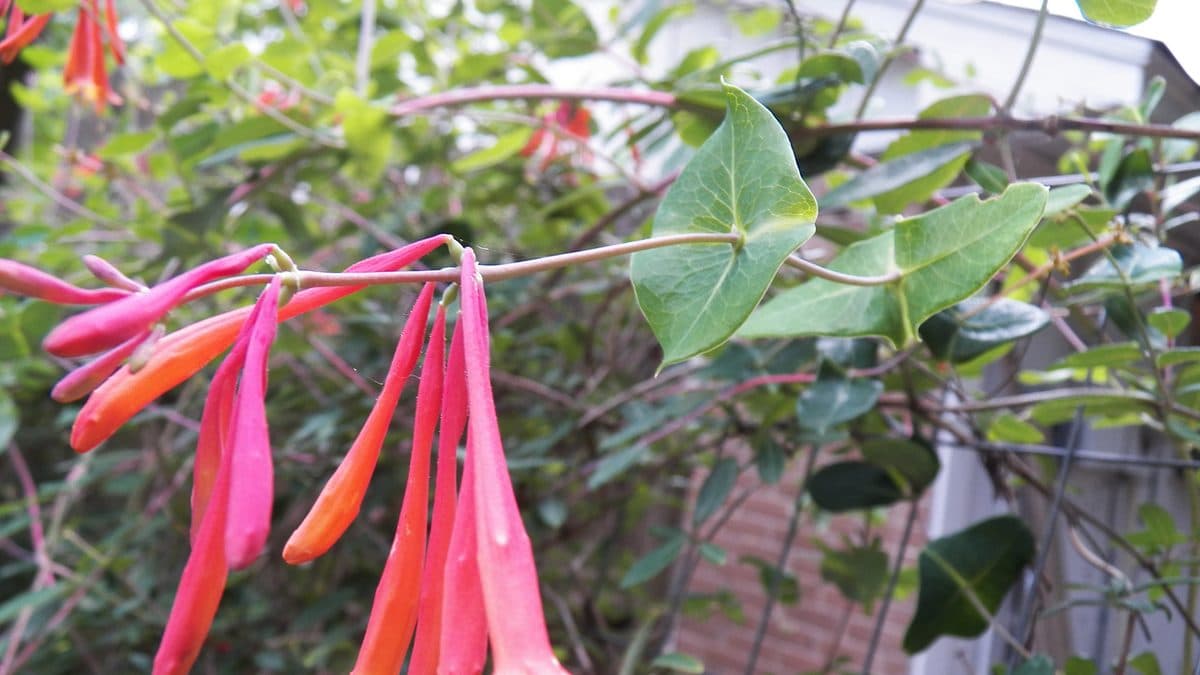
This native vine can take sand, loam, or clay, even poor drainage, and the Houston Chapter says hummingbirds visit its red trumpets, especially in winter. It wants morning sun and afternoon shade. The Wildflower Center (opens in new tab) lists it as a host plant for the spring azure and the snowberry clearwing moth, and adds that it needs good air circulation to avoid powdery mildew. The Chapter also points out that it is not aggressive like its cousin, the exotic Japanese honeysuckle, so it is a reasonable fence or arbor vine. Our coral honeysuckle page has more.
Texas lantana (Lantana urticoides)
The Houston Chapter separates this native from the invasive Lantana camara. It blooms red, orange, and yellow from April to October and reaches up to about 6 feet, but the Wildflower Center (opens in new tab) describes it as a dry-soil plant for poor, well-drained ground. Its blue-black fruit is poisonous, per the same page, and old stems get thorny.
Inland sea oats (Chasmanthium latifolium)
A shade grass, 2 to 4 feet tall, for the dark side of the house. The Houston Chapter lists it among native grasses for shade. The Wildflower Center (opens in new tab) says it takes moist clays and poorly drained soil, and that it hosts the pepper and salt skipper, Bell's roadside skipper, and bronzed roadside skipper. Cut the dead stalks back in mid to late winter. See inland sea oats as a liriope swap.
Planting for wet weeks and dry spells
Coral honeysuckle and inland sea oats are the two on this list sources describe as tolerating poor drainage, so they suit the spot where water collects. Texas lantana is the one the Wildflower Center describes as a dry-soil plant.
The dry side needs a plan too. The Houston Chapter says beautyberry can withstand drought with minimal watering, while Turk's cap survives drought much better with a little supplemental water in shade or part shade, and needs more if it sits in full sun. The Chapter's Top 100 intro adds that most of these plants need no special treatment beyond proper care until they are established.
If you are building a rain garden, the Houston Chapter says water should not stand more than three days, and that the berm needs a spot where water can overflow in a flood. Its erosion-control list also notes that bald cypress resists blowing over in strong winds, even in saturated soils. Beyond that, we have not found a source that ranks yard plants by hurricane damage, so we are not going to claim one does.
Where to go from here
The Houston Chapter's guide also has a section on where to buy natives locally. Its advice is to be patient and ask for the plants on your list instead of substituting out-of-ecoregion plants when a native is not on the shelf.
Pick two or three of these and repeat them, so the planting looks intentional from the street. That is also an HOA-friendly habit. For a wider Texas view, read best native plants for Texas, or native hummingbird plants in Texas. Our Houston page has more local detail, and the Houston rebates page lists current water programs.
People also ask
What are the best native plants for a Houston yard?
The Native Plant Society of Texas Houston Chapter's guide lists Turk's cap, Gulf muhly, American beautyberry, coral honeysuckle, Texas lantana, and inland sea oats for Harris County and nearby. Match each to its light, and check the Wildflower Center's size and soil notes.
Do native plants grow in Houston clay?
Many do. The Wildflower Center lists clay among the soils for Turk's cap, Gulf muhly, American beautyberry, coral honeysuckle, and inland sea oats. Texas lantana is the exception, since it prefers poor, well-drained soil.
Which native plants handle shade in Houston?
Turk's cap, American beautyberry, and inland sea oats are all listed by the Houston Chapter for shade or part shade, and coral honeysuckle likes morning sun with afternoon shade.
Want the list for your own ZIP?
Pollinator Patch matches native plants to your ZIP and ecoregion, then helps you lay them out by sun and height.