If you've got a hummingbird feeder on your porch, you already know the thrill. That hover, the iridescent flash, then gone. But feeders need cleaning every few days, the sugar water grows mold in Texas heat, and honestly, the birds prefer real flowers. Six native plants can replace that feeder and bring hummingbirds closer to your windows than a plastic tube ever will.
Which hummingbirds are you planting for?
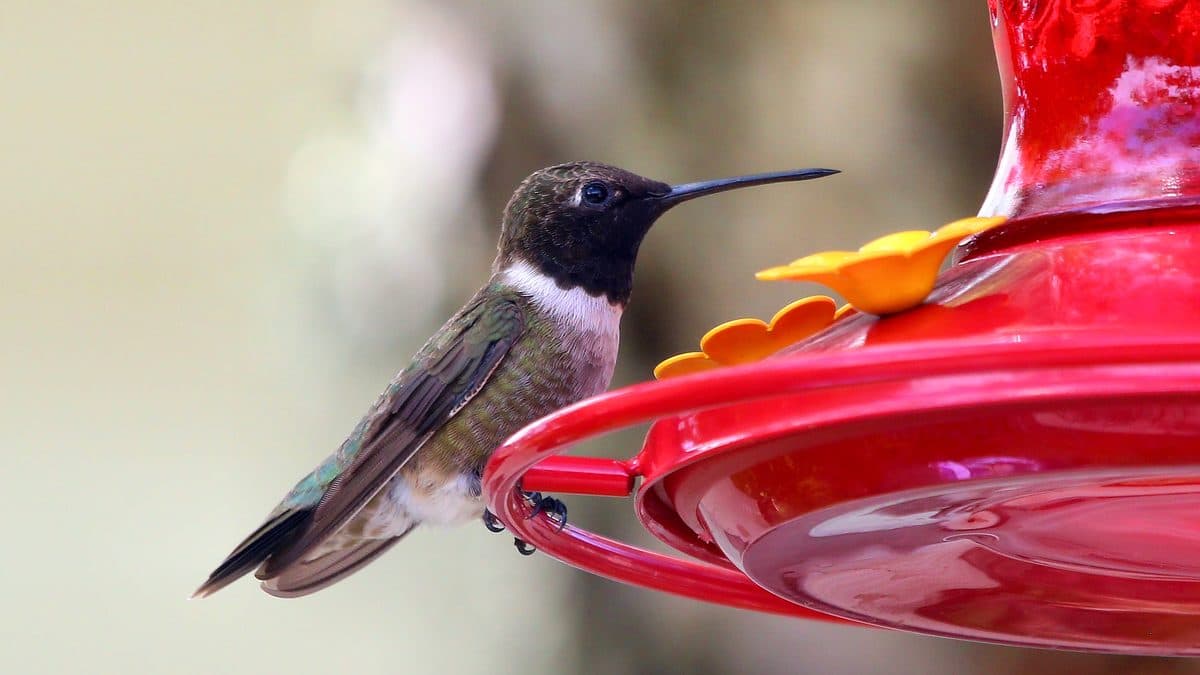
Two species dominate Texas yards. Ruby-throated Hummingbirds pass through eastern and central Texas during spring migration (March through May) and again heading south in September and October per Texas Parks and Wildlife. Black-chinned Hummingbirds are the summer residents, breeding across central and west Texas from April through September (Texas Parks and Wildlife, tpwd.texas.gov). In San Antonio and Austin, you'll see both species overlap in spring and fall.
That means you need flowers from March through October. These six plants cover that range and then some.
The six plants
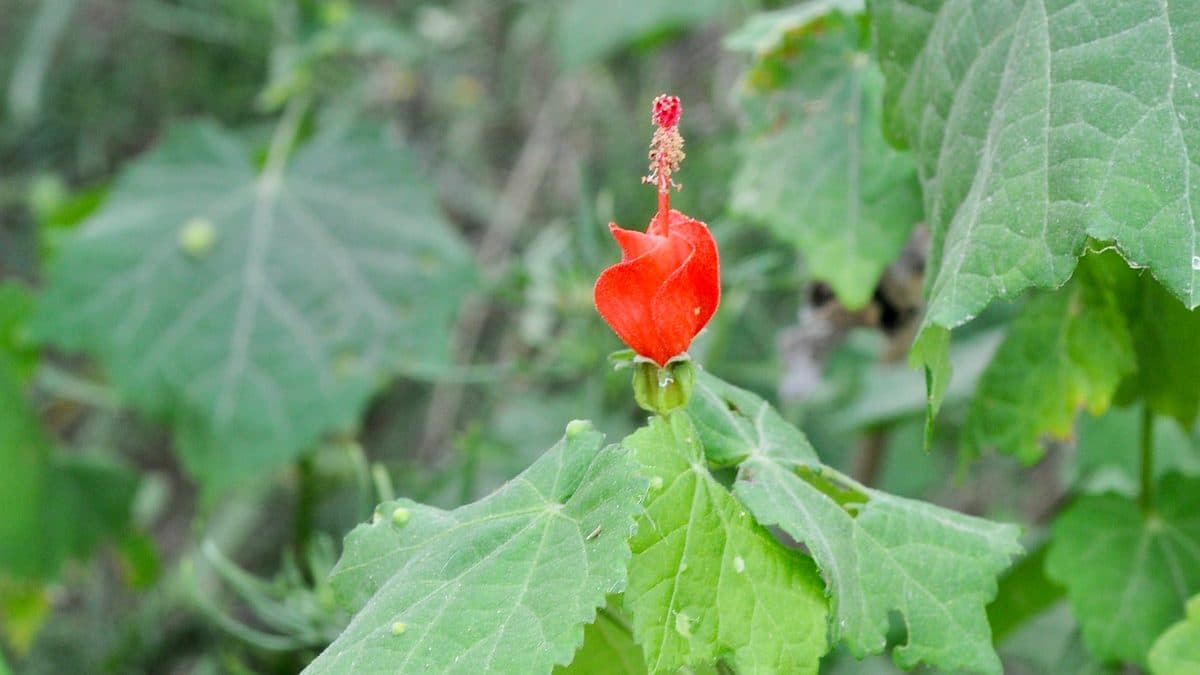
Turk's Cap (Malvaviscus arboreus var. drummondii) is probably the single best hummingbird plant in Texas. The red, twisted flowers bloom from late spring all the way into November, sometimes later in mild years (Lady Bird Johnson Wildflower Center, wildflower.org). It grows in full sun or part shade, handles drought once established, and gets about three to four feet tall. Hummingbirds will visit it dozens of times a day. The berries are edible too, if you're curious.
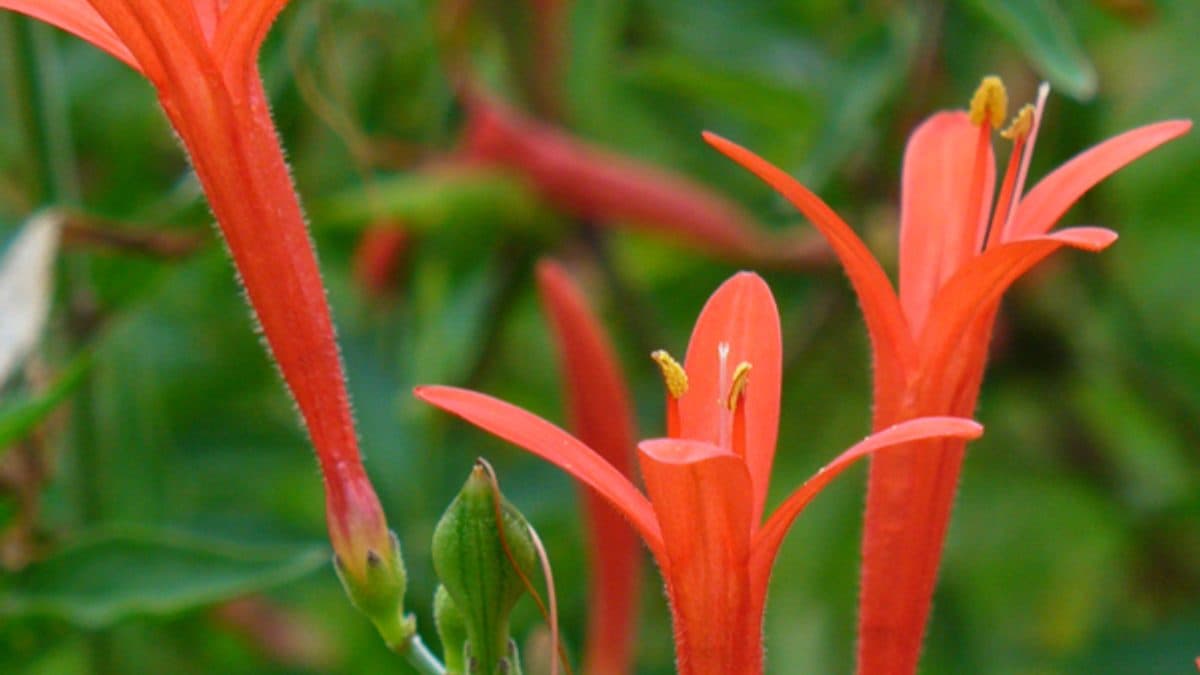
Flame Acanthus (Anisacanthus quadrifidus var. wrightii) is a Hill Country native that blooms orange-red tubes from June through frost. It's drought-tough, deer-resistant, and stays around four to five feet. Cut it back hard in late winter and it comes back fuller. Hummingbirds and butterflies compete for it.
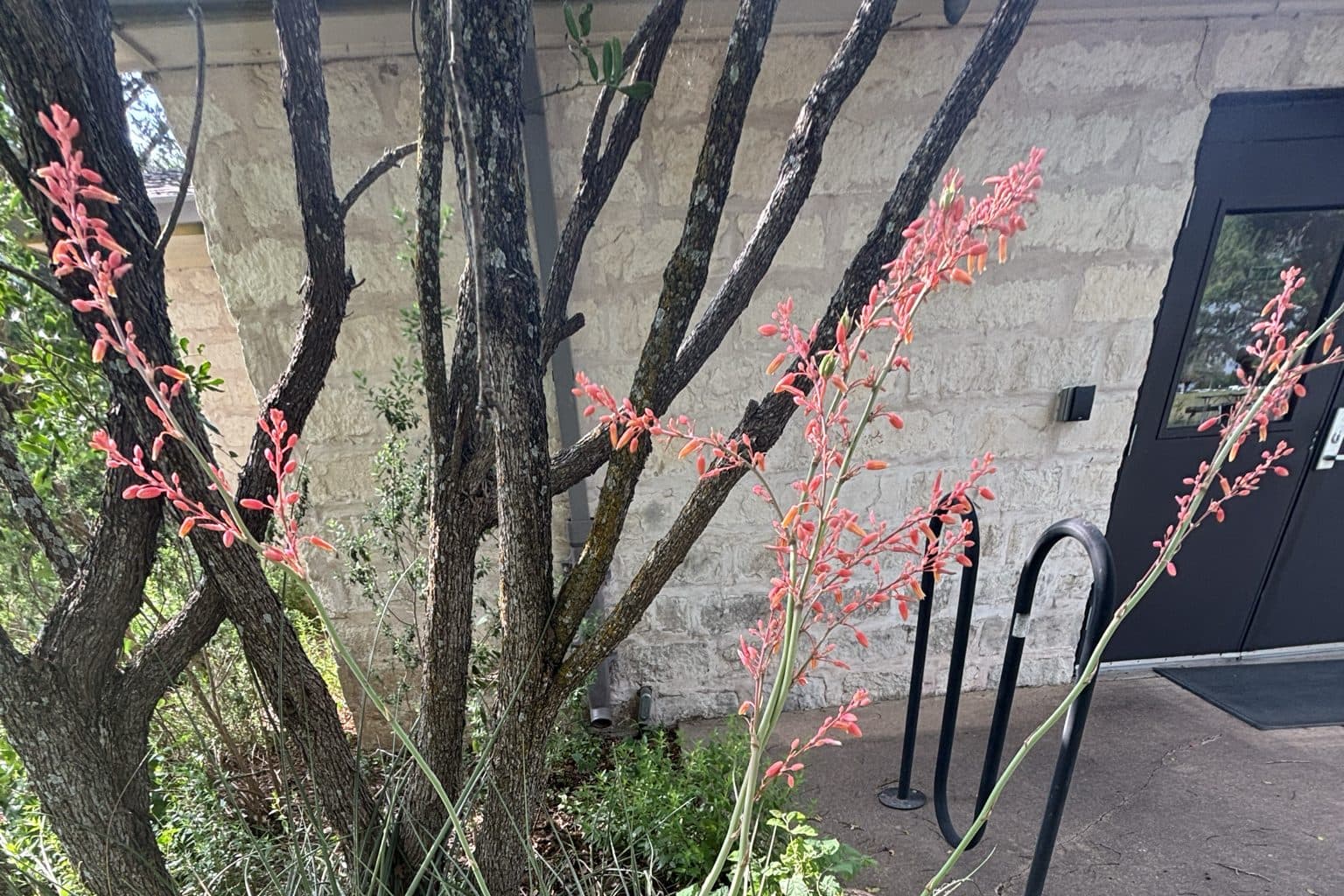
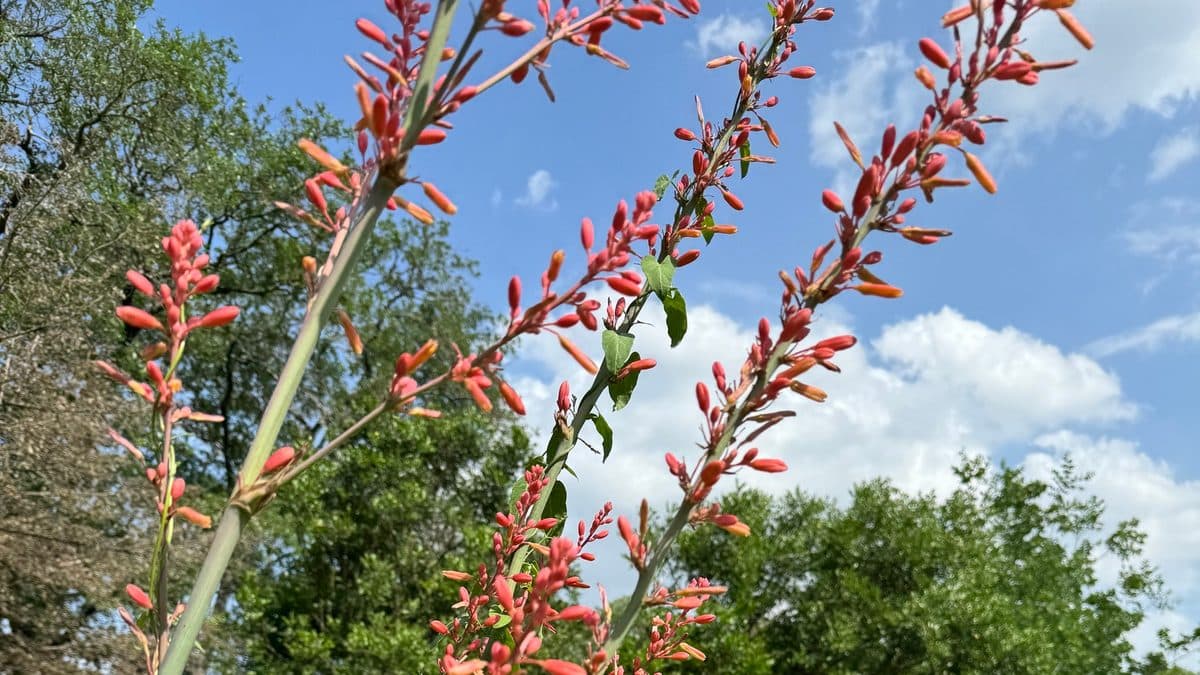
Red Yucca (Hesperaloe parviflora) isn't actually a yucca. It's in the agave family per the Lady Bird Johnson Wildflower Center. The coral-pink flower stalks shoot up in May and keep going through summer. The plant itself is evergreen and sculptural, which makes it one of the most HOA-friendly natives you can plant. You'll see it in commercial landscapes all over Texas because it looks clean and needs almost no water. Hummingbirds love the tubular flowers.
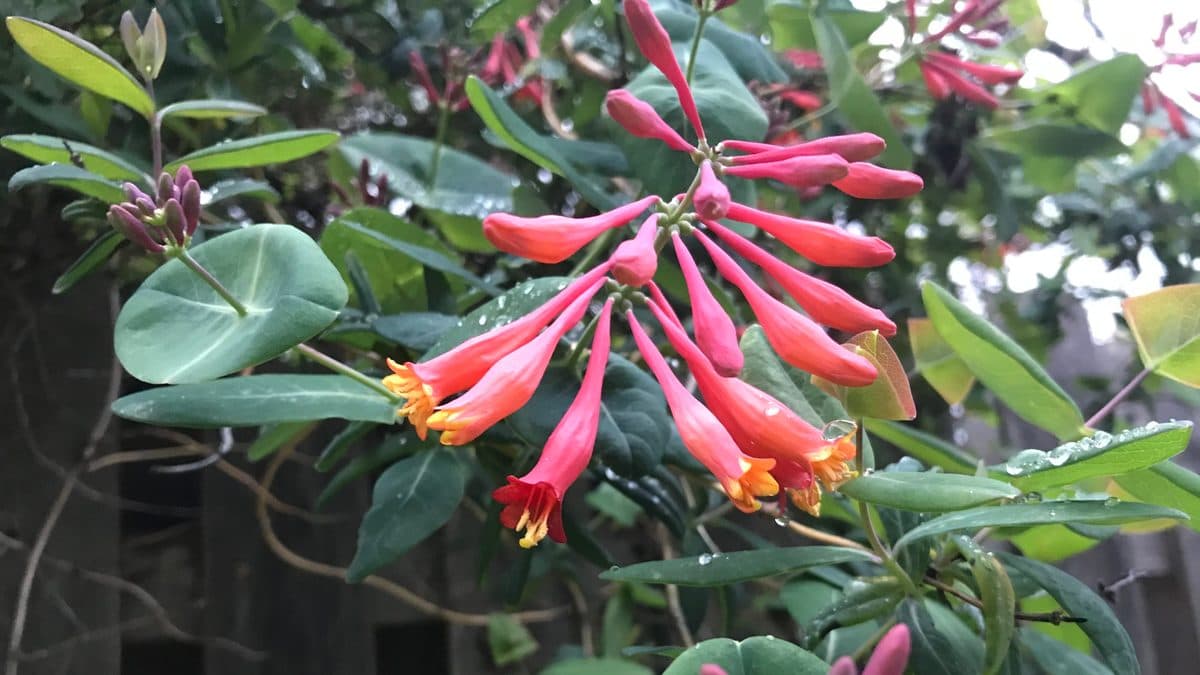
Coral Honeysuckle (Lonicera sempervirens) is a well-behaved native vine. Unlike Japanese honeysuckle, it won't eat your fence (Lady Bird Johnson Wildflower Center). It blooms clusters of red tubular flowers from spring into summer. Train it on a trellis, a mailbox, or a fence. Ruby-throated hummingbirds seek it out during spring migration because it's one of the earliest red flowers available.
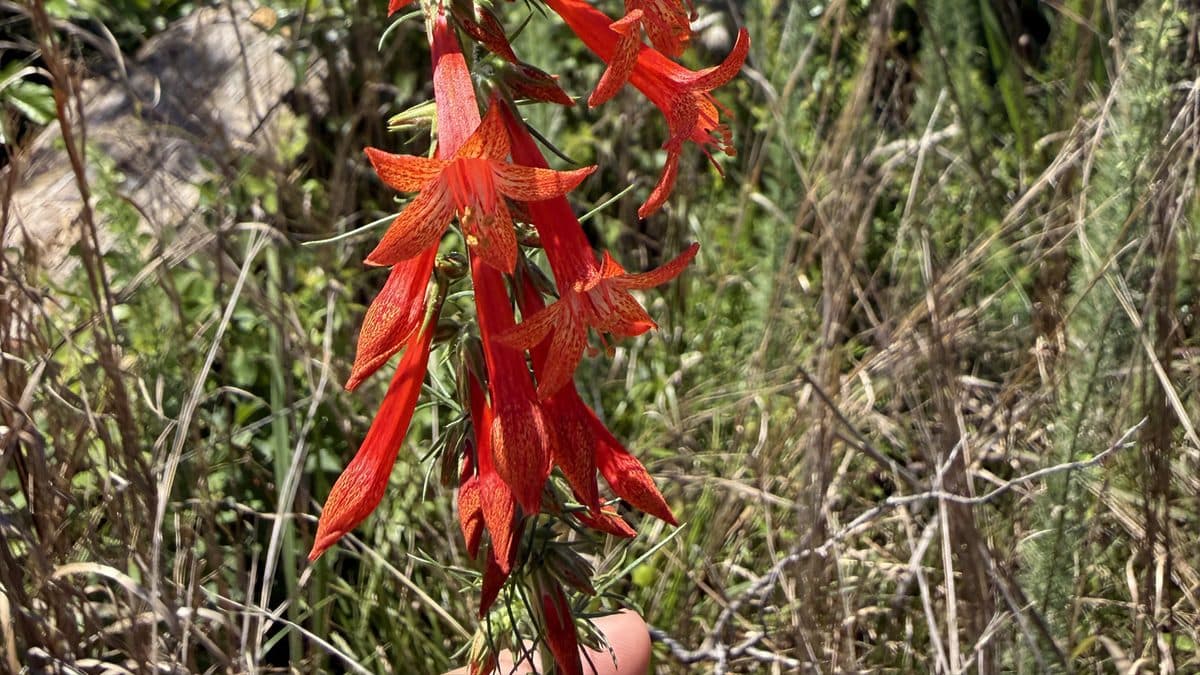
Standing Cypress (Ipomopsis rubra) is a biennial, so it grows foliage the first year and blooms the second (Lady Bird Johnson Wildflower Center). The payoff is worth the wait: tall spikes covered in red star-shaped flowers that hummingbirds go absolutely wild for. Plant it two years in a row so you always have some in bloom. It reseeds freely if you let it.
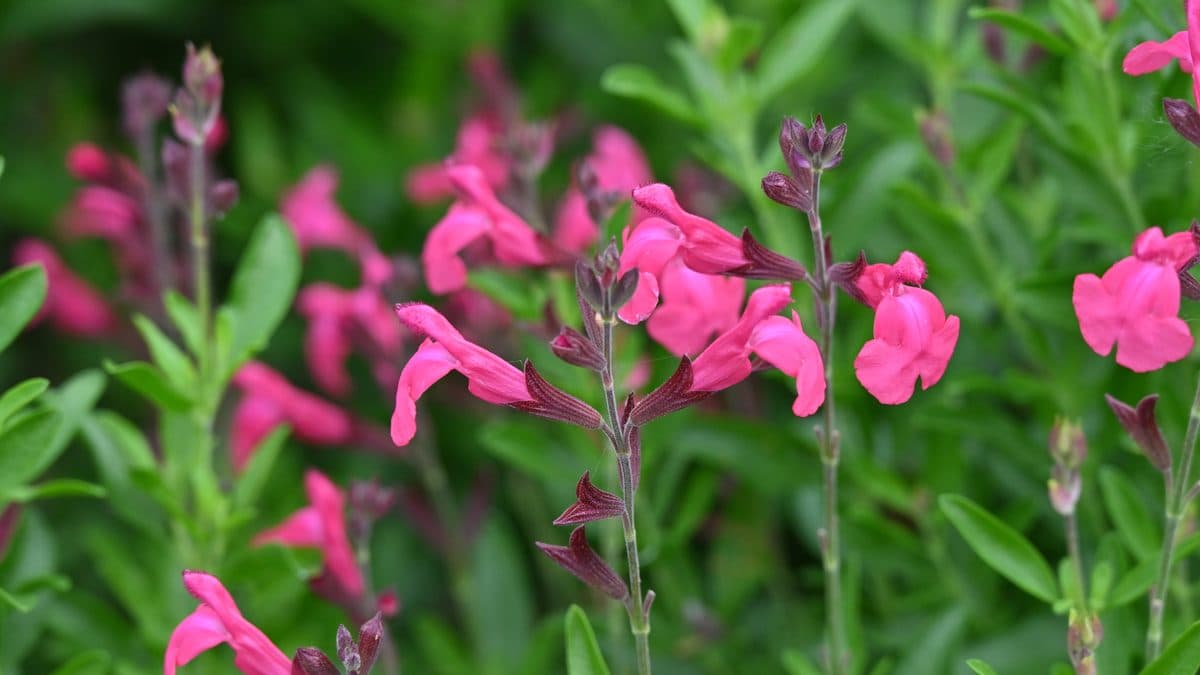
Autumn Sage (Salvia greggii) rounds out the list because it blooms from spring through fall in almost every color, red, coral, pink, white. The red varieties are strongest for hummingbirds. It stays compact (two to three feet), takes full sun and poor soil, and fits into any front bed. It's also a fantastic bee plant.
Bloom overlap with hummingbird seasons
- March/April (Ruby-throated arrival): Coral Honeysuckle, Autumn Sage
- May/June: Red Yucca, Turk's Cap, Standing Cypress, Flame Acanthus
- July/August (Black-chinned breeding): Turk's Cap, Flame Acanthus, Autumn Sage
- September/October (fall migration): Turk's Cap, Flame Acanthus, Autumn Sage
Placement tips
Hummingbirds are territorial. A single dominant male will guard one feeder and chase everyone else away per Audubon Texas. Plants solve this because you can spread flowers across your yard so multiple birds can feed at once.
Group plants in clusters of three to five. A single Autumn Sage is easy to miss. Five of them together create a patch of color that hummingbirds can spot from a distance. Put at least two clusters in different parts of your yard so territorial birds can't monopolize everything.
If you want to watch from inside, plant Turk's Cap or Coral Honeysuckle near a window. Hummingbirds get used to the glass quickly and will feed just a few feet away. Better than any feeder view.
Why ditch the feeder?
Feeders aren't bad. But they're work. In Texas summer heat, sugar water ferments fast. You should be changing it every two to three days, and scrubbing the feeder to prevent mold. Most people don't, and moldy feeders can make hummingbirds sick.
Native flowers produce fresh nectar constantly, at the exact concentration hummingbirds evolved to drink. No cleaning, no refilling, no ants crawling into the sugar water. The plants also support butterflies and native bees, which a feeder never will.
By city: what works where
All six plants above grow across most of Texas, but climate and soil vary enough that a few city-specific notes help.
Houston area (Gulf Coast Prairie, zones 8b-9a)
Houston's humidity and heat suit Turk's Cap especially well. It thrives in the part-shade conditions under live oaks. Coral Honeysuckle blooms earlier here than in Central Texas, often starting in February. Flame Acanthus handles the summer heat with no problem. Avoid Standing Cypress in low-lying yards with poor drainage.
Austin area (Edwards Plateau edge / Blackland Prairie, zones 8a-8b)
All six plants perform reliably in Austin. Red Yucca is a standout because it handles the limestone soil and summer drought that stress other plants. Turk's Cap takes part shade under cedar elms and blooms until first frost. Flame Acanthus and Autumn Sage are common in HOA-friendly front beds across Travis County.
San Antonio area (Edwards Plateau, zones 8a-8b)
San Antonio sits at the edge of the Hill Country, which means you can grow plants from both the Edwards Plateau and the coastal plains. Flame Acanthus is native here and grows with almost no care. Red Yucca is everywhere in commercial landscapes because it looks clean and tough. SAWS WaterSaver rebates cover many of these plants. Check with SAWS WaterSaver before you buy.
DFW area (Blackland Prairie / Cross Timbers, zones 7b-8a)
DFW sits at the junction of Blackland Prairie clay and the western Cross Timbers, so plant performance varies by where you are in the metro. Purple Coneflower and Turk's Cap are reliable across the region. Autumn Sage does well in Tarrant County and Collin County's clay. Fort Worth and Dallas yards both see Ruby-throated Hummingbirds strongly during April and September migration. Black-chinned Hummingbirds are less common here than in Central Texas, so front-load your planting toward Coral Honeysuckle (early spring bloom) and Autumn Sage (fall persistence).
Central Texas and Hill Country (zones 7b-8b)
The Hill Country ecoregion is where several of these plants are native and at their best. Flame Acanthus, Red Yucca, and Autumn Sage all originate here. Turk's Cap grows throughout the understory. Standing Cypress reseeds freely on rocky, well-drained ground and will naturalize in a few years if you let it.
Check if your city offers rebates for native landscaping. The broader Texas native landscaping guide covers ecoregion-specific picks for the rest of your yard.
People also ask
What's the best plant to attract hummingbirds in Texas?
Turk's Cap (Malvaviscus arboreus var. drummondii) is the most reliable single plant for Texas yards. It blooms from late spring into November, handles full sun or part shade, and tolerates drought once established (Lady Bird Johnson Wildflower Center). Pair it with Autumn Sage and Coral Honeysuckle to cover the full March-through-October hummingbird season.
When do hummingbirds arrive in Texas?
Ruby-throated Hummingbirds arrive in eastern and central Texas in mid-March and pass through again in September and October on the way south. Black-chinned Hummingbirds arrive in central and west Texas in April and stay through September to breed (Texas Parks and Wildlife). Have early-blooming plants like Coral Honeysuckle and Autumn Sage ready by early March.
Do hummingbirds prefer red flowers?
Red and orange tubular flowers attract hummingbirds because the shape matches their bills and tongues, and red stands out against green foliage (Audubon Texas). They will visit other colors if the flower shape is right, but red Turk's Cap, Flame Acanthus, and Coral Honeysuckle outperform pastel varieties in the same yard.
Are hummingbird feeders bad for hummingbirds?
Feeders are not bad if you clean them. In Texas summer heat, sugar water ferments in two to three days, and moldy feeders can make hummingbirds sick (Audubon). If you cannot commit to cleaning that often, native flowers are a lower-maintenance alternative that produces fresh nectar at the right concentration on their own.
What plants do Black-chinned Hummingbirds prefer?
Black-chinned Hummingbirds breed across central and west Texas and feed heavily on Flame Acanthus, Turk's Cap, Autumn Sage, and Red Yucca through the summer months (Texas Parks and Wildlife). All four are drought-tolerant Hill Country and Edwards Plateau natives, which makes them a strong fit for San Antonio, Austin, and west Texas yards.
How many types of hummingbirds are there in Texas?
Texas Parks and Wildlife documents 18 hummingbird species recorded in the state, more than any other state besides Arizona (tpwd.texas.gov). For a typical yard, three matter: Ruby-throated (eastern and central Texas, migration in spring and fall), Black-chinned (central and west Texas, summer breeding), and Rufous (statewide in fall, with some overwintering along the Gulf Coast). The plants in this guide feed all three.