Autumn Sage
Salvia greggii
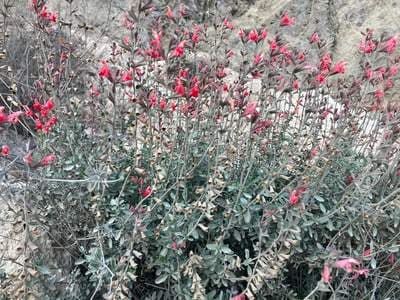
/images/plants/autumn-sage/attribution.json.Light
full sun
Water
low
Size
24"–36" H × 24"–36" W
Bloom
Mar, Apr, May, Jun, Jul, Aug, Sep, Oct, Nov
Native to
Edwards Plateau, Trans-Pecos, South Texas Plains
Pollinators
hummingbirds, bees, butterflies
Browse plants for this ecoregion
Autumn Sage is a perennial shrub native to Edwards Plateau, Trans-Pecos, South Texas Plains. It grows best in full sun with low water needs.
Autumn Sage (Salvia greggii), also called Cherry Sage or Gregg Salvia, is one of the most versatile small shrubs for Texas yards. It blooms from spring through fall in red, coral, pink, white, or purple depending on cultivar, and red varieties are especially attractive to hummingbirds. Per the ASPCA Animal Poison Control Center plant database, Autumn Sage is not on the toxic plant list for dogs, cats, or horses.
The plant stays compact (2-3 feet tall and wide), takes hard pruning, and tolerates drought once established. It pairs well with almost any other Texas native and works in front-yard, foundation, and mid-zone plantings. Texas Master Naturalist publications cite Autumn Sage as one of the most reliable small shrubs for sustained pollinator activity from March through November.
Ecoregion notes for Texas. In the Edwards Plateau and Trans-Pecos (alkaline rocky soil, 15-25 inches of rain): native and ideal. Plant in full sun, water deeply twice during the establishment summer, then leave it. In the South Texas Plains (Brush Country): also native; tolerates the heat with minimal water. In the Blackland Prairie (DFW, Austin, San Antonio metros, heavy clay): plant on a raised berm or amend with decomposed granite; the species hates wet feet. In the Pineywoods (East Texas, acidic, humid): not recommended; the wet conditions cause root rot.
Cut back hard in late winter (down to 6-8 inches) for the fullest spring rebound. Without this annual prune, Autumn Sage gets leggy and woody at the base. It pairs especially well with Mealy Blue Sage and Blackfoot Daisy in front-yard beds. For HOA contexts, the compact form and long bloom season make it one of the safest visual choices among Texas natives.
Bee species data compiled from GBIF, iNaturalist, Discover Life, and the USGS Native Bee Inventory and Monitoring Lab. Plant-pollinator associations informed by published ecological literature.
How to care for Autumn Sage, by region
How to care for Autumn Sage where it is actually grown: year-round basics plus what to do each season, region by region, with the sources for each.
Care guidance last updated: August 2026
Chihuahuan Deserts (includes El Paso)
Year-round
Autumn sage is a Chihuahuan Desert native shrub built for rocky, dry Trans-Pecos slopes, with a long bloom season that draws hummingbirds and bees.
- Native to the Trans-Pecos and Chihuahuan Desert, typically found on rocky slopes at 5,000 to 9,000 feet elevation, extending south into San Luis Potosi, Mexico (Lady Bird Johnson Wildflower Center).
- Needs full sun and sharply drained, rocky soil. It is very drought tolerant and struggles in soil that holds moisture, which makes it a natural fit for the region's thin, mountain-desert ground (Lady Bird Johnson Wildflower Center).
- A strong hummingbird plant with a March-to-November bloom window, and one of the most-visited salvias by bees in pollinator research (Lady Bird Johnson Wildflower Center; NC State Extension).
- Autumn sage is not on the ASPCA toxic plant list under its scientific name. The ASPCA's general 'Sage' entry (Salvia spp., common names Herbaceous Sage and Jerusalem Sage) is listed as toxic to dogs, so watch dogs that chew on any salvia and call the ASPCA Animal Poison Control Center at (888) 426-4435 if you're unsure or see symptoms (ASPCA Animal Poison Control Center plant database).
Fall
Fall is autumn sage's heaviest bloom period in the Trans-Pecos, so keep deadheading instead of cutting it back hard.
- Autumn sage blooms heaviest as temperatures drop in fall, which is where the common name comes from (Lady Bird Johnson Wildflower Center).
- Keep up light deadheading through fall. Save any hard cutback for early spring instead.
- This is peak hummingbird and bee traffic season on the plant, so a full bloom flush now is doing real pollinator work in a desert landscape with few other nectar sources this late.
A full fall bloom flush stands out as a clear, intentional focal point against a rock or gravel front yard.
Winter
Skip pruning through winter in the Trans-Pecos and wait for new growth in early spring before cutting back.
- Do not prune in winter. Fresh cuts expose new growth to a hard freeze and can kill stems back to the ground (NC State Extension).
- In Trans-Pecos winters, autumn sage often goes semi-deciduous or drops leaves after a freeze. That is normal dormancy, not plant failure.
- Wait until you see new growth starting in early spring before doing the main cutback of a third to half.
Spring
Prune autumn sage back hard in early spring, right before new growth starts, to keep it full in the desert heat ahead.
- Cut the shrub back by a third to half in early spring, just as new growth begins, to prevent the woody, leggy look that rocky desert plantings tend to develop (NC State Extension).
- Expect the first bloom flush to run a few weeks later than an unpruned plant. That tradeoff is worth it for a fuller shrub through the Trans-Pecos growing season.
- Cut back to a woody framework of stems. Never cut this shrub to the ground.
A hard spring prune keeps the mounding shape tidy along a front walk or bed edge.
Summer
Deadhead spent flower spikes through the Trans-Pecos summer to keep new blooms coming despite the heat.
- Remove spent flower spikes every one to two weeks. Each cut prompts a fresh round of side buds within days (NC State Extension).
- Water deeply but infrequently. This is a rocky-slope desert native, and it is far more likely to fail from overwatering in summer than from underwatering.
- A light mid-summer shearing, taking off spent flowers and a couple inches of stem, keeps the plant from thinning out before its big fall bloom.
Sources: Lady Bird Johnson Wildflower Center - Salvia greggii, NC State Extension Gardener Plant Toolbox - Salvia greggii, ASPCA Toxic and Non-Toxic Plant List - Dogs (Sage / Salvia spp.), Parker County Master Gardener Association - How to Prune Salvias (community tip), UF/IFAS Extension - Salvia greggii (FPS524)
Cross Timbers (includes Fort Worth, TX)
Year-round
Autumn sage is a tough, low-water shrub that wants sun and sharp drainage. In the Cross Timbers around Fort Worth the main thing to get right is drainage, then a hard cutback each year to keep it full instead of leggy.
- Establishment: water a new plant deeply about twice a week for the first month or two, then back off as roots take hold. Plant it high in a raised or mounded spot so water never sits around the crown.
- Watering once established: soak it every 10 to 14 days in a dry stretch and let the top few inches of soil dry out between waterings. The most common mistake here is overwatering, which rots the roots faster than any drought would.
- Mulch: keep a thin 2 inch layer of mulch pulled back a couple inches from the stems, not piled against them, so the base stays dry.
- Pruning: cut the whole plant back by a third to half in late winter to force dense new growth, and shear off spent blooms through the season to keep flowers coming.
Fall
Fall is the big show. Autumn sage often blooms hardest as Fort Worth nights cool, so hold off on heavy pruning and just tidy.
- Leave the plant mostly alone to bloom. Deadhead lightly to keep it neat and extend flowering into the cool weeks.
- Ease off watering as temperatures drop and rain returns.
- Skip any hard cutback now. Save the real pruning for late winter so you do not remove the fall flowers or push tender growth before a freeze.
Light fall deadheading keeps the front-yard plant looking cared for during its showiest season and signals a tended bed rather than a neglected one.
Winter
Autumn sage is hardy through Fort Worth winters and stays semi-evergreen. Winter is when you do the one real prune of the year.
- In late winter, cut the plant back by a third to half to force compact spring growth. This is the single most important prune for keeping it full.
- It usually holds some leaves through winter here, so do not assume a bare-looking plant is dead. Wait for the late-winter cutback and watch for spring push.
- Keep water minimal. Cold, wet soil around the crown is the main winter risk, so make sure the spot still drains.
Doing the hard cutback in late winter leaves a tidy, deliberate silhouette out front and reads as intentional seasonal care instead of a dead-looking shrub a neighbor might report.
Spring
Spring is cutback and cleanup time. A hard trim now sets up a fuller plant and a longer bloom season through the Fort Worth summer.
- Do the main cutback in late winter to very early spring, taking the plant back by a third to half before new growth pushes.
- Pull last year's mulch back from the stems and refresh a thin layer, keeping it off the crown.
- Water only if spring turns dry. Cross Timbers spring rains usually cover a settling-in plant, so skip extra water when the soil is already damp.
A clean late-winter cutback reads as intentional pruning and keeps the plant from going leggy and unkempt out front, which is the look that draws a violation letter.
Summer
Summer is easy. Once established, autumn sage rides out Fort Worth heat on very little water, and a light shearing keeps it blooming.
- Water established plants deeply only every 10 to 14 days during a dry, hot stretch, and let the soil dry between soakings.
- Shear off faded flower spikes lightly through summer to trigger another round of blooms.
- Resist the urge to water more when it looks tired in peak heat. A short midsummer pause in blooming is normal and it recovers as nights cool.
Sources: Texas Master Gardeners Grayson County Salvia greggii profile, ASPCA toxic plant list for dogs (Salvia greggii not listed), Native Plant Society of Texas Salvia greggii profile, Central Texas Gardener winter pruning autumn sage, Aggie Horticulture Autumn Sage Salvia greggii
Edwards Plateau (includes San Antonio)
Year-round
Autumn sage is a tough, low-water native shrub for the Edwards Plateau that blooms nearly all year and pulls in hummingbirds and bees.
- Native to the western Edwards Plateau and Hill Country, where it grows on rocky limestone slopes with sharp drainage, from western Bandera County west into the Trans-Pecos (Lady Bird Johnson Wildflower Center).
- Needs full sun and well-drained, rocky or gravelly alkaline soil. It cannot tolerate heavy shrink-swell clay or soil that stays wet, and it is highly drought tolerant once established (Lady Bird Johnson Wildflower Center).
- A strong hummingbird and native bee plant with a long March-to-November bloom season, and one of the most visited salvias by bees in pollinator studies (Lady Bird Johnson Wildflower Center; NC State Extension).
- Autumn sage is not on the ASPCA toxic plant list under its scientific name. The ASPCA's general 'Sage' entry (Salvia spp., common names Herbaceous Sage and Jerusalem Sage) is listed as toxic to dogs, so keep close watch on dogs that chew on any salvia and call the ASPCA Animal Poison Control Center at (888) 426-4435 if you're unsure or see symptoms (ASPCA Animal Poison Control Center plant database).
Fall
Fall is autumn sage's biggest bloom flush in the Hill Country, so hold off on any hard pruning until it finishes.
- Autumn sage puts on its heaviest bloom of the year as temperatures cool, which is where the common name comes from (Lady Bird Johnson Wildflower Center).
- Keep deadheading spent spikes through fall rather than cutting the plant back hard. Save the hard prune for early spring.
- This is peak season for hummingbird and bee activity on the plant, so a full, blooming shrub now is doing real ecological work, not just looking good.
The heaviest bloom flush of the year makes this a strong front-yard focal point through fall without any extra work.
Winter
Leave the woody framework alone through winter in the Hill Country and wait for early spring to cut it back.
- Don't prune in winter. Cutting back too early exposes fresh growth to a hard freeze and can kill the plant to the ground (NC State Extension).
- In Edwards Plateau winters, autumn sage often stays semi-evergreen but may drop leaves or die back partway in a hard freeze. That's normal, not a sign of a dead plant.
- Hold all major cuts until you see new growth starting in early spring, then prune back a third to half at that point.
Spring
Cut autumn sage back hard in early spring before new growth starts to keep it compact and full for the season ahead.
- Prune the whole shrub back by a third to half in early spring, just before new growth emerges, to keep it dense instead of leggy (NC State Extension; Parker County Master Gardener Association).
- This hard prune delays the first flush of blooms by a few weeks, so do it early rather than waiting until buds have already started.
- Treat autumn sage like a small woody rose. Cut to a framework of stems, never all the way to the ground.
A freshly pruned, tidy mound reads as intentional care to neighbors before the plant fills back in.
Summer
Deadhead spent flower spikes every one to two weeks through the Hill Country summer heat to keep hummingbirds coming back.
- Snip off individual spent flower spikes every one to two weeks. Each cut triggers a quick new flush of lateral buds (NC State Extension).
- Water deeply but infrequently once established. This is a rocky-slope native, and soil that stays wet in summer heat is the most common way to lose it.
- A light shearing mid-summer, removing just the spent flowers and a few inches of stem, keeps the shrub from getting sparse before its big fall bloom.
Sources: Lady Bird Johnson Wildflower Center - Salvia greggii, NC State Extension Gardener Plant Toolbox - Salvia greggii, ASPCA Toxic and Non-Toxic Plant List - Dogs (Sage / Salvia spp.), Parker County Master Gardener Association - How to Prune Salvias (community tip), UF/IFAS Extension - Salvia greggii (FPS524)
High Plains (includes Lubbock, TX)
Year-round
Autumn sage is a tough, low-water, hummingbird-and-bee magnet, but its documented native range does not reach the Lubbock High Plains, and its cold tolerance is a real concern here.
- Autumn sage's documented native range is south central and west Texas, including the Edwards Plateau, Trans-Pecos, and Chihuahuan Desert, down into Mexico, on rocky limestone slopes. That range does not reach the Lubbock area, so treat this as a well-adapted garden plant here rather than a native one.
- It wants full sun and soil that drains fast. Once its roots are established it is drought tolerant and usually only needs supplemental water every one to two weeks.
- It blooms from spring into fall and draws hummingbirds, bees, and butterflies. Shearing off spent flower spikes keeps new blooms coming.
- Texas Tech University's own plant resources database, based in Lubbock, rates autumn sage for zones 8 through 11 and notes it may not overwinter in colder areas. Lubbock sits mostly in zone 7b, colder than that rating, so expect winter dieback in a hard freeze, especially in an open spot with no wind break.
- Autumn sage is not individually listed by name on the ASPCA's toxic or non toxic plant list. ASPCA does list two related garden sages, common sage and Texas sage (Salvia coccinea), as not on its toxic list for dogs, cats, and horses, and no Salvia species shows up on the toxic side of that list, but there is no ASPCA page confirming this exact species by name.
Fall
Fall is the plant's namesake season and its heaviest bloom, so keep deadheading but stop hard pruning well before the first freeze.
- Fall is this plant's namesake season. Expect its heaviest flush of red, pink, or white blooms from September through the first hard freeze.
- Deadheading through early fall keeps flowers coming and still leaves time for the plant to settle in before winter.
- Stop major pruning by mid to late fall. Cutting back hard right before a freeze removes growth that would otherwise help buffer the crown from cold.
- Ease off supplemental watering as temperatures drop and water only during dry stretches.
Winter
Winter is the riskiest season for autumn sage in the Lubbock area, since local lows regularly drop colder than the zone range this plant is rated for.
- Lubbock's average winter low runs about 5 to 10 degrees Fahrenheit in USDA zone 7b, colder than the zone 8 through 11 range autumn sage is normally rated for. Expect dieback in a hard freeze and do not be surprised if some plants do not come back at all.
- Leave dead top growth in place through winter instead of cutting it back now. The old stems help buffer the crown and roots from cold, and it is safer to prune in spring once you can see what actually survived.
- A loose layer of mulch over the root zone can help even out soil temperature swings. Keep it off the crown itself so the base does not stay wet.
- Cut back on watering in winter and skip it entirely during freezing weather. The plant is dormant, and wet cold soil raises the risk of root rot.
Frost-killed stems left standing through winter can look untidy in a front bed, but cutting them back before spring raises the risk of losing the whole plant, so a short note on the plan explaining the wait can head off HOA-conscious concerns.
Spring
Spring is cleanup time, cutting back whatever winter killed and giving the plant time to show what survived before you shape it.
- After your last spring frost, usually early April in the Lubbock area, check for winter dieback. Cut dead or blackened stems down to where you see green wood or new buds.
- If the whole plant died back to the ground over winter, give it a few extra weeks once soil warms before deciding it did not make it. Established roots can resprout from the base.
- Start watering again as new growth appears, roughly once a week until the plant is growing well, then taper back.
- Hold off on fertilizer and heavy shaping cuts until you can see how much of the plant survived winter.
A spring cutback of frost-killed stems is the main tidy-up task for this plant. Wait until new growth shows before cutting so you do not remove wood that is still alive.
Summer
Summer is peak heat and peak bloom, so water deep and infrequently and go easy on pruning until things cool off.
- Full sun and heat suit autumn sage well. Once established, water deeply about once a week during the hottest stretch of summer instead of frequent light sprinkles.
- Skip heavy pruning during peak summer heat since it stresses the plant. Light deadheading or pinching off spent flower spikes is fine and keeps new blooms coming.
- Good drainage matters most now. Overwatering or a spot where water sits after rain can cause root rot even in a drought tolerant plant like this one.
- A slowdown in blooming during the hottest weeks is normal. Flowering usually picks back up as temperatures ease later in summer.
Sources: Native Plants of North America: Salvia greggii (Lady Bird Johnson Wildflower Center), Salvia greggii - Native Plant Society of Texas, Autumn Sage (Salvia greggii) - TTU Plant Resources, Texas Tech University, Toxic and Non-toxic Plants: Sage (ASPCA), Toxic and Non-toxic Plants: Texas Sage (ASPCA), How to Grow Salvia Greggii Flowers (Autumn Sage) - Petal Republic (community tip)
Middle Atlantic Coastal Plain (includes Philadelphia, PA)
Year-round
Autumn Sage is a compact, rounded shrub that generally does fine in Philadelphia's USDA zone 7b winters as long as the soil drains well. Its native range is central and west Texas into Mexico, not the mid Atlantic, so the real local risk is wet clay soil and a hard freeze on poorly drained ground, not the average winter cold itself. It blooms from spring through fall and draws hummingbirds, bees, and butterflies to the front yard.
- Plant in full sun in soil amended with compost or coarse grit if the yard has heavy clay. Wet roots in winter kill this shrub faster than cold does.
- It is rated hardy to roughly USDA zone 6a, so Philadelphia's zone 7b winters are typically fine on a well drained site.
- Water deeply and let the soil dry out between waterings once established. It tolerates Philadelphia's humid summers better with good airflow between plants.
- Expect fairly steady bloom from spring through the first hard frost, drawing hummingbirds, bees, and butterflies.
Fall
Fall is this plant's strongest bloom season in the mid Atlantic, often continuing until the first hard frost in late October or November. It is not on the ASPCA's toxic plant list for dogs, cats, or horses, based on the related culinary sage species the ASPCA has evaluated.
- Let the plant keep blooming into fall. This is its best display of the year and it is when migrating hummingbirds rely on it most.
- Do not cut the plant back in fall. Leaving the top growth in place over winter protects the crown and improves survival through Philadelphia's cold snaps.
- Stop fertilizing by late summer so the plant is not pushing tender new growth right before frost.
- The ASPCA lists the related Salvia officinalis, culinary sage, not this exact species, as non-toxic to dogs, cats, and horses. Treat that as a related-species signal rather than a determination made about Salvia greggii itself.
A small tag or a quick note to a neighbor that the standing fall growth is intentional winter protection, not neglect, keeps the bed reading as cared for and avoids an HOA violation letter over what looks like an unfinished cleanup.
Winter
Winter is the season that actually tests whether this plant belongs in a Philadelphia yard. It is rated hardy to roughly USDA zone 6a, so an average zone 7b winter should not kill it, but a wet site combined with a hard freeze is the real failure mode here, not the cold on its own.
- Leave the top growth standing all winter. It insulates the crown, and cutting back now is one of the most common ways this plant is lost over a mid Atlantic winter.
- Make sure the planting site sheds water. Standing water plus a freeze is more likely to kill this shrub than a cold snap on its own.
- If a stretch of single digit or colder nights is forecast, a couple inches of loose mulch over the root zone, kept off the crown, adds insurance without smothering the plant.
- Do not judge the plant dead from bare or blackened stems in January. Wait for spring regrowth before deciding what to cut.
A small identification tag by the plant keeps bare winter stems reading as a deliberately unpruned dormant perennial rather than a dead plant, which avoids a premature HOA complaint before spring regrowth proves it is alive.
Spring
Spring is when Philadelphia gardeners should do the one hard prune of the year, timed after new leaf growth shows which stems survived winter. New foliage and the first flush of red, pink, white, or purple blooms typically follow soon after.
- Wait for new leaves to appear, generally by mid to late April in the Philadelphia area, before cutting back. Pruning too early risks removing wood that is still alive.
- Cut the whole plant back by about a third to keep its rounded shape and push dense new growth instead of leggy stems.
- Refresh mulch around the base after pruning, but keep it an inch or two off the crown so the base can dry out and avoid rot.
- Hummingbirds returning to the region in spring are drawn to the season's first blooms, so a brief delay in flowering from an early prune is a fair tradeoff for a tidier shape.
A tidy post-winter cutback reads as an intentional, cared-for bed rather than a plant that died over winter, which is the kind of thing an HOA committee notices on spring walk-throughs.
Summer
Summer is peak bloom and peak humidity stress in Philadelphia. The shrub handles the region's hot, muggy summers well once established, but airflow and drainage matter more here than they would in its native Texas range.
- Water only during extended dry spells, roughly once a week in a drought, and let the soil dry between waterings. Overwatering in humid weather is the more common mistake in this region.
- Deadhead spent flower spikes to keep bloom going through the summer, cutting just above a leaf node.
- Give plants 18 to 24 inches of spacing so air can move through the foliage. Cramped, still air in Philadelphia's humidity raises the risk of powdery mildew.
- Skip heavy fertilizer. A lean, well-drained bed matches this plant's native growing conditions better than rich, wet soil does.
Regular summer deadheading keeps a street-facing bed looking maintained through peak growing season, which is what an HOA walk-through tends to notice.
Sources: Salvia greggii (Autumn sage) - Native Plant Database, Lady Bird Johnson Wildflower Center, Salvia greggii - NC State Extension Gardener Plant Toolbox, Toxic and Non-Toxic Plants: Sage - ASPCA
Texas Blackland Prairies (includes Dallas, TX)
Year-round
Autumn sage is a sun-loving, low-water shrub, but Dallas Blackland clay is its hardest challenge because the plant hates wet feet. Get drainage right and give it a hard yearly cutback and it thrives.
- Establishment: on heavy Blackland clay, plant it high on a raised mound or berm and mix in coarse material so water drains away from the crown. Water deeply about twice a week for the first month, then taper off.
- Watering once established: soak only every 10 to 14 days in dry weather and let the top few inches dry out first. In clay the biggest killer is staying too wet, so err on the dry side.
- Mulch: use a thin 2 inch layer kept pulled back from the stems so the base can dry between waterings.
- Pruning: cut back by a third to half in late winter for dense growth, and deadhead spent blooms through the season to keep it flowering.
Fall
Fall is peak bloom. Autumn sage often flowers hardest as Dallas nights cool, so hold the heavy pruning and just keep it neat.
- Let it bloom and deadhead lightly to keep it tidy and stretch flowering into the cool weeks.
- Cut back on watering as temperatures fall and autumn rain returns.
- Do not do a hard cutback now. Wait until late winter so you keep the fall flowers and avoid pushing soft growth before a freeze.
Light fall deadheading keeps the front-yard plant looking cared for during its best season and reads as a tended bed rather than a neglected one.
Winter
Autumn sage is hardy through Dallas winters and stays semi-evergreen. Winter brings the one real prune, and cold wet clay is the thing to guard against.
- In late winter, cut the plant back by a third to half to force compact spring growth. This is the key prune of the year.
- It usually keeps some leaves through winter here, so a sparse-looking plant is not necessarily dead. Wait for the cutback and spring growth before giving up on it.
- Keep water to a minimum. Cold, saturated Blackland clay around the crown is the main winter danger, so make sure the spot still drains.
Doing the hard cutback in late winter leaves a tidy, deliberate silhouette out front and reads as intentional seasonal care rather than a dead-looking shrub a neighbor might report.
Spring
Spring means the yearly cutback and a drainage check. On Dallas clay, spring rains can leave the crown soggy, so watch how the spot drains.
- Cut the plant back by a third to half in late winter to early spring before new growth pushes, for a fuller shape.
- After heavy spring rain, check that water is not pooling around the base. If it is, plan to mound the soil higher or move the plant come fall.
- Refresh a thin mulch layer, keeping it off the stems, and skip extra water while spring rains keep the soil damp.
A clean late-winter cutback reads as intentional pruning and keeps the plant tidy out front instead of leggy, which is the look that invites a violation letter.
Summer
Summer is low effort. Once established, autumn sage handles Dallas heat on very little water, and light shearing keeps blooms coming.
- Water established plants deeply only every 10 to 14 days in a hot dry spell, letting the clay dry down between soakings so roots do not sit wet.
- Shear off faded flower spikes lightly to push another flush of blooms.
- Do not overwater in peak heat even if the plant looks tired. A brief midsummer bloom pause is normal and it bounces back as nights cool.
Sources: Texas Master Gardeners Grayson County Salvia greggii profile, ASPCA toxic plant list for dogs (Salvia greggii not listed), Central Texas Gardener winter pruning autumn sage, Aggie Horticulture Autumn Sage Salvia greggii, Native Plant Society of Texas Salvia greggii profile
Want these tasks as reminders timed to your yard? Pollinator Patch turns this guidance into a season-by-season care plan for the plants you actually grow.
Before you buy
Your city may pay you to plant this
Cities and water utilities offer rebates for replacing lawn with native and water-wise plants. We track 452 programs across 44 states, each with a link to the provider and the date we last checked it.
Find rebates in your areaIf something looks wrong
Common plant problems, and what to check first
These come up on almost any plant. Each guide lists the likely causes in the order they are worth ruling out, with one thing to check before you act on any of them, and links to the source it came from.
- It is dying right after planting
- Leaves turning yellow
- Wilting even though I watered it
- Brown crispy leaf tips
- Bugs on the plant
Keep reading
Guides that feature this plant
- Texas Native Plants That Attract HummingbirdsThe best native plants for attracting hummingbirds in Texas, with bloom times, city-specific picks for Houston, Austin, San Antonio, and DFW, and notes on ruby-throated and black-chinned hummingbird migration seasons.
- Can Your Texas HOA Force You to Keep a Grass Lawn?No. Texas Property Code §202.007 bars HOAs from requiring turf or banning native plants. What your HOA can still require, how to answer a violation letter.
Ready to grow Autumn Sage? Add it to your garden in Pollinator Patch to track it and get season-by-season care guidance.
Planning a bed around it? Start a free plan with this plant
Not sure where to start? Take the 2-minute yard quiz