Turk's Cap
Malvaviscus arboreus var. drummondii
/images/plants/turks-cap/attribution.json.Light
part sun
Water
low
Size
36"–72" H × 36"–72" W
Bloom
May, Jun, Jul, Aug, Sep, Oct, Nov
Native to
Edwards Plateau, South Texas Plains, Blackland Prairie, Post Oak Savannah, East Texas
Pollinators
hummingbirds, butterflies
Browse plants for this ecoregion
Turk's Cap is a perennial shrub native to Edwards Plateau, South Texas Plains, Blackland Prairie, Post Oak Savannah, East Texas. It grows best in part sun with low water needs.
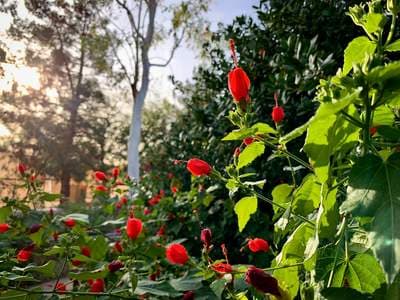
Turk's Cap (Malvaviscus arboreus var. drummondii) is one of the best hummingbird plants in Texas. The twisted red flowers, which look like little turbans, bloom from May through November and sometimes later in mild winters. The plant grows 3-6 feet tall and works in full sun or deep shade, which makes it unusually versatile.
Turk's Cap is not listed as toxic to dogs or cats by the ASPCA Animal Poison Control Center plant database (aspca.org). The small red fruit that forms after the flowers is edible and has a flavor between watermelon and apple. Hummingbirds visit dozens of times a day in peak season, and the flowers also attract butterflies and large native bees.
Ecoregion notes for Texas. In the Pineywoods and Post Oak Savannah (East Texas, acidic, humid, 35-60 inches of rain): native and thrives in shade or part shade. Cut back to the ground in late winter for a fuller spring rebound. In the Blackland Prairie (DFW-Austin-San Antonio corridor, heavy clay): native and easy; clay holds enough moisture that it rarely needs supplemental water once established. In the Edwards Plateau / Hill Country (alkaline limestone): plant in part shade with afternoon protection from western sun, and add a layer of compost at planting. In the South Texas Plains (Brush Country, hotter and drier): native and tough; full sun is fine if you can give one deep watering a month in summer.
Turk's Cap dies back to the ground in hard freezes (most of Central Texas, every few winters) and returns from the roots in spring. That regrowth pattern is normal; do not panic and dig it up. Pair with Inland Sea Oats, Cedar Sage, or Coral Honeysuckle for a shade-tolerant native bed. For HOA contexts, a single specimen in a defined bed reads better than a sprawling mass; selective tip-pruning in summer keeps it shapely.
Bee species data compiled from GBIF, iNaturalist, Discover Life, and the USGS Native Bee Inventory and Monitoring Lab. Plant-pollinator associations informed by published ecological literature.
How to care for Turk's Cap, by region
How to care for Turk's Cap where it is actually grown: year-round basics plus what to do each season, region by region, with the sources for each.
Care guidance last updated: July 2026
Cross Timbers (includes Fort Worth)
Year-round
Turk's cap grows in the wooded pockets of the Cross Timbers, a reliable native shrub for the oak-woodland shade found around Fort Worth.
- Turk's cap is documented as native across the Cross Timbers and Prairies ecoregion, growing at oak-woodland edges and along streambanks (Lady Bird Johnson Wildflower Center).
- It adapts to the region's mix of sandy and clay soils and tolerates both the dry upland pockets and the moister creek-bottom sites typical of this ecoregion.
- The red flowers are a strong hummingbird and butterfly nectar source through the Fort Worth area's hot summers (Lady Bird Johnson Wildflower Center).
- Turk's cap is not on the ASPCA's toxic plant list for dogs, cats, or horses (ASPCA Animal Poison Control Center plant database).
Fall
Fall bloom in the Cross Timbers supports hummingbirds migrating through the Fort Worth area.
- Flowering typically peaks in September and October, matching the fall hummingbird migration through North Texas.
- Small red fruits form and are eaten by birds, leave them in place instead of trimming.
- Skip pruning now, it removes flowers and fruit that wildlife are using this time of year.
- Bloom continues until the first freeze, which usually arrives in the Fort Worth area sometime in November.
Winter
Winter usually kills Turk's cap back to the ground in the Cross Timbers, and it returns reliably from the root each spring.
- Expect the above-ground stems to die back after the first hard freeze, this is normal for this root-hardy shrub in the Fort Worth area.
- Leave dead stems standing through winter rather than cutting back right away, for some frost buffering at the crown.
- No watering or feeding is needed while it's dormant.
- Wait for spring growth to appear before cutting old stems back so you don't remove live wood.
Bare winter stems can look neglected to a neighbor unfamiliar with the plant, a tidy cutback keeps the bed looking cared for.
Spring
Spring cleanup for Turk's cap in the Cross Timbers means clearing winter dieback before new growth takes over.
- Cut back any frost-killed stems to the ground once new shoots show at the base, usually by April in the Fort Worth area.
- Give young spring growth a deep soak if rainfall is light, especially on the ecoregion's sandier upland soils.
- This is a good time to thin or move root suckers if the plant has spread beyond the bed.
- Bloom is minimal early on and builds as the weather warms.
Summer
Summer brings continuous bloom to Turk's cap in the Cross Timbers, holding up well through Fort Worth's hot, dry stretches.
- Expect steady red flowering from early summer into fall, even through the extended heat typical of North Central Texas summers.
- It's drought tolerant once established but blooms more heavily with an occasional deep watering during long dry spells.
- Part shade under oak canopy, common throughout the Cross Timbers, produces the strongest growth and bloom.
- No deadheading is needed, spent flowers fall away on their own.
Continuous summer bloom under oak shade reads as an intentional planting choice in a spot where turf often struggles.
Sources: Lady Bird Johnson Wildflower Center: Malvaviscus arboreus var. drummondii, ASPCA Animal Poison Control Center: Toxic and Non-Toxic Plant Search, Aggie Horticulture: Texas Native Shrubs, Turk's Cap
East Central Texas Plains (includes College Station)
Year-round
Turk's cap is a native understory shrub for the Post Oak Savanna, well suited to the sandy, acidic soils and dappled shade found under post oaks around College Station.
- Turk's cap grows naturally along streambanks and at woodland edges through the Post Oak Savanna, thriving in the region's sandy, acidic soils (Lady Bird Johnson Wildflower Center).
- It's one of the better native choices for the deep shade cast by post oak and blackjack oak canopies, where many flowering shrubs struggle.
- The red flowers are a strong hummingbird and butterfly nectar source, especially valuable during the region's hot late summer (Lady Bird Johnson Wildflower Center).
- Turk's cap is not on the ASPCA's toxic plant list for dogs, cats, or horses (ASPCA Animal Poison Control Center plant database).
Fall
Fall is peak hummingbird season for Turk's cap in the Post Oak Savanna as migration passes through the Brazos Valley.
- Bloom typically peaks in September and October, matching fall hummingbird migration through this part of Texas.
- Small fruits form and feed birds, leave them on the plant instead of trimming.
- Avoid pruning now, it removes flowers and fruit wildlife are actively using.
- Flowering continues until the first freeze, which in College Station usually comes in November or later.
Winter
A freeze usually takes Turk's cap back to the ground in the Post Oak Savanna, and it returns reliably from the roots each spring.
- Expect stems to die back after the first hard freeze, this is normal winter behavior for this root-hardy shrub in this region.
- Leave dead stems standing through winter rather than cutting back immediately, they add some frost buffering for the crown.
- Skip watering and fertilizing during dormancy.
- Wait for new spring growth to show before cutting old stems back, so you don't remove any wood that's still alive.
Bare stems in winter can look neglected to neighbors unfamiliar with die-back-and-return shrubs, a tidy cutback keeps the bed looking intentional.
Spring
Spring cleanup for Turk's cap in the Post Oak Savanna means clearing winter dieback before the new season's growth takes off.
- Cut back frost-killed stems to the ground once new shoots appear at the base, typically by early to mid April around College Station.
- Sandy soils here drain fast, so young spring growth benefits from a deep soak if rainfall is light.
- This is a good time to thin or relocate spreading root suckers.
- Bloom is sparse in early spring and increases as the season warms.
Summer
Summer brings steady bloom to Turk's cap in the Post Oak Savanna, holding up well through Brazos Valley heat and humidity.
- Expect continuous red flowering from early summer into fall, even during the region's long stretches of high heat.
- Sandy soils mean the plant dries out faster than on clay, so an occasional deep watering during drought keeps bloom steady.
- It performs best in the dappled shade under oak canopy typical of this ecoregion.
- No deadheading required, old flowers drop on their own.
Steady red bloom in the shade under oaks fills a spot where lawn typically thins out, reading as deliberate rather than neglected.
Sources: Lady Bird Johnson Wildflower Center: Malvaviscus arboreus var. drummondii, ASPCA Animal Poison Control Center: Toxic and Non-Toxic Plant Search, Aggie Horticulture: Texas Native Shrubs, Turk's Cap
Edwards Plateau (includes San Antonio)
Year-round
Turk's cap is a shade-loving native shrub for the Edwards Plateau that keeps blooming red hibiscus-like flowers through the hottest part of the Hill Country summer.
- Turk's cap grows on wooded limestone slopes, ledges, and stream edges across the Edwards Plateau, and it tolerates the region's alkaline, rocky soils as long as it gets occasional deep water (Lady Bird Johnson Wildflower Center).
- It handles part shade to full shade better than almost any other Hill Country native bloomer, which makes it useful under live oaks where turf struggles.
- The red, never-fully-open flowers are a major hummingbird nectar source, especially for migrating ruby-throated hummingbirds refueling in late summer and fall, and they also draw butterflies, moths, and bees (Lady Bird Johnson Wildflower Center).
- Turk's cap is not on the ASPCA's toxic plant list for dogs, cats, or horses (ASPCA Animal Poison Control Center plant database).
Fall
Fall brings the heaviest hummingbird traffic to Turk's cap as birds fuel up for migration through the Hill Country.
- Bloom often peaks in September and October, which lines up with the fall hummingbird migration through Central Texas.
- Small red fruits form behind spent flowers and are eaten by birds and small mammals, leave them in place rather than deadheading.
- No pruning is needed now, cutting back in fall removes flowers birds are actively using.
- Plants can keep blooming until the first hard freeze in a typical San Antonio fall.
Winter
Winter usually knocks Turk's cap back to the ground in the Hill Country, and that's normal, not a sign it died.
- A hard freeze typically kills the above-ground stems back to the root in the San Antonio area, the plant is root-hardy and returns from the base in spring.
- Leave the dead stems standing through winter rather than cutting them back immediately, they offer some frost protection to the crown.
- No watering or feeding is needed while the plant is dormant.
- If a mild winter leaves some stems green, you can leave them, they'll just get pruned out in spring once new growth shows where it's coming from.
Bare winter stems can look neglected to a neighbor who doesn't know the plant is just dormant, a small explanatory note or tidy cutback helps curb appeal.
Spring
Spring is when Turk's cap wakes up from winter dieback and pushes new growth before the summer bloom show starts.
- Cut back any winter-killed stems to the ground once new growth appears at the base, usually by mid to late March in the San Antonio area.
- New shoots are soft and fast-growing, so this is a good time to shape the plant if it's spreading wider than you want.
- Established plants rarely need spring fertilizer; a light layer of compost is enough on Hill Country limestone soils.
- Flowering is light or absent in early spring, it ramps up as days get longer and hotter.
Summer
Summer is peak bloom for Turk's cap in the Hill Country, when the red flowers come nonstop through the worst heat.
- This is the plant's showiest season, flowers appear continuously from early summer through frost with almost no gap.
- Turk's cap is drought tolerant once established but blooms more heavily with an occasional deep soak during long dry stretches typical of a San Antonio summer.
- It thrives in the dappled shade under oaks where many summer bloomers fade, so it's a reliable choice for shady front-yard beds.
- Deadheading isn't necessary, spent flowers drop cleanly and new ones keep forming along the stem.
Continuous red summer bloom under shade trees reads as an intentional, cared-for planting rather than bare ground.
Sources: Lady Bird Johnson Wildflower Center: Malvaviscus arboreus var. drummondii, ASPCA Animal Poison Control Center: Toxic and Non-Toxic Plant Search, Aggie Horticulture: Texas Native Shrubs, Turk's Cap
Northeastern Coastal Zone (includes New York, NY)
Year-round
Turk's Cap is a shade-tolerant mallow that dies back in winter around New York City and comes back from the roots each spring, so treat it like a die-back perennial rather than a permanent shrub. Give it part sun to shade, water it while it roots in, then let it go mostly on its own, and protect the crown over winter since the city sits at the cold edge of its range.
- Establishment: water a new plant deeply once or twice a week its first summer so the roots reach down; a spot with afternoon shade helps it settle.
- Once established: it handles dry spells well, so soak it only during long hot stretches with no rain instead of watering a little every day.
- Mulch: keep 2 to 3 inches of shredded bark over the root zone year round, and pile it a bit thicker in fall to shield the crown through winter.
- Common mistake: do not give up on it if the top dies to the ground over winter; the roots are usually alive and push new stems in late spring.
Fall
Turk's Cap keeps blooming into fall until the first hard frost hits the New York City area, usually around late October or November. Let it flower as long as it can, then start setting it up for a safe winter. You can leave the stems standing for now.
- Let it bloom through the first light frosts; the flowers keep feeding late hummingbirds and pollinators.
- After the first hard freeze blackens the top, add an extra few inches of mulch or a loose leaf layer over the crown for winter insulation.
- You can leave the dead stems standing over winter as extra crown protection and cut them down later, or tidy them now if you prefer a neater look.
A quick trim of frost-blackened stems and a neat mulch ring reads as intentional care to neighbors and an HOA-conscious eye, which helps avoid a violation letter over a messy-looking front bed. Leaving stems up is fine too, just keep the surrounding bed edged and clean.
Winter
Around New York City this plant is at the cold edge of where it survives, so winter is mostly about protecting the roots. The top dies back completely and that is normal. Do the hard cutback in late winter, right before spring growth begins.
- Keep a thick mulch or leaf layer over the crown all winter; this is the main thing that carries it through a hard New York City winter.
- In late winter, before new spring growth starts, cut all stems down to about 6 inches above the ground.
- Do not dig it up or replace it during winter just because the top looks dead; wait for spring to see the roots resprout.
Cutting the dead stems to a short, even 6-inch height in late winter gives the bed a tidy, intentional winter silhouette that reads as maintained rather than neglected, which keeps an HOA-conscious front yard clear of tidiness complaints.
Spring
Spring is slow-start time for Turk's Cap near New York City. New shoots often do not appear until the soil warms in mid to late spring, so wait before assuming a winter loss. This is the window to do the hard cutback and pull back some winter mulch.
- If you did not cut it back in late winter, cut all last year's stems down to about 6 inches now before new growth takes off.
- Pull the extra winter mulch back to a normal 2 to 3 inch layer once nights stay reliably above freezing.
- Be patient: this plant leafs out later than many perennials here, so give it until late spring before deciding a plant did not survive.
Summer
Summer is peak bloom for Turk's Cap. It flowers from mid summer until frost, feeding hummingbirds and bees, and needs little from you beyond water during dry heat. A light trim keeps it from flopping over a walkway.
- Water deeply during long hot rain-free stretches; an inch of water once a week is plenty for an established plant.
- If it gets tall and leggy or leans into a path, trim stems back by a third in early to mid summer to keep it bushy; it reblooms fast.
- Skip heavy feeding; rich soil and lots of fertilizer push floppy growth and fewer flowers.
Sources: Clemson Cooperative Extension Home and Garden Information Center Turks Cap, ASPCA Animal Poison Control plant list search, Lady Bird Johnson Wildflower Center Malvaviscus arboreus var drummondii
South Central Plains (includes Beaumont)
Year-round
Turk's cap is a natural understory shrub in the Piney Woods, well matched to the shady, humid conditions found under pine-hardwood canopy around Beaumont.
- Turk's cap is documented as native to the Piney Woods, growing along streambanks and at forest edges in the region's humid pine-hardwood habitat (Lady Bird Johnson Wildflower Center).
- It's naturally suited to the dense shade cast by pine and hardwood canopy, where it outperforms most other flowering shrubs.
- The red flowers provide hummingbird, butterfly, and bee nectar through the long, humid East Texas growing season (Lady Bird Johnson Wildflower Center).
- Turk's cap is not on the ASPCA's toxic plant list for dogs, cats, or horses (ASPCA Animal Poison Control Center plant database).
Fall
Fall bloom continues strong for Turk's cap in the Piney Woods, supporting hummingbirds moving through East Texas.
- Flowering often stays strong through October as fall hummingbird migration passes through the region.
- Small fruits develop and feed birds, leave them on the plant rather than cutting them off.
- Skip pruning in fall, it removes flowers and fruit wildlife are actively using.
- Bloom continues until the first freeze, which tends to come later here than in inland Texas.
Winter
A freeze usually sends Turk's cap back to the ground in the Piney Woods, and it regrows reliably from the roots each spring.
- Expect stems to die back after the first hard freeze, typical for this root-hardy shrub in the Beaumont area.
- Leave dead stems in place through winter rather than cutting back right away, for some frost protection at the crown.
- No watering or fertilizing needed during dormancy.
- Wait until spring growth appears before cutting old stems back so you don't remove live wood.
Bare winter stems can look neglected to neighbors unfamiliar with the plant's die-back habit, a tidy cutback keeps the bed looking intentional.
Spring
Spring regrowth for Turk's cap in the Piney Woods follows the usual winter dieback in this part of East Texas.
- Cut back winter-killed stems to the ground once new shoots emerge from the base, typically by late March or April near Beaumont.
- The region's acidic, sandy loam soils suit this plant well, no soil amendment is usually needed.
- This is a good time to thin the clump if root suckers have spread further than wanted.
- Bloom is minimal at first and increases as the season warms and humidity builds.
Summer
Summer is steady bloom time for Turk's cap in the Piney Woods, holding up well in East Texas heat and humidity.
- Expect continuous red flowering from early summer through fall, the plant handles this region's high humidity better than most flowering shrubs.
- Established plants rarely need supplemental water even during dry spells, thanks to the region's typically higher rainfall.
- It performs best in the partial to full shade found under the area's pine-hardwood canopy.
- No deadheading is needed, old flowers drop cleanly as new ones open.
Steady bloom in deep shade fills a spot where grass usually struggles under pine canopy, reading as a deliberate planting choice.
Sources: Lady Bird Johnson Wildflower Center: Malvaviscus arboreus var. drummondii, ASPCA Animal Poison Control Center: Toxic and Non-Toxic Plant Search, Aggie Horticulture: Texas Native Shrubs, Turk's Cap
Southern Texas Plains (includes McAllen)
Year-round
In the Rio Grande Valley, Turk's cap is often evergreen and can bloom nearly year-round in the region's warm, subtropical climate.
- Turk's cap grows natively in the Lower Rio Grande Valley's woodland edges, brushland understory, and disturbed sites, and stays evergreen in most winters here (Lady Bird Johnson Wildflower Center).
- It tolerates the Valley's heat and a wide range of soils, from sandy to clay, and needs little supplemental water once established.
- The red flowers draw hummingbirds and butterflies year-round in this frost-light climate, and the plant also serves as host plant for the Turk's-cap White-Skipper butterfly, a species found in South Texas (Butterflies and Moths of North America).
- Turk's cap is not on the ASPCA's toxic plant list for dogs, cats, or horses (ASPCA Animal Poison Control Center plant database).
Fall
Fall keeps Turk's cap blooming in the Rio Grande Valley, with little slowdown compared to summer.
- Flowering continues strong into fall in this mild climate, without the sharp seasonal drop-off seen further north.
- Fruit forms behind the flowers and is eaten by birds, leave it in place.
- No major pruning needed now, the plant is still actively growing and blooming.
- Watch for Turk's-cap White-Skipper caterpillars on the leaves this time of year, they're part of the plant's normal ecological role as host plant, not a pest problem (Butterflies and Moths of North America).
Winter
Winter is mild enough in the Rio Grande Valley that Turk's cap often stays evergreen and keeps blooming.
- In most winters here, the plant won't freeze back at all and can keep flowering lightly through the season.
- If a rare hard freeze does hit, treat dieback like a hard prune, cut back to the ground and it will regrow from the root.
- No watering needed if leaves are still green and the plant is dormant or semi-dormant.
- Hold off on major pruning until you see whether the plant kept its leaves or needs a cutback after a freeze.
Spring
Spring in the Rio Grande Valley is a growth surge for Turk's cap, which may not have lost its leaves at all over the mild winter.
- If the plant stayed evergreen through winter, spring just means a flush of new leaves and faster growth, no cutback needed.
- If a rare freeze did kill stems back, trim to the ground once new shoots appear at the base.
- This is a good time to prune for shape before the summer growth spurt, since the plant can get leggy in Valley heat.
- Bloom is typically already underway by spring in this warm climate, rather than just starting.
Summer
Summer is nonstop bloom for Turk's cap in the Rio Grande Valley, one of the few shrubs that keeps flowering through Valley humidity and heat.
- Expect continuous red flowers through the hottest, most humid months, this is one of the most heat-tolerant native bloomers for the McAllen area.
- It handles both drought and the Valley's occasional heavy summer downpours without issue once established.
- Part shade keeps the foliage looking its best; full sun is tolerated but can stress the plant during extreme heat waves.
- No deadheading needed, spent flowers drop cleanly as new ones open daily.
Nonstop red bloom through Valley summer heat gives a yard color when most plantings are struggling, a clear sign of active care.
Sources: Lady Bird Johnson Wildflower Center: Malvaviscus arboreus var. drummondii, Butterflies and Moths of North America: Heliopetes macaira, ASPCA Animal Poison Control Center: Toxic and Non-Toxic Plant Search
Texas Blackland Prairies (includes Dallas)
Year-round
Turk's cap is a tough, shade-tolerant native for the Blackland Prairie that blooms red through the hottest, driest stretches of a Dallas or Austin summer.
- Turk's cap grows naturally at woodland edges and along streambanks across the Blackland Prairie, and it adapts well to the region's heavy clay soils (Lady Bird Johnson Wildflower Center).
- It's one of the few reliable native bloomers for shady spots under post oaks or pecans, where lawn grass typically thins out.
- The tubular red flowers are a key late-season nectar source for hummingbirds and also draw butterflies, moths, and bees (Lady Bird Johnson Wildflower Center).
- Turk's cap is not on the ASPCA's toxic plant list for dogs, cats, or horses (ASPCA Animal Poison Control Center plant database).
Fall
Fall bloom on the Blackland Prairie lines up with hummingbird migration passing through North Texas.
- Flowering typically peaks in September and October as days shorten, coinciding with fall hummingbird migration through the Dallas area.
- Small red fruits develop and are eaten by birds, leave them on the plant rather than trimming them off.
- Skip fall pruning, it removes blooms and fruit that wildlife are actively using this time of year.
- Plants keep flowering until the first freeze, which can come anywhere from late October to December in North Texas.
Winter
A hard freeze typically kills Turk's cap back to the ground in North Texas, and the plant regrows from the root every spring.
- Expect stems to die back after the first hard freeze, which is normal for this root-hardy shrub in the Dallas area's winter range.
- Leave dead stems in place through winter instead of cutting them back right away, they help protect the crown from extreme cold snaps.
- No watering or fertilizing is needed while it's dormant.
- Wait until new spring growth shows where live wood is before cutting anything back.
Bare dormant stems can read as dead to a neighbor unfamiliar with the plant, a tidy winter cutback keeps the bed looking maintained.
Spring
Spring is cleanup and regrowth time for Turk's cap on the Blackland Prairie, after a typical winter dieback.
- Cut winter-killed stems back to the ground once you see new growth emerging from the base, usually by April in the Dallas area.
- Clay soil holds spring moisture well, so extra watering usually isn't needed at this stage.
- This is a good window to divide or relocate root suckers if the clump has spread further than you want.
- Bloom is minimal in early spring and builds as temperatures climb toward summer.
Summer
Summer is when Turk's cap earns its keep on the Blackland Prairie, blooming steadily through Dallas heat that shuts down many other plants.
- Flowering runs continuously from early summer into fall, even during extended 100-degree stretches typical of North Texas summers.
- It handles clay soil that stays wet after rain and dry between waterings better than most flowering shrubs, and needs little supplemental water once established.
- Part shade under shade trees produces the most vigorous growth and bloom in this region's intense summer sun.
- No deadheading is needed, spent blooms drop on their own as new ones open.
Sustained red bloom through peak summer heat, when many yards look tired, signals an intentionally chosen, low-maintenance planting.
Sources: Lady Bird Johnson Wildflower Center: Malvaviscus arboreus var. drummondii, ASPCA Animal Poison Control Center: Toxic and Non-Toxic Plant Search, Aggie Horticulture: Texas Native Shrubs, Turk's Cap
Western Gulf Coastal Plain (includes Houston)
Year-round
Turk's cap thrives in Houston's humid, wet-soil conditions and is one of the most reliable shade bloomers for Gulf Coast Prairie yards.
- Turk's cap is native to the Gulf Coast Prairies and Marshes as a woodland-edge and streambank shrub, and it handles the region's humid, poorly-drained clay soils well (Lady Bird Johnson Wildflower Center).
- It's one of the few reliable flowering natives for the deep shade found under Houston-area live oaks and pines.
- The red flowers draw hummingbirds, butterflies, and bees throughout the long Gulf Coast growing season (Lady Bird Johnson Wildflower Center).
- Turk's cap is not on the ASPCA's toxic plant list for dogs, cats, or horses (ASPCA Animal Poison Control Center plant database).
Fall
Fall keeps Turk's cap blooming strong on the Gulf Coast, coinciding with hummingbird migration through the Houston area.
- Bloom often stays strong into October and November as fall migrant hummingbirds pass through the region.
- Small fruits form and are eaten by birds, leave them in place rather than trimming.
- Skip fall pruning, it removes flowers and fruit that wildlife are using this time of year.
- Plants can keep flowering until the first freeze, which may not arrive in the Houston area until December or later in a mild year.
Winter
Winter is usually mild enough on the Gulf Coast that Turk's cap only partially dies back, or not at all in a warm year.
- In many Houston winters the plant only loses some leaves rather than freezing fully to the ground, unlike further inland.
- If a hard freeze does knock it back, cut the dead stems to the ground and expect regrowth from the root in spring.
- Hold off on major pruning until you see how much of the plant survived the winter.
- No watering or feeding needed during the slow season.
Spring
Spring is regrowth season for Turk's cap on the Gulf Coast, after a typically mild but sometimes wet winter.
- Cut back any frost-damaged stems to the ground once new shoots appear at the base, usually by March in the Houston area.
- Make sure the planting site drains reasonably well, Turk's cap tolerates humidity but not standing water for extended periods.
- This is a good time to divide or thin the clump if it has spread into nearby beds.
- Bloom is light early on and builds through the season as heat increases.
Summer
Summer is nonstop bloom for Turk's cap on the Gulf Coast, thriving in Houston's heat and humidity where many plants struggle.
- Flowering runs continuously from early summer into fall, and the plant actually prefers the region's high humidity over dry heat.
- It tolerates Houston's frequent summer downpours and heavy clay soils without root problems once established.
- Part shade under trees produces the fullest growth and bloom in this region's intense sun and humidity.
- No deadheading needed, spent blooms drop cleanly as new ones open.
Continuous red bloom through Houston's most humid, hardest-on-plants months signals a thriving, cared-for bed rather than a struggling one.
Sources: Lady Bird Johnson Wildflower Center: Malvaviscus arboreus var. drummondii, ASPCA Animal Poison Control Center: Toxic and Non-Toxic Plant Search
Want these tasks as reminders timed to your yard? Pollinator Patch turns this guidance into a season-by-season care plan for the plants you actually grow.
Before you buy
Your city may pay you to plant this
Cities and water utilities offer rebates for replacing lawn with native and water-wise plants. We track 452 programs across 44 states, each with a link to the provider and the date we last checked it.
Find rebates in your areaIf something looks wrong
Common plant problems, and what to check first
These come up on almost any plant. Each guide lists the likely causes in the order they are worth ruling out, with one thing to check before you act on any of them, and links to the source it came from.
- It is dying right after planting
- Leaves turning yellow
- Wilting even though I watered it
- Brown crispy leaf tips
- Bugs on the plant
Keep reading
Guides that feature this plant
Ready to grow Turk's Cap? Add it to your garden in Pollinator Patch to track it and get season-by-season care guidance.
Planning a bed around it? Start a free plan with this plant
Not sure where to start? Take the 2-minute yard quiz