Flame Acanthus
Anisacanthus quadrifidus var. wrightii
/images/plants/flame-acanthus/attribution.json.Light
full sun
Water
low
Size
36"–60" H × 36"–60" W
Bloom
Jun, Jul, Aug, Sep, Oct, Nov
Native to
Edwards Plateau, South Texas Plains, Trans-Pecos
Pollinators
hummingbirds, butterflies
Browse plants for this ecoregion
Flame Acanthus is a perennial shrub native to Edwards Plateau, South Texas Plains, Trans-Pecos. It grows best in full sun with low water needs.
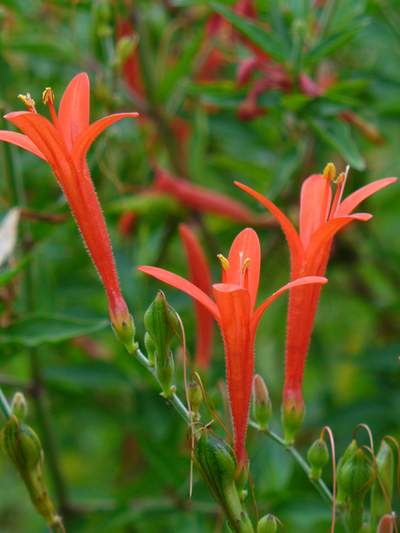
Flame Acanthus (Anisacanthus quadrifidus var. wrightii), also called Hummingbird Bush, is a Texas Hill Country native that blooms orange-red tubular flowers from June through frost. It is dog-safe (Flame Acanthus is not on the ASPCA Animal Poison Control Center toxic plant list for dogs, cats, or horses) and is one of the most reliable hummingbird shrubs for late-summer bloom.
The plant stays 3-5 feet tall, dies back in hard freezes and returns from the roots in spring, and competes successfully against Bermuda grass and weeds once established. Hummingbirds and butterflies (especially Janais Patch) compete for the flowers, and Lady Bird Johnson Wildflower Center lists it among the top hummingbird plants for Central and South Texas.
Ecoregion notes for Texas. In the Edwards Plateau and South Texas Plains (alkaline rocky soil, 15-25 inches of rain): native and ideal. Plant in full sun, water deeply twice during the establishment summer, then leave it. In the Trans-Pecos (Chihuahuan Desert): native and tough; full sun and minimal water. In the Blackland Prairie (DFW, Austin, San Antonio metros, heavy clay): plant on a raised berm or in well-drained soil; clay tolerance is moderate. In the Pineywoods: not recommended; too acidic and too humid.
Cut back hard in late winter (down to 6 inches) for the fullest spring growth and bloom. Flame Acanthus is one of the few Texas natives that flowers heavily in August and September when most other plants are dormant from heat. Pair with Autumn Sage, Turk's Cap, and Mealy Blue Sage for a hummingbird-and-butterfly bed that blooms from spring through fall.
Bee species data compiled from GBIF, iNaturalist, Discover Life, and the USGS Native Bee Inventory and Monitoring Lab. Plant-pollinator associations informed by published ecological literature.
How to care for Flame Acanthus, by region
How to care for Flame Acanthus where it is actually grown: year-round basics plus what to do each season, region by region, with the sources for each.
Care guidance last updated: July 2026
Ouachita Mountains (includes Hot Springs, AR)
Year-round
Flame acanthus is a heat-loving, drought-tough shrub that wants full sun and well-drained soil. In the Hot Springs area the wetter climate and heavier soils are the thing to watch, so drainage matters most here. Once it is established it needs little water, and you can expect the top to freeze back in winter and regrow from the roots each spring, which means one hard cutback a year and easy care otherwise.
- Establishment: water a new plant deeply about once a week through the first summer, then cut way back so the roots learn to reach for water.
- Watering once established: low water and good drainage are key. Skip watering after normal Arkansas rain and only soak during a real dry spell.
- Mulch: a two to three inch mulch layer held back from the stems conserves moisture and protects the crown through winter cold.
- Common mistake: soggy, rich soil makes it flop and can rot the crown. Plant it high and lean in the sunniest, best-draining spot you have.
Fall
Fall keeps blooming up to frost in the Hot Springs area, so leave the plant standing for late pollinators. Do only a light tidy now and save the hard cut for spring so the crown stays protected.
- Let it flower into October. The late blooms feed hummingbirds and butterflies heading into fall.
- Do not cut it to the ground yet. Standing stems shield the crown through the coming cold, so the hard cutback waits for spring.
- Trim only broken or badly out-of-bounds stems to keep the front bed looking neat.
A quick fall trim of stray or broken stems keeps the front-yard planting reading as intentional rather than neglected and heads off a tidiness complaint, while still leaving nectar for pollinators.
Winter
In the Hot Springs area the top freezes back and the plant goes dormant, surviving from the roots. There is almost nothing to do beyond protecting the crown and keeping it from sitting in cold, wet soil.
- Expect the top to die back after a hard freeze. Flame acanthus regrows from the roots in spring per the Wildflower Center.
- Keep a couple inches of mulch over the root zone for cold protection, but make sure the crown is not sitting in standing winter water.
- Leave the dead stems standing over winter as extra crown insulation, then cut them low in spring.
Bare dormant stems can look untended from the street, so a low border or a simple marker keeps the spot reading as an intentional resting planting instead of a dead one and avoids a violation letter.
Spring
Spring is cutback time in the Hot Springs area. After the last hard frost, cut the plant back low so it regrows dense and full, and make sure the bed drains well before the wet season really gets going.
- Once hard freezes are done, cut stems back to within about six inches of the ground per the Wildflower Center guidance for compact regrowth.
- Check that the planting spot drains well before spring rains arrive. Standing water on the crown is the main risk here.
- Pull winter mulch back off the crown so new shoots warm up and emerge cleanly.
A clean early-spring cutback reads as intentional care from the curb and lowers the odds of a violation letter, since the plant comes back tidy instead of a snarl of last year's dead stems.
Summer
Summer is peak bloom. Flame acanthus flowers June through October per the Wildflower Center and handles Arkansas heat easily. With the humidity here, err on the dry side and let it do its thing.
- Let rainfall do most of the work. Only water deeply during a genuine dry stretch, and avoid keeping the soil wet.
- Give it as much sun and airflow as you can, which keeps humid-summer leaf problems down and blooms up.
- Skip fertilizer. Feeding gives you soft leafy growth instead of the orange-red tubular flowers hummingbirds want.
Sources: Lady Bird Johnson Wildflower Center Flame Acanthus profile, Dallas County Master Gardeners Flame Acanthus
Texas Blackland Prairies (includes Dallas, TX)
Year-round
Flame acanthus is a tough, heat-loving shrub that is native to central and west Texas per the Lady Bird Johnson Wildflower Center, so around Dallas it is well suited to your climate. Give it full sun and lean, well-drained soil. Once it is settled in, it wants very little water and almost no fuss. In the Dallas area the top usually freezes back in winter and the plant regrows from the roots each spring, so plan on one hard cutback a year and let it do its thing the rest of the season.
- Establishment: water a new plant deeply about once a week for the first summer so the roots reach down, then taper off.
- Watering once established: low water. A deep soak every two to three weeks in a Dallas summer dry spell is plenty; it tolerates drought well.
- Mulch: keep a two to three inch layer of mulch pulled back from the stems to hold moisture and protect the crown through winter freezes.
- Common mistake: overwatering and rich soil make it floppy and leggy. Keep it lean and sunny for the most flowers and the best hummingbird show.
Fall
Fall keeps blooming right up to frost in the Dallas area, so leave the plant standing to feed late hummingbirds and butterflies. Do a light tidy only, and save the hard cut for spring.
- Let it keep flowering into October. The late blooms are a valuable nectar source before frost.
- Do not cut it to the ground now. The old stems help protect the crown through winter, so a hard cutback waits until spring.
- A light trim of any broken or wildly out-of-bounds stems is fine for a neater curb look.
A quick fall tidy of stray or broken stems keeps the front-yard silhouette looking intentional through the season and heads off a tidiness complaint, while still leaving the plant standing for pollinators.
Winter
In the Dallas area the top usually freezes back and the plant goes dormant, surviving from the roots. There is very little to do. Just protect the crown and wait for spring regrowth.
- Expect the top to die back after a hard freeze. This is normal for flame acanthus this far north per the Wildflower Center, and it returns from the roots in spring.
- Keep a couple inches of mulch over the root zone to buffer the crown during cold snaps.
- Leave the dead stems standing over winter as extra crown protection, then cut them low in spring.
Leaving dead winter stems standing can look messy from the curb, so a simple placed marker or a low border keeps the spot reading as an intentional dormant planting rather than a neglected bed and avoids a violation letter.
Spring
Spring is cutback and cleanup time in the Dallas area. After the last hard frost, cut the whole plant back low so fresh growth comes up dense and full. Give it a good watering to wake it up.
- Once the danger of a hard freeze passes, cut stems back to within about six inches of the ground per the Wildflower Center guidance so the plant regrows compact.
- Water deeply once after the cutback to push new growth, then return to lean watering.
- Pull back winter mulch a little so the crown warms up and new shoots come through easily.
A clean early-spring cutback reads as intentional care to neighbors and reduces the chance of a violation letter, since the plant regrows tidy instead of showing a tangle of last year's dead stems.
Summer
Summer is peak bloom. Flame acanthus flowers June through October per the Wildflower Center and shrugs off Dallas heat. Your main job is to water only during real dry spells and enjoy the hummingbirds.
- Water deeply only every two to three weeks during a hot dry stretch. It is drought tolerant and does not want soggy roots.
- If it gets rangy by midsummer, you can shear it back lightly to keep it shaped and it will rebloom.
- Skip fertilizer. Rich feeding gives you leaves instead of the orange-red tubular flowers hummingbirds come for.
Sources: Lady Bird Johnson Wildflower Center Flame Acanthus profile, Dallas County Master Gardeners Flame Acanthus
Want these tasks as reminders timed to your yard? Pollinator Patch turns this guidance into a season-by-season care plan for the plants you actually grow.
Before you buy
Your city may pay you to plant this
Cities and water utilities offer rebates for replacing lawn with native and water-wise plants. We track 452 programs across 44 states, each with a link to the provider and the date we last checked it.
Find rebates in your areaIf something looks wrong
Common plant problems, and what to check first
These come up on almost any plant. Each guide lists the likely causes in the order they are worth ruling out, with one thing to check before you act on any of them, and links to the source it came from.
- It is dying right after planting
- Leaves turning yellow
- Wilting even though I watered it
- Brown crispy leaf tips
- Bugs on the plant
Keep reading
Guides that feature this plant
Ready to grow Flame Acanthus? Add it to your garden in Pollinator Patch to track it and get season-by-season care guidance.
Planning a bed around it? Start a free plan with this plant
Not sure where to start? Take the 2-minute yard quiz