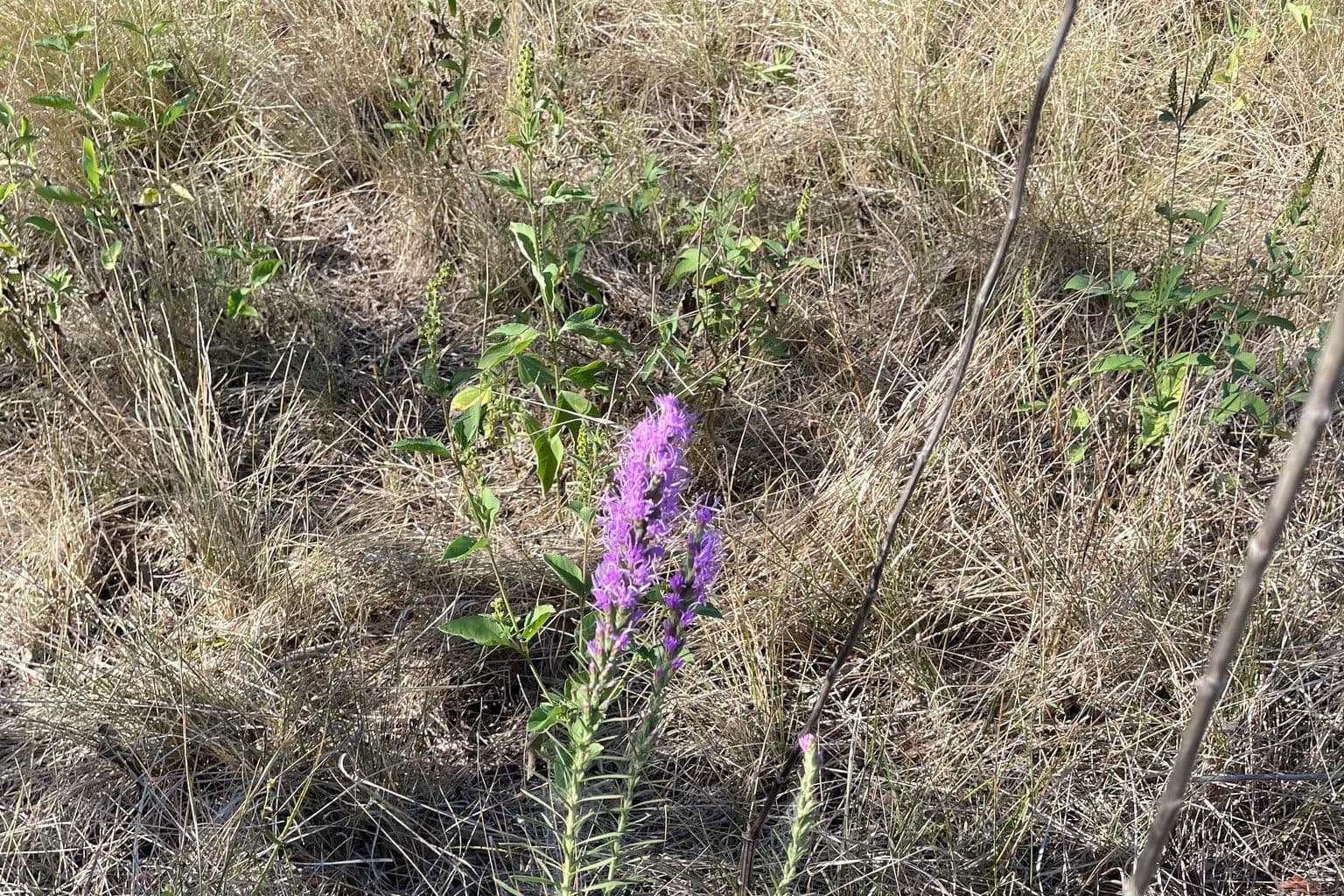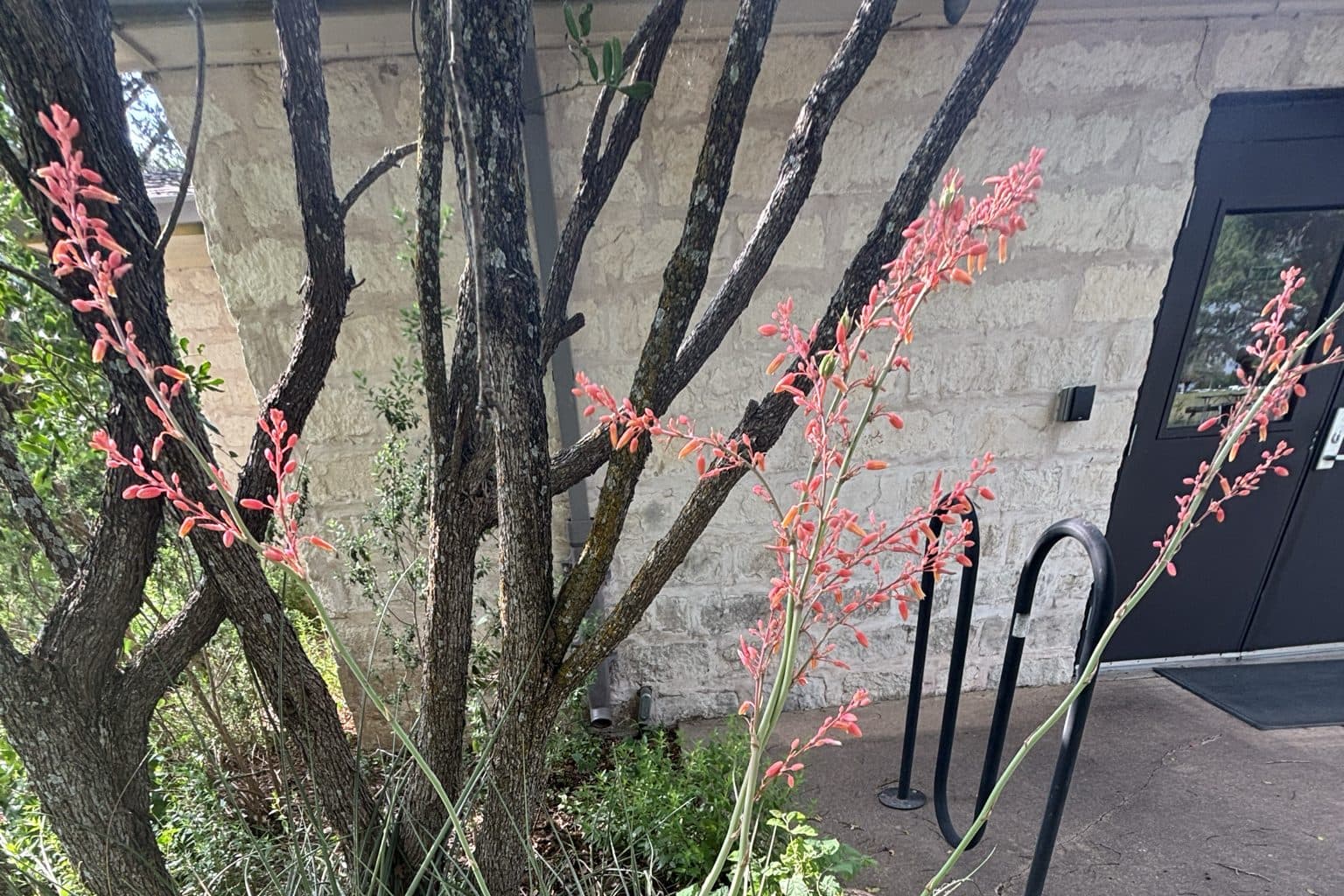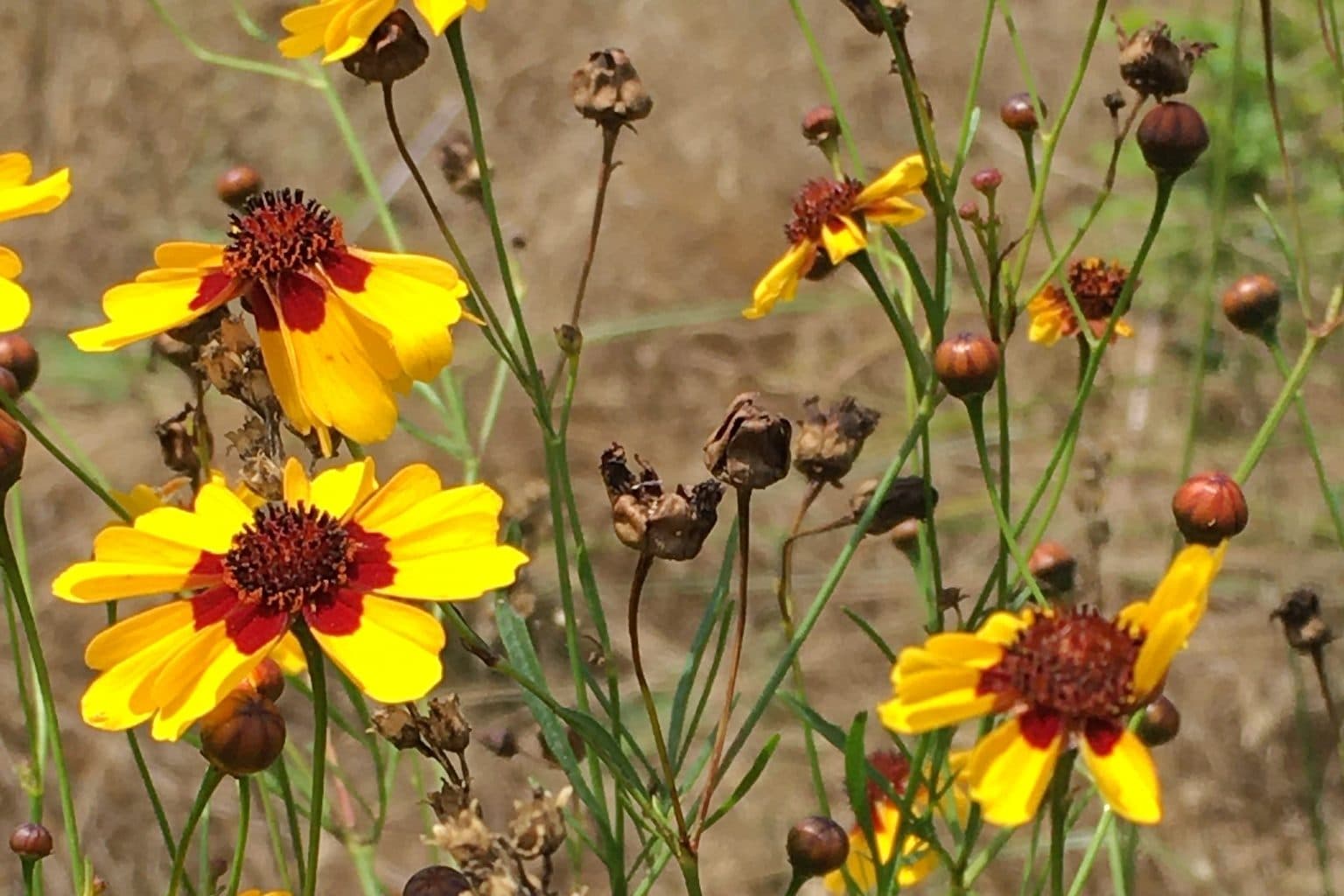
If you want bees and butterflies in your Texas yard, what you plant matters more than how much you plant. A handful of the right native species, timed across seasons, will pull in more pollinators than an acre of non-native annuals. And most of these plants look tidy enough for a front yard with an HOA.
Here's what actually works in Zones 8 and 9, organized by when it blooms. The goal: something flowering in your yard from March through November.
Spring bloomers (March through May)
Spring is when native bees come out of dormancy hungry. Black-eyed Susan (Rudbeckia hirta) starts blooming in late spring and keeps going well into summer. It's compact, bright yellow, and familiar enough that nobody questions it in a front bed. Bumblebees and sweat bees love it.
Bluebonnet (Lupinus texensis) is the state flower, so it's about as HOA-friendly as a plant gets. Honeybees and native bees work the spikes hard in March and April. It reseeds if you let the pods dry on the plant. Mix it with Black-eyed Susan for a spring-to-summer handoff.
Summer workhorses (June through August)
Summer is peak pollinator season in Texas, and three plants carry most of the weight.
Purple Coneflower (Echinacea purpurea) blooms for weeks and attracts everything: swallowtails, painted ladies, skippers, bumblebees. The dried seed heads also feed goldfinches into fall. It's structured and upright, so it reads as intentional in a designed bed.
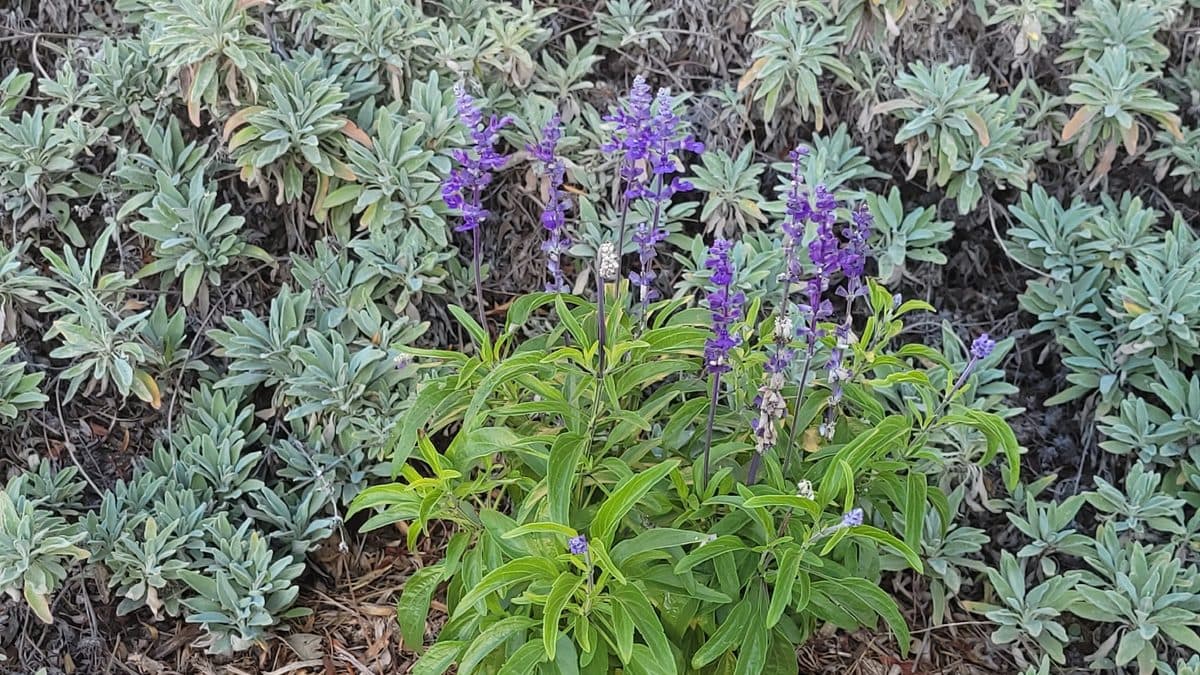
Mealy Blue Sage (Salvia farinacea) is one of the best bee plants in Texas. Period. Those blue flower spikes are magnets for native bees, and the plant stays green and blooming through the worst of July and August heat with almost no water. It grows wild along Texas highways, which tells you everything about its toughness.
Autumn Sage (Salvia greggii) starts in spring but really hits its stride in summer. The red and coral varieties pull in hummingbirds alongside bees. It stays under three feet and responds well to a trim if it gets leggy.
Fall fuel stops (September through November)
Fall is when migrating monarchs pass through Texas heading to Mexico. They need nectar, and lots of it.
Goldenrod (Solidago spp.) is the MVP of fall pollinator gardens. It doesn't cause allergies (that's ragweed, which blooms at the same time). Goldenrod produces enormous amounts of nectar and pollen, and you'll see monarchs, queens, sulphurs, and dozens of bee species all over it. It does spread, so give it room or plant it in a contained bed.
Maximilian Sunflower (Helianthus maximiliani) is tall. Six to ten feet tall. It's a back-of-the-bed or fence-line plant, not a front-yard feature. But the payoff is huge: hundreds of small sunflowers on each stalk that bees and butterflies swarm in October.
Gulf Muhly (Muhlenbergia capillaris) is technically a grass, not a flowering plant for pollinators. But it earns a spot here because those pink-purple plumes in October and November add visual interest when other things are going dormant. It fills the "something is still happening" role in the bed and looks fantastic as an edging plant.
Winter structure
Yaupon Holly (Ilex vomitoria) is an evergreen native shrub that keeps your bed from looking bare December through February. It's one of the best HOA-friendly natives because it stays green year-round and can be shaped. In spring, the tiny flowers are one of the earliest nectar sources for bees. The berries feed birds all winter.
Quick bloom calendar
- March/April: Bluebonnet, Yaupon Holly flowers
- May/June: Black-eyed Susan, Autumn Sage, Mealy Blue Sage
- July/August: Purple Coneflower, Mealy Blue Sage, Autumn Sage
- September/October: Goldenrod, Maximilian Sunflower, Gulf Muhly
- November through February: Yaupon Holly (evergreen structure, winter berries)
Making it HOA-friendly
Every plant on this list can work in a front yard with an HOA. The trick is layout, not species selection. Clean mulch edges, plants grouped in odd numbers, shorter species up front, taller ones behind. That's it. A bed of Mealy Blue Sage and Autumn Sage with Yaupon Holly as a backdrop looks like a professionally designed landscape. It just happens to feed pollinators too.
Want to learn more about native plants for your area or check if your city offers rebates for native landscaping? Pollinator Patch can help you pick the right plants and lay them out in a way your HOA won't question. Also check out the butterfly lifecycle guide if you want to understand why host plants matter as much as nectar plants.