If you've planted a butterfly bush and wondered why you're still not seeing butterflies, here's the thing nobody tells you at the nursery: butterfly bush (Buddleia) is a nectar source, but most Texas butterflies won't lay eggs on it. To actually get butterflies in your yard, and keep them there, you need the plants their caterpillars eat. That's the part most people skip.
Host plants vs. nectar plants
Nectar plants feed adult butterflies. They'll stop by, drink, and leave. That's nice. But host plants are where butterflies lay eggs, because those are the plants their caterpillars can actually eat. Without host plants, you're running a gas station. Butterflies refuel and move on. With host plants, you're running a neighborhood. They stay, breed, and you see caterpillars turning into chrysalises in your own yard.
You want both. But if you only have room for a few plants, prioritize hosts. The adults will find the nectar somewhere. For more on how this works, our butterfly lifecycle guide covers each stage and what the caterpillars need.
Five Texas butterflies and what they need
Monarch (Danaus plexippus)
You already know this one. Monarchs need milkweed. That's it. No milkweed, no Monarchs. In Texas, the best native species are Green Milkweed (Asclepias viridis) for Central Texas and Antelope Horns (Asclepias asperula) for drier western areas. Avoid tropical milkweed (Asclepias curassavica) if you can. It doesn't die back in mild Texas winters, which disrupts migration patterns and can harbor parasites. Plant 3 to 5 milkweeds in a sunny spot and you'll see eggs within weeks during migration season (March through May, September through November).
More on Monarch-specific planting in the Monarch garden guide.
Black Swallowtail (Papilio polyxenes)
Host plants: anything in the carrot family. In a native garden, that's Golden Alexanders (Zizia aurea). In your herb garden, it's dill, parsley, and fennel. If you've ever found fat green caterpillars with black and yellow stripes eating your parsley, those were Black Swallowtails. Let them have it. Plant extra parsley. It's worth it.
Pipevine Swallowtail (Battus philenor)
This one's a stunner. Iridescent blue-black wings. Host plant is Pipevine (Aristolochia fimbriata or A. tomentosa). It's a vine, so it needs a trellis or fence. Texas native and pretty low maintenance once established. The caterpillars are black and spiky and totally harmless. One healthy vine can support a whole local population.
Gulf Fritillary (Agraulis vanillae)
Bright orange with silver spots underneath. One of the easiest butterflies to attract in Texas. Host plant is Passionvine (Passiflora incarnata), which is native, aggressive, and covered in wild-looking purple flowers. Fair warning: the caterpillars will eat the vine down to bare stems. It grows back fast. If that freaks you out, put the Passionvine where you won't stare at it daily. Against a back fence is perfect.
Common Buckeye (Junonia coenia)
Those big eyespots on the wings. Hard to miss. Host plants include Wild Petunia (Ruellia humilis), which is a Texas native that blooms purple in part shade. Also uses American Beautyberry (Callicarpa americana) and various plantain species. Ruellia is the easiest to grow and it spreads on its own, so one plant becomes a patch within a year or two.
The no-pesticides rule
This is non-negotiable. If you spray pesticides, you will kill caterpillars. That includes "organic" options like Bt (Bacillus thuringiensis), which specifically targets caterpillars. Can't have a butterfly garden and a pest-free garden at the same time. Caterpillars eat leaves. That's the deal. The plants grow back. If you see holes in your milkweed, that's success, not a problem.
Small space butterfly garden
You don't need a big yard. A 4x8 foot bed in full sun can support Monarchs, Gulf Fritillaries, and Buckeyes. Here's a planting list that fits:
- 2 Green Milkweed (Asclepias viridis) in back, tallest
- 1 Passionvine (Passiflora incarnata) on a small trellis, corner
- 3 Wild Petunia (Ruellia humilis) in the middle
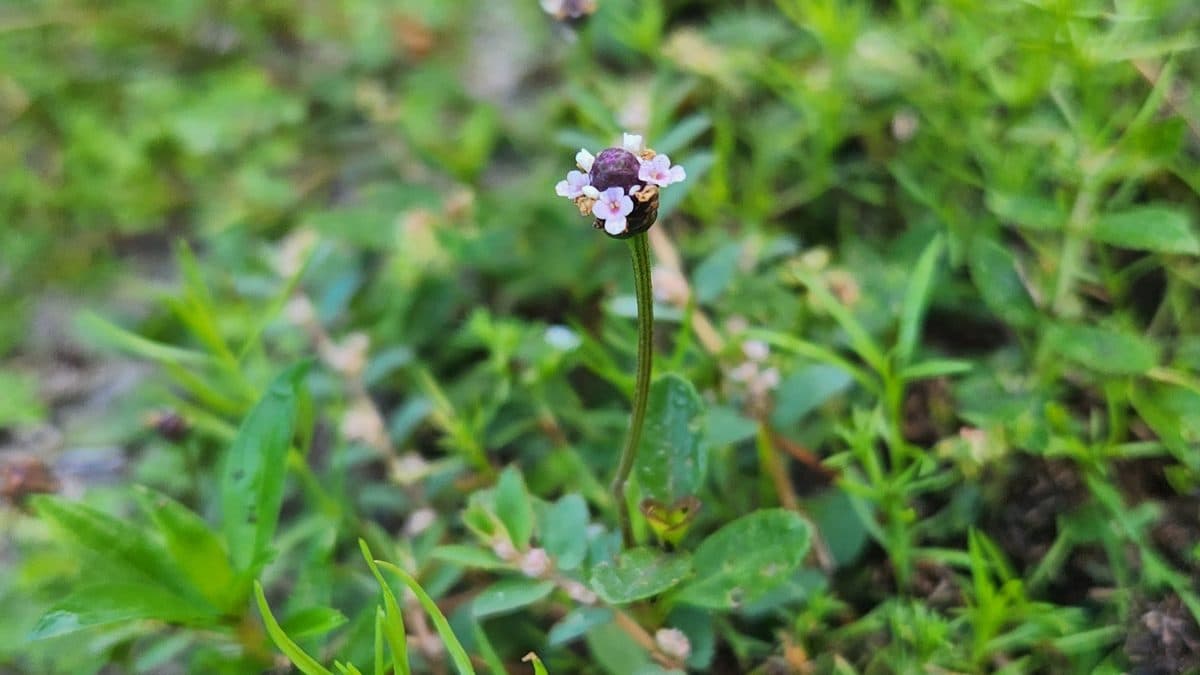
- 5 Frogfruit (Phyla nodiflora) as ground cover along the front edge
- 1 Blackfoot Daisy (Melampodium leucanthum) for extra nectar
That's five species, under $40 in plugs if you buy from a native plant nursery. Frogfruit doubles as a nectar source for small butterflies and native bees. The native plants guide has more on spacing and grouping. Our best pollinator plants for Texas list covers additional species if you want to expand.
Some Texas cities will help pay for it. Check the rebates page to see if your area offers credits for native plantings or turf removal. Several of the plants on this list also pull in hummingbirds. The native hummingbird plants guide covers which Texas species work hardest for both.