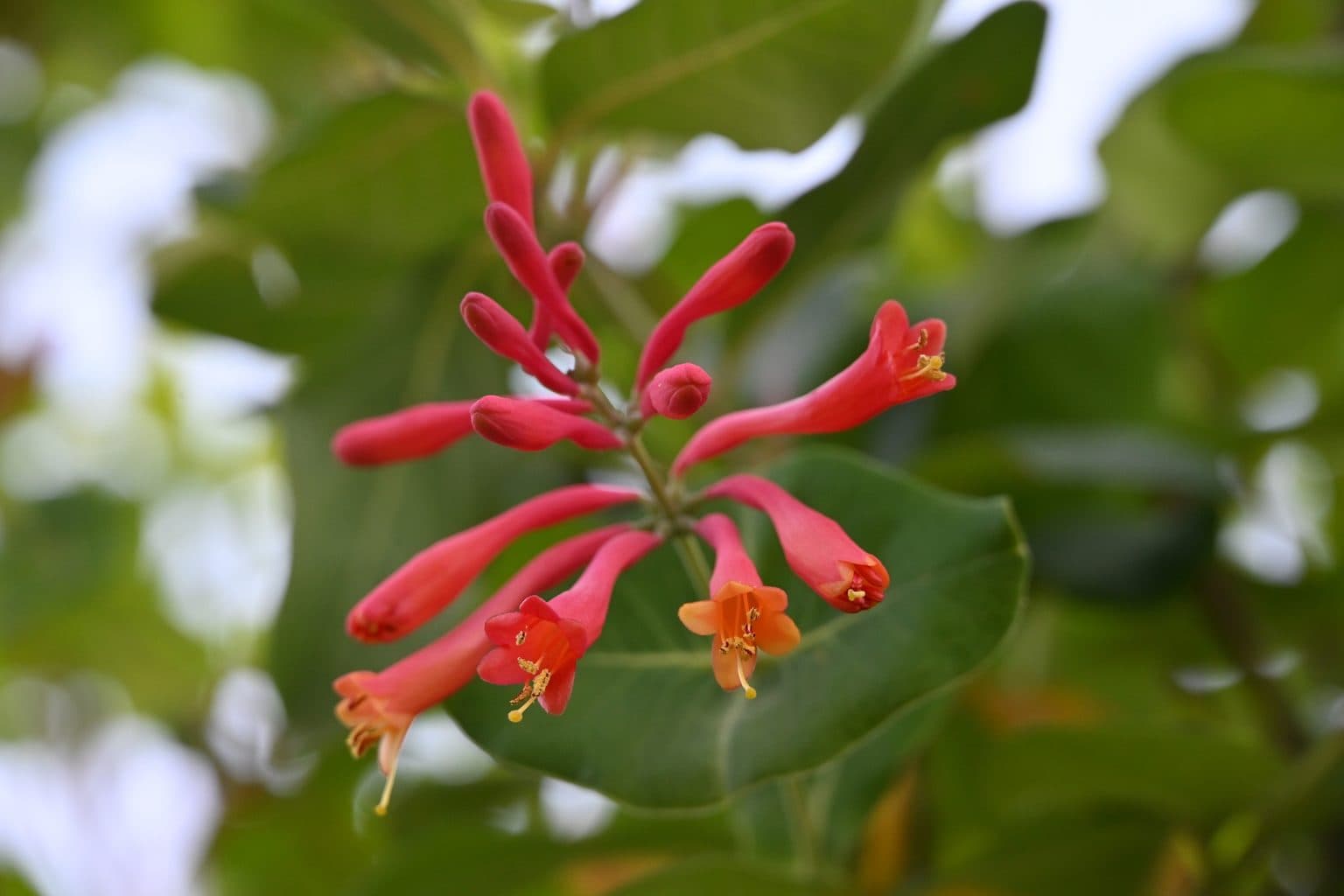
Quick answer: Coral Honeysuckle (Lonicera sempervirens, also called trumpet honeysuckle) is not on the ASPCA Animal Poison Control Center toxic plant list for dogs, cats, or horses. The ASPCA says its list is not meant to be all-inclusive, but rather a compilation of the most frequently encountered plants. The honeysuckle warnings you have read apply to other species, mainly Japanese Honeysuckle berries.
"Honeysuckle" covers dozens of species, and the safety answer changes depending on which one is on your fence. Coral Honeysuckle, the native one with red tubular flowers, is the safe one. Here is how to be sure that is what you have.
What the ASPCA says
Coral Honeysuckle (Lonicera sempervirens) does not appear on the ASPCA Animal Poison Control Center toxic plant list for dogs, cats, or horses. That standard means there is no documented systemic toxin for those species. You can verify at aspca.org/pet-care/animal-poison-control/toxic-and-non-toxic-plants.
The usual caveat applies: a dog that eats a large quantity of any plant material can get mild GI upset. If your dog eats a lot and shows symptoms, call the ASPCA Animal Poison Control Center at (888) 426-4435.
Which honeysuckle do you actually have?
The genus is the source of all the mixed messages online. The species that matter in Texas yards:
| Honeysuckle | Off ASPCA toxic list? | Notes |
|---|---|---|
| Coral / trumpet honeysuckle (Lonicera sempervirens) | Yes | Native; not on ASPCA toxic plant list (ASPCA Animal Poison Control Center) |
| Japanese Honeysuckle (Lonicera japonica) | Caution | Berries can cause GI upset in dogs per the ASPCA; invasive in Texas |
| Cape honeysuckle (Tecoma capensis) | Yes | Not a true honeysuckle; not on ASPCA toxic plant list |
| Carolina Jessamine (Gelsemium sempervirens) | No | Sometimes mislabeled "yellow honeysuckle"; not in the ASPCA database, and toxic to dogs per the Pet Poison Helpline |
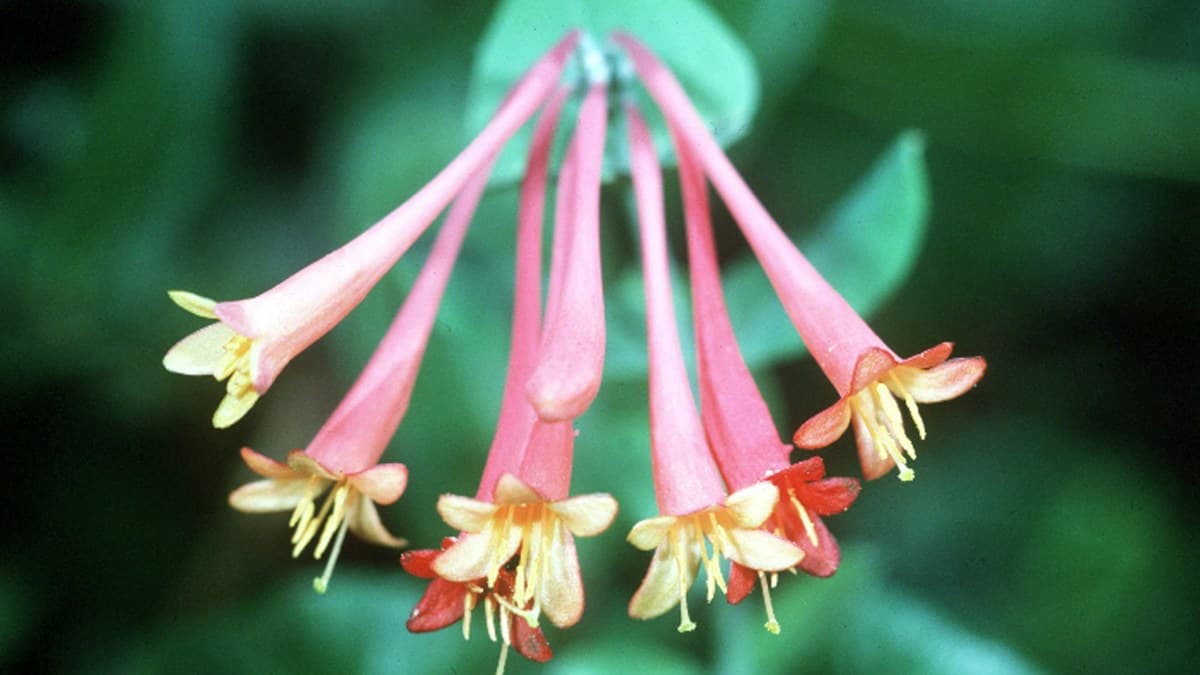
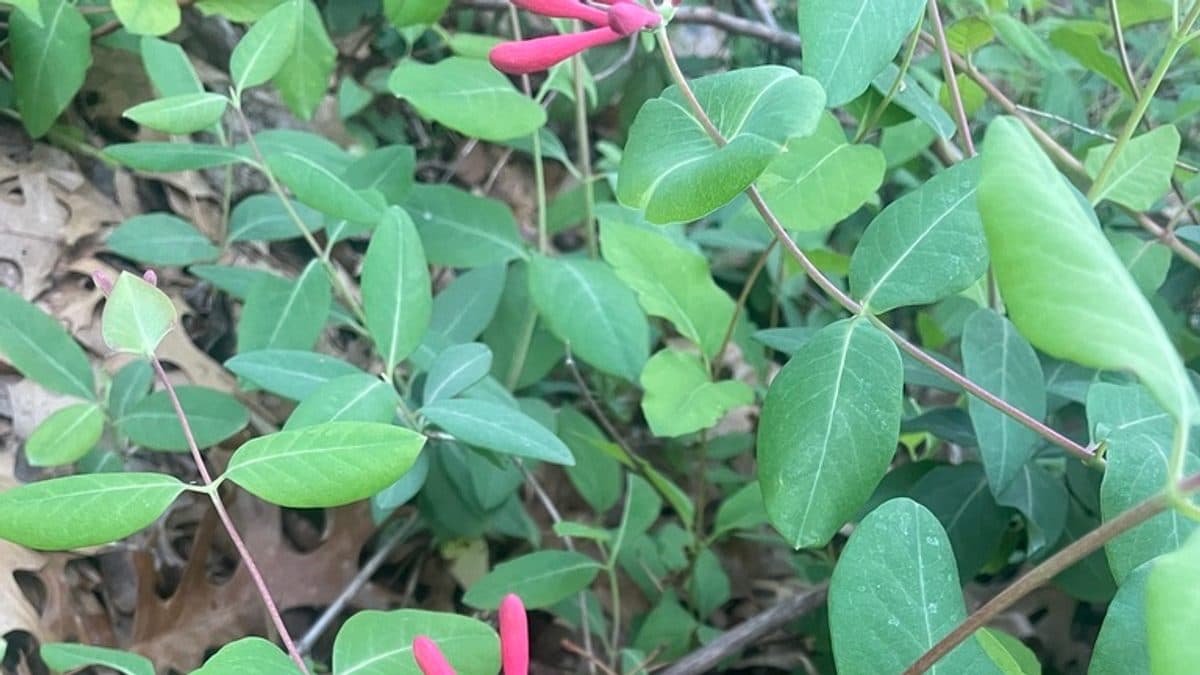
The fast ID check for Coral Honeysuckle: red to coral tubular flowers with yellow throats, blue-green paired leaves, a twining vine that never strangles its support, and red berries in fall. Japanese Honeysuckle has white-to-yellow strongly fragrant flowers and black berries, and it climbs by smothering. Coral Honeysuckle flowers have almost no scent, which surprises people who planted it for fragrance.
Why Coral Honeysuckle earns the spot anyway
It is native across the eastern half of Texas, including the Piney Woods (Beaumont area) and east into the Post Oak Savanna, per the Lady Bird Johnson Wildflower Center. It blooms from spring into summer, Ruby-throated Hummingbirds hit it hard during March and April migration, and it behaves on a trellis or mailbox in a way an HOA reviewer never questions. Among native Texas vines, it and Crossvine are the two standard dog-safe picks.
Building out the rest of a dog-safe yard? Start with the six Texas yard plants most toxic to dogs, and see which natives hummingbirds prefer in the Texas hummingbird plants guide.
If something goes wrong
ASPCA Animal Poison Control Center: (888) 426-4435 (24/7, fee may apply). Have the plant name ready when you call.
Checking more than one plant? See the full list of plants toxic to dogs and cats, with native alternatives, covering every plant on the ASPCA list.