The difference between "I stopped mowing" and "I'm improving the yard" is a piece of paper. That's it. A written plan turns your native garden from something that confuses your HOA into something they can review, discuss, and approve.
You don't need a landscape architect. You don't need fancy software. You need a clear document that shows what you're planting, where it's going, and how you'll keep it looking good. Here's exactly what to include.
Why a written plan matters
HOA boards are volunteer committees. They review dozens of requests and complaints. When someone shows up with "I want to plant some native stuff," that's vague and hard to approve. When someone shows up with a plant list, a sketch, and a maintenance schedule, that's a project they can say yes to.
A plan also protects you later. If a new board member questions your yard in two years, you can point to the approved plan on file. It's your proof that this was intentional from the start. Our HOA 101 guide covers more on why proactive communication works.
What your plan should include
1. Plant list
For each plant, include the common name, scientific name, mature size, and a sentence on why you chose it. HOA reviewers aren't plant people. Giving them specifics shows you've done the research. More on choosing the right plants for HOA yards on our Texas native plants page.
2. Simple layout sketch
Draw your yard from above. Mark where each plant goes. Label the beds, the walkway, the driveway, property lines. It doesn't need to be professional. Graph paper and a pencil work fine. The point is showing that you have a spatial plan, not just a shopping list.
3. Maintenance schedule
This is the part most people skip, and it's the part HOA boards care about most. A monthly schedule that lists what you'll do (mulch refresh, edge trimming, dead-heading, seasonal cutback) tells them you're not going to plant and forget. Check out cues of care for what visual maintenance signals matter most.
4. Before photo of current yard
Take a photo from the street. This becomes your baseline. When the garden fills in, you'll have a clear before-and-after that shows improvement. Board members love seeing progress.
5. Talking points for the committee
Write 3-4 bullet points about your goals. Keep them focused on things the HOA cares about: curb appeal, property values, reduced water use, low maintenance. Save the pollinator talk for your friends. The structure guide has more on framing your project around shared goals.
Sample plant list for a small Texas front yard
Here's an example for a 200 sq ft front bed in zones 8b-9a. This is a starting point, not a prescription.
| Plant | Scientific name | Mature size | Why |
|---|---|---|---|
| Flame Acanthus | Anisacanthus quadrifidus var. wrightii | 3-5 ft | Hummingbird magnet. Blooms red-orange from spring through fall. Tidy, upright form. |
| Blackfoot Daisy | Melampodium leucanthum | 6-12 in | Low mounding border plant. White flowers nearly year-round. Handles full sun and poor soil. |
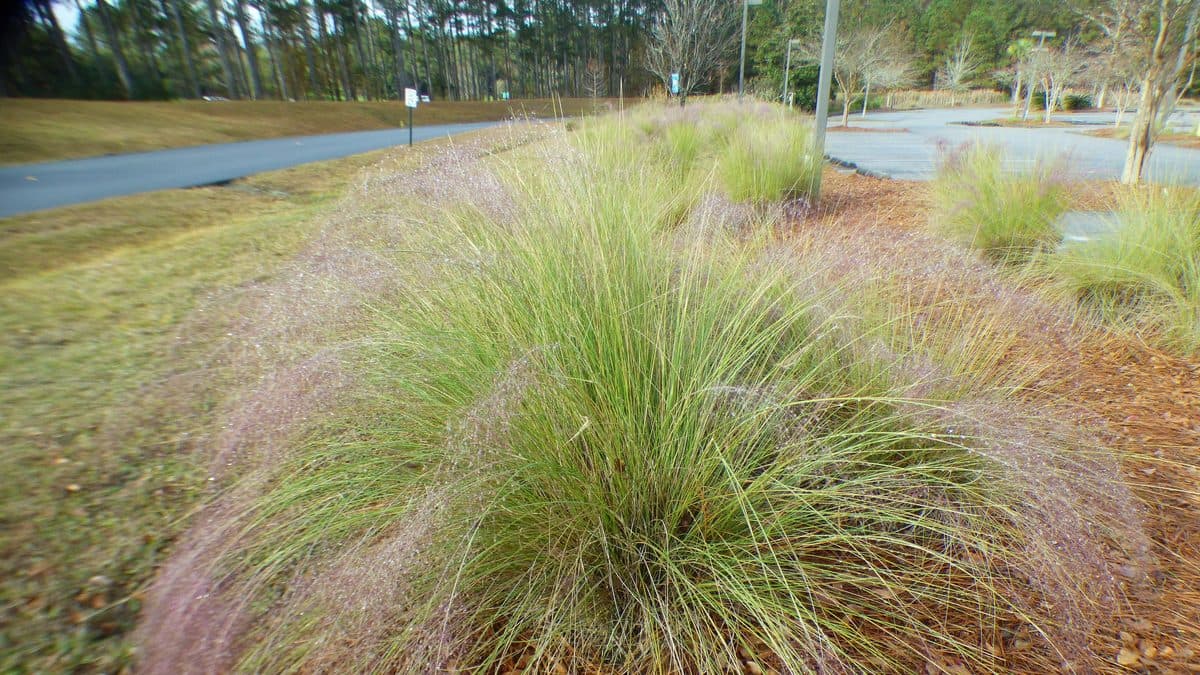
| Gulf Muhly | Muhlenbergia capillaris | 2-3 ft | Pink cloud of blooms in fall. Great texture. Neighbors will ask what it is. |
| Gregg's Mistflower | Conoclinium greggii | 1-2 ft | Butterfly favorite. Blue-purple flowers late summer. Spreads gently as groundcover. |
| Texas Sage | Leucophyllum frutescens | 4-6 ft | Silver foliage, purple blooms after rain. Extremely drought-tolerant. Looks "landscaped." |
| Frog Fruit | Phyla nodiflora | 2-4 in | Lawn alternative groundcover. Tiny white flowers, walkable, very low water needs. |
Layer these front-to-back: Frog Fruit and Blackfoot Daisy along the edge, Gregg's Mistflower and Gulf Muhly in the middle, Flame Acanthus and Texas Sage at the back. Add 2-3 inches of hardwood mulch between everything.
How to present your plan
Show up calm and prepared. Think of it like a home improvement proposal, not a debate. Focus on what you share with the board: keeping the neighborhood looking great, being a responsible homeowner, reducing water waste. Our step-by-step HOA approval guide walks through the full process.
Print your plan. Bring copies. Having something physical to hand over makes a difference that's hard to explain until you've been in the meeting.
Rebate programs often need this too
Many city turf replacement rebate programs require a landscape plan as part of the application. If you're building one for your HOA, you're halfway to qualifying for rebate money.
Don't want to build this from scratch?
Get a free printable PDF template (plant list, layout sketch, maintenance schedule) at our download page. Or use Pollinator Patch to generate a full plan with your plant list, layout, and maintenance schedule, ready to print or share as a PDF.