Quick answer: True honeysuckle (Lonicera) does not appear on the ASPCA Animal Poison Control Center toxic plant list for dogs. The native Coral Honeysuckle is the low-risk one, Japanese Honeysuckle berries can cause mild GI upset in quantity, and the real hazard is a yellow-flowered lookalike, Carolina Jessamine, which is genuinely toxic to dogs per the Pet Poison Helpline.
"Honeysuckle" is a loose name that gets pinned on several unrelated vines, so the poison question depends entirely on which plant is actually on your fence. The short version: real honeysuckle is a low concern, and the thing to watch for is a yellow-flowered vine that people mistake for it. Here is how to tell them apart.
What the ASPCA says
True honeysuckle in the genus Lonicera does not appear on the ASPCA Animal Poison Control Center toxic plant list for dogs, cats, or horses. That standard means there is no documented systemic toxin for those species. One trap: the ASPCA database returns a "Honeysuckle Fuchsia" entry, but that is Fuchsia triphylla, a completely different plant, not the honeysuckle on your trellis. Do not read the fuchsia page as covering your vine. You can check the database at aspca.org/pet-care/animal-poison-control/toxic-and-non-toxic-plants.
The usual caveat applies to any honeysuckle. A dog that eats a lot of berries can get mild stomach upset, because Lonicera berries contain saponins and some foliage carries cyanogenic glycosides. This is a volume problem, not a bite problem. If your dog eats a large amount and shows symptoms, call the ASPCA Animal Poison Control Center at (888) 426-4435.
Which honeysuckle do you actually have?
The name covers several vines, and the safety answer changes with the species. The ones that show up in Texas yards:
| Honeysuckle | Dog Safe? | Notes |
|---|---|---|
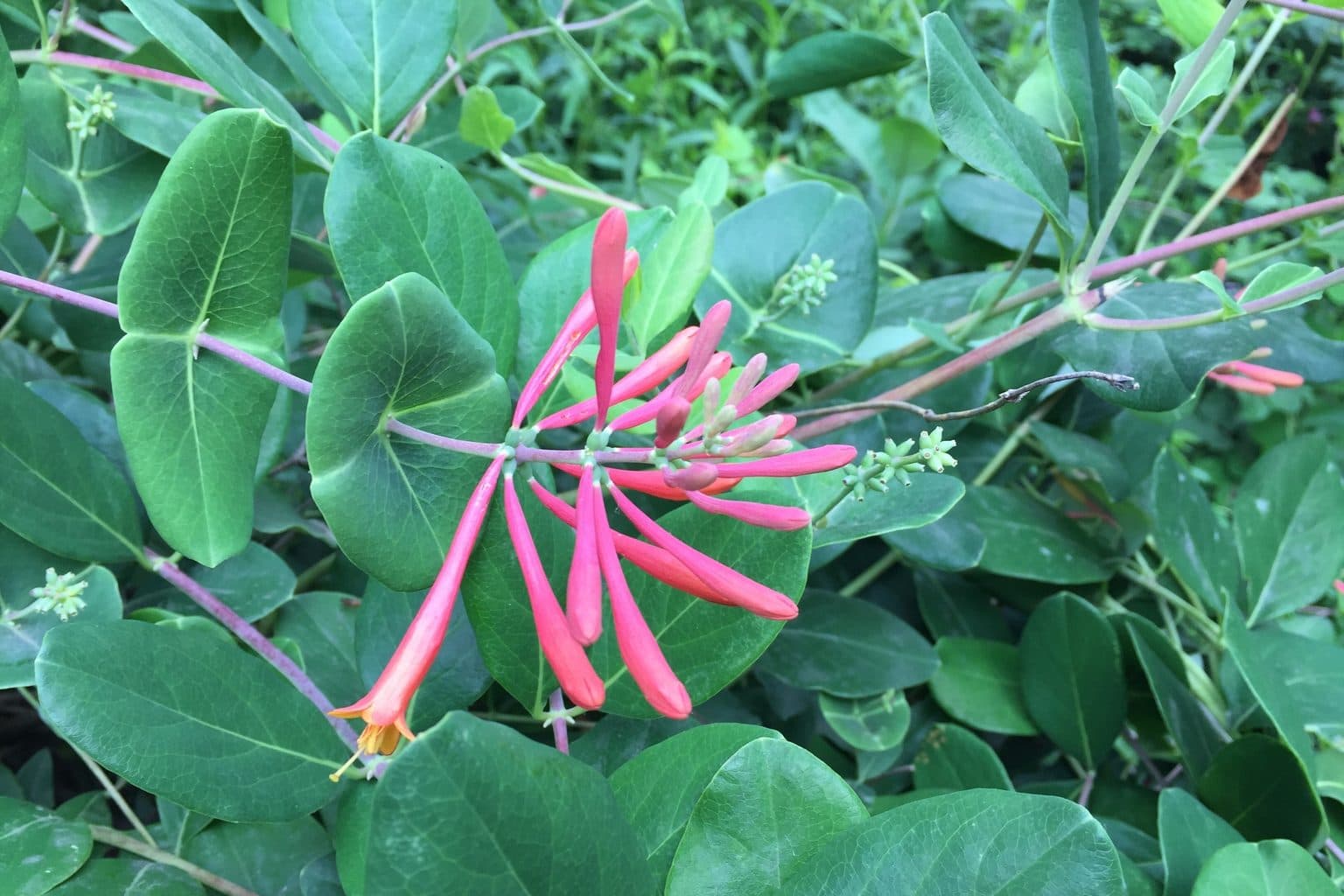
| Coral / trumpet honeysuckle (Lonicera sempervirens) | Yes | Native; not on the ASPCA toxic plant list (ASPCA Animal Poison Control Center) |
| Japanese Honeysuckle (Lonicera japonica) | Caution | Not on the ASPCA list; berries contain saponins and can cause GI upset in quantity. Invasive across the Southeast and Central US |
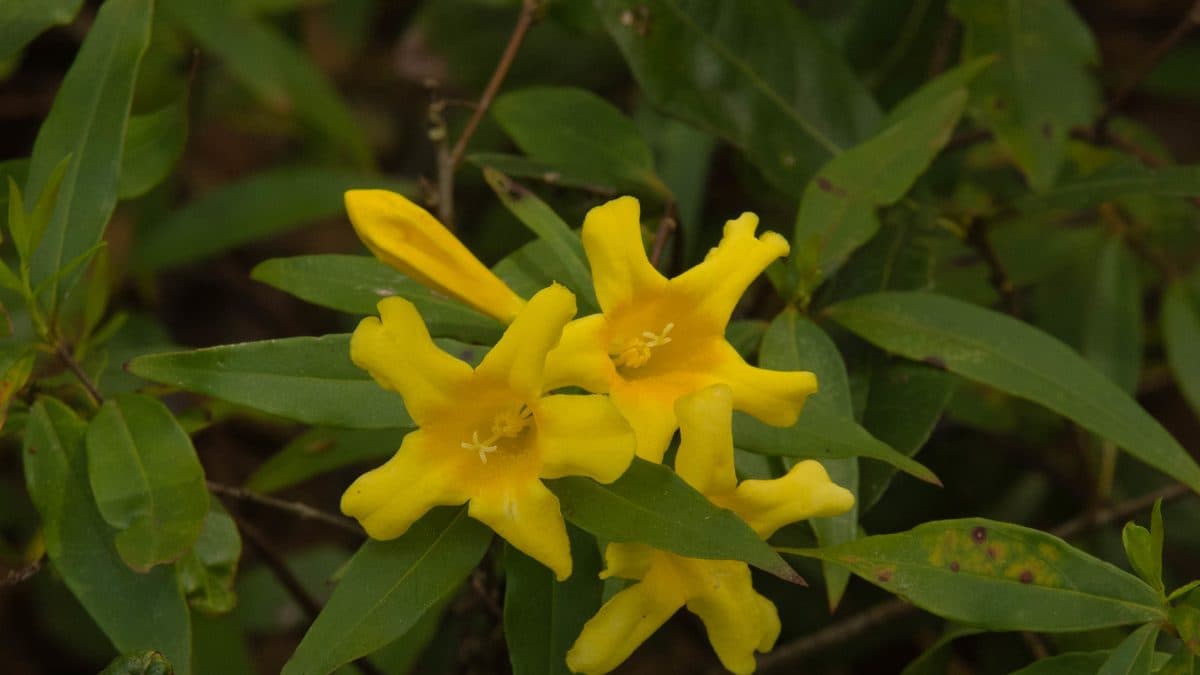
| Carolina Jessamine (Gelsemium sempervirens) | No | A yellow-flowered lookalike, not a true honeysuckle. Not in the ASPCA database, but toxic to dogs per the Pet Poison Helpline (neurotoxic gelsemine) |
The one to worry about: Carolina Jessamine
Carolina Jessamine (Gelsemium sempervirens) is the reason this question matters. It is a yellow-flowered evergreen vine that gets called "yellow jessamine" or, wrongly, "yellow honeysuckle," and it grows on the same kind of fence or arbor. It is not in the ASPCA database, so do not read that absence as an all-clear. All parts of the plant, including the nectar, contain the neurotoxic alkaloids gelsemine and sempervirine, and it is toxic to dogs per the Pet Poison Helpline (petpoisonhelpline.com/poison/jessamine). The Merck Veterinary Manual describes gelsemine as affecting the nervous system.
Signs of jessamine poisoning include muscle weakness, incoordination, difficulty swallowing, a slow respiratory rate, trouble breathing, seizures, and in serious cases paralysis or death. If you think your dog ate Carolina Jessamine, treat it as an emergency and call the ASPCA Animal Poison Control Center at (888) 426-4435 or your vet right away.
The fast way to keep them straight: Coral Honeysuckle has red to coral tubular flowers with yellow throats and blue-green paired leaves. Carolina Jessamine has clusters of bright yellow, fragrant, funnel-shaped flowers on a wiry evergreen vine. If the flowers are yellow, do not assume it is honeysuckle.
Dog-safe native vines for the same spot
If you want the honeysuckle look without second-guessing, these three natives cover the Edwards Plateau and Hill Country (San Antonio area) and none of them are on the ASPCA toxic plant list.
- Coral Honeysuckle (Lonicera sempervirens). The native honeysuckle itself, with red tubular flowers hummingbirds work hard, native across much of Texas per the Lady Bird Johnson Wildflower Center and not on the ASPCA toxic plant list. See the full writeup on whether Coral Honeysuckle is toxic to dogs.
- Crossvine (Bignonia capreolata). A vigorous climber with orange-red trumpet flowers in spring, native to the region per the Lady Bird Johnson Wildflower Center and not on the ASPCA toxic plant list. More detail in is crossvine toxic to dogs.
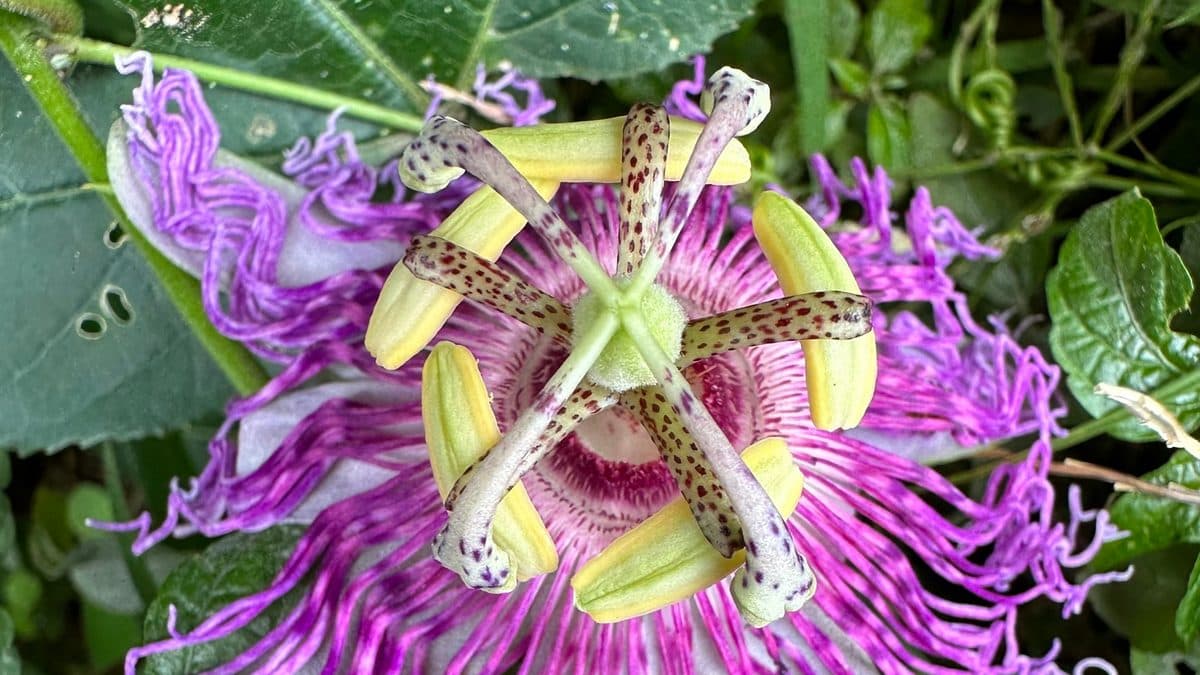
- Purple Passionflower (Passiflora incarnata). An intricate purple-and-white bloom that hosts Gulf Fritillary butterflies, native to the area per the Lady Bird Johnson Wildflower Center and not on the ASPCA toxic plant list.
Building out the rest of a dog-safe yard? Start with the Texas yard plants most toxic to dogs, then match the vine to the fence you are trying to cover.
If something goes wrong
ASPCA Animal Poison Control Center: (888) 426-4435 (24/7, fee may apply). Have the plant name ready when you call, and treat any suspected Carolina Jessamine ingestion as urgent.
Checking more than one plant? See the full list of plants toxic to dogs and cats, with native alternatives, covering every plant on the ASPCA list.