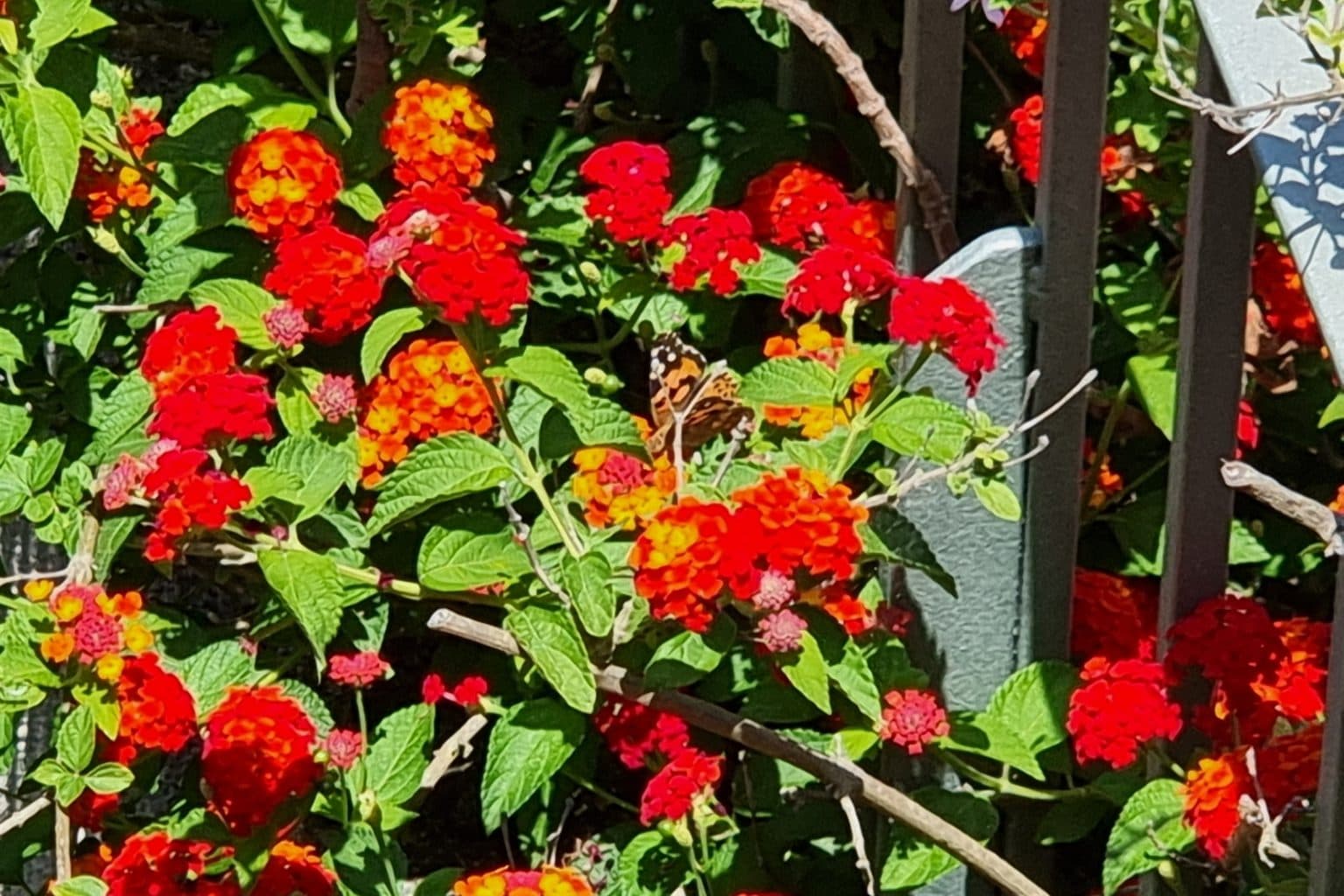
Quick answer: Yes. Lantana (Lantana camara) is listed as toxic to dogs, cats, and horses by the ASPCA Animal Poison Control Center. It contains pentacyclic triterpenoids that can cause vomiting, diarrhea, weakness, and labored breathing. The unripe green berries are the most dangerous part. If your dog ate lantana, call the ASPCA Animal Poison Control Center at (888) 426-4435.
Lantana is one of the most planted flowering shrubs in Texas, and one of the few common ones that earns a real toxicity warning. This page covers what the toxin does, how worried to be about the native Texas Lantana, and what to plant instead if you want the same look without the risk.
What the ASPCA says
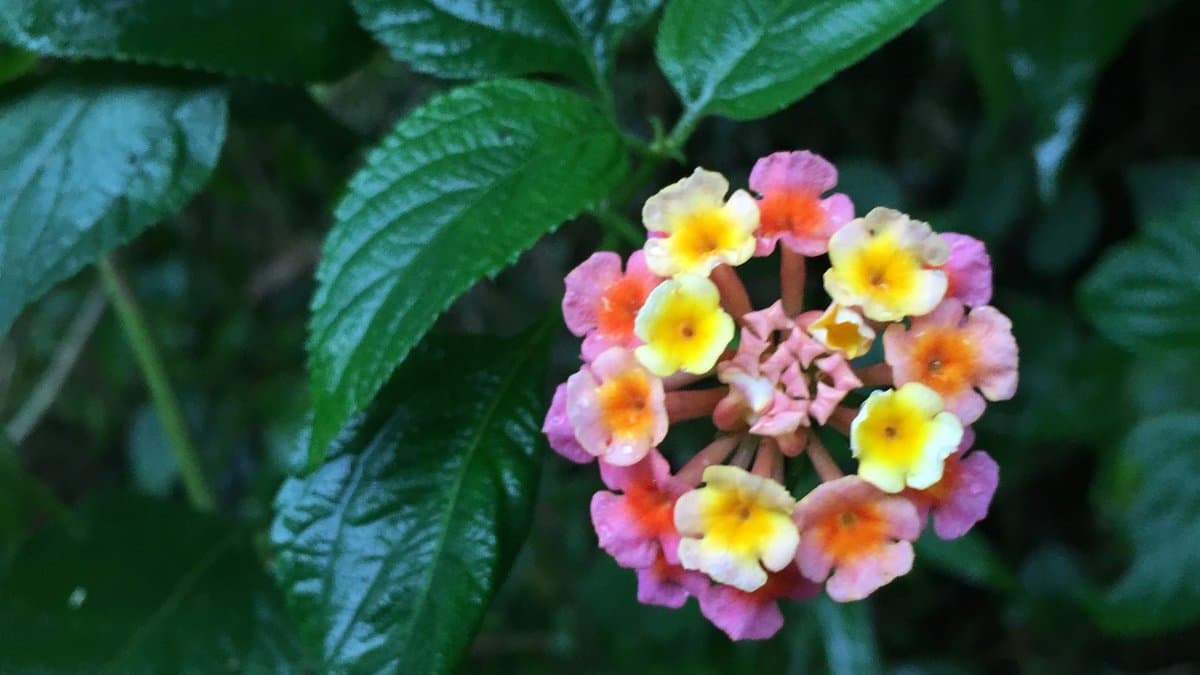
The ASPCA Animal Poison Control Center lists Lantana (Lantana camara, also sold as shrub verbena or yellow sage) as toxic to dogs, cats, and horses. The toxic agents are pentacyclic triterpenoids. In dogs, ingestion most commonly causes vomiting, diarrhea, weakness, and labored breathing. In grazing animals, lantana can cause liver failure, which is why it has a serious reputation in livestock country. Severe outcomes in dogs are less common but documented enough that the ASPCA lists the plant without qualification.
The unripe green berries carry the highest toxin concentration. Ripe berries, leaves, and flowers are lower risk but still on the list. A dog that mouths a flower head is in a different situation from a dog that ate a handful of green berries, but both are worth a call to poison control.
How much lantana is dangerous for a dog?
The ASPCA lists lantana as toxic without naming a safe dose, so there is no amount you can treat as harmless. In practice the risk scales with what was eaten: a dog that swallowed a handful of unripe green berries is a more urgent call than one that licked a single flower. Because the triterpenoid effects can take hours to appear, the size and timing of what the dog ate matter more than waiting to watch for symptoms. Call the ASPCA Animal Poison Control Center at (888) 426-4435 with your best estimate of the amount rather than guessing whether it was enough to matter.
Can lantana kill a dog?
Serious outcomes are rare in dogs but documented in grazing animals, per the Merck Veterinary Manual, which describes lantana poisoning progressing to liver damage in livestock that eat it repeatedly. For a dog, the realistic risks are vomiting, diarrhea, weakness, and labored breathing rather than a single fatal dose. That is reassuring, not a reason to wait: because the triterpenoid effects can take hours to show and severity depends on the dog's size and how much was eaten, treat any known ingestion as a call to make now. Call the ASPCA Animal Poison Control Center at (888) 426-4435 as soon as you know lantana was eaten.
Is lantana toxic to cats too?
Yes. The same ASPCA Animal Poison Control Center listing covers cats and horses alongside dogs, and the pentacyclic triterpenoids are the same across species. Cats tend to nibble foliage rather than the berries, but the plant stays on the toxic list for them. If you have a cat that chews garden foliage or houseplants, keep lantana out of reach the same way you would for a dog.
Is native Texas Lantana different?
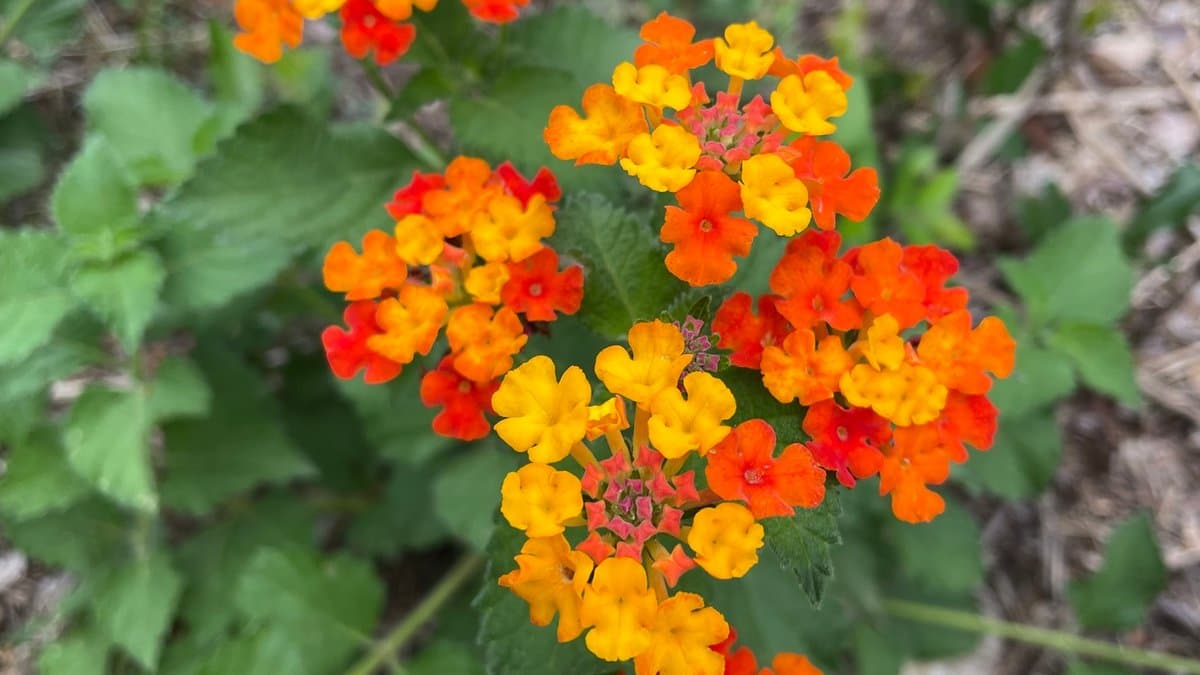
Texas Lantana (Lantana urticoides) is the native species, with orange and red flowers instead of the multicolor pink-yellow clusters of the imports. It is a better ecological citizen than Lantana camara, which is invasive in parts of Texas. On toxicity, though, the honest answer is to treat it the same. The ASPCA entry covers the genus by its most common species, and the triterpenoid compounds occur across Lantana. If your dog actively eats plants, do not rely on the native species being safer.
Practical translation: Texas Lantana is fine in a front bed your dog never visits, and it is a poor choice for the strip along the dog run. Where the dog roams, use one of the swaps below.
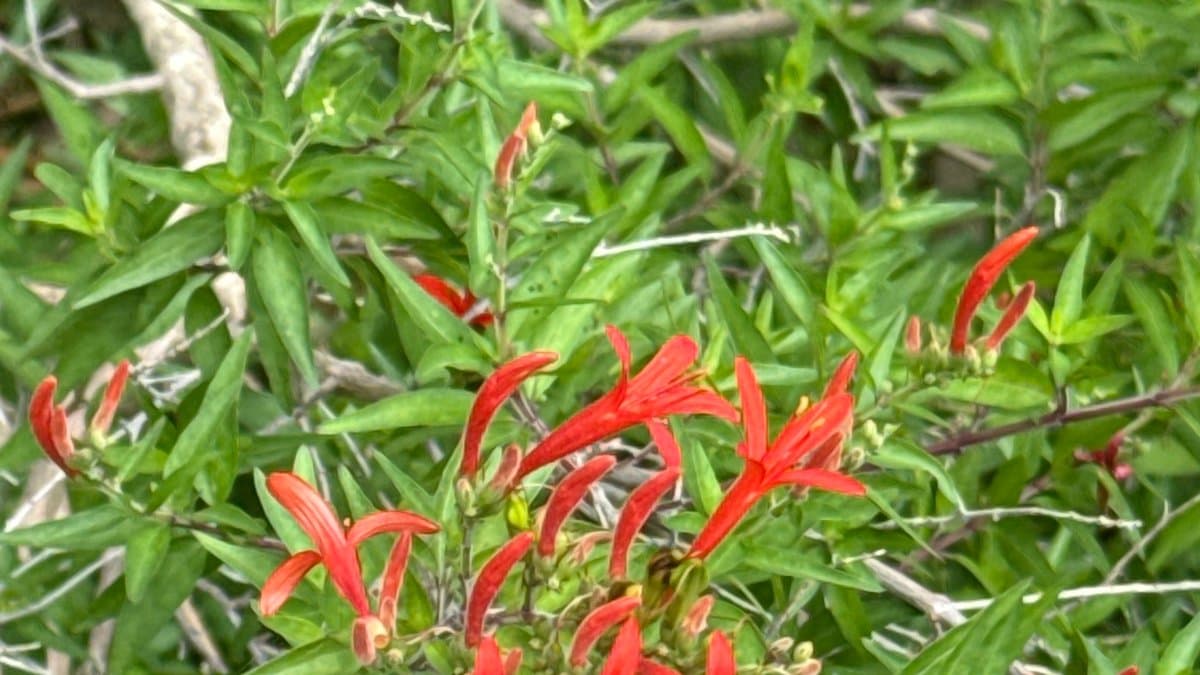
Dog-safe native swaps with the same look
These Edwards Plateau and Hill Country natives (San Antonio area) give you the same low, sun-loving, long-blooming color without the ASPCA listing. Native ranges per the Lady Bird Johnson Wildflower Center.
| Plant | Off ASPCA toxic list? | Notes |
|---|---|---|
| Lantana (Lantana camara) | No | Toxic to dogs, cats, and horses per the ASPCA; green berries worst |
| Texas Lantana (Lantana urticoides) | Caution | Native, but same genus; treat with the same caution around dogs that chew plants |
| Flame Acanthus (Anisacanthus quadrifidus var. wrightii) | Yes | Not on ASPCA toxic plant list; orange-red summer bloom, hummingbird favorite |
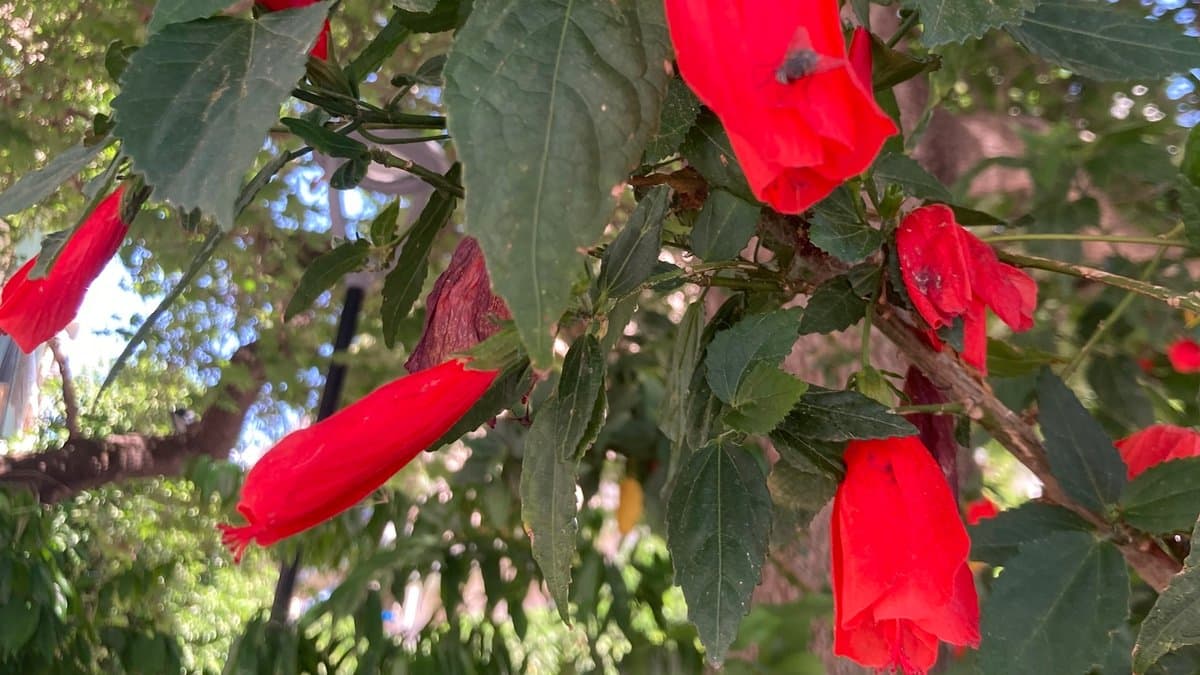
| Turk's Cap (Malvaviscus arboreus var. drummondii) | Yes | Not on ASPCA toxic plant list; red blooms late spring through fall, takes shade |
| Blackfoot Daisy (Melampodium leucanthum) | Yes | Not on ASPCA toxic plant list; low white mounds, very drought tough |
What to do if your dog ate lantana
- Note which part was eaten (berries, leaves, flowers) and roughly how much.
- Call the ASPCA Animal Poison Control Center at (888) 426-4435, or your vet. Do not wait for symptoms; triterpenoid effects can take hours.
- Do not induce vomiting unless a vet tells you to.
- Watch for vomiting, diarrhea, weakness, or labored breathing and report them on the call.
For the rest of the plants worth checking before your next nursery run, see the six Texas yard plants most toxic to dogs and the dog-friendly native backyard guide.
If something goes wrong
ASPCA Animal Poison Control Center: (888) 426-4435 (24/7, fee may apply). Have the plant name ready when you call.
Checking more than one plant? See the full list of plants toxic to dogs and cats, with native alternatives, covering every plant on the ASPCA list.