The 'Pretty' Vine That's Smothering Texas Creek Beds
The short version
- Japanese Honeysuckle was introduced for erosion control and now inhibits native vegetation.
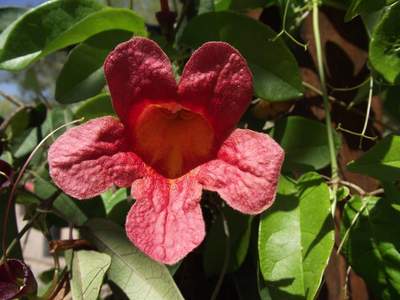
- Crossvine is semi-evergreen, fast-growing, and attracts pollinators.
- Use Crossvine on pergolas and fences for an HOA-friendly native vine.
Japanese Honeysuckle was brought from Japan in the early 1800s for erosion control. It spreads aggressively and forms dense mats that smother native vegetation along creeks and in woods. Crossvine is the native swap: semi-evergreen, fast-growing, low-maintenance, and terrific for pollinators. It softens fences and pergolas without the ecological cost.
Why Japanese Honeysuckle is a problem
Japanese Honeysuckle (Lonicera japonica) vines over shrubs and trees and can form a dense ground layer that blocks sunlight and keeps native plants from regenerating. It is still sold and planted because it smells nice and grows fast. In natural areas it is a major invader. In a yard it can escape into adjacent land.
Grow Crossvine instead
Crossvine (Bignonia capreolata) is a Texas native vine with trumpet-shaped orange and red flowers in spring. It is semi-evergreen, fast-growing, and very low-maintenance. Hummingbirds and pollinators use it. It works on pergolas, fences, and arbors and reads as intentional, so it fits HOA-conscious yards. For more on vines and slopes, see pollinator garden slope design.
For pet-safe vine options, toxic plants for dogs includes Crossvine as a safe swap. Check rebates for water-wise landscaping in your city.
Plan a native yard
Pollinator Patch helps you pick plants by region. Check rebates before you buy.
See a finished plan for a yard like this
Find our guides useful? Add Pollinator Patch as a preferred source on Google and articles like this one will show up higher in your own search results.