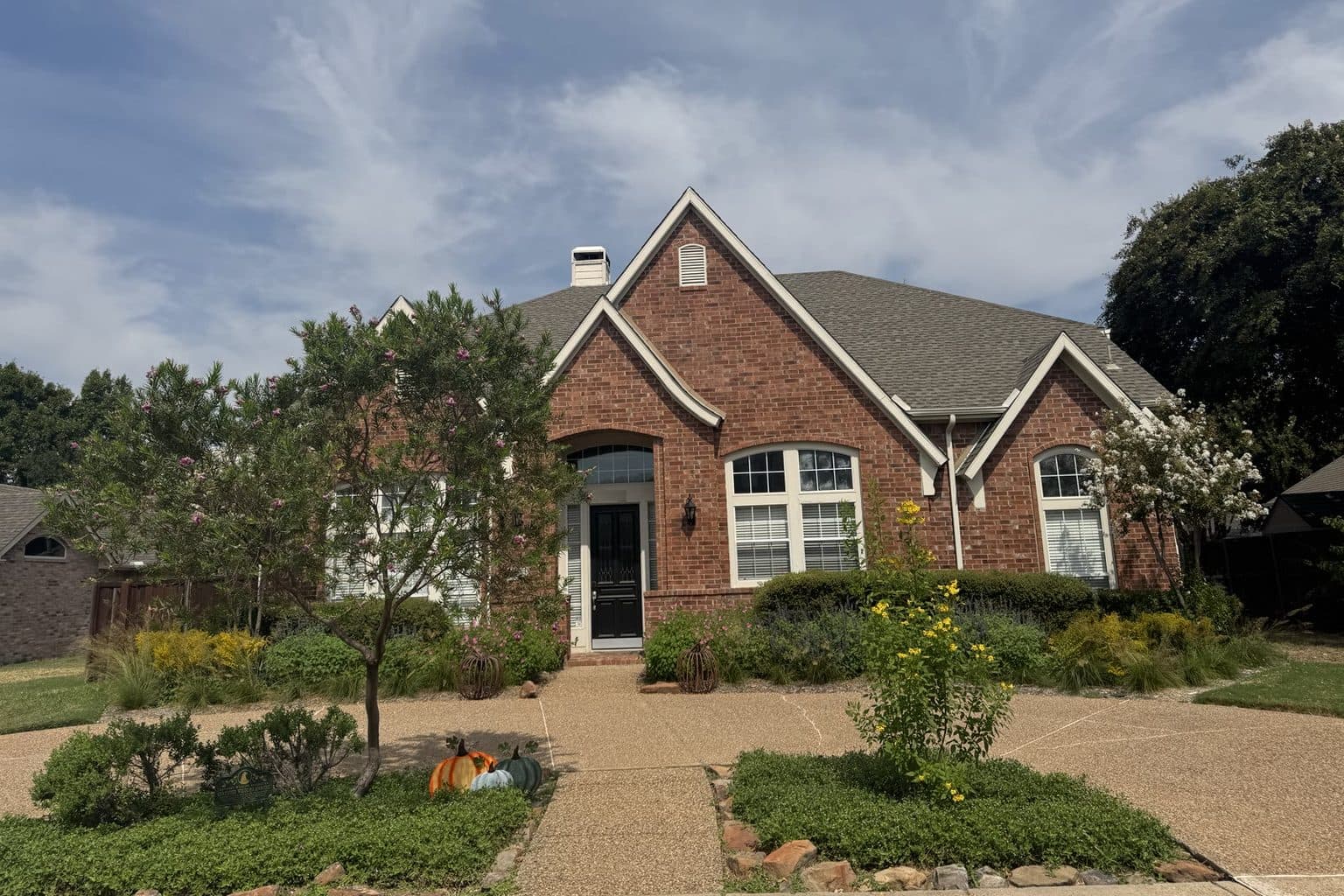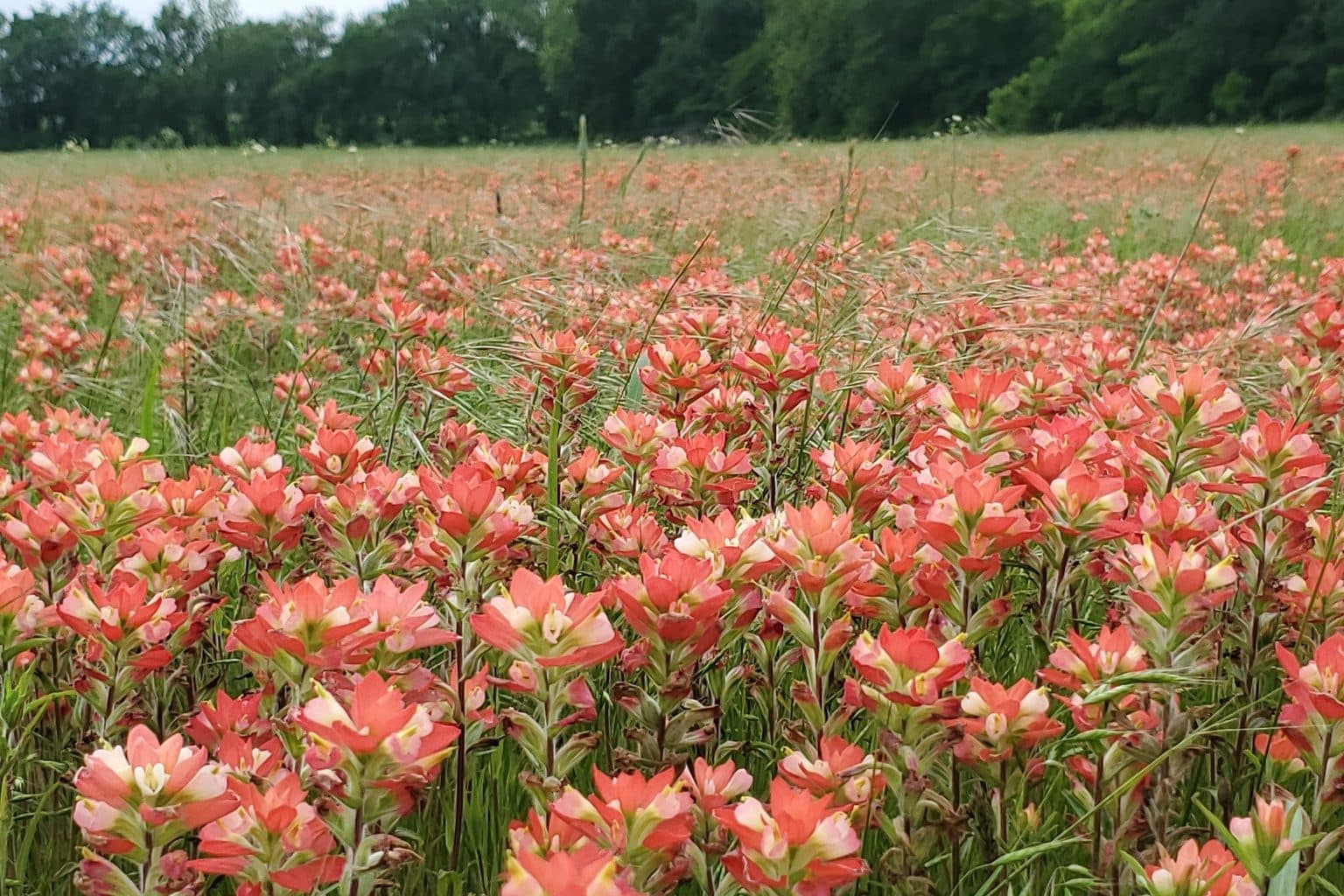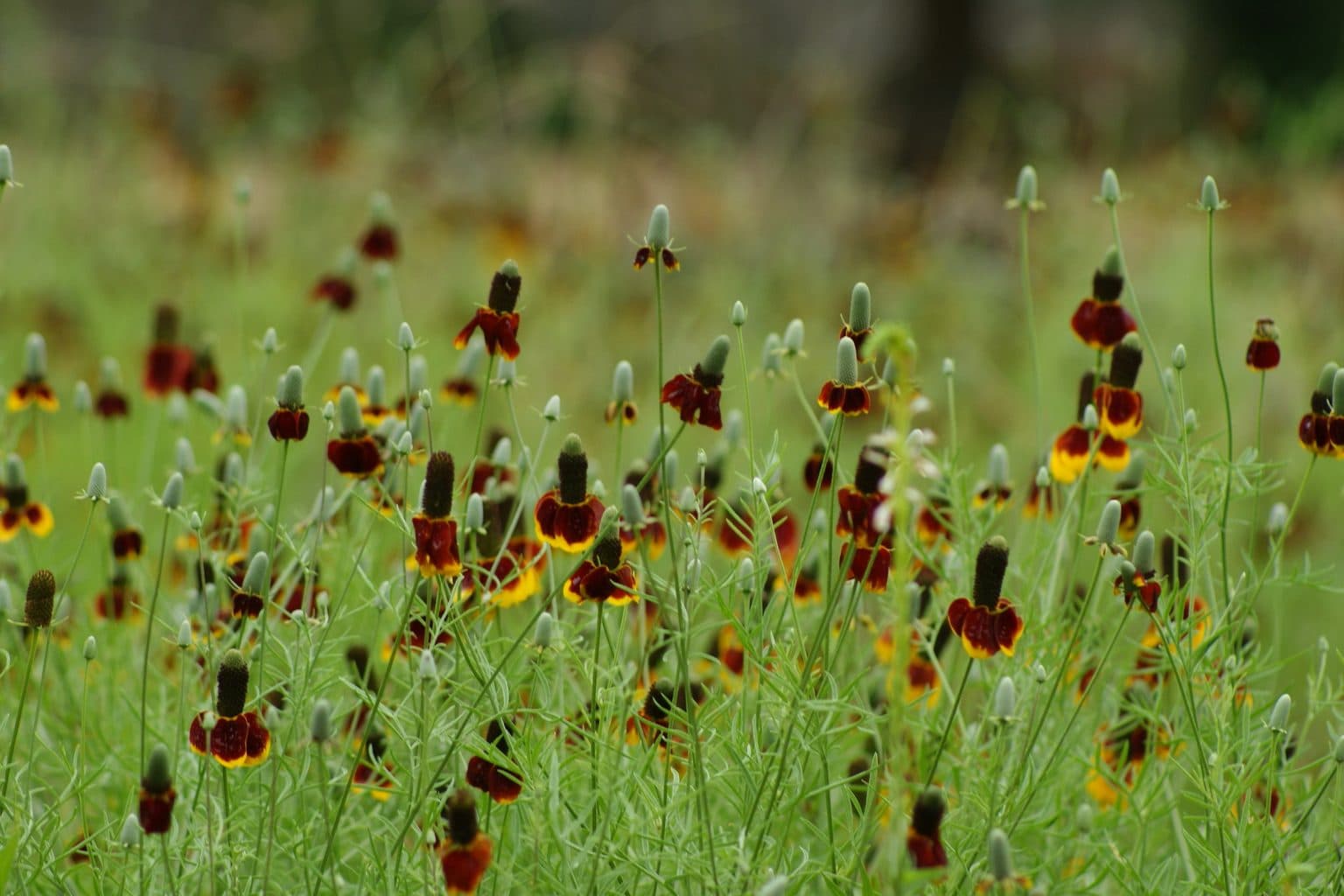
Sloped yards are common in Texas. Hillsides, berms, and drainage swales create challenges: erosion, water runoff, and spots where turf struggles. Native plants with deep roots can hold soil and reduce runoff better than grass. The trick is designing a slope planting that looks intentional from the street, not like a wild hillside.
Key takeaways
- Little Bluestem, Indiangrass, Black-eyed Susan have deep roots that hold soil. Turf has shallow roots.
- Contour planting, terracing, or mulch and edging at the base. All read as designed. See mulch and visibility.
- Low at bottom (Frogfruit, Prairie Verbena, Blackfoot Daisy), tall at top (Gulf Muhly, Little Bluestem, Indiangrass).
- See best native plants for Texas for full plant list.
Pollinator gardens on slopes work when you use structure: defined beds, contour planting, and plants chosen for their root systems as much as their flowers.
Why natives work on slopes
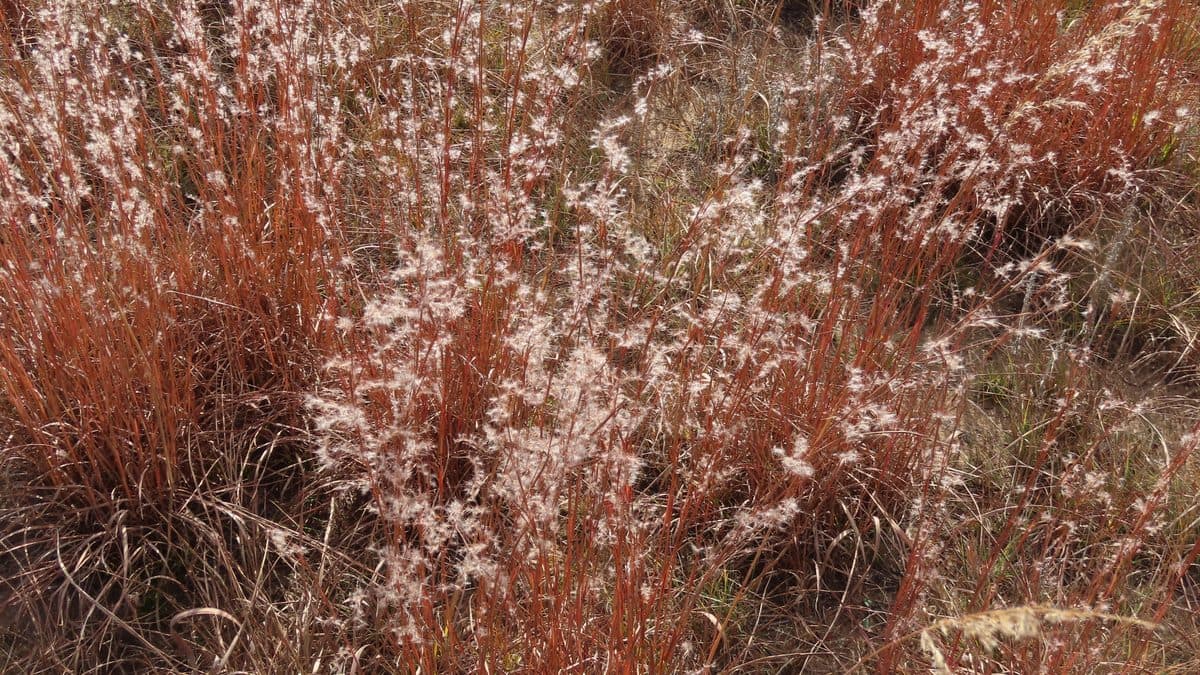
Native grasses and perennials send roots deep. Little Bluestem, Indiangrass, and Black-eyed Susan develop root systems that anchor soil and absorb water. Turf grass, by contrast, has shallow roots. On a slope, that means more erosion and more runoff during heavy rain.
For more on replacing turf with natives, see how to replace your lawn with native plants.
Design strategies for slopes
Three approaches that read as designed:
- Contour planting: Follow the slope with curved beds. The curves define the planting zone and create visual flow.
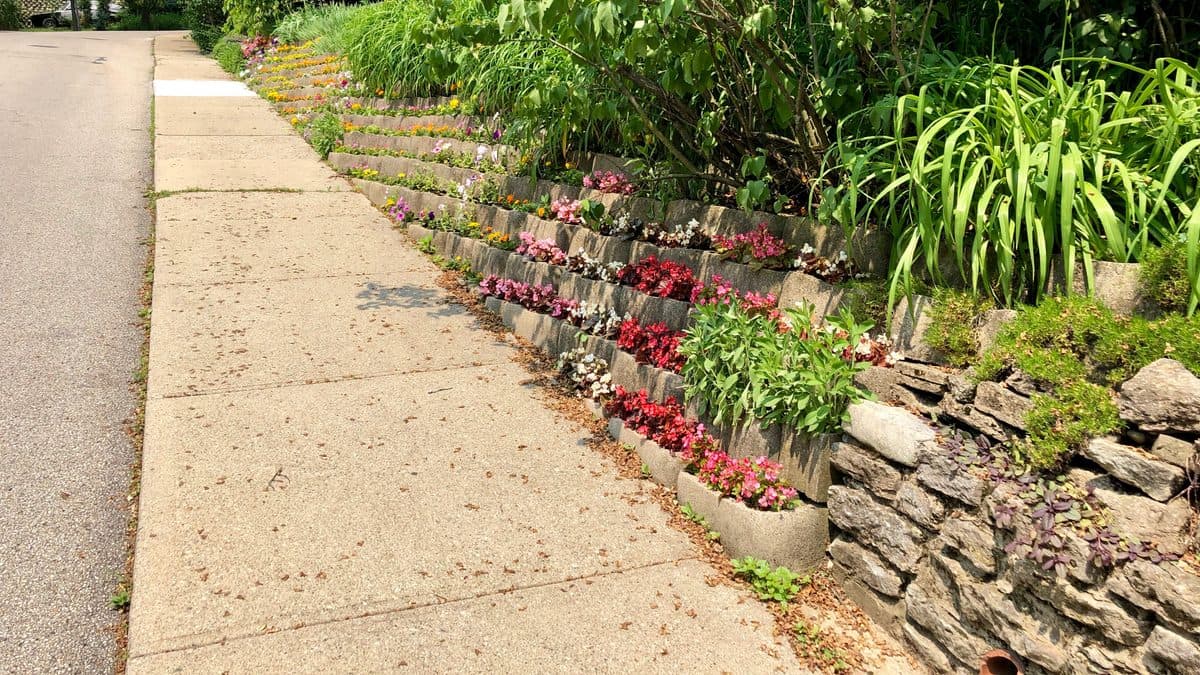
- Terracing: Level steps with retaining walls or stacked stone. Each terrace is a defined bed. More labor upfront, but very clear structure.
- Mulch and edging at the base: A crisp edge where the slope meets flat ground signals "this is intentional." Mulch on the slope reduces erosion and weeds.
For design cues that HOAs notice, see mulch, edging, and visibility.
Plant placement by height
Low-growing species near the bottom of the slope and taller plants toward the top improve visibility and reduce the "wall of green" effect. It also helps with erosion: plants at the base catch sediment; plants at the top hold the soil.
Good low options: Frogfruit, Prairie Verbena, Blackfoot Daisy. Mid-height: Mealy Blue Sage, Black-eyed Susan. Tall: Gulf Muhly, Little Bluestem, Indiangrass.
For a full plant list, see best native plants for Texas front yards.
Visibility from the street
If your slope faces the street, design for the 50-foot view. Clean edges, grouped plantings, and visible mulch matter more than individual species. For more on curb appeal, see first impressions from the curb.
Erosion control during establishment
New plantings need time to root. Until then, erosion cloth, jute netting, or a thick mulch layer can hold soil. Avoid plastic sheeting; it prevents water from reaching roots. Once plants establish (usually by the second season), they'll do most of the work.
Planning a slope planting?
Pollinator Patch helps you pick plants and design layouts for your conditions.