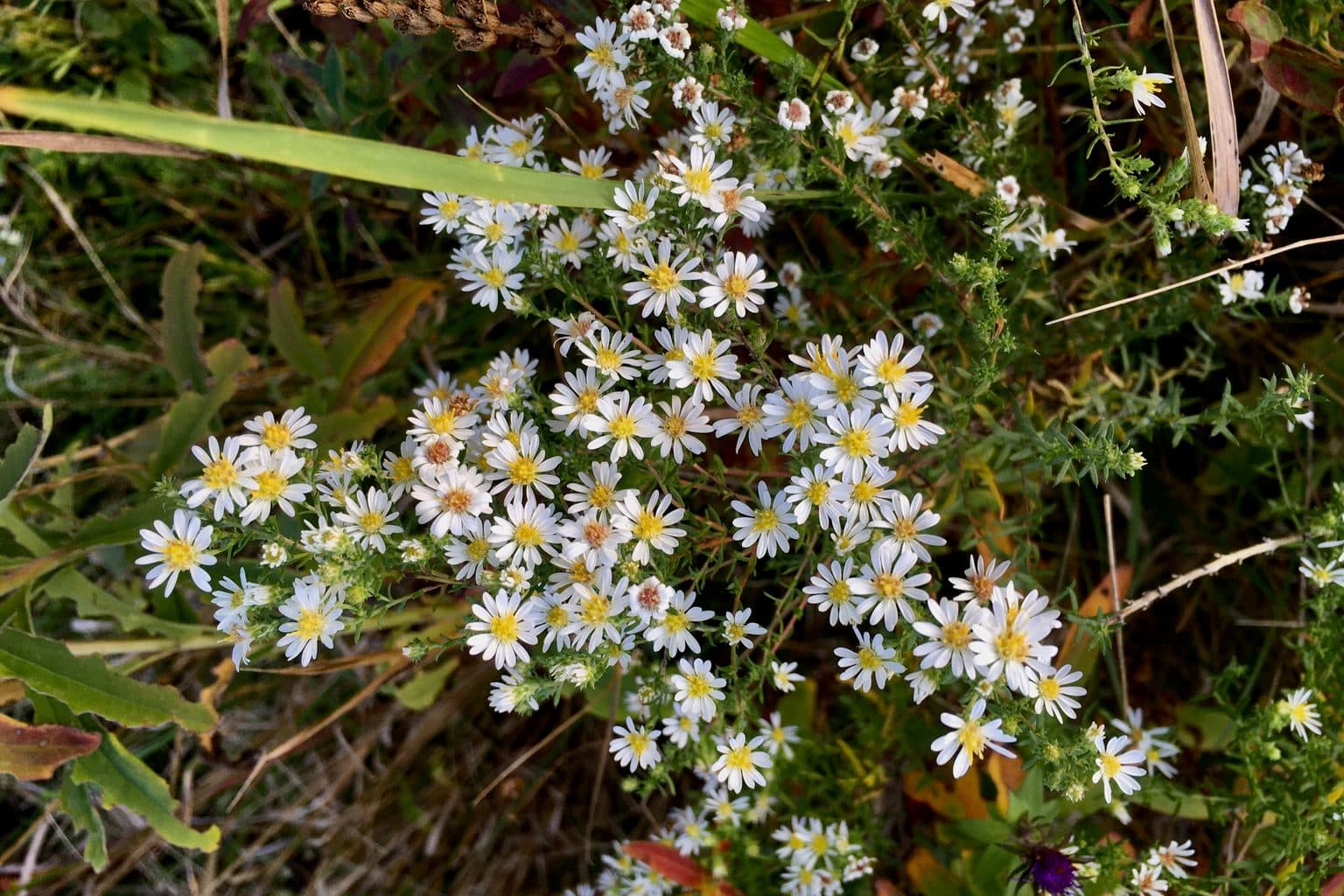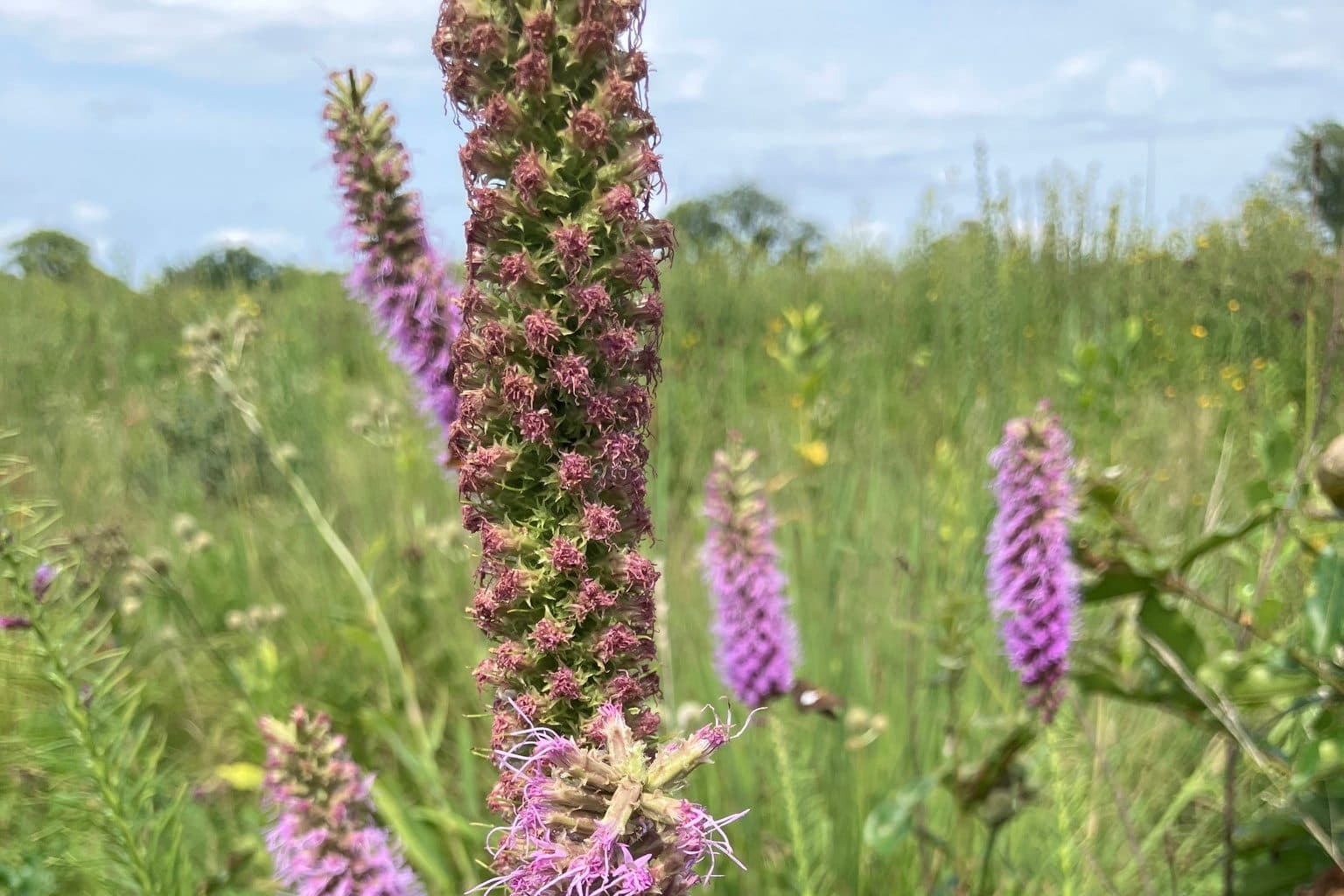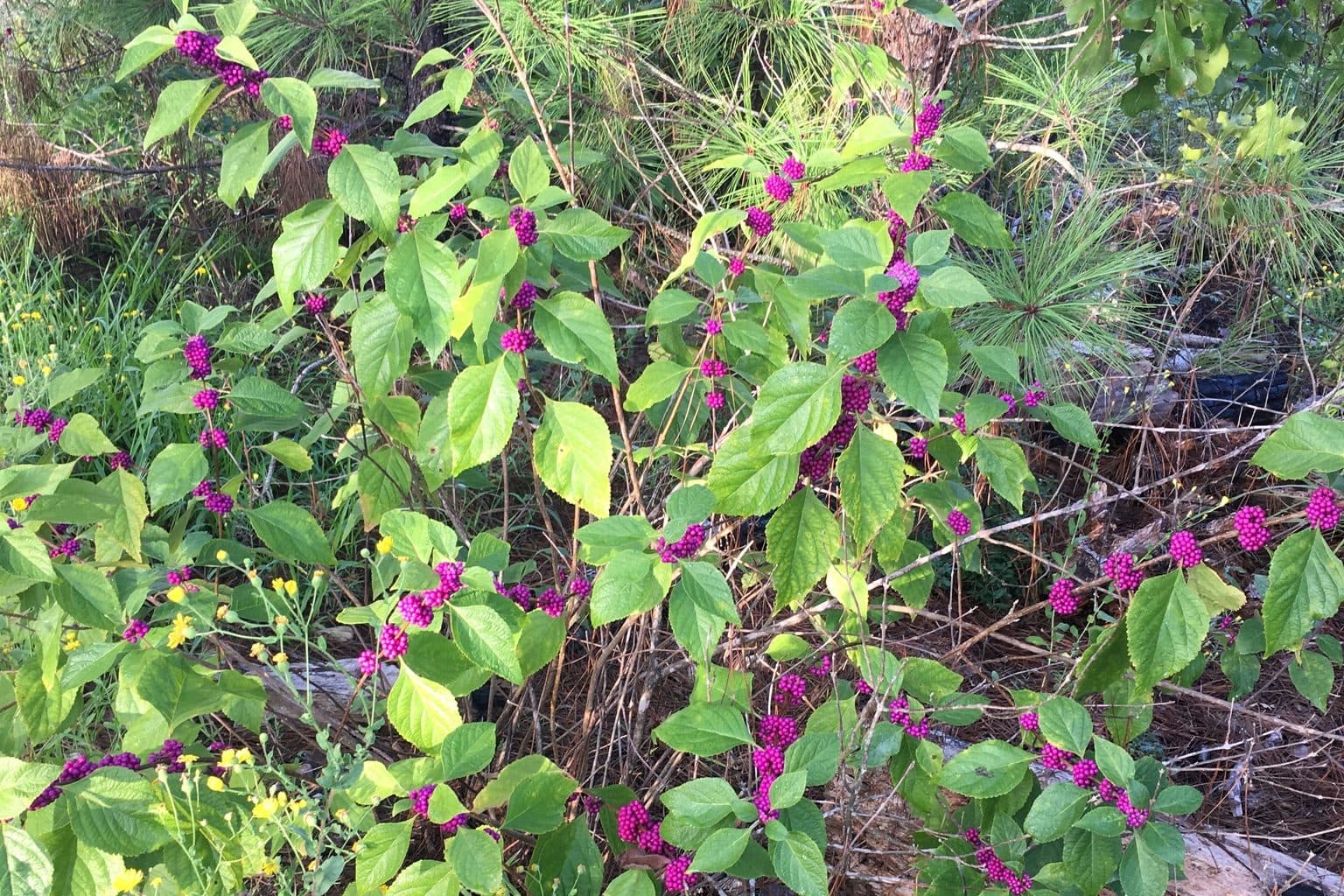
Quick answer: For native plant garden design in a small yard, choose one anchor shrub, buy compact plants by their mature width, repeat each plant in a group, and stack the heights from back to front. In the worked example below, a 10 by 20 foot bed in the Piney Woods (Beaumont area) takes 3 American beautyberry, 2 coral honeysuckle on a trellis, 5 inland sea oats, 5 cardinal flower, and 13 black-eyed Susan. Each count comes from dividing the bed's length by the plant's mature spread (Native Plant Society of Texas).
Native plant garden design for a small yard is mostly arithmetic. Every plant has a full-grown width, and a bed that size fills up fast if you buy for the pot instead of the plant.
The example here is a Piney Woods bed in the Beaumont area, because a plant list needs an ecoregion to be accurate. The method works in any ecoregion, and only the plant names change. A 10 by 20 foot bed is 200 square feet, about the size of a strip along a front walk or a fence.
Native plant garden design for a small yard starts with mature width
A nursery tag shows a plant in a one-gallon pot. The number you want is the spread of the full-grown plant, which the Native Plant Society of Texas (NPSOT) lists on each plant page. Divide the length of a bed row by that spread and you have the plant count for the row. Where the spread is a range, use the middle. A beautyberry listed at 4 to 6 feet wide gets 5 feet.
Planting closer than the mature spread looks full for a year or two. After that the plants lean into each other and you spend weekends cutting them back to hold the shape.
Pick one anchor for the whole bed
A small yard reads as calm when one plant is clearly the tallest and largest, and everything else is lower. Here the choice is between two shrubs.
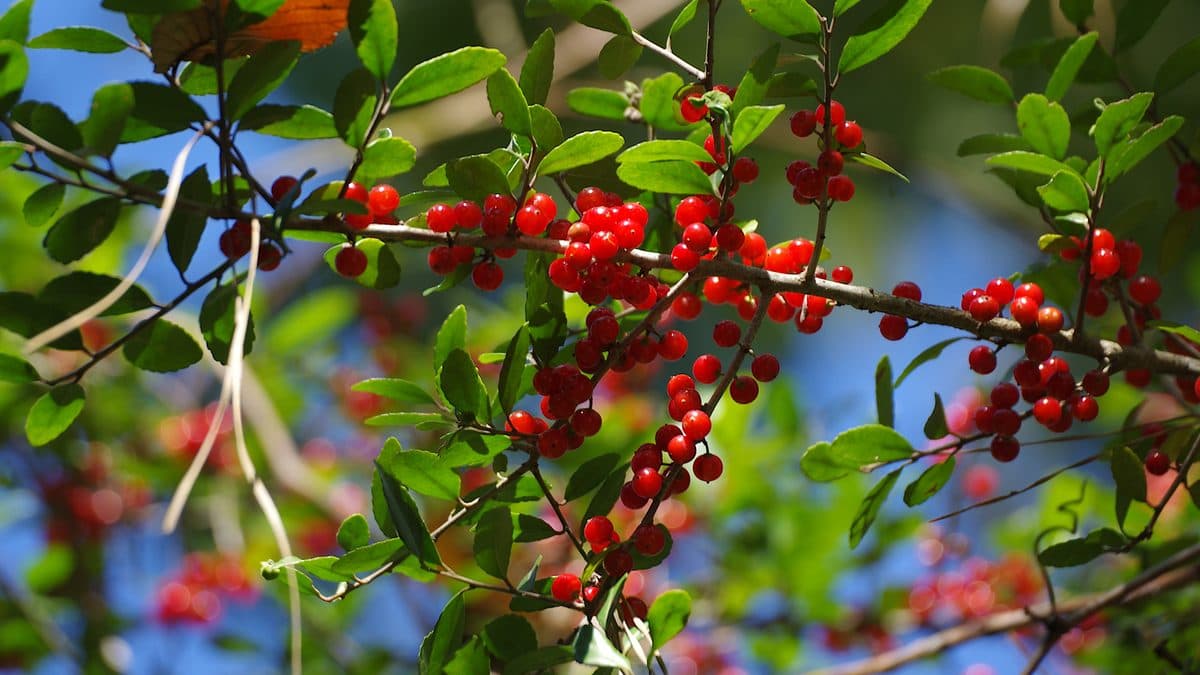
Yaupon (Ilex vomitoria) is evergreen and grows 12 to 25 feet tall and 8 to 12 feet wide, in sun, part shade, or shade (NPSOT (opens in new tab)). The Lady Bird Johnson Wildflower Center lists it as a larval host for Henry's Elfin butterfly, and notes that you need both a male and a female plant to get berries (Wildflower Center (opens in new tab)). It is a fine anchor where a bed has room, but one yaupon at its full width would take a 10-foot slice of the 20-foot back row. In a 10-foot-deep bed it leaves a 10 by 10 foot square for everything else.
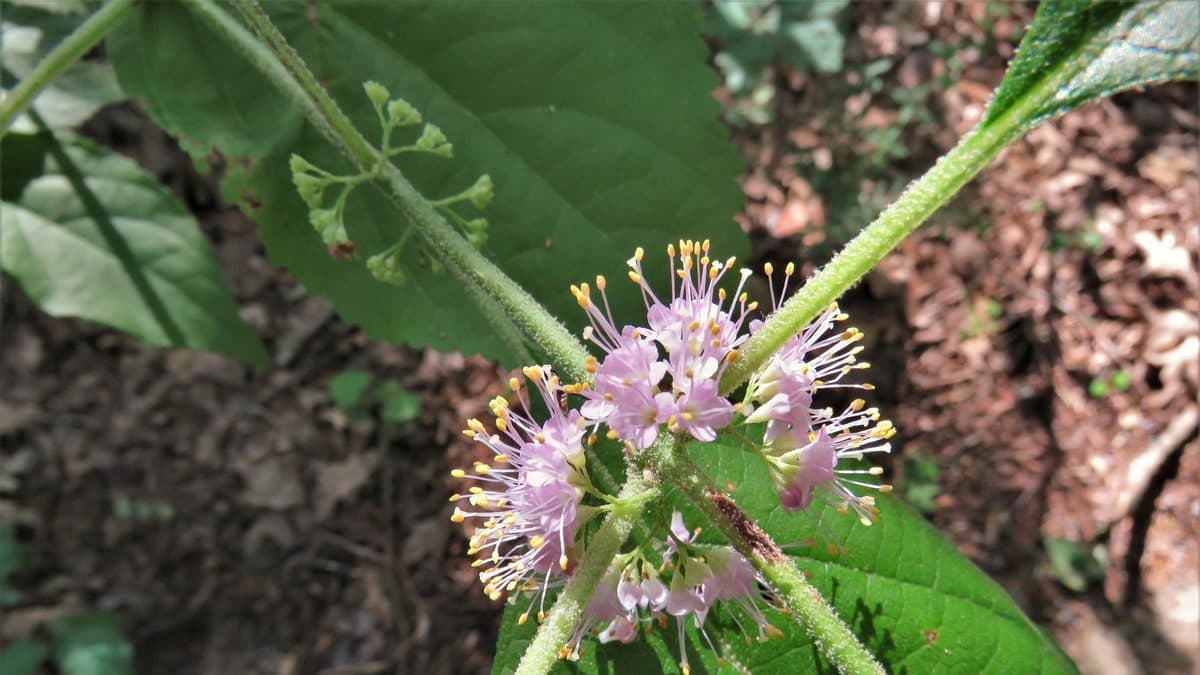
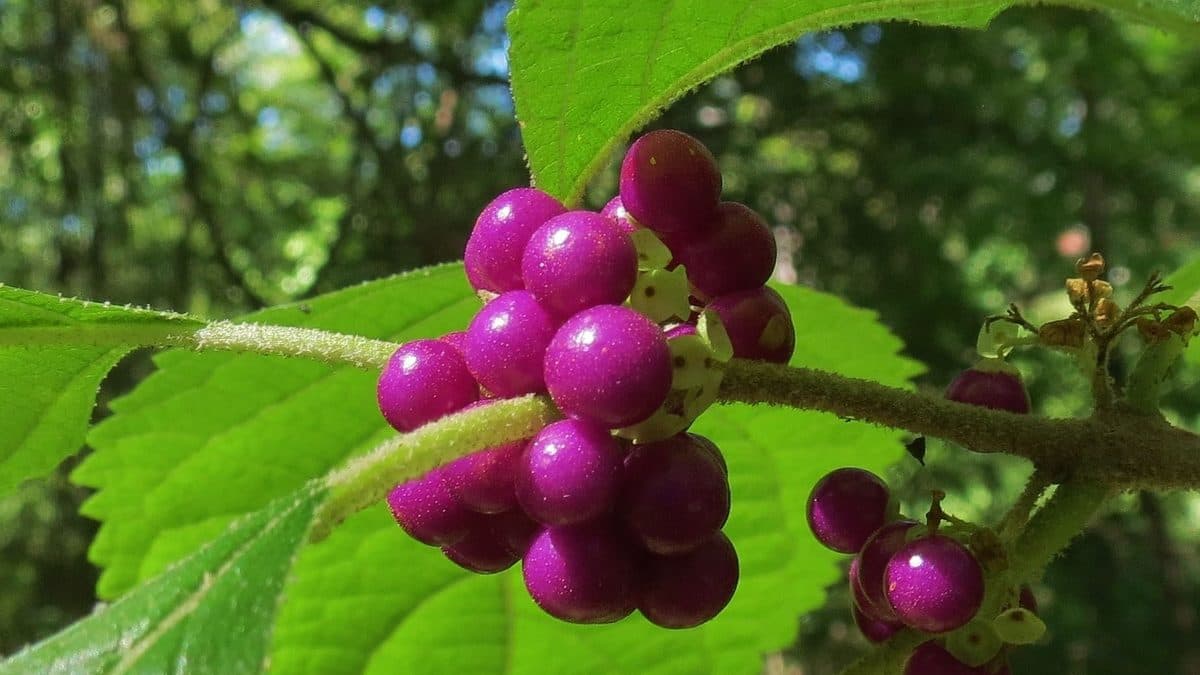
American beautyberry (Callicarpa americana) fits the 10-foot depth. NPSOT lists it at 4 to 6 feet tall and 4 to 6 feet wide, in part shade, blooming May through July (NPSOT (opens in new tab)). The Wildflower Center adds that it can reach 9 feet in good soil and moisture, that birds eat the berries, and that deer favor the foliage and the plant is not rated deer resistant (Wildflower Center (opens in new tab)). It appears on the Texas Parks and Wildlife Department's East Texas Piney Woods plant list (Texas Wildscapes, Appendix V (opens in new tab)).
Layer the plants by height
Four more plants fill the layers below the anchor. All four are on the Texas Parks and Wildlife East Texas Piney Woods list, and the sizes below are from their NPSOT pages.
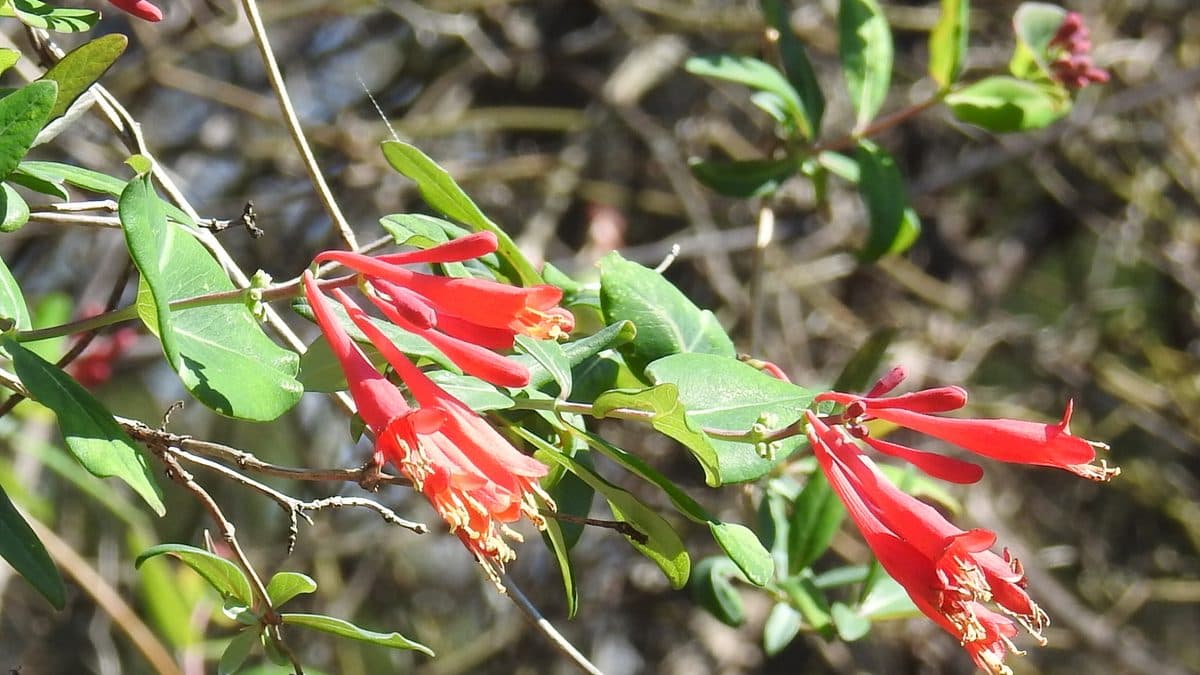
Coral honeysuckle (Lonicera sempervirens) goes up a trellis at the back. It is a twining vine, 3 to 20 feet long and only a foot or less wide, so it adds height without taking floor space (NPSOT (opens in new tab)). It takes sun or part shade, blooms from March into early summer, and the flowers draw hummingbirds. It is also a host plant for the Spring Azure and the Snowberry Clearwing moth (Wildflower Center (opens in new tab)).
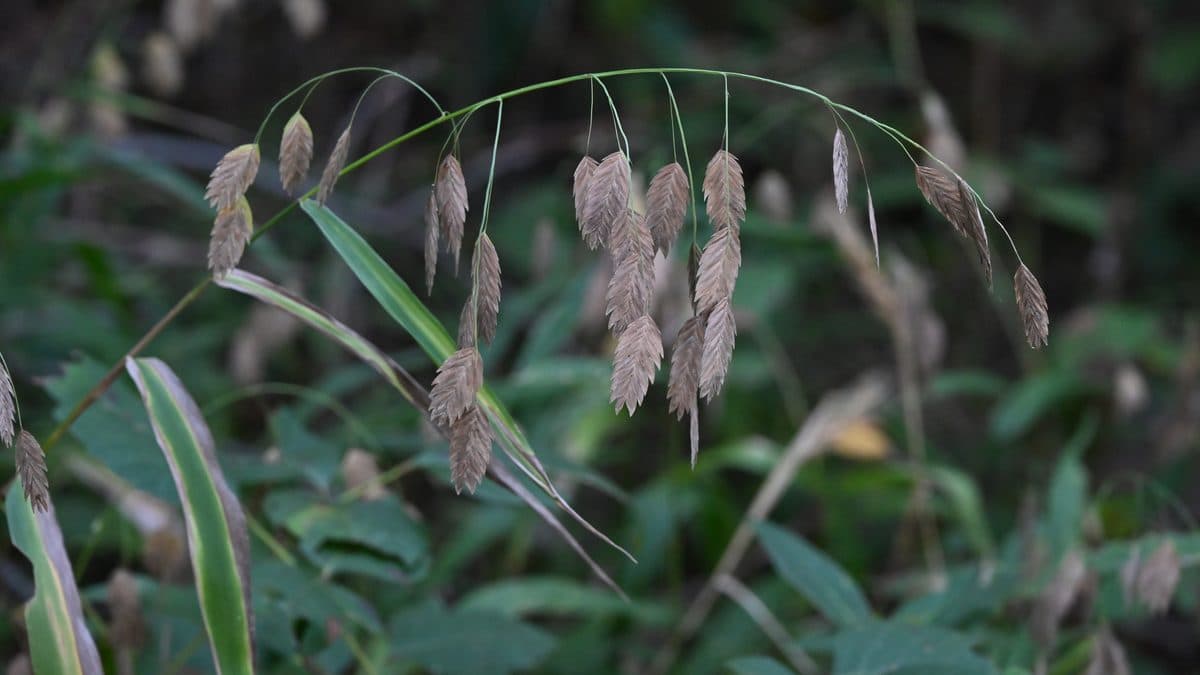
Inland sea oats (Chasmanthium latifolium) form the middle layer, 2 to 4 feet tall and 2 to 3 feet wide, in part shade to shade (NPSOT (opens in new tab)). The Wildflower Center says to avoid continuous full sun, since the leaves turn yellow, and warns that it reseeds easily and can spread aggressively in moist loam, so in a small bed you pull the extras. It hosts three skipper butterflies (Wildflower Center (opens in new tab)).
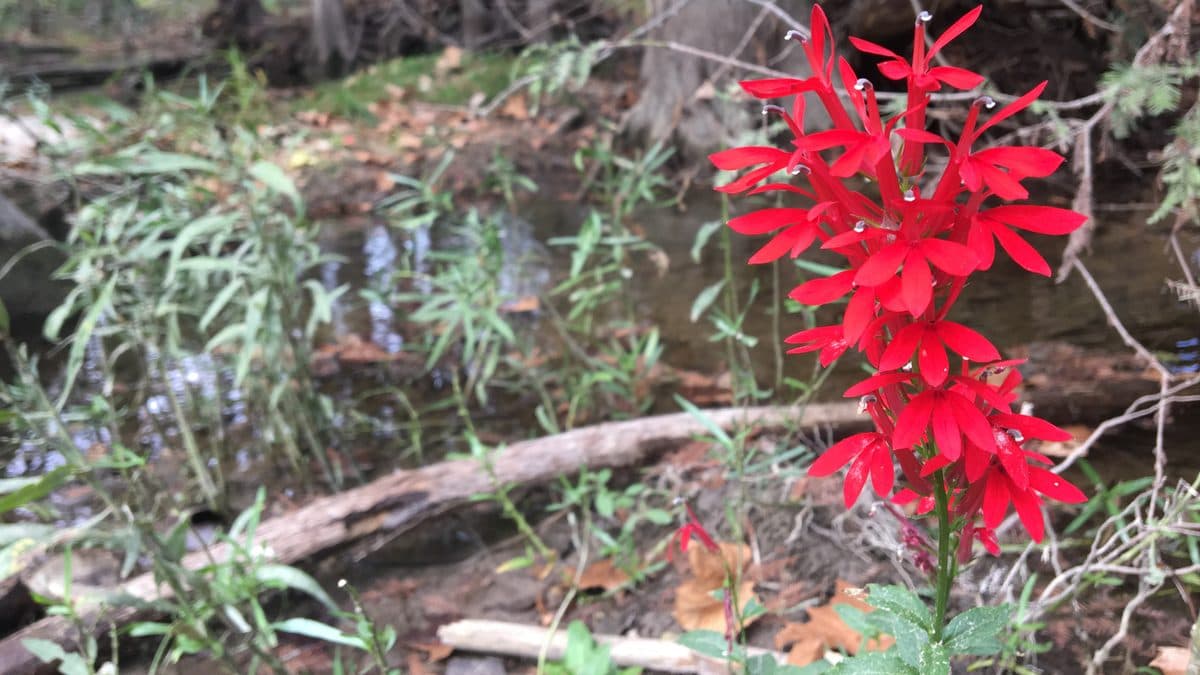
Cardinal flower (Lobelia cardinalis) is 2 to 6 feet tall and 1 to 2 feet wide, with red flowers from May to October. It needs soil that stays moist at all times (NPSOT (opens in new tab)), so give it the low corner or the spot nearest the downspout or hose. Hummingbirds visit it in bloom (Wildflower Center (opens in new tab)).
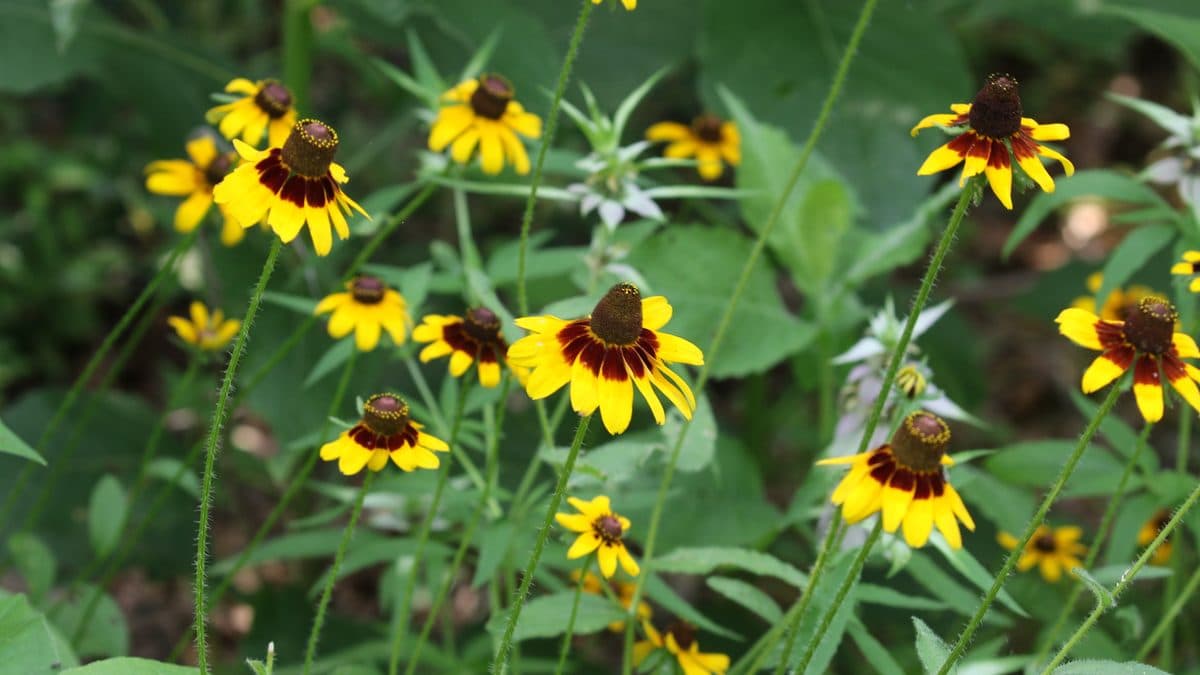
Black-eyed Susan (Rudbeckia hirta) takes the front edge at 1 to 2 feet tall and 1 to 2 feet wide, in full sun, blooming March through November in the NPSOT listing (NPSOT (opens in new tab)). The Wildflower Center notes it may behave as an annual, biennial, or short-lived perennial and may bloom longer with some afternoon shade. It hosts the Gorgone Checkerspot and Bordered Patch butterflies (Wildflower Center (opens in new tab)).
A sample native plant garden design for a small yard: 10 by 20 feet
Picture the bed with its long side facing the street and its back against a fence or wall. It gets morning sun and some afternoon shade. Put the sea oats on the shadier end, the black-eyed Susan where the sun is strongest, and the cardinal flower at the wettest spot. Each count is the row length divided by the spacing, rounded down.
| Layer | Plant | Mature height x spread (NPSOT) | Spacing used | Count |
|---|---|---|---|---|
| Back | American beautyberry | 4 to 6 ft x 4 to 6 ft | 5 ft, so 15 ft of the row | 3 |
| Back (trellis) | Coral honeysuckle | 3 to 20 ft x 0.5 to 1 ft | 2 ft apart on a 4 ft trellis, in the last 5 ft | 2 |
| Middle | Inland sea oats | 2 to 4 ft x 2 to 3 ft | 2.5 ft, so 12.5 ft of the row | 5 |
| Middle | Cardinal flower | 2 to 6 ft x 1 to 2 ft | 1.5 ft, so 7.5 ft of the row | 5 |
| Front | Black-eyed Susan | 1 to 2 ft x 1 to 2 ft | 1.5 ft, so 20 ft divided by 1.5 | 13 |
That is 28 plants for 200 square feet. The bed will look sparse the first spring because every plant is set at its full-grown spacing, so mulch the open soil and let the black-eyed Susan fill in. Swap in the numbers for your own plants and the same division gives you a shopping list.
Edges that look intentional
Small beds get judged on their edges. A clean mulch line, a steel or stone edge, or a low row of the same plant along the front tells a neighbor or a review committee that the bed is planned. Groups help too. Five sea oats together look like a decision, and one of each plant looks like a sampler. Keep the tallest plants at the back and the lowest at the front, and trim the front row when it leans over the edge.
Our posts on clean borders with wild interiors and mulch and edging as design cues go deeper on edges, and the HOA landscape plan template helps you put the layout on one page for a review. Sea oats and other grasses are covered in native grass height and HOA rules in Texas.
Use the method with your own plants
Everything above is a Piney Woods example. In another ecoregion the plant names change and the steps stay the same: pick one anchor, find each plant's mature spread on a native plant society or extension page, divide, repeat in groups, and stack heights.
Sources
Height, spread, sun, and bloom time: Native Plant Society of Texas plant pages, linked above. Pollinator and wildlife associations, native range notes, and the 9-foot beautyberry figure: Lady Bird Johnson Wildflower Center plant pages. Piney Woods regional list: Texas Parks and Wildlife Department, Texas Wildscapes, Appendix V, East Texas Piney Woods (opens in new tab), which includes beautyberry, coral honeysuckle, inland sea oats, cardinal flower, and Rudbeckia hirta. Yaupon is not on that list, so its range rests on the NPSOT and Wildflower Center pages.
People also ask
How many plants fit in a 10 by 20 foot native garden bed?
It depends on mature spread. In the Piney Woods example here, 28 plants fit: 3 American beautyberry, 2 coral honeysuckle, 5 inland sea oats, 5 cardinal flower, and 13 black-eyed Susan. Divide each row's length by the plant's mature spread from a native plant society page.
What is the best shrub for a small native garden in the Piney Woods?
American beautyberry fits a small bed. The Native Plant Society of Texas lists it at 4 to 6 feet tall and wide, and it appears on the Texas Parks and Wildlife East Texas Piney Woods list. Yaupon grows 8 to 12 feet wide, so it suits a bed with room for it.
How far apart should I space native plants in a small yard?
Use the plant's mature spread, taken from the middle of the listed range. Beautyberry at 4 to 6 feet wide gets 5 feet, and sea oats at 2 to 3 feet get 2.5 feet. Closer spacing fills in sooner and then needs regular cutting back.
Want the list for your own ZIP?
Pollinator Patch matches native plants to your ZIP and ecoregion and helps you lay out a bed that fits your yard.