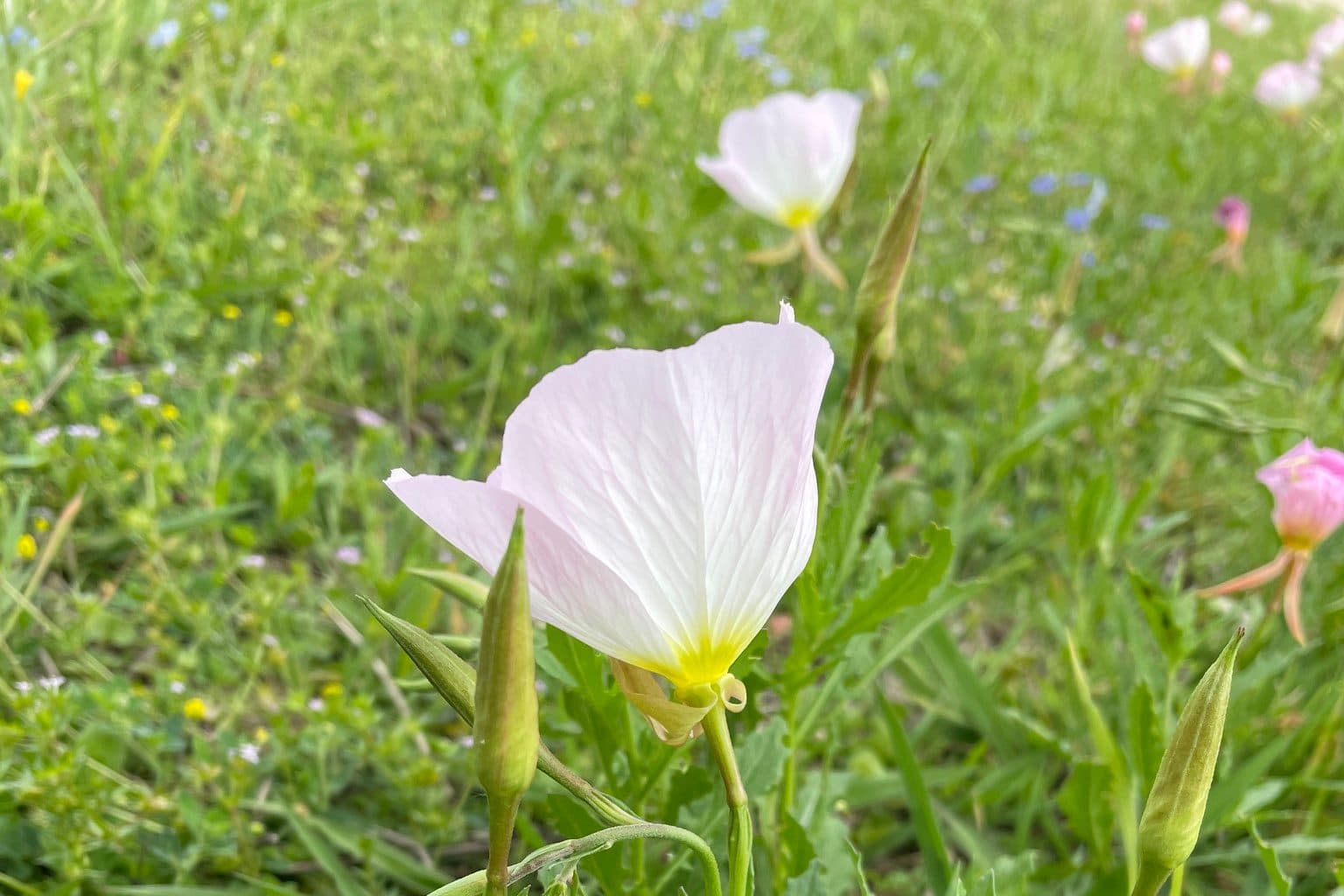
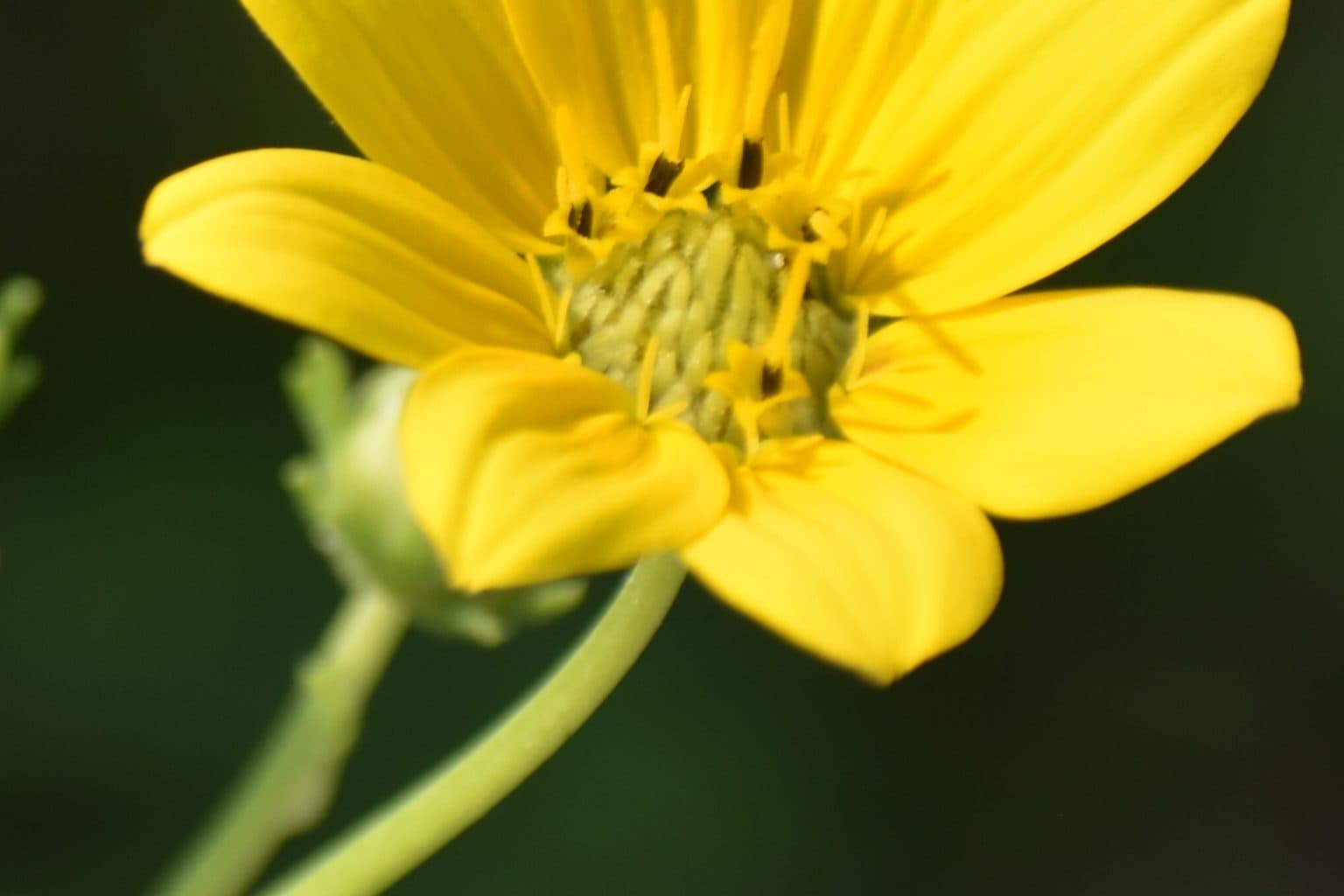
Quick answer: For native plants in Dallas-Fort Worth, start with six that the Lady Bird Johnson Wildflower Center lists as suitable for planned landscapes in North Central Texas: winecup, Engelmann's daisy, lemon beebalm, Indian blanket, black-eyed Susan, and little bluestem. The Wildflower Center lists clay, sandy soil, or both for several of them. The metro splits between black clay in the east and sandy Cross Timbers soil toward Fort Worth, so check which side your yard is on.
Planting native plants in Dallas-Fort Worth means choosing for two kinds of ground at once. A yard in Garland and a yard in Fort Worth can both be called "DFW," and they may not drain alike.
This list covers the Blackland Prairie and Cross Timbers around Dallas and Fort Worth. We already cover Dallas clay gardens and Fort Worth and the Tarrant rebate, so here the focus is the plants that sit comfortably on either side of the line. Sizes, light, and soil come from the Lady Bird Johnson Wildflower Center (opens in new tab) plant pages unless another source is named.
Why native plants in Dallas-Fort Worth start with the soil
Texas Parks and Wildlife describes the Blackland Prairie as sitting on chalks, marls, limestones, and shales that produced black, calcareous, alkaline, heavy clay soils (opens in new tab). The same agency says East Cross Timbers soils are slightly acidic, sandy or sandy loam (opens in new tab), and that the region is bordered on the east by the Blackland Prairie. Its East Cross Timbers section names both Dallas and Fort Worth among the cities where woodlands were cleared for development.
Real yards are messier than a map. Soil can change within a single street. A simple test helps: dig a hole, fill it with water, and see how long it takes to drain. The plants below were picked because the Wildflower Center lists them for more than one soil type or for well-drained ground, which gives you room to adjust.
How we chose these six
Each plant appears in the Wildflower Center's Texas-North Central Recommended collection (opens in new tab), which it describes as commercially available native species suitable for planned landscapes in North Central Texas. That is a regional list, not an ecoregion-by-ecoregion one. The Native Plant Society of Texas adds two ecoregion notes in its ecoregion overview (opens in new tab): little bluestem grows in the Blackland Prairie, and black-eyed Susans grow in the Cross Timbers.
| Plant | Light | Soil note | Size |
|---|---|---|---|
| Winecup | Sun to part shade | Well-drained, rocky or sandy, clay also listed | 8 to 12 inches, spreading to 3 feet |
| Engelmann's daisy | Sun | Calcareous loams and clays, also dry sandy sites | Up to about 3 feet, often shorter |
| Lemon beebalm | Sun to part shade | Sandy loam to rocky, clay also listed | Up to about 30 inches |
| Indian blanket | Sun to part shade | Sandy or calcareous, needs good drainage | Up to about 2 feet, often shorter |
| Black-eyed Susan | Sun | Moist to dry, well-drained | Up to about 3 feet |
| Little bluestem | Sun to part shade | Well-drained, sandy through clay | Up to about 7 feet, often shorter |
Six native plants for Dallas-Fort Worth yards
Winecup (Callirhoe involucrata)
A low, spreading plant with cup-shaped flowers in white, pink, and purple. The Wildflower Center page (opens in new tab) lists a March to June bloom and says it works as a bedding plant alone or mixed into grass. Bees visit for nectar, and the gray hairstreak butterfly uses it as a larval host. The page lists clay, clay loam, and sandy soils together, so it can cross the divide. Plan for it to spread across the ground.
Engelmann's daisy (Engelmannia peristenia)
Yellow flowers from March to July on stems that usually reach about 2 feet. The Wildflower Center (opens in new tab) says it blooms well even in drought, forms an evergreen rosette, and may need extra water if winter and spring are unusually dry. Birds eat the seed. It is also preferred by livestock, which matters on a ranch and not at all on a city lot.
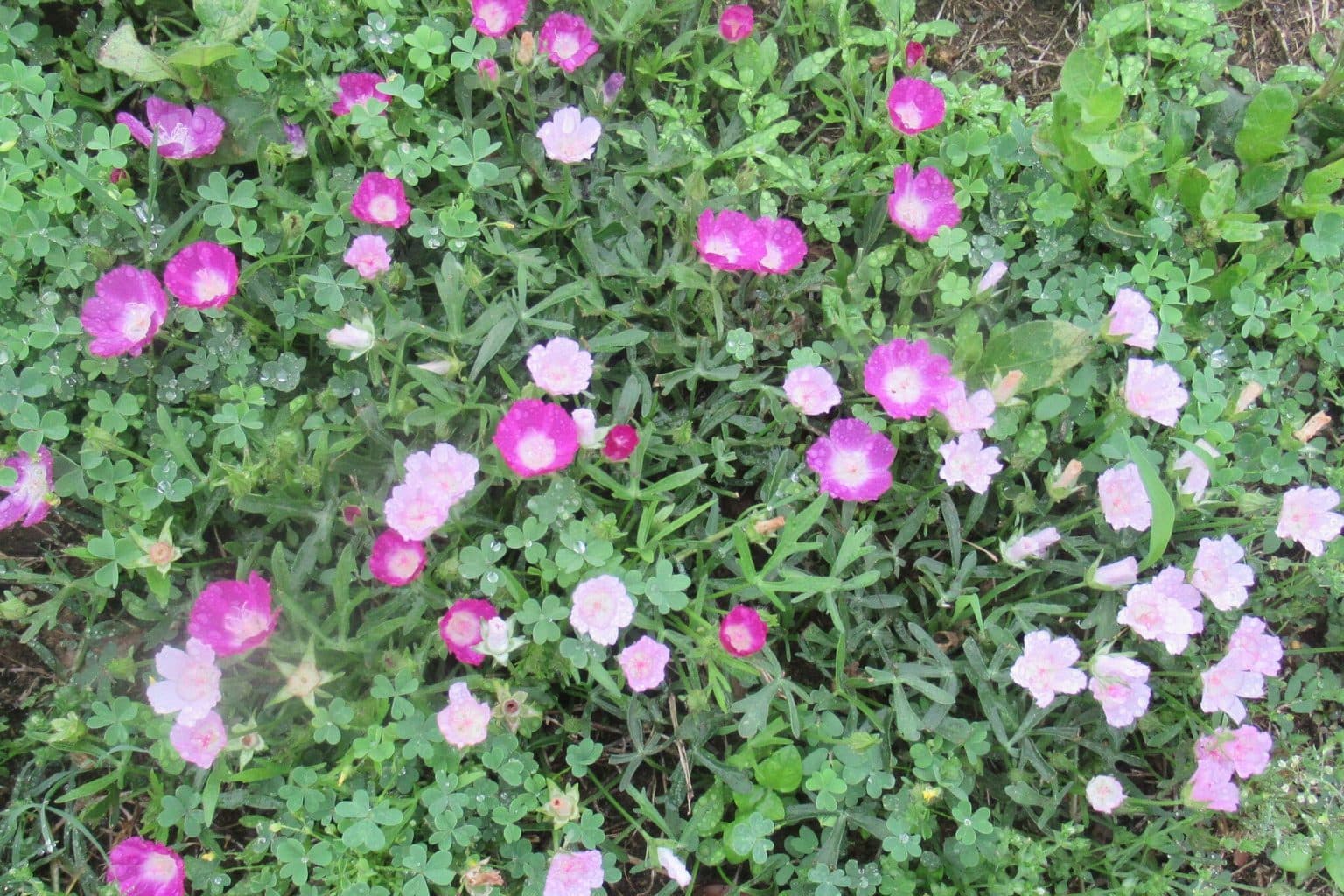
Lemon beebalm (Monarda citriodora)
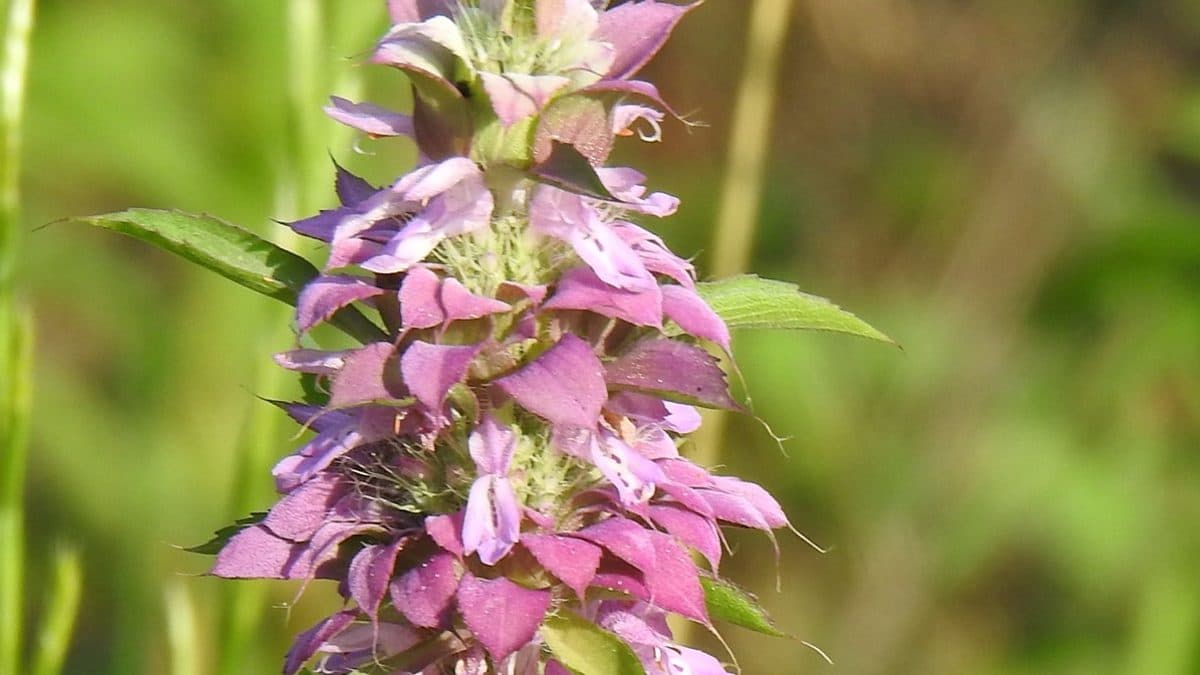
Stacked whorls of pink-lavender flowers from May to July. The Wildflower Center (opens in new tab) rates deer resistance high and says bees and butterflies are especially drawn to it. It is an annual, so let the seed heads dry before cutting back. It can form large colonies, and it is susceptible to powdery mildew.
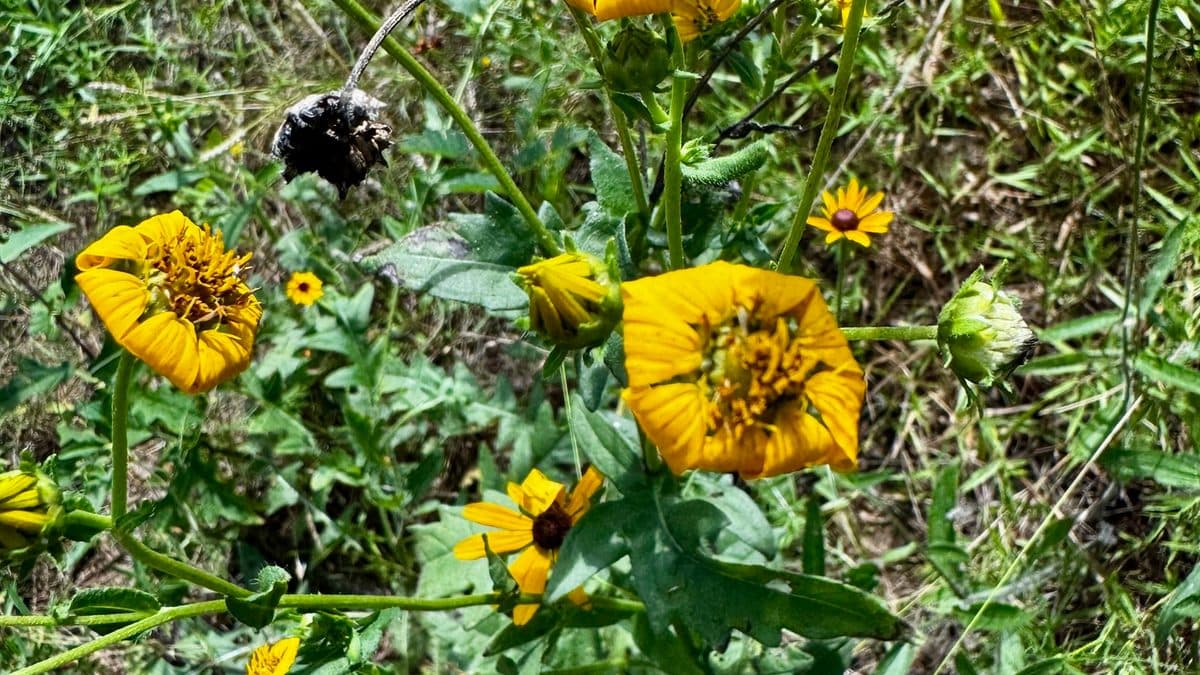
Indian blanket (Gaillardia pulchella)
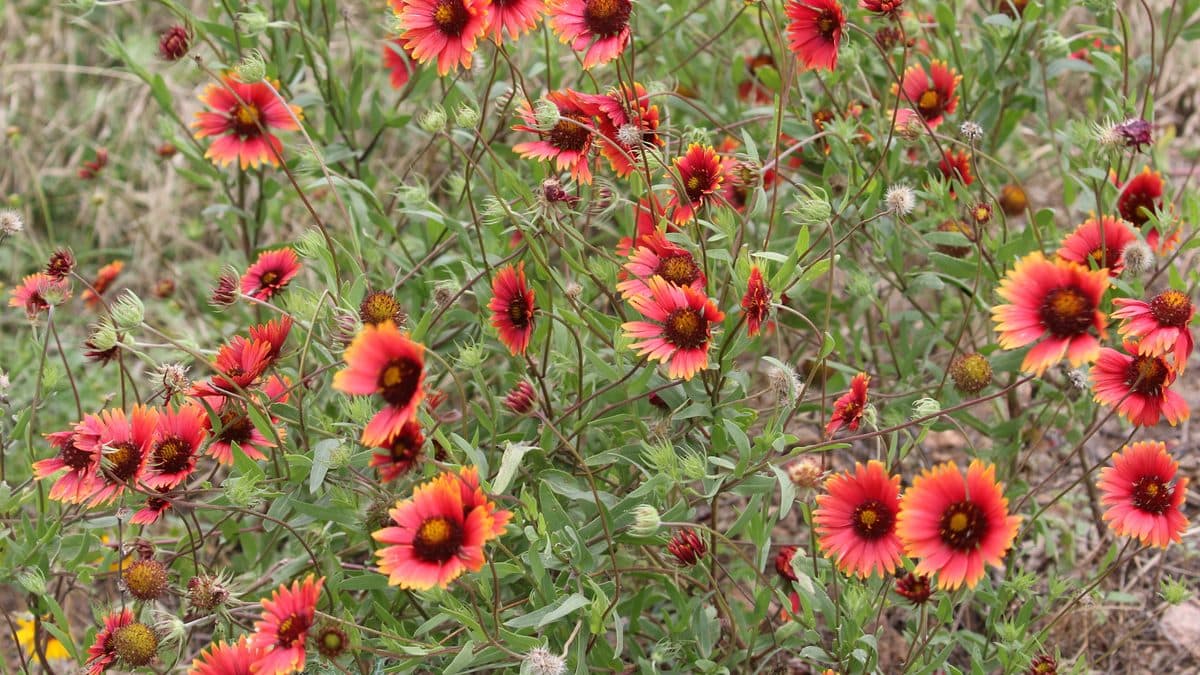
Red and yellow daisies from May to August. The Wildflower Center (opens in new tab) says good drainage is the only requirement, and that rich soil produces large, floppy plants with few flowers. That makes it a plant for the sandier side of town, or for a raised bed on the clay side. Deadheading and some summer water stretch the bloom.
Black-eyed Susan (Rudbeckia hirta)
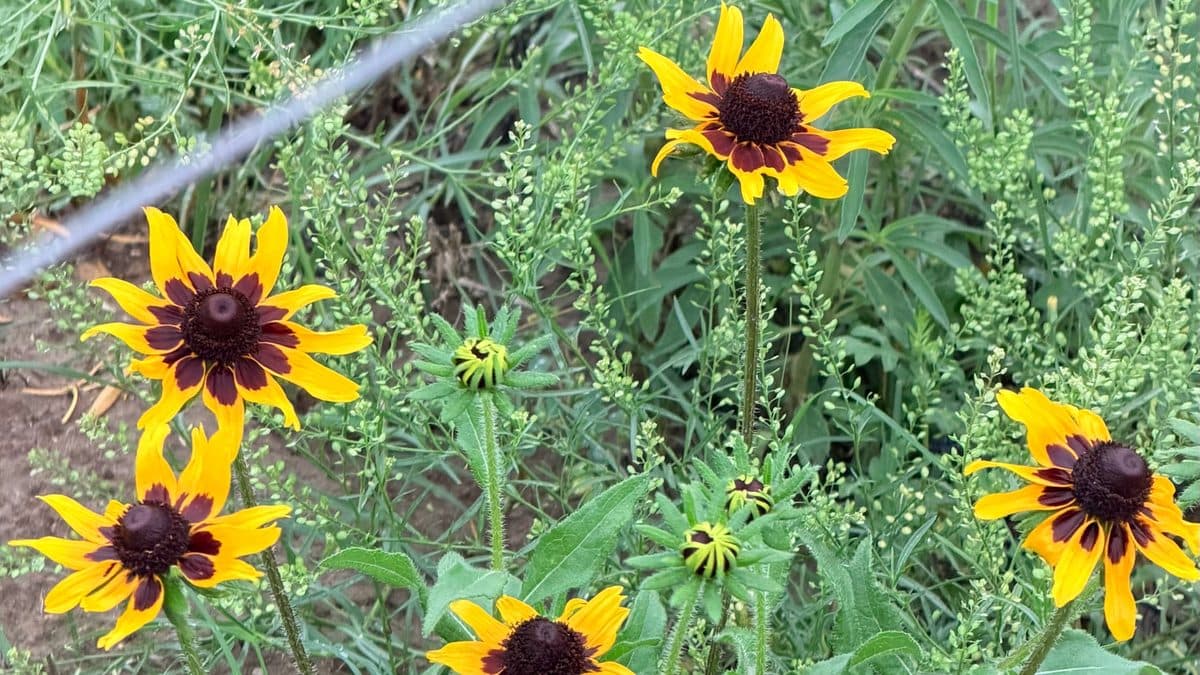
Yellow petals around a dark center, June to October. The Wildflower Center (opens in new tab) lists the gorgone checkerspot and bordered patch as larval hosts, and rates deer resistance high. It warns the plant can turn aggressive in a too-perfect spot, so removing seed heads after bloom limits volunteers. The page adds that birds enjoy the ripe seeds.
Little bluestem (Schizachyrium scoparium)
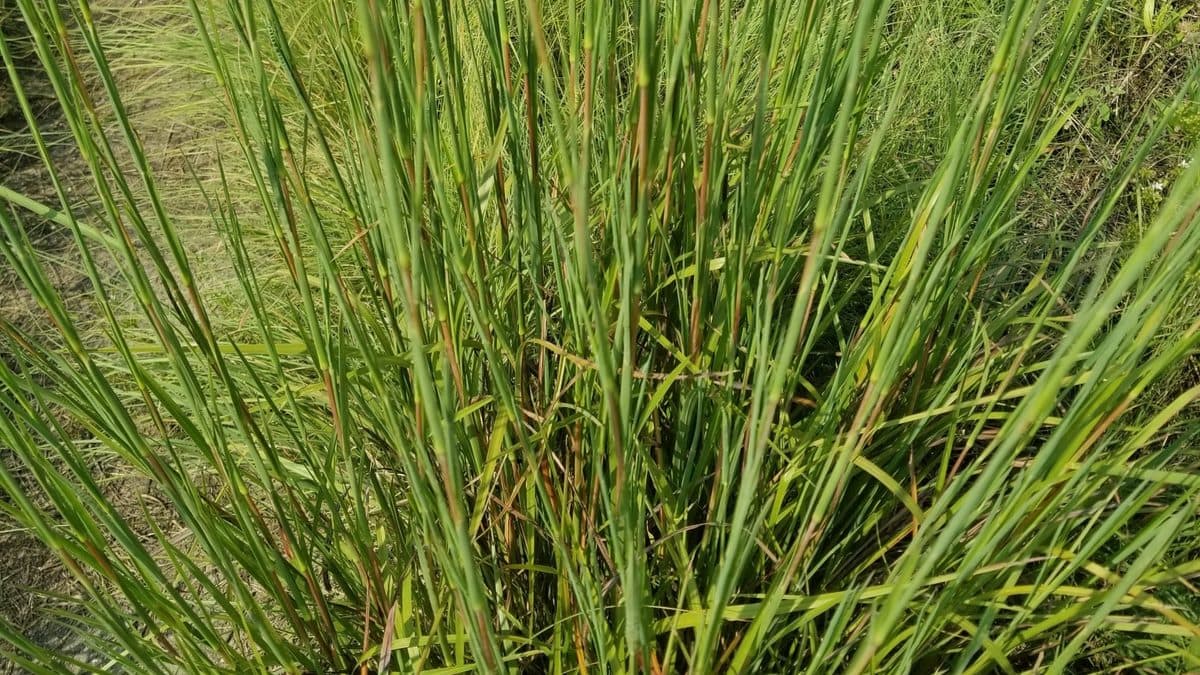
The grass that holds a bed together. The Wildflower Center (opens in new tab) lists sandy through clay and limestone soils, and says it will not tolerate wetlands or sub-irrigated sites. It reseeds readily, so the page does not recommend it for small gardens. Several skipper species use it as a larval host. Its color runs from blue-green in late summer to golden in winter.
Matching the plant to your side of the metro
On heavy clay, give the drier plants a head start by planting on a slight mound or in a raised bed. On sandy ground, the water-hungry period is the first summer, so plan on regular watering until roots settle. The Wildflower Center names clay for winecup, lemon beebalm, and little bluestem, which makes those the easiest to try on either side.
The Wild Ones native garden design for north Dallas-Fort Worth, built with the Native Plant Society of Texas, says it references plants native to both the Blackland Prairie and the Cross Timbers, and its plant list (opens in new tab) adds trees, vines, and shrubs this post does not cover. For water programs in the area, see our Dallas-Fort Worth page and the Texas rebates directory.
Repeat a few plants and test drainage first
Pick two or three of these and repeat them along a bed, so the planting looks intentional from the street. That habit is also HOA-friendly. Check soil drainage first, and let it decide where each plant goes.
People also ask
What are the best native plants for Dallas-Fort Worth?
Winecup, Engelmann's daisy, lemon beebalm, Indian blanket, black-eyed Susan, and little bluestem are all on the Wildflower Center's North Central Texas list of native plants suitable for planned landscapes. Match each to your light and drainage.
Is Dallas-Fort Worth clay or sandy soil?
Both. Texas Parks and Wildlife describes black, heavy clay soils in the Blackland Prairie and sandy or sandy loam soils in the East Cross Timbers. Dallas and Fort Worth sit near the edge between them, so test drainage in your own yard.
Which of these plants work in both clay and sandy soil?
The Wildflower Center lists clay and sandy soils for winecup, lemon beebalm, and little bluestem. Indian blanket needs good drainage, and Engelmann's daisy is listed for calcareous loams and clays as well as dry sandy sites.
Want the list for your own ZIP?
Pollinator Patch matches native plants to your ZIP and ecoregion, then helps you lay them out by sun and height.