Quick answer: For native plants in San Antonio, six that fit a yard are esperanza, cenizo, Texas mountain laurel, blackfoot daisy, zizotes milkweed, and fall aster. All six show up in articles on San Antonio Water System's Garden Style San Antonio site, and the Lady Bird Johnson Wildflower Center lists limestone, caliche, or rocky soil for each. Most want sun and drainage more than they want water.
Picking native plants in San Antonio mostly comes down to soil that drains and sun that does not quit. Many yards here sit on shallow rock with pockets of heavier clay, and the plants below are ones that tolerate that mix without much coaxing.
This list is built around the Edwards Plateau side of San Antonio. Our San Antonio page places the city in both the Edwards Plateau and South Texas Plains ecoregions. A separate post covers rural and rocky acreage, so this one stays at yard scale: a front bed, a foundation strip, a parkway.
Choosing native plants in San Antonio starts with soil
We skip rainfall and temperature numbers here because the sources we opened do not state them for the city. What the plant pages do describe is soil. Read the Wildflower Center's soil notes for these six plants and the same words keep appearing: limestone, caliche, rocky, calcareous, well drained.
That matters in a yard with clay pockets. Cenizo and Texas mountain laurel both list clay among their soils, but both also say they need good drainage. A plant that likes dry, rocky ground can fail in a low spot that stays wet, so put each one where water leaves.
| Plant | Light | Soil note | Size |
|---|---|---|---|
| Esperanza | Sun to part shade | Well drained, rocky, limestone, sand, loam | 3 to 6 ft, up to 9 ft |
| Cenizo | Sun to part shade | Limestone-based through clay, caliche. Needs drainage | Typically 2 to 5 ft, up to 10 ft |
| Texas mountain laurel | Sun to part shade | Rocky, well-drained, preferably calcareous. Clay also listed | 10 to 15 ft typical |
| Blackfoot daisy | Sun to part shade | Dry, rocky, calcareous. Drainage is essential | Under 6 in tall, 1 to 2 ft across |
| Zizotes milkweed | Full sun | Sandy or gravelly, dry | Up to about 16 in |
| Fall aster | Sun to part shade | Rocky, calcareous or sandy, well drained | Up to about 3 ft, often less |
Native plants for San Antonio: six that fit a yard
Light, soil, and size figures below come from the Lady Bird Johnson Wildflower Center (opens in new tab) plant pages. The local tie for each plant is a Garden Style San Antonio article, which the water utility publishes.
Esperanza (Tecoma stans)
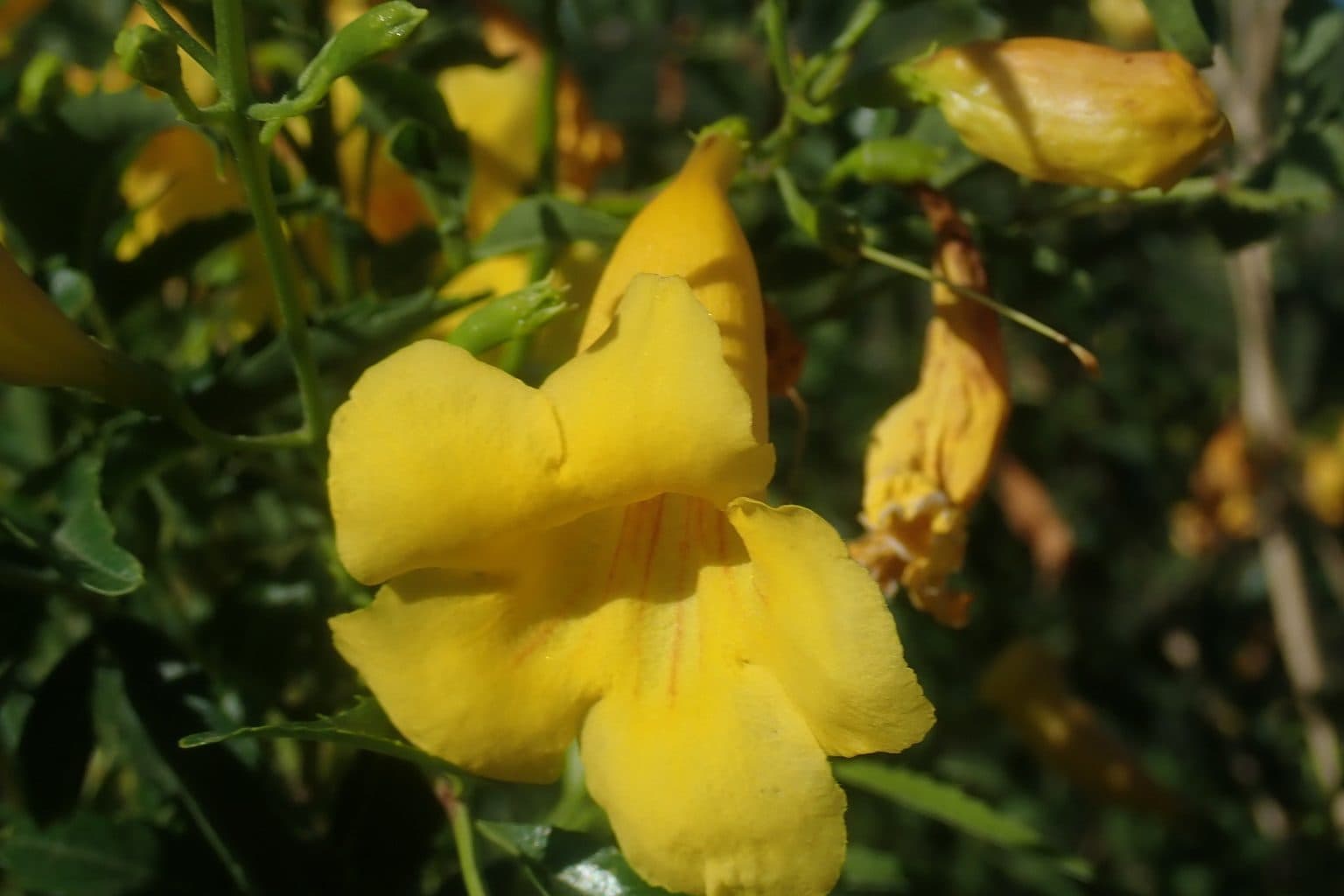
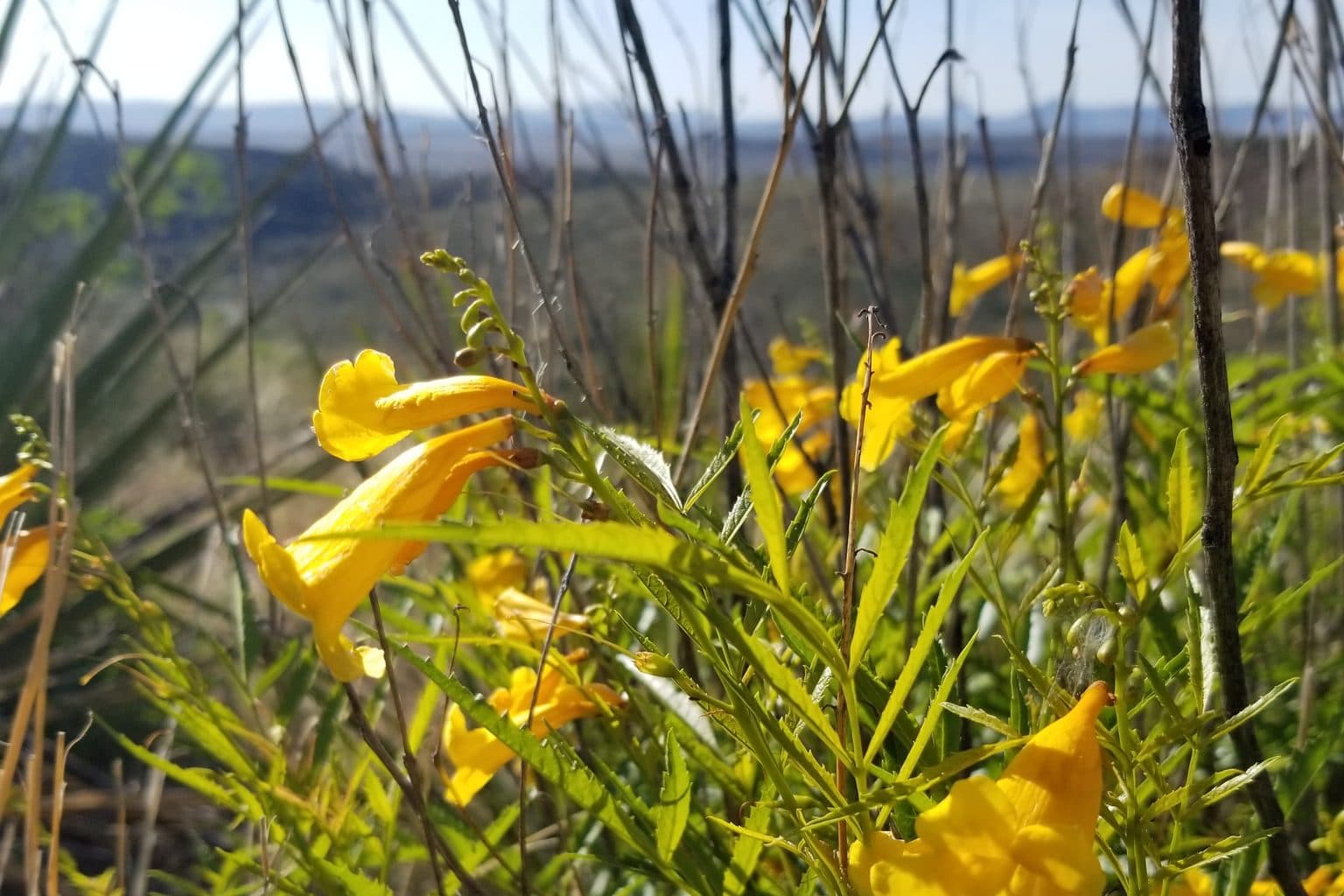
A summer-blooming shrub that Garden Style San Antonio calls common in San Antonio neighborhoods (SAWS, August 2025 (opens in new tab)). The Wildflower Center (opens in new tab) gives its native range as south-central Texas west to Arizona, and says it blooms yellow from April through November. It reaches 3 to 6 feet in North America, sometimes 9. The same page lists it as a larval host for the dogface butterfly and a source of nectar for bees and hummingbirds. Our guide to protecting Texas natives in a freeze covers esperanza in winter.
Cenizo (Leucophyllum frutescens)
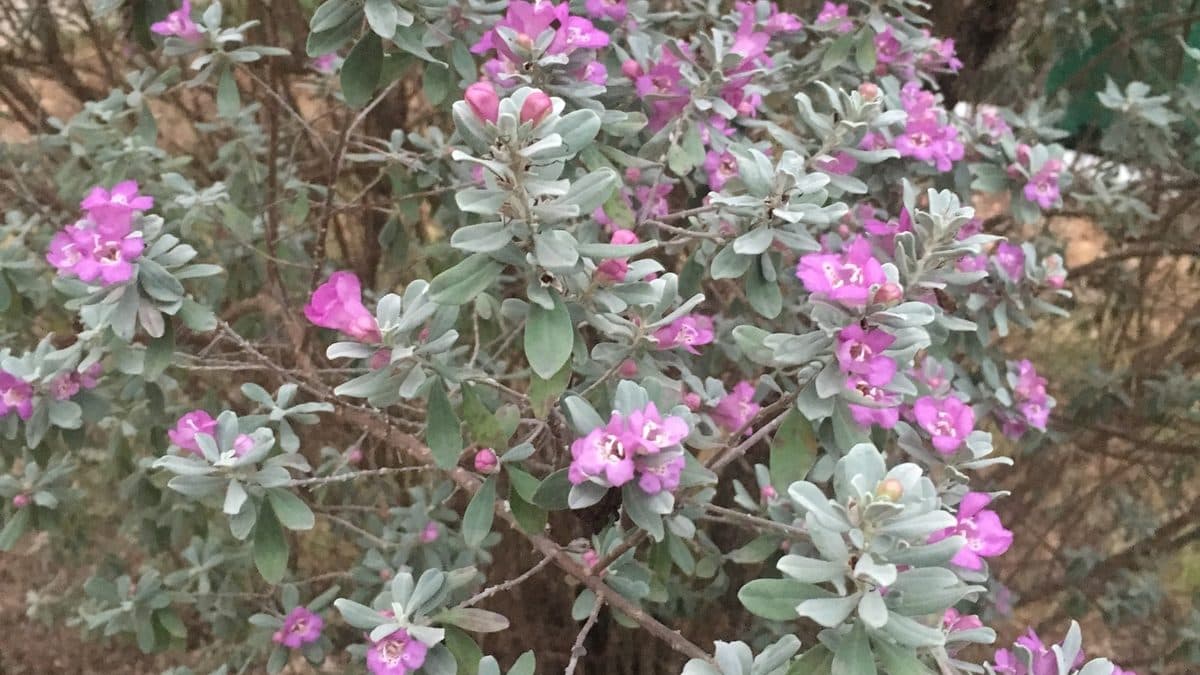
The silver shrub on many San Antonio streets. The Wildflower Center gives its Texas range as the Rio Grande Plain, southern Trans-Pecos, and Edwards Plateau, and Garden Style San Antonio names it among native evergreens in its plant pairs article (opens in new tab). It usually stays 2 to 5 feet tall, takes limestone through clay soils, and blooms in periodic flushes. The page rates deer resistance high and lists the Theona checkerspot and Calleta silkmoth as larval hosts. Two warnings from the same page: skip fertilizer and extra water, and expect trouble if the soil stays wet.
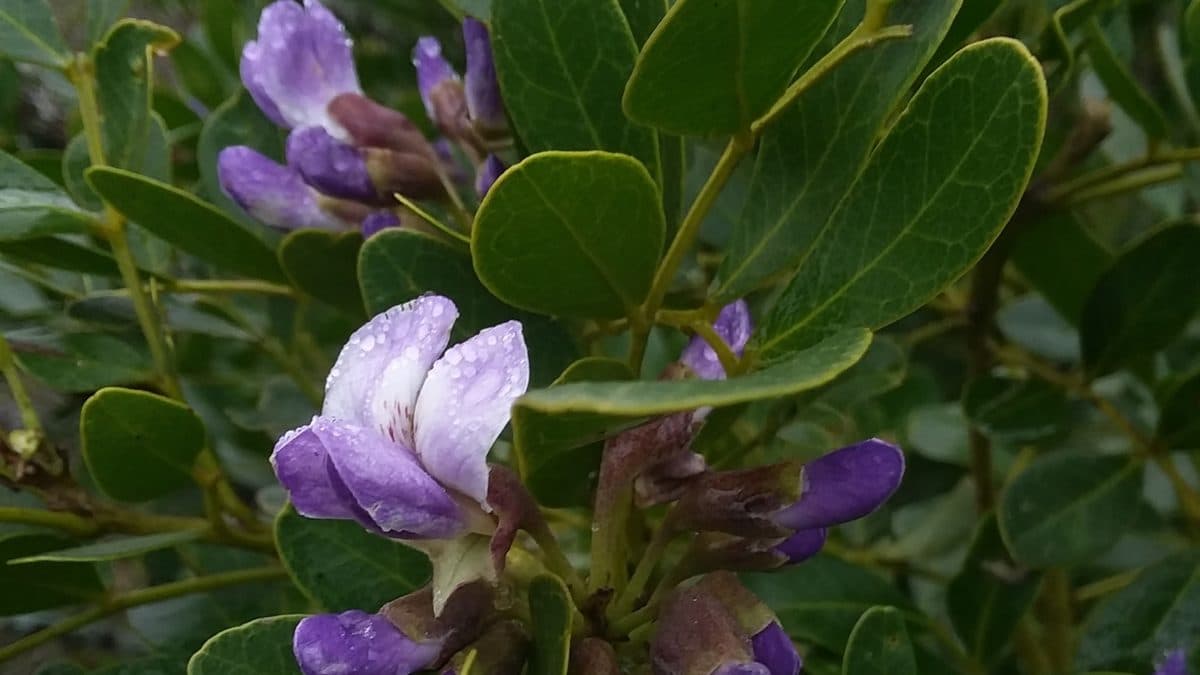
Texas mountain laurel (Dermatophyllum secundiflorum)
The tallest plant on this list, at 10 to 15 feet typically. Garden Style San Antonio lists it as a native evergreen with purple spring flower clusters. The Wildflower Center puts bloom in February through April, prefers dry, rocky, calcareous soil, and notes that it needs good drainage. One caution: the bright red seeds contain a highly poisonous alkaloid. If a pet swallows one, call the ASPCA Animal Poison Control Center at (888) 426-4435. Plant it where seed pods will not drop into a play area.
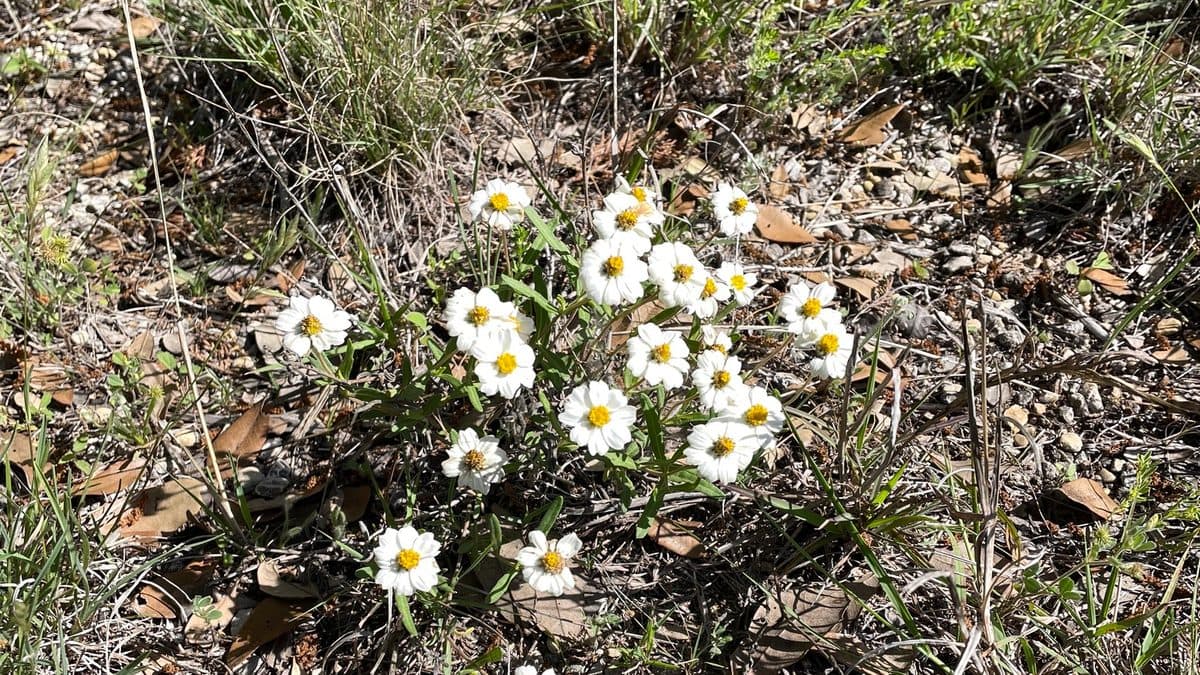
Blackfoot daisy (Melampodium leucanthum)
A low mound, seldom over 6 inches tall and 1 to 2 feet across, that the Wildflower Center says blooms March through November in dry, rocky, calcareous soil. Garden Style San Antonio recommends it for well-drained, full-sun spots. The page says good drainage is essential, rates deer resistance high, and lists nectar for bees and butterflies. Cut older plants back by half in late winter to keep them compact.
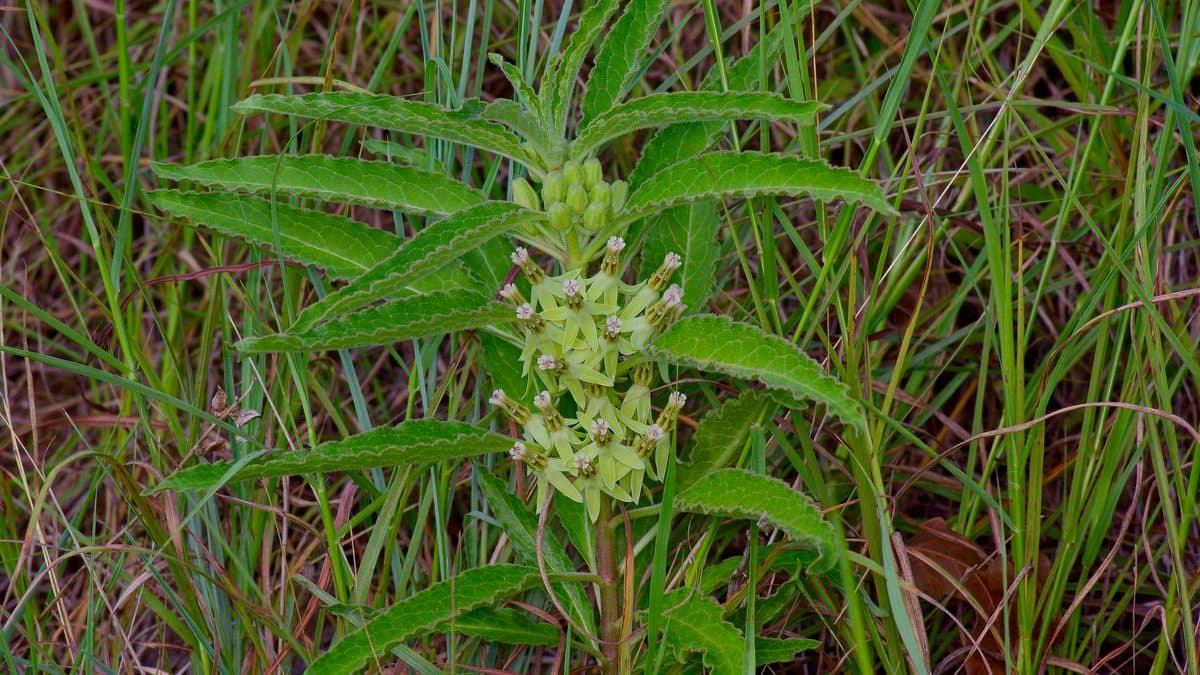
Zizotes milkweed (Asclepias oenotheroides)
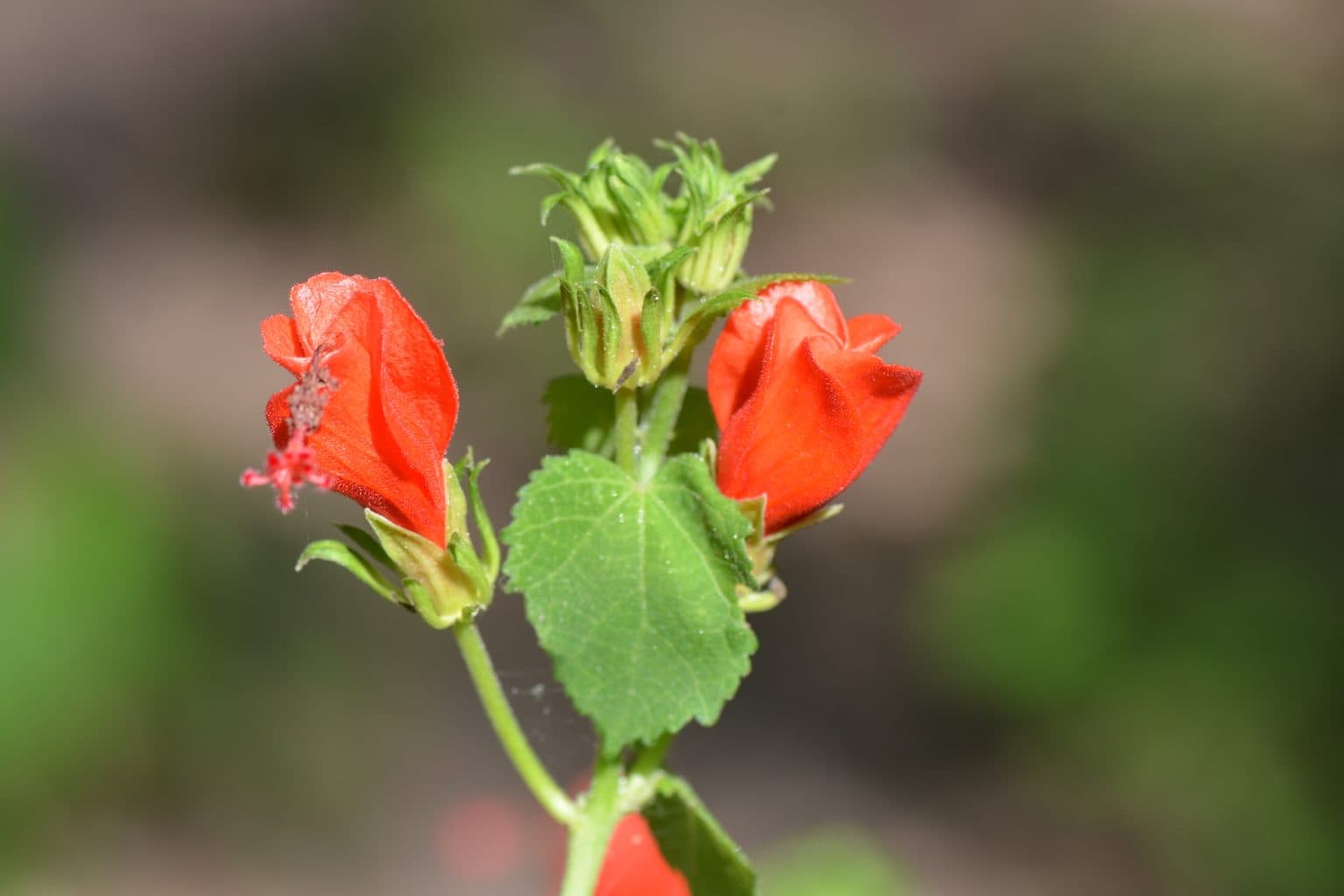
A short native milkweed that Garden Style San Antonio says establishes readily, even in grassy or lightly mowed areas. The Wildflower Center calls it a well-documented larval host for monarch butterflies. It stays up to about 16 inches, loves full sun, and prefers sandy, dry soil, so it is the one plant here that is not a clay plant. The page notes that plants in the milkweed genus are probably somewhat toxic and that the sap can irritate skin. Keep that in mind near dogs and children.
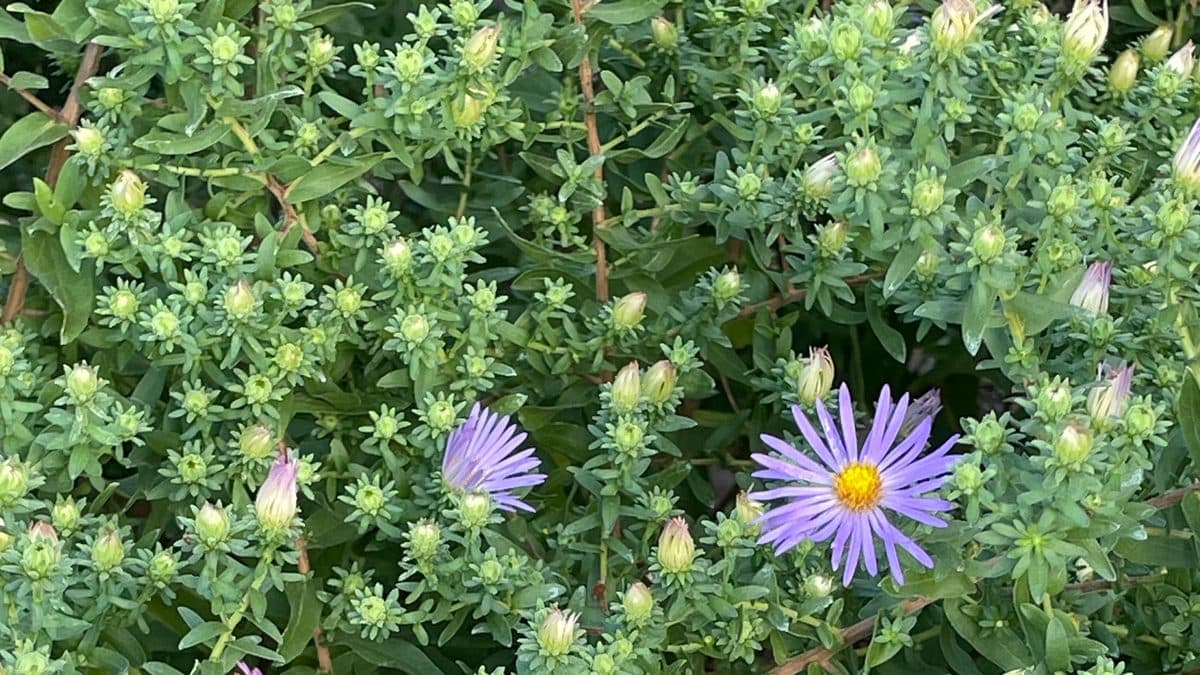
Fall aster (Symphyotrichum oblongifolium)
The fall finish. Garden Style San Antonio says mass plantings of fall aster attract bees, butterflies, and other pollinators. It blooms September through November on rocky, calcareous or sandy, well-drained soil, and stays up to about 3 feet. The Wildflower Center cites the Xerces Society for its special value to native bees. It spreads by stolons, so thin it each year, and prune it back by no more than half in June if it gets floppy.
Putting native plants together in a San Antonio yard
Pick two or three from the list and repeat them, so the bed looks planned from the street. That is also an HOA-friendly habit. A cenizo or two for structure, blackfoot daisy along the edge, and fall aster for a late show is a workable start. Esperanza and mountain laurel are the tall back-of-bed plants, so check their size against your fence and windows.
If you are removing turf, SAWS runs a water-saving landscape program. Check our Texas rebates page and the SAWS WaterSaver guide for current terms, since programs change. For how natives ride out the hottest weeks, see summer native plant care in Texas.
People also ask
What are the best native plants for San Antonio?
Six that fit a yard are esperanza, cenizo, Texas mountain laurel, blackfoot daisy, zizotes milkweed, and fall aster. Each appears in San Antonio Water System's Garden Style San Antonio articles, and the Wildflower Center lists rocky, limestone, or well-drained soil for each.
Will native plants grow in San Antonio clay?
Some will. The Wildflower Center lists clay among the soils for cenizo and Texas mountain laurel, but both need good drainage. Blackfoot daisy, zizotes milkweed, and fall aster prefer rocky, sandy, or well-drained ground, so give them the raised or sloped spots.
Are Texas mountain laurel seeds poisonous?
Yes. The Wildflower Center warns that the red seeds contain a highly poisonous alkaloid. If a pet or child swallows one, call a poison control center. The ASPCA Animal Poison Control Center number is (888) 426-4435.
Want the list for your own ZIP?
Pollinator Patch matches native plants to your ZIP and ecoregion, then helps you lay them out by sun and height.