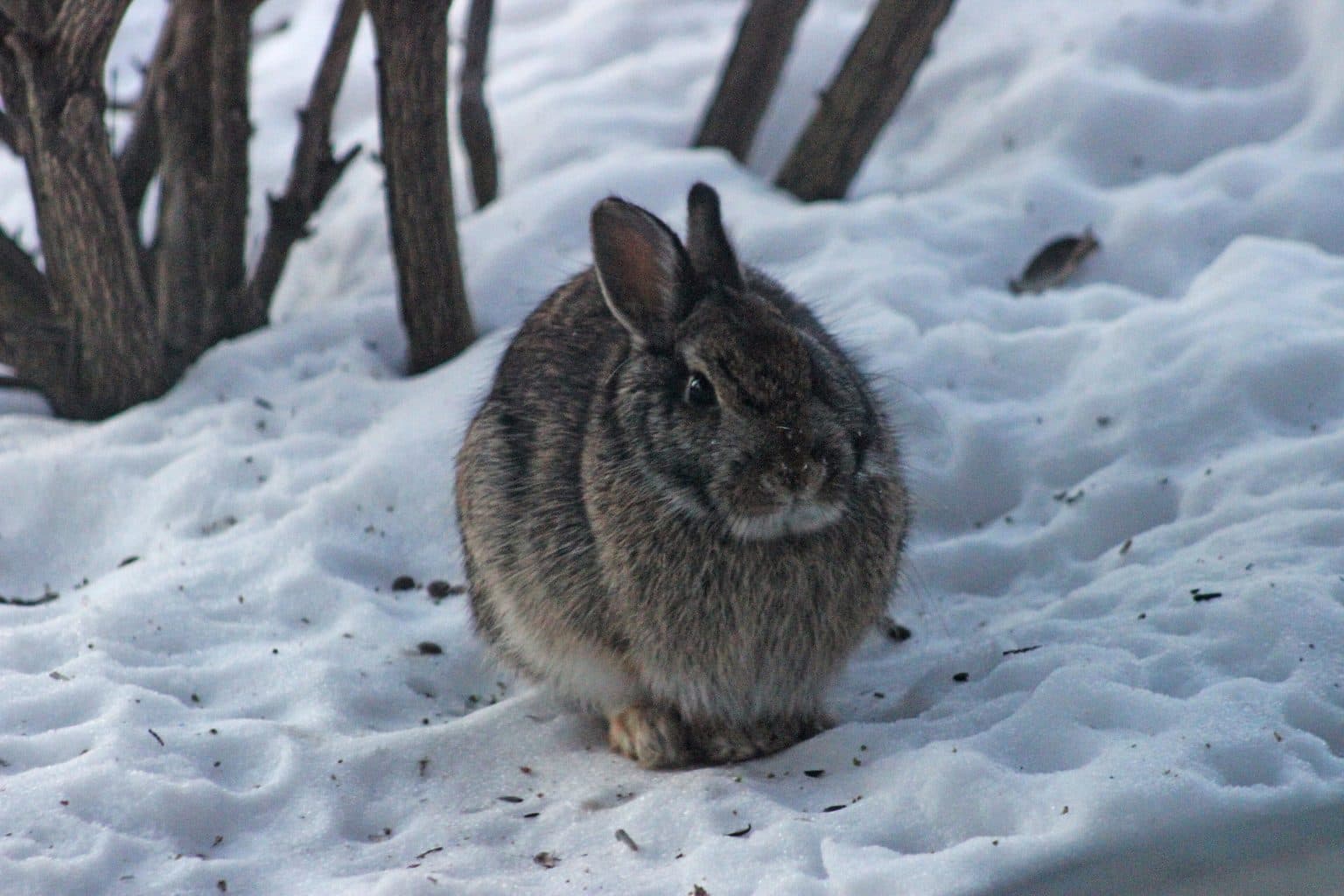
The tree you planted last year still has thin bark, and for the next several months it is on the menu. Mice, rabbits, voles and deer can all cause severe damage in winter, and they can girdle trees and shrubs by chewing through the bark (University of Minnesota Extension). The main defense is a piece of wire mesh put up in fall.
Why a ring of missing bark kills a tree
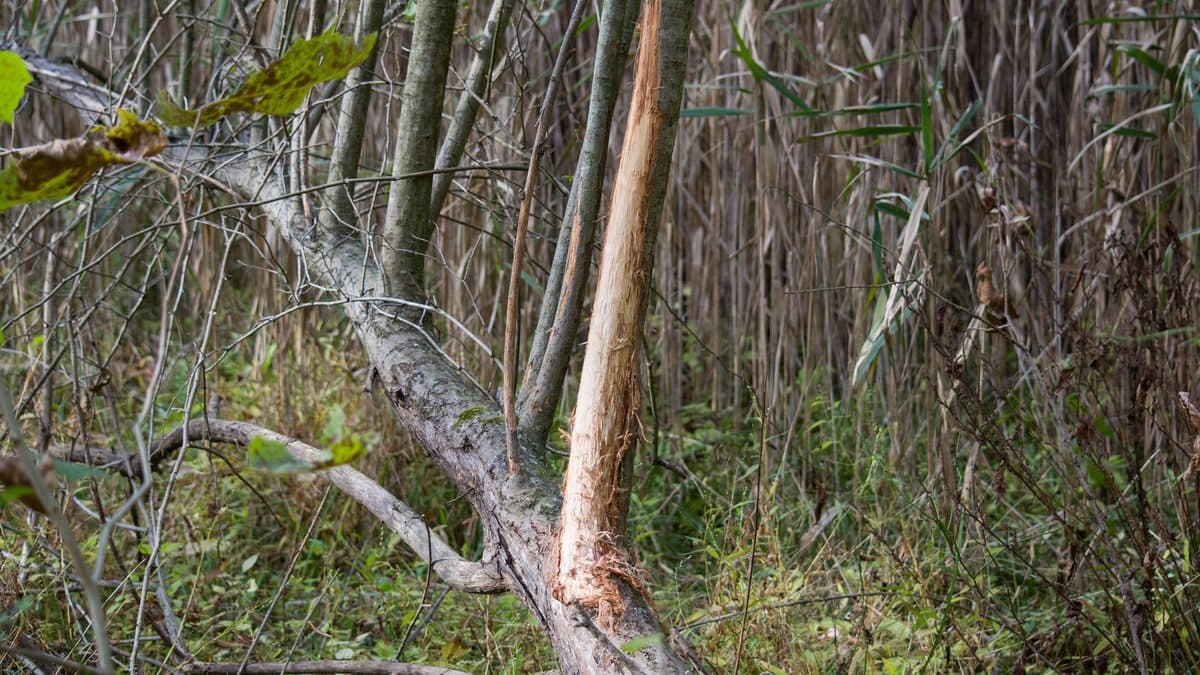
Rabbits feed on the tissue between the bark and the wood. If they remove it down to the wood and go completely around the trunk, the tree is girdled. Girdling destroys the tree by cutting off the downward flow of food from the leaves to the roots, and all growth above the girdled area will eventually die (Iowa State University Extension).
That is how a small animal kills a tree many times its size, and why a guard is worth an afternoon. A chewed patch on one side is a wound. A chewed ring ends everything above it.
Rabbits: fence them out
Placing chicken wire or hardware cloth fencing around vulnerable plants is the most effective way to prevent rabbit damage (Iowa State University Extension). Height matters, because snow lifts a rabbit up. University of Minnesota Extension says the cylinder should extend 18 to 24 inches above the anticipated snow line, and stand about 6 inches away from the trunk (University of Minnesota Extension). Iowa State University Extension puts it more simply: in most cases, a fence that stands 24 to 36 inches tall should be sufficient.
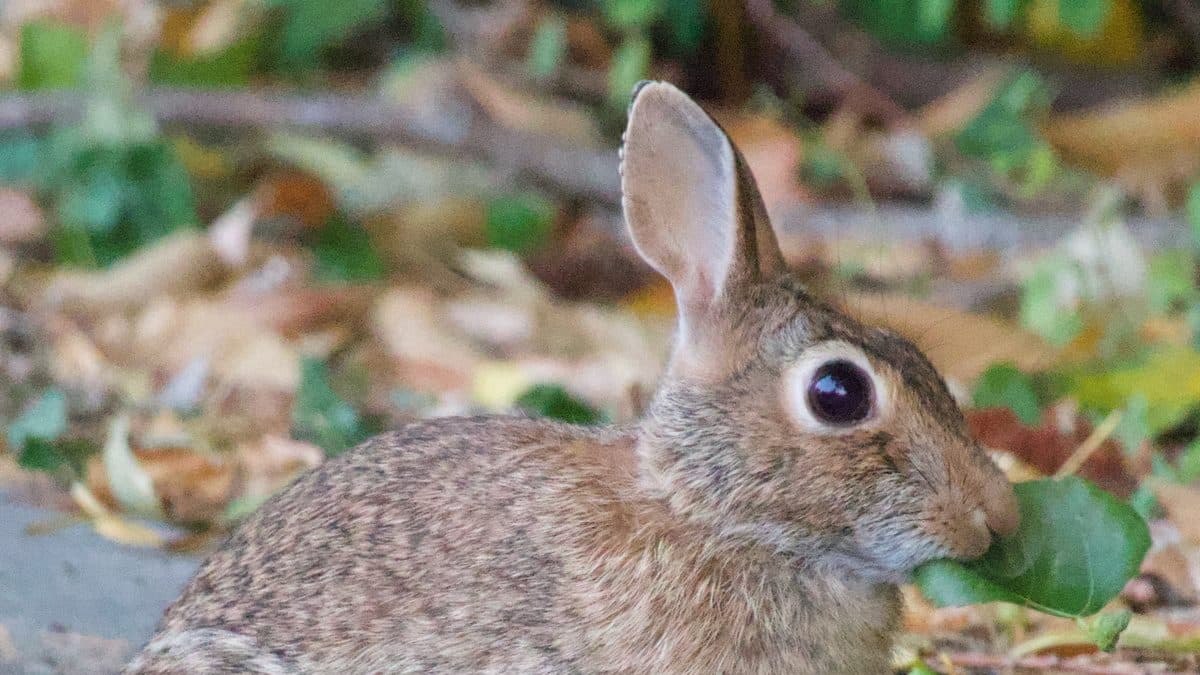
Iowa State's list of what rabbits often damage in winter is crabapple, apple, pear, redbud, honey locust, serviceberry, burning bush, flowering quince, barberry, roses and raspberries (Iowa State University Extension). If you have a young one of those, it goes first.
Voles and mice: guard the soil line
In winter, meadow voles may eat the bark of small trees and shrubs (Iowa State University Extension). The guard is the same quarter-inch hardware cloth, with one change: bury the bottom 2 to 3 inches in the soil so voles cannot burrow under it (Iowa State University Extension, University of Minnesota Extension).
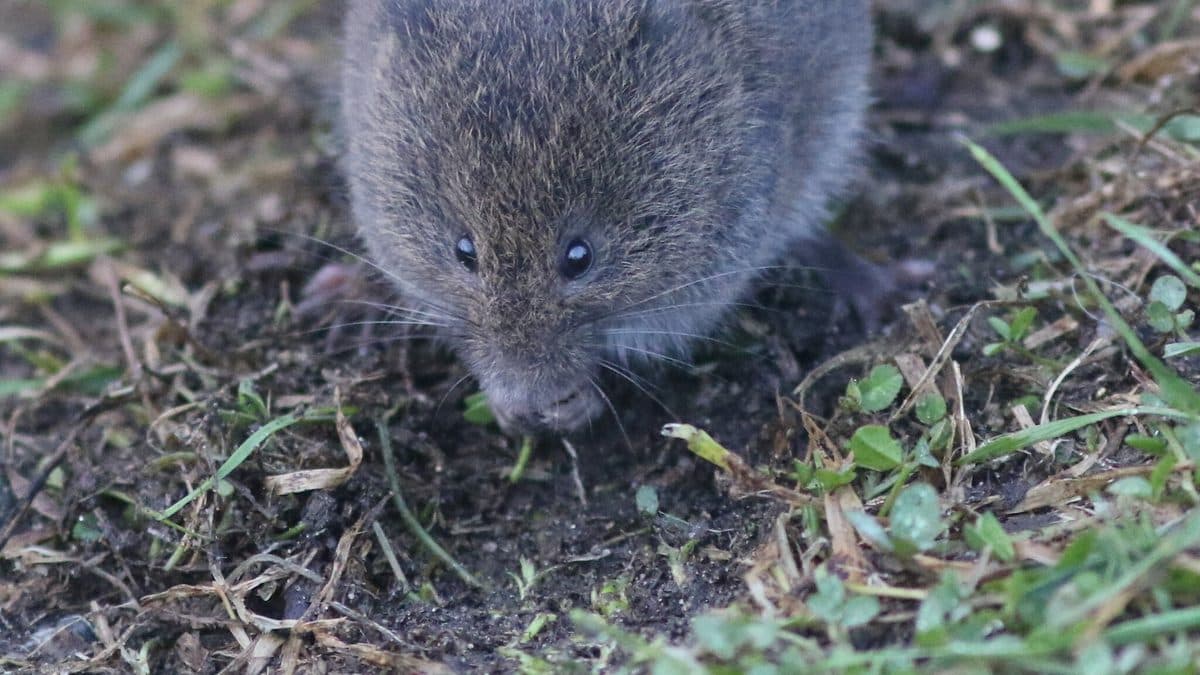
Then take away their cover. University of Illinois Extension notes that rodent damage at the soil line happens when grass is left to grow tall next to the trunk (University of Illinois Extension). University of Minnesota Extension says to cut grasses and other vegetation short in late fall within 2 feet of young trees. And when you mulch, keep wood mulch at least 6 inches from the trunks of small trees (Iowa State University Extension).
This squares with raking leaves into your beds and around tree bases. Leaves and mulch belong over the roots, where University of Minnesota Extension recommends 3 to 4 inches of shredded wood mulch for newly planted trees and shrubs (University of Minnesota Extension). They do not belong piled against the bark.
Bucks: stakes, not mesh
In fall, bucks rub their antlers on trees to remove the dried velvet and to mark their territory. Young trees with flexible trunks and thin, smooth bark are most likely to be damaged, and the damage typically sits 1 1/2 to 3 1/2 feet above the ground (Iowa State University Extension). A short rabbit cylinder does not reach that high.
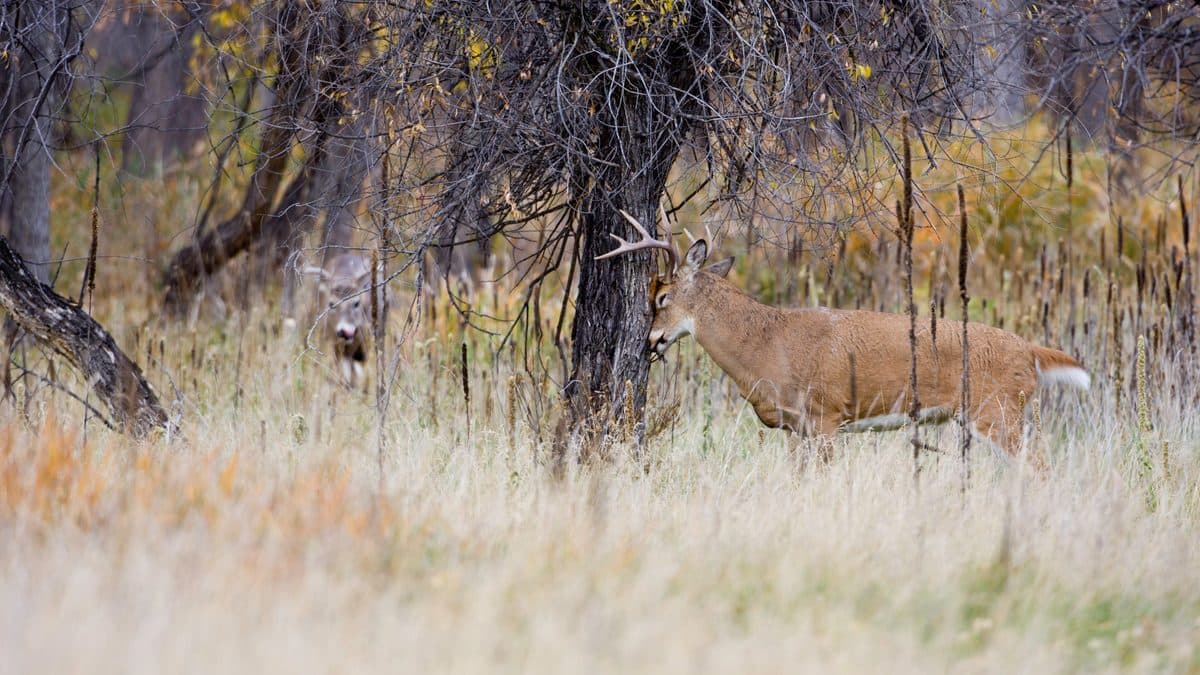
Iowa State's easiest method is to drive three sturdy metal or wooden stakes around the young tree, with no more than 18 inches between posts. Tubes and wire cylinders also work if they are at least six feet tall. The risk drops significantly once the trunk is 3 to 4 inches in diameter or larger and the bark has turned thick and corky (Iowa State University Extension).
Iowa State wants those barriers up by mid-August in Iowa. Wherever you are, it is fall now, so if you have deer and a young tree, this is the first job on the list. Take the barriers down in spring.
Sun: white wrap in cold-winter climates
Sunscald shows up as elongated, sunken, dried or cracked areas of dead bark, usually on the south or southwest side of a tree. Young trees, newly planted trees and thin-barked trees (cherry, crabapple, honey locust, linden, maple, mountain ash, plum) are the susceptible ones (University of Minnesota Extension).
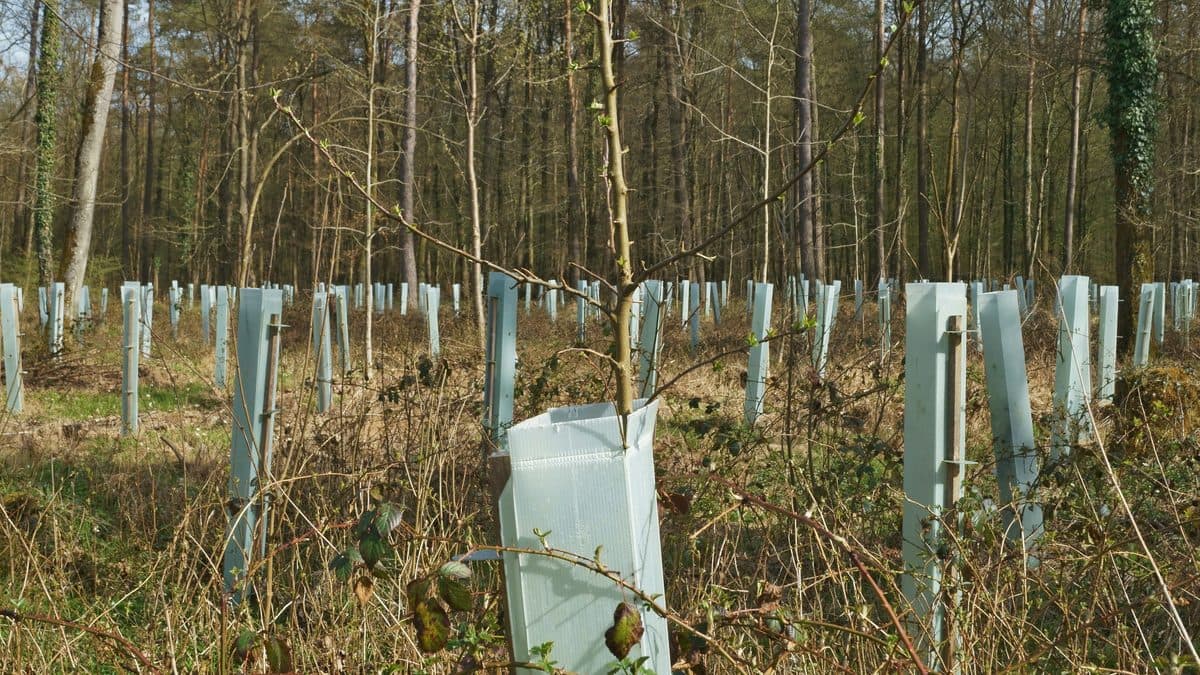
The fix is a white commercial tree wrap or plastic tree guard. Do not use brown paper wrap or black guards, which absorb heat from the sun (University of Minnesota Extension). The point is shade: University of Illinois Extension says the wrap is there to shade the trunk from direct sunlight, and it is doing nothing to keep the trunk warm (University of Illinois Extension).
Put the wrap on in fall and take it off in spring after the last frost. Newly planted trees get it for at least two winters, and thin-barked species for up to five winters or more (University of Minnesota Extension).
What about repellents?
Iowa State University Extension is plain about them: repellents are not always effective and can be difficult to apply in the winter months when temperatures are below freezing (Iowa State University Extension). That is why everything above is a barrier.
Put it on the calendar twice
Guards go up in fall, and wraps and deer barriers come off in spring. In between, look at the cylinders after a heavy snow. The rabbit height is measured from the snow line (University of Minnesota Extension), so a deep drift shortens the guard.
Where the app fits
Pollinator Patch sends freeze alerts by email as well as in the app, once your account has a garden saved with your location. The first one is a good deadline for having the guards up. Woody plants do not need a sheet on a frost night, but the young ones do need their bark protected. And if you are not sure whether a tree in your yard counts as thin-barked, ask Patch. Something like "does my young redbud need a trunk guard this winter?" works.