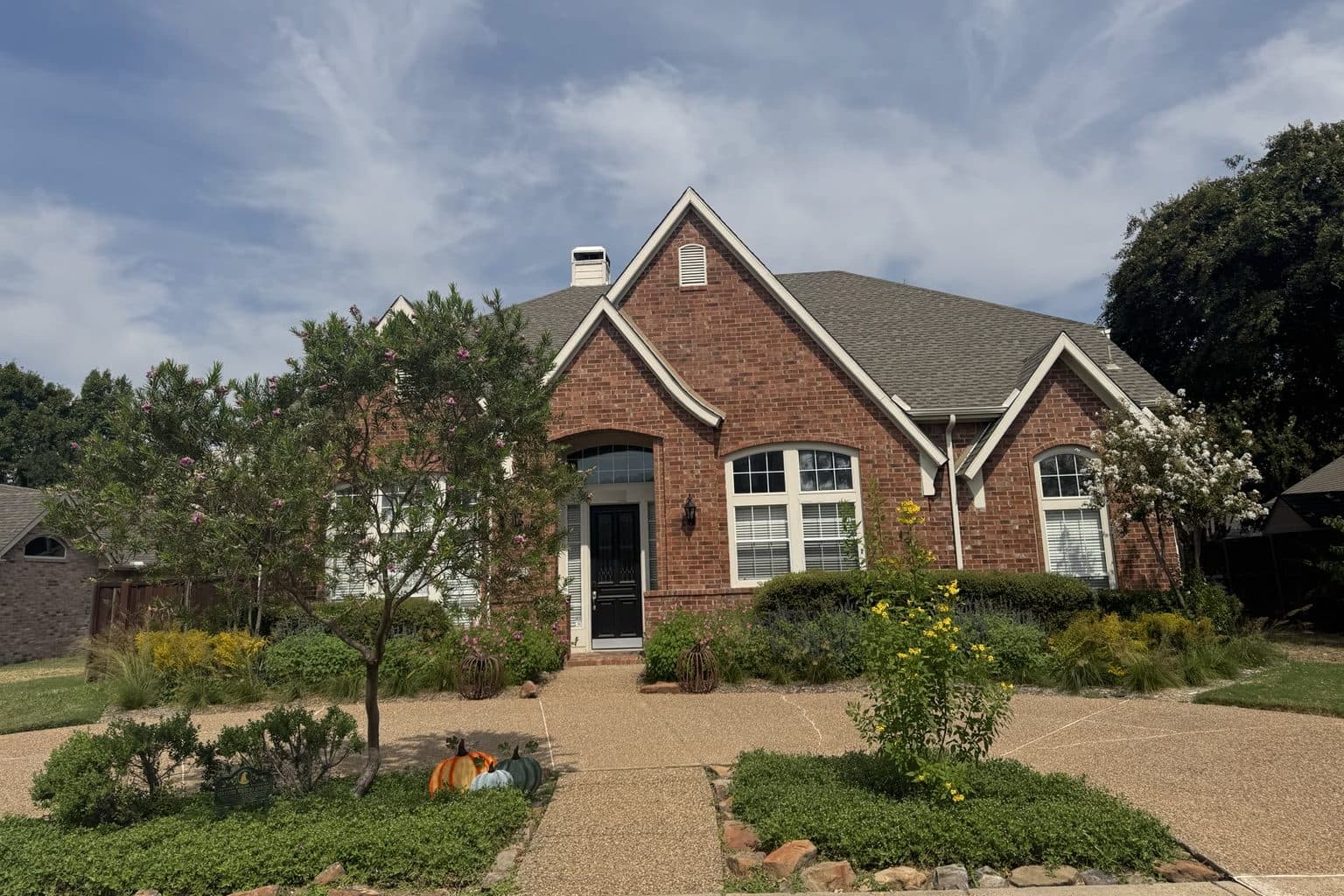
Most people decide to replace part of a lawn in spring, discover it is the wrong time to plant, and lose the year. Fall is the better window across most of the country, and the work that makes fall possible happens now, in the worst of the July heat. None of it involves a shovel.
Key takeaways
- July is the most reliable month to solarize, at four to six weeks of heating.
- Count your planting date backward from your first frost, not from a month on the calendar.
- Fall planting works because soil stays warm after the air cools, and warm soil grows roots.
- Apply for any turf rebate before the grass comes out, not after.
- In cool climates, cutting the sod out beats solarizing.
Why fall, and why that means working now
Fall planting works for a reason that is easy to miss. Soil holds onto heat longer even as air temperatures drop, which is the condition new root structures want (Illinois Extension). The plant puts its effort underground instead of into leaves it cannot support, and it goes into winter with a root system already working.
The Lady Bird Johnson Wildflower Center recommends planting during spring or fall. Between the two, fall asks less of you, because a fall planting does not face a first summer three months later.
That leaves one problem. The lawn is still there, and something has to happen to it before October.
What solarizing actually is
Solarizing means watering the area, covering it with clear plastic, and burying the edges so the heat cannot escape. The sun does the rest. Trapped heat kills the grass and much of what is living in the top few inches of soil.
University of California IPM sets the target at daily maximum temperatures of 110 to 125 degrees in the top six inches of soil, and says four to six weeks of soil heating during the warmest time of the year is usually sufficient to control most soil pests. On timing, UC IPM is direct: July is the most reliable time to solarize.
Clear plastic, not black. Black plastic absorbs the heat instead of letting it through, which is the opposite of what you want. Water the area first, because moist soil carries heat downward better than dry soil does. Bury the edges in a trench so the sheet holds its own atmosphere rather than venting at the perimeter.
Then you wait, which in July is the most pleasant work available.
When to plant, counted from your first frost
Skip the calendar months and count backward from your own first frost date. Perennials want about six weeks in the ground before the first frost of fall (Illinois Extension), a figure the Missouri Botanical Garden puts the same way: planting at least six weeks before the first autumn frost date gives plants time to establish adequate root systems.
In the Dallas area, that arithmetic lands the planting in October. Yours will land somewhere else. Plastic down in mid-July, plastic up in late August, and the bed sits ready until your date arrives.
Apply for the rebate before you touch the grass
This is the part that costs people real money, and it is worth more than the rest of this post combined.
If a turf rebate is part of your plan, apply before you remove any grass. Many programs require an inspection of the lawn while it is still standing, because the lawn is the evidence of what you are converting. The Town of Windsor in Colorado requires the design to be pre-approved before work begins. Washington County Water Conservancy District in Utah requires a pre-conversion site visit. The City of Roseville in California states that starting without City approval makes the conversion ineligible outright, and Irvine Ranch Water District tells applicants not to remove grass until they have a Letter to Proceed.
Not every program works this way, but enough do that the order matters. Apply first, get your approval, then put the plastic down. You can look up the programs at your address before you buy a roll of plastic.
What goes in the ground in October
Solarizing clears the bed. What fills it has to actually belong where you live, and this is where a lot of good intentions go sideways, because a plant being sold at your local nursery is not evidence that it is native to your ecoregion.
For the Blackland Prairie around Dallas, zones 8a-8b, these five are confirmed natives and suit a full-sun front bed:
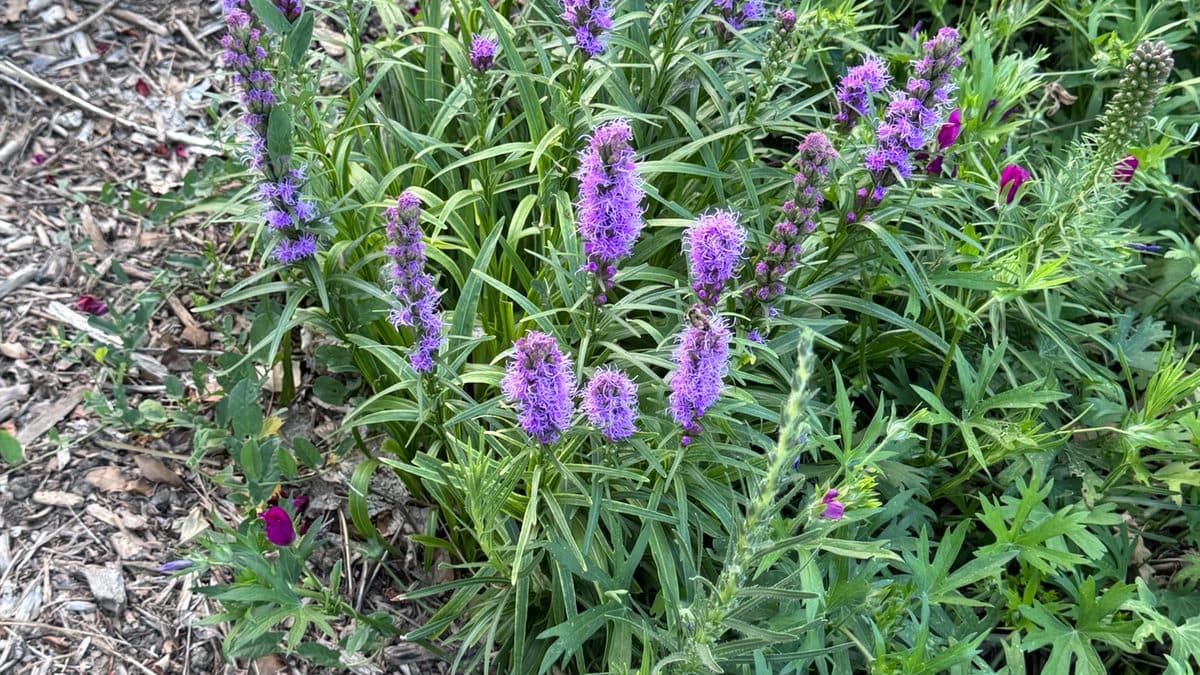
Texas Gayfeather (Liatris punctata var. mucronata) is the best fall anchor here. It stays one to three feet, holds a strictly upright form that never sprawls, and blooms August through December (Lady Bird Johnson Wildflower Center). NPSOT lists it for both the Northern and Southern Blackland Prairie. It is the one plant on this list that pays off visually in the same season it goes in the ground.
Engelmann's Daisy (Engelmannia peristenia) has the strongest local record of the set, with USDA PLANTS county records in Dallas, Collin, and Ellis. It runs 1.5 to 3.5 feet (NPSOT), blooms March through July (Lady Bird Johnson Wildflower Center), and holds a tidy basal mound the rest of the time.
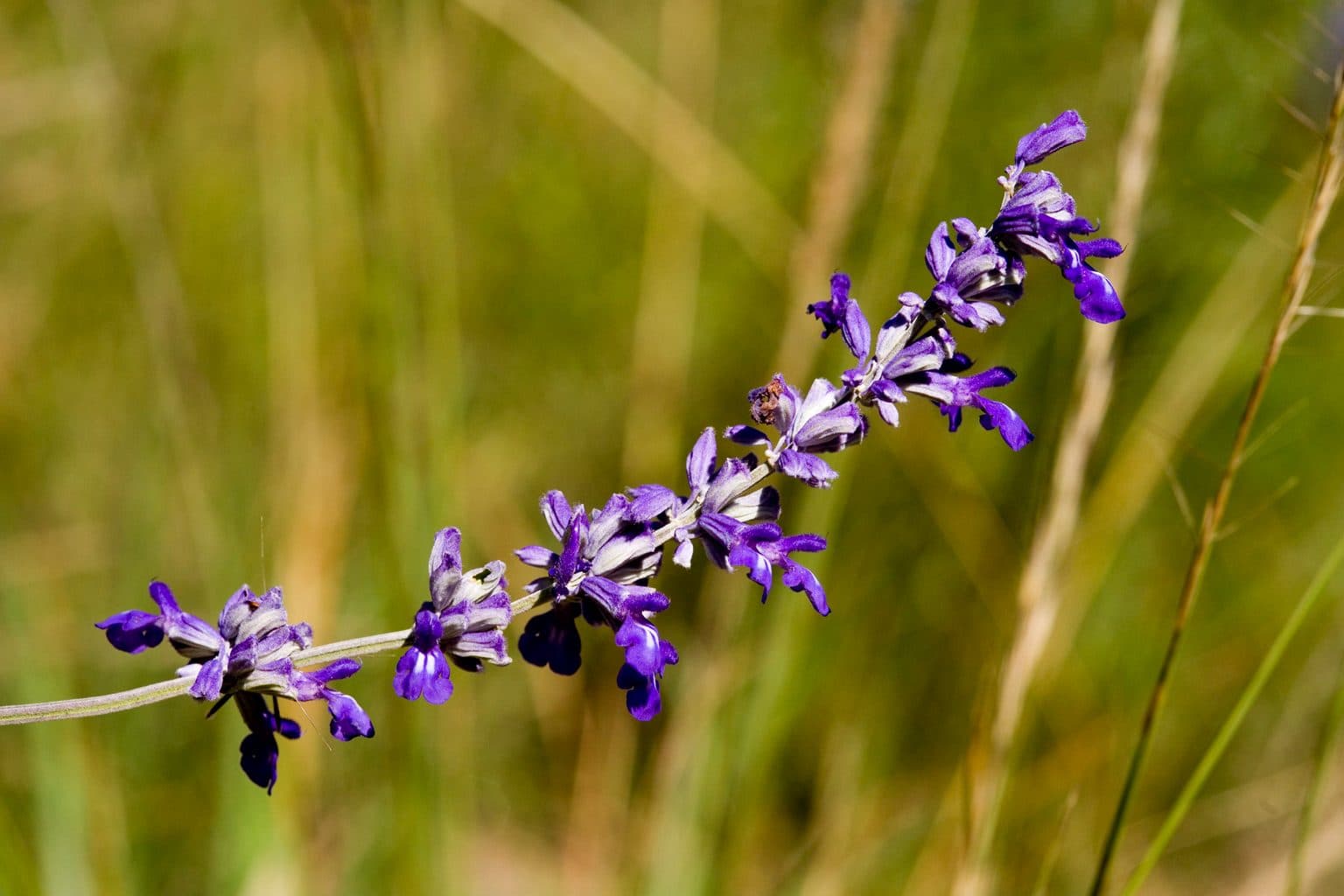
Mealy Blue Sage (Salvia farinacea) reaches about three feet and blooms April through October (NPSOT), whose ecoregion list includes the Texas Blackland Prairies. Upright habit, long bloom, the closest thing here to a conventional border perennial.
Black-eyed Susan (Rudbeckia hirta) grows to about three feet and blooms June through October (Lady Bird Johnson Wildflower Center), with county records in Dallas (USDA PLANTS). It is familiar enough to read as a garden plant rather than a weed patch, which matters at the sidewalk edge.
Little Bluestem (Schizachyrium scoparium) is the dominant upland bunchgrass of the Blackland Prairie (NPSOT), with county records in Dallas (USDA PLANTS). It carries the fall and winter, going copper when everything else has been cut back. One honest caveat: the Wildflower Center lists it up to about seven feet, and on watered front-yard soil it can flop and read unkempt. Keep it out of the front row and cut it back in late winter.
The plant that fools everyone in Dallas
Purple Coneflower is sold across North Texas and is not native to the Blackland Prairie. The Wildflower Center gives its range as Georgia to extreme northeast Texas, north to North Carolina, Ohio, Illinois, and Iowa. USDA PLANTS county records put it in a single Texas county, Bowie, up at Texarkana roughly 180 miles from Dallas. It is an eastern species clipping the corner of the state, and "TX" appearing in a state list is exactly how it passes a quick check.
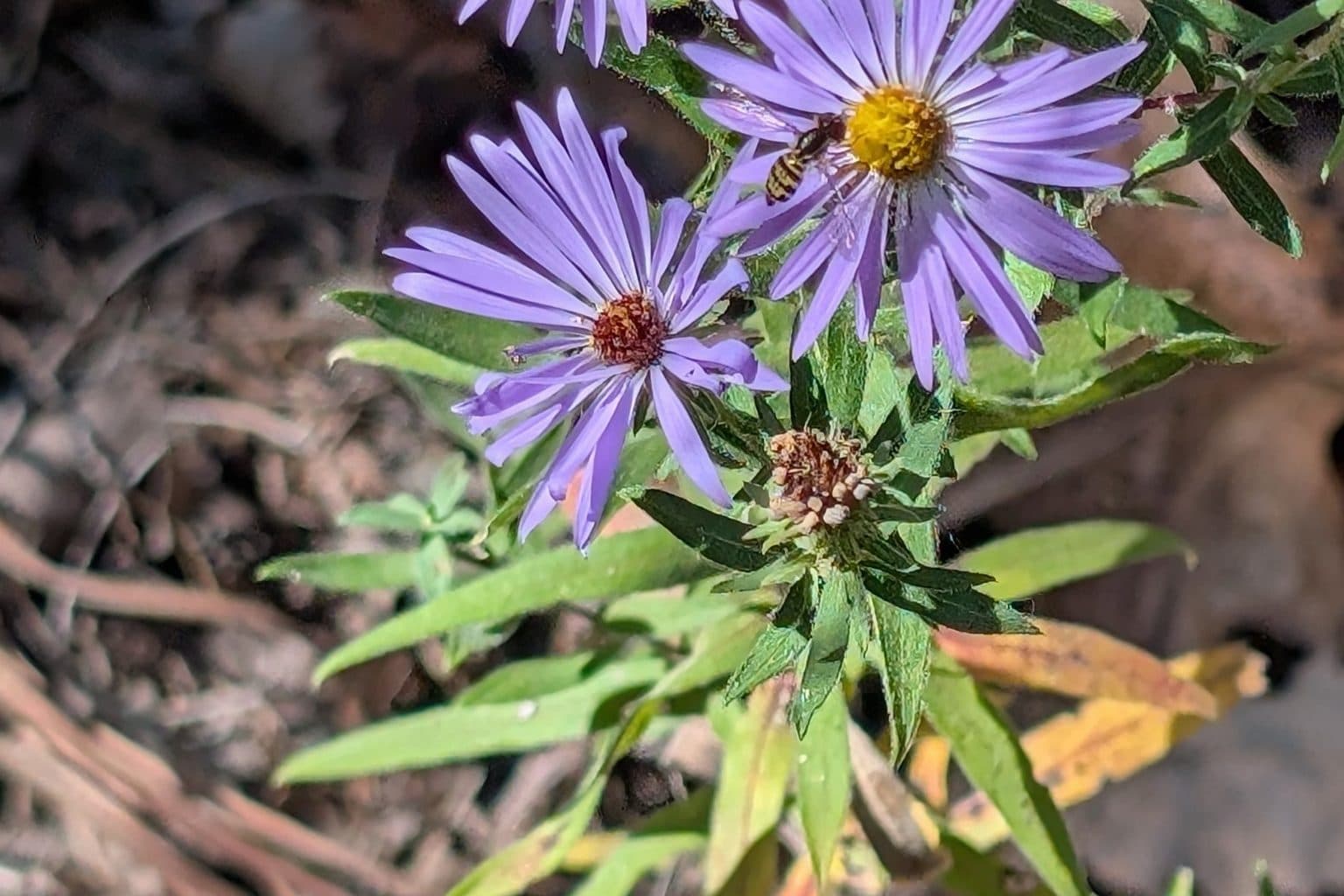
Gregg's Mistflower is the same story from the other direction. The Wildflower Center now treats it as a synonym of Conoclinium dissectum, native to the Trans-Pecos east to the Edwards Plateau and Rio Grande Plains. Fall Aster, another Dallas staple, has no Blackland county record in Dallas, Collin, or Ellis, and neither NPSOT nor the Wildflower Center places it in this ecoregion.
None of these will die in a Dallas yard. They just are not doing the ecological work you planted them for, and that is the entire point of the exercise.
When solarizing is the wrong tool
Solarizing needs sustained heat, so it is a poor fit in cool summers. The Xerces Society notes that in cool climates such as the Upper Midwest, abundant weed growth often follows solarization. If that is your region, cutting the sod out is the more dependable route. Xerces puts sod removal at one day of work, begun in late summer or fall, planted in fall or winter, which fits the same timeline without depending on the weather.
Sheet mulching is the other method people reach for, and it is worth being honest about its clock. Xerces gives it a total time of three to twenty-four months, begun in winter to late spring. It is a good method and a bad fit for a July start. If sheet mulching is what you want, you are planning for next fall, not this one.
Planning the bed that goes in this fall?
Pollinator Patch builds a plant list for your ZIP and ecoregion, so the October planting is decided before the plastic comes off, and it shows the rebate programs at your address along with what each one wants from you before you start.