Tall, narrow evergreens catch wet snow and ice in their centers, and the weight can split them open. A loose spiral of twine before the first big storm prevents most of it, and the right response after a storm is usually less than you think. If your winters stay above freezing, you can skip this one.
Which plants split
Upright evergreens such as arborvitae and upright junipers, and plants with more than one main stem, take the most damage from snow and ice (University of Illinois Extension). Their stems fan apart under the weight, and once a shrub opens up it can stay misshapen for years or snap at the base (Iowa State University Extension).
Before the first storm: tie them up
- Tie soft twine, jute if you have it, to a stem near the base (Clemson Cooperative Extension).
- Spiral it loosely up about three-quarters of the shrub and fasten the end to a stem (Clemson Cooperative Extension). It should hold the stems together without bending them. "The goal is to prevent stems from spreading apart, but not to immobilize them" (Clemson Cooperative Extension).
- Strips of fabric, old nylon hose or bungee cords also work. Avoid anything that can cut into bark (Iowa State University Extension).
- Do not wrap twine around a single stem, where it can girdle it (Clemson Cooperative Extension).
- Leave the ties on until all the ice has melted, and take them off before spring growth starts (Clemson Cooperative Extension).
After a storm: snow
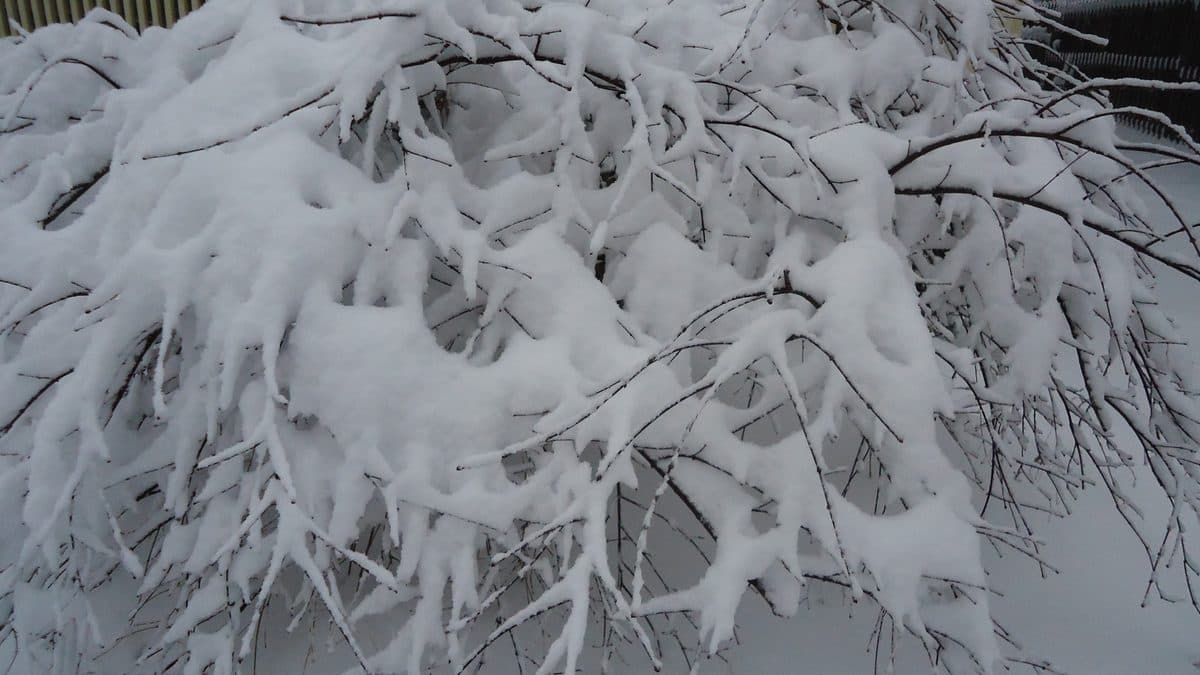
- Loose snow can come off. Sweep it with a broom, pushing upward (University of Illinois Extension, Iowa State University Extension).
- Never brush downward on branches that are already bent (Iowa State University Extension).
- If the snow is heavy, wet or frozen on, wait for it to melt (University of Illinois Extension).
- Do not throw shoveled snow onto shrubs or small trees (Iowa State University Extension).
After a storm: ice
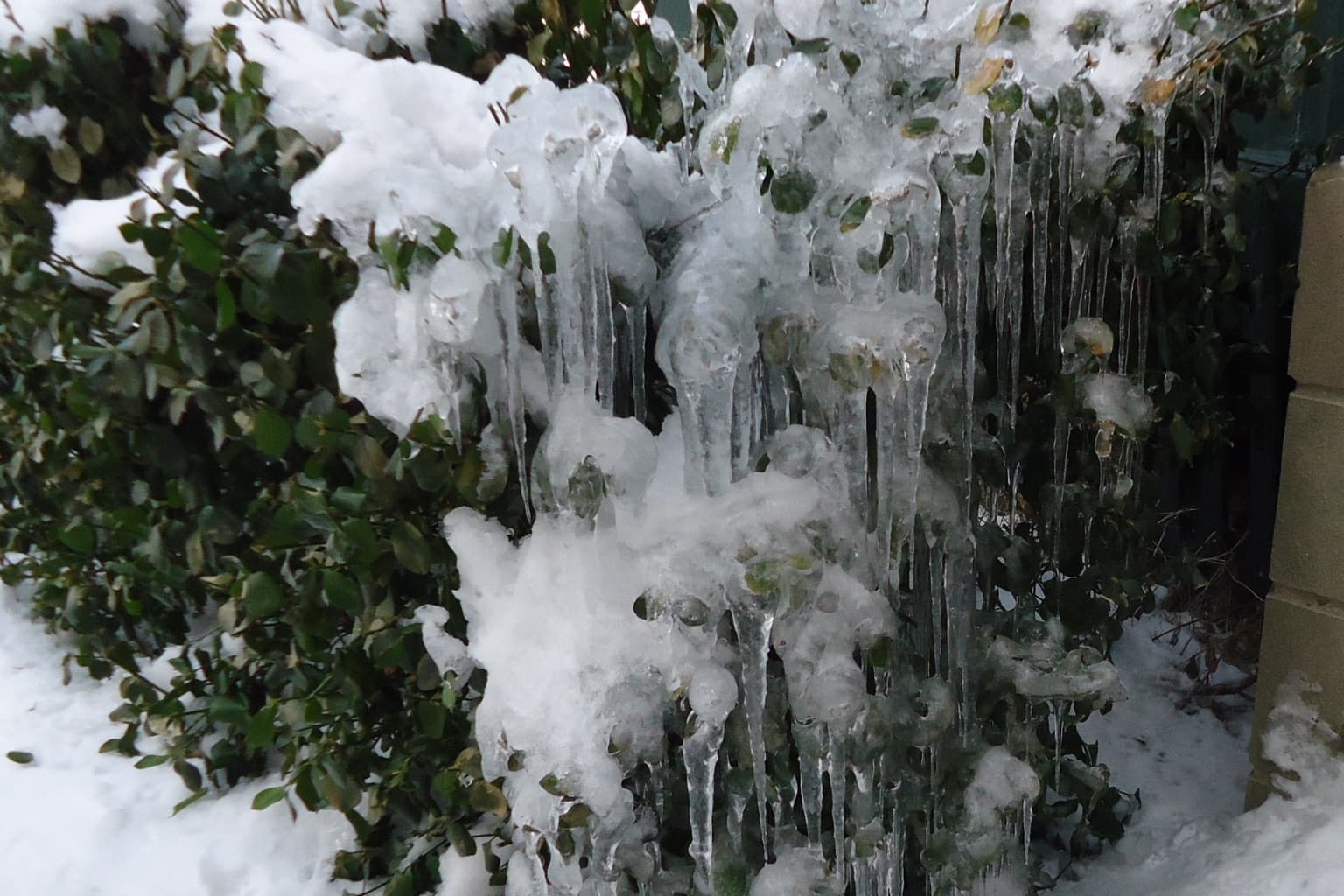
- Leave it alone. Knocking ice off breaks branches, so let it melt on its own (Clemson Cooperative Extension).
- Do not pour hot water on it, which can injure the plant (Iowa State University Extension).
- Do not push ice-bent branches back upright. Support them, if anything, until the ice melts (Iowa State University Extension).
- Stay away from large, ice-laden trees, and never approach a limb touching a power line. Call the utility and an arborist (Iowa State University Extension, University of Illinois Extension).
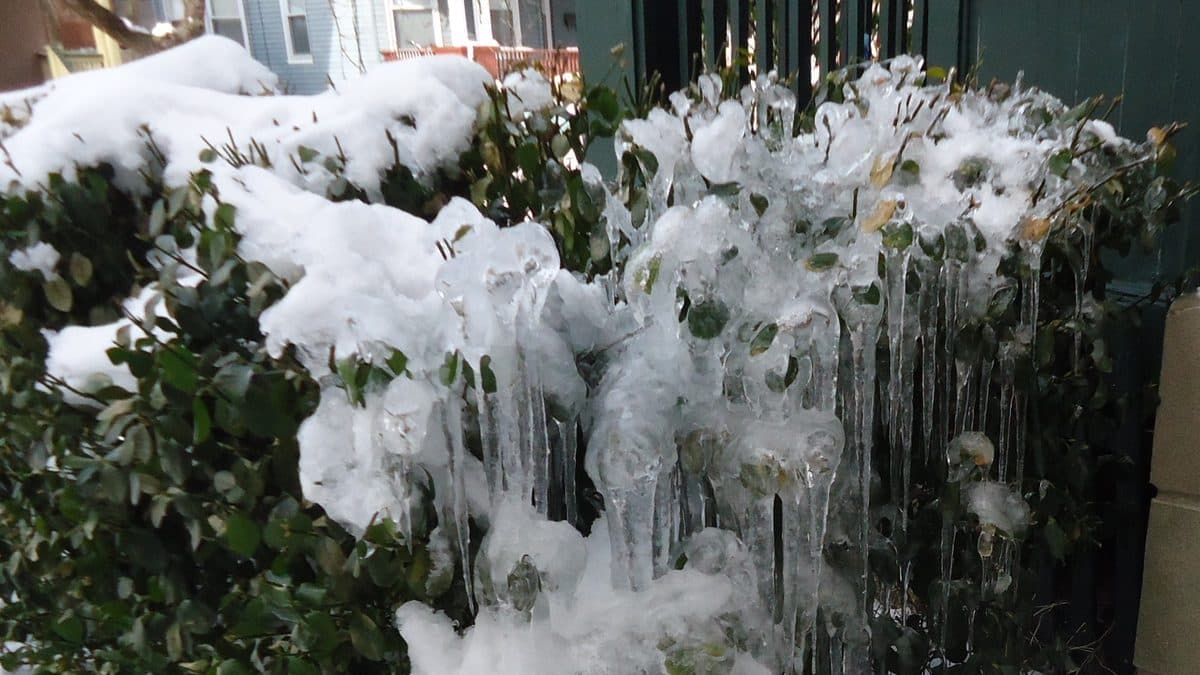
Afterward: wait, then prune what broke
- Bent branches that are not broken usually recover on their own over weeks or months (University of Illinois Extension, Iowa State University Extension). Resist propping or tying them up after the fact (Iowa State University Extension).
- Prune truly broken limbs back to the main branch or trunk in late winter, once it is safe to work (Iowa State University Extension).
Where the app fits
The Pollinator Patch App sends freeze alerts by email as well as in the app, once your account has a garden saved with your location, so the first hard freeze can double as your reminder to get the twine on. If a shrub looks split or flattened after a storm, ask Patch whether to cut it now or wait for late winter.
Planning what goes in after a storm?
Enter your ZIP code and Pollinator Patch shows you which natives grow where you live and helps you plan the bed for spring.