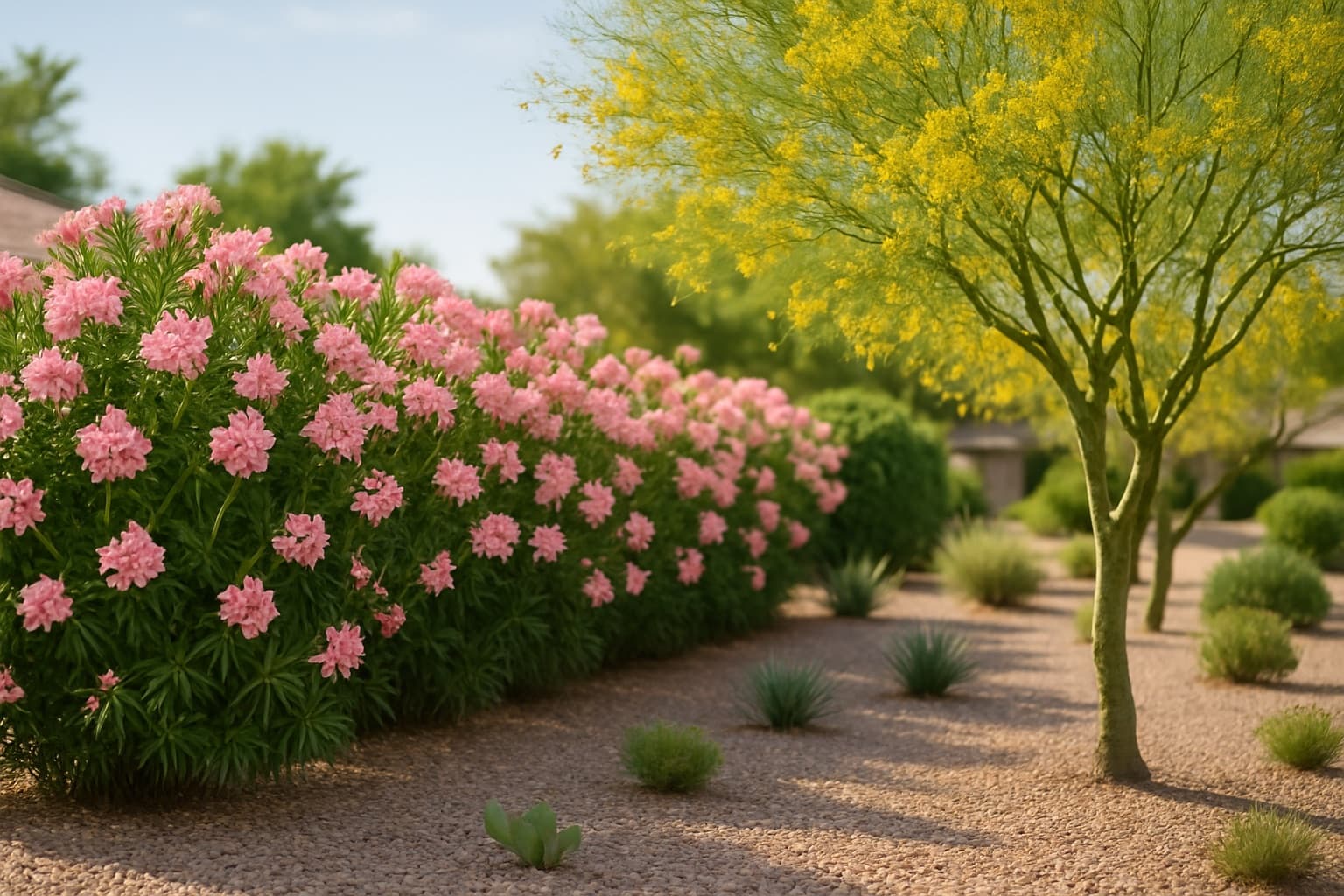
Plants Toxic to Dogs in Arizona Yards
The short version
- Oleander, Lantana, Sago Palm, Yellow Bird of Paradise, Castor Bean, and Chinaberry Tree are all ASPCA-confirmed toxic to dogs and common in Arizona xeriscape yards.
- Sago Palm is the single most dangerous, with published mortality rates of 50 to 75 percent even with treatment.
- Each toxic plant has an Arizona-native swap not on the ASPCA list: Desert Willow, Fairy Duster, Red Yucca, Chuparosa, Ocotillo, and Palo Verde (the state tree).
If your dog ate something and you are worried right now
Call the ASPCA Animal Poison Control Center: (888) 426-4435. There is a consultation fee, but they are available 24/7 and will walk you through it. Your vet's emergency line is the other call to make.
Quick answer
The most dangerous plants for dogs in Arizona yards are Oleander, Lantana, Sago Palm, Yellow Bird of Paradise, Castor Bean, and Chinaberry Tree. Each has an Arizona-native swap that is not on the ASPCA toxic plant list: Desert Willow, Fairy Duster, Red Yucca, Chuparosa, Ocotillo, and Palo Verde.
Arizona xeriscaping leans on a handful of tough, low-water plants that show up in nearly every Phoenix and Tucson yard, and several of the most common ones are toxic to dogs. Oleander lines commercial parking lots and residential fences alike. Lantana fills in as a heat-proof groundcover almost everywhere. None of it comes with a warning tag at the nursery.
Here are the worst offenders you will find in Arizona yards, why they are dangerous, and a Sonoran Desert native you can plant instead. Toxicity below is per the ASPCA Animal Poison Control Center plant database. Native swaps are drawn from the Arizona Native Plant Society.
Oleander (Nerium oleander)
Toxic to dogs top to bottom per the ASPCA: leaves, flowers, bark, roots, even the water left over from a vase of cuttings. The cardiac glycosides inside can bring on drooling, vomiting, and an abnormal heart rhythm. It is also one of the single most common hedge and screening plants in Phoenix and Tucson xeriscaping, precisely because it thrives without supplemental water.
Safe swap: Desert Willow (Chilopsis linearis). An Arizona native small tree or large shrub with showy, trumpet-shaped orchid-like flowers from spring through fall that hummingbirds visit heavily. It gives you the same tall screening presence oleander does, and it is not on the ASPCA toxic plant list (Arizona Native Plant Society).
Lantana (Lantana camara)
A flowering groundcover and low shrub planted across Arizona desert landscaping for its heat tolerance and long bloom season, and toxic to dogs per the ASPCA. The triterpene acids it contains can damage the liver, and severe cases bring on photosensitivity. A plant this common deserves a second look before it goes near a yard a dog uses.
Safe swap: Fairy Duster (Calliandra eriophylla). A low, spreading Arizona native shrub with distinctive pink-red pom-pom flowers, drought tough and popular with pollinators. Not on the ASPCA toxic plant list (Arizona Native Plant Society).
Sago Palm (Cycas revoluta)
The single most dangerous common landscaping plant for dogs on this list. Every part is toxic per the ASPCA, the seeds worst of all, and published veterinary case series report mortality between 50 and 75 percent even with treatment. Phoenix-area landscaping uses it as an accent or architectural plant, often close to entryways where dogs spend the most time.
Safe swap: Red Yucca (Hesperaloe parviflora), native to Arizona and further into Texas. It has a similarly bold, spiky architectural silhouette, with tall red-coral flower spikes that hummingbirds visit. Not on the ASPCA toxic plant list (Arizona Native Plant Society).
Yellow Bird of Paradise (Caesalpinia gilliesii)
Listed by the ASPCA simply as "Bird of Paradise," and toxic to dogs. This fast-growing, yellow-flowered accent shrub is everywhere in Phoenix-area xeriscape yards. The seed pods are the main hazard, and they are easy for a curious dog to find under the shrub.
Safe swap: Chuparosa (Justicia californica), a true Sonoran Desert Arizona native shrub with red tubular flowers that draw hummingbirds in numbers. It fills the same sun-loving accent-shrub role and is not on the ASPCA toxic plant list (Arizona Native Plant Society).
Castor Bean (Ricinus communis)
One of the most acutely dangerous plants on the entire ASPCA list, because it contains ricin. Gardeners grow it as a fast, dramatic, large-leafed ornamental accent, and it also turns up as a weedy escape in Arizona lots and washes. Do not assume it is only a problem where it was deliberately planted.
Safe swap: Ocotillo (Fouquieria splendens), an iconic Arizona native with tall, whip-like spiny canes tipped in red flowers after rain. It is a genuinely dramatic architectural accent in its own right, and it is not on the ASPCA toxic plant list (Arizona Native Plant Society).
Chinaberry Tree (Melia azedarach)
A fast-growing shade tree, invasive and common across Arizona, especially in older neighborhoods where it was planted decades ago for quick shade. The ASPCA lists it as toxic to dogs, with the berries the biggest concern since they drop in quantity and dogs will eat them.
Safe swap:Palo Verde (Parkinsonia species, also called Cercidium), Arizona's official state tree. It is a fast-growing native shade tree with green photosynthetic bark and a spring flush of yellow flowers, and it is not on the ASPCA toxic plant list (Arizona Native Plant Society).
A note on the plants people worry about needlessly
Some Arizona favorites are fine. Desert Marigold and Penstemon, including Parry's Penstemon, are widely planted Arizona natives that are not on the ASPCA toxic plant list and are reliable, dog-reasonable choices for a sunny bed. As with any plant, "non-toxic" means no known systemic toxin, not that a dog should eat a whole clump; large amounts of any plant can cause mild stomach upset. If something looks off, call the ASPCA Animal Poison Control Center at (888) 426-4435.
Quick reference
Toxicity details on this page follow the ASPCA Animal Poison Control Center plant database. Native plants suited to your part of Arizona vary by elevation and desert region, so check bloom time and mature size before you buy.
If you are replacing toxic plants and want help covering the cost, see Arizona landscaping and water rebates.
To filter every plant in your plan by pet toxicity before you buy, get Pollinator Patch on the App Store. Plants with a cited toxic listing carry a Toxic to Pets flag right on the card.
Checking more than one plant? See the full list of plants toxic to dogs and cats, with native alternatives, covering every plant on the ASPCA list.
See a finished plan for a yard like this
Find our guides useful? Add Pollinator Patch as a preferred source on Google and articles like this one will show up higher in your own search results.