Quick answer: South Dakota has no native-plant, xeriscape, or landscaping-protection law, and no general homeowners association act either. What South Dakota does have is a narrow, 1925-era chapter (SDCL 11-5) that lets property owners in a first- or second-class municipality record a use-restriction declaration, caps that declaration at 40 years, and, since 2024, bars an association from enforcing a governing-document provision against lawful firearm possession. A separate 2025 law, SDCL 43-12-7, does the same for any covenant running with the land. Landscaping appears nowhere in it. Your leverage comes from what your recorded declaration says, whether your association followed South Dakota's Nonprofit Corporation Act if it is incorporated, and whether the rule is enforced the same way on every yard.
A lot of guidance online implies every state has some law shielding native or drought-tolerant landscaping from an HOA. South Dakota does not, and pushing back on a board with a statute that does not exist is the fastest way to lose credibility in that conversation. What follows is what governs a landscaping dispute in South Dakota, checked against the state legislature's own published code, and where you have room to work.
This is a plain-English summary, not a fight plan. Most of these disputes end quietly once a homeowner reads their covenants closely and asks the board to apply them evenly.
The starting point: no landscaping statute
Texas has Property Code §202.007, which bars an HOA from prohibiting drought-resistant landscaping or water-conserving natural turf. California has Civil Code §4735, which protects low-water landscaping and blocks fines during drought. Washington bars a governing document from prohibiting drought-resistant landscaping or pollinator habitat outright. South Dakota has nothing comparable. No South Dakota statute says an association cannot require turf grass, cannot ban native beds, or has to approve a xeriscape plan.

So in South Dakota, the landscaping rules live in your subdivision's recorded declaration and covenants. The room to push back is about how that document is written and how the board applies it, not about a state law that overrides it.
South Dakota's one covenant-specific chapter is old, narrow, and was never about planting
South Dakota has a dedicated covenant-declaration chapter: SDCL Title 11, Chapter 5, "Restrictive Contracts and Declarations." It is worth reading closely, because both its age and its scope are easy to miss.
SDCL 11-5-1: written for municipalities, not statewide
The chapter opens with a scope limit, not a grant of general authority. SDCL 11-5-1 provides that it is lawful for the owner or owners of real property "situated in any first or second class municipality within this state" to regulate and restrict, by declaration or contract, building height, lot coverage, yard and setback dimensions, population density, and the use of land and structures. That language dates to 1925 (SL 1925, ch 243, §1) and was last touched in 1992. It says nothing about landscaping, native plants, turf, or xeriscape, and by its own words it addresses property inside an incorporated municipality of the first or second class, not every subdivision in the state.
SDCL 11-5-2 sets the mechanics: the declaration must be written, signed, acknowledged, and recorded with the county register of deeds within 30 days, with both spouses signing for a homestead. SDCL 11-5-3 lets any interested property owner, or the municipality itself, sue to enforce it. You can read the chapter on the South Dakota Legislature's official code site (opens in new tab).
Whether your own subdivision's declaration was created under this specific chapter, versus general common-law covenant practice recorded under South Dakota's broader property-covenant chapter (SDCL 43-12, discussed below), is a fact a title company or property attorney can confirm from your recorded documents. It matters, because two of the chapter's more useful provisions, the duration cap and the default amendment vote, are both tied to this chapter by their own words. SDCL 11-5-4 covers "the restrictions authorized by" SDCL 11-5-1 and 11-5-2, and SDCL 11-5-11 covers a declaration "as provided in" SDCL 11-5-2.

A widely repeated citation for South Dakota does not check out
Several HOA law summary sites describe a "South Dakota Planned Community Act" at "SDCL 43-15B" and cite "South Dakota Revised Statutes §421J-1 through 421J-16." We could not find either. Checked directly against the South Dakota Legislature's own chapter index for Title 43, Chapter 15B is Time-Share Estates, not a planned-community statute, and no chapter numbered 421J exists anywhere in South Dakota's codified laws. South Dakota's actual condominium statute is SDCL 43-15A, and it does not extend to standard single-family subdivision HOAs. Do not repeat the 43-15B or 421J citations to your board. They do not exist.
Two recent laws show the legislature knows how to void a covenant. Landscaping is not one of them.
The clearest evidence that South Dakota's silence on landscaping is a choice, not an oversight, is what the legislature has chosen to protect instead, twice, in the last two years.
Firearms are protected in two separate places, both recent
SDCL 11-5-9, added in 2024 (SL 2024, ch 42, §1), provides that "a homeowner's association may not include or enforce a provision in a governing document" that prohibits or restricts the lawful possession, transportation, or storage of a firearm or ammunition, or the lawful discharge of a firearm. That section defines "homeowner's association" and "governing documents" on its own terms rather than pointing back to the municipal scope of 11-5-1, so it reads as reaching HOAs generally, not only municipal ones.
A year later, the legislature acted again, this time outside Chapter 11-5 entirely. SDCL 43-12-7 (SL 2025, ch 181, §1), added to South Dakota's general real-property-covenants chapter, provides that "a covenant running with the land may not prohibit, restrict, or have the effect of prohibiting or restricting" the lawful possession, storage, or transportation of a firearm, or its lawful discharge, and makes any conflicting covenant provision void and severable. This one carries no municipal-boundary language at all, it applies to any covenant running with the land in South Dakota.
Also inside Chapter 11-5, SDCL 11-5-7 and 11-5-8 let a homeowner display a portable U.S. flag and a state, military, or POW/MIA flag, and erect a freestanding flagpole up to 20 feet high regardless of private covenants, as long as it does not obstruct sightlines at intersections and is not on an easement. Verified against the South Dakota Legislature's code (opens in new tab) and Chapter 43-12 (opens in new tab).
None of that reaches a garden. A legislature capable of writing two separate firearms-override statutes in consecutive years, plus a flag-display statute, and choosing not to write a landscaping one, is telling you something about where its priorities sit. Compare that to Washington, where RCW 64.38.057 protects pollinator habitat by name. South Dakota has made no such choice.
No solar override either
Several states in this series turn out to protect rooftop solar from HOA restrictions while saying nothing about landscaping. That pattern does not hold in South Dakota.
South Dakota's solar statute is a private easement tool, not an HOA override
SDCL Chapter 43-13, "Easements and Servitudes," lets any property owner grant a written wind or solar easement to another landowner, so a neighbor's tree or building cannot later block a solar collector's access to the sun. SDCL 43-13-17 caps the term at 50 years and voids the easement if no energy development occurs within five years. That is a tool for negotiating sun access between two landowners. It says nothing about, and does not limit, whether your own HOA can restrict or require approval for installing panels on your own roof. As of 2026, we found no South Dakota statute that bars an association from restricting rooftop solar.

The 40-year clock, and why it is not a guarantee
Massachusetts and Wisconsin give homeowners an angle that has nothing to do with an HOA statute: their covenants can age out after 30 or 40 years unless renewed. South Dakota has something that looks similar, but it comes with a limit worth understanding before you count on it.

SDCL 11-5-4: a 40-year cap, with no built-in renewal
SDCL 11-5-4 provides that "the restrictions authorized by §§ 11-5-1 and 11-5-2 continue in force for a period as may be prescribed in a declaration or contract but not exceeding forty years from the date of such declaration or contract." Unlike Wisconsin's 40-year covenant statute, which can be renewed in further 40-year periods, or Massachusetts's 30-year rule, which allows a 20-year extension, South Dakota's text describes no renewal or extension mechanism at all. If a declaration was created under this specific chapter more than 40 years ago and nothing in the record extended it, the restriction may simply be expired. Before a 2021 amendment (SL 2021, ch 56, House Bill 1084), the cap in this section was twenty-five years, not forty. Which limit applies to a declaration recorded before that change is a question for an attorney.
The catch is the same one Chapter 11-5 carries throughout: this cap, by its own text, applies to "restrictions authorized by §§ 11-5-1 and 11-5-2," the municipal declaration mechanism. South Dakota also has a general real-property-covenants chapter, SDCL 43-12, and a separate marketable-record-title chapter, SDCL 43-30, that operate on different rules and carry no equivalent 40-year cap in their own text. Whether a specific subdivision's declaration was created under Chapter 11-5 specifically, as opposed to general covenant practice, is a question for the recorded chain of title, not something to guess at from a section number. Do not tell your board a covenant has expired without a title company or attorney confirming which framework governs your declaration.

No general homeowners association act
South Dakota is unusual in a second way, similar to Missouri. Many states have a comprehensive planned-community or property owners association statute setting out how rules get adopted, how fines work, and what notice an owner is owed. South Dakota does not have one for standard subdivision associations.
Condominiums are the exception. SDCL Chapter 43-15A, titled Condominiums, supplies a statutory framework, but only where a developer or the owners have expressly submitted the property to it by recording a master deed or lease (SDCL 43-15A-3). If you own a single-family home in a subdivision with an HOA, Chapter 43-15A does not govern you.
Your declaration, plus the Nonprofit Corporation Act if incorporated
For a non-condominium South Dakota HOA, authority comes from the recorded declaration and covenants, plus, if the association is incorporated, SDCL Title 47, Chapters 47-22 through 47-28, South Dakota's Nonprofit Corporation Act. That combination decides what your board may require, what corporate formalities it owes members, and how it can enforce a violation. There is no notice-and-hearing procedure or fine cap written specifically for HOAs the way Virginia and Ohio have.
This makes reading the declaration, and confirming whether your association is formally incorporated, far more important in South Dakota than in a state with a mandatory umbrella act layered on top.
Where you do have leverage
You still have options. Four things carry weight in South Dakota.
What the declaration says
Boards sometimes enforce a rule that is not in the recorded document, or stretch a general maintenance clause further than its words support. A clause requiring a yard be kept neat is not the same as a clause requiring turf grass. Ask for the exact recorded provision and the page it appears on, not a paraphrase from a newsletter or a board member's recollection.

Whether your association is incorporated, and following Title 47
If your HOA is a nonprofit corporation, South Dakota's Nonprofit Corporation Act sets requirements for meetings, board action, and member records. A board that skipped its own corporate formalities, or never properly adopted the rule it is citing, is on weak ground regardless of whether the underlying restriction is valid.
Whether Chapter 11-5 applies to your declaration
If your property sits within a first- or second-class municipality and your declaration was created under SDCL 11-5-1 and 11-5-2, the 40-year duration cap and the two-thirds default amendment vote in SDCL 11-5-11 may be live options. Confirming this takes research, and it is worth having a title company check.
Even-handed enforcement
Selective enforcement carries weight in South Dakota because, absent a mandatory statute, the association's authority rests almost entirely on a document it is expected to apply consistently. If your native bed is cited while comparable or messier yards nearby are not, document it with dated photos. That inconsistency undercuts the citation and often ends the dispute without a fight.

Cost-share programs can still offset a conversion. See what is currently available on our South Dakota rebate page before you plan the work.
What your HOA can still require
Given how little South Dakota law limits an association outside of firearms and flags, it helps to be realistic about what a board can enforce through a clearly written declaration:
- Turf grass, or a minimum percentage of lawn, where the declaration says so plainly
- Pre-approval of landscaping changes through an architectural review committee
- Maintenance standards covering dead plants, overgrowth, and edging
- Height limits near sidewalks, driveways, and street sight lines
- Rules about raised beds, borders, trellises, and other structures
- Setback and screening requirements
- Restrictions on rooftop solar panels and their placement
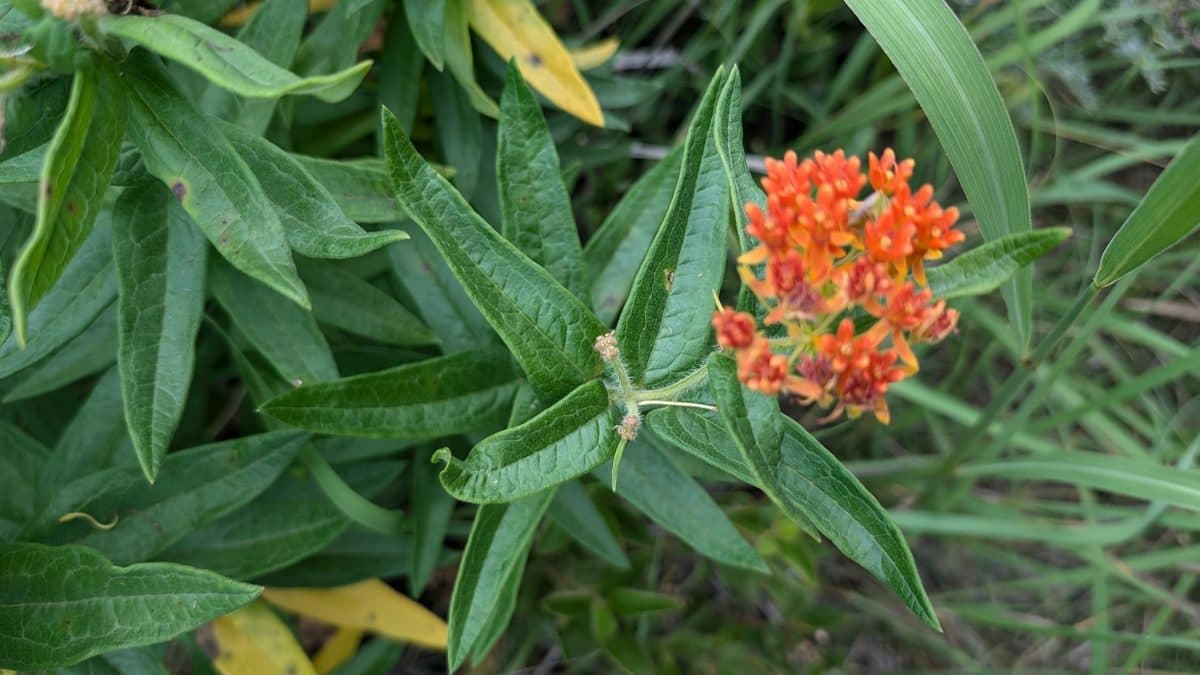
The practical difference from Texas or Washington is that a clearly written South Dakota turf requirement is likely to hold up as written. The more productive path is usually to design something the review committee can approve, rather than to argue that a statute overrides the declaration.
How to respond when the rules feel unfair
Even without a landscaping statute behind you, a calm and documented approach settles most of these disputes. Four steps, in order:
- 1Ask for the rule in writing.Request the exact recorded provision the association is citing, by section. A verbal warning is not an enforceable violation, and seeing the language often reveals the rule says less than the board believes.
- 2Find out what governs your association.Determine whether you are in a condominium under SDCL 43-15A, whether your declaration was created under SDCL 11-5-1 and 11-5-2, and whether your association is incorporated under Title 47. That answer sets both the procedure your board owes you and whether the 40-year duration cap could even apply.
- 3Document uneven enforcement.Photograph comparable yards that have not been cited, with dates. Where an association's authority rests mostly on a private document rather than a mandatory statute, evidence that it applies that document inconsistently carries weight and often gets a citation withdrawn.
- 4Submit a tidy plan.Give the review committee something concrete to approve: a plant list, a simple layout, and a maintenance schedule. A neat, clearly intentional design is far easier for a board to accept than a request framed as a challenge.
When to involve a lawyer
Because South Dakota gives you so little to cite on your own, a short attorney consultation is worth more here than in a state with a landscaping statute. Consider one if:
- You are being fined and cannot tell whether the declaration supports the citation
- The association is threatening a lien
- You believe your declaration may have been created under SDCL 11-5-1 and 11-5-2 and could be past the 40-year cap
- You cannot tell whether your community is a condominium under SDCL 43-15A, a Chapter 11-5 municipal declaration, or an ordinary covenant under SDCL 43-12
A South Dakota real estate attorney can read your declaration and tell you quickly which framework governs it, and whether a rule holds. Given how much South Dakota leans on that document, one consultation is often worth it before you commit to either a fight or a redesign.
This is not legal advice.
We are a gardening app, not lawyers. This post summarizes publicly available South Dakota law as of 2026. South Dakota has no native-plant or landscaping-protection statute, your recorded declaration controls your situation, and every dispute is different. If you are facing fines or legal threats, talk to a real estate attorney in South Dakota.
People also ask
Does South Dakota have a law protecting native landscaping from HOAs?
No. South Dakota has no native-plant, pollinator, or xeriscape statute, and nothing comparable to Texas Property Code §202.007 or Washington RCW 64.38.057. If your recorded declaration clearly requires turf grass, South Dakota law generally lets the association enforce it. Your leverage comes from the wording of that declaration, whether your association followed its own corporate procedure if incorporated, and whether it enforces the rule uniformly.
Does South Dakota have a general homeowners association act?
Not for standard subdivision associations. South Dakota has no umbrella planned-community act. Condominium projects created by a recorded master deed or lease are covered by SDCL 43-15A. South Dakota does have a narrow 1925 chapter, SDCL 11-5, that lets property owners in a first- or second-class municipality record a use-restriction declaration, but it is scoped by its own text to municipal property and says nothing about landscaping. A non-condominium HOA otherwise runs on its recorded declaration plus, if incorporated, SDCL Chapters 47-22 through 47-28, the South Dakota Nonprofit Corporation Act. Some HOA law summary sites cite a "South Dakota Planned Community Act" at SDCL 43-15B. That chapter is Time-Share Estates, and the citation does not check out.
Can a South Dakota HOA make me keep a grass lawn?
If the recorded declaration clearly requires turf grass or a minimum percentage of lawn, then generally yes. South Dakota has no statute overriding a turf requirement the way Texas or Washington does. A vague tidiness or maintenance clause is not the same as a turf mandate, though, and inconsistent enforcement can undercut a citation.
Does South Dakota protect rooftop solar panels from HOA restrictions?
No. SDCL Chapter 43-13 lets one landowner grant another a private wind or solar easement so a neighbor cannot block access to the sun, but that is a tool for negotiating between landowners, not a limit on your own association. We found no South Dakota statute that bars an HOA from restricting or requiring approval for rooftop solar panels.
Can an old South Dakota HOA covenant expire on its own after enough years?
Possibly, but only under a specific condition. SDCL 11-5-4 caps restrictions created under SDCL 11-5-1 and 11-5-2 at 40 years from the date of the declaration (25 years before a 2021 amendment), with no renewal mechanism described in the statute. That cap applies to that specific municipal declaration chapter, not to every South Dakota covenant. Whether your subdivision's declaration was created under this chapter, as opposed to general covenant practice under SDCL 43-12, is a question for a title company or attorney, not something to assume from the date alone.
Planning a native yard in South Dakota?
Pollinator Patch helps you build a plant plan that fits your declaration, with the tidy documentation review committees respond to. Plant list, layout, and maintenance schedule, all printable.