Bamboo muhly
Muhlenbergia dumosa
Last reviewed: August 2026
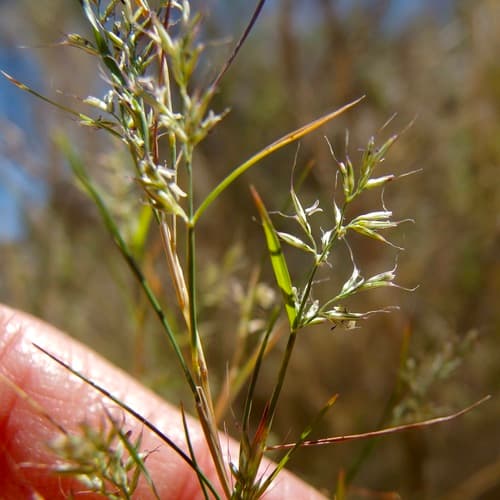
Muhlenbergia dumosa, or bamboo muhly, is a low-water ornamental grass with fine, arching, bamboo-like foliage suited to rocky slopes and canyon washes in the low desert of southern Arizona. It produces airy flower plumes in September and October.
Toxicity unknown
Bamboo muhly (Muhlenbergia dumosa) is not listed by the ASPCA Animal Poison Control Center (opens in new tab) or the other sources we check, so we have no verdict for it either way. Absence from those lists is not a clearance. If your pet shows symptoms after eating any plant, call the ASPCA at (888) 426-4435.
Light
part sun
Water
low
Size
36"–60" H × 36"–60" W
Bloom
Sep, Oct
Native to
AZ
Before you buy
Your city may pay you to plant this
Cities and water utilities offer rebates for replacing lawn with native and water-wise plants. We track 459 programs across 44 states, each with a link to the provider and the date we last checked it.
Find rebates in your areaPicture natives in your own yard
Upload a photo of your yard and Patch Vision shows a rendering of it planted with natives for your region, like Bamboo muhly.


Browse plants for this ecoregion
A fine-textured ornamental grass with soft, feathery, bamboo-like foliage held on slender, arching stems that give it a light, airy appearance. Grown primarily for its graceful form and movement rather than its flowers, which are inconspicuous plumes appearing in fall. Stays evergreen and full-bodied with minimal maintenance.
Growing Bamboo muhly
Grow Bamboo muhly in part sun and low water. Mature plants reach 36 to 60 inches tall and spread 36 to 60 inches wide. Expect low maintenance to keep it looking intentional in a front yard.
How to care for Bamboo muhly, by region
How to care for Bamboo muhly where it is actually grown: year-round basics plus what to do each season, region by region, with the sources for each.
Care guidance last updated: July 2026
Cross Timbers (includes Fort Worth, TX)
Year-round
Bamboo muhly is an airy ornamental grass from the desert Southwest. It is not native to North Texas, but it handles our hot, dry summers well once it has a season to root in, and it grows as a tidy clump rather than spreading.
- Give it part sun (morning sun with afternoon shade is ideal through North Texas summer heat)
- In the heavy black clay soils east of the metro, plant it high on a slight mound or work in compost for drainage; in the sandier soils west of the metro it drains fine on its own but will need water more often through the first summer
- Expect a mature clump 3 to 5 feet tall and wide; leave that much room from a sidewalk or driveway edge
- It grows as a clumping bunch grass, not a runner, so it will not spread into the lawn or a neighbor's bed
- It is not on the ASPCA toxic plant list for dogs or cats
Fall
Fall is bloom season for bamboo muhly, when it sends up fine, airy seed plumes above the foliage, and the cooler weather also makes it a good time to plant.
- Expect the feathery plumes to show September into October
- Fall planting works well too, since cooler autumn weather is easier on new roots than summer heat
- Ease off watering as temperatures drop, but do not let the soil go bone dry through a dry autumn stretch
- Leave the plumes standing rather than cutting them back; they hold their look into winter
The seed plumes give the bed soft, deliberate texture that reads as an ornamental planting rather than an unmown patch, right as neighboring lawns start going dormant.
Winter
Bamboo muhly stays evergreen or semi-evergreen through a typical mild North Texas winter, but a hard freeze can brown the top growth.
- In a normal winter the foliage stays green to tan through short cold snaps
- After a severe Arctic outbreak (well below freezing for more than a day), expect browning; wait until late February to judge it, do not assume it is dead early
- Cut the whole clump back to about 6 inches in late February, before spring growth starts
- Skip watering during a freeze; resume regular watering once temperatures return to normal
A clump left standing brown after a freeze can look neglected from the street; cutting it back promptly once the hard cold has passed keeps the bed looking tended.
Spring
Spring is the best time to plant bamboo muhly in North Texas, and established clumps put out fresh new blue-green growth once the weather warms.
- Plant new starts anytime from March through May, after the last frost (mid March)
- Water new plants two to three times a week for the first six to eight weeks while roots establish
- Skip fertilizer; this grass performs best in average to lean soil
- If you have not cut the clump back yet this year, do it now, to about 6 inches, before new blades fill in
A freshly cut, even clump reads as an intentional, tended planting rather than an overgrown patch of grass, which matters if the bed faces the street.
Summer
July and August are the real test for a bamboo muhly planted this year. Established clumps handle North Texas drought well, but a first-year plant still needs regular water.
- Established clumps (in the ground a full year or more): deep water every 10 to 14 days during the hottest stretch, more often if leaf tips start rolling or browning
- First-year plants: keep watering two to three times a week straight through summer; do not let them dry out completely during 100F afternoons
- Skip fertilizer during peak heat; feeding now stresses the plant rather than helping it
- Leave the foliage alone this season, no cutting back in summer
Sources: Muhlenbergia dumosa (Bamboo Muhly), Lady Bird Johnson Wildflower Center Native Plant Database, ASPCA Toxic and Non-Toxic Plant List, Dogs, Muhlenbergia dumosa (Bamboo Muhly) plant profile, Green Things Nursery, Muhlenbergia dumosa (Bamboo Muhly) grass care, Wilson Bros Gardens
Texas Blackland Prairies (includes Dallas, TX)
Year-round
Bamboo muhly is an airy ornamental grass from the desert Southwest. It is not native to North Texas, but it handles our hot, dry summers well once it has a season to root in, and it grows as a tidy clump rather than spreading.
- Give it part sun (morning sun with afternoon shade is ideal through North Texas summer heat)
- In the heavy black clay soils east of the metro, plant it high on a slight mound or work in compost for drainage; in the sandier soils west of the metro it drains fine on its own but will need water more often through the first summer
- Expect a mature clump 3 to 5 feet tall and wide; leave that much room from a sidewalk or driveway edge
- It grows as a clumping bunch grass, not a runner, so it will not spread into the lawn or a neighbor's bed
- It is not on the ASPCA toxic plant list for dogs or cats
Fall
Fall is bloom season for bamboo muhly, when it sends up fine, airy seed plumes above the foliage, and the cooler weather also makes it a good time to plant.
- Expect the feathery plumes to show September into October
- Fall planting works well too, since cooler autumn weather is easier on new roots than summer heat
- Ease off watering as temperatures drop, but do not let the soil go bone dry through a dry autumn stretch
- Leave the plumes standing rather than cutting them back; they hold their look into winter
The seed plumes give the bed soft, deliberate texture that reads as an ornamental planting rather than an unmown patch, right as neighboring lawns start going dormant.
Winter
Bamboo muhly stays evergreen or semi-evergreen through a typical mild North Texas winter, but a hard freeze can brown the top growth.
- In a normal winter the foliage stays green to tan through short cold snaps
- After a severe Arctic outbreak (well below freezing for more than a day), expect browning; wait until late February to judge it, do not assume it is dead early
- Cut the whole clump back to about 6 inches in late February, before spring growth starts
- Skip watering during a freeze; resume regular watering once temperatures return to normal
A clump left standing brown after a freeze can look neglected from the street; cutting it back promptly once the hard cold has passed keeps the bed looking tended.
Spring
Spring is the best time to plant bamboo muhly in North Texas, and established clumps put out fresh new blue-green growth once the weather warms.
- Plant new starts anytime from March through May, after the last frost (mid March)
- Water new plants two to three times a week for the first six to eight weeks while roots establish
- Skip fertilizer; this grass performs best in average to lean soil
- If you have not cut the clump back yet this year, do it now, to about 6 inches, before new blades fill in
A freshly cut, even clump reads as an intentional, tended planting rather than an overgrown patch of grass, which matters if the bed faces the street.
Summer
July and August are the real test for a bamboo muhly planted this year. Established clumps handle North Texas drought well, but a first-year plant still needs regular water.
- Established clumps (in the ground a full year or more): deep water every 10 to 14 days during the hottest stretch, more often if leaf tips start rolling or browning
- First-year plants: keep watering two to three times a week straight through summer; do not let them dry out completely during 100F afternoons
- Skip fertilizer during peak heat; feeding now stresses the plant rather than helping it
- Leave the foliage alone this season, no cutting back in summer
Sources: Muhlenbergia dumosa (Bamboo Muhly), Lady Bird Johnson Wildflower Center Native Plant Database, ASPCA Toxic and Non-Toxic Plant List, Dogs, Muhlenbergia dumosa (Bamboo Muhly) plant profile, Green Things Nursery, Muhlenbergia dumosa (Bamboo Muhly) grass care, Wilson Bros Gardens
In an HOA neighborhood
Bamboo muhly is an HOA-friendly choice. Maintenance level: low. Tidiness: 4 out of 5.
Works well in: front yard, foundation, street edge, mid zone.
Wildlife value
Dense, fine-textured foliage offers cover and nesting material for small birds, though the plant holds little direct nectar value.
Common questions
- How much light does bamboo muhly need?
- Bamboo muhly grows best in part sun. In cultivation it tolerates conditions from full sun to part shade, and afternoon shade helps in the hottest desert gardens.
- How much water does Muhlenbergia dumosa need?
- This grass is drought tolerant once established and prefers low water. It can also handle occasional medium watering without becoming waterlogged.
- When does bamboo muhly bloom?
- Muhlenbergia dumosa sends up delicate, feathery flower plumes in September and October, adding movement and texture to the garden in fall.
- Does bamboo muhly lose its leaves in winter?
- Bamboo muhly is evergreen in mild climates, keeping its fine, cane-like foliage year round, though a hard freeze can cause dieback that it usually recovers from in spring.
- Is Bamboo muhly HOA-friendly?
- Bamboo muhly is generally an HOA-friendly choice in the right placement, with low maintenance.
These answers were drafted with an AI model from this plant's data. Verify care details with a local expert.
Native range data from vouchered herbarium specimen records and regional native plant society lists. Pollinator and host plant associations compiled from GBIF, iNaturalist, and published ecological literature.
If something looks wrong
Common plant problems, and what to check first
These come up on almost any plant. Each guide lists the likely causes in the order they are worth ruling out, with one thing to check before you act on any of them, and links to the source it came from.
- It is dying right after planting
- Leaves turning yellow
- Wilting even though I watered it
- Brown crispy leaf tips
- Bugs on the plant
Ready to grow Bamboo muhly? Add it to your garden in Pollinator Patch to track it and get season-by-season care guidance.