Black-eyed Susan
Rudbeckia hirta
Light
full sun
Water
low
Size
24"–36" H × 12"–18" W
Bloom
Jun, Jul, Aug, Sep, Oct
Native to
North Texas
Pollinators
butterflies, bees
Picture natives in your own yard
Upload a photo of your yard and Patch Vision shows a rendering of it planted with natives for your region, like Black-eyed Susan.


Browse plants for this ecoregion
Black-eyed Susan is a perennial forb native to North Texas. It grows best in full sun with low water needs.
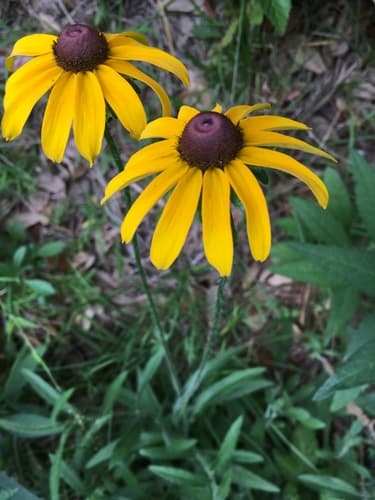
Black-eyed Susan is the workhorse of Texas native gardens. Cheerful yellow-gold daisies bloom from June through October. It reseeds gently to fill gaps, and the seed heads provide winter interest and bird food. Most homeowners recognize it instantly, which helps with HOA perception.
Use Black-eyed Susan in the middle of beds. It pairs well with Purple Coneflower, Mealy Blue Sage, and Little Bluestem. It handles clay soil and full sun. Once established, it needs little water. In HOA neighborhoods, its tidy habit and long bloom period make it a safe choice.
It attracts butterflies and bees. Cut back in late winter or early spring when new growth appears. Some varieties can flop in rich soil; lean conditions keep it more compact.
Bee species data compiled from GBIF, iNaturalist, Discover Life, and the USGS Native Bee Inventory and Monitoring Lab. Plant-pollinator associations informed by published ecological literature.
How to care for Black-eyed Susan, by region
How to care for Black-eyed Susan where it is actually grown: year-round basics plus what to do each season, region by region, with the sources for each.
Care guidance last updated: September 2026
Arkansas Valley (includes McAlester, OK)
Year-round
Black-eyed Susan is native to the Arkansas Valley region around McAlester and Poteau, growing in the prairies, pastures, and open woodland edges between the Ouachita and Ozark uplifts.
- Native to the valley region shared with western Arkansas per the Arkansas Native Plant Society, and to Oklahoma per the USDA PLANTS Database.
- Grows well on the mix of prairie remnants and open valley soils typical of this ecoregion, tolerating both moist and dry, well-drained conditions.
- Short-lived, often biennial, and self-seeds readily in open, sunny sites, which fits the valley's mosaic of pasture and clearing.
- Full sun gives the strongest bloom. Part shade at woodland edges is tolerated but flowering will be lighter.
A widely recognized, tidy-looking wildflower that fits an HOA-friendly front bed without looking unkempt.
Fall
Fall is seed-drop time for Black-eyed Susan in the Arkansas Valley. Leave dried seed heads standing rather than cutting back right away.
- Dried seed heads are a food source for goldfinches and other birds through fall and into winter.
- Standing seed heads let the plant self-seed, which keeps the patch going as a short-lived perennial.
- For a tidier front-yard look, trim only the bed's street-facing edge and leave interior seed heads standing.
- Fall is also a good time to reseed thin spots if spring germination was uneven.
Trimming the visible edge while leaving interior seed heads keeps the bed looking cared for.
Winter
Black-eyed Susan dies back to the ground for winter in the Arkansas Valley. No special winter care is needed.
- Top growth dies back after the first hard frost, which is normal for this short-lived, often biennial species.
- The planting returns from self-sown seed the next spring, so skip heavy mulch that could smother seedlings.
- No winter watering or covering is required in this climate.
- Wait until early spring to clear old stalks so seed heads can keep feeding birds through winter.
Spring
Spring is planting season for Black-eyed Susan around McAlester and Poteau, from either direct-sown seed or nursery starts.
- Press seed lightly into the soil surface after the last frost. It needs light to germinate, so do not bury it.
- Nursery transplants can go in any time after frost danger passes, generally early to mid April in this part of the Arkansas Valley.
- Water regularly through the first few weeks to help roots establish, then reduce watering.
- Do not expect bloom the first year. Many plants only put up leaves in year one and flower in year two.
Summer
Summer is peak bloom season for Black-eyed Susan in the Arkansas Valley, lasting from June into early fall.
- Blooms June through October per the Lady Bird Johnson Wildflower Center, covering the full length of a hot Oklahoma summer.
- Established plants tolerate the valley's summer heat and dry spells without supplemental water.
- Deadhead spent blooms regularly to keep flowering going and to keep the bed looking neat.
- Watch for aphid clusters on new growth. A firm spray of water usually clears them without pesticide.
Regular deadheading keeps the planting looking maintained for street-facing beds.
Sources: USDA PLANTS Database, Rudbeckia hirta profile, Arkansas Native Plant Society, Rudbeckia, USDA PLANTS Database, Black-eyed Susan plant guide (PDF), Lady Bird Johnson Wildflower Center, Rudbeckia hirta
Atlantic Coastal Pine Barrens (includes Riverhead, NY)
Year-round
Black-eyed Susan is native to the Atlantic Coastal Pine Barrens and grows well in a sunny Riverhead-area yard.
- Full sun is important, especially since pine barrens habitat is naturally open and sunny.
- It grows fine in the region's sandy, well-drained soils, which suit it well.
- It tolerates dry, sandy conditions once established without extra watering.
- It usually behaves as a short-lived perennial or biennial, reseeding itself in open, sunny ground.
Fall
Fall brings the last blooms and seed set around Riverhead.
- Let late blooms go to seed instead of deadheading so the patch renews itself in the sandy soil.
- Birds will feed on dried seed heads through fall if left standing.
- Fall's mild coastal weather is a good time to divide crowded clumps.
- Trim only stems that look diseased, leave the rest standing.
Winter
Winters around Riverhead are moderated by the coast, and this plant goes mostly dormant.
- Leave dried stems and seed heads standing through winter for birds and overwintering insects.
- Wait until fresh spring growth appears before cutting anything back.
- Standing stems help trap insulating snow or leaf litter over the crown in sandy soil.
- Mulch new plantings if a hard freeze is expected, sandy soil offers less natural insulation.
A tidy bed edge keeps standing winter stems looking like an intentional wildlife planting.
Spring
Spring around Riverhead brings new seedlings and basal growth from dropped seed.
- Clear away dead winter stems once fresh leaves appear at the base.
- Thin dense seedling clusters so plants have room to grow.
- Skip fertilizer, this plant flowers well even in the area's lean, sandy soil.
- Water new transplants regularly until established, sandy soil dries out fast.
Clearing winter debris in spring keeps the bed looking intentional before bloom.
Summer
Summer is peak bloom time around Riverhead.
- Deadhead regularly to keep new flowers forming through summer.
- It handles coastal summer heat and salt-tinged air fine once established.
- Sandy soil drains fast, so newly planted specimens may need more frequent water than inland gardens.
- Pollinators are especially active on it now, leave some blooms unpicked for them.
Regular deadheading keeps the planting looking full and tended through summer.
Sources: USDA Forest Service FEIS, Rudbeckia hirta, Lady Bird Johnson Wildflower Center, Rudbeckia hirta, New England Wild Flower Society Go Botany, Rudbeckia hirta
Blue Ridge (includes Gettysburg, PA)
Year-round
Black-eyed Susan is native to the Blue Ridge region and grows well in a sunny Gettysburg-area yard.
- Full sun keeps it compact with strong bloom, it flops and thins in shade.
- It grows fine in typical Blue Ridge foothill soils as long as they drain.
- It tolerates dry stretches once established without extra watering.
- It usually behaves as a short-lived perennial or biennial, reseeding itself over time.
Fall
Fall brings the last blooms and seed set around Gettysburg.
- Let late blooms go to seed instead of deadheading so the patch renews itself.
- Birds will feed on dried seed heads through fall if left standing.
- Fall's mild weather is a good window to divide crowded clumps.
- Trim only stems that look diseased, leave the rest standing.
Winter
Winters around Gettysburg are cold and this plant goes fully dormant.
- Leave dried stems and seed heads standing through winter for birds and overwintering insects.
- Wait until fresh spring growth appears before cutting anything back.
- Standing stems help trap insulating snow or leaf cover over the crown.
- Mulch new plantings after the ground freezes to protect roots through their first winter.
A tidy bed edge keeps standing winter stems looking intentional rather than unkempt.
Spring
Spring around Gettysburg brings new seedlings and basal growth from dropped seed.
- Clear dead winter stems once fresh leaves appear at the base.
- Thin crowded seedling clusters so plants have room to grow.
- Skip fertilizer, average soil produces sturdier growth.
- Water new transplants regularly until established.
Clearing old stems in spring keeps the bed looking cared for before bloom season.
Summer
Summer is peak bloom time around Gettysburg.
- Deadhead regularly to keep new flowers forming through summer.
- It handles regional summer heat and humidity fine once established.
- Give plants room for airflow to reduce powdery mildew risk.
- Pollinators are especially active now, leave some blooms unpicked for them.
Regular deadheading keeps the bed looking tidy through the bloom season.
Sources: USDA Forest Service FEIS, Rudbeckia hirta, Lady Bird Johnson Wildflower Center, Rudbeckia hirta, North Carolina Extension Gardener Plant Toolbox, Rudbeckia hirta
Boston Mountains (includes Fayetteville)
Year-round
Black-eyed Susan is a sun-loving native wildflower that thrives in the sunny openings, glades, and roadside edges of the Boston Mountains around Fayetteville.
- Plant it in full sun in the acidic, rocky, well-drained soil that is normal here; it does not like soggy ground or limestone-alkaline spots.
- It is native to Arkansas and the Ozarks and shows up naturally in forest openings, glades, and disturbed sunny ground, so it fits a Boston Mountains yard.
- It is a short-lived pioneer that reseeds itself, so let a few seed heads stand each year and it will keep coming back.
- It is not on the ASPCA list of plants toxic to dogs, cats, or horses.
Fall
Fall is when blooms fade and you decide how much to tidy for the street and how much to leave for the birds.
- Leave a share of the dark seed heads standing; goldfinches and other birds feed on them into winter.
- You can sow fresh seed now, since a cold Ozark winter helps it sprout in spring.
- Pull spent, mildewed plants if the foliage looks rough, since this is a short-lived plant that reseeds anyway.
To keep a front bed reading as intentional and avoid a violation letter, cut back the front row or edge to a clean line and leave the standing seed heads toward the back where they look purposeful rather than neglected.
Winter
Winter is a rest period; the plant dies back and the standing stalks or a low rosette are all you will see.
- Do nothing to the roots; Boston Mountains winters in zones 6b to 7a are well within its hardiness.
- Leave stems standing if you want seed for birds and cover for overwintering insects, or cut them low if you prefer a tidy look.
- A light mulch of leaves over the crowns is fine but not required in Ozark soil.
A row of dead brown stalks can read as neglected to a picky board; cutting the front edge to a short, even height keeps the winter silhouette looking intentional while you leave the interior stems for wildlife.
Spring
Spring is when you sow seed or set out plants and let the new rosettes get going before the summer heat.
- Direct-sow seed on top of the soil in early spring; the seed needs light to sprout, so do not bury it deep.
- Set out young plants after the last hard frost, usually mid-April around Fayetteville, in a sunny, well-drained spot.
- Skip heavy fertilizer; lean, rocky Ozark soil grows sturdier plants that flop less.
Summer
Summer is peak bloom, when the yellow daisies feed pollinators through the humid Ozark heat.
- Water new first-year plants during dry spells; once settled they handle Boston Mountains summer heat with little help.
- Leave some blooms for native bees and butterflies, which use the flowers as a nectar source through summer.
- Give plants room and morning sun so leaves dry fast, which lowers leaf-spot in humid weather.
Sources: Missouri Department of Conservation field guide, Black-eyed Susan (native, statewide including the Ozarks, upland forest openings and glades), Lady Bird Johnson Wildflower Center, Rudbeckia hirta (native range, woodland edge and opening habitat, acidic soil pH under 6.8), USDA Forest Service FEIS species review, Rudbeckia hirta (interior highlands distribution, forest openings and glades, pioneer species), ASPCA Animal Poison Control Center toxic plant database (Rudbeckia hirta not listed as toxic to dogs, cats, or horses), Xerces Society pollinator plant profile, Rudbeckia (native bee and butterfly nectar value), USDA NRCS Black-eyed Susan plant guide (seeding, establishment, low fertility tolerance)
Central Appalachians (includes Johnstown, PA)
Year-round
Black-eyed Susan is native to the Central Appalachians and grows well in a sunny Johnstown-area yard.
- Full sun keeps growth compact and bloom strong, it stretches thin in shade.
- It grows fine in the region's mountain-valley soils as long as they drain.
- It tolerates dry spells once established without extra watering.
- It usually behaves as a short-lived perennial or biennial, reseeding itself over time.
Fall
Fall brings the last blooms and seed set around Johnstown.
- Let late blooms set seed instead of deadheading so the patch renews.
- Birds will feed on dried seed heads through fall if left standing.
- Fall's mild weather is a good window to divide crowded clumps.
- Trim only stems that look diseased, leave the rest standing.
Winter
Winters around Johnstown are cold, higher elevation, and this plant goes fully dormant.
- Leave dried stems and seed heads standing through winter for birds and overwintering insects.
- Wait until fresh spring growth appears before cutting anything back.
- Standing stems help trap insulating snow cover over the crown.
- Mulch new plantings after the ground freezes to protect roots through their first winter, especially at higher elevations.
A tidy bed edge keeps standing winter stems reading as intentional rather than neglected.
Spring
Spring around Johnstown brings new seedlings and basal growth from dropped seed.
- Clear away dead winter stems once fresh leaves appear.
- Thin dense seedling clusters so plants have room to grow.
- Skip fertilizer, average to lean soil keeps growth sturdier.
- Water new transplants regularly until they establish.
Clearing winter debris in spring keeps the bed looking intentional before bloom.
Summer
Summer is peak bloom time around Johnstown.
- Deadhead regularly to keep new flowers forming through summer.
- It handles the region's summer heat and humidity fine once established.
- Space plants for airflow to reduce powdery mildew risk.
- Pollinators are especially active on it now, leave some blooms unpicked.
Regular deadheading keeps the planting looking full through peak bloom.
Sources: USDA Forest Service FEIS, Rudbeckia hirta, Lady Bird Johnson Wildflower Center, Rudbeckia hirta, North Carolina Extension Gardener Plant Toolbox, Rudbeckia hirta
Central Corn Belt Plains (includes Chicago)
Year-round
Black-eyed Susan is native to the Corn Belt prairie region around Chicago and is a dependable choice for sunny front yards there.
- Full sun keeps it compact and floriferous, it flops and thins out in shade.
- It grows well in typical Chicago-area clay-loam soils as long as they drain.
- It handles dry periods well once established, no regular watering needed.
- Expect it to act like a short-lived perennial that regrows from dropped seed more than the same root each year.
Fall
Fall brings the last blooms and seed formation around Chicago.
- Let the final round of flowers go to seed instead of deadheading.
- Goldfinches and other birds feed on dried seed heads through fall.
- Fall's mild weather is a good time to divide crowded plants.
- Only cut back stems that show disease, leave the rest for winter.
Winter
Winters around Chicago are cold and this plant goes fully dormant.
- Leave seed heads and stems standing through winter for birds and overwintering insects.
- Hold off cutting back until new spring growth appears at the base.
- Standing stems help catch insulating snow over the crown.
- Mulch first-year plantings after the ground freezes to help them through winter.
A trimmed bed edge keeps standing winter stems looking like a deliberate wildlife planting rather than neglect.
Spring
Spring around Chicago is when new seedlings and basal rosettes appear from last year's seed drop.
- Clear dead stems once fresh leaves show at the base.
- Thin crowded seedling clusters so plants are not competing for space.
- Skip fertilizer, lean soil produces sturdier plants.
- Water new transplants regularly until established, then ease off.
Clearing winter stems in early spring keeps the bed looking intentional before bloom season.
Summer
Summer is peak bloom for this plant in the Chicago area.
- Deadhead to keep flowers coming through summer's heat.
- It tolerates dry spells well once its roots are established.
- Space plants for airflow, crowding can invite powdery mildew in humid stretches.
- Pollinators are especially active on it now, leaving some blooms up helps them.
Regular deadheading keeps the bed looking tended through peak summer bloom.
Sources: Illinois Wildflowers, Black-Eyed Susan, Chicago Botanic Garden, Rudbeckia hirta, Lady Bird Johnson Wildflower Center, Rudbeckia hirta
Central Great Plains (includes Oklahoma City, OK)
Year-round
Black-eyed Susan is a true prairie native across the Central Great Plains around Oklahoma City. It grows in open fields, pastures, and roadsides on the same dry to moist, well-drained soils common in this ecoregion, and it is one of the easiest natives to establish from seed.
- Native to Oklahoma's plains and prairies per the USDA PLANTS Database and the Lady Bird Johnson Wildflower Center, not just a roadside escapee.
- Tolerates heat and drought once established, and handles the clay and loam soils typical of the Central Great Plains.
- Short-lived, often behaving as a biennial or short-lived perennial, so it self-seeds readily and keeps a patch going year to year.
- Full sun brings the heaviest bloom. Part shade is tolerated but flowering thins out.
Reads as a tidy, cheerful wildflower rather than a weed patch, especially when kept in a defined bed edge.
Fall
Fall is seed season for Black-eyed Susan around Oklahoma City. Leave the dried seed heads standing instead of cutting the plant back.
- Seed heads that dry on the stalk feed goldfinches and other seed-eating birds through fall and into winter.
- Leaving spent flower heads in place also lets the plant self-seed, which is how it naturally persists as a short-lived perennial.
- If you want a tidier look for an HOA-conscious front yard, cut back only the outer edge of the bed and leave interior seed heads for wildlife.
- Fall is also a good window for a second round of seeding if spring germination was thin.
Trimming just the bed's front edge while leaving interior seed heads balances a tended look with wildlife value.
Winter
Black-eyed Susan dies back to the ground for winter around Oklahoma City. No special protection is needed.
- The above-ground plant dies back after hard frost. This is normal since the species is often a biennial or short-lived perennial.
- Established plantings come back from self-sown seed the following spring, so avoid heavy mulch that would smother seedlings.
- No winter watering or wrapping is needed. It is fully hardy through Oklahoma winters.
- Wait until early spring to cut back old stalks so seed heads can finish feeding birds through the cold months.
Spring
Spring is when to get Black-eyed Susan in the ground around Oklahoma City, either from seed after the last frost or from nursery starts.
- Direct-sow seed in early spring. Seeds need light to germinate, so press them into the soil surface instead of burying them.
- Nursery transplants can go in any time after the last frost, typically early to mid April in this part of Oklahoma.
- Water new plantings regularly for the first few weeks until roots establish, then taper off.
- First-year plants may only form a low rosette of leaves and skip blooming. That is normal for this species.
Summer
Summer is peak bloom for Black-eyed Susan, running from June into early fall around Oklahoma City.
- Blooms June through October per the Lady Bird Johnson Wildflower Center, so it carries color through the hottest stretch of the year.
- Deadhead spent blooms to encourage more flowers and to keep the bed looking neat for street view.
- Established plants handle Oklahoma summer heat and drought without supplemental water, though occasional deep watering keeps bloom count higher.
- Watch for aphids on new growth. A strong spray of water usually knocks them back without needing a pesticide.
Deadheading keeps the display looking maintained, which reads well from the street.
Sources: USDA PLANTS Database, Rudbeckia hirta profile, Lady Bird Johnson Wildflower Center, Rudbeckia hirta, USDA PLANTS Database, Black-eyed Susan plant guide (PDF)
Central Irregular Plains (includes Kansas City, MO)
Year-round
Black-eyed Susan is native to the tallgrass prairie country around Kansas City, where it grows in upland prairies and old fields on heavier claypan ground.
- Native to the Central Irregular Plains, listed by the Missouri Department of Conservation as scattered to common in upland prairies, pastures, old fields, and open disturbed ground.
- It handles the region's heavier, clay-rich prairie soils well and takes full sun, which suits an open front yard away from tree shade.
- Once established it is drought tolerant, a real plus in the hot, dry late summers common to the Kansas City area (Lady Bird Johnson Wildflower Center).
- Its summer-to-fall flowers are a strong nectar source for native bees and monarchs and a caterpillar host for the silvery checkerspot (Xerces Society).
- Not on the ASPCA toxic plant list, so it is a safe choice for yards with pets.
Fall
Fall is decision time for black-eyed Susan on the Kansas City prairie: cut back for a neat look, or leave seedheads for birds and next year's plants.
- Blooming slows through fall as plants set seed across the prairie.
- For a tidy front yard, cut spent stems back to a few inches after flowering ends.
- To feed goldfinches and get volunteer seedlings, leave the dark seedheads standing instead.
- Fall is a good time to sow fresh seed on bare ground, letting the region's cold winter ready it for spring sprouting.
A fall cutback and a clean bed edge signal intentional care, the kind of tidiness that keeps a native planting off an HOA's radar.
Winter
Winter is a rest period for black-eyed Susan on the Kansas City prairie, and the season's cold sets up any dropped seed to sprout in spring.
- The region's cold winter chills fallen seed, so plants that seeded in fall often come back on their own.
- Seedheads left standing add winter structure to a prairie bed and feed finches.
- Dormant plants need no watering.
- Hold cleanup of old stems until late winter or early spring if you skipped a fall cutback.
Keeping the winter patch inside a defined, edged bed helps standing stems still read as intentional rather than as a yard left untended.
Spring
Spring is planting time for black-eyed Susan on the Kansas City prairie, when the ground is workable and rains help roots break into heavy clay.
- Plant or sow seed in spring so roots settle in before summer heat builds over the Central Irregular Plains.
- On heavier claypan soils, loosen the planting spot and avoid low areas where water pools, since this plant dislikes staying wet.
- Water new plantings during dry spring gaps, then back off as they establish.
- Volunteer seedlings from last year often appear now. Move or thin them while young to keep a bed from crowding.
Summer
Summer is full bloom for black-eyed Susan on the Kansas City tallgrass prairie, and it keeps flowering through the hottest, driest weeks.
- Flowers run from summer into fall, feeding native bees and monarchs and hosting silvery checkerspot caterpillars (Xerces Society).
- Established plants ride out the region's hot, dry midsummer with little to no extra water (Lady Bird Johnson Wildflower Center).
- Deadhead spent blooms to push more flowers and to keep self-seeding in check on open prairie ground.
- Pair it with prairie grasses so the whole planting reads as a deliberate meadow rather than a weedy patch.
Regular deadheading keeps the bed crisp and intentional-looking from the curb, which helps a prairie-style front yard avoid an HOA complaint.
Sources: Black-Eyed Susan field guide (Missouri Department of Conservation), Rudbeckia hirta, Native Plant Database (Lady Bird Johnson Wildflower Center), Monarch Nectar Plant Guides (Xerces Society), Toxic and Non-Toxic Plants (ASPCA Animal Poison Control Center)
Cross Timbers (includes Fort Worth)
Year-round
Black-eyed Susan is a short-lived native perennial that thrives in the Cross Timbers mix of oak woodland edges and tallgrass prairie around Fort Worth.
- It grows best in full sun to light shade on the sandy and rocky soils typical of the Cross Timbers, and tolerates both dry spells and occasional heavy rain once established.
- The Native Plant Society of Texas lists Cross Timbers as part of black-eyed Susan's native Texas range, where it grows along prairie openings and woodland edges.
- Its flowers are a nectar source for bees and butterflies, and the seed heads feed goldfinches and other songbirds through fall and winter, per the Xerces Society's pollinator plant guidance.
- Black-eyed Susan is not on the ASPCA's toxic plant list for dogs, cats, or horses.
Fall
Fall is when black-eyed Susan sets seed, and leaving the seed heads up feeds birds through the cooler months.
- Seed heads left standing through fall provide food for goldfinches and other seed-eating birds.
- This is a good time to collect and scatter seed if you want to expand the patch or share with a neighbor.
- Cutting back only the spent flower stalks, not the basal foliage, keeps the plant photosynthesizing into cooler weather.
Winter
Black-eyed Susan goes dormant through winter, and standing seed heads are worth leaving for wildlife rather than tidying up.
- The plant dies back to a basal rosette or disappears above ground, depending on whether it's acting as an annual or short-lived perennial that year.
- Standing dead stems and seed heads still offer bird food and shelter for overwintering insects through the coldest months.
- Wait until late winter or early spring to cut back old growth, since some of Texas's native bees overwinter in hollow stems.
Winter stems can look messy to a neighbor used to bare beds. A short note or sign explaining it's intentional wildlife habitat helps.
Spring
New rosettes of black-eyed Susan green up quickly once soil warms, and established clumps can be divided now.
- Established clumps can be divided in early spring before new growth gets tall, which also thins crowded plantings.
- Seedlings from last year's dropped seed often show up nearby, so it's fine to thin or transplant them while they're small.
- Avoid heavy mulch right at the crown, since black-eyed Susan rosettes prefer some airflow to resist crown rot in wet spring weather.
Fresh spring foliage reads as tidy and intentional along a front bed edge, unlike bare winter stems.
Summer
Black-eyed Susan blooms hardest through the Cross Timbers summer heat and needs little water once it's rooted in.
- Established plants are drought tolerant and usually only need supplemental water during extended dry stretches.
- Deadheading spent blooms encourages more flowers through the season, though leaving some seed heads late in summer helps birds and lets the plant reseed.
- Watch for aphids on new growth in early summer, they're usually minor and predatory insects clean them up on their own.
Continuous yellow bloom through peak summer keeps a bed looking cared for when many other plants go dormant in the heat.
Sources: Rudbeckia hirta - Native Plant Society of Texas, ASPCA Animal Poison Control Center plant database, Xerces Society - Leave the Leaves and Stems, Black-eyed Susan Rudbeckia hirta L. Plant Guide - USDA NRCS, Black-eyed Susan Rudbeckia hirta - Prairie Moon Nursery
Driftless Area (includes Galena, IL)
Year-round
Black-eyed Susan is a classic Midwest prairie native and grows well in the Driftless Area's open, sunny ground around Galena.
- Full sun brings the strongest, most compact bloom, it gets floppy in shade.
- It handles the region's mesic to dry, well-drained prairie soils without extra help.
- It is drought tolerant once established and rarely needs supplemental water here.
- It usually behaves as a short-lived perennial or biennial, refreshing itself from dropped seed.
Fall
Fall brings seed set and the tail end of bloom around Galena.
- Let the last flush of flowers go to seed rather than deadheading so the patch renews itself.
- Goldfinches and other birds feed on the dried seed heads, leave them standing if you can.
- Fall is a good time to divide crowded clumps while weather is mild.
- Remove only stems that look diseased, leave healthy ones up for winter.
Winter
Winters around Galena are cold, and this plant goes fully dormant, relying on dropped seed and root crowns to return.
- Leave dried stems and seed heads standing all winter, they feed birds and shelter overwintering insects.
- Do not cut back in fall, wait until you see new spring growth at the base.
- The dried seed heads and stems also help catch insulating snow cover over the crown.
- If planting is new, a layer of mulch after the ground freezes protects young roots through hard winters.
Standing winter stems can look messy to some neighbors, a clean edge along the bed keeps the look deliberate.
Spring
Spring around Galena is when this plant's rosettes and new seedlings get going.
- Cut back last year's dead stems once fresh basal leaves appear.
- Thin thick clusters of seedlings so plants have room to grow.
- Skip fertilizer, it prefers average to lean prairie-type soil.
- Keep new transplants watered until roots take hold, then ease off.
Tidying old stems in early spring keeps the bed looking intentional before bloom starts.
Summer
Summer is the main bloom season for Black-eyed Susan around Galena.
- Deadhead spent flowers to keep new blooms coming through summer.
- It handles the region's summer heat and dry spells well once established.
- Watch for crowding in wetter summers, thin stems for airflow to avoid mildew.
- Bees and butterflies use it heavily now, leaving some blooms unpicked helps them.
Regular deadheading through summer keeps the planting looking full instead of leggy.
Sources: Illinois Wildflowers, Black-Eyed Susan, USDA Forest Service FEIS, Rudbeckia hirta
East Central Texas Plains (includes College Station)
Year-round
Black-eyed Susan is one of the conspicuous native forbs in the Post Oak Savanna's sandy oak woodlands around College Station.
- It does best in full sun to partial shade on the sandy, acidic soils common in the Post Oak Savanna, and tolerates both dry spells and periodic rain.
- Texas Parks and Wildlife names black-eyed Susan among the forbs commonly found in East-Central Texas Plains post oak savanna and woodland, and the Native Plant Society of Texas lists East Central Texas Plains in its native range.
- Its flowers support native bees and butterflies, and the seed heads feed goldfinches and other birds through fall and winter.
- Black-eyed Susan is not on the ASPCA's toxic plant list for dogs, cats, or horses.
Fall
Fall seed set is when black-eyed Susan in the Post Oak Savanna feeds the most birds and offers the best chance to collect seed.
- Leaving seed heads standing through fall provides food for goldfinches and other seed-eating songbirds.
- Seed ripens on the plant through fall, so this is the best window to collect and share seed or scatter it in bare spots.
- Trim only the spent flower stalks, leaving basal foliage intact so the plant keeps some energy reserves going into winter.
Winter
Black-eyed Susan dies back through winter in the Post Oak Savanna, and it's worth leaving the stems up for wildlife.
- The plant typically dies back to a basal rosette or disappears above ground for winter, depending on whether it acted as an annual or short-lived perennial that year.
- Standing dead stems and seed heads continue to feed birds and shelter overwintering native bees through the cold months.
- Wait until late winter or early spring to cut back old growth, since many native bees overwinter inside hollow stems.
Standing winter stems can look untidy to neighbors used to cleared beds. A small sign noting it's wildlife habitat helps.
Spring
Black-eyed Susan greens up fast in Post Oak Savanna's sandy soils as spring warms, and this is a good time to divide crowded clumps.
- Divide established clumps in early spring before new growth is tall, which also helps control spread in a small bed.
- Volunteer seedlings often show up near parent plants and can be thinned or transplanted while small.
- Sandy Post Oak Savanna soils drain fast, so young spring transplants need more frequent watering until roots establish.
Quick spring green-up along a bed edge signals an actively tended garden rather than a neglected one.
Summer
Established black-eyed Susan handles College Station's hot, humid summer well and needs little supplemental water.
- Once rooted, plants are drought tolerant and only need extra water during prolonged dry stretches.
- Deadheading spent flowers keeps new blooms coming, though leaving some seed heads by late summer benefits birds and reseeding.
- High summer humidity can bring powdery mildew or leaf spot. Spacing plants for airflow reduces the risk.
Steady bloom through the hottest, muggiest months keeps a bed looking cared for when many plants slow down.
Sources: East-Central Texas Plains Post Oak Savanna and Woodland - Texas Parks and Wildlife Department, Rudbeckia hirta - Native Plant Society of Texas, ASPCA Animal Poison Control Center plant database, Black-eyed Susan Rudbeckia hirta L. Plant Guide - USDA NRCS, Xerces Society - Leave the Leaves and Stems
Eastern Corn Belt Plains (includes Columbus)
Year-round
Black-eyed Susan is native to the Eastern Corn Belt Plains and grows readily in a sunny Columbus-area yard.
- It needs full sun for the sturdiest, most compact bloom.
- It grows fine in Ohio's typical loam and clay-loam soils as long as they drain.
- It tolerates dry spells once established without extra watering.
- It generally behaves as a short-lived perennial or biennial, reseeding itself over time.
Fall
Fall brings the last blooms and seed set around Columbus.
- Let late blooms set seed instead of deadheading so the patch renews itself.
- Songbirds will feed on dried seed heads through fall if left standing.
- Mild fall weather is a good time to divide crowded plants.
- Trim only stems that look diseased, leave healthy stems standing for winter.
Winter
Winters around Columbus are cold and this plant goes fully dormant.
- Leave dried stems and seed heads up through winter for birds and overwintering insects.
- Wait until spring growth appears before cutting anything back.
- Standing stems help trap insulating snow cover over the crown.
- Mulch new plantings after the ground freezes to protect roots through the first winter.
A clean bed edge keeps standing winter seed heads looking like an intentional planting rather than neglect.
Spring
Spring around Columbus brings new basal growth and seedlings from last year's seed.
- Clear away dead stems once fresh leaves appear low at the base.
- Thin dense seedling patches so plants are not crowding each other out.
- Skip fertilizer, this plant flowers better in lean, average soil.
- Keep new transplants watered regularly until they establish, then back off.
Clearing old stems in spring keeps the bed looking intentional before flowers appear.
Summer
Summer is peak bloom season around Columbus.
- Deadhead regularly to keep new flowers forming through the summer.
- It handles central Ohio's summer heat and humidity well once established.
- Give plants room for airflow, crowding invites powdery mildew.
- Bees and butterflies use it heavily right now, so leave some blooms unpicked.
Regular deadheading keeps the front bed looking tidy through the long summer bloom period.
Sources: USDA Forest Service FEIS, Rudbeckia hirta, Lady Bird Johnson Wildflower Center, Rudbeckia hirta, North Carolina Extension Gardener Plant Toolbox, Rudbeckia hirta
Eastern Great Lakes Lowlands (includes Rochester, NY)
Year-round
Black-eyed Susan is native to the Eastern Great Lakes and Hudson Lowlands region and grows well in a sunny Rochester-area yard.
- Full sun keeps it compact with strong bloom, it flops and thins in shade.
- It grows fine in the region's lowland soils as long as they drain.
- It tolerates dry spells once established without extra watering.
- It usually behaves as a short-lived perennial or biennial, reseeding itself over time.
Fall
Fall brings the last blooms and seed set around Rochester.
- Let late blooms go to seed instead of deadheading so the patch renews itself.
- Birds will feed on dried seed heads through fall if left standing.
- Fall is a good window to divide crowded clumps before hard frost.
- Trim only stems that look diseased, leave the rest standing.
Winter
Winters around Rochester are cold, with heavy lake-effect snow, and this plant goes fully dormant.
- Leave dried stems and seed heads standing through winter for birds and overwintering insects.
- Do not cut back until fresh spring growth appears at the base.
- Standing stems help hold insulating snow cover over the crown.
- Mulch new plantings after the ground freezes to protect them through winter.
A tidy bed edge keeps standing winter stems looking deliberate rather than neglected.
Spring
Spring around Rochester brings new seedlings and basal growth from dropped seed.
- Clear away dead winter stems once fresh leaves appear.
- Thin dense seedling clusters so plants have room to grow.
- Skip fertilizer, average soil produces sturdier growth.
- Water new transplants regularly until they establish.
Clearing winter debris in spring keeps the bed looking intentional ahead of bloom.
Summer
Summer is peak bloom time around Rochester.
- Deadhead regularly to keep new flowers coming through summer.
- It tolerates lake-effect humidity and summer heat well once established.
- Space plants for airflow to reduce powdery mildew risk.
- Pollinators are especially active on it now, leave some blooms unpicked.
Regular deadheading keeps the planting looking tidy through peak bloom.
Sources: USDA Forest Service FEIS, Rudbeckia hirta, Lady Bird Johnson Wildflower Center, Rudbeckia hirta, New England Wild Flower Society Go Botany, Rudbeckia hirta
Edwards Plateau (includes San Antonio)
Year-round
Black-eyed Susan is a tough, cheerful native wildflower that fits right into Hill Country limestone soils and dry rocky ground.
- It grows in full sun to part shade in dry to medium, well-drained soil, and handles the thin caliche and clay-over-limestone ground common around the Edwards Plateau without extra soil amending (Lady Bird Johnson Wildflower Center).
- In Texas it is documented across the Edwards Plateau and Balcones Canyonlands ecoregions, where it grows in prairies, savannas, open rocky woods, and disturbed edges like roadsides and old fields (Lady Bird Johnson Wildflower Center).
- It is a larval host plant for the silvery checkerspot and gorgone checkerspot butterflies and its yellow flowers draw a wide range of native bees, so it pulls its weight for pollinators, not just looks.
- Black-eyed Susan is not on the ASPCA toxic plant list for dogs or cats, though the ASPCA notes that eating any plant material can still cause mild stomach upset in pets.
Fall
Fall is the last stretch of bloom and a good time to decide what seed heads to leave standing for winter.
- Blooming can continue into fall with deadheading, but many gardeners let the last round of flowers go to seed so birds like goldfinches can feed on them over winter.
- Seed heads left standing provide winter food for birds and let the plant reseed itself for next year.
- If the bed is starting to look overgrown, this is also a fine time to thin out crowded clumps before winter.
A few standing seed heads read as intentional wildlife gardening, but if the whole bed looks brown and collapsed, a partial fall tidy-up keeps it from reading as neglected.
Winter
Winter is dormant season, and old growth can be cut back any time before new leaves appear in spring.
- Dead foliage and stems can be cut back in late fall through early spring once the plant has gone dormant (Clemson Cooperative Extension).
- Black-eyed Susan is short-lived as a species, often behaving as a biennial, so some plants in the bed may not return and will need reseeding or replacing.
- It tolerates Hill Country winter conditions without protection since it is winter hardy across a wide range of US climates.
Cutting back collapsed winter stems before they turn to a matted brown mess keeps the front bed looking maintained rather than abandoned.
Spring
Spring is when black-eyed Susan wakes up from its winter cutback and starts putting on fresh growth.
- New basal leaves emerge in early spring once the ground warms, and plants started from seed in fall or late winter will begin forming their first rosettes now.
- If you didn't cut back old stems over the winter, do it now before new growth gets tall, cutting just above the soil line (Clemson Cooperative Extension).
- Established clumps can be divided in spring if they're getting crowded, which also helps keep the planting looking neat along a front bed.
A tidy spring cutback before new growth comes in keeps the bed looking cared for during the transition out of winter dormancy.
Summer
Summer is peak bloom for black-eyed Susan, and regular deadheading keeps the flowers coming through the Hill Country heat.
- Flowers open in early summer and keep going into fall if you deadhead spent blooms regularly, snipping the flowering stem back near the base (Clemson Cooperative Extension).
- It handles Hill Country summer heat and dry spells well once established, needing only occasional deep watering during the driest stretches.
- Leave a few late-summer flowers unclipped if you want the plant to self-seed and spread naturally in the bed.
Steady deadheading through summer keeps the bloom show full and tidy instead of leggy and spent-looking, which reads as intentional from the street.
Sources: Lady Bird Johnson Wildflower Center: Rudbeckia hirta, ASPCA Animal Poison Control: Toxic and Non-Toxic Plants, Clemson Cooperative Extension Home & Garden Information Center: Rudbeckia
Erie Drift Plain (includes Buffalo, NY)
Year-round
Black-eyed Susan is native to the Erie Drift Plain and grows well in a sunny Buffalo-area yard.
- Full sun gives the sturdiest, most compact bloom, shade makes it flop.
- It grows fine in the region's drift-plain soils as long as they drain.
- It handles dry spells well once established, needing little extra water.
- It usually acts as a short-lived perennial or biennial that reseeds itself.
Fall
Fall brings the last blooms and seed set around Buffalo.
- Let the final flowers set seed instead of deadheading so the patch renews.
- Birds will feed on dried seed heads through fall if left standing.
- Fall is a good time to divide crowded clumps before hard frost.
- Trim only stems that look diseased, leave the rest standing.
Winter
Winters around Buffalo are cold, with heavy lake-effect snow, and this plant goes fully dormant.
- Leave dried stems and seed heads standing through winter for birds and overwintering insects.
- Do not cut back until fresh spring growth appears at the base.
- Standing stems help hold insulating snow cover over the crown.
- Mulch first-year plantings after the ground freezes to protect them through winter.
A tidy bed edge keeps standing winter stems looking deliberate rather than neglected.
Spring
Spring around Buffalo brings new seedlings and basal growth from dropped seed.
- Remove dead winter stems once fresh leaves appear.
- Thin dense seedling clusters so plants are not crowding each other.
- Skip fertilizer, average soil keeps growth sturdier.
- Water new transplants regularly until established.
Clearing winter debris in early spring keeps the bed looking intentional before bloom.
Summer
Summer is peak bloom time around Buffalo.
- Deadhead regularly to keep new flowers coming through summer.
- It tolerates lake-effect humidity and summer heat well once established.
- Space plants for airflow to reduce powdery mildew risk.
- Pollinators are especially active on it now, leave some blooms unpicked.
Regular deadheading keeps the planting looking tidy through peak bloom.
Sources: USDA Forest Service FEIS, Rudbeckia hirta, Lady Bird Johnson Wildflower Center, Rudbeckia hirta, New England Wild Flower Society Go Botany, Rudbeckia hirta
Flint Hills (includes Manhattan)
Year-round
Black-eyed Susan is a true Flint Hills tallgrass prairie wildflower that gives you bright gold daisies through the hot part of summer with almost no fuss.
- Give it full sun and the shallow, rocky limestone soil the Flint Hills is known for. It handles the cherty, thin ground here better than most and does not want rich, wet beds.
- Water new plants their first summer to get roots down, then back off. Once settled it lives on Manhattan-area rainfall and shrugs off dry spells.
- This is a top pollinator plant. The gold flowers feed native bees and butterflies, and it is a host plant for the Silvery Checkerspot butterfly, so caterpillars may chew a few leaves, which is normal and fine.
- It is native to the Flint Hills, documented on Konza Prairie in Riley County and on prairie near Council Grove, so it belongs in a local yard and reseeds itself over time.
Fall
In fall the flowers fade and you decide how tidy you want the front yard to look going into winter.
- As blooms finish, you can leave the dark seed heads standing. Goldfinches and other birds pick at them, and they give winter interest.
- If you want a neater curb, cut plants back partway in fall and leave the rest for spring. Around Manhattan there is no rush, since these are tough prairie plants.
- Let a few seed heads drop where you want more plants. Black-eyed Susan reseeds on its own, so a light fall cleanup also controls how far it spreads.
If your front bed needs to look kept, a partial fall cutback and clean edge reads as intentional and lowers the odds of a violation letter, while you can leave seed heads in back beds for the birds.
Winter
Winter is quiet, and a hard late-winter cutback is the real maintenance moment for this prairie plant.
- Leave the standing stems and seed heads through most of winter if you can. They feed birds and hold snow, and the whole planting mimics how the plant behaves out on the Flint Hills prairie.
- Do the main cutback in late winter, right before new spring growth, and clear the old stems to the ground. On the tallgrass prairie this is the season fire resets the plants, and a hard late-winter cut is the home-yard version of that.
- Winters around Manhattan run cold, roughly zone 6a to 6b, and this native takes it with no protection needed.
Standing stems can read as messy to a strict HOA in winter. If that is a worry, keep front-yard clumps trimmed to a low, even height so the bed still looks intentional and avoids a violation letter.
Spring
Spring is for starting plants and letting the prairie wake up, since Black-eyed Susan comes on later in the season here.
- Set out transplants or sow seed in spring once the soil warms. New plants go in easily in the thin Flint Hills soil and get a full season to root before summer heat.
- The Flint Hills is managed with prescribed spring burns, and Black-eyed Susan is a prairie plant that comes back fine after a burn. In a home yard you do not burn, but the same idea applies. Clear off last year's dead stems in early spring so new growth has room.
- Do not fertilize. This plant expects lean, rocky ground, and feeding it just makes floppy growth.
Summer
Summer is the show, with gold flowers covering the plant through June and July across the Flint Hills.
- Peak bloom runs June into July around Manhattan. Let it flower and feed the bees and butterflies. This is when it earns its spot.
- It carries itself on summer rain here. Only water in a long dry stretch, and even then go easy since it dislikes soggy soil.
- Snapping off spent flowers keeps it blooming longer and looking tidy, but you can also leave some to set seed for more plants and for goldfinches later.
- Expect some leaf chewing from Silvery Checkerspot caterpillars. Leave them be. That is the plant doing its job as a host.
A quick pass of deadheading in summer keeps the planting reading as intentional and cared-for, which is the look that keeps a front yard clear of a violation letter.
Sources: Kansas Wildflowers and Grasses, Rudbeckia hirta, USDA NRCS Plant Guide, Black-eyed Susan Rudbeckia hirta, Xerces Society, pollinator and host plant value of Rudbeckia
High Plains (includes Lubbock, TX)
Year-round
Black-eyed Susan is a true native of Texas and the High Plains, so it already fits Lubbock's tough, dry, windy climate. Give it full sun and soil that drains well, since standing water in winter is what kills it, not the cold. It is a short-lived plant that drops seed and comes back, so the patch slowly wanders around your bed over the years. In a dry spot like Lubbock it wants a good deep soak now and then during the hottest summer stretches, more than it would need in a rainier place. It blooms roughly June through September and pulls in bees and butterflies.
- Full sun and well-draining soil are the two must-haves
- Native to Texas and the High Plains, so it belongs here
- Deep, occasional soaks in peak summer heat, not daily sips
- Short-lived but reseeds, so the clump moves around over time
- Blooms June to September and feeds bees and butterflies
- USDA lists it non-toxic to horses
Fall
Fall, around September and October, is the best time to plant black-eyed Susan in Lubbock because the roots get months to settle before next summer's heat. This is also when the plant finishes its bloom and sets seed heads. You have a choice here: tidy up the spent flowers and thin the self-sown seedlings for a clean look, or leave some seed heads standing so goldfinches can eat the seeds through fall and winter. Either way, water any fall plantings well since the wind still dries things out. Cooler nights make this an easy, low-stress time to get plants going.
- Best planting window is September to October
- Roots settle over winter before next summer's heat
- Thin self-sown seedlings for a neat bed, or leave some to spread
- Leave seed heads if you want to feed goldfinches
- Water fall plantings so wind does not dry them out
Either tidy the seed heads and stray seedlings for a clean front bed, or leave a few standing on purpose, both read as intentional and keep the planting from looking neglected.
Winter
Lubbock winters bring hard freezes, wind, and the odd snow or ice, but the cold is not what threatens black-eyed Susan. The real killer is soggy, poorly drained soil, so make sure water never sits around the crown of the plant. This is a native, so it handles the local freezes on its own with no wrapping needed. Watering nearly stops now, only a rare drink in a long dry warm spell. If you left seed heads up for the goldfinches, a late-winter cutback before spring growth resets the bed for the new season.
- Cold is fine, wet soggy soil in winter is the danger
- Make sure water drains away from the crown
- Native here, so no winter wrapping or protection needed
- Water only during a long dry warm spell, if at all
- Cut back old stems in late winter before spring growth
A late-winter cutback of the old stems clears the tired growth before spring, keeping the front bed looking cared for rather than dead.
Spring
Spring is the second-best time to plant black-eyed Susan in Lubbock, right after the last frost around early-to-mid April. Get it in the ground early so the roots can settle before the summer heat arrives. The biggest spring danger here is drying wind on a fresh transplant, so water new plants well and keep them from drying out until they take hold. Any seedlings that popped up on their own from last year will start filling in now. This is a native plant, so once it is established it handles the local spring swings just fine.
- Plant after last frost, around early-to-mid April
- Water new transplants often so wind does not dry them out
- Native here, so it takes spring temperature swings well
- Let self-sown seedlings come up and fill the patch
- Give it a full-sun spot with good drainage
Summer
Summer is peak bloom, roughly June through September, and this is when black-eyed Susan earns its spot in the front bed. Lubbock summers are hot and dry with highs in the 90s and 100s, so give established plants a deep soak during the driest, hottest stretches rather than a little bit every day. Deep watering pushes roots down where the soil stays cooler and helps the plant ride out the heat. Pinching off spent flowers keeps new blooms coming and keeps the plant looking neat. Bees and butterflies work the flowers all season.
- Peak bloom runs June through September
- Deep soak in the hottest, driest spells, not shallow daily water
- Deadhead spent flowers to keep new blooms coming
- Full sun is fine even in the worst heat
- Flowers feed bees and butterflies all summer
Snipping off the faded flowers keeps the clump tidy and blooming, which reads as intentional care and avoids a tired, ragged look up front.
Sources: USDA PLANTS, Rudbeckia hirta (RUHI2), Lady Bird Johnson Wildflower Center, Rudbeckia hirta
Huron/Erie Lake Plains (includes Toledo)
Year-round
Black-eyed Susan is native to the Huron/Erie Lake Plains and does well in a sunny Toledo-area yard.
- Full sun is key for compact growth and strong bloom.
- It grows fine in the region's lake-plain soils as long as drainage is adequate.
- It tolerates dry spells once established, needing little supplemental water.
- It usually acts as a short-lived perennial, refreshing the patch from dropped seed.
Fall
Fall brings the final blooms and seed set around Toledo.
- Let the last flowers go to seed rather than deadheading so the patch comes back.
- Birds will feed on dried seed heads through fall if left standing.
- Fall is a good window to divide crowded clumps before hard frost.
- Cut back only stems that look diseased, leave the rest standing.
Winter
Winters around Toledo are cold, with lake-effect snow, and this plant goes fully dormant.
- Leave stems and seed heads standing through winter for bird food and insect shelter.
- Do not cut back until fresh spring growth shows at the base.
- Standing stems help hold insulating snow cover over the root crown.
- Mulch first-year plantings after the ground freezes to protect them through winter.
A tidy bed edge keeps standing winter stems reading as intentional rather than an unmowed patch.
Spring
Spring around Toledo brings new seedlings and basal growth from last year's seed drop.
- Remove dead winter stems once fresh leaves appear at the base.
- Thin thick seedling clusters so plants have room to grow.
- Skip fertilizer, average soil keeps growth sturdier.
- Water new transplants regularly until they establish.
Clearing winter debris in spring keeps the bed looking cared for before bloom.
Summer
Summer is peak bloom time around Toledo.
- Deadhead to keep flowers coming through the summer months.
- It handles regional summer heat and humidity fine once established.
- Space plants for airflow to reduce the risk of powdery mildew near Lake Erie's humidity.
- Pollinators are especially active on it now, leave some blooms unpicked.
Regular deadheading keeps the planting looking full and tidy through peak bloom.
Sources: USDA Forest Service FEIS, Rudbeckia hirta, Lady Bird Johnson Wildflower Center, Rudbeckia hirta, North Carolina Extension Gardener Plant Toolbox, Rudbeckia hirta
Interior Plateau (includes Cincinnati)
Year-round
Black-eyed Susan is native to the Interior Plateau and grows well in a sunny Cincinnati-area yard.
- It needs full sun for compact growth and the strongest bloom.
- It grows fine in the region's plateau soils as long as they drain.
- It tolerates dry spells once established without extra watering.
- It usually behaves as a short-lived perennial or biennial, reseeding itself over time.
Fall
Fall brings the last blooms and seed set around Cincinnati.
- Let late blooms set seed instead of deadheading so the patch renews itself.
- Birds will feed on dried seed heads through fall if left standing.
- Fall's mild weather is a good time to divide crowded plants.
- Cut back only stems that look diseased, leave the rest standing.
Winter
Winters around Cincinnati are cold and this plant goes fully dormant.
- Leave dried stems and seed heads standing through winter for birds and overwintering insects.
- Wait until spring growth appears before cutting anything back.
- Standing stems help trap insulating snow cover over the crown.
- Mulch new plantings after the ground freezes to protect roots through their first winter.
A tidy bed edge keeps standing winter stems from reading as neglect to neighbors.
Spring
Spring around Cincinnati brings new seedlings and basal growth from dropped seed.
- Clear away dead winter stems once fresh leaves appear at the base.
- Thin dense seedling clusters so plants have room to grow.
- Skip fertilizer, average to lean soil produces sturdier growth.
- Water new transplants regularly until established.
Clearing winter stems in spring keeps the bed looking intentional before bloom.
Summer
Summer is peak bloom time around Cincinnati.
- Deadhead regularly to keep flowers coming through summer.
- It handles the region's summer heat and humidity fine once established.
- Space plants for airflow to reduce powdery mildew risk.
- Pollinators are especially active on it now, leave some blooms unpicked.
Regular deadheading keeps the planting looking full through peak bloom.
Sources: USDA Forest Service FEIS, Rudbeckia hirta, Lady Bird Johnson Wildflower Center, Rudbeckia hirta, North Carolina Extension Gardener Plant Toolbox, Rudbeckia hirta
Interior River Valleys and Hills (includes Peoria, IL)
Year-round
Black-eyed Susan is native to the Interior River Valleys and Hills region and grows well in a sunny Peoria-area yard.
- Full sun keeps it compact with strong bloom, shade makes it leggy.
- It grows fine in the region's river-valley soils as long as they drain.
- It tolerates dry spells once established without extra watering.
- It usually behaves as a short-lived perennial or biennial, reseeding the patch over time.
Fall
Fall brings the last blooms and seed set around Peoria.
- Let late blooms go to seed instead of deadheading so the patch renews itself.
- Goldfinches and other birds feed on dried seed heads through fall.
- Fall is a good window to divide crowded clumps.
- Trim only stems that look diseased, leave the rest standing.
Winter
Winters around Peoria are cold and this plant goes fully dormant.
- Leave dried stems and seed heads standing through winter for birds and overwintering insects.
- Do not cut back until fresh spring growth appears at the base.
- Standing stems help trap insulating snow cover over the crown.
- Mulch new plantings after the ground freezes to protect roots through their first winter.
A tidy bed edge keeps standing winter stems looking like a deliberate wildlife planting.
Spring
Spring around Peoria brings new seedlings and basal growth from dropped seed.
- Clear away dead winter stems once fresh leaves appear.
- Thin dense seedling clusters so plants have room to grow.
- Skip fertilizer, average to lean soil produces sturdier growth.
- Water new transplants regularly until established.
Clearing winter debris in spring keeps the bed looking cared for before bloom.
Summer
Summer is peak bloom time around Peoria.
- Deadhead regularly to keep new flowers coming through summer.
- It tolerates the region's summer heat and dry spells well once established.
- Space plants for airflow to reduce powdery mildew risk.
- Pollinators are especially active on it now, leave some blooms unpicked.
Regular deadheading keeps the planting looking full through peak bloom.
Sources: Illinois Wildflowers, Black-Eyed Susan, USDA Forest Service FEIS, Rudbeckia hirta
Lake Agassiz Plain (includes Fargo, ND)
Year-round
A native Red River Valley prairie forb that belongs on the well-drained ground, not in the wettest clay of the old lakebed (Fargo-Moorhead area).
- Black-eyed Susan is part of the upland prairie of the Lake Agassiz Plain and is listed in the Minnesota DNR Red River Prairie Subsection tallgrass prairie flora (Minnesota DNR, Minnesota Wildflowers).
- The Lake Agassiz Plain is famously flat with heavy, poorly-drained clay. This plant rates FACU, meaning it wants the drier, better-drained spots, so pick a raised or well-drained site rather than a low, soggy pocket (USDA PLANTS wetland indicator).
- Full sun and dry to dry-mesic soil suit it. It takes the cold, roughly USDA zone 3b to 4a, without trouble once established.
- It is not on the ASPCA toxic plant list, so it is a low-worry pick around dogs, cats, and horses (ASPCA Animal Poison Control Center plant database).
- It draws native bees and butterflies, hosts silvery checkerspot caterpillars, and feeds goldfinches with its seed (Xerces Society, BAMONA).
Fall
Let it seed and decide how tidy the bed should look going into winter.
- Leave the dark seed heads standing so goldfinches and other birds can feed on them through fall and winter (Minnesota Wildflowers).
- Standing heads reseed the patch in place, which matters for a short-lived plant that renews itself from seed.
- For a neater curb look, cut the front of the bed and leave a back stand for wildlife and reseeding.
- Fall is a good time to scatter saved seed on bare, well-drained ground so winter cold can chill it naturally.
Cutting the front rows and leaving a back stand keeps a front bed reading as intentional before winter while still feeding birds, which avoids a violation letter.
Winter
Fully winter-hardy in the valley's cold, zone 3b to 4a climate, with no special protection needed.
- Black-eyed Susan comes through Red River Valley winters on its own, so there is nothing to wrap or cover.
- Seed heads left standing give birds food and add some structure above the snow.
- The hard winter cold chills fallen seed so it sprouts in spring, which is why leaving some seed in place pays off here.
- Make sure the crown is not sitting in an ice or meltwater pocket. On flat clay, poor winter drainage is the bigger risk, not the cold itself.
A late-winter cutback instead of fall leaves the bed tidy before spring while giving birds winter cover, so it stays HOA-friendly either way.
Spring
Plant in spring on your best-drained ground once the heavy valley clay dries out enough to work.
- The Red River Valley clay stays wet and cold late, so wait until the soil is no longer sticky before sowing seed or setting plugs, usually May at Fargo's timing.
- Choose a raised bed, a berm, or an amended, better-draining spot. On flat heavy clay this plant sulks and can rot.
- Surface-sow the seed and do not cover it, since it needs light to germinate. Press it into contact with the soil.
- Go easy on spring watering. The native clay usually holds plenty of moisture on its own this time of year.
Summer
Blooms all summer with almost no help, as long as its roots are not sitting in wet clay.
- Expect flowers from June into fall, a long show for a low-effort plant (Minnesota Wildflowers).
- Watch drainage after summer downpours on the flat valley floor. Standing water around the crown is the main thing that kills it here.
- Water only in a genuine dry spell. Established plants handle heat well and prefer to run dry between rains.
- Deadhead for more flowers if you like, but leave some heads late in summer so the patch can reseed.
Light summer deadheading keeps a front planting looking tended and deliberate, which reads well from the street and heads off a tidiness complaint.
Sources: Minnesota DNR, Red River Prairie Subsection 251Aa, Minnesota Wildflowers, Rudbeckia hirta native range and habitat, USDA PLANTS Database, Rudbeckia hirta FACU wetland indicator, ASPCA Animal Poison Control Center plant database, Prairie Moon Nursery, Rudbeckia hirta seeding and light requirement
Middle Atlantic Coastal Plain (includes Philadelphia)
Year-round
Black-eyed Susan is native to the Middle Atlantic Coastal Plain and grows well in a sunny Philadelphia-area yard.
- It needs full sun for the strongest, most compact bloom.
- It grows fine in typical coastal-plain soils as long as they drain.
- It tolerates dry spells once established, needing little supplemental water.
- It usually behaves as a short-lived perennial or biennial, reseeding itself over time.
Fall
Fall brings the final blooms and seed set around Philadelphia.
- Let the last flush of flowers go to seed instead of deadheading.
- Goldfinches and other birds will feed on dried seed heads through fall.
- Fall's mild weather is a good time to divide crowded plants.
- Remove only stems that look diseased, leave the rest standing.
Winter
Winters around Philadelphia are moderately cold, and this plant goes mostly dormant.
- Leave dried stems and seed heads standing through winter for birds and overwintering insects.
- Hold off cutting back until fresh spring growth shows at the base.
- Standing stems help trap insulating snow or leaf litter over the crown.
- Mulch new plantings if a hard freeze is expected, especially the first winter.
A tidy bed edge keeps standing winter seed heads looking like an intentional wildlife planting.
Spring
Spring around Philadelphia brings new seedlings and basal growth from last year's seed.
- Clear dead stems once fresh leaves appear at the base.
- Thin crowded seedling clusters so plants have room to grow.
- Skip fertilizer, average to lean soil keeps growth sturdier.
- Water new transplants regularly until roots establish.
Clearing winter stems in spring keeps the bed looking intentional before bloom.
Summer
Summer is peak bloom season around Philadelphia.
- Deadhead regularly to keep new flowers coming through summer.
- It handles the region's summer heat and humidity fine once established.
- Space plants for airflow to lower the risk of powdery mildew.
- Bees and butterflies use it heavily now, leave some blooms unpicked for them.
Regular deadheading keeps the bed looking full and tended through summer bloom.
Sources: USDA Forest Service FEIS, Rudbeckia hirta, Lady Bird Johnson Wildflower Center, Rudbeckia hirta, North Carolina Extension Gardener Plant Toolbox, Rudbeckia hirta, Penn State Extension, perennial garden care
Mississippi Alluvial Plain (includes Memphis, TN)
Year-round
Black-eyed Susan is a native wildflower across the Mississippi Valley Loess Plains around Memphis, growing in prairies, old fields, and roadsides on the region's loess soils.
- Plant in full sun to part shade in average, well-drained soil. It adapts well to the loess-derived silty soils common in this ecoregion.
- It is native and adapted in the Memphis area and needs no supplemental water once established, per Mississippi State University Extension.
- It often grows as a biennial or short-lived perennial, so let some seed heads mature each fall to keep the stand going.
- Skip heavy fertilizing. It flowers best in average to lean soil.
Fall
Fall is when to decide how much of the black-eyed Susan stand to leave for seed and wildlife around Memphis.
- Let a portion of the flower heads mature and dry on the plant. Goldfinches and other birds feed on them into fall.
- Scatter collected seed over thin spots in the bed before the first hard frost.
- Cutting back the street-facing edge of the bed keeps a tidy look while leaving the rest standing for wildlife.
- Fall is also a fine time to divide and transplant crowns into a new bed area.
A full stand of dried stalks along the front of a bed can look unkempt to a passing neighbor. Trim the visible edge while leaving taller growth toward the back.
Winter
Winter is a dormant, low-maintenance season for black-eyed Susan around Memphis.
- The plant is dormant and needs no water or feeding through the Memphis area's mild winters.
- Seed heads left standing in fall continue feeding birds through winter.
- No frost protection is needed for this species in this region.
- Late winter, before new growth starts, is the last good window to cut back any remaining dead stalks.
Spring
Spring is seeding and rosette season for black-eyed Susan around Memphis.
- Sow seed onto bare, prepared soil once nights stay reliably above freezing. Press it in rather than burying it, since it needs light to germinate.
- Rosettes from a prior year's seeding show up as low leafy clumps in early spring. Leave them in place.
- Clear back winter mulch gradually as the weather warms so new growth is not smothered.
- This is a good window to divide overcrowded clumps if last year's patch self-seeded heavily.
Bare seeded patches look empty into mid spring. A clear bed edge signals the space is planted rather than neglected.
Summer
Summer is peak bloom for black-eyed Susan around Memphis, running from early summer into fall in the region's heat and humidity.
- Deadhead spent blooms to keep new flowers coming through the season.
- Established plants need zero supplemental water in this ecoregion, per Mississippi State University Extension. Water new plantings only during extended dry spells in year one.
- Watch for powdery mildew during humid stretches. Thinning nearby growth for airflow helps more than spraying.
- Japanese beetles are a common midsummer pest. Handpicking in the morning keeps petal damage minor.
Regular deadheading through the humid Memphis summer keeps the bed looking tended rather than overgrown.
Sources: Mississippi State University Extension: Rudbeckia for the Mississippi Gardener, Lady Bird Johnson Wildflower Center: Rudbeckia hirta
Mississippi Valley Loess Plains (includes Memphis, TN)
Year-round
Black-eyed Susan is a native wildflower across the Mississippi Alluvial Plain around Memphis, growing in old fields, prairies, and along field edges in the flat delta country.
- Plant in full sun to part shade in average, well-drained soil. It tolerates the heavier clay and silt soils common on the alluvial plain once established.
- It often grows as a biennial or short-lived perennial in this ecoregion, so allow some seed heads to mature each fall to keep a stand renewing itself.
- It is a common early bloomer in delta prairie remnant and restoration plantings.
- Skip heavy fertilizing. Lean to average soil produces sturdier plants with more flowers.
Fall
Fall is when to decide how much of the black-eyed Susan stand to leave standing for seed and birds on the Mississippi Alluvial Plain.
- Let some flower heads mature and dry on the plant. Goldfinches and other seed-eating birds rely on them into fall.
- Scatter collected seed over bare or thin spots in the bed before the first hard frost.
- Cutting back the street-facing edge of the bed keeps a tidy look while the back half stays standing for wildlife.
- Fall is also a good time to divide and transplant crowns to fill out a new bed area.
A fully standing patch of dried stalks near the street can read as unkempt. Trimming the visible front edge while leaving taller growth toward the back keeps it looking intentional.
Winter
Winter is a dormant, low-maintenance season for black-eyed Susan on the Mississippi Alluvial Plain.
- The plant is dormant and needs no water or feeding through the region's mild winters.
- Seed heads left standing in fall continue to feed birds through winter.
- No frost protection is needed for this species here.
- Late winter, before new growth starts, is the last good window to cut back any remaining dead stalks.
Spring
Spring is the seeding and rosette window for black-eyed Susan on the Mississippi Alluvial Plain around Memphis.
- Sow seed onto bare, prepared soil once nights stay reliably above freezing. Press it in lightly rather than burying it, since it needs light to germinate.
- Rosettes from a prior year's seeding appear as low leafy clumps in early spring. Leave them in place rather than clearing them out.
- Watch drainage after spring rains on the flatter delta ground. Standing water for more than a day or two can rot the crown.
- This is a good time to divide overcrowded clumps if last year's patch self-seeded heavily.
Bare seeded patches look empty into mid spring. A clear bed edge helps the space read as planted rather than neglected.
Summer
Summer brings peak bloom for black-eyed Susan on the Mississippi Alluvial Plain, running from early summer into fall in the region's heat and humidity.
- Deadhead spent blooms regularly to keep new flowers coming through the season.
- Water new plantings during dry spells in the first year. Established plants get by on typical delta rainfall without extra watering.
- Powdery mildew can show up during humid stretches, especially on crowded plants. Thin nearby growth for airflow rather than spraying first.
- Japanese beetles are a common midsummer pest here. Handpicking in the early morning limits petal damage.
Regular deadheading through the humid delta summer keeps the planting looking full and tended.
Sources: Plant Wild: 20 Native Plants for the Mississippi Alluvial Plain Ecoregion, Lady Bird Johnson Wildflower Center: Rudbeckia hirta
Nebraska Sand Hills (includes Valentine)
Year-round
Black-eyed Susan is a cheerful golden-and-brown prairie wildflower that thrives in the dry, sandy, sunny soils of a Valentine-area yard.
- Native to the Nebraska Sand Hills. The USDA Forest Service FEIS profile lists sandhills among its habitats and notes it grows on sandy loam soils.
- Loves the exact conditions of a Sand Hills yard. Full sun, well-drained sandy soil, and it handles heat, drought, and wind once it settles in.
- Feeds pollinators and birds. It is a larval host for the Gorgone Checkerspot and Bordered Patch butterflies per the Lady Bird Johnson Wildflower Center, and finches eat the seeds in fall.
- Safe around pets. Black-eyed Susan is not on the ASPCA toxic plant list for cats or dogs.
Fall
In fall you decide whether to leave the seed heads standing for birds or tidy them up for a neater curb.
- Leave standing seed heads if you can. Finches and other birds eat the seeds, and the dark cones add winter interest.
- Let a few heads drop seed where you want more plants. Black-eyed Susan often self-sows in open sandy ground.
- If you want a tidy look, cut stems back after the first hard frost and scatter the seed by hand.
- Do not mulch heavily. Sandy Sand Hills soil drains fast and this plant does not want a wet, smothered crown.
Standing seed heads read as intentional to most eyes, but if your street favors a crisp look, cut spent stems in late fall and manage self-seeding so plants stay inside the bed. This keeps it HOA-friendly.
Winter
Winter care is mostly leaving it alone through the cold, since this hardy prairie plant needs no protection in zone 4b to 5a.
- No winter protection needed. Black-eyed Susan is cold-hardy well below Valentine winter lows and dies back to the ground on its own.
- Leave stems and seed heads up through winter for birds and for cover, then cut back in early spring before new growth starts.
- Watch for volunteer seedlings in spring where seed dropped, and move or thin them while they are small.
- Do not water. Dormant plants in frozen sandy soil need nothing until the ground thaws.
Dead winter stems left up for birds can look untidy from the curb. If your HOA leans strict, do a clean spring cutback instead of leaving growth all winter to keep the front bed HOA-conscious.
Spring
Spring is the time to sow seed or set out plants and let the cold, sandy soil warm before you push growth.
- Sow seed in early spring or set out young plants after the last hard frost, which around Valentine runs into mid-May in zone 4b to 5a.
- Press seed onto the surface and barely cover it. Black-eyed Susan needs light to germinate and roots fine in loose sand.
- Water new seedlings until they green up, then ease off. Established plants prefer the dry side per the Lady Bird Johnson Wildflower Center.
- Skip fertilizer. Lean sandy soil is what this prairie native wants, and rich feeding makes it flop.
Summer
Summer is peak bloom, so let it flower with almost no fuss through the hot, dry Sand Hills weeks.
- Expect flowers from June into fall. The Lady Bird Johnson Wildflower Center gives a June through October bloom window.
- Water only in a long drought. This plant tolerates heat and drought once established, so deep, occasional soaks beat frequent sprinkles on sand.
- Leave some spent flowers to feed bees and set seed, and snip a few if you want more blooms.
- Let it stand in the wind. Sand-grown plants stay shorter and sturdier than pampered garden ones and rarely need staking.
Sources: USDA Forest Service FEIS, Rudbeckia hirta, Lady Bird Johnson Wildflower Center, Rudbeckia hirta, ASPCA Animal Poison Control, toxic and non-toxic plants
North Central Appalachians (includes Williamsport, PA)
Year-round
Black-eyed Susan is native to Pennsylvania and grows well in a sunny yard around Williamsport, which sits in the ridge-and-valley country of north-central Pennsylvania along the Susquehanna River.
- Black-eyed Susan is native to Pennsylvania, including the north-central part of the state around Williamsport.
- The Williamsport area falls roughly in USDA hardiness zone 6a to 6b, a bit colder in winter than spots right along Lake Erie.
- It grows best in full sun to part sun and does not need rich soil, so skip heavy fertilizer near it.
- Once established, plants handle heat and short dry spells well and mainly need regular water during their first season.
- The flowers draw bees, wasps, flies, butterflies, and moths, and the plant is a caterpillar host for the Gorgone Checkerspot and Bordered Patch butterflies.
Fall
By fall around Williamsport, black-eyed Susan is finishing its last blooms and setting seed, with the first frost usually arriving in the first half of October.
- Late blooms continue into fall, and the season's flowers set small brown seeds.
- Leaving spent flower heads standing rather than cutting them back gives goldfinches and other birds seeds to eat into winter.
- The average first fall frost around Williamsport arrives in the first half of October, which signals the growing season is winding down.
- Fall is a good time to let self-sown seedlings from earlier in the year stay put, since the plant relies on self-seeding to keep a patch going.
- Fall transplanting can still work if you get new plants in the ground about six weeks before the first frost.
Standing seed heads can look a little messy next to a freshly cut bed, so a quick note to a neighbor that it is intentional winter bird food can head off questions about how the front yard reads.
Winter
Winter around Williamsport is cold enough for black-eyed Susan to go fully dormant above ground, consistent with the area's USDA zone 6a to 6b conditions.
- Top growth dies back to the ground after the first hard frost, and the plant spends winter underground as roots, typical for a short-lived perennial in this zone.
- Leaving old stems and seed heads standing over winter gives birds a food source, so garden cleanup is best saved for spring.
- The Williamsport area sits roughly in USDA hardiness zone 6a to 6b, meaning winter lows can regularly drop below 0 degrees Fahrenheit.
- No winter watering or covering is needed once the plant is dormant, since it is suited to cold Pennsylvania winters.
Standing dead stems through winter is a common look for a wildlife-friendly, HOA-friendly native bed, but a light tidy-up of any stems that have fallen onto a sidewalk or path keeps the edges neat.
Spring
In spring around Williamsport, black-eyed Susan starts back up as a low rosette of leaves or fresh seedlings, with the last frost usually behind you by mid May.
- New growth shows up first as a low rosette of hairy, oval leaves before any flower stems appear.
- Established clumps often send up volunteer seedlings from last year's dropped seed, since the plant self-seeds freely.
- The average last spring frost around Williamsport falls in early to mid May, so hold off on new transplants until after that.
- Water new transplants regularly through their first spring while the roots get established.
- Full sun and average, well-drained soil in spring set the plants up for their best show later in summer.
If you left last year's seed heads standing through winter for the birds, cutting them back once new growth starts keeps the bed looking tended for an HOA-conscious front yard.
Summer
Summer is peak bloom time for black-eyed Susan around Williamsport, with flowers opening by early to midsummer and continuing into fall.
- Flowers typically open by early to midsummer and keep going into fall, especially with regular deadheading.
- Deadheading spent blooms, or cutting some for a bouquet, encourages the plant to keep producing new flowers.
- Once established, plants are heat and drought tolerant and usually only need extra water during a long dry stretch.
- University of Maryland Extension notes the plant can become more disease-prone if left in the exact same spot for many years without being divided or moved.
- Grouping several plants together in a sunny bed draws in more bees, butterflies, and other pollinators.
Deadheading through summer keeps the bed looking tidy and full of color, an easy way to read as intentional in an HOA-conscious front yard.
Sources: Lady Bird Johnson Wildflower Center Native Plant Database: Rudbeckia hirta, USDA Plant Hardiness Zone Map, Penn State Extension: Black-Eyed Susan, Beautiful and Beneficial, University of Maryland Extension: Black-Eyed Susan, NC State Extension Gardener Plant Toolbox: Rudbeckia hirta, Almanac.com Frost Dates for Williamsport, PA (community tip)
North Central Hardwood Forests (includes Minneapolis, MN)
Year-round
Black-eyed Susan is a true local native for central Minnesota and central and northern Wisconsin, easy to grow, and safe around pets.
- This is a real native plant here, not a stranger from somewhere warm. Minnesota Wildflowers lists it as native across the state including the central and northern counties, and the Lady Bird Johnson Wildflower Center places its native range from the eastern states west to Manitoba and Wyoming, which covers the Minneapolis and Eau Claire area.
- It loves full sun and takes almost any well-drained soil, from the sandy glacial ground and pine-barren edges near Wausau and Stevens Point to the loamy soil in a Minneapolis front yard.
- It is not on the ASPCA toxic plant list, so it is a calm choice for a yard with dogs or cats.
- The golden flowers feed native bees and butterflies, and the leaves are a larval host for the silvery checkerspot and gorgone checkerspot, so a small patch does real work for pollinators.
- Think of it as short-lived. Each plant may last a couple of years, but it drops seed and keeps a patch going on its own, so you rarely have to replant.
Fall
Let it keep blooming into October, then leave the seed heads standing for the birds and next year's plants.
- It often blooms right up to the first hard frost, which in the Minneapolis and Eau Claire area usually lands in early to mid October.
- The best thing you can do in fall is leave the stems and seed heads standing. Goldfinches and other birds eat the seeds through winter, and the dropped seed starts next year's plants.
- If you want more plants in a new spot, this is a good time to scatter fresh seed on bare soil so it gets the winter chill it needs to sprout in spring.
- Do not cut everything to the ground yet. The standing stems also catch snow, which insulates the roots through the cold months.
Standing seed heads left for the birds can read as messy to an HOA. To keep it looking intentional and avoid a violation letter, leave a clean edge along the sidewalk and driveway, trim any stems that flop over the walkway, and let the seed heads stand in the interior of the bed.
Winter
Nothing to do. This native shrugs off deep cold, and snow cover only helps.
- Cold is a non-issue. This is a native of the northern woods and prairies, so a hard Minnesota or Wisconsin winter with deep frost is exactly what it is built for. No mulching or wrapping needed.
- Reliable snow cover in central Minnesota and northern Wisconsin actually works in your favor, blanketing the roots and the self-sown seed until spring.
- Leave the standing stems and seed heads through the winter if you can. They feed birds and hold snow over the crown.
- Wait until spring for any cleanup. There is no winter task here beyond enjoying the seed heads poking through the snow.
If your HOA expects tidy winter beds, cut the stems down to a few inches in late fall instead of spring. A short, even stubble reads as intentional and keeps the bed from looking neglected under snow.
Spring
Wait for the cold to break, then plant or sow in late spring once the soil warms.
- Spring comes late up here. In the Minneapolis and Eau Claire area the safe window for setting out new plants is mid to late May, after the last hard frost, so the young roots are not sitting in freezing ground.
- If you are sowing seed, you can scatter it on bare soil in April so the cold, damp weeks help it sprout, or start it a bit later once nights stay above freezing.
- Give it the sunniest spot you have. Six or more hours of direct sun brings the most flowers.
- Water new plants every few days through May and June while the roots settle. Once it is established it handles dry stretches well, since the Lady Bird Johnson Wildflower Center rates its drought tolerance as high.
- Do not rush it. Plants set out too early during a cold, wet Minnesota spring often sulk, while ones planted in warm late-May soil take off fast.
Summer
This is peak bloom season, so mostly just water in dry spells and let the pollinators come.
- Summer is the show. The Lady Bird Johnson Wildflower Center lists bloom from June into October, so a northern patch is usually gold from July through the first frost.
- In a normal Minnesota or Wisconsin summer the rain does most of the work. Water only during a real dry stretch, about once a week, and let sandy soils dry between waterings.
- Skip the fertilizer. Rich feeding gives you tall floppy plants and fewer flowers. Lean glacial soil is exactly what it likes.
- Snap off spent flowers if you want more blooms and a tidier look, or leave some to form seed heads for goldfinches and to let the patch reseed itself.
- The flowers feed native bees and butterflies all season, and the leaves host silvery checkerspot and gorgone checkerspot caterpillars per the Lady Bird Johnson Wildflower Center, so a few chewed leaves are a good sign, not a problem.
Sources: Minnesota Wildflowers, Rudbeckia hirta (Black-eyed Susan), Lady Bird Johnson Wildflower Center, Rudbeckia hirta, ASPCA, Toxic and Non-Toxic Plants (Rudbeckia hirta is not listed), USDA PLANTS Database, Rudbeckia hirta (native distribution), Xerces Society, Rudbeckia hirta as a monarch and pollinator nectar plant
Northeastern Coastal Zone (includes New York City)
Year-round
Black-eyed Susan is an easy, cheerful native for the New York City area (Northeastern Coastal Zone), blooming all summer in full sun.
- Plant in full sun in well-drained soil. It is drought tolerant once established and very low fuss (Lady Bird Johnson Wildflower Center).
- It is a short-lived perennial that reseeds itself, so it drifts to new spots each year. Deadhead to keep it in bounds, or let it naturalize.
- The flowers feed native bees and butterflies, and the seed heads feed goldfinches through winter (Lady Bird Johnson Wildflower Center).
- Black-eyed Susan is not on the ASPCA toxic plant list, so it is a low-worry plant around dogs and cats.
Fall
Bloom winds down and seed heads form. Decide between tidy and bird-friendly.
- Leave the seed heads standing and goldfinches will feed on them through fall and winter (Lady Bird Johnson Wildflower Center).
- To limit reseeding, clip the spent heads instead.
- A light mulch helps any first-year plants ahead of winter.
For a neat front bed, clip spent heads; for wildlife, leave them. Either reads fine with clean bed edges.
Winter
Dormant under cold and snow. Seed heads add winter structure and feed birds.
- Established plants are reliably winter hardy in the New York City area (Lady Bird Johnson Wildflower Center).
- Leave seed heads and stems for goldfinches and winter interest, or cut them down. Clear old stalks before new growth in late winter.
- Frost-dusted seed heads are part of the appeal of leaving them up.
If standing winter stalks read as untidy in your neighborhood, plan one clean cutback in late winter instead.
Spring
New plants and seedlings come up in spring. Cut old stalks and thin the volunteers.
- Cut last year's stalks to the ground in early spring before new growth (Penn State Extension).
- Expect volunteer seedlings in new spots. Pull or transplant the extras to keep the planting tidy.
- Space new plants for good airflow to reduce summer mildew.
Thinning volunteer seedlings in spring keeps the planting reading as intentional rather than a patch that is taking over.
Summer
Peak bloom, June into September. Deadhead to keep it flowering and to manage where it spreads.
- Snip faded flowers through the season to prolong bloom and limit self-seeding (North Carolina Extension Gardener Plant Toolbox).
- Water at the base and keep airflow open to head off powdery mildew.
- Leave some late flowers to form seed heads for the goldfinches.
Regular deadheading keeps the planting looking groomed and stops it reseeding into spots that read as messy.
Sources: Lady Bird Johnson Wildflower Center, North Carolina Extension Gardener Plant Toolbox, Rudbeckia hirta, ASPCA Animal Poison Control Center, Toxic and Non-Toxic Plants, Penn State Extension, Delay Garden Cleanup
Northeastern Highlands (includes Montpelier, VT)
Year-round
Black-eyed Susan is a native, low-fuss meadow flower for the Montpelier area. It is native to Vermont, self-seeds readily, and is not on the ASPCA toxic plant list for dogs or cats.
- Rudbeckia hirta, commonly called Black-eyed Susan, is native to Vermont and most of the eastern and central United States, according to the Lady Bird Johnson Wildflower Center.
- It usually grows as a short-lived perennial or biennial. It often blooms its first year from seed and self-seeds freely after that, per NC State Extension.
- It grows best in full sun with moist to average, well-drained soil, and tolerates a range of soil types once established, per NC State Extension.
- It supports pollinators and serves as a larval host plant for the wavy-lined emerald and silvery checkerspot butterflies, per NC State Extension.
- Black-eyed Susan is not on the ASPCA toxic plant list for dogs or cats.
Fall
Fall frost arrives early in Montpelier. Let some flowers go to seed for next year and for birds, or cut back now for a tidier look.
- Montpelier's growing season is short, and Vermont's cooler climate means fall frost often arrives well before it would in a warmer region, per University of Vermont Extension guidance on the state's short growing season.
- Let some of the last flowers go to seed. Black-eyed Susan self-seeds freely, which is how new plants fill in the bed next year, per University of Maryland Extension.
- Seed heads left standing feed goldfinches and other songbirds through fall, per University of Maryland Extension.
- If you do not want a lot of volunteer seedlings next spring, cut the spent flower heads back before they fully dry and drop seed.
Standing seed heads look a little wild through fall. If a tidier front yard matters more than feeding birds, cut the spent stalks back once the last bloom fades.
Winter
Winters in Montpelier are cold and snowy. The plant is fully dormant, some individuals may not survive, and no active care is needed.
- Winters in Montpelier are cold and snowy, consistent with USDA zone 4b to 5a, and the plant is fully dormant from late fall through early spring.
- Rudbeckia hirta is often a biennial or short-lived perennial, so some plants may not survive a hard winter. That is normal, and self-sown seedlings usually fill the gap the next season, per NC State Extension.
- If you left seed heads up in fall, the dried cones add some winter interest against the snow and keep feeding birds, per University of Maryland Extension.
- There is no active care needed in winter. Leave the dead stalks alone until spring cleanup.
Spring
Montpelier's cold soil and late last frost mean spring starts slower here than in milder climates. Wait out the frost risk before planting.
- Montpelier falls in USDA hardiness zone 4b to 5a, so the ground stays cold well into spring.
- Vermont's growing season starts later than in warmer states. Wait until your last spring frost has passed before direct sowing seed or moving transplants outside, per University of Vermont Extension.
- If you want blooms sooner, start seed indoors 6 to 8 weeks before your last frost date, then harden off seedlings before planting them out.
- Established plants send up low new growth in spring and won't show much size until the weather warms.
Summer
Summer is Black-eyed Susan's main bloom stretch. Deadheading extends flowering, and good air flow helps avoid powdery mildew in humid weather.
- This is the plant's main bloom period, typically running from mid-summer into fall.
- Deadheading spent blooms through August keeps the plant flowering longer, per NC State Extension.
- Give plants room to breathe. Crowded, humid conditions raise the risk of powdery mildew on the lower leaves, per NC State Extension.
- Once established, the plant handles short dry spells in a Vermont summer without regular watering.
Deadheading through summer keeps a front-facing bed looking tidy. Skip it if you would rather let seed heads form for birds later in the season.
Sources: Lady Bird Johnson Wildflower Center, Rudbeckia hirta native distribution, NC State Extension Plant Toolbox, Rudbeckia hirta, ASPCA Toxic and Non-Toxic Plant List, University of Vermont Extension, A Head Start on the Growing Season, University of Maryland Extension, Black-Eyed Susan, USDA Plant Hardiness Zone Map
Northern Allegheny Plateau (includes Binghamton, NY)
Year-round
Black-eyed Susan is native to the Northern Appalachian Plateau and Uplands and grows well in a sunny Binghamton-area yard.
- It needs full sun to stay compact and bloom well, shade makes it leggy.
- It grows fine in the region's upland soils as long as they drain.
- Once established it handles dry spells without extra water.
- It typically acts as a short-lived perennial that reseeds rather than a long-term shrub.
Fall
Fall brings the last blooms and seed set around Binghamton.
- Let late blooms go to seed instead of deadheading so the patch renews itself.
- Songbirds will visit dried seed heads through fall if left standing.
- Mild fall weather is a good time to divide crowded plants.
- Cut back only diseased-looking stems, leave the healthy ones for winter.
Winter
Winters around Binghamton are cold and this plant goes fully dormant.
- Leave dried stems and seed heads standing through winter for birds and overwintering insects.
- Wait until you see spring growth before cutting anything back.
- Standing stems help trap insulating snow over the root crown.
- Mulch new plantings after the ground freezes to protect roots through their first winter.
A trimmed bed edge keeps standing winter stems from reading as neglect to neighbors.
Spring
Spring around Binghamton brings new seedlings and basal growth from last year's seed drop.
- Clear away dead stems once fresh leaves appear at the base.
- Thin crowded seedling clusters so plants have room to grow.
- Skip fertilizer, this plant flowers better in average, lean soil.
- Water new transplants regularly until roots establish.
Clearing winter debris in spring keeps the bed looking intentional ahead of bloom.
Summer
Summer is peak bloom season around Binghamton.
- Deadhead regularly to keep new flowers forming through summer.
- It tolerates the region's summer heat and dry spells once established.
- Give plants space for airflow to reduce mildew risk in humid stretches.
- Bees and butterflies rely on it heavily now, leave some blooms unpicked.
Regular deadheading keeps the bed looking full and tended through the bloom season.
Sources: USDA Forest Service FEIS, Rudbeckia hirta, Lady Bird Johnson Wildflower Center, Rudbeckia hirta, New England Wild Flower Society Go Botany, Rudbeckia hirta
Northern Glaciated Plains (includes Aberdeen, SD)
Year-round
A tough, sun-loving prairie wildflower that is at home on the rolling glacial till of the Northern Glaciated Plains (Aberdeen, SD area).
- Black-eyed Susan is native to the tallgrass and mixedgrass prairie of eastern South Dakota and southwestern Minnesota, and it shows up early in restored and disturbed prairie ground (Minnesota Wildflowers, Minnesota DNR Upland Prairie System).
- Give it full sun and dry to dry-mesic, well-drained soil on the upland till between the wetland potholes. It handles the region's drought and cold, roughly USDA zone 4, once it is settled in.
- It is short-lived, often a biennial or brief perennial, but it reseeds itself readily, so a patch keeps coming back on its own.
- It is not on the ASPCA toxic plant list, so it is a low-worry choice around dogs, cats, and horses (ASPCA Animal Poison Control Center plant database).
- The flowers feed a wide range of native bees and butterflies and the plant is a larval host for the silvery checkerspot, and goldfinches eat the seed later in the year (Xerces Society, BAMONA).
Fall
Let it go to seed and decide how tidy you want the bed to look going into winter.
- Leave the dark seed heads standing into fall. Goldfinches and other seed-eating birds work them over through the cold months (Minnesota Wildflowers).
- Standing seed heads also drop seed in place, which is how this short-lived plant renews itself across the prairie.
- If you want a neater look, cut back part of the planting and leave the rest standing for the birds and the reseeding.
- Fall is a fine time to scatter collected seed onto bare ground so the winter cold can work on it naturally.
If a front bed needs to read as cared-for before winter, cut the front rows and leave a back stand for the birds. A partial cutback keeps it looking intentional and avoids a violation letter.
Winter
It needs no winter babysitting in this cold, zone 4 climate.
- Black-eyed Susan is hardy through the Northern Glaciated Plains winters, so no wrapping or mulching is needed to carry it through.
- Any seed heads you left standing keep feeding birds and add some structure above the snow.
- The winter cold is doing useful work, chilling the fallen seed so it sprouts in spring. This is why leaving some seed in place pays off.
- Do the main cleanup cut in late winter or early spring rather than fall if you want to keep cover and food for wildlife as long as possible.
A late-winter cutback, rather than fall, still leaves the bed tidy before spring while giving birds cover all winter, so it stays HOA-friendly either way.
Spring
Sow or plant in spring once the ground on the glacial till plains has thawed and warmed.
- Wait until the frost is out and the soil is workable, usually late April into May at Aberdeen's zone 4 timing, then direct-sow seed or set out plugs on the well-drained upland ground.
- Black-eyed Susan seed needs light to sprout, so press it onto the surface and do not bury it. A gentle spring rain does the rest.
- New spring rosettes look like low, hairy green tufts. Learn them so you do not pull the volunteers that reseeded from last year.
- Hold off on heavy watering. This is a dry-prairie plant and soggy spring soil rots the crown.
Summer
This is the long bloom season, June through the first frost, and it runs with very little help.
- Flowers open in June and keep going into fall on the prairie, so a summer planting fills a bed fast (Minnesota Wildflowers).
- Water only in a real drought. Established plants shrug off the dry, hot stretches typical of the subhumid Northern Glaciated Plains.
- Snapping off spent flowers pushes more blooms, but leaving some to set seed is what keeps the patch reseeding for next year, so trade off based on what you want.
- Skip the fertilizer. Rich feeding makes it flop and grow leggy on ground it is already suited to.
Light summer deadheading keeps the planting looking tended and intentional, which reads well from the curb and avoids a tidiness complaint.
Sources: Rudbeckia hirta, Black-eyed Susan, native range and habitat, Minnesota DNR, Upland Prairie System UPn23, Northern Floristic Region, ASPCA Animal Poison Control Center plant database, Xerces Society, Rudbeckia as pollinator and monarch nectar plant, Prairie Moon Nursery, Rudbeckia hirta seeding and light requirement, Wisconsin Horticulture Extension, Rudbeckia hirta care
Northern Lakes and Forests (includes Marquette, MI)
Year-round
Black-eyed Susan grows wild across Michigan, including the Upper Peninsula around Marquette, in prairies, old fields, and open roadsides.
- Give it full sun and average, well-drained soil. It is not fussy about soil fertility and actually flowers more on leaner ground, per Michigan Flora.
- In the Northern Lakes and Forests region, it often acts as a biennial, forming a leafy rosette the first year and flowering the second.
- It is one of the earliest wildflowers to bloom in a new prairie or meadow planting, filling in while slower perennials establish.
- No fertilizer needed. Rich soil tends to produce floppy plants with fewer flowers.
Fall
Fall comes early to the Upper Peninsula, so black-eyed Susan seed heads mature and dry quickly once nights turn cold.
- Let some flower heads dry on the plant. Goldfinches and other seed eaters use them heavily as other food sources decline.
- Collect and scatter ripe seed over any bare spots in the bed before the first hard frost locks up the soil.
- Cutting the front of the bed back to a few inches keeps a tidy look for anyone passing by, while leaving the back half standing for wildlife.
- There is no need to protect the crown for winter. This species is well adapted to the region's cold.
A neat cutback along the street-facing edge, with taller dried stalks kept toward the back of the bed, reads as an intentional design rather than an unmowed patch.
Winter
Winter in the Northern Lakes and Forests region is long and snowy, and black-eyed Susan needs nothing from you during it.
- The plant is fully dormant. Snow cover actually protects the crown and root system through the coldest stretches.
- Any seed heads left standing in fall will still be feeding birds well into winter if snow depth allows access.
- No watering, feeding, or covering needed. This species handles Upper Peninsula winters without help.
- Late winter, once the snowpack starts to recede, is the last chance to cut back old stalks before new growth starts.
Spring
Spring around Marquette starts late, so black-eyed Susan seedlings and rosettes are slow to get going.
- Wait until the soil has fully thawed and warmed before direct-sowing seed. It needs light to germinate and does best pressed into bare soil, not buried.
- First-year rosettes from last year's seeding will be low and leafy. Do not mow or weed-whack them by mistake.
- Remove heavy winter mulch gradually as nights warm so new growth is not smothered under the Upper Peninsula's long snow cover.
- This is a fine time to thin overcrowded seedlings if last year's patch self-seeded heavily.
Bare, seeded patches look empty into late spring here. A visible edge or border helps neighbors read the space as planted rather than neglected.
Summer
Summer is bloom season for black-eyed Susan in the Upper Peninsula, running through the region's shorter growing window.
- Flowers typically run from midsummer into early fall. Deadhead spent blooms to extend flowering into the shorter northern season.
- Water during dry stretches in the first year. Established plants tolerate the sandy, well-drained soils common in this ecoregion without extra watering.
- Watch for aphids on new growth in early summer. A strong water spray usually knocks them back without needing a pesticide.
- This region's cooler summers mean less pressure from powdery mildew than in warmer parts of the plant's range.
Regular deadheading keeps the bed looking tended through the peak growing season, when curb appeal matters most.
Sources: Michigan Flora: Rudbeckia hirta, USDA Forest Service FEIS: Rudbeckia hirta
Northern Piedmont (includes Poughkeepsie, NY)
Year-round
Black-eyed Susan is native to the Northern Piedmont and grows well in a sunny Poughkeepsie-area yard.
- Full sun is important for compact growth and strong bloom.
- It grows fine in the region's piedmont soils as long as they drain.
- It tolerates dry spells once established without extra watering.
- It usually acts as a short-lived perennial or biennial, reseeding the patch over time.
Fall
Fall brings the last blooms and seed set around Poughkeepsie.
- Let late blooms set seed instead of deadheading so the patch renews itself.
- Songbirds will feed on dried seed heads through fall if left up.
- Fall's mild weather is a good time to divide crowded plants.
- Cut back only stems that look diseased, leave the rest standing.
Winter
Winters around Poughkeepsie are cold and this plant goes fully dormant.
- Leave dried stems and seed heads standing through winter for birds and overwintering insects.
- Wait until you see fresh spring growth before cutting anything back.
- Standing stems help trap insulating snow cover over the crown.
- Mulch first-year plantings after the ground freezes to protect them through winter.
A tidy bed edge keeps standing winter stems from reading as neglect to neighbors.
Spring
Spring around Poughkeepsie brings new seedlings and basal growth from dropped seed.
- Clear away dead winter stems once fresh leaves appear.
- Thin dense seedling clusters so plants have room to grow.
- Skip fertilizer, average soil keeps growth sturdier.
- Water new transplants regularly until they establish.
Clearing winter debris in early spring keeps the bed looking intentional before bloom.
Summer
Summer is peak bloom season around Poughkeepsie.
- Deadhead regularly to keep new blooms coming through summer.
- It tolerates summer heat and humidity well once established.
- Space plants for airflow to reduce powdery mildew risk.
- Pollinators are especially active on it now, leave some blooms unpicked.
Regular deadheading keeps the planting looking full and tended through summer.
Sources: USDA Forest Service FEIS, Rudbeckia hirta, Lady Bird Johnson Wildflower Center, Rudbeckia hirta, New England Wild Flower Society Go Botany, Rudbeckia hirta
Ouachita Mountains (includes Broken Bow, OK)
Year-round
Black-eyed Susan is native to the Ouachita Mountains region in far southeast Oklahoma, growing in open woodland edges, meadows, and pastures throughout the Ozark, Valley, and Ouachita Mountain regions shared with western Arkansas.
- Native to Arkansas's Ozark, Valley, and Ouachita Mountain regions per the Arkansas Native Plant Society, and to Oklahoma per the USDA PLANTS Database.
- Prefers the same moist to dry, well-drained soils and woodland-edge openings found through the Ouachita foothills.
- Short-lived, often biennial, and spreads by self-seeding in disturbed or open sunny patches, which matches forest-edge and clearing conditions in this ecoregion.
- Needs full sun to part sun. Dense forest shade will suppress bloom, so plant it in clearings or bed edges rather than under a full canopy.
A cheerful, well-known wildflower that reads as intentional planting rather than an overgrown patch.
Fall
Fall is seed-drop season for Black-eyed Susan in the Ouachita Mountains. Let the dried heads stand instead of cutting the plant down right away.
- Dried seed heads feed goldfinches and other birds through fall.
- Standing seed heads also let the plant self-seed, which is how it persists as a short-lived perennial in open Ouachita clearings.
- For a neater street-facing look, trim just the front edge of the bed and leave interior seed heads standing.
- Fall is a good time for a second seeding pass if spring germination was uneven.
Trimming the visible bed edge while leaving interior seed heads balances a tended look with wildlife value.
Winter
Black-eyed Susan dies back for winter in the Ouachita Mountains. No protection is needed in this climate.
- Top growth dies back after hard frost, which is expected for this short-lived, often biennial species.
- Self-sown seed carries the planting through to the next spring, so skip heavy winter mulch that would bury seedlings.
- No winter watering or covering is needed here.
- Hold off cutting old stalks until early spring so seed heads keep feeding birds through winter.
Spring
Spring planting works well for Black-eyed Susan in the Ouachita Mountains, whether from seed or nursery starts.
- Sow seed shallowly, just pressed into the soil surface, after the last frost. It needs light to germinate.
- Choose a sunny clearing or bed edge rather than a spot under dense tree canopy, since this ecoregion is heavily wooded.
- Keep new plantings watered through the first several weeks while roots establish.
- First-year plants often form only a leafy rosette without blooming. Flowers typically follow in year two.
Summer
Summer brings peak bloom for Black-eyed Susan in the Ouachita Mountains, from June into early fall.
- Blooms June through October per the Lady Bird Johnson Wildflower Center, holding color through the humid Ouachita summer.
- This ecoregion gets more summer rain than the plains further west, so established plants rarely need supplemental watering.
- Deadhead spent blooms for a tidier look and to extend flowering.
- Good air circulation helps avoid powdery mildew in the humid Ouachita summer. Avoid overly crowded plantings.
Deadheading keeps the bed looking tended, which matters most for beds visible from the street.
Sources: USDA PLANTS Database, Rudbeckia hirta profile, Arkansas Native Plant Society, Rudbeckia, USDA PLANTS Database, Black-eyed Susan plant guide (PDF), Lady Bird Johnson Wildflower Center, Rudbeckia hirta
Ozark Highlands (includes Springfield, MO)
Year-round
Black-eyed Susan is a true Ozark native around Springfield, growing wild in the thin, rocky soils of glades and dry upland woods.
- Native across the Ozark Highlands, where the Missouri Department of Conservation lists it as scattered to common in glades, openings of dry upland forests, and the bases of bluffs.
- It shrugs off the region's shallow, cherty, slightly acidic ground. Give it full sun and soil that drains fast, which is easy on most Ozark slopes.
- Once its roots take hold it needs almost no watering, a good match for the rocky, quick-drying spots where turf grass struggles.
- Bright yellow flowers with a dark center bloom from early summer into fall and feed native bees and butterflies (Xerces Society monarch nectar plant lists).
- Not on the ASPCA toxic plant list, so it is a low-worry pick for a front yard where dogs or cats roam.
Fall
Fall is the choice point for black-eyed Susan in the Ozarks: cut it back for a tidy look, or leave the seedheads for wildlife.
- Blooming winds down through fall as the plants set seed on dry Ozark uplands.
- For a neat front yard, cut stems back to a few inches once flowering ends.
- To feed birds and get free seedlings, leave the dark seedheads standing into winter instead.
- Fall is also a fine time to scatter fresh seed on bare, gravelly ground, since Ozark winters give it the cold spell it needs to sprout.
A fall cutback reads as intentional tidying and helps a native bed avoid looking neglected, which is the kind of thing that draws a violation letter.
Winter
Winter is quiet for black-eyed Susan in the Ozarks, and the cold is actually doing useful work on any seed left in the ground.
- Ozark winter cold gives seed the chilling it needs, so plants that dropped seed in fall will often come up on their own in spring.
- If you left seedheads standing, they feed finches and add a bit of structure to a bare winter bed.
- No watering is needed while plants are dormant.
- Wait until late winter or early spring to clear old stems if you held off in fall.
Standing seedheads can look messy to some neighbors, so keeping the patch to a defined bed with a clean edge helps it still read as intentional through winter.
Spring
Spring is the planting and settling-in window for black-eyed Susan in the Ozarks, when rains help young roots reach down through the rocky ground.
- Set out plants or sow seed in spring so roots can establish before the dry Ozark summer arrives.
- Pick a full-sun spot with fast-draining, cherty soil. This plant does not want its roots sitting wet in a low, soggy corner.
- Water new plantings during dry spring stretches, then ease off as the plants find their footing.
- Seedlings from last year's plants often show up now in thin, gravelly ground. Thin or move them while they are small if a bed is getting crowded.
Summer
Summer is peak bloom for black-eyed Susan on Ozark glades and slopes, and it handles the heat and drought with almost no help.
- Flowers run from early summer into fall, drawing native bees, butterflies, and the silvery checkerspot, which uses Rudbeckia as a caterpillar host (Xerces Society).
- Its high drought tolerance shines here. Even on shallow, quick-drying Ozark soil, established plants rarely need extra water (Lady Bird Johnson Wildflower Center).
- Snapping off spent flowers keeps new buds coming and holds down heavy self-seeding.
- Leave a few late flowerheads if you want seed for goldfinches and volunteer plants next year.
Deadheading through summer keeps the planting looking cared-for and intentional from the street, which reads better to an HOA than a bed going to seed early.
Sources: Black-Eyed Susan field guide (Missouri Department of Conservation), Rudbeckia hirta, Native Plant Database (Lady Bird Johnson Wildflower Center), Monarch Nectar Plant Guides (Xerces Society), Toxic and Non-Toxic Plants (ASPCA Animal Poison Control Center)
Piedmont (includes Atlanta, GA)
Year-round
Black-eyed Susan is a cheerful, tough native for the Piedmont around Atlanta. It grows in old fields, meadows, and open woodland edges across the region and asks for very little once it settles in.
- Give it full sun to light shade and average, well-drained soil. It tolerates Piedmont clay better than most wildflowers once established, per the North Carolina Extension Gardener Plant Toolbox.
- It often behaves as a biennial or short-lived perennial, so let a few flower heads go to seed each fall to keep a patch going year to year.
- Deadheading spent blooms through summer encourages more flowers, but leaving the last flush standing feeds birds and reseeds the patch.
- It pairs naturally with other Piedmont prairie remnant species like little bluestem and asters if you are building out a meadow bed.
- No irrigation needed after the first season in typical Piedmont rainfall, which also keeps water bills and maintenance down.
Fall
Fall is when to decide how much of the black-eyed Susan patch to cut back and how much to leave for seed.
- Let a portion of the flower heads mature and dry on the plant. Goldfinches and other seed-eating birds rely on them into winter.
- If you want denser coverage next year, shake ripe seed heads over bare patches in the bed before frost.
- Cutting the rest back to a few inches tidies the bed for anyone concerned about a wild look heading into winter.
- Fall is also a fine time to divide and transplant crowns if the patch needs to be spread to a new bed.
Leaving some dried seed heads standing can read as unkempt to a passing neighbor. Cutting back the front-facing edge of the bed while leaving the back for birds balances both.
Winter
Winter is the quiet season for black-eyed Susan in the Piedmont, with little to do besides deciding on cutback timing.
- If seed heads were left standing in fall, they can stay through winter as bird food and will finally look tattered by late winter.
- No watering or feeding needed. The plant is dormant and Piedmont winters rarely require any protection for this species.
- Clear away matted leaf litter from nearby trees if it is smothering the crown, but otherwise leave the bed alone.
- Late winter, just before new growth starts, is the last good window to cut back any remaining dead stalks.
Spring
Spring is when black-eyed Susan seedlings and overwintered rosettes wake up around Atlanta.
- Rosettes from last year's seed will already show basal leaves by mid spring. Leave them in place rather than mistaking them for weeds.
- If direct-sowing fresh seed, scatter it on bare soil in early spring and press it in lightly. It needs light to germinate, so do not bury it.
- Clear winter mulch back from the crown once nights stay above freezing so new growth is not smothered.
- This is a good time to divide crowded clumps if the patch has thickened from self-seeding the year before.
Early spring rosettes look sparse. A light layer of mulch between plants keeps beds looking tended while the patch fills in.
Summer
Summer is peak bloom for black-eyed Susan in the Atlanta area, and the main maintenance task is deadheading.
- Flowers open from early summer into fall. Snap or cut spent blooms just below the head to push out more flowers.
- Water new plantings during dry spells in the first year. Established plants handle typical Georgia summer heat without extra watering.
- Watch for powdery mildew on crowded plants during humid stretches. Thin nearby growth for airflow rather than reaching for a fungicide first.
- Japanese beetles sometimes chew the petals in midsummer. Handpicking in the morning keeps damage minor.
Deadheading through summer keeps the bed looking neat and in constant bloom, which reads as cared-for from the street.
Sources: NC Extension Gardener Plant Toolbox: Rudbeckia, Lady Bird Johnson Wildflower Center: Rudbeckia hirta
Ridge and Valley (includes Harrisburg, PA)
Year-round
Black-eyed Susan is native to the Ridge and Valley region and grows well in a sunny Harrisburg-area yard.
- It needs full sun for compact growth and strong bloom.
- It grows fine in the region's valley soils as long as they drain.
- It tolerates dry spells once established without extra watering.
- It usually acts as a short-lived perennial or biennial, reseeding itself over time.
Fall
Fall brings the last blooms and seed set around Harrisburg.
- Let late blooms set seed instead of deadheading so the patch renews itself.
- Birds will feed on dried seed heads through fall if left standing.
- Fall is a good time to divide crowded clumps while weather is mild.
- Cut back only stems that look diseased, leave the rest standing.
Winter
Winters around Harrisburg are cold and this plant goes fully dormant.
- Leave dried stems and seed heads standing through winter for birds and overwintering insects.
- Wait until spring growth appears before cutting anything back.
- Standing stems help trap insulating snow cover over the crown.
- Mulch new plantings after the ground freezes to protect roots through winter.
A tidy bed edge keeps standing winter seed heads reading as intentional rather than unkempt.
Spring
Spring around Harrisburg brings new seedlings and basal growth from last year's seed.
- Clear dead stems once fresh leaves appear at the base.
- Thin dense seedling clusters so plants are not crowding each other.
- Skip fertilizer, average soil keeps growth sturdier.
- Water new transplants regularly until they establish.
Clearing winter stems in spring keeps the bed looking intentional ahead of bloom.
Summer
Summer is peak bloom time around Harrisburg.
- Deadhead regularly to keep flowers coming through summer.
- It handles the region's summer heat and humidity fine once established.
- Space plants for airflow to reduce powdery mildew risk.
- Pollinators are especially active on it now, leave some blooms unpicked.
Regular deadheading keeps the planting looking full through the bloom season.
Sources: USDA Forest Service FEIS, Rudbeckia hirta, Lady Bird Johnson Wildflower Center, Rudbeckia hirta, North Carolina Extension Gardener Plant Toolbox, Rudbeckia hirta
South Central Plains (includes Beaumont)
Year-round
Black-eyed Susan is an adaptable native wildflower that also thrives in the sandier, more acidic soils of the Piney Woods.
- It tolerates clay, loam, and sandy soils and grows well in the acidic soil common to East Texas, as long as the ground isn't constantly waterlogged (Lady Bird Johnson Wildflower Center).
- In Texas it's documented in Piney Woods-associated ecoregions including flatwoods, floodplains, and the Southern Tertiary Uplands, where it grows along woodland edges, clearings, and roadsides (Lady Bird Johnson Wildflower Center).
- It's a larval host plant for the silvery checkerspot and gorgone checkerspot butterflies, and its flowers bring in a wide range of native bees.
- Black-eyed Susan is not on the ASPCA toxic plant list for dogs or cats, though the ASPCA notes that eating any plant material can still cause mild stomach upset in pets.
Fall
Fall wraps up the bloom season, and leaving some seed heads standing feeds birds through the Piney Woods winter.
- Deadheading can stretch bloom time into fall, but letting the last flowers go to seed lets goldfinches and other birds feed on the seed heads.
- Standing seed heads also let the plant reseed itself for next year in the bed.
- If growth has gotten dense from the season's rainfall, thin out crowded clumps now before winter.
A few standing seed heads read as intentional for wildlife, but if the bed looks fully collapsed and brown, a partial cleanup keeps it from reading as neglected.
Winter
Winter is the dormant season, with old stems ready to cut back any time before spring growth starts.
- Dead foliage and stems can be removed any time from late fall through early spring once the plant is dormant (Clemson Cooperative Extension).
- Black-eyed Susan often behaves as a biennial, so expect some plants not to return and plan to reseed or replace them.
- It handles East Texas winters without protection, since it's winter hardy across a wide range of US climates.
Clearing collapsed winter stems before they mat down in the wetter Piney Woods climate keeps the bed from looking neglected.
Spring
Spring brings fresh growth as black-eyed Susan comes out of dormancy in the humid Piney Woods.
- New basal leaves emerge as the weather warms, and fall or late-winter-sown seed will form its first rosettes now.
- Cut back any old winter stems before new growth gets tall if you didn't clear them earlier, snipping close to the soil line (Clemson Cooperative Extension).
- With the higher rainfall typical of the Piney Woods, watch drainage in low spots since this plant does not like standing water.
A quick spring cutback of old stems before new growth fills in keeps the bed looking intentional as it comes out of winter.
Summer
Summer is bloom season, and the Piney Woods' extra rainfall means less supplemental watering than drier parts of the state.
- Flowers open in early summer and continue into fall with regular deadheading, cutting the spent flower stem back near the base (Clemson Cooperative Extension).
- The higher humidity and rainfall of East Texas generally means this plant needs little to no supplemental watering once established.
- Watch for powdery mildew in humid, still air, and thin crowded plants for better airflow if it becomes an issue.
Regular deadheading through the humid summer keeps blooms fresh looking instead of moldy or spent, which matters more in wetter climates.
Sources: Lady Bird Johnson Wildflower Center: Rudbeckia hirta, ASPCA Animal Poison Control: Toxic and Non-Toxic Plants, Clemson Cooperative Extension Home & Garden Information Center: Rudbeckia
Southeastern Plains (includes Tallahassee)
Year-round
Black-eyed Susan is native to the Southeastern Plains through its northern Florida form, and it thrives in the sunny, open ground common around Tallahassee yards.
- Give it full sun, at least 6 hours a day, or it gets leggy and flops over.
- It likes well-drained soil and does not need rich soil to bloom well.
- Once it is established it handles dry spells fine, so you do not need to baby it with a hose.
- It often acts like a short-lived perennial here, coming back from dropped seed more than from the same root year after year.
Fall
Fall blooms taper off and seed heads start to form around Tallahassee.
- Let the last flush of blooms go to seed instead of deadheading, this is how the patch renews itself next year.
- Goldfinches and other seed-eating birds will visit the dried heads, so leaving them up feeds wildlife.
- You can still divide or move plants now while the weather is mild.
- Cut back only the parts that look diseased, leave healthy stems standing.
Winter
Winters are mild around Tallahassee, so this plant rarely goes fully dormant.
- Leave dried seed heads and stems standing through winter, they hold seed for birds and shelter for overwintering insects.
- New rosettes may already be visible at the base on warm winter days.
- Skip pruning until you see fresh spring growth so you do not cut off next year's flower buds by mistake.
- A light mulch layer helps if a hard freeze is forecast, but it is not usually needed here.
Standing seed heads can look unkempt to some neighbors, a neat edge along the bed line keeps the look intentional.
Spring
Spring is when new rosettes and seedlings from last year's drop get going around Tallahassee.
- Clear away last year's dead stems once you see new green growth low at the base.
- Thin crowded seedlings so the strongest ones have room, they will crowd each other out if left alone.
- Skip fertilizer, this plant does better in average to lean soil.
- New transplants need regular water until roots settle in, established plants do not.
Tidying winter debris in early spring keeps the front bed looking intentional before the first blooms show up.
Summer
Summer is peak bloom season for Black-eyed Susan in the Tallahassee area.
- Deadhead spent blooms to keep new flowers coming through the hottest months.
- It handles Florida humidity fine as long as the soil drains and does not stay soggy.
- Watch for powdery mildew on leaves in muggy stretches, thin out crowded stems for airflow.
- Pollinators, especially native bees and butterflies, use it heavily right now, so let some blooms stay if you can.
Regular deadheading keeps the bed looking tidy and full instead of leggy through peak summer heat.
Sources: USF Plant Atlas, Rudbeckia hirta species page, Florida Native Plant Society, Rudbeckia hirta, Clemson HGIC, Rudbeckia factsheet
Southeastern Wisconsin Till Plains (includes Milwaukee, WI)
Year-round
Black-eyed Susan is an easy, widely grown native prairie forb that does well in the Milwaukee area, including the Lake Michigan-moderated pockets right along the lakeshore. It asks for little beyond full sun and decent drainage.
- Black-eyed Susan is native to Wisconsin and grows well across most of the eastern and central United States.
- It does best in full sun with average, well-drained soil, and it tolerates poor or clay soil once established.
- Blooms run from early summer into fall, and the plant often reseeds itself, so new plants tend to show up nearby each year.
- It usually grows as an annual, biennial, or short-lived perennial rather than a plant that lives for many years in one spot.
- Black-eyed Susan is not on the ASPCA toxic plant list for dogs, cats, or horses.
Fall
Fall brings Milwaukee's first hard frost and the end of bloom, plus a choice about whether to cut the plant back or leave it standing.
- Milwaukee's average first fall frost lands in mid to late October, later than much of inland Wisconsin because Lake Michigan holds onto summer warmth.
- After frost blackens the foliage, you can cut the plant back to the ground for a tidier look.
- Leaving the seed heads standing instead lets the plant reseed itself and gives birds like goldfinches a source of food into winter.
- If you skipped deadheading late in summer, expect some volunteer seedlings nearby next spring.
Cutting spent stems back after frost gives a tidier, more finished look for a street-facing bed. Leaving seed heads up instead feeds birds but can read as less tidy to some neighbors.
Winter
Winter is a dormant, hands-off season for black-eyed Susan in the Milwaukee area.
- Black-eyed Susan is winter hardy through the cold typical of the Milwaukee area and needs no mulching or wrapping for protection.
- Milwaukee's lakeshore neighborhoods run slightly milder in winter than inland Wisconsin, though that difference does not change how the plant is cared for.
- Seed heads left standing in fall keep feeding birds and dropping seed through winter.
- Because the plant often behaves as an annual or biennial, some individual plants may not return in spring. Self-sown seedlings usually fill the gap.
Spring
Spring in Milwaukee is planting time for black-eyed Susan, once the last frost has passed.
- Milwaukee's average last spring frost falls in late April to early May, a bit later than more inland parts of Wisconsin thanks to Lake Michigan's cooling effect on spring temperatures.
- Wait until after that date to move transplants outside, or direct-sow seed a couple weeks earlier since the seedlings can handle a light frost.
- Seeds started indoors in March can be hardened off gradually before planting out once nights stay reliably above freezing.
- Choose a full-sun spot with average, well-drained soil, and water new plants regularly until they are established.
Summer
Summer is black-eyed Susan's main event in the Milwaukee area, with steady blooms through the warm months.
- Flowers open in early to mid summer and continue into fall, usually the plant's showiest stretch.
- Once established, the plant handles normal summer dry spells without extra watering. Give it water during long heat spells or during its first year in the ground.
- Deadheading spent flowers through summer can encourage more blooms, though skipping the last deadheading pass late in the season lets the plant set seed for next year.
- Powdery mildew can show up on the leaves during hot, humid stretches. Watering at the base of the plant and giving it room for airflow helps prevent it.
Deadheading through summer keeps the bed looking tidy and full of color, which helps in an HOA-conscious front yard.
Sources: USDA PLANTS Database, Rudbeckia hirta profile, Lady Bird Johnson Wildflower Center, Rudbeckia hirta, ASPCA Toxic and Non-Toxic Plants, Black-eyed Susan, Clemson HGIC, Rudbeckia factsheet, South Dakota State University Extension, Rudbeckia Brighten the Garden From Summer Through Fall, Almanac.com, Frost Dates for Milwaukee, WI
Southern Coastal Plain (includes Orlando)
Year-round
Black-eyed Susan's central Florida form is native around Orlando and grows well in typical sunny front-yard conditions.
- Full sun is best, it will stretch and flop in too much shade.
- It tolerates Florida's sandy soils as long as they drain, standing water will rot the roots.
- It is drought tolerant once established but appreciates water during dry spring stretches.
- Expect it to behave more like a reseeding annual or short-lived perennial than a long-term shrub.
Fall
Fall is a slower bloom period around Orlando as flowers finish and go to seed.
- Let late-season blooms set seed instead of deadheading, that seed carries the patch into next year.
- Songbirds will pick at the dried seed heads through fall, leave them standing if you can.
- Fall's cooler, milder weather is a fine time to divide or transplant.
- Remove only stems that look diseased or rotted, keep the rest standing.
Winter
Winters around Orlando are mild, so this plant may keep some green growth through the season.
- Leave old seed heads and stems up through winter for birds and overwintering insects.
- You may already see fresh basal leaves on warmer winter days.
- Hold off cutting back until you see clear spring growth so you do not remove next year's buds.
- Frost is rare but a light mulch helps protect new seedlings if a cold snap is forecast.
A tidy edge around the bed keeps standing winter seed heads from reading as neglect to neighbors.
Spring
Spring around Orlando brings a flush of new seedlings and early growth.
- Clean out old dead stems once new basal leaves appear.
- Thin dense seedling clusters so plants are not competing for the same small patch of ground.
- No need for extra fertilizer, lean soil actually keeps growth sturdier.
- Water new transplants regularly until they show new growth, then back off.
Clearing winter stems in spring gives the bed a fresh, cared-for look right before bloom season.
Summer
Summer heat and humidity around Orlando is peak bloom time for this plant.
- Deadhead regularly to keep flowers coming through the hottest, most humid weeks.
- Space plants for airflow, Florida humidity makes powdery mildew more likely on crowded stems.
- It handles heavy summer rain fine as long as the site drains between storms.
- Bees and butterflies are especially active on it now, so consider leaving a few blooms unpicked.
Regular deadheading keeps the planting looking tended rather than scraggly during the long bloom stretch.
Sources: USF Plant Atlas, Rudbeckia hirta species page, Florida Native Plant Society, Rudbeckia hirta, Clemson HGIC, Rudbeckia factsheet
Southern Florida Coastal Plain (includes Miami)
Year-round
Black-eyed Susan's south Florida form (var. floridana) is native to this coastal region and works in a typical Miami-area sunny bed.
- Give it full sun for the strongest bloom, it stretches thin in shade.
- It needs soil that drains, South Florida's heavy rain seasons can rot the roots if water sits.
- It is more heat and humidity tolerant here than the northern forms of the species, being adapted to this exact climate.
- Treat it as a reseeding annual or short-lived perennial rather than a permanent shrub.
Fall
Fall brings a wind-down of blooms and seed set around Miami.
- Let the last round of flowers go to seed instead of deadheading so the patch reseeds itself.
- Birds will work the dried seed heads through fall, leave them up if you can.
- This milder stretch is a decent window to divide or move plants.
- Only remove stems that are clearly diseased, leave the rest standing.
Winter
Winters are warm around Miami, so this plant often keeps growing with little real dormancy.
- Leave dried seed heads standing through winter for birds and overwintering insects.
- You may see new basal growth appearing even in the middle of winter.
- Hold off on cutting back until you see clear new growth so you do not remove next year's flower buds.
- Frost is rare here, so winter protection usually is not needed.
A neat bed edge helps standing seed heads read as an intentional wildlife planting rather than neglect.
Spring
Spring in the Miami area brings new seedlings and fresh growth from last year's seed drop.
- Clear dead winter stems once new basal leaves show up.
- Thin out crowded seedlings so they are not fighting each other for light and root space.
- Skip fertilizer, it flowers better in average, lean soil.
- Water new transplants until established, then let rainfall carry most of the load.
Clearing old stems in spring keeps the front bed looking intentional heading into bloom season.
Summer
Summer wet season in South Florida is peak growth and bloom for this plant.
- Deadhead regularly to push out new flowers through the long summer bloom window.
- Make sure the site drains well, this is the region's heaviest rain season.
- Space plants out for airflow to cut down on fungal leaf spots in the humidity.
- Bees and butterflies rely on it heavily now, leave a few blooms standing for them.
Regular deadheading through the wet season keeps the bed looking full and cared for instead of leggy.
Sources: USF Plant Atlas, Rudbeckia hirta species page, Florida Native Plant Society, Rudbeckia hirta, Clemson HGIC, Rudbeckia factsheet
Southern Michigan/Northern Indiana Drift Plains (includes Lansing, MI)
Year-round
Black-eyed Susan is a familiar native across southern Michigan's drift plains around Lansing, growing in prairies, old fields, and along roadsides.
- Plant in full sun to part shade in average, well-drained soil. It is unfussy about the region's mix of loam and clay-loam glacial till soils.
- It typically grows as a biennial or short-lived perennial here, so let some seed drop each fall to keep the patch renewing itself.
- It is a common early bloomer in southern Michigan prairie restorations and pairs well with purple coneflower and native grasses.
- Skip the fertilizer. Lean soil produces sturdier plants with more flowers than rich, heavily amended beds.
Fall
Fall is when to decide how much of the black-eyed Susan patch to leave standing for seed and wildlife around Lansing.
- Let a portion of the flower heads dry and go to seed on the plant. Goldfinches feed on them heavily into fall.
- Scatter collected seed over thin spots in the bed before the ground freezes.
- Cutting back the street-facing part of the bed to a few inches keeps things tidy while leaving the rest standing for birds.
- Fall is also a good time to divide and move crowns to fill in a new area of the bed.
A full stand of dried stalks can look unkempt to a passing neighbor. Cutting back the front edge while leaving taller growth toward the back reads as intentional.
Winter
Winter is a dormant, low-maintenance season for black-eyed Susan in southern Michigan.
- The plant needs no care through winter. It is well adapted to southern Michigan's cold and snow cover.
- Any seed heads left standing continue to feed birds through the winter months.
- Skip watering and feeding entirely. There is nothing to do until new growth starts in spring.
- Late winter, before the first new shoots appear, is the last good window to cut back any remaining old stalks.
Spring
Spring around Lansing brings up new black-eyed Susan rosettes and is the window for direct seeding.
- Sow seed on bare, prepared soil once the ground has warmed. Press it in rather than burying it, since it needs light to germinate.
- Rosettes from last year's seeding show up as low leafy clumps. Leave them in place rather than clearing them as weeds.
- Pull back any winter mulch gradually as the weather warms so new shoots are not smothered.
- Divide overcrowded clumps now if last year's patch self-seeded thickly.
Newly seeded patches look bare through mid spring. A defined edge or a few taller companion plants signal the space is planted, not neglected.
Summer
Summer is bloom time for black-eyed Susan around Lansing, with flowers running from early summer well into fall.
- Deadhead spent blooms regularly to keep new flowers coming through the season.
- Water new plantings during dry spells in year one. Established plants get by on typical southern Michigan rainfall.
- Powdery mildew can show up on crowded plants during humid weeks. Thinning nearby growth for airflow helps more than spraying.
- Japanese beetles are a common summer pest here. Handpicking in the early morning keeps petal damage to a minimum.
Steady deadheading through summer keeps the bed looking full and tended, which matters most during peak curb-appeal season.
Sources: Michigan Flora: Rudbeckia hirta, Lady Bird Johnson Wildflower Center: Rudbeckia hirta
Southern Texas Plains (includes McAllen)
Year-round
Black-eyed Susan grows in the Lower Rio Grande Valley's floodplains and low terraces, part of its native South Texas Plains range.
- It grows in full sun on well-drained soils and tolerates both drought and the occasional wet spell, which suits the variable rainfall around McAllen.
- The Native Plant Society of Texas lists Southern Texas Plains among black-eyed Susan's native Texas ecoregions, and it is documented growing in Lower Rio Grande Valley floodplains and low terraces.
- Its blooms draw native bees and butterflies, and the seed heads are a food source for finches and sparrows into winter.
- Black-eyed Susan is not on the ASPCA's toxic plant list for dogs, cats, or horses.
Fall
Fall brings a second flush of bloom and seed set for black-eyed Susan in the Rio Grande Valley's mild autumn weather.
- Cooler fall temperatures often trigger another round of flowering after the peak summer heat passes.
- Seed heads left standing feed migrating and wintering birds moving through the Rio Grande Valley flyway.
- This is a good time to collect seed for reseeding bare patches or sharing, since seed ripens on the plant through fall.
Winter
South Texas winters are mild, so black-eyed Susan may keep some green foliage or go fully dormant depending on the year.
- In McAllen's mild winters the plant may only partially die back rather than disappearing completely like it does farther north.
- Leaving old stems and seed heads up through winter still offers food and shelter for birds and overwintering insects.
- Hold off on cutting back until you see new growth starting, since an unexpected cold snap can still damage cut-back crowns.
Partial winter green in mild South Texas winters keeps the bed from looking bare compared to neighboring lawns.
Spring
Spring warmth brings fast growth to black-eyed Susan in the Rio Grande Valley, and it's a good window to divide crowded clumps.
- Plants green up quickly as soil temperatures rise and can be divided or transplanted before summer heat sets in.
- Volunteer seedlings from last year often appear nearby and can be thinned or moved while small.
- Give new plantings a deep soak at planting time, then taper off once roots are established, since South Texas Plains soils drain fast.
Fast spring green-up along a front border reads as an intentionally maintained bed rather than a weedy patch.
Summer
Black-eyed Susan holds up well through McAllen's long, hot summer once it's established, needing only occasional deep watering.
- Established plants are drought tolerant and typically need water only during the driest, hottest stretches of summer.
- Deadheading keeps flowers coming through the season, but leave some seed heads by late summer for birds and reseeding.
- Extreme humidity after summer rain can invite powdery mildew on foliage. Good airflow between plants helps prevent it.
Continued bloom through the hottest months keeps a bed visibly alive when many other plants stall out in South Texas heat.
Sources: Rudbeckia hirta - Native Plant Society of Texas, ASPCA Animal Poison Control Center plant database, Black-eyed Susan Rudbeckia hirta L. Plant Guide - USDA NRCS, Xerces Society - Leave the Leaves and Stems
Southwestern Appalachians (includes Chattanooga, TN)
Year-round
Black-eyed Susan grows wild across the Southwestern Appalachians around Chattanooga, in meadows, glades, and open woodland edges through the Cumberland Plateau country.
- Plant in full sun to light shade in average, well-drained soil. It handles the region's rocky, thin-soil glades better than most garden wildflowers.
- It often grows as a biennial or short-lived perennial here, so let a portion of the seed heads mature each year to keep it going.
- It is a common early bloomer in Cumberland Plateau prairie and glade restorations, per the Alabama Cooperative Extension System.
- No fertilizer needed. It flowers best in lean soil and tends to flop in rich, heavily amended beds.
Fall
Fall is decision time for how much of the black-eyed Susan patch to leave standing for seed around Chattanooga.
- Let some flower heads mature and dry on the plant. Goldfinches and other birds rely on the seed heads into fall and winter.
- Scatter collected seed over bare patches in the bed before the first hard frost.
- Cutting back the front of the bed keeps a tidy look for anyone passing by while leaving the rear standing for wildlife.
- Fall is also a good time to divide and transplant crowns to fill out the bed.
A fully standing patch of dried stalks can look neglected to a passing neighbor. Trimming the street-facing edge while leaving taller growth toward the back reads as intentional.
Winter
Winter is a quiet, dormant season for black-eyed Susan around Chattanooga, with little upkeep needed.
- The plant is dormant and needs no water or feeding through winter in this region.
- Seed heads left standing in fall continue to feed birds through the colder months.
- No frost protection is needed. This species handles the Cumberland Plateau's winter cold without help.
- Late winter, before new growth starts, is the last good time to cut back any remaining dead stalks.
Spring
Spring is when black-eyed Susan rosettes green up and is the right window to seed new patches around Chattanooga.
- Direct-sow seed onto bare, prepared soil once nights stay reliably above freezing. Press it in lightly since it needs light to germinate.
- Rosettes from last year's seeding will already be visible as low leafy clumps. Leave them be rather than weeding them out.
- Clear back winter mulch gradually as the weather warms so new growth is not smothered.
- Divide any crowded clumps now if last year's patch self-seeded heavily.
Freshly seeded patches look sparse into mid spring. A clear bed edge helps it read as planted rather than an empty, weedy patch.
Summer
Summer brings peak bloom for black-eyed Susan in the Chattanooga area, running from early summer into fall.
- Deadhead spent flowers regularly to keep the plant blooming through the season.
- Water new plantings during dry spells in the first year. Established plants handle typical Tennessee summer heat and humidity without extra watering.
- Powdery mildew can appear on crowded plants during humid stretches. Improve airflow by thinning nearby growth rather than reaching for a fungicide first.
- Japanese beetles commonly chew petals in midsummer. Handpicking in the early morning keeps damage minor.
Regular deadheading through summer keeps the planting looking full and cared-for during the season neighbors notice most.
Sources: Alabama Cooperative Extension System: Native Flowers for North Alabama Landscaping, Tennessee Smart Yards: Rudbeckia hirta
Southwestern Tablelands (includes Colorado Springs, CO)
Year-round
Black-eyed Susan is a cheerful, golden native of the shortgrass plains around Colorado Springs, Pueblo, and La Junta, and it is one of the easiest true natives to grow in a sunny southeastern Colorado yard.
- Rudbeckia hirta is genuinely native to the Great Plains portion of southeastern Colorado, with the Lady Bird Johnson Wildflower Center giving its native range as reaching west to Wyoming and New Mexico across the plains, which includes the shortgrass tablelands around Colorado Springs and Pueblo (wildflower.org).
- It is not on the ASPCA toxic plant list, so it is a low-worry choice for yards with dogs, cats, or horses, though eating a lot of any plant can still cause mild stomach upset (ASPCA Animal Poison Control Center plant database).
- Give it full sun and ordinary, well-drained plains soil, from clay loam to sandy loam, and it will bloom golden yellow from about June into October.
- It is a short-lived perennial or biennial that reseeds itself readily, so once you plant a patch it tends to carry on year to year on its own in the semi-arid, rain-shadow climate east of the Front Range.
- It is a nectar source for native bees and butterflies and a larval host for the Gorgone Checkerspot and Bordered Patch butterflies, both of which occur in this region (wildflower.org, Lady Bird Johnson Wildflower Center).
Fall
In fall, Black-eyed Susan finishes blooming and sets seed, and a light touch now sets up next year's plants around Colorado Springs and Pueblo.
- Let the last flowers ripen into dark seed heads, since this short-lived perennial and biennial depends on reseeding to keep a patch going year after year.
- Fall is a good time to scatter collected or self-sown seed onto bare soil, because the coming cold winter gives the seed the chilling it needs to sprout well in spring.
- You can cut back the tired foliage after frost, or leave the stems and seed heads standing to feed seed-eating birds through the cold months.
- Skip heavy fall watering as the plant goes dormant, and let cooling temperatures and any autumn rain around the plains do the work.
If your street or HOA leans formal, a fall cutback and edge cleanup keeps the bed looking deliberate rather than neglected, if you prefer to leave seed heads up for the birds, a mowed edge and a tidy border still reads as intentional and stays HOA-friendly.
Winter
Black-eyed Susan is fully winter-hardy on the southeastern Colorado plains and needs almost nothing from you in the cold months.
- It is cold-hardy well within the winter lows of the Colorado Springs, Pueblo, and La Junta area, so the roots and seed handle hard freezes without protection (USDA Forest Service Fire Effects Information System).
- The plant dies back to the ground for winter and rests as roots and dormant seed in the soil, so there is no tender growth to guard.
- Standing dead stems and seed heads left from fall provide winter seed for birds and a bit of cover, and they can be cut down anytime before spring growth starts.
- No winter watering is needed, since the plant is dormant and the dry, cold plains climate is exactly what it is adapted to.
Standing winter stems can look untidy to a strict HOA, so if that is a concern, cut the bed down to a clean, low silhouette in late fall, otherwise a mowed edge around the dormant clump keeps it reading as intentional through winter.
Spring
Spring is the time to sow seed or set out plants so Black-eyed Susan gets its roots down before the dry heat of a southeastern Colorado summer.
- Sow seed or plant transplants in mid to late spring once the ground has warmed, since nights around Colorado Springs and Pueblo can stay cold well into May.
- Black-eyed Susan seed germinates better with a cold period, so seed sown late the previous fall or scattered over still-cool spring soil tends to come up strongly.
- Water new spring seedlings every few days at first, because spring on the plains is often windy and dry and young plants have shallow roots that dry out fast.
- Pick a full-sun spot with well-drained soil, since this is when you are setting the plant up to handle the hot, low-humidity summer that follows.
- Established clumps can be dug and divided in early spring if a patch has gotten crowded, which also gives you free plants for the rest of the yard.
Summer
Summer is peak bloom, when Black-eyed Susan lights up a southeastern Colorado bed with golden flowers on very little water.
- Expect the main flush of golden yellow flowers from June into fall, right through the hottest, driest stretch of the Colorado Springs and Pueblo summer.
- Once established it has low to moderate water needs, so a deep soak every week or two is usually plenty on the semi-arid plains, and overwatering does more harm than drought here.
- The summer monsoon rains that reach southeastern Colorado in July and August often cover much of its water needs on their own, so hold back the hose after a good storm.
- Deadheading spent flowers through the summer keeps new blooms coming and keeps the planting looking tidy from the street.
- Leaving some late-summer flowers to form seed heads lets the plant reseed and feeds seed-eating birds later in the year.
Summer deadheading keeps the bed reading as intentional and cared-for from the curb, which is the kind of tidy upkeep that helps a native planting stay HOA-friendly and avoids a stray violation letter.
Sources: Lady Bird Johnson Wildflower Center, Rudbeckia hirta native range and wildlife value, ASPCA Animal Poison Control Center plant database, Black-eyed Susan not listed as toxic, USDA Forest Service Fire Effects Information System, Rudbeckia hirta distribution
Texas Blackland Prairies (includes Dallas)
Year-round
Black-eyed Susan is the easy, cheerful yellow daisy of the Dallas and Austin area. Full sun and almost no fuss.
- Plant in full sun in well-drained soil. It is drought tolerant once established and handles Blackland clay (Lady Bird Johnson Wildflower Center).
- It is a short-lived perennial that reseeds itself, so it drifts to new spots each year. Deadhead if you want to keep it in bounds, or let it naturalize.
- The flowers feed native bees and butterflies, and the seed heads feed goldfinches into winter (Lady Bird Johnson Wildflower Center).
- Black-eyed Susan is not on the ASPCA toxic plant list, so it is a low-worry plant around dogs and cats.
Fall
Blooms wind down and seed heads form. Decide between tidy and bird-friendly.
- Leave the seed heads standing and goldfinches will work them through fall and winter (Lady Bird Johnson Wildflower Center).
- If you would rather keep it from reseeding, cut the spent heads off instead.
- No watering or feeding needed.
For a neat front bed, clip spent heads; for wildlife, leave them. Either reads fine if the bed edges stay clean.
Winter
The plant rests. Mild Blackland winters ask nothing of you.
- Established plants are cold hardy here and need no protection (Lady Bird Johnson Wildflower Center).
- Leave seed heads and stems for the birds, or cut them down. Either way, clear old stalks before new growth in late winter.
- Do not water dormant plants.
If standing stalks read as messy in your neighborhood, plan one clean cutback in late winter.
Spring
New plants and seedlings come up in spring. Cut old stalks and thin the seedlings you do not want.
- Cut last year's stalks to the ground in early spring if you left them standing (Penn State Extension).
- Expect volunteer seedlings in new spots. Pull or transplant the extras now to keep the planting tidy.
- Established plants need little water. Hold off unless spring turns dry.
Thinning volunteer seedlings in spring keeps the planting reading as intentional rather than a patch that is taking over.
Summer
Peak bloom, June through September. Deadhead to keep it flowering and to control where it spreads.
- Snip faded flowers through the season. It prolongs bloom and cuts down on self-seeding (North Carolina Extension Gardener Plant Toolbox).
- Drought tolerant once established. Water only in a hard, dry Blackland stretch.
- Toward the end of summer, leave some final flowers to form seed heads for the birds.
Regular deadheading keeps the planting looking groomed and stops it from reseeding into places your HOA might read as messy.
Sources: Lady Bird Johnson Wildflower Center, North Carolina Extension Gardener Plant Toolbox, Rudbeckia hirta, ASPCA Animal Poison Control Center, Toxic and Non-Toxic Plants, Penn State Extension, Delay Garden Cleanup
Western Allegheny Plateau (includes Pittsburgh)
Year-round
Black-eyed Susan is native to the Western Allegheny Plateau and grows well in a sunny Pittsburgh-area yard.
- Full sun is important for compact growth and strong bloom.
- It grows fine in the region's plateau soils as long as they drain.
- It tolerates dry spells once established without extra watering.
- It usually behaves as a short-lived perennial or biennial, reseeding itself over time.
Fall
Fall brings the last blooms and seed set around Pittsburgh.
- Let late blooms go to seed instead of deadheading so the patch renews itself.
- Birds will feed on dried seed heads through fall if left standing.
- Fall's mild weather is a good window to divide crowded plants.
- Remove only stems that look diseased, leave the rest standing.
Winter
Winters around Pittsburgh are cold and this plant goes fully dormant.
- Leave dried stems and seed heads standing through winter for birds and overwintering insects.
- Wait until fresh spring growth shows at the base before cutting anything back.
- Standing stems help hold insulating snow cover over the crown.
- Mulch new plantings after the ground freezes to protect roots through their first winter.
A tidy bed edge keeps standing winter stems reading as intentional rather than an unkempt yard.
Spring
Spring around Pittsburgh brings new seedlings and basal growth from dropped seed.
- Clear dead winter stems once fresh leaves appear at the base.
- Thin dense seedling clusters so plants have room to grow.
- Skip fertilizer, average soil produces sturdier growth.
- Water new transplants regularly until they establish.
Clearing winter debris in spring keeps the bed looking cared for before bloom.
Summer
Summer is peak bloom season around Pittsburgh.
- Deadhead regularly to keep flowers coming through summer.
- It tolerates regional summer heat and humidity well once established.
- Space plants for airflow to reduce powdery mildew risk.
- Pollinators are especially active on it now, leave some blooms unpicked.
Regular deadheading keeps the planting looking tidy through the bloom season.
Sources: USDA Forest Service FEIS, Rudbeckia hirta, Lady Bird Johnson Wildflower Center, Rudbeckia hirta, North Carolina Extension Gardener Plant Toolbox, Rudbeckia hirta
Western Corn Belt Plains (includes St. Joseph, MO)
Year-round
Black-eyed Susan is native to the deep loess prairie country around St. Joseph, where it grows in prairies, old fields, and along roadsides.
- Native to the Western Corn Belt Plains, where the Missouri Department of Conservation lists it as scattered to common in upland prairies, old fields, roadsides, and open disturbed ground.
- The region's deep, rich loess soils grow it easily. It just needs full sun and ground that drains, not a wet low spot.
- On fertile loess it can grow lush, so lean soil or a bit less water actually keeps plants sturdier and less floppy (Lady Bird Johnson Wildflower Center).
- Summer-to-fall flowers feed native bees and monarchs and host silvery checkerspot caterpillars (Xerces Society).
- Not on the ASPCA toxic plant list, so it is a low-worry choice around pets.
Fall
Fall is the choice point for black-eyed Susan on the St. Joseph loess prairie: cut it back for tidiness, or leave seedheads for wildlife.
- Flowering fades through fall as plants set seed on the rich prairie ground.
- For a neat front yard, cut spent stems back to a few inches once blooming ends.
- To feed finches and get volunteer plants, leave the dark seedheads standing into winter.
- Fall sowing works well here, letting the region's cold winter ready fresh seed for spring.
A fall cutback with a clean bed edge reads as intentional care, which helps keep a native front yard from looking neglected and drawing a violation letter.
Winter
Winter is a rest period for black-eyed Susan on the St. Joseph loess prairie, and the cold readies any dropped seed for spring.
- The region's cold winter chills fallen seed, so fall-seeded plants often return on their own.
- Standing seedheads add winter structure and feed goldfinches on an otherwise bare prairie bed.
- Dormant plants need no watering.
- Leave cleanup of old stems until late winter or early spring if you skipped a fall cutback.
Keeping the winter patch within a defined, edged bed helps standing stems read as intentional rather than as a yard left to go wild.
Spring
Spring is planting time for black-eyed Susan on the loess prairie near St. Joseph, when moist, deep soil gives young plants a fast start.
- Plant or sow seed in spring so roots settle before summer heat sets in over the Western Corn Belt Plains.
- The deep loess soil here is forgiving, so plants take hold quickly. Just avoid low, poorly drained spots.
- Water new plantings through dry spring stretches, then taper off as they establish.
- On rich soil, self-seeded volunteers can be plentiful. Thin them early to keep a bed from getting crowded and floppy.
Summer
Summer is peak bloom for black-eyed Susan on the St. Joseph loess prairie, and rich soil can make it grow tall and full.
- Flowers run from summer into fall, feeding native bees and monarchs and hosting silvery checkerspot caterpillars (Xerces Society).
- Established plants are drought tolerant, so on deep loess they rarely need watering once summer heat arrives (Lady Bird Johnson Wildflower Center).
- Deadhead spent blooms to keep flowers coming and to slow the heavy self-seeding that fertile soil encourages.
- If plants get tall and lean, staking or planting among prairie grasses helps hold them upright.
Deadheading and keeping tall stems upright makes the bed look tended and intentional from the street, which helps a native planting avoid an HOA complaint.
Sources: Black-Eyed Susan field guide (Missouri Department of Conservation), Rudbeckia hirta, Native Plant Database (Lady Bird Johnson Wildflower Center), Monarch Nectar Plant Guides (Xerces Society), Toxic and Non-Toxic Plants (ASPCA Animal Poison Control Center)
Western Gulf Coastal Plain (includes Houston)
Year-round
Black-eyed Susan is an easy, sunny daisy for the Houston area. The main thing to manage here is airflow in the humidity.
- Plant in full sun in well-drained soil. It is heat tolerant and adaptable (Lady Bird Johnson Wildflower Center).
- Space plants for good air circulation and water at the base, not overhead. The humid Gulf climate makes it prone to powdery mildew on crowded, wet foliage (North Carolina Extension Gardener Plant Toolbox).
- It is a short-lived perennial that reseeds itself readily in moist Gulf soil, so deadhead to keep it in bounds or let it naturalize.
- Black-eyed Susan is not on the ASPCA toxic plant list, so it is a low-worry plant around dogs and cats.
Fall
Bloom winds down and seed heads form. Choose tidy or bird-friendly.
- Leave the seed heads and goldfinches will work them through fall (Lady Bird Johnson Wildflower Center).
- To limit reseeding, clip the spent heads instead.
- Clear any mildewed foliage rather than composting it in place.
For a neat front bed, clip spent heads; for wildlife, leave them. Either reads fine with clean bed edges.
Winter
A short, mild dormancy. The plant needs almost nothing.
- Mild Gulf winters mean established plants need no protection (Lady Bird Johnson Wildflower Center).
- Leave seed heads for the birds or cut them down. Clear old stalks before new growth in late winter.
- No watering needed.
Plan a single late-winter cutback so the bed looks intentional heading into the early Gulf spring.
Spring
New plants and seedlings come up in spring. Cut old stalks and thin the volunteers.
- Cut last year's stalks to the ground before new growth (Penn State Extension).
- Volunteer seedlings are plentiful in rich Gulf soil. Pull or move the extras now.
- Space new plants well apart to head off summer mildew.
Thinning volunteer seedlings in spring keeps the planting reading as intentional rather than a patch that is taking over.
Summer
Long, easy bloom through the heat. Watch for mildew and deadhead to keep it flowering.
- Snip faded flowers to prolong bloom and limit self-seeding (North Carolina Extension Gardener Plant Toolbox).
- Water at soil level and keep airflow open. Overhead water and crowding bring powdery mildew in the humidity.
- Leave a few late flowers to set seed heads for the birds.
Deadheading keeps the planting groomed and stops it reseeding into spots that read as messy.
Sources: Lady Bird Johnson Wildflower Center, North Carolina Extension Gardener Plant Toolbox, Rudbeckia hirta, ASPCA Animal Poison Control Center, Toxic and Non-Toxic Plants, Penn State Extension, Delay Garden Cleanup
Before you buy
Your city may pay you to plant this
Cities and water utilities offer rebates for replacing lawn with native and water-wise plants. We track 459 programs across 44 states, each with a link to the provider and the date we last checked it.
Find rebates in your areaIf something looks wrong
Common plant problems, and what to check first
These come up on almost any plant. Each guide lists the likely causes in the order they are worth ruling out, with one thing to check before you act on any of them, and links to the source it came from.
- It is dying right after planting
- Leaves turning yellow
- Wilting even though I watered it
- Brown crispy leaf tips
- Bugs on the plant
Keep reading
Guides that feature this plant
- Best Native Plants for Georgia Front Yards: A Piedmont Homeowner's GuideThe best native plants for the Piedmont region of Georgia: bloom times, sizes, sun and water needs, and how to keep each one tidy in an HOA-conscious yard.
- Best Native Plants for Tennessee Front Yards: A Homeowner's GuideA curated list of the best native plants for Tennessee front yards, with bloom times, sizes, sun and water needs, and tips for keeping each one tidy in HOA-conscious neighborhoods. Sourced from the Tennessee Native Plant Society and UT Extension.
Ready to grow Black-eyed Susan? Add it to your garden in Pollinator Patch to track it and get season-by-season care guidance.