Bleeding-heart
Dicentra formosa
Last reviewed: September 2026
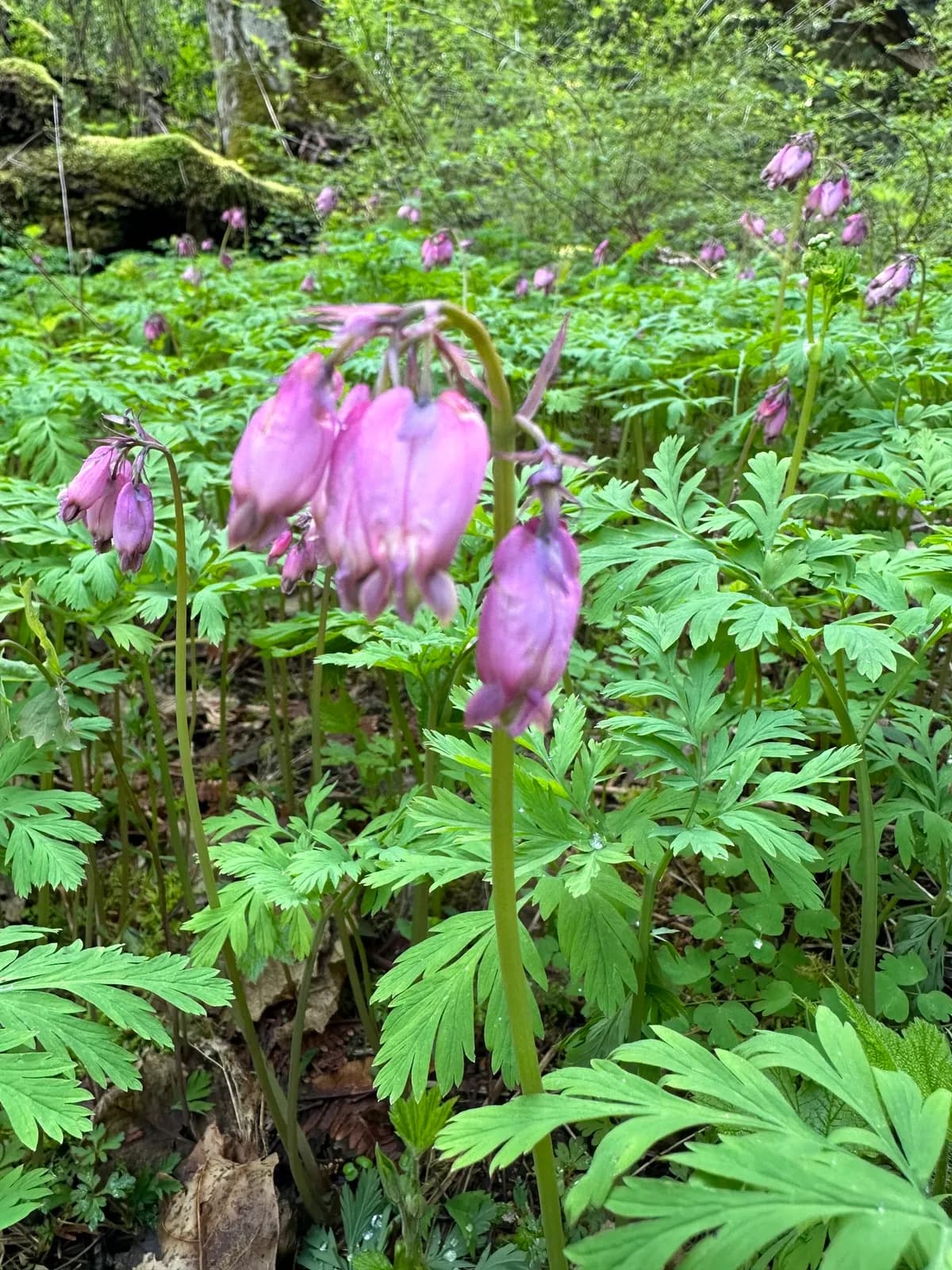
Dicentra formosa, or Pacific bleeding heart, produces pink heart-shaped flowers from April through June in shaded woodland gardens along the West Coast. It thrives in part shade with medium moisture and dies back to the ground in summer heat.
Toxicity unknown
Bleeding-heart (Dicentra formosa) is not listed by the ASPCA Animal Poison Control Center (opens in new tab) or the other sources we check, so we have no verdict for it either way. Absence from those lists is not a clearance. If your pet shows symptoms after eating any plant, call the ASPCA at (888) 426-4435.
Bleeding-heart is listed as toxic to grazing livestock such as cattle, sheep, and goats at a moderate level by the USDA PLANTS Database (opens in new tab). This is a livestock indicator and is separate from pet toxicity.
Light
part shade
Water
medium
Size
6"–18" H × 6"–12" W
Bloom
Apr, May, Jun
Native to
CA, OR, WA
Pollinators
bees, hummingbirds
Before you buy
Your city may pay you to plant this
Cities and water utilities offer rebates for replacing lawn with native and water-wise plants. We track 459 programs across 44 states, each with a link to the provider and the date we last checked it.
Find rebates in your areaPicture natives in your own yard
Upload a photo of your yard and Patch Vision shows a rendering of it planted with natives for your region, like Bleeding-heart.


Browse plants for this ecoregion
Pacific bleeding-heart produces delicate pink heart-shaped flowers on arching stems above soft, fern-like foliage. This native perennial thrives in shaded areas and goes dormant in late summer, returning each spring with fresh growth.
Growing Bleeding-heart
Grow Bleeding-heart in part shade and medium water. Mature plants reach 6 to 18 inches tall and spread 6 to 12 inches wide. Expect low maintenance to keep it looking intentional in a front yard.
How to care for Bleeding-heart, by region
How to care for Bleeding-heart where it is actually grown: year-round basics plus what to do each season, region by region, with the sources for each.
Care guidance last updated: September 2026
Eastern Corn Belt Plains (includes Columbus, OH)
Year-round
Pacific bleeding heart is native to cool, shaded coastal and mountain forests from California to British Columbia, not to Ohio. In the Columbus area it is grown purely as a shade garden ornamental, well outside its native range.
- Native range is the Pacific Coast, from central California north to British Columbia, per the Lady Bird Johnson Wildflower Center; it is not native to Ohio or the Midwest
- In its native Pacific Northwest forests it grows in consistently cool, damp, humus rich shade, conditions Columbus does not naturally offer
- Grown here strictly as an ornamental shade perennial, similar to how the unrelated old fashioned garden bleeding heart, Lamprocapnos spectabilis, is widely grown across the Midwest
- Expect more heat and humidity stress in a Columbus summer than gardeners in its native Pacific Northwest range experience
- Needs consistently moist, well drained, humus rich soil and part to full shade to perform its best
- Divide or transplant in fall or early spring while the plant is dormant or just emerging
A low, spreading shade groundcover that stays under about a foot and a half tall, which suits a foundation bed without reading as overgrown, though it commonly looks ragged by mid to late summer in Ohio's heat and may need a neighboring plant to fill the gap.
Fall
Cooler fall weather can bring a partial rebound in foliage, but do not expect much bloom this time of year.
- If the plant kept any foliage through summer, cooling fall temperatures in Columbus may prompt some fresh leaf growth
- A good time to divide or transplant, giving roots the cool season to settle in before winter
- Top dress with shredded leaves to rebuild the humus rich soil this species prefers, since Ohio's native clay soils do not match its home range
- Reduce watering as the plant heads toward winter dormancy
Winter
The plant dies back to the ground and overwinters as a dormant rootstock.
- Foliage dies back completely with the first hard freezes, typically by mid October in Columbus
- Root system is hardy through Columbus's USDA zone 6b winters with no extra protection needed
- A layer of leaf mulch over winter helps retain the moisture and organic matter this species prefers
- Do not fertilize or water during dormancy
Spring
Spring is this plant's best season in Ohio, before summer heat sets in.
- Emerges and flowers from April into May while Columbus is still cool and often rainy, closer to the conditions it evolved with
- Nodding, heart shaped pink to lavender flowers bloom over finely cut, fern-like gray-green foliage
- Keep soil consistently moist during this active growth period, since the plant is not drought adapted
- Mulch with shredded leaves to mimic the cool, humus rich forest floor of its native range
- This is the best window to plant or divide it, so roots can establish before summer heat arrives
Summer
Summer is the hardest season for this plant in Ohio, since Columbus heat and humidity are well outside what it experiences in its native Pacific coastal forests.
- Foliage commonly yellows, wilts, or goes summer dormant once Columbus heat and humidity set in, a normal stress response for a plant grown this far outside its native range rather than necessarily a sign of disease
- Consistent moisture and afternoon shade help it hold its foliage longer into summer
- Some gardeners let it go summer dormant on purpose and interplant with a later season shade perennial to fill the visual gap
- Avoid full sun entirely; even part sun is often too much heat stress during a Columbus summer
- Watch for slug and snail damage on the soft foliage during humid stretches
Sources: Lady Bird Johnson Wildflower Center: Dicentra formosa, NC State Extension Gardener Plant Toolbox: Dicentra, ASPCA Toxic and Non-Toxic Plants List (A-Z database, searched directly for this species with no matching entry), National Weather Service Wilmington OH: Fall Frost/Freeze
Interior River Valleys and Hills (includes Peoria, IL)
Year-round
Pacific bleeding heart is native to the Pacific Coast of North America, from British Columbia south to central California, not to Illinois or the Midwest, according to the Lady Bird Johnson Wildflower Center. In a Peoria area garden it works as a shade perennial with fern like foliage and pink or white heart shaped flowers. It does best in a part to full shade spot with rich, moist, well drained soil, similar to a woodland edge planting. All parts of the plant contain isoquinoline alkaloids and are toxic if eaten, so keep it away from pets and small children.
- Plant in part to full shade in soil that stays evenly moist but drains well, working in compost or leaf mold at planting time.
- This plant is native to the Pacific Northwest and California, not to central Illinois, so treat it as a garden ornamental here rather than a native planting.
- All parts of the plant contain isoquinoline alkaloids and are toxic to people, cats, and cattle if eaten, per Cornell University's poisonous plants database.
- Give it a spot near larger shrubs or trees where it gets relief from Peoria's hot, humid summer afternoons.
- Mulch lightly each spring to hold moisture and keep roots cool through the growing season.
Fall
Fall in Peoria brings cooler, wetter weather that suits Pacific bleeding heart's preference for steady moisture, even though the plant may already be resting by this point in its cycle. This is a good season for planting new divisions or nursery starts, since cooler air lets roots settle in before winter without the stress of summer heat. Clean up fully browned foliage once it has died back on its own.
- Plant new starts or divisions from September through mid October so roots have time to settle in before the ground freezes.
- Water new fall plantings regularly until the ground begins to freeze, since Peoria falls can turn dry.
- Once foliage has fully browned and pulls away easily, remove it to cut down on slug and disease habitat over winter.
- Add a two to three inch layer of mulch after the first hard frost to insulate the crown through an Illinois winter.
Clearing fully browned foliage before winter keeps a front bed looking cared for instead of left to collapse in place.
Winter
Winters in Peoria regularly drop well below freezing, but Pacific bleeding heart is hardy through USDA zone 3, so a mulched, dormant crown should come through a typical Illinois winter without extra protection. The plant is fully dormant this time of year, with no foliage above ground. Avoid walking on or digging into the mulched area where the crown is resting.
- Leave the fall mulch layer in place through winter to buffer the dormant crown from Peoria's freeze and thaw cycles.
- Skip fertilizing and supplemental watering during full winter dormancy, since the plant needs no active care this time of year.
- Mark the planting spot if you plan to add spring bulbs or other plants nearby, so you do not disturb the dormant crown while digging.
- Save any transplanting or division work for next fall or very early spring rather than during a hard freeze.
Spring
Spring is when Pacific bleeding heart comes to life in a Peoria garden, sending up fern like foliage in early to mid April as the soil warms and blooming from May into June. Cool spring weather here suits the plant well, since it does not tolerate summer heat the way some other shade perennials do. Keep soil consistently moist through this stretch, since dry spring soil can cut bloom time short.
- Watch for new fern like growth emerging in early to mid April, once nighttime temperatures stay reliably above freezing.
- Water regularly through the spring bloom period, aiming for about an inch of water a week if rainfall falls short.
- Pinch or snip individual flower stems as they finish blooming to encourage more flowers over a longer season.
- Hold off on high nitrogen fertilizer, since it pushes leafy growth at the expense of flowers.
A light spring trim of faded flower stems keeps this front-yard bed looking tended, an easy win for HOA-conscious neighbors.
Summer
Peoria summers turn hot and humid, and Pacific bleeding heart often responds by slowing down or going dormant once daytime temperatures push into the 80s and 90s. Foliage can yellow and die back by mid to late summer, especially in a sunnier spot or a dry year. This is a normal part of the plant's cycle here and not a sign it needs to be replaced.
- Expect flowering to taper off and foliage to yellow once summer heat sets in, often by mid to late July in a typical Peoria summer.
- Keep the soil from drying out completely during this slowdown, especially for a plant still in its first year or two.
- Mark the spot with a plant tag so you do not accidentally disturb the dormant crown while tending nearby beds.
- Leave yellowing foliage in place until it has fully browned and pulls away easily, since it is still feeding the roots.
Summer dieback can leave a bare gap in a street-facing bed. Planting a low filler like sedge or hosta nearby hides the gap without disturbing the resting crown.
Sources: Lady Bird Johnson Wildflower Center: Dicentra formosa, Cornell University Department of Animal Science, Plants Poisonous to Livestock: Dicentra spp., NC State Extension Gardener Plant Toolbox: Dicentra, University of Illinois Extension: Fringed Leaf Bleeding Heart
Southern Coastal Plain (includes Orlando, FL)
Year-round
Pacific Bleeding Heart is a cool, shady Pacific Northwest woodland plant, and that is a real climate mismatch for Central Florida's heat and humidity. Plan for it to struggle here and act like a short-lived or one-season planting rather than a dependable perennial.
- Give it the deepest shade you can find, ideally full shade under a tree canopy, and never full Central Florida sun.
- Keep the soil constantly moist and rich in organic matter. This plant does poorly in both dry spells and standing water.
- Treat it as a short-lived or one-season planting here rather than a long-term perennial, since Orlando's heat and humidity are far outside its comfort zone.
- Watch closely for crown and root rot during hot, humid stretches, since constant moisture plus poor drainage is a common failure point in this climate.
- Every part of the plant contains isoquinoline alkaloids and is listed as toxic, cited genus-level as Dicentra spp., so keep it away from pets that chew on garden plants.
Fall
If the plant made it through summer, cooler and drier fall weather in Orlando may bring a short second flush of growth, but do not count on it lasting into next year.
- Watch for new leaves if any crown survived the summer, as October and November temperatures drop.
- Ease off watering slightly as the weather cools, but never let the soil dry out completely.
- Fall is a reasonable time to replant if the original planting did not survive summer.
- Clear away any collapsed or rotted foliage from spring and summer once it dies back.
Clearing out collapsed bleeding heart foliage in fall keeps a shaded front bed looking like an intentional planting instead of a neglected one, which helps if the area is visible from the street.
Winter
Winter is actually one of the more survivable seasons for this plant in Orlando, since mild Central Florida winters are closer to the cool weather it prefers, though a hard freeze can still hurt or kill it.
- Orlando's mild winters, USDA zone 9b to 10a, are closer to this plant's comfort zone than summer, so this may be its strongest growth window if it survived that long.
- Watch the forecast for occasional freeze nights, mainly December through February here, and cover the plant with frost cloth on those nights.
- Keep the soil moist through winter. Central Florida's dry season can quietly dry out a shallow-rooted plant like this one.
- Do not expect the clean, reliable winter dormancy this species shows in its native Pacific Northwest range. Central Florida winters are too mild and short for that cycle.
Spring
Spring, before Orlando's heat builds, is the best window to plant or settle in a Pacific Bleeding Heart here. It still will not thrive long-term, but this is its best shot.
- Plant or transplant in late winter to early spring once frost risk has passed, roughly mid-February in Orlando.
- Pick the coolest, shadiest spot on the property, ideally deep shade under established tree canopy.
- Mulch generously to keep roots cool and hold moisture as temperatures start climbing.
- Enjoy the flowers in March and April. This is likely the best bloom show the plant will give you in this climate.
- Skip heavy fertilizing. Shade and consistent moisture matter far more right now than feeding.
Summer
Summer is the hardest stretch for this plant in Orlando. The heat and humidity often push it into decline or death, so do not be surprised if it disappears by midsummer.
- Expect dieback or full collapse once daytime highs stay in the 90s. Treat this as expected decline, not a problem to fix.
- Keep soil evenly moist but never soggy. Florida's heavy summer rain combined with poor drainage rots the roots fast.
- Yellowing or collapsing foliage in midsummer is almost always heat stress or root rot here, not a pest issue.
- Plan for this to be a one-season planting and have a shade-loving native ready to fill the spot if it does not make it.
- Do not fertilize during peak heat. It will not help and can push stressed roots further.
Sources: Calscape: Pacific Bleeding Heart (Dicentra formosa ssp. formosa), ASPCA Toxic and Non-Toxic Plants: Bleeding Heart (Dicentra spp.), USDA ARS Plant Hardiness Zone Map
In an HOA neighborhood
Bleeding-heart is an HOA-friendly choice. Maintenance level: low. Tidiness: 3 out of 5.
Works well in: front yard, foundation, mid zone.
- Goes dormant in late summer leaving bare spots
- May appear too informal for very formal landscapes
Wildlife value
The flowers attract native bees and provide nectar for hummingbirds during spring blooms. The plant also supports some native butterfly larvae.
Common questions
- When does Pacific bleeding heart bloom?
- Dicentra formosa typically flowers from April through June, with clusters of pink heart-shaped blooms held above fern-like foliage.
- What kind of light does Dicentra formosa need?
- It grows best in part shade, though it tolerates dappled part sun in cooler coastal climates and deeper shade in hot inland gardens.
- How much water does Pacific bleeding heart need?
- It prefers consistent medium moisture through spring but can handle drier conditions once it goes dormant in summer.
- What pollinators visit Dicentra formosa flowers?
- Bees and hummingbirds are the primary visitors, drawn to the nectar in its pendant, heart-shaped flowers.
- Does Pacific bleeding heart stay green year round?
- No, it is deciduous and the foliage dies back to the ground during summer dormancy, often reemerging with fall or winter rains.
- Is Bleeding-heart toxic to livestock?
- Bleeding-heart is listed as toxic to grazing livestock such as cattle, sheep, and goats (moderate severity) by the USDA PLANTS Database. This is separate from pet (dog and cat) toxicity.
- Is Bleeding-heart HOA-friendly?
- Bleeding-heart is generally an HOA-friendly choice in the right placement, with low maintenance.
These answers were drafted with an AI model from this plant's data. Verify care details with a local expert.
Native range data from vouchered herbarium specimen records and regional native plant society lists. Pollinator and host plant associations compiled from GBIF, iNaturalist, and published ecological literature.
If something looks wrong
Common plant problems, and what to check first
These come up on almost any plant. Each guide lists the likely causes in the order they are worth ruling out, with one thing to check before you act on any of them, and links to the source it came from.
- It is dying right after planting
- Leaves turning yellow
- Wilting even though I watered it
- Brown crispy leaf tips
- Bugs on the plant
Ready to grow Bleeding-heart? Add it to your garden in Pollinator Patch to track it and get season-by-season care guidance.