Blue Wild Indigo
Baptisia australis var. minor
Last reviewed: September 2026
Baptisia australis var. minor sends up spikes of blue-purple flowers from March through May and grows best in full sun with dry to medium soil. It is well suited to prairies, glades, and rocky open ground across the central and southern Great Plains.
Toxicity unknown
Blue Wild Indigo (Baptisia australis var. minor) is not listed by the ASPCA Animal Poison Control Center (opens in new tab) or the other sources we check, so we have no verdict for it either way. Absence from those lists is not a clearance. If your pet shows symptoms after eating any plant, call the ASPCA at (888) 426-4435.
Light
full sun
Water
low
Size
12"–24" H × 12"–24" W
Bloom
Mar, Apr, May
Native to
AR, IA, KS, MO and 3 more states
Pollinators
butterflies, bees, hummingbirds
Before you buy
Your city may pay you to plant this
Cities and water utilities offer rebates for replacing lawn with native and water-wise plants. We track 452 programs across 44 states, each with a link to the provider and the date we last checked it.
Find rebates in your areaBrowse plants for this ecoregion
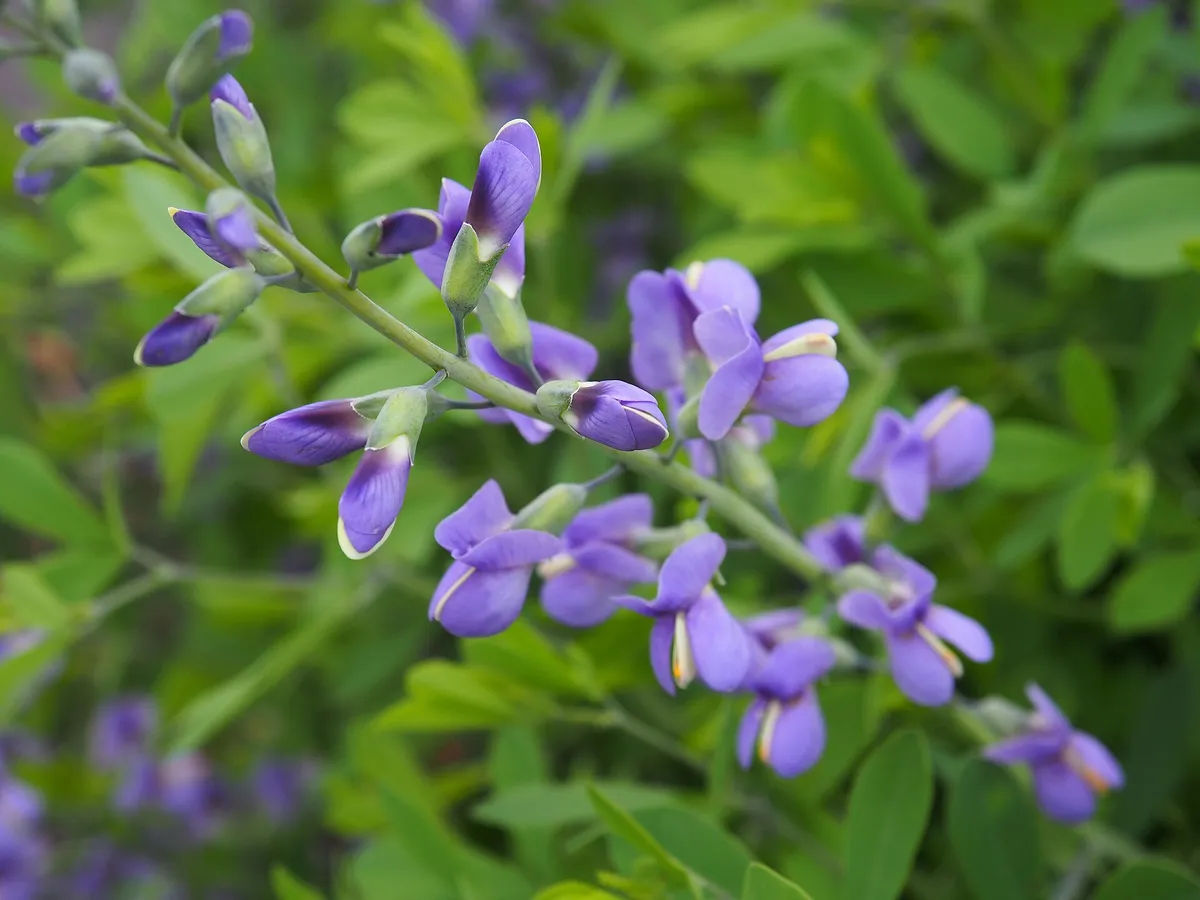
Blue Wild Indigo is a compact native perennial that forms a neat, rounded shrub with blue-green foliage and spikes of deep blue flowers in spring. This drought-tolerant plant requires minimal care once established and provides long-lasting structure in the garden. The attractive seed pods that follow the flowers add interest through summer and fall.
Growing Blue Wild Indigo
Grow Blue Wild Indigo in full sun and low water. Mature plants reach 12 to 24 inches tall and spread 12 to 24 inches wide. Expect moderate maintenance to keep it looking intentional in a front yard.
How to care for Blue Wild Indigo, by region
How to care for Blue Wild Indigo where it is actually grown: year-round basics plus what to do each season, region by region, with the sources for each.
Care guidance last updated: September 2026
Ouachita Mountains (includes Hot Springs, AR)
Year-round
Blue wild indigo is a slow-to-establish, deep-taprooted perennial that rewards patience with years of reliable blue blooms once it settles in.
- Give it full sun and well-drained soil. It tolerates clay, sand, and poor soil, but soggy ground around the taproot is the main way this plant runs into trouble.
- Water it regularly through its first year or two while the taproot digs in. Once established it handles heat and dry spells well on its own.
- A mature clump of this dwarf variety reaches roughly 2 to 3 feet tall and wide. Space plants about 18 to 24 inches apart.
- Flower spikes open in late spring, typically May into June in this region.
- The taproot runs deep and does not like being moved, so choose its spot with the mature size in mind rather than planning to transplant it later.
- Lady Bird Johnson Wildflower Center lists this plant as having special value to native bees and bumble bees, so a stand of it does double duty as pollinator support.
Once mature it holds a neat, rounded mounded shape on its own with little shaping needed, which is one reason it reads as an HOA-friendly choice for a front bed.
Fall
Fall is quiet for this plant. Seed pods finish darkening, foliage yellows, and it heads into dormancy well ahead of the first freeze.
- Seed pods darken through fall and can be left on the plant for winter interest, though they get heavy and may cause stems to flop over.
- Foliage yellows and dies back as nights cool. In Hot Springs the typical first fall freeze lands around November 10, and by then this plant is usually already shutting down for the year.
- No fertilizing needed in fall. As a legume it fixes its own nitrogen and does best in average to lean soil.
- This is a fine time to cut stems down to the ground if you would rather have a clean bed over winter instead of standing seed pods. Leaving them up is just as fine for the plant.
- Do not divide or transplant now. The taproot is still active in fall and disturbance is hard on it.
Cutting the stems down during fall clean-up gives the bed a tidy, HOA-friendly look through winter, though leaving the seed pods up is just as healthy for the plant if you want some winter texture instead.
Winter
Winter is fully dormant. Everything above ground dies back and all the plant's energy sits in that deep taproot, waiting for spring.
- Top growth is dead by winter. If stems and pods were left up in fall, this is the last easy window to cut them to the ground before new shoots start pushing up in early spring.
- Hot Springs winters are mild for this species. It is grown successfully from cold northern states down into the South, so local winter lows are not a concern for an established taproot.
- No winter watering or protection is needed once the plant has been through at least one full growing season. A first-winter plant benefits from a layer of mulch over the root zone.
- Avoid walking on or compacting the soil around the crown. The dormant taproot is still there even though nothing shows above ground.
A clean winter cutback leaves a low, quiet silhouette in the bed, an easy way to keep a front-yard planting looking intentional through the dormant months.
Spring
Spring is when this plant wakes up and puts on its show. New growth pushes up as the ground warms, building toward the blue flower spikes by late spring.
- New shoots emerge as soil warms. In Hot Springs the last spring freeze typically falls around March 21 and the last frost around April 3, so hold off on new plantings or dividing an existing clump until after that window.
- If you did not cut old growth back in winter, do it early, before new shoots appear. Cutting into new growth by accident can set the season's bloom back.
- Expect flower spikes to open in May, running into June.
- Keep soil evenly moist while flower spikes are forming, then ease off once blooms fade.
- First and second year plants are still building their taproot underground and will look modest above ground. That is normal for this species, not a sign of trouble.
Summer
Summer in Hot Springs runs hot and humid, and this plant handles it fine once established. Bloom wraps up early in the season, then it settles into a green mounded shape.
- Flowering finishes by June, after which the spikes turn into green seed pods that darken later in the year.
- If you do not want the seed pods, or the stems are getting weighed down by them, cut back by about a third after bloom or prune spent stems out at the base.
- Well-drained soil matters most right now. Hot Springs summers bring heavy afternoon storms, and standing water around the taproot is the main risk to watch for.
- Once established, in year two or three, it shrugs off summer heat and dry stretches without extra watering.
- Full sun keeps the clump full and upright. Too much summer shade can make stems lean or flop over.
Trimming spent stems back by about a third after bloom keeps the clump compact and tidy for the rest of the season, an easy way to keep an HOA-conscious front bed looking cared for.
Sources: Lady Bird Johnson Wildflower Center native plant database, NC State Extension Gardener Plant Toolbox, Prairie Moon Nursery growing guide for Baptisia australis var. minor, Wisconsin Horticulture Extension, Blue False Indigo, National Weather Service Little Rock frost and freeze dates
Want these tasks as reminders timed to your yard? Pollinator Patch turns this guidance into a season-by-season care plan for the plants you actually grow.
In an HOA neighborhood
Blue Wild Indigo is an HOA-friendly choice in the right placement. Maintenance level: moderate. Tidiness: 4 out of 5.
Works well in: foundation, mid zone.
- Requires annual shaping to stay compact
Wildlife value
This plant is excellent for pollinators, attracting native bees, butterflies, and occasionally hummingbirds to its spring blooms. As a legume, it also fixes nitrogen in the soil and serves as a host plant for some butterfly larvae.
Common questions
- When does Blue Wild Indigo bloom?
- Baptisia australis var. minor blooms from March through May, sending up upright spikes of blue to violet flowers.
- What pollinators does this plant attract?
- Its flowers draw bees, butterflies, and hummingbirds, making it a useful addition to pollinator gardens.
- How much water does Blue Wild Indigo need?
- Once established, it tolerates low water and dry soil, though it also handles medium moisture, making it a low-maintenance choice for sunny beds.
- What light conditions does it prefer?
- It grows best in full sun but will still flower reasonably well with a few hours of light shade during the day.
- What does the flower and plant shape look like?
- It forms a bushy, upright clump with blue-green foliage topped by tall spikes of blue-purple, pea-like flowers in spring.
- Is Blue Wild Indigo toxic to cats?
- Yes. Blue Wild Indigo is listed as toxic to cats by the NC State Extension Gardener Plant Toolbox (aspca.org). If your cat has been exposed, call the ASPCA Animal Poison Control Center at (888) 426-4435.
- Is Blue Wild Indigo HOA-friendly?
- Blue Wild Indigo is generally an HOA-friendly choice in the right placement, with moderate maintenance.
These answers were drafted with an AI model from this plant's data. Verify care details with a local expert.
Native range data from vouchered herbarium specimen records and regional native plant society lists. Pollinator and host plant associations compiled from GBIF, iNaturalist, and published ecological literature.
If something looks wrong
Common plant problems, and what to check first
These come up on almost any plant. Each guide lists the likely causes in the order they are worth ruling out, with one thing to check before you act on any of them, and links to the source it came from.
- It is dying right after planting
- Leaves turning yellow
- Wilting even though I watered it
- Brown crispy leaf tips
- Bugs on the plant
Ready to grow Blue Wild Indigo? Add it to your garden in Pollinator Patch to track it and get season-by-season care guidance.
Planning a bed around it? Start a free plan with this plant
Not sure where to start? Take the 2-minute yard quiz