Butterfly Weed
Asclepias tuberosa
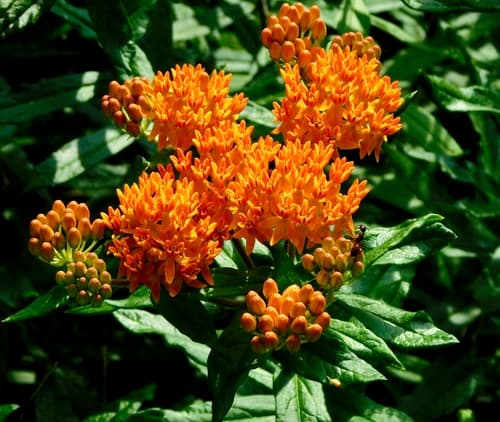
Light
full sun
Water
low
Size
12"–36" H × 12"–18" W
Bloom
May, Jun, Jul, Aug, Sep
Native to
North Texas
Pollinators
Monarch Butterfly, Queen Butterfly
Picture natives in your own yard
Upload a photo of your yard and Patch Vision shows a rendering of it planted with natives for your region, like Butterfly Weed.


Browse plants for this ecoregion
Butterfly Weed is a perennial forb native to North Texas. It grows best in full sun with low water needs.
Butterfly Weed is the only milkweed many Texas gardeners need. Its bright orange flower clusters bloom from May through September and attract monarchs, queens, and a host of other butterflies. Monarch caterpillars require milkweed to survive; without it, they cannot complete their lifecycle.
Plant Butterfly Weed in full sun with good drainage. It dislikes wet feet. Place it toward the front or middle of a bed where the orange flowers can pop against green foliage. It stays compact and upright, making it HOA-friendly. Group three to five plants for maximum visibility to passing butterflies.
Butterfly Weed is a critical host plant. Avoid pesticides entirely. It may take a year or two to establish; be patient. Once it settles in, it is drought-tough and long-lived. Pair it with Gregg's Mistflower or Mealy Blue Sage for a complete monarch waystation.
Bee species data compiled from GBIF, iNaturalist, Discover Life, and the USGS Native Bee Inventory and Monitoring Lab. Plant-pollinator associations informed by published ecological literature.
How to care for Butterfly Weed, by region
How to care for Butterfly Weed where it is actually grown: year-round basics plus what to do each season, region by region, with the sources for each.
Care guidance last updated: September 2026
Arizona/New Mexico Mountains (includes Prescott, AZ)
Year-round
Butterfly weed reaches the edge of its range in the Arizona/New Mexico Mountains, growing in open pine, oak, and pinyon-juniper woodland rather than low desert.
- Plant it in a higher elevation, well drained spot that mimics open pine-oak or pinyon-juniper woodland, not a hot low desert bed.
- Full sun to light open shade works, matching the woodland edge habitat it's documented in across this region.
- It needs a site that stays on the drier side, similar to the sandy, rocky soils it's found on in the wild here.
- Because this is the edge of its natural range, it can be harder to source locally, so confirm the seed or plant is regionally appropriate stock before planting.
Fall
Fall brings seed pods and dieback for butterfly weed around Prescott as the monsoon season ends.
- Pods split and release seed in fall. Collect some if you want to grow more, since regionally sourced seed can be hard to find for this edge-of-range population.
- Let the foliage die back naturally as temperatures drop at this elevation.
- Hold off on dividing established clumps until the plant is clearly dormant.
Cutting back browned stems keeps the bed tidy through fall cleanup.
Winter
Winter is dormant for butterfly weed in the Arizona/New Mexico Mountains, with cold and drainage the main considerations.
- Cut back dead stems once fully browned after frost.
- This higher elevation region gets real winter cold, and the plant should handle it while dormant as long as the site is well drained.
- No winter watering or fertilizing is needed while it's dormant.
A neatly cut-back bed reads as cared for through the dormant winter months.
Spring
Spring is a slow start for butterfly weed at higher elevation around Prescott.
- New growth may not appear until late spring, later here than in warmer lowland gardens.
- Wait until the risk of late frost has passed at this elevation before planting new starts.
- Plant into lean, well drained soil rather than amended garden beds.
A bare patch into late spring at this elevation is normal for this species, not a sign it failed to establish.
Summer
Summer brings the orange bloom period for butterfly weed in the Prescott area's cooler mountain summers.
- Expect blooms through the summer monsoon period, when this region gets most of its seasonal moisture.
- It shouldn't need much supplemental water if it's sited well and the monsoon rains come through.
- Deadheading spent flower clusters can help extend the bloom period into late summer.
The bright, upright blooms look tended and intentional rather than wild in a visible bed.
Sources: SEINet AZ/NM Node, Asclepias tuberosa, Wildflower.org, Asclepias tuberosa ssp. interior, USDA Forest Service, Butterfly Milkweed plant of the week
Arizona/New Mexico Plateau (includes Flagstaff, AZ)
Year-round
Butterfly milkweed is native to the pinyon-juniper and ponderosa pine country around Flagstaff, usually on dry, sandy or gravelly slopes between about 4,300 and 7,900 feet. It is one of several milkweeds the Southwest Monarch Study tracks in this area because Flagstaff sits along the monarch migration route, and butterfly milkweed is a larval host plant for monarch caterpillars alongside antelope horns and showy milkweed (Xerces Society, Southwest Monarch Study). Give it full sun and soil that drains fast. It skips watering better than almost anything else in a front bed once the taproot is established, which usually takes about two years.
- Full sun, at least 6 hours a day, is non negotiable for good bloom
- Plant in sandy or gravelly soil, this species rots in heavy clay or anywhere water sits
- Water regularly the first two seasons while the taproot forms, then cut back hard
- Monarch caterpillars will eat the leaves down to stubs some years, that is normal, the plant regrows
- Toxic to dogs, cats, and horses per the ASPCA Animal Poison Control Center plant database, keep it out of reach of grazing or chewing pets
Butterfly milkweed's tidy clump habit and bright orange flowers read as an intentional planted bed, not a weed patch, which helps in front-yard HOA-conscious plantings.
Fall
As nights cool and days shorten, leaves yellow and the plant starts shutting down for the year (Wisconsin Horticulture Extension). You can cut the bare stems to the ground now or leave them standing through winter, either works.
- Yellowing leaves in fall are normal dieback, not disease
- Cut stems to a few inches from the ground once they're fully brown, or leave standing for winter interest and seed for birds
- If seed pods have split open, the silky-tufted seeds can be collected and cold-stratified for new plants
- Skip fall fertilizing, the plant is heading into dormancy, not new growth
A trimmed clump of cut stems a few inches tall reads as tidy fall cleanup rather than a dead plant left behind.
Winter
The plant is fully dormant and invisible above ground through Flagstaff's cold winters, relying on its deep taproot to survive freezes (Prairie Moon Nursery). No winter watering or mulching against the crown is needed once it's established in well-drained soil.
- Nothing to do above ground, the plant is dormant and the taproot is doing the work of surviving winter cold
- Do not overwater or mulch heavily right against the crown, wet soil in freezing weather is the main way this plant dies
- Avoid walking or driving over the dormant crown, the taproot is brittle when frozen
- If you collected seed in fall, this is the window for cold-moist stratification indoors before spring sowing
Spring
Butterfly milkweed is famously slow to wake up around Flagstaff. Soil needs to warm well into the season before the taproot sends up new growth, so an empty-looking patch in April or even May is normal, not a dead plant (Prairie Moon Nursery, Wisconsin Horticulture Extension). Resist the urge to dig around the crown to check on it.
- Do not panic if nothing shows above ground until late spring, this species breaks dormancy later than most perennials
- Avoid digging near the crown, the taproot is brittle and shallow disturbance can kill the whole plant
- Once new shoots appear, water lightly to help leaf-out, then taper off
- Mark the spot in fall so you don't accidentally plant over it while it's still dormant
A bare patch in spring can look neglected to a neighbor. A small dated plant tag nearby keeps the bed reading as intentional while you wait it out.
Summer
This is peak bloom and peak monarch season around Flagstaff, which the Southwest Monarch Study flags as a stopover on the migration route. Flowers run orange to yellow-orange and draw butterflies, bees, and hummingbird moths for weeks (Lady Bird Johnson Wildflower Center). Deep, infrequent watering during monsoon dry spells keeps flowering going without encouraging root rot.
- Expect heavy pollinator and monarch caterpillar activity, chewed leaves are a sign the plant is doing its job as a host plant
- Water deeply but infrequently during dry stretches between monsoon storms, this plant does not want constantly damp soil
- Deadheading spent flower clusters can encourage a second flush of bloom
- Skip fertilizer, rich soil produces floppy growth and fewer flowers
Sources: Asclepias tuberosa, USDA PLANTS Database, Butterfly Milkweed (Asclepias tuberosa), Lady Bird Johnson Wildflower Center, Milkweed, ASPCA Animal Poison Control Center toxic plant database, Asclepias tuberosa, Prairie Moon Nursery growing guide, Butterflyweed, Asclepias tuberosa, Wisconsin Horticulture Extension, Butterfly Weed 101, GrowIt BuildIt grow and care guide (community tip)
Arkansas Valley (includes McAlester, OK)
Year-round
Butterfly milkweed is native to the Arkansas Valley around McAlester and Poteau, growing in dry prairies, glades, and rocky open ground between the surrounding forested ridges.
- Native to eastern Oklahoma including the Arkansas Valley counties, per USDA PLANTS Database and the eastern Oklahoma native plant list for monarch habitat.
- Favors dry, sandy or rocky, well-drained sites in full sun, which matches the valley's prairie remnants and open fields better than its wooded ridgelines.
- Toxic to dogs, cats, and horses per the ASPCA Animal Poison Control Center plant database, despite lacking the milky sap of most other milkweeds.
- Acts as a larval host plant for monarch butterflies, per the Xerces Society.
- Forms a compact clump, one to two and a half feet tall, rather than spreading aggressively like some other native milkweeds.
A neat, upright clump with bright orange blooms fits easily into a front bed or border without looking like an unmanaged patch.
Fall
Seed pods split open in fall. Leave some standing to let the plant spread on its own, or clip them to keep growth contained.
- Mature pods split and release silky-tufted seed in fall. Leave a few if you want more plants next season.
- Foliage yellows and dies back with the first hard frost, typical for this part of eastern Oklahoma.
- Leave the taproot undisturbed during fall cleanup of nearby beds. It runs deep and does not recover well from digging.
- Avoid fall transplanting because of the taproot. Spring is the better window if a plant needs to be moved.
Winter
The plant is fully dormant in winter, with nothing showing above ground until the following spring.
- An empty-looking bed in winter is normal. The taproot survives underground through the cold season.
- No winter watering, mulching, or covering is needed. It is well adapted to this region's winters and to dry conditions generally.
- Standing seed heads left from fall can attract goldfinches and other birds through winter.
- Keep the dormant crown free of foot traffic and parked equipment, since the taproot is shallow enough to be damaged by compaction.
Spring
Butterfly milkweed is a slow starter in spring. New growth often does not show until later than most perennials in the bed.
- Do not assume the crown has died if nothing shows by early spring. It commonly waits until later in the season to emerge.
- Choose a full-sun planting spot. Valley soils that stay too moist or shaded will weaken the plant over time.
- Hold off on fertilizer. Lean soil produces sturdier stems and better bloom than rich, amended beds.
- Once shoots appear, pull back any winter mulch so the crown is not smothered.
Summer
Summer brings the main bloom show, with orange flower clusters lasting from May into August and drawing monarchs to the yard.
- Bloom season runs May through August, per OSU Extension, so expect weeks of color rather than a single short flush.
- Established plants need little supplemental water. In the Arkansas Valley's humid summers, overwatering is more likely to cause problems than drought.
- Deadheading extends bloom time. Leaving some pods intact lets the plant reseed into other sunny spots.
- Leaf damage from feeding caterpillars is expected and is a sign monarchs are using the plant, not a disease or pest to treat.
Kept in a defined bed, the long summer bloom reads as active flower gardening rather than an overgrown corner.
Sources: USDA PLANTS Database, Asclepias tuberosa profile, ASPCA Animal Poison Control, Milkweed toxicity, Xerces Society, Native Milkweeds, Missouri Botanical Garden Plant Finder, Asclepias tuberosa, North Carolina Extension Gardener Plant Toolbox, Asclepias tuberosa, Oklahoma State University Extension, Milkweed plant profile
Atlantic Coastal Pine Barrens (includes Riverhead, NY)
Year-round
Butterfly weed is native to New York and is well suited to the sandy soils of the Atlantic Coastal Pine Barrens.
- Full sun and fast-draining sandy soil are ideal, this matches the pine barrens' natural conditions closely.
- The long taproot means it should be planted in a permanent spot from the start.
- Skip regular watering and fertilizing once established, lean sandy soil is exactly what it wants.
- Space plants 12 to 18 inches apart for airflow and full sun.
Fall
Seed pods split open in fall, releasing seed on silky tufts that can travel on ocean breezes.
- Collect pods just as they begin to open if you want to save seed.
- Cut back finished stalks once seed has dropped for a tidier look.
- Leave a few pods to let the plant self-sow in the sandy soil.
Coastal breezes can carry pod fluff into a neighbor's yard, trimming pods before they fully open avoids that.
Winter
Plants die back fully in winter, surviving coastal cold on the taproot.
- Cut back dead stems any time after they brown or during a late-winter cleanup.
- No winter mulch is generally necessary, sandy soil drainage matters more than cold protection here.
- Keep the crown area undisturbed through freeze-thaw cycles.
Spring
Spring green-up is late, this species is slow to show growth compared to most perennials.
- Wait until late spring before assuming a plant did not survive winter.
- Remove old dead stems once new shoots appear at the base.
- Avoid digging near the crown while it looks dormant, the sandy soil here still holds the taproot in place.
A bare-looking sandy patch through late spring can look neglected in a visible bed, mulch around the crown helps it read as tended.
Summer
Summer brings the bright orange bloom that draws monarchs and native bees to the pine barrens.
- Deadhead spent blooms to help extend the flowering period.
- Monarch caterpillars feeding on the leaves in summer are expected, this is a host plant.
- This plant is built for these sandy, dry conditions and rarely needs summer watering.
Peak bloom is the plant's showiest stage, worth pointing out if a neighbor asks about a sandy-soil planting.
Sources: New York Flora Atlas, Asclepias tuberosa, Lady Bird Johnson Wildflower Center, Asclepias tuberosa
Blue Ridge (includes Gettysburg, PA)
Year-round
Butterfly weed is native to Pennsylvania and grows in the dry upland woods and fields of the Blue Ridge.
- Full sun and dry, well-drained soil are what this plant needs, avoid heavy wet clay.
- The long taproot means it should be planted in its permanent spot from the start.
- Once established, it takes drought well and does not need regular feeding.
- Give it space from taller plants so it gets enough sun.
Fall
Seed pods ripen and split in fall, releasing silky-tufted seed.
- Collect pods just as they begin splitting if you want to save seed.
- Cut back finished stalks once pods have opened for a tidier look.
- Leave a few pods on the plant to let it reseed.
Pod fluff can drift into a neighbor's yard on windy fall days, trimming pods early avoids that.
Winter
Plants die back fully in winter and overwinter on the taproot.
- Cut back dead stems any time after they brown or during a late-winter cleanup.
- No winter mulch is typically needed, this species is suited to regional winters.
- Keep the crown area undisturbed through freeze-thaw cycles.
Spring
Spring green-up is late, this species typically trails other perennials.
- Wait until late spring before assuming a plant has failed to return.
- Remove old stems once new growth is visible at the base.
- Avoid digging near the crown while it looks dormant, the taproot is sensitive to disturbance.
A bare patch in a front bed through late spring can look neglected, mulch around the crown helps it read as tended.
Summer
Summer brings the orange bloom that is a strong monarch and native bee draw.
- Deadhead spent flower clusters to help extend the bloom period.
- Monarch caterpillars feeding on the leaves in summer is normal, this is a host plant.
- Established plants tolerate summer dry spells without extra watering.
Full summer bloom is the most attractive stage of the plant, worth mentioning if a neighbor asks.
Sources: Flora of Pennsylvania, Asclepias tuberosa (Butterfly Weed), Lady Bird Johnson Wildflower Center, Asclepias tuberosa
Boston Mountains (includes Fayetteville)
Year-round
Butterfly milkweed is a tough, orange-flowered native that likes sun and the dry, rocky, acidic soil you already have on Boston Mountains ridges and glades.
- Give it full sun and a lean, well-drained rocky or sandy spot; it hates soggy soil and does not need rich dirt or fertilizer.
- It grows a deep taproot, so plant it where you want it to stay and water new plants their first summer only, then leave it alone.
- It is a monarch caterpillar host plant, so expect chewed leaves in summer and count that as the plant doing its job (Lady Bird Johnson Wildflower Center).
- The milky sap is toxic to dogs, cats, and horses per the ASPCA Animal Poison Control Center, so keep pets from chewing it and wash hands after handling.
Fall
In fall the plant sets seed pods and starts to brown, and you get to choose between letting it self-sow or tidying it up.
- Green pods split open in fall to release silky seeds; leave a few pods if you want more plants, or clip them before they scatter if you do not.
- Foliage yellows and dies back naturally as nights cool on the ridges; this is normal, not disease.
- If you want new plants, press fresh seed into a bare, sunny, rocky spot in fall so winter cold can break its dormancy.
- The deep taproot means it does not transplant well once established, so move seedlings only while young.
Cutting off browning stems and stray seed pods in fall reads as intentional cleanup and avoids the messy, weedy look that can draw a violation letter.
Winter
In winter the plant is fully dormant underground and needs nothing from you but a decision on when to cut it back.
- The taproot easily survives real Boston Mountains winters in zones 6b to 7a, so no protection is needed for established plants.
- You can leave dead stems standing through winter to shelter insects, or cut them to a few inches for a neater look.
- Do not overwater or mulch heavily in winter; wet, cold soil is the main thing that rots this dry-loving plant.
- Hold off on any transplanting or digging until the plant re-sprouts in late spring.
Cutting stems down to a low, even height in late winter gives a tidy, intentional silhouette if standing dead stems would look unkempt to your HOA.
Spring
Spring is when you plant new butterfly milkweed and wait patiently, because it is one of the last natives to wake up.
- Plant seedlings or sow seed in spring once frost risk passes; on cool, moist Boston Mountains slopes pick the sunniest, driest, rockiest spot you have.
- Do not panic if it stays bare into late spring; it sprouts late, so mark the spot so you do not dig it up by mistake.
- Skip fertilizer and skip heavy compost; this plant does better in poor, gritty Ozark soil than in rich beds.
- Water new plants during dry spring stretches only until they show strong growth, then taper off.
A small plant marker or a tidy ring of mulch reads as intentional and keeps a bare late-sprouting spot from looking like a neglected gap while neighbors' beds fill in.
Summer
Summer is the bright orange bloom show, and the main job is to leave the plant alone and let monarchs use it.
- Expect orange flower clusters through the humid Ozark summer; established plants are drought tough and rarely need watering.
- Leave chewed leaves and caterpillars in place; this is a monarch larval host plant, so damage means it is working (Lady Bird Johnson Wildflower Center).
- Do not spray insecticides near it, since that kills the monarch caterpillars and other pollinators it feeds.
- You can snip a few spent flower heads if you want a second, smaller flush, but it is optional.
Light deadheading of finished flower heads keeps the plant looking cared for from the curb without stopping the seed pods that form later.
Sources: Lady Bird Johnson Wildflower Center, Asclepias tuberosa (native range, larval host), ASPCA Animal Poison Control Center, Milkweed (Asclepias), University of Arkansas Cooperative Extension, Butterfly milkweed, Monarch Watch, Asclepias tuberosa milkweed profile, University of Arkansas Cooperative Extension, Butterfly Weed
Central Appalachians (includes Johnstown, PA)
Year-round
Butterfly weed is native to Pennsylvania's Central Appalachians, favoring dry, open woods and fields.
- Choose full sun and well-drained soil, sandy or rocky ground works better than wet clay.
- Its deep taproot means it should be planted where it will stay for good.
- No regular watering or feeding is needed once established.
- Space plants apart so they are not shaded by taller neighbors.
Fall
Fall is when seed pods ripen and split, releasing silky-tufted seed.
- Gather pods just as they start to crack if you want to save seed.
- Cut back finished flower stalks once seed has dropped.
- Leave a few pods on the plant to let it reseed naturally.
Split pods can send fluff toward a neighbor's yard on windy days, trimming pods early helps if that is a concern.
Winter
Top growth dies back completely and the plant survives on its taproot through mountain winters.
- Cut back dead stems any time after they brown or during a late-winter cleanup.
- No winter mulch is generally necessary, this species is suited to Appalachian winters.
- Keep the crown area undisturbed through freeze-thaw cycles.
Spring
Spring emergence is late, well behind most other perennials.
- Wait until late spring before assuming a plant did not survive winter.
- Remove old dead stems once new shoots are visible.
- Avoid disturbing the crown while it looks dormant, digging nearby can damage the taproot.
An empty-looking patch into late spring can look neglected in a visible bed, mulch around the crown helps it read as tended.
Summer
Summer brings the bright orange bloom that is a strong draw for monarchs and native bees.
- Deadhead spent blooms to help extend flowering into late summer.
- Expect monarch caterpillars feeding on the leaves, this is a host plant.
- Established plants handle mountain summer dry spells without extra watering.
Peak bloom is the plant's showiest stage, good timing if a neighbor questions the bed.
Sources: Flora of Pennsylvania, Asclepias tuberosa (Butterfly Weed), Lady Bird Johnson Wildflower Center, Asclepias tuberosa
Central Corn Belt Plains (includes Chicago)
Year-round
Butterfly weed is native across the Central Corn Belt Plains in dry prairie remnants and sandy old fields.
- Pick a full-sun location with soil that drains well, dry and lean beats rich and wet.
- The taproot goes deep fast, so plant it in its permanent home from the start.
- It is drought-tolerant once established and does not want regular fertilizing or watering.
- Give plants 12 to 18 inches of space so they are not crowded out by taller neighbors.
Fall
Fall brings seed pod split and silky-tufted seed dispersal.
- Collect pods as they begin to open if you want to save seed for next season.
- Cut back finished flower stalks once pods have released their seed.
- Leaving some seed heads up feeds birds through early winter.
Pod fluff can drift into a neighbor's yard on a windy fall day, trimming pods before they fully open avoids that.
Winter
Plants go fully dormant in winter, surviving on the taproot below ground.
- Cut back dead stems any time after they brown or wait until late winter cleanup.
- No winter mulch is generally necessary, this plant is built for Midwest winters.
- Leave the crown area undisturbed through the cold months.
Spring
Growth starts late in spring, often behind other perennials in the bed.
- Give it until late spring before assuming it did not survive winter.
- Clean up old stems once new shoots have emerged.
- Avoid moving or dividing plants in spring, the taproot does not tolerate disturbance well.
An empty-looking patch in a visible front bed can draw questions in early spring, mulch around the crown helps it read as tended.
Summer
Summer is peak bloom, with clusters of bright orange flowers drawing monarchs and native bees.
- Deadheading spent blooms can help extend flowering into late summer.
- Expect monarch caterpillars on the leaves, this is one of their host plants.
- Skip supplemental watering, established plants handle Chicago-area summer dry spells fine.
Full summer bloom is the plant's best curb-appeal moment, worth timing a photo or conversation with a neighbor around it.
Sources: Illinois Wildflowers, Butterfly Milkweed, University of Illinois Extension, Milkweed
Central Great Plains (includes Oklahoma City, OK)
Year-round
Butterfly milkweed grows wild across the Central Great Plains around Oklahoma City, in dry prairie soils, roadsides, and open fields. It is one of the most common native milkweeds in this part of the state and a reliable monarch host plant.
- Native to Oklahoma except the panhandle, which includes the Central Great Plains ecoregion around Oklahoma City (USDA PLANTS Database).
- Prefers dry, sandy or gravelly, well-drained soil in full sun, matching the shallow prairie soils common in this ecoregion.
- Unlike most milkweeds, its sap is not milky, but the plant is still toxic to dogs, cats, and horses per the ASPCA Animal Poison Control Center plant database.
- Serves as a larval host plant for monarch butterflies, per the Xerces Society.
- Clump-forming and slow to spread, so it stays tidy in a front bed without the runners some other milkweeds produce.
Stays as a neat, upright clump one to two and a half feet tall, so it reads as a tidy accent plant rather than a spreading patch.
Fall
Seed pods form and split open in fall, releasing silky-tufted seeds. Leave some pods standing if you want the plant to spread on its own.
- Let a few seed pods mature and split naturally in fall if you want more plants next year, or cut pods before they open to control where seed lands.
- Foliage yellows and dies back with the first hard frost. Cutting stems back to a few inches is optional and can wait until late winter.
- Do not cut the taproot when clearing nearby beds. It is deep and slow to reestablish if disturbed.
- This is a good time to divide congested clumps, though butterfly milkweed resents transplanting more than most milkweeds because of its taproot.
Winter
Butterfly milkweed goes fully dormant in winter and needs no care beyond leaving the root system undisturbed.
- The plant dies back completely to the ground. An empty patch of soil in winter is normal, not a sign of plant loss.
- No winter watering or protection needed. It is hardy through Oklahoma winters and drought tolerant by nature.
- If you left seed pods standing in fall, birds like goldfinches may feed on the fluff and seed through winter.
- Avoid walking or parking equipment over the dormant crown. The taproot sits close to the surface and can be damaged by compaction.
Spring
Butterfly milkweed is one of the last perennials to emerge in spring. New shoots appear late, so mark the spot in fall to avoid digging it up by accident.
- Wait until late spring, often into May, before assuming a dormant crown has died. It is a naturally late riser in Oklahoma clay and prairie soils.
- Avoid heavy watering in spring. It is drought-adapted and root rot is a bigger risk than dry soil.
- Do not fertilize. Rich soil produces floppy growth and fewer blooms in this species.
- Once shoots reach a few inches, thin out winter mulch so the crown gets sun and air.
Summer
Summer is bloom season, with bright orange clusters that draw monarchs and other butterflies from May through August.
- Blooms May through August in Oklahoma, per OSU Extension, giving a long season of orange color.
- Deadhead spent flower clusters to encourage more bloom, but leave some seed pods if you want the plant to self-sow.
- Once established, it needs little to no supplemental water. Overwatering in summer heat is the most common way to lose this plant.
- Watch for monarch caterpillars on the leaves. Leaf damage from caterpillars is a sign the plant is doing its job, not a pest problem to treat.
Bright orange bloom clusters read as an intentional flower bed feature, not a weed patch, especially when kept in a defined clump near a walkway or bed edge.
Sources: USDA PLANTS Database, Asclepias tuberosa profile, ASPCA Animal Poison Control, Milkweed toxicity, Xerces Society, Native Milkweeds, North Carolina Extension Gardener Plant Toolbox, Asclepias tuberosa, Oklahoma State University Extension, Milkweed plant profile, Missouri Botanical Garden Plant Finder, Asclepias tuberosa
Central Irregular Plains (includes Kansas City, MO)
Year-round
Butterfly milkweed is native to the Central Irregular Plains around Kansas City. This is old tallgrass prairie country, and this plant is a classic prairie forb that belongs in a front-yard native planting here.
- The Missouri Department of Conservation lists it as a statewide native of prairies, fields, and roadsides, which matches the prairie remnants and claypan grasslands around Kansas City.
- Give it full sun. It handles the region's heavy claypan soils best where drainage is decent, so a slight slope or a raised spot beats a low wet pocket, per Missouri Botanical Garden.
- Its deep taproot lets it pull moisture through prairie dry spells, so once it is established you rarely need to water it (Lady Bird Johnson Wildflower Center).
- It is a monarch host plant and a heavy nectar source for prairie butterflies and native bees (Xerces Society, Milkweeds of Kansas and Missouri).
- It is toxic to dogs, cats, and horses per the ASPCA Animal Poison Control Center, so site it away from where pets graze or chew.
Fall
Fall is cleanup and seed-decision time. Around Kansas City the plant browns and sets pods, and you decide how much it spreads across your prairie-style planting.
- Let a few pods ripen and split if you want it to seed into a prairie planting. The wind carries the silky seed across open ground (Missouri Botanical Garden).
- To keep it in bounds in a tidy front bed, clip the pods before they open and scatter seed (Missouri Botanical Garden).
- Standing stems left through fall shelter stem-nesting native bees, so leaving some up helps pollinators (Xerces Society, Milkweeds of Kansas and Missouri).
A light fall cutback and clipping split pods keeps the bed from looking overgrown heading into winter, which reads as tended and avoids a violation letter.
Winter
Winter care is basically nothing. The plant is fully hardy across the Central Irregular Plains and the taproot sits safe underground until spring.
- It is hardy well below Kansas City winter lows, so it needs no mulch mounding or winter cover (Lady Bird Johnson Wildflower Center).
- If you saved stems for bees, cut them to a few inches in late winter before new growth starts (Xerces Society, Milkweeds of Kansas and Missouri).
- Never try to dig or divide it in winter. The deep taproot does not survive being moved (Missouri Botanical Garden).
A clean late-winter cut to a low even height gives the front bed a tidy silhouette before spring growth, keeping it looking kept rather than abandoned.
Spring
Spring is planting and patience season around Kansas City. Butterfly milkweed emerges late, and the region's tight claypan soil means drainage is the thing to get right at planting.
- Plant plugs in spring so roots can establish before summer heat. On heavy claypan, loosen a wide area and plant on a slight mound so water does not pool around the crown (Missouri Botanical Garden).
- Expect it to break dormancy late, often not showing until mid or late April. Flag the spot so it does not get weeded or dug (Missouri Botanical Garden).
- Skip rich compost and fertilizer. Prairie natives like it lean, and heavy feeding makes floppy, weak stems (Lady Bird Johnson Wildflower Center).
Summer
Summer brings the orange bloom and a wave of pollinators. On the Central Irregular Plains it powers through heat and humid dry stretches once it is settled in.
- Water new plants during their first summer if it turns dry, but leave established clumps alone. They are drought tolerant and prefer dry to their prairie roots (Missouri Botanical Garden).
- Watch for monarchs laying eggs and caterpillars feeding on the leaves, plus bumble bees and swallowtails on the flowers (Xerces Society, Milkweeds of Kansas and Missouri).
- Cut the first spent flower clusters to tidy the plant and encourage a lighter repeat bloom later in summer (Missouri Botanical Garden).
Deadheading the first flush of spent blooms in summer keeps the clump neat and colorful along the street, so it reads as an intentional planting rather than an overgrown patch.
Sources: MDC Field Guide: Butterfly Weed, Lady Bird Johnson Wildflower Center: Asclepias tuberosa, Missouri Botanical Garden Plant Finder: Asclepias tuberosa, ASPCA: Milkweed toxicity, Xerces Society: Milkweeds of Kansas and Missouri
Chihuahuan Deserts (includes El Paso)
Year-round
Butterfly weed is a Trans-Pecos native that thrives in the Chihuahuan Desert's dry, rocky, well-drained soils.
- Grows in caliche, limestone, or rocky well-drained soil and needs very little supplemental water once established, a good match for El Paso's low rainfall.
- The Native Plant Society of Texas lists the Chihuahuan Deserts among this species' native Texas ecoregions, so it belongs in Trans-Pecos gardens (npsot.org).
- It is the main host plant for monarch and queen butterfly caterpillars in this region, so it draws pollinators through a long bloom window (Xerces Society).
- Milkweed, including butterfly weed, is toxic to dogs, cats, and horses per the ASPCA Animal Poison Control Center plant database, so keep it away from pets that chew on plants.
Fall
Let seed pods dry and split on the plant so they can reseed naturally around the yard.
- The narrow seed pods turn from green to tan and split open in fall, releasing silky-tufted seeds on the wind.
- This is a good time to collect a few pods for next year if you want more plants without buying nursery stock.
- Foliage starts to yellow and die back as nights cool. That is normal and not a sign of disease.
Dry, splitting seed pods can look messy from the street. Clip a few before they burst if the bed faces the sidewalk.
Winter
Leave the dead stems standing through winter rather than cutting the plant to the ground.
- Cut stems back to a few inches only after they turn fully brown, usually after the first hard freeze.
- The plant goes fully dormant above ground in Trans-Pecos winters and shows no green until spring, which is normal.
- Standing dry stems help mark the plant's location so it is not accidentally dug up while the bed is bare.
- No winter watering is needed here. The dormant root does not need moisture through the cold months.
Spring
New growth is slow to emerge in the Trans-Pecos, so wait for warm nights before assuming the plant died over winter.
- Butterfly weed breaks dormancy later than most perennials, often not showing new shoots until well into April in this region's cool desert nights.
- Do not dig or disturb the taproot while checking for signs of life. It is thick and slow to recover from damage.
- Skip a spring feeding. In lean, rocky Trans-Pecos soil this plant blooms better without added fertilizer.
- Watch for the first small leaves at the base of last year's dry stems before cutting anything back.
Summer
Deep, infrequent water gets this plant through El Paso's hottest, driest stretch without root rot.
- Water deeply but rarely. Butterfly weed's thick taproot stores moisture, and constant watering in fast-draining desert soil can rot it.
- Deadhead spent flower clusters to encourage a second bloom flush before fall.
- Check for monarch and queen caterpillars before spraying anything nearby, since this is the host plant they depend on.
- Blooms hold up well in high heat once the plant is established, usually its second summer in the ground.
Sources: Asclepias tuberosa, Native Plant Society of Texas, Milkweed, ASPCA Animal Poison Control Center, Butterfly Milkweed (Asclepias tuberosa), US Forest Service
Colorado Plateaus (includes Grand Junction, CO)
Year-round
Butterfly milkweed is a genuine western Colorado native, quietly at home in the pinyon-juniper country around Grand Junction as long as it can find a well-drained pocket that catches a little extra moisture.
- Butterfly milkweed is native to Colorado, and on the western slope it grows in sandy, gravelly, or limestone soils in open woodlands and pinyon-juniper communities roughly 5,000 to 7,000 feet, which fits the mesas and canyon country around Grand Junction, Montrose, and Cortez (Lady Bird Johnson Wildflower Center, US Forest Service).
- It is native here but genuinely uncommon on the western slope, and in this dry country it turns up near springs and seeps rather than out on the open flats, so give it the moistest well-drained spot you have.
- It grows from a deep woody taproot and hates being moved, so start it from seed right where you want it or set out a small plant early and leave it alone (US Forest Service).
- Every part of the plant is toxic to dogs, cats, and horses per the ASPCA Animal Poison Control Center plant database, so keep it away from pasture edges and spots where pets graze.
- Full sun and fast-draining soil are the two things it will not compromise on, and Grand Junction's dry air suits it once the taproot is down.
Fall
Fall brings seed pods and the natural fade to dormancy, and it is the right time to sow more if you want a colony.
- Pods split open in fall to release silk-tailed seeds, and you can collect a few and sow them right away outdoors so winter cold does the three-month stratification for you (US Forest Service).
- Let the plant die back on its own, because it is pulling energy down into that deep taproot for winter.
- In the dry Grand Junction fall you can leave standing stems and pods for winter interest and for birds that pick at the seed.
- If you want a tidier front-yard look heading into winter, a light trim of spent stems reads as intentional care and keeps the bed looking maintained rather than neglected.
A light fall trim of the spent stems reads as intentional, cared-for landscaping and heads off any tidiness complaint, while leaving the crown and taproot untouched.
Winter
Winter is a hands-off season, the plant sleeps underground and asks for almost nothing on the plateau.
- The plant is fully dormant in winter, so there is nothing to water and nothing to protect at Grand Junction's elevation, its cold hardiness easily covers plateau winters.
- Avoid piling wet mulch or compost over the crown, since winter wet on a dry-country taproot is the fastest way to lose it.
- Leave the crown undisturbed, do not dig or divide, because this species does not recover from root disturbance.
- Any fall-sown seed sitting in the ground is getting its cold stratification now and should sprout once soil warms in spring (US Forest Service).
Spring
Spring on the plateau is your planting and sowing window, while the plant is still deciding whether to send up shoots.
- Butterfly milkweed is one of the last natives to break dormancy, so do not panic in April around Grand Junction when the bed still looks empty, the shoots often wait until soil warms.
- Sow seed in fall or set out small plants in early spring so the taproot can get down before the dry heat of summer arrives.
- Water new spring plantings modestly to help roots establish, then back off, since this is a dry-country plant that resents soggy soil.
- Mark where it sits so you do not dig into the dormant crown while spring-cleaning the bed, because it will not forgive being disturbed once rooted.
Summer
This is when butterfly milkweed earns its keep, glowing orange through the hot plateau summer and pulling in monarchs and native bees.
- Bloom runs roughly May through September, so expect the orange umbels to carry the plant through the peak Grand Junction heat (Lady Bird Johnson Wildflower Center).
- It is a larval host for monarch caterpillars and a nectar stop for many native bees and butterflies, so leave the leaves alone even when caterpillars chew them (Xerces Society, Lady Bird Johnson Wildflower Center).
- In the dry plateau air give it a deep soak only if leaves wilt in a long rainless stretch, because established plants are strongly drought tolerant and rot in wet soil.
- Skip fertilizer and heavy mulch against the crown, since lean, fast-draining ground is exactly what it wants here.
Sources: Lady Bird Johnson Wildflower Center, NPIN, Asclepias tuberosa (Colorado native, low water, requires good drainage, monarch host), ASPCA Animal Poison Control Center, Milkweed (Asclepias species), toxic to dogs, cats, horses, US Forest Service, Plant of the Week, Asclepias tuberosa (deep woody taproot, does not transplant well, cold stratification), A Wandering Botanist (K.H. Keeler), Milkweeds, Monarch Butterflies and Colorado (western Colorado near springs, pinyon-juniper, 5000-7000 ft, uncommon) (community tip), Xerces Society, Milkweeds of Colorado (native milkweeds as monarch host and pollinator resource in Colorado)
Cross Timbers (includes Fort Worth)
Year-round
Butterfly weed is a Cross Timbers native, at home in the sandy and rocky soils around Fort Worth.
- It grows well in the sandy loam of the West Cross Timbers and the rockier soils of the Grand Prairie, and tolerates both sun and light shade.
- The Native Plant Society of Texas lists Cross Timbers among this species' native Texas ecoregions (npsot.org).
- Its bright orange summer flowers are a key nectar source and larval host for monarch and queen butterflies moving through North Texas (Xerces Society).
- Milkweed, including butterfly weed, is toxic to dogs, cats, and horses per the ASPCA Animal Poison Control Center plant database, so plant it where pets are not likely to chew on it.
Fall
Let seed pods mature and split naturally so the plant can spread through the bed on its own.
- Narrow pods dry to tan and split open in fall, releasing seeds with silky tufts that drift on the wind.
- Collect a few pods now if you want to grow more plants from seed next year.
- Foliage yellows and dies back with the season's first cool nights, which is expected, not a problem.
Split pods and browning foliage can look messy near a front walkway. Trim a few pods early if curb appeal matters this season.
Winter
Leave dead growth standing through winter and wait to cut back until it is fully brown.
- Cut stems down to a few inches only after they turn completely brown, usually following the season's first hard freeze.
- The plant dies back fully above ground in Cross Timbers winters, so bare ground where it grows is normal.
- Leaving old stems in place helps mark the plant's location in the bed through the dormant months.
- No winter watering is needed for established plants in this region.
Spring
Give the taproot time. New shoots often lag behind other spring bloomers in Cross Timbers gardens.
- Expect new growth to appear in April, sometimes later than neighboring perennials, since the thick taproot breaks dormancy slowly.
- Do not move or divide established plants this time of year. The taproot is easily damaged and slow to recover.
- Skip a spring fertilizer application. This plant blooms best in the area's naturally lean sandy or rocky soil.
- Mulch lightly around new shoots to protect them from a late cold snap, common in North Texas through early April.
Summer
Water only occasionally through the Fort Worth summer once the plant is established.
- Deep, infrequent watering suits this plant best. Constant moisture in Cross Timbers clay or sandy loam can lead to root rot.
- Deadhead spent blooms to encourage additional flowering into late summer.
- Check for monarch and queen caterpillars before applying any pest treatment nearby, since this is their host plant.
- Established plants tolerate North Texas summer heat well and need little upkeep beyond occasional deep watering.
Sources: Asclepias tuberosa, Native Plant Society of Texas, Milkweed, ASPCA Animal Poison Control Center, Butterfly Milkweed (Asclepias tuberosa), US Forest Service
Driftless Area (includes Galena, IL)
Year-round
Butterfly weed is a native of the Driftless Area's sand and hill prairies, at home in dry, lean soil.
- Full sun and well-drained, even sandy or rocky soil, is what this plant wants.
- The taproot runs deep, plant it where you want it to stay for good.
- Once it settles in it takes drought well and does not need feeding.
- Give it space from taller neighbors so it gets full sun most of the day.
Fall
Seed pods ripen and split in fall, sending seed out on silky tufts.
- Collect pods as they begin to split if you want to save seed.
- Cut back finished stalks once seed has dropped for a neater look.
- Leave a few pods standing if you want the plant to self-sow next year.
Fluff from open pods can drift into a neighbor's yard on windy fall days, cutting pods early avoids that.
Winter
Plants die back completely in winter and rely on the taproot to survive cold.
- Cut back dead stems any time after they turn brown or wait until late winter.
- No winter mulch is usually needed, this plant tolerates Midwest winters on its own.
- Avoid disturbing the soil around the crown during freeze-thaw cycles.
Spring
Spring emergence is late, this species is one of the last prairie plants to show green.
- Wait until late spring before assuming a plant died over winter.
- Clear old stems away once new shoots are visible.
- Skip transplanting in spring, the taproot does not recover well from being moved.
Bare ground into late spring can look like a dead spot in the bed, a small marker or light mulch around the crown signals it is intentional.
Summer
Bright orange summer flowers are the main show and a strong draw for monarchs and native bees.
- Deadhead spent clusters to keep flowers coming through midsummer.
- Watch for monarch caterpillars, this is a recognized host plant.
- No extra watering needed once established, even in a dry Midwest summer.
Peak bloom is the most attractive the plant gets, useful timing if a neighbor questions the bed.
Sources: Illinois Wildflowers, Butterfly Milkweed, Lady Bird Johnson Wildflower Center, Asclepias tuberosa, Xerces Society, Native Milkweeds
East Central Texas Plains (includes College Station)
Year-round
Butterfly weed grows well in the sandy, acidic soils of the Post Oak Savanna around College Station.
- It prefers the well-drained sandy loam typical of Post Oak Savanna uplands and tolerates both full sun and the dappled light under oak canopy.
- The Native Plant Society of Texas lists East Central Texas Plains among this species' native Texas ecoregions (npsot.org).
- Its long-blooming orange flower clusters are an important nectar source and larval host for monarch and queen butterflies in this region (Xerces Society).
- Milkweed, including butterfly weed, is toxic to dogs, cats, and horses per the ASPCA Animal Poison Control Center plant database, so site it away from pets prone to chewing plants.
Fall
Let seed pods dry and split on their own so the plant can reseed through the bed.
- Pods turn from green to tan and split open in fall, scattering seeds with silky tufts on the breeze.
- This is a good time to gather a few pods if you want to start more plants from seed.
- Foliage yellows and dies back as nights cool, which is normal seasonal dormancy, not decline.
Browning stems and open pods can look untidy near a front entry. Clip a few pods before they split if the bed faces the street.
Winter
Leave the dead stems in place through winter and wait until they brown fully before cutting back.
- Cut back to a few inches only once stems are completely dry and brown, typically after the first hard freeze.
- The plant goes fully dormant above ground here, so an empty-looking patch of soil where it grows is expected through winter.
- Leaving old growth in place through the dormant months helps mark the plant's spot in the bed.
- No winter watering is needed for established plants in this region.
Spring
New shoots take their time emerging from the taproot in Post Oak Savanna gardens.
- Growth typically resumes in March or April, later than many perennials, since the taproot breaks dormancy slowly in the region's sandy soils.
- Avoid digging near the base while checking for new growth. The taproot is thick, brittle, and slow to recover from injury.
- Hold off on fertilizing. In the sandy, acidic soils here, lean conditions produce sturdier growth and better bloom.
- Watch for small basal leaves before cutting back any remaining dead stems from last season.
Summer
Water deeply but infrequently through the hot, humid Post Oak Savanna summer.
- Deep, occasional watering works better than frequent light watering, since constant moisture in sandy soil can still lead to root rot.
- Deadhead spent flower clusters to prompt another round of blooms later in the season.
- Check for monarch and queen caterpillars before treating for pests nearby, since this plant is their larval host.
- Established plants handle College Station's summer heat and humidity well with minimal care.
Sources: Asclepias tuberosa, Native Plant Society of Texas, Milkweed, ASPCA Animal Poison Control Center, Butterfly Milkweed (Asclepias tuberosa), US Forest Service
Eastern Corn Belt Plains (includes Columbus)
Year-round
Butterfly weed occurs throughout Ohio and is especially abundant in the east-central and southern counties of this region.
- Plant in full sun and dry, sandy or well-drained soil, this species does poorly in heavy wet clay.
- The deep taproot means it should be planted where it will stay long-term.
- Skip regular watering and fertilizer once it is established, lean dry soil is what it wants.
- Give it space from taller perennials so it is not shaded out.
Fall
Seed pods split open in fall, sending seeds out on silky tufts.
- Gather pods as they start to crack if you want to save seed.
- Cut back spent stalks once pods have released their seed for a tidier look.
- Leaving some pods intact lets the plant self-sow for next season.
Open pods can send fluff drifting into a neighbor's yard, cutting pods before they fully split helps if that is a concern.
Winter
Top growth dies completely in winter, the plant survives on its taproot.
- Cut back dead stems any time in late fall or winter after they brown.
- No winter protection is generally needed, this species is built for Ohio winters.
- Keep the ground around the crown undisturbed through freezes.
Spring
Expect a late start in spring, this plant is slower to show green than most perennials.
- Do not assume the plant is dead if it has not emerged by mid spring, it commonly lags behind.
- Clear old dead stems once new growth appears at the base.
- Leave the crown undisturbed, digging around it while dormant risks the taproot.
A bare patch in a front bed can look neglected into late spring, a thin mulch layer around (not on) the crown helps it read as tended.
Summer
Summer brings the bright orange bloom that draws monarchs, bees, and other pollinators.
- Deadhead spent clusters to help extend the bloom period.
- Expect monarch caterpillars on the foliage, this is a recognized host plant.
- Established plants tolerate Ohio summer dry spells without extra watering.
Peak summer bloom is the plant's best curb-appeal window, worth mentioning if a neighbor asks about the bed.
Sources: Ohio State University, Plants of Central Ohio and the Midwest, Asclepias tuberosa, Lady Bird Johnson Wildflower Center, Asclepias tuberosa, Xerces Society, Native Milkweeds
Eastern Great Lakes Lowlands (includes Rochester, NY)
Year-round
Butterfly weed is native to New York, growing in the dry, sunny ground of the Eastern Great Lakes and Hudson Lowlands.
- Full sun and well-drained soil are what this plant needs, avoid heavy wet clay near the lake plain.
- The deep taproot means it should be planted in a permanent spot from the start.
- No regular watering or fertilizing is needed once it is established.
- Space plants apart so they are not shaded by taller neighbors.
Fall
Seed pods split open in fall, releasing seed on silky tufts.
- Collect pods as they begin to crack if you want to save seed.
- Cut back finished stalks once seed has dropped.
- Leave a few pods standing to let the plant self-sow.
Wind off the lake can carry pod fluff into a neighbor's yard, trimming pods before they fully open avoids that.
Winter
Plants die back completely in winter, surviving lake-effect cold on the strength of the taproot.
- Cut back dead stems any time after they brown or during a late-winter cleanup.
- No winter mulch is generally necessary, this species handles regional winters on its own.
- Keep the crown area undisturbed through freeze-thaw cycles.
Spring
Spring green-up is late, often trailing well behind other perennials.
- Wait until late spring before assuming a plant has failed to return.
- Remove old stems once new growth is visible at the base.
- Avoid digging near the crown while it looks dormant.
An empty-looking patch into late spring near Lake Ontario's cool spring can look neglected, mulch around the crown helps it read as tended.
Summer
Summer brings the orange bloom that draws monarchs and native bees near the Great Lakes.
- Deadhead spent blooms to help extend the flowering period.
- Expect monarch caterpillars feeding on the leaves during summer, this is a host plant.
- Established plants tolerate summer dry spells without extra watering.
Peak bloom is the plant's showiest stage, good timing if a neighbor questions the bed.
Sources: New York Flora Atlas, Asclepias tuberosa, Buffalo-Niagara Gardening, New York Flora Atlas offers info on wild plants in WNY (community tip)
Edwards Plateau (includes San Antonio)
Year-round
Butterfly weed is a tough, drought-tolerant native for Hill Country yards, happy in the thin, rocky, limestone soils that dominate the Edwards Plateau.
- Give it full sun and well-drained soil. It handles sand, clay, or limestone-based soil without complaint, which is exactly what most Edwards Plateau yards have to work with (NPSOT plant profile).
- It's documented growing in Texas prairies, open woods, canyons, and hillsides across the state, and Hill Country native nurseries around San Antonio and Fredericksburg regularly stock it for this kind of terrain (Native Plant Society of Texas).
- It's a monarch caterpillar host plant, and the Xerces Society lists it as a nectar source for many native bees too, so it pulls double duty for pollinators.
- Asclepias tuberosa is toxic to dogs, cats, and horses per the ASPCA Animal Poison Control Center plant database, though poisoning cases are uncommon since the sap tastes bitter and most pets avoid it.
Fall
Fall is when the seed pods split open, and you can choose to cut back now or leave it standing through winter.
- You can cut the plant back to the ground once the leaves and stems look dead and dry, or leave it and cut back in spring instead. Either timing works.
- If you leave the seed pods, they add fall and early winter interest and the fluff gets used by birds for nesting material later on.
- Wear gloves when cutting stems back. The milky-clear sap can irritate skin.
A tidy fall cutback keeps the bed looking intentional if a full-season seed-pod look feels too wild for the front yard.
Winter
Winter is the lowest-maintenance season for butterfly weed. Just leave the roots alone.
- The plant goes fully dormant and the taproot survives cold snaps on its own in most Hill Country winters without extra mulch.
- Leave any standing dead stems if you skipped the fall cutback. They still provide nesting fiber for birds through winter.
- Do not attempt to divide or transplant it now. The taproot is brittle in cold soil and breaks easily if disturbed.
Spring
Butterfly weed is one of the last perennials to wake up in spring, so patience matters more than pruning.
- Wait for new growth low on the plant before cutting back any leftover winter stems. It is notoriously slow to emerge, sometimes not showing green until late spring (Cornell home gardening guide).
- If you do need to tidy up, cut the entire plant back by about a third to a half of last year's height before new shoots appear.
- Do not dig or move the plant this time of year. Its deep taproot makes established plants very hard to transplant without damage.
Mark the spot with a small stake if the bed looks bare in early spring, so it doesn't get mistaken for a dead patch.
Summer
Summer is peak bloom for butterfly weed, and it needs almost no water once established in Hill Country soil.
- Established plants are drought-tolerant and rarely need supplemental watering in a normal Hill Country summer, thanks to that deep taproot.
- Deadhead spent flower clusters just above the topmost leaves if you want a second flush of blooms, which can come about a month later.
- Stop deadheading by late summer if you want the decorative seed pods to form for fall interest.
Deadheading keeps the plant compact and tidy-looking through peak bloom season, which reads well from the curb.
Sources: ASPCA Animal Poison Control Center: Milkweed, Native Plant Society of Texas: Asclepias tuberosa, Xerces Society: 2017 Perennial Plant of the Year and Other Milkweeds, NPIN (Wildflower Center): Deadheading Asclepias spp., Gardening Know How: Overwintering Milkweed Plants, Monarch Butterfly Garden: Transplanting Milkweed Taproots (community tip)
Erie Drift Plain (includes Buffalo, NY)
Year-round
Butterfly weed is native to Western New York's Erie Drift Plain, growing in dry fields and open sunny ground.
- Give it full sun and well-drained soil, this species struggles in heavy wet clay.
- The long taproot means it should go straight into its permanent location.
- Once established it needs little watering and no regular fertilizing.
- Space it apart from taller plants so it is not shaded out.
Fall
Seed pods split in fall, sending seed out on silky tufts.
- Collect pods as they begin to crack if you want to save seed.
- Cut back finished stalks once seed has dropped.
- Leave a few pods on the plant to let it self-sow.
Fluff from open pods can drift into a neighbor's yard on a windy fall day, trim pods early to avoid that.
Winter
Plants die back completely in winter, relying on the taproot through lake-effect cold and snow.
- Cut back dead stems any time after they brown, or during a late-winter cleanup.
- No winter mulch is generally necessary, the plant handles this region's winters on its own.
- Leave the crown area undisturbed through the cold months.
Spring
Spring growth starts late here, often after most other perennials have leafed out.
- Wait until late spring before assuming the plant failed to come back.
- Clear old stems away once new shoots appear.
- Avoid digging near the crown while it is still dormant-looking.
An empty patch into late spring can look neglected near Lake Erie's cooler spring, mulch around the crown helps it read as tended.
Summer
Summer brings the orange bloom that draws monarchs and native pollinators.
- Deadhead spent blooms to keep new flowers coming.
- Monarch caterpillars on the leaves in summer are expected, this is a host plant.
- This plant rarely needs watering once established, even in a dry summer stretch.
Peak bloom is the showiest the plant gets, worth pointing out if a neighbor asks about it.
Sources: New York Flora Atlas, Asclepias tuberosa, Buffalo-Niagara Gardening, New York Flora Atlas offers info on wild plants in WNY (community tip)
Flint Hills (includes Manhattan)
Year-round
Butterfly milkweed is a tough, orange-flowered native forb of the Flint Hills tallgrass prairie that thrives in the shallow, rocky limestone soils around Manhattan.
- Plant it in full sun in lean, well-drained, rocky or sandy ground. It handles the thin cherty limestone soils of the Flint Hills and does not want rich, wet, or heavily amended beds.
- Water a new plant its first summer to get roots down, then leave it alone. It grows a deep taproot and is very drought tolerant once established, matching the dry Flint Hills summers.
- It is a monarch larval host and a strong nectar source for native bees and butterflies (Lady Bird Johnson Wildflower Center, Xerces Society).
- All parts are toxic to dogs, cats, and horses per the ASPCA Animal Poison Control Center plant database, so place it away from where pets graze.
Fall
In fall the plant sets seed pods, drops its leaves, and starts pulling energy back into its deep taproot.
- Slender pods split open in fall and release silk-tufted seeds on the wind. If you do not want new seedlings, snip the pods before they open.
- Fall is the right time to sow collected seed outdoors so the winter cold does the sprouting work for you.
- Leave the standing stems and seed heads through fall for wildlife and winter interest instead of cutting everything flat.
- Do not fertilize or heavily water going into fall. The plant wants to harden off and rest in the lean prairie soil.
A quick pass to snip the spent pods and tidy the front edge in fall keeps the planting reading as intentional and helps it avoid a violation letter, while you can leave the interior stems standing for wildlife.
Winter
Butterfly milkweed goes fully dormant in winter, riding out Flint Hills cold in its taproot with just dry stalks above ground.
- It is hardy through the zone 6 winters around Manhattan and needs no protection. The deep taproot holds while the top dies back to the ground.
- The real cutback is a hard one at the end of winter. Cut the dead stalks close to the ground in late winter before spring growth, which mirrors the prescribed prairie burn.
- Leave the dry stems standing through most of winter if you can. They hold seed for birds and give overwintering insects cover.
- Do not dig or divide in winter. The taproot does not move well, so start new plants from seed instead.
If bare winter stalks look messy from the curb, cutting them to a few inches in late winter keeps the bed reading as intentional and avoids a violation letter, and it doubles as the hard cutback the plant needs anyway.
Spring
Spring is when butterfly milkweed breaks dormancy late and when the Flint Hills prairie burns, so be patient and hold off on cutting old stems too early.
- It is one of the last natives to emerge, often not showing until mid to late spring around Manhattan. Do not assume it died over winter and dig it up.
- If you cut back last year's stems, do it in early spring before new growth pushes, since the deep taproot resents being disturbed.
- On tallgrass prairie the defining spring practice is prescribed burning, and butterfly milkweed is fire adapted. In a home bed a hard late-winter or early-spring cutback of the dead stalks stands in for that burn.
- Sow any fresh seed in fall or cold-treat it, not in warm spring soil, because the seed needs a cold spell to sprout well.
Summer
Summer is peak bloom, when the flat orange flower clusters draw monarchs and native bees across the Flint Hills.
- Flowering runs from late May into August around Manhattan, matching what you see on the open prairie. Full sun gives the best flower show.
- Skip the summer watering once it is established. It is built for the hot, dry Flint Hills growing season and rot is a bigger risk than drought.
- It is a monarch host and a heavy nectar plant, so expect caterpillars chewing leaves and many bees and butterflies working the blooms (Xerces Society).
- Deadhead spent flowers if you want a lighter second flush and less self-seeding, but leaving some pods feeds fall seed dispersal.
Sources: Lady Bird Johnson Wildflower Center, Asclepias tuberosa native range and monarch host, ASPCA, Milkweed (Asclepias species) toxic to dogs, cats, and horses, Kansas Native Plants, Asclepias tuberosa seed and pod habit, Xerces Society, milkweeds as monarch host and pollinator nectar plants, Kansas Wildflowers and Grasses (Kansas Biological Survey, K-State), Asclepias tuberosa
High Plains (includes Lubbock)
Year-round
Butterfly weed is a true High Plains native, well suited to the shortgrass prairie around Lubbock.
- It grows in clay, caliche, or well-drained loam and tolerates the region's cold winters and hot, dry summers once established.
- High Plains Gardening lists it as a Great Plains native recommended for Texas Panhandle landscapes, and it has been documented blooming in Panhandle prairie remnants.
- Its long summer bloom feeds monarchs, queens, and native bees crossing the High Plains during migration season (Xerces Society).
- Milkweed, including butterfly weed, is toxic to dogs, cats, and horses per the ASPCA Animal Poison Control Center plant database, so keep it out of reach of pets that chew on plants.
Fall
Let the narrow seed pods dry and split on their own so the plant can reseed around the bed.
- Pods turn tan and crack open in fall, releasing seeds with silky tufts that catch the wind easily on the open plains.
- Save a few pods now if you want to start more plants next spring instead of buying nursery stock.
- Foliage yellows and dies back with the first cool snaps. That is the plant going dormant, not dying.
Split, papery seed pods can look untidy from the curb. Clip a few before they open if the bed is highly visible.
Winter
Leave dead stems standing through the High Plains winter instead of cutting back early.
- Wait until stems are fully brown and brittle, usually after the first hard freeze, before cutting back to a few inches.
- The plant is fully dormant above ground through winter here, so bare, empty-looking soil where it grows is expected.
- Leaving old stems in place marks the plant's spot so it does not get disturbed while dormant.
- No winter watering is needed. The root does not require moisture during the cold season.
Spring
Expect butterfly weed to emerge late on the High Plains, often after most other perennials have leafed out.
- New shoots can take until mid to late April to appear, since the taproot waits out the region's unpredictable late frosts.
- Avoid transplanting or dividing this time of year. The taproot is brittle and does not recover well from disturbance.
- Skip fertilizer at planting. Lean, rocky or caliche soil actually produces sturdier stems and better bloom.
- Wait for consistent nighttime lows above freezing before mulching around new growth.
Summer
Occasional deep watering carries this plant through Lubbock's dry, windy summer heat.
- Water deeply every couple of weeks rather than lightly and often. Overwatering in heavy High Plains clay can rot the taproot.
- Deadhead faded flower clusters to push out a second round of blooms before the season ends.
- Look for monarch and queen caterpillars on the leaves before treating for any other pest, since this is their host plant.
- Established plants handle High Plains wind and heat well and rarely need staking.
Sources: Plant List for the Texas Panhandle, High Plains Gardening, Milkweed, ASPCA Animal Poison Control Center, Asclepias tuberosa, Native Plant Society of Texas, Butterfly Milkweed (Asclepias tuberosa), US Forest Service
Huron/Erie Lake Plains (includes Toledo)
Year-round
Butterfly weed is native across Ohio, including the Huron/Erie Lake Plains, in dry fields and open, sunny ground.
- Choose full sun and well-drained soil, heavy wet clay near the lake plain is the main thing to avoid.
- The taproot runs deep, so plant it in a permanent spot from day one.
- No regular fertilizing or watering needed once established, it prefers lean, dry conditions.
- Give it room from taller plants so it is not shaded out.
Fall
Seed pods split in fall, releasing seeds on silky tufts that ride the wind.
- Collect pods just as they begin to open if you want seed for next year.
- Cut spent stalks back after seed drop for a cleaner look.
- Leave a few pods to let the plant reseed naturally.
Wind off the lake can carry pod fluff into a neighbor's yard, cutting pods before they fully split avoids that.
Winter
Plants go fully dormant in winter and rely on the taproot to survive lake-effect cold.
- Cut back dead stems any time after they brown or during late winter cleanup.
- No winter mulch is typically necessary, this species tolerates regional winters on its own.
- Leave the crown area undisturbed through freeze-thaw cycles.
Spring
Spring green-up is late in this region, well behind most other perennials.
- Wait until late spring before assuming a plant did not survive winter.
- Remove dead top growth once fresh shoots emerge.
- Avoid digging near the crown while it is still dormant-looking, the taproot is easily damaged.
Bare-looking soil into late spring can draw questions in a visible bed, mulch around the crown helps it read as tended.
Summer
Bright orange summer blooms attract monarchs and native pollinators near Lake Erie.
- Deadhead spent flower heads to stretch out the bloom period.
- Monarch caterpillars feeding on the leaves in summer is normal and expected.
- Established plants handle summer dry spells without extra watering.
Peak bloom is the showiest the plant gets, good timing for a conversation if a neighbor asks about the bed.
Sources: Ohio State University, Plants of Central Ohio and the Midwest, Asclepias tuberosa, Lady Bird Johnson Wildflower Center, Asclepias tuberosa
Interior Plateau (includes Cincinnati)
Year-round
Butterfly weed is native to the Interior Plateau, part of the southern Ohio counties where it is especially abundant.
- Full sun and dry, well-drained soil suit this plant best, avoid heavy wet clay.
- Its deep taproot means the first planting spot should be the permanent one.
- Skip regular watering and feeding once it is established, it wants lean, dry ground.
- Space plants apart so they are not shaded by taller perennials or shrubs.
Fall
Fall is when seed pods ripen and split, releasing silky-tufted seed.
- Collect pods as they begin to split if you want to save seed.
- Cut back finished flower stalks once seed has dropped.
- Leaving a few pods on the plant lets it reseed on its own.
Split pods can send fluff drifting toward a neighbor's yard, trimming pods early avoids that.
Winter
Top growth dies back completely in winter, with the plant surviving on its taproot.
- Cut back dead stems any time after they brown, or wait for late-winter cleanup.
- No winter mulch is generally needed, this plant handles regional winters on its own.
- Keep the area around the crown undisturbed through freeze-thaw cycles.
Spring
Spring growth starts late, this species is one of the last to show green in the bed.
- Give it until late spring before assuming it failed to overwinter.
- Remove old stems once new shoots are visible at the base.
- Do not disturb the crown while waiting, the taproot does not like being dug around.
An empty-looking patch into late spring can look neglected, light mulch around the crown helps it read as intentional.
Summer
Summer brings the orange bloom that is a strong draw for monarchs and native bees.
- Deadheading spent blooms helps extend flowering into late summer.
- Monarch caterpillars on the leaves in summer are expected, not a problem.
- This plant rarely needs watering once established, even during a hot Ohio Valley summer.
Peak bloom is the plant's most attractive stage, useful if a neighbor asks what the bed is for.
Sources: Ohio State University, Plants of Central Ohio and the Midwest, Asclepias tuberosa, Lady Bird Johnson Wildflower Center, Asclepias tuberosa
Interior River Valleys and Hills (includes Peoria, IL)
Year-round
Butterfly weed is native to the dry prairies and open woods of the Interior River Valleys and Hills.
- Full sun and dry, well-drained soil are what this plant needs, sandy or rocky ground is ideal.
- Its long taproot means it should go in its final spot the first time.
- Once established it is very drought-tolerant and does not need feeding.
- Space plants apart so they get full sun and are not overtaken by neighbors.
Fall
Seed pods ripen and split in fall, releasing silky-tufted seed.
- Collect pods just as they begin splitting if you want seed to save or share.
- Cut back finished stalks once seed has dropped.
- Leave some pods on the plant if you want it to self-sow next year.
Pod fluff can drift toward a neighbor's yard on windy fall days, trim pods early to avoid that.
Winter
Plants die back fully in winter and rest on the taproot until spring.
- Cut back dead stems any time after they brown, or wait for a late-winter cleanup.
- No winter mulch is usually needed, this species handles regional winters on its own.
- Keep the area around the crown undisturbed through freeze-thaw cycles.
Spring
Spring emergence is late, this plant is not an early riser.
- Wait until late spring before assuming a plant has failed to return.
- Remove last year's dead stems once new shoots are visible.
- Do not dig around the crown while waiting, the taproot is easily damaged.
A bare patch in a visible bed can look neglected in early spring, light mulch around the crown helps it look intentional.
Summer
Orange flower clusters peak in summer and bring in monarchs and native bees.
- Deadhead spent flowers to keep the bloom going through midsummer.
- Monarch caterpillars are common on the leaves in summer, this is expected.
- Established plants rarely need watering, even during a dry Midwest summer.
Peak summer bloom is the most attractive stage, useful to point out if a neighbor questions the planting.
Sources: Illinois Wildflowers, Butterfly Milkweed, Lady Bird Johnson Wildflower Center, Asclepias tuberosa
Madrean Archipelago (includes Tucson, AZ)
Year-round
Butterfly weed grows in the Madrean Archipelago's sky island mountains around Tucson, in the same open woodland habitat used in local pollinator restoration work.
- Site it at higher elevation, in open oak, pine, or grassland habitat similar to sky island canyons, not low Sonoran Desert flats.
- It needs well drained, lean soil. Avoid rich or heavily amended beds.
- Full sun to light shade suits it, matching the open woodland edges it's documented in through restoration projects here.
- Expect it to be less commonly available locally than in its eastern range, so confirm you're sourcing regionally appropriate seed or plants.
Fall
Fall brings seed pods and the start of dieback for butterfly weed in the sky islands around Tucson as the monsoon ends.
- Pods split open and release seed as the monsoon tapers off. Collect some for future plantings since local stock can be limited.
- Let foliage die back on its own as temperatures cool at elevation.
- Hold off dividing an established clump until it's clearly gone dormant.
Cutting back browned stems keeps the bed looking maintained through fall cleanup.
Winter
Winter is dormant for butterfly weed in the Madrean Archipelago, with mild lowland winters but colder nights at elevation.
- Cut back dead stems once fully browned after frost.
- At higher sky island elevations nights get cold, and the dormant plant should tolerate it as long as the site drains well.
- No winter watering or fertilizing is needed during dormancy.
A neatly trimmed dormant bed reads as intentional care through winter.
Spring
Spring emergence is late for butterfly weed in the sky island mountains around Tucson.
- New shoots usually don't appear until late spring, later than lowland desert plants around the same garden.
- Wait until the danger of frost passes at higher elevation sky island sites before setting out new plants.
- Plant into lean, rocky, well drained soil rather than a rich amended bed.
A bare-looking patch into late spring at this elevation is normal for this species, not a failed planting.
Summer
Summer monsoon season is the main bloom window for butterfly weed in the Madrean sky islands.
- Expect flowering to line up with the summer monsoon, when this region gets most of its rain.
- It should need little to no supplemental water during a normal monsoon season once established.
- Deadheading spent blooms can help stretch the flowering period further into late summer.
The bright orange blooms look like a deliberate pollinator planting rather than wild growth.
Sources: Borderlands Restoration Network, Pollinator Corridors in the Madrean Archipelago (community tip), SEINet AZ/NM Node, Asclepias tuberosa, USDA Forest Service, Butterfly Milkweed plant of the week
Middle Atlantic Coastal Plain (includes Philadelphia)
Year-round
Butterfly weed is native across Pennsylvania, growing in dry, sandy soils of the Middle Atlantic Coastal Plain.
- Choose full sun and fast-draining, sandy soil, this plant does poorly in wet or heavy clay ground.
- The deep taproot means the first planting spot should be the last.
- Skip regular watering and fertilizer once established, lean dry soil suits it best.
- Space plants 12 to 18 inches apart so they get full sun and good airflow.
Fall
Seed pods split in fall, releasing seed on silky tufts that ride the wind.
- Collect pods just as they begin to open if you want to save seed.
- Cut back spent stalks once seed has dropped for a tidier look.
- Leave a few pods standing to let the plant self-sow.
Pod fluff can drift into a neighbor's yard on windy fall days, trimming pods early avoids that.
Winter
Plants die back completely in winter and survive on the taproot until spring.
- Cut back dead stems any time after they brown or during a late-winter cleanup.
- No winter mulch is typically needed, this species handles mid-Atlantic winters on its own.
- Keep the crown area undisturbed through freeze-thaw cycles.
Spring
Growth starts late in spring, often after most other perennials have leafed out.
- Give it until late spring before assuming it did not survive winter.
- Remove old dead stems once new shoots appear at the base.
- Avoid disturbing the crown while it looks dormant, digging near it can damage the taproot.
A bare patch through late spring near the sidewalk can look neglected, mulch around the crown helps it read as tended.
Summer
Orange flower clusters peak in summer and bring in monarchs and native bees.
- Deadhead spent blooms to extend the flowering period.
- Monarch caterpillars feeding on the leaves in summer is expected, this is a host plant.
- Established plants tolerate mid-Atlantic summer dry spells without extra watering.
Full bloom is the plant's most attractive stage, worth pointing out if a neighbor asks about the bed.
Sources: Flora of Pennsylvania, Asclepias tuberosa (Butterfly Weed), Lady Bird Johnson Wildflower Center, Asclepias tuberosa
Mississippi Alluvial Plain (includes Memphis, TN)
Year-round
Butterfly weed is native to the Mississippi Valley Loess Plains around Memphis, growing in dry, open, well drained ground.
- Give it full sun and well drained soil. Loess-derived soils here can be fertile, so a spot with good drainage matters more than soil richness.
- Expect slow spring emergence, later than many other perennials in the same bed.
- Once it's established it tolerates Memphis-area summer heat and dry spells without extra irrigation.
- Avoid heavy, poorly drained clay pockets. Standing water, especially in the dormant season, is the most common way this plant fails here.
Fall
Fall brings seed pods and dieback for butterfly weed in the Memphis area.
- Seed pods split open in fall and release fluffy seed. Collect some for later sowing or let a few disperse naturally.
- Allow foliage to yellow and die back on its own rather than cutting it back green.
- Fall works for dividing an established clump, though the long taproot slows the process compared to shallow-rooted perennials.
Trimming fully browned stems in fall cleanup keeps the bed looking maintained rather than left to go to seed indefinitely.
Winter
Winter is dormant for butterfly weed in the Loess Plains, with little care needed.
- Cut back dead stems to a few inches once they're fully brown from frost.
- It's winter hardy in this region and doesn't need protective covering.
- Keep the crown area well drained through winter. Waterlogged soil in the dormant season is the main risk, not cold.
A neatly cut-back winter bed reads as intentional dormant-season care.
Spring
Spring is a late start for butterfly weed in the Loess Plains around Memphis.
- Don't expect visible growth until late spring. A bare spot in April is normal, not a sign of a dead plant.
- Plant new starts after the last frost in a well drained, sunny bed.
- Skip rich fertilizer at planting. Lean soil keeps growth sturdy instead of floppy.
Marking the spot helps a late-emerging patch avoid looking like a gap in an otherwise full spring bed.
Summer
Summer is peak bloom for butterfly weed around Memphis, with orange flowers drawing monarchs and other pollinators.
- Blooming generally runs from early summer through early fall, longer with regular deadheading.
- It handles Mid-South summer heat and humidity well once established, without needing supplemental water.
- Check for monarch caterpillars on the leaves before deadheading or trimming in midsummer.
The tidy, upright orange blooms read as an intentional flower planting rather than an unmanaged patch.
Sources: Tennessee-Kentucky Plant Atlas, Asclepias tuberosa var. interior, USDA Forest Service, Butterfly Milkweed plant of the week
Mississippi Valley Loess Plains (includes Memphis, TN)
Year-round
Butterfly weed is native to the Mississippi Alluvial Plain, favoring the drier, better drained ground within this bottomland region.
- Choose the driest, best drained spot available. This species does not tolerate the wet bottomland clay common through much of the Alluvial Plain, even though it grows within this region on sandier rises and terraces.
- Full sun is essential. It gets weak and floppy in shade or under tree cover.
- Expect a late spring start, often well behind other perennials in the same bed.
- Once established on well drained ground, it needs little supplemental water even through Mid-South summer heat.
Fall
Fall brings seed pods and dieback for butterfly weed in the Alluvial Plain.
- Pods split and release fluffy seed in fall. Collect some for sowing elsewhere or let a few scatter naturally.
- Let stems and leaves yellow and die back on their own rather than cutting them green.
- This is a workable time to divide a clump, though the deep taproot makes it slower than fibrous-rooted perennials, and any division should stay on well drained ground.
Cutting back browned stems in fall cleanup keeps the bed looking tended.
Winter
Winter is dormant for butterfly weed in the Alluvial Plain, with drainage the main concern.
- Cut back dead stems to a few inches once fully browned by frost.
- It's winter hardy in this region, but winter flooding on low ground is a real risk given how wet this region gets, more so than the cold itself.
- No fertilizing or covering is needed during dormancy.
A trimmed, dormant bed on a well drained spot reads as intentional care through the wetter winter months.
Spring
Spring emergence is slow for butterfly weed in the Mississippi Alluvial Plain.
- Expect no visible growth until late spring. Resist the urge to dig up what looks like a bare patch.
- Only plant new starts on ground that drains well after rain. Standing water after spring storms is the biggest risk here.
- Hold off on fertilizing at planting time, since lean soil supports sturdier growth.
Since this bottomland region floods more than others, keep new plantings on raised or well drained beds so they don't disappear after a wet spring.
Summer
Summer brings orange blooms and pollinator visits to butterfly weed on the well drained ground of the Alluvial Plain.
- Flowering runs from early summer into early fall, and deadheading spent blooms can extend the show.
- It tolerates the region's hot, humid summers well as long as the site drains, without needing extra water.
- Check for monarch caterpillars before trimming or deadheading during the summer.
The bright orange flowers look like a deliberate planting choice, which helps on visible front beds.
Sources: Native Plant Society of Texas, Asclepias tuberosa (community tip), USDA Forest Service, Butterfly Milkweed plant of the week
Nebraska Sand Hills (includes Valentine)
Year-round
Butterfly milkweed is a deep-rooted, drought-hardy native wildflower that fits a sandy, full-sun Valentine yard and feeds monarchs and native bees.
- It grows in dry, sandy, well-drained prairie and does well in the droughty sand of the Sand Hills uplands per USDA FEIS and the Lady Bird Johnson Wildflower Center.
- Its bright orange flower clusters bloom in early to mid summer and pull in monarchs, native bees, and other butterflies. Milkweeds are the required host plant for monarch caterpillars per Xerces.
- It is toxic to dogs, cats, and horses per the ASPCA Animal Poison Control plant database, so keep pets and grazing animals from eating it. Pet poisoning hotline: (888) 426-4435.
- Unlike most milkweeds it has a watery, not milky, sap and a deep woody taproot, so plant it once where you want it because it does not move well per the USDA Forest Service.
A tidy, upright clump with showy orange bloom reads as an intentional planting, an easy HOA-friendly fit for a front bed.
Fall
In fall you decide whether to collect seed and whether to leave the dry stalks and pods standing over winter.
- Let seed pods ripen and split if you want more plants. Collect the flat brown seeds once the pods open, or leave them to self-sow in bare sand.
- You can leave the dry stalks and pods standing for winter interest and wildlife, or cut them back if you prefer a neater look.
- Do not water going into fall. The plant is going dormant and wants dry sandy soil.
- No dividing or moving. The taproot resents disturbance per the USDA Forest Service.
If you want to limit volunteer seedlings in a front bed, clip the pods before they split. Leaving standing stalks is fine but cut them if your HOA-conscious neighbors prefer a tidier winter look.
Winter
In winter butterfly milkweed is fully dormant and cold hardy, so there is nothing to do but a late cutback if you want one.
- It is reliably cold hardy through Valentine winters in zone 4b to 5a, so it needs no protection per the Lady Bird Johnson Wildflower Center.
- Cut last year's dead stalks down to a few inches in late winter or wait until early spring. Either timing is fine.
- Do not water. The dormant taproot sits fine in dry, frozen sand.
- Mark the crown so you do not disturb it, since new growth is slow to appear in spring.
Cutting the old stalks back before spring keeps the bed looking cared for through the tail end of winter.
Spring
In spring you plant or sow butterfly milkweed and go easy on water so the taproot reaches down into the sand.
- Plant nursery seedlings or sow seed in spring once the soil has warmed. It comes up late, so mark the spot and be patient.
- Set it in full sun in your sandiest, best-draining ground. It handles the droughty Sand Hills sand and does not want rich or soggy soil per the Lady Bird Johnson Wildflower Center.
- Water a new plant just enough to settle it in, then back off. Overwatering rots the taproot.
- Do not dig up or move an established plant. The deep woody taproot does not transplant well per the USDA Forest Service.
Summer
In summer it blooms bright orange and needs almost no care beyond leaving it alone for the monarchs.
- Expect orange bloom in early to mid summer. Leave the flowers for monarchs, native bees, and other butterflies per Xerces.
- Water rarely if at all. An established plant is very drought tolerant and handles hot, windy Sand Hills summers on its own per the Lady Bird Johnson Wildflower Center.
- Leave milkweed leaves in place if you find monarch caterpillars, since milkweed is their only host plant per Xerces.
- Skip fertilizer. This plant prefers lean sandy soil and grows leggy in rich ground.
Sources: Lady Bird Johnson Wildflower Center, Asclepias tuberosa, USDA Forest Service, Butterfly Milkweed Asclepias tuberosa, ASPCA Animal Poison Control, Milkweed, Xerces Society, Milkweeds of Nebraska and the Dakotas
North Central Appalachians (includes Williamsport, PA)
Year-round
Butterfly milkweed is a tough, full sun perennial native to Pennsylvania, including the Williamsport area. It grows about 1 to 2 feet tall on a single deep taproot and blooms bright orange from June into August, drawing monarchs and a wide range of other pollinators.
- Plant it in full sun with well drained soil. It tolerates sandy, rocky, or clay ground once established, but wet, heavy soil is the main way to lose this plant.
- The deep taproot makes it a poor candidate for moving later. Pick its permanent spot and leave it undisturbed.
- This is the required larval host plant for monarch caterpillars, according to the Xerces Society, and it feeds many other pollinators as a nectar source.
- Every part of the plant, leaves, stems, roots, and seed pods, is toxic to dogs, cats, and horses if chewed or eaten, according to the ASPCA. Its bitter taste usually keeps pets from eating much, but keep it out of areas where pets like to graze.
Fall
First frost in the Williamsport area typically arrives in mid to late October. Foliage yellows and dies back on its own, and seed pods that formed over summer begin to split open, releasing silky tufted seeds on the wind.
- Collect ripening pods before they split if you want to control where the seed lands, or let some open naturally so the patch can spread.
- Resist a full fall cutback. Cutting stems to roughly 8 to 24 inches instead of down to the ground, then leaving them standing over winter, gives stem nesting native bees a place to overwinter, per Xerces Society guidance.
- Do not cut, dig, or move the plant this time of year. Fall disturbance to the taproot can weaken or kill an established plant.
- Yellowing, dying back foliage in fall is the plant going dormant on schedule, not a problem that needs fixing.
Standing stems after frost can read as an unfinished cleanup to a passing HOA inspector. Cutting the bed to a neat 8 to 24 inch stubble height, rather than leaving full dead stalks, keeps the pollinator habitat while still reading as an intentional, tended bed.
Winter
Williamsport sits in USDA hardiness zone 6a to 6b, well within butterfly milkweed's known hardy range of roughly zone 3 through 9. The plant is fully dormant through winter with no foliage visible above ground and needs no winter protection.
- No mulching, wrapping, or watering is needed over winter. The deep taproot handles the region's normal winter cold on its own.
- Avoid walking on or compacting the soil directly over the dormant crown, since the taproot sits just below the surface at that point.
- Late winter, before new growth appears, is a reasonable time to finish clearing last year's stem stubble left for pollinator habitat, if that was not already done in fall.
Bare, snow covered ground with no visible plant material through winter can draw an HOA inquiry. A small marker stake or a mulch ring around the crown keeps the bed reading as intentional and HOA-friendly until spring regrowth resumes.
Spring
Butterfly milkweed wakes up late in the Williamsport area. Do not expect any growth above ground until well into spring, and hold off on new plantings until the last frost has cleared.
- New shoots often do not show until May here, well after most other perennials have leafed out. Mark the crown's location in fall so spring bed cleanup does not disturb it or mistake it for a dead spot.
- The Williamsport area's average last spring frost falls in the last week of April into the first days of May. Wait until after that window to set out new nursery starts or hardened off seedlings.
- Do not attempt to move or divide an established plant this time of year. Its deep taproot rarely survives transplanting at any point in the season.
- Cut back any dry stems left standing over winter once new growth appears low on the plant, not before.
A bare patch with no visible growth through April reads as an empty bed to a passing HOA inspector. A small plant marker or a light mulch ring signals an intentional planting rather than a dead spot.
Summer
Summer is peak season for butterfly milkweed in the Williamsport area, with clusters of bright orange flowers from June into August that draw monarchs and other pollinators.
- Deadhead spent flower clusters to encourage more blooms and to keep the plant from self seeding more than you want.
- Watch new growth for clusters of small orange or yellow aphids. A firm spray of water every few days for about a week usually knocks back a light infestation.
- Once established, the deep taproot makes this plant genuinely drought tolerant through a normal central Pennsylvania summer. Extra watering is rarely needed except during an extended dry spell in the plant's first year.
- Leave a few seed pods on the plant through late summer if you want it to spread into a small patch over the years.
Sources: Lady Bird Johnson Wildflower Center: Asclepias tuberosa, NC State Extension Gardener Plant Toolbox: Asclepias tuberosa, ASPCA: Toxic and Non-Toxic Plants, Milkweed, Xerces Society: Native Milkweeds (monarch host plant), Almanac.com: Frost Dates for Williamsport, PA (community tip), USDA Plant Hardiness Zone Map
North Central Hardwood Forests (includes Minneapolis, MN)
Year-round
Butterfly milkweed is a true local native here, and it thrives in the sandy, dry soils this region is known for.
- This plant is native to the North Central Hardwood Forests around Minneapolis, central Minnesota, and central-northern Wisconsin. Minnesota Wildflowers lists it as native with records in Crow Wing County near Brainerd and Sherburne County near the Twin Cities, and the Wisconsin State Herbarium documents a native population in Burnett County pine barrens.
- It loves full sun and dry, sandy, or gravelly soil. The glacial outwash sands common near Eau Claire and the pine-barren country north of Minneapolis suit it perfectly.
- It does not like wet feet. Skip the low, soggy spots near lakes and wetlands and give it a well-drained bank or a raised bed instead.
- Butterfly milkweed is toxic to dogs, cats, and horses per the ASPCA Animal Poison Control Center. If a pet chews it, call the ASPCA hotline at (888) 426-4435.
- It is a host plant for monarch caterpillars and a strong nectar source for bees and butterflies per the Xerces Society, so it earns its spot in a pollinator yard.
- Once it is settled in, it is deeply cold hardy and shrugs off the hard winters here, so winter dieback is normal and not a worry.
Fall
Let the seed pods ripen and the stems stand. A little planned mess in fall feeds next year and looks intentional.
- Seed pods split open in September and October and release silky seeds. Collect a few pods if you want more plants, or let them scatter on their own.
- Fall is a fine time to direct-sow fresh seed. The long cold winter here gives the seed the natural chill it needs to sprout next spring.
- You can leave the dry stems standing through fall. Native bees and other insects shelter in hollow stems, and the standing stalks help you find the plant next spring.
- Do not dig or divide it in fall. The deep taproot resents disturbance and moving it this late rarely works.
- Skip any late feeding or heavy watering. The plant is heading into dormancy and wants to dry down.
If a fully wild look draws attention from neighbors, cut the front-facing stems to a few inches and leave the back of the bed standing. A clean edge reads as intentional and keeps the yard from looking neglected while still leaving winter cover for insects.
Winter
Winter is easy. This native handles deep cold and snow on its own, so there is almost nothing to do.
- Butterfly milkweed is fully hardy to the deep cold and snow around Minneapolis, Wausau, and Stevens Point. It dies back to the root and rides out winter underground with no help.
- Reliable snow cover in this region actually protects the crown, so you do not need to mulch heavily for warmth.
- Leave the dry stems and any remaining pods up if you like. They give a bit of winter structure and shelter overwintering insects.
- If you prefer a neater look, you can cut the old stems down in late winter before new growth starts in spring.
- There is no watering or feeding to do. Just wait, and remember it is a late riser that will not push new shoots until well into spring.
If you leave stems standing over winter, a quick trim along the sidewalk or driveway edge keeps things looking cared for and heads off any tidiness complaint before spring cleanup.
Spring
Spring comes late up here, so plant after the frost lets go and be patient waiting for it to wake up.
- Wait until mid to late May to plant or sow. Around Minneapolis and Eau Claire the last hard frost often lands in mid-May, and this plant hates cold wet ground.
- If you grow it from seed, the seed needs a cold, moist chill first. A winter outdoors or about 30 days in the fridge in a damp bag does the job.
- Butterfly milkweed is one of the last natives to emerge. Do not panic if the ground looks bare into late May or early June. It is just slow, not dead.
- Mark where it grows so you do not dig into the deep taproot while it is still sleeping. That taproot is why it hates being moved once it is established.
- A thin layer of compost is plenty. Rich or heavily mulched soil holds too much water for a plant that wants it dry and sandy.
Summer
This is the show. Bright orange flowers open through the short northern summer and pull in monarchs and bees.
- Expect bloom from late June into August. The growing season is short here, so this is the plant's main window and worth watching.
- Water only during a real dry stretch in its first summer. After that it fends for itself, and too much summer water in this sandy ground can rot the crown.
- Leave the leaves alone if you spot monarch caterpillars. Butterfly milkweed is a monarch host plant per the Xerces Society, so the chewing is the whole point.
- No fertilizer needed. It evolved for lean glacial soils and gets floppy and weak in rich ground.
- You can snip a few spent flower heads to tidy it, but leaving some lets seed pods form for fall.
Sources: Minnesota Wildflowers, Asclepias tuberosa (Butterfly-weed), native status and county records, Wisconsin State Herbarium / WisFlora, Asclepias tuberosa Wisconsin distribution, ASPCA Animal Poison Control, Milkweed (Asclepias species) toxic to dogs, cats, horses, Xerces Society, Native Milkweeds and monarch host-plant role, USDA PLANTS Database, Asclepias tuberosa native distribution and hardiness range, University of Wisconsin-Madison Extension Horticulture, Butterfly Weed care and propagation
Northeastern Coastal Zone (includes New York City)
Year-round
Butterfly milkweed is a cold-hardy, full-sun perennial for the New York City area (Northeastern Coastal Zone). It asks for sun and good drainage and little else.
- Plant in full sun in well-drained soil. It uses low water and tolerates drought once established (Lady Bird Johnson Wildflower Center).
- It grows a deep taproot and does not move well, so pick a permanent spot (Lady Bird Johnson Wildflower Center).
- It is a monarch larval host and is native across New York (USDA PLANTS Database; Xerces Society).
- It is listed as exploitably vulnerable in New York, so buy nursery-propagated plants rather than digging from the wild (Lady Bird Johnson Wildflower Center).
- Milkweed is toxic to dogs, cats, and horses per the ASPCA Animal Poison Control Center plant database. ASPCA poison hotline: (888) 426-4435.
Fall
Let the plant set seed and stand. The standing stems become winter habitat.
- Leave stalks and seed heads up through fall. They shelter overwintering insects and feed birds (Penn State Extension).
- Collect a few seed pods before they split if you want more plants.
- A light mulch helps first-year plants through their first cold winter.
Leave a tidy stand of stems rather than a sprawl, and clear the bed edges so it still reads as cared for.
Winter
Fully dormant under cold and snow. Established plants are very cold hardy and need no help.
- Established plants are reliably winter hardy in the New York City area and need no special protection (Lady Bird Johnson Wildflower Center).
- Leave the dead stalks standing until early-spring cleanup to protect overwintering insects.
- Do not water dormant plants.
If standing winter stalks read as untidy in your neighborhood, plan one clean cutback in late winter instead of leaving them into spring.
Spring
Cut last year's stalks in early spring and wait. This is famously the last plant in the bed to reappear.
- Cut old stalks back by one-third to one-half, or to the ground, before new growth begins (Penn State Extension).
- Shoots often do not break ground until May, well after frost danger passes. A bare spot is not a dead plant, so do not dig it up.
- Hold off on heavy watering while the soil is still cold and wet.
A clean early-spring cutback clears the winter stalks so a front bed looks intentional as the season starts.
Summer
Bright orange bloom from June through August on a plant that wants to be left alone.
- Established plants need little or no extra water through a normal summer (Lady Bird Johnson Wildflower Center).
- Oleander aphids are common. Hose them off or leave them for ladybugs instead of spraying (Lady Bird Johnson Wildflower Center).
- Deadhead spent blooms for a neater look and a chance at more flowers.
Deadheading keeps the plant looking like a tended perennial rather than a wild patch.
Sources: Lady Bird Johnson Wildflower Center, USDA PLANTS Database, Asclepias tuberosa, Xerces Society, Native Milkweeds, ASPCA Animal Poison Control Center, Milkweed, Penn State Extension, Delay Garden Cleanup, GrowItBuildIt, Butterfly Weed Guide (community tip)
Northeastern Highlands (includes Montpelier, VT)
Year-round
Butterfly milkweed is a tough, sun-loving plant with a long taproot that lets it shrug off Montpelier's cold winters and short growing season once it gets settled in. Give it a dry, sunny spot and then leave it alone, it does not like being moved.
- Pick a spot with full sun and soil that drains well. Wet, heavy ground is the main way to lose this plant, not the cold.
- It grows one long taproot straight down, so plant it where you want it to live for good. Digging it up to move it later usually kills it.
- This is the plant monarch caterpillars need to grow up, and it feeds a wide range of other pollinators too, according to the Xerces Society.
- Every part of the plant, leaves, stems, roots, and seed pods, is toxic to dogs, cats, and horses if chewed or eaten, according to the ASPCA. Keep it out of spots where pets like to graze.
Fall
Fall is seed season. Pods split open and release fluffy seeds before Montpelier's first frost, which typically lands around the start of October.
- Seed pods ripen and split open in early fall, usually before Montpelier's average first fall frost around October 1, based on National Weather Service Burlington data for this part of Vermont. Collect pods just as they start to crack if you want to save seed.
- Leave the dry stems and any leftover pods standing instead of cutting the plant back now. They give late seed a chance to finish and drop on its own.
- The dry stems and pods stay toxic to dogs, cats, and horses if chewed, according to the ASPCA, so keep grazing pets away from the standing plant into fall.
- This is a good time to sow fresh seed outdoors if you collected any. Vermont's coming winter cold is exactly what the seed needs before it will sprout next spring.
HOA-conscious tip: standing dry stems can read as messy to some neighbors, a clean edge or small sign noting it is left for seed and winter habitat keeps the bed looking intentional.
Winter
There is not much to do in winter. Established butterfly milkweed is built for Montpelier's cold, and the best thing you can do is leave it standing and undisturbed.
- Established plants handle Montpelier's USDA zone 5a winters, with the surrounding hills dipping into zone 4b, without any covering, according to the official USDA Plant Hardiness Zone Map.
- Leave dead stems standing rather than cutting them down. They trap insulating snow over the crown, and hollow old stems give native bees a place to spend the winter.
- Skip mulching a mature plant. A thick, wet mulch pile against the crown is more likely to cause rot here than the cold is to hurt the plant.
- If you sowed seed in fall, leave that spot undisturbed all winter. The cold is doing the work of breaking the seed's dormancy.
Spring
Butterfly milkweed wakes up late here. Do not worry if you do not see any growth until well into May, that is normal for this plant in a cold-winter spot like Montpelier.
- New shoots often do not show until mid to late May in Montpelier's growing zone, weeks after most other perennials. Mark the spot in fall so you do not accidentally dig into the dormant crown come spring.
- Cut back last year's dry stems once the ground has thawed and before new growth pushes up, if you left them standing over winter.
- Montpelier's typical last spring frost lands around May 11, based on National Weather Service Burlington data for this part of Vermont. Hold off setting out young nursery starts until after that date, since tender new growth can be hurt by a late freeze.
- If you sowed seed outdoors last fall, Vermont's long winter already gave it the cold spell it needs to sprout. You do not need to do anything extra come spring.
HOA-conscious tip: a small plant tag over the bare patch heads off any early spring dead-plant questions before new growth shows.
Summer
Summer is when butterfly milkweed puts on its show, clusters of bright orange flowers followed by monarch caterpillars stripping the leaves. That leaf damage is a good sign, not a problem.
- Expect clusters of orange flowers from around late June into August in Montpelier's shorter growing season.
- Water only during a real dry spell once the plant is established. It prefers to stay on the dry side, and Vermont's humid summers make overwatering more likely to cause root rot than drought is to hurt the plant.
- If you see caterpillars stripping leaves down to bare stems, leave them alone, that is a monarch caterpillar feeding, and this plant is its required food source according to the Xerces Society.
- Deadhead spent flower clusters if you want a tidier look through the rest of summer. Leaving some pods on is fine too.
HOA-friendly tip: deadheading spent blooms keeps the clump looking deliberate and tended during peak summer viewing.
Sources: Xerces Society: Native Milkweeds (monarch host plant), ASPCA: Milkweed toxicity to pets, NWS Burlington: Frost/Freeze Program (Vermont), USDA Plant Hardiness Zone Map
Northern Allegheny Plateau (includes Binghamton, NY)
Year-round
Butterfly weed is native across New York, including the Northern Appalachian Plateau and Uplands, in dry open ground.
- Choose full sun and well-drained soil, sandy or rocky ground suits it better than heavy clay.
- The deep taproot means it should be planted in its permanent spot from the start.
- No regular watering or feeding is needed once it is established.
- Space plants 12 to 18 inches apart so they get full sun.
Fall
Fall brings seed pod splitting and silky-tufted seed release.
- Collect pods just as they begin to crack if you want to save seed.
- Cut back spent flower stalks once pods have opened.
- Leave some pods to let the plant reseed naturally.
Windblown pod fluff can drift into a neighbor's yard, trimming pods before they fully split helps if that is a concern.
Winter
Plants die back to the ground in winter and rely on the taproot to survive.
- Cut back dead stems any time after they brown or during late winter cleanup.
- No winter mulching is typically needed, the plant is suited to this region's winters.
- Keep the crown area undisturbed through freeze-thaw cycles.
Spring
Growth begins late in spring, this species trails behind most other perennials.
- Wait until late spring before assuming a plant is not coming back.
- Remove dead stems once fresh growth is visible at the base.
- Avoid disturbing the crown while waiting, the taproot is sensitive to digging.
Bare-looking soil in a visible bed through late spring can raise questions, mulch around the crown helps it read as tended.
Summer
Orange flower clusters peak in summer, drawing monarchs and other pollinators.
- Deadhead spent flowers to keep the bloom going longer.
- Monarch caterpillars feeding on leaves in summer is normal for this host plant.
- Established plants rarely need extra water, even in a dry summer.
Peak bloom is the most attractive stage of the plant, good timing if a neighbor asks about the bed.
Sources: New York Flora Atlas, Asclepias tuberosa, Lady Bird Johnson Wildflower Center, Asclepias tuberosa
Northern Glaciated Plains (includes Aberdeen, SD)
Year-round
Butterfly milkweed is a tough, dry-prairie native for the upland till around Aberdeen, and it is the star pollinator plant of a Northern Glaciated Plains yard.
- Native to eastern South Dakota and southwestern Minnesota prairie, so it belongs on the well-drained rises here, not down in the wet potholes (USDA PLANTS, BONAP county maps).
- It is a larval host for monarch caterpillars and a nectar source for bees and butterflies, one of the best single plants you can add for pollinators (Xerces Society).
- Give it full sun and lean, sandy or gravelly, fast-draining soil. It has a deep taproot, hates soggy ground, and can get crown rot in heavy wet clay.
- It is slow to wake in spring and slow to settle after transplant, so plant it once and leave the taproot alone. It resents being moved.
- Milkweed, including this species, is toxic to dogs, cats, and horses per the ASPCA Animal Poison Control Center plant database, so keep it out of areas where pets graze unsupervised.
Fall
In fall the pods split and release silky seed, and you get to choose between a tidy front-yard look and letting it self-sow.
- Let a few pods ripen and open if you want free seedlings, or clip pods before they burst to keep seed from drifting across a manicured yard.
- Do not cut the plant to the ground yet if you can leave it. The hollow stems give native bees a place to overwinter, and the standing seed heads add winter interest.
- If you want more plants, scatter fresh seed on bare soil now so the winter cold does the sprouting prep for you.
- Leave the taproot fully in place. Fall is not the time to divide or move it, since it almost never survives the disturbance.
A quick fall tidy, clipping spent pods and squaring off the edge, reads as intentional and keeps a prairie planting from looking neglected to an HOA.
Winter
Butterfly milkweed is fully hardy through Aberdeen winters and needs almost nothing from you in the cold months.
- It is reliably hardy to USDA zone 4, so the roughly minus 25 degree lows of the Northern Glaciated Plains do not faze the dormant taproot (Lady Bird Johnson Wildflower Center).
- Skip winter mulch over the crown. This dry-prairie plant is likelier to rot under wet, matted mulch than to freeze out.
- Standing dead stems are fine to leave all winter. They catch snow, shelter overwintering insects, and give you something to see in the bed.
- Wait until spring to cut anything back so you do not accidentally clear stems that native bees are overwintering inside.
If bare winter stems look too untidy for your street, cut them to a few inches now so the spot reads as tended rather than abandoned, then let it regrow in late spring.
Spring
Be patient in spring around Aberdeen. Butterfly milkweed is one of the last natives to break ground, so do not dig it up thinking it died.
- It stays dormant well into May here, later than almost anything else in the bed, so mark its spot in fall so you do not disturb the taproot before it wakes.
- Sow fresh seed outdoors in fall or very early spring. It needs a cold, moist winter chill to sprout, which zone 4 winters give it for free.
- Hold off on watering established plants. Spring soil is usually moist enough, and the deep taproot pulls up what it needs once shoots appear.
- Do not add rich compost or mulch heavily over the crown. This prairie plant wants lean, fast-draining soil and rots in soggy, over-amended ground.
Summer
Summer is the payoff. Bright orange flower clusters cover the plant in the July heat and pull in monarchs and bees across the glaciated plains.
- It blooms from about late June into August in this zone and shrugs off the dry, hot spells that stress thirstier plants.
- Leave the flowers for the pollinators. This is a monarch larval host, so expect chewed leaves from caterpillars and treat that as the plant doing its job (Xerces Society).
- Skip the sprinklers. Established plants are drought-tolerant, and extra water in heavy soil is the fastest way to lose one to crown rot.
- Never spray insecticide on or near it. Killing the caterpillars and bees defeats the whole reason for planting milkweed.
Sources: Asclepias tuberosa, Butterflyweed, native distribution and growing conditions, ASPCA Animal Poison Control Center, Milkweed toxic to dogs, cats, horses, Xerces Society, Milkweeds of Iowa and Minnesota, monarch host and pollinator value, Prairie Nursery, Butterfly Weed hardiness and winter care, Wisconsin Horticulture, Butterfly Weed seasonal care
Northern Piedmont (includes Poughkeepsie, NY)
Year-round
Butterfly weed is native across New York and grows well in the dry, well-drained soils of the Northern Piedmont.
- Give it full sun and soil that drains fast, sandy or rocky ground works better than heavy clay.
- Its long taproot means it should be planted where it can stay long-term.
- No regular watering or fertilizing is needed once it is established.
- Allow 12 to 18 inches between plants for airflow and full sun.
Fall
Seed pods split open in fall, sending seed out on silky tufts.
- Collect pods as they begin to crack if you want to save seed.
- Cut back finished stalks once seed has dropped.
- Leave a few pods on the plant to let it self-sow.
Pod fluff can drift toward a neighbor's yard on windy fall days, trim pods early to avoid that.
Winter
Plants die back fully in winter and rely on the taproot to survive the cold.
- Cut back dead stems any time after they brown or during a late-winter cleanup.
- No winter mulch is generally necessary, this plant handles regional winters on its own.
- Keep the crown area undisturbed through freeze-thaw cycles.
Spring
Spring emergence is late, often lagging behind other garden perennials.
- Wait until late spring before assuming the plant has not returned.
- Clear away old stems once new shoots are visible.
- Leave the crown undisturbed, the taproot does not tolerate digging nearby.
An empty-looking patch into late spring can draw questions in a visible bed, mulch around the crown helps it read as tended.
Summer
Summer brings the bright orange bloom that draws monarchs and native pollinators.
- Deadhead spent blooms to help extend flowering.
- Expect monarch caterpillars on the leaves during summer, this is a host plant.
- Established plants rarely need extra water, even in a dry summer.
Peak bloom is the plant's showiest moment, worth mentioning if a neighbor asks about the bed.
Sources: New York Flora Atlas, Asclepias tuberosa, Lady Bird Johnson Wildflower Center, Asclepias tuberosa
Ouachita Mountains (includes Broken Bow, OK)
Year-round
Butterfly milkweed is native to the Ouachita Mountains region around Broken Bow, found in dry, rocky open woods and glades rather than the wetter forest floor.
- Native to eastern Oklahoma including the Ouachita Mountains counties, per USDA PLANTS Database and regional native plant lists for eastern Oklahoma.
- Needs full sun and sharp drainage, so it does best on rocky slopes, glades, and roadside cuts rather than deep forest shade common elsewhere in this ecoregion.
- Toxic to dogs, cats, and horses per the ASPCA Animal Poison Control Center plant database, even though its sap is not milky like other milkweeds.
- Functions as a monarch butterfly larval host plant, per the Xerces Society.
- Grows in a tidy clump one to two and a half feet tall rather than spreading by runners.
Its compact, upright clump and bright orange bloom read as a deliberate flower bed choice, a good fit for a front yard corner or walkway edge.
Fall
Seed pods ripen and split in fall. Leave a few standing if you want the plant to spread naturally into other sunny spots.
- Let some pods mature and open on their own in fall for natural reseeding, or clip them earlier if you want to control spread.
- Foliage dies back after the first frost, which can come slightly earlier in the higher elevations of this region than in the rest of the state.
- Do not disturb the taproot while doing fall bed cleanup nearby. It is deep and does not tolerate digging or moving well.
- Fall is not a good time to transplant this species because of the taproot. Wait for spring division instead if you need to move it.
Winter
The plant dies back to the ground and needs no winter care beyond leaving the root system alone.
- A bare patch of soil in winter is expected. The taproot is alive underground even though nothing shows above ground.
- No winter watering or covering needed. It is hardy and drought-adapted through this region's winters.
- If seed heads were left standing, goldfinches and other seed-eating birds may visit through the cold months.
- Keep foot traffic and equipment off the dormant crown, since the taproot sits near the surface and compaction can damage it.
Spring
Expect a late start in spring. This is a slow plant to break dormancy, especially in the cooler, shadier pockets of the Ouachita Mountains.
- Shoots often do not appear until well into spring. Mark the location the previous fall so you do not disturb the crown thinking it is dead.
- Plant or transplant only in a full-sun spot. Shaded areas under the tree canopy common in this region will produce weak, leggy growth.
- Skip fertilizer and keep watering light. This species is adapted to lean, fast-draining soil.
- Pull back any heavy leaf litter mulch from the crown once new growth starts to show.
Summer
Bright orange blooms peak in summer, drawing monarchs and other pollinators to sunny openings in this mostly forested ecoregion.
- Blooms May through August, giving weeks of orange color when planted in a sunny spot away from the tree line.
- Water only during extended drought once established. Too much summer water in the humid Ouachita climate can cause root rot.
- Deadhead to extend bloom, or leave some pods to let the plant self-sow into open, sunny ground.
- Chewed leaves usually mean monarch caterpillars are feeding, which is the point of planting it, not a problem to spray for.
Full, bright blooms in a defined sunny bed look intentional and cared for, which matters most in this shadier, wooded region where a sunny flower bed stands out as tended space.
Sources: USDA PLANTS Database, Asclepias tuberosa profile, ASPCA Animal Poison Control, Milkweed toxicity, Xerces Society, Native Milkweeds, Missouri Botanical Garden Plant Finder, Asclepias tuberosa, Oklahoma State University Extension, Milkweed plant profile, North Carolina Extension Gardener Plant Toolbox, Asclepias tuberosa
Ozark Highlands (includes Springfield, MO)
Year-round
Butterfly milkweed is a true native of the Ozark Highlands around Springfield. It grows wild in the dry, rocky glades and thin upland soils that define this region, so it belongs in a front yard here without any babying.
- The Missouri Department of Conservation lists butterfly weed as a statewide native that grows in glades, dry rocky woods, and prairies, which is exactly the Ozark upland habitat around Springfield.
- Give it full sun and lean, fast-draining rocky or gravelly soil. It handles the shallow cherty ground common on Ozark slopes and hates sitting in wet clay, per Missouri Botanical Garden.
- It has a deep taproot and does not like being moved, so pick its spot once and leave it alone. Plant small plugs rather than trying to transplant a mature clump (Missouri Botanical Garden).
- Monarch caterpillars eat the leaves and butterflies and native bees work the orange flowers, so it earns its keep as a pollinator plant (Xerces Society, Milkweeds of Kansas and Missouri).
- It is toxic to dogs, cats, and horses per the ASPCA Animal Poison Control Center, so keep pets and grazing animals from chewing on it.
Fall
In fall the seed pods split and the plant browns out. You get to choose between letting it self-sow across your Ozark slope or keeping it tidy for the street.
- Leave a few pods if you want more plants. The silky seeds catch wind and settle into gravelly gaps on their own, which is how it spreads in the wild (Missouri Botanical Garden).
- To keep it from wandering, clip the pods before they split open and drop the seed (Missouri Botanical Garden).
- You can leave the dried stems standing over winter for stem-nesting native bees, or cut them back if a tidy look matters more on a front slope (Xerces Society, Milkweeds of Kansas and Missouri).
Clipping the split seed pods and doing a light fall tidy keeps the planting from looking ragged over the street, so it reads as intentional and avoids a violation letter.
Winter
Winter is easy. The plant is fully hardy in the Ozarks and needs nothing from you. The deep taproot rides out the cold underground.
- It is cold hardy well below Springfield winter lows, so no mulch mounding or winter protection is needed (Lady Bird Johnson Wildflower Center).
- If you left stems standing for the bees, cut them down to a few inches in late winter before the new shoots start (Xerces Society, Milkweeds of Kansas and Missouri).
- Do not dig or move the crown in winter. The taproot resents disturbance and moving it usually kills the plant (Missouri Botanical Garden).
Cutting the old stems to a low, even height in late winter gives the bed a clean silhouette before spring, which keeps the front yard looking kept rather than neglected.
Spring
Spring in the Ozarks is when butterfly milkweed wakes up late, so give it room and a little patience. It pushes up new shoots well after most plants have leafed out.
- Do not panic if the spot looks empty into mid or late April. This plant is a slow riser and often the last thing up, so mark it so you do not dig it out by mistake (Missouri Botanical Garden).
- Set out new plugs now while spring rain helps them root into the rocky Ozark ground. Water new plants weekly for the first month, then back off since established plants want it dry.
- Hold off on fertilizer and rich compost. Lean glade-type soil is what it evolved in around Springfield, and fat soil just makes it flop, per Lady Bird Johnson Wildflower Center.
Summer
Summer is the payoff. Butterfly milkweed throws bright orange flower clusters through the Ozark heat and shrugs off the dry, rocky spells that stress other plants.
- Once established it is drought tolerant and wants to be left dry. Skip the sprinkler during hot spells since Ozark glades bake hard and it is built for that, per Missouri Botanical Garden.
- It is a top nectar stop for butterflies and a monarch host plant in summer, so expect visitors on the orange umbels (Xerces Society, Milkweeds of Kansas and Missouri).
- If you want a possible second, lighter flush of bloom, snip off the first round of spent flower heads before they form pods (Missouri Botanical Garden).
A quick trim of spent flower heads in summer keeps the front-yard clump looking tended and intentional, which reads as cared-for rather than weedy to an HOA-conscious neighbor.
Sources: MDC Field Guide: Butterfly Weed, Lady Bird Johnson Wildflower Center: Asclepias tuberosa, Missouri Botanical Garden Plant Finder: Asclepias tuberosa, ASPCA: Milkweed toxicity, Xerces Society: Milkweeds of Kansas and Missouri
Piedmont (includes Atlanta, GA)
Year-round
Butterfly weed is native to the Piedmont around Atlanta and does best in dry, well drained soil in full sun.
- Give it a spot that gets at least 6 hours of direct sun. It struggles and gets leggy in shade.
- Skip the compost and rich garden soil. This plant is adapted to lean, dry, even rocky ground and rich soil can cause root rot.
- It is slow to emerge in spring, often not showing new growth until late April or May, so mark the spot so you don't accidentally dig it up.
- The taproot runs deep, which is what makes it so drought tolerant once established, but also why it resents being moved after the first year.
Fall
Fall brings seed pods and the start of dormancy for butterfly weed in the Piedmont.
- Seed pods split open and release fluffy seeds. Leave some pods on the plant if you want it to self-sow, or collect them dry for winter sowing.
- Foliage starts to yellow and die back. Let it happen naturally rather than cutting it green.
- This is a good window to divide overcrowded clumps, though the taproot makes division harder than with fibrous-rooted perennials.
Trimming back yellowed stems once they've fully browned keeps fall beds looking maintained instead of messy.
Winter
Winter is dormant and mostly hands off for butterfly weed in the Piedmont.
- Cut back dead stems to a few inches once they're fully brown, usually after several hard frosts.
- No winter watering or fertilizing is needed. The plant is dormant below ground and waiting out the cold.
- Avoid heavy mulch piled against the crown, since the roots prefer dry conditions even in winter.
A neatly cut-back stub bed reads as intentional dormant-season care rather than neglect.
Spring
Spring is the slow-to-wake stage for butterfly weed in the Piedmont. Patience matters more than watering.
- New shoots often don't appear until mid to late spring. If neighboring perennials are up and this one isn't, it's usually still fine, not dead.
- Avoid working the soil around the crown early in the season since the roots are shallow near the surface even though the taproot goes deep.
- If starting from a nursery pot, plant it out after last frost and water it in once, then let the soil dry between waterings.
Bare soil where it's planted can look empty into May, so a label stake or nearby low groundcover keeps the bed looking tended while you wait for it to leaf out.
Summer
Summer is bloom season, bringing bright orange flowers and monarch and pollinator traffic to Piedmont gardens.
- Flowers run from early summer into early fall. Deadheading spent clusters can encourage a second flush.
- It handles Georgia summer heat and dry spells without extra watering once it has a full growing season established.
- Watch for aphids clustering on flower stalks. A strong spray of water knocks most of them off without needing a spray.
The orange blooms read as a tidy, intentional flower bed rather than an overgrown patch, which helps in front yard plantings.
Sources: USDA Forest Service, Butterfly Milkweed plant of the week, Plant Wild, 25 Native Plants for the Piedmont Ecoregion, North Carolina Extension Gardener Plant Toolbox, Asclepias tuberosa
Ridge and Valley (includes Harrisburg, PA)
Year-round
Butterfly weed is native to Pennsylvania's Ridge and Valley region, growing in dry, open, sandy or rocky ground.
- Pick a full-sun spot with fast-draining soil, this species does not like wet or heavy clay ground.
- The deep taproot means it should be planted in a permanent location the first time.
- Skip regular watering and fertilizer once established, lean dry soil suits it best.
- Space plants apart so taller neighbors do not shade them out.
Fall
Seed pods split in fall, sending out seed on silky tufts.
- Collect pods just as they begin to open if you want to save seed.
- Cut back finished stalks once seed has dropped for a tidier look.
- Leave a few pods to let the plant self-sow next year.
Pod fluff can drift into a neighbor's yard on a windy fall day, trimming pods early avoids that.
Winter
Plants die back completely in winter, surviving cold on the taproot.
- Cut back dead stems any time after they brown or during a late-winter cleanup.
- No winter mulch is typically necessary, the plant handles regional winters on its own.
- Keep the crown area undisturbed through freeze-thaw cycles.
Spring
Spring growth starts late, often behind other perennials in the bed.
- Do not assume a plant is dead if it has not emerged by mid spring.
- Clear away old dead stems once new shoots appear.
- Avoid digging near the crown while it looks dormant, the taproot is easily damaged.
A bare-looking patch through late spring can raise questions in a visible bed, mulch around the crown helps it read as tended.
Summer
Bright orange summer blooms are the highlight, attracting monarchs and native bees.
- Deadhead spent flowers to extend the bloom period.
- Monarch caterpillars on the leaves in summer are expected, this is a host plant.
- Established plants tolerate summer dry spells without extra watering.
Peak bloom is the plant's showiest stage, worth pointing out if a neighbor questions the bed.
Sources: Flora of Pennsylvania, Asclepias tuberosa (Butterfly Weed), Lady Bird Johnson Wildflower Center, Asclepias tuberosa
South Central Plains (includes Beaumont, TX)
Year-round
Butterfly weed thrives in the poor, fast draining soil and drought of its usual Texas range, which is not what most Beaumont yards offer. In the Piney Woods high rainfall climate it can still do well in an intentionally well drained spot, but heavy clay and standing water are the main risks to manage.
- Site it in the sandiest, highest, or best draining spot in the yard. A slight slope or a raised bed 8 to 12 inches tall filled with a sandy or gravelly mix works better here than a flat clay bed.
- If the soil is heavy clay or holds water after storms, amend generously with coarse sand, expanded shale, or pine bark fines rather than planting into it as is.
- Water only during real dry spells once established. Beaumont's rainfall usually covers this plant's needs, and extra watering on top of heavy rain is the fastest way to rot the taproot.
- This plant is a larval host for monarch and queen butterfly caterpillars, so chewed leaves during the growing season are a good sign rather than a pest problem to treat.
- The sap can irritate skin and the plant is listed as toxic to dogs, cats, and horses, so keep it out of beds where pets regularly graze on greenery.
Its tidy clumping habit and bright orange summer blooms read as a deliberate, cared for planting in a front bed, which keeps it HOA-friendly.
Fall
Fall is for winding the plant down dry, not feeding or watering it into the wetter winter months ahead, and it lines up with peak Gulf Coast monarch migration.
- Let seed pods mature and split open in fall if you want to collect seed. They ripen from silky white to golden brown before splitting.
- Cut back stems once frost has browned them, typically in December here, rather than cutting back in late summer while the plant is still active.
- Fall is peak monarch migration season along the Gulf Coast, so leave any late blooms standing for nectar rather than deadheading everything.
- Skip fall fertilizer and extra water heading into winter. This plant should go into winter on the dry side, not the wet side.
- Avoid piling mulch directly over the crown. A wet mulch cap combined with Piney Woods winter rain is a common way the taproot rots over winter.
Winter
Cold is not the real threat to this plant in a Beaumont winter. Wet, saturated soil during the region's rainy winter months is what actually puts the taproot at risk.
- Expect the above ground growth to die back completely at the first hard frost. This is normal dormancy, not plant loss, and new growth returns from the crown in late spring.
- This species is hardy well beyond Beaumont's mild winter lows, so low temperatures alone are not the main concern. Cold combined with saturated soil is what damages the taproot.
- During the region's wetter winter months, do not keep the bed moist for the dormant plant. Dry cold is fine for this species, wet cold is not.
- Leave dead stems in place over winter rather than cutting them to the ground right away. They mark where the crown is and reduce the chance of accidental digging nearby.
- No winter covering is needed for this plant ahead of a hard freeze or ice event. Save frost protection effort for tender or still active plants in the same bed.
Spring
Butterfly weed is slow to wake up in spring and easy to mistake for dead, especially after a wet Piney Woods winter. Patience and good drainage matter more here than early watering or feeding.
- Mark the plant's spot in fall or winter, since it is slow to emerge and often shows no new growth until late spring, well after other perennials in the bed.
- Do not dig it up as dead if it looks bare in early spring. The deep taproot regrows from the crown, and Beaumont's mild winters rarely kill it outright.
- Hold off on extra spring watering. Piney Woods spring rain is usually enough on its own, and wet soil on top of a still dormant taproot raises rot risk.
- Once growth appears, check the bed's drainage after any heavy spring storm and improve it now if water is standing, before summer growth ramps up.
- If you spot chewed young leaves, look for monarch or queen caterpillars before assuming it is a pest problem.
Summer
Bloom runs from late spring into summer, and Beaumont's heat and humidity bring their own pest and moisture pressures that drier-region care advice does not cover.
- Expect full bloom through summer, with bright orange to yellow clusters that draw monarchs, other butterflies, and native bees.
- Skip supplemental irrigation on top of Beaumont's summer thunderstorms unless there is a real dry stretch of a week or more. Consistently damp soil is the main way this plant declines here.
- Check leaf undersides regularly for small orange milkweed aphids, which build up quickly in humid heat, and knock them off with a strong water spray rather than letting colonies spread.
- Deadhead spent flower clusters to encourage a second bloom flush before fall, unless you want to leave some pods on the plant to collect seed later.
- If the bed stays soggy for more than a day or two after heavy rain, treat that as a sign the drainage needs improving before next summer, not a reason to water less now.
Regular deadheading through peak bloom keeps a front bed looking tended rather than overgrown, a simple habit that supports an HOA-friendly look all season.
Sources: NC State Extension Gardener Plant Toolbox, ASPCA Toxic and Non-toxic Plants: Milkweed, Lady Bird Johnson Wildflower Center Native Plant Database, Clemson HGIC Rain Garden Plants: Butterfly Milkweed
Southeastern Plains (includes Tallahassee)
Year-round
Butterfly weed is native to the Southeastern Plains and does best in dry, sandy soil in full sun.
- Give it a spot with full sun and soil that drains fast, sandhill and old-field ground works well.
- It has a long taproot, so pick the final spot at planting time. It does not like being moved once settled.
- Skip the fertilizer and skip the extra watering once it is established. This plant wants to be left alone in lean, dry soil.
- Space plants 12 to 18 inches apart so air can move through and leaves dry off after rain.
Fall
Seed pods form in fall and split open to release silky-tufted seeds.
- Let a few pods mature and split naturally if you want to collect seed or let it self-sow.
- Cut back spent flower stalks after pods have released seed if you want a tidier look.
- Leave some seed heads standing for birds and for a natural look through early winter.
Split seed pods can scatter fluff into neighboring beds or sidewalks, cutting the pods before they fully open keeps things tidier if that is a concern.
Winter
Plants die back to the ground in winter and rest on their taproot until spring.
- Leave the root system undisturbed, no need to mulch heavily in this mild-winter region.
- Cut back old stems any time in late winter before new growth starts.
- Resist the urge to water during dormancy, wet soil in cool weather is the main risk to the root.
Spring
New growth is slow to emerge in spring, do not assume it died over winter.
- Butterfly weed is one of the last perennials to show green growth in spring. Wait until late spring before writing it off.
- Clear away any leftover dead stems once new shoots are a few inches tall.
- Do not disturb the roots while you wait. Digging around impatiently is the most common way people kill this plant.
Bare ground in early spring can look neglected to neighbors, a small layer of mulch (not touching the crown) keeps the bed looking tended while you wait for growth.
Summer
Summer is bloom season, bright orange clusters draw monarchs, queens and native bees.
- Deadheading spent flower clusters can extend bloom into late summer.
- Watch for monarch and queen caterpillars on the leaves, they are the reason to plant it in the first place.
- Extra irrigation is rarely needed even in a Florida summer, this plant is built for dry sandhill conditions.
Bright orange summer blooms read as a cared-for pollinator bed, not a weed patch, especially with a clean edge around it.
Sources: Florida Native Plant Society, Asclepias tuberosa, Lady Bird Johnson Wildflower Center, Asclepias tuberosa
Southeastern Wisconsin Till Plains (includes Milwaukee, WI)
Year-round
Butterfly milkweed is a low-fuss native perennial for Milwaukee yards. Give it full sun and soil that drains fast, pick its spot once since it grows a deep taproot, and keep it away from anywhere pets graze since every milkweed is toxic if eaten.
- Give it full sun and well-drained soil. It does best on the dry side, in sandy or rocky ground rather than rich, damp beds.
- It forms a clump about 1.5 to 3 feet tall and wide and grows a long taproot early on, so pick its spot once. A mature plant does not move well.
- Milwaukee sits in USDA hardiness zone 5b to 6a. Lakeshore neighborhoods run in the warmer 6a band, while areas farther from Lake Michigan are more often 5b.
- Like every milkweed, this plant is toxic to dogs, cats, and horses if chewed or eaten. Keep it out of areas where pets or grazing animals spend time.
Fall
Fall is a hands-off season. Let seed pods dry and split if you want them, leave the dry stems standing, and let the foliage yellow and die back on its own as the plant goes dormant.
- Let seed pods form and dry on the plant if you want to collect seed or let it spread. They turn brown and papery, then split open to release fluffy seed.
- Leave the dry stems standing this fall rather than cutting them down. Wisconsin Horticulture Extension guidance is to wait until spring, since the hollow stems can shelter overwintering insects through winter.
- Southern Wisconsin's growing season runs roughly 160 to 170 days per the state climatology office. Starting from Milwaukee's typical late-April last frost, that puts the average first fall freeze somewhere in early to mid October, a bit later right along the lakeshore than farther inland.
- Yellowing, dying-back foliage in fall is the plant going dormant. It is not a problem that needs fixing.
Standing seed pods and dry stems read as an intentional native planting through fall, especially with a clean mowed edge around the bed.
Winter
Winter takes care of itself. This plant is hardy well past Milwaukee's cold, so there is nothing to cover, water, or feed, just dry stems left standing until spring.
- Butterfly milkweed is hardy down to USDA zone 3a, so Milwaukee's zone 5b to 6a winters are well within its range. It does not need any covering or extra protection.
- Leave the dry stems standing through winter instead of cutting the plant down. It gives some structure above the snow and shelter for overwintering insects.
- Skip winter watering. The plant is dormant and prefers dry soil, especially through Milwaukee's freeze and thaw swings near the lake.
- There is nothing to prune or feed this time of year. The next task is waiting for new growth low on the plant before cutting back old stems in spring.
Bare stems poking through winter snow are normal for a dormant native perennial here, not a sign the bed was left unmaintained.
Spring
This plant is slow to wake up in a Milwaukee spring, so patience matters more than any active task. Hold off on cutting back old stems or planting new ones until you see real growth and the last frost has cleared.
- Butterfly milkweed is slow to emerge. Do not assume it died over winter just because you see no growth while other perennials nearby are already leafing out.
- Wait to cut back last year's dry stems until you see new shoots low on the plant. Cutting too early risks trimming off this season's growth.
- The Wisconsin State Climatology Office's records put Milwaukee's typical last spring freeze near the end of April historically, with recent years trending about a week earlier. Hold new transplants until that date has safely passed.
- Skip heavy watering once shoots appear. Established plants handle a normal Milwaukee spring on rainfall alone once the soil has drained.
A bare-looking patch through April is normal for this plant here, not a sign of a neglected bed.
Summer
Summer is the payoff season, with bright orange blooms from late spring into summer that draw monarchs and other butterflies. The main task is watching for aphids and deciding whether to deadhead for a second round of flowers.
- Flowers show up from late spring into summer, in flat clusters of bright orange that draw monarchs and a wide range of other butterflies.
- This plant is a host plant for monarch caterpillars, but its foliage is not their top pick. If caterpillars do show up, they can eat leaves ragged, so keep that in mind for where you plant it in the yard.
- Deadhead the spent flower clusters and the plant will often put out a second round of blooms about a month later.
- Aphids are the main summer pest to watch for. A strong spray of water or a shot of insecticidal soap usually clears them.
- Established plants handle a dry Milwaukee summer stretch without extra watering. Too much water in heavy soil is more likely to hurt this plant than too little.
A full summer of bright orange blooms reads as a tended flower bed to most HOA-conscious neighbors, especially if you keep a clean edge around it.
Sources: ASPCA: Toxic and Non-Toxic Plants, Milkweed, Wisconsin Horticulture Extension: Butterfly Weed, Asclepias tuberosa, Wisconsin Horticulture Extension: Hardiness Zone Maps, Wisconsin State Climatology Office: How Longer Growing Seasons Are Reshaping Wisconsin's Gardens and Farms, Xerces Society: Native Milkweeds (monarch host plant)
Southern Coastal Plain (includes Orlando)
Year-round
Butterfly weed grows natively across the Southern Coastal Plain in scrub, flatwoods and sandhill.
- Plant in full sun and fast-draining sandy soil, this is a dry-habitat native, not a wetland plant.
- The long taproot means it should go straight into its permanent spot rather than a pot you plan to move it from.
- Established plants need little to no supplemental water, even through central Florida summers.
- Give it room, 12 to 18 inches between plants keeps air moving and reduces fungal issues in humid weather.
Fall
Seed pods split open in fall, releasing seeds on silky parachutes.
- Collect pods just as they start to crack if you want to save seed before it blows away.
- Cut spent stalks back once seed drop is done for a tidier look.
- Leaving a few seed heads up feeds finches and other seed-eating birds.
Split pods can send fluff drifting into a neighbor's yard, snapping pods off before they fully open avoids that if it is a concern.
Winter
Top growth dies back in winter, the plant rests on its taproot through the mild dry season.
- Cut back dead stems any time in winter before spring growth starts.
- No winter mulch needed in this climate, good drainage matters more than cold protection here.
- Keep the bed on the dry side, winter is when root rot from wet soil is most likely.
Spring
Spring green-up starts late, the plant is often the last thing in the bed to wake up.
- Do not dig around looking for signs of life, the taproot is doing fine even when the top looks bare.
- Remove old dead stems once fresh shoots appear.
- Avoid overwatering in spring rains, standing water is harder on this plant than dry spells.
A patch of bare sandy soil in early spring can look unkempt next to green lawn, a thin layer of mulch around (not on) the crown helps it read as intentional.
Summer
Orange flower clusters peak in summer heat and draw monarch, queen and soldier butterflies.
- Look for monarch, queen, and soldier caterpillars on the foliage during summer, all three use it as a host plant.
- Deadhead spent blooms to encourage more flowering through the season.
- This plant is drought-built, skip extra watering even during dry summer stretches.
Full summer bloom is the showiest the plant gets, a clean bed edge nearby helps it read as a planted pollinator garden rather than an overgrown patch.
Sources: Florida Native Plant Society, Asclepias tuberosa, USFWS, Rolfs' Milkweed (Asclepias tuberosa ssp. rolfsii), Lady Bird Johnson Wildflower Center, Asclepias tuberosa
Southern Florida Coastal Plain (includes Miami)
Year-round
In deep South Florida, butterfly weed is a pineland plant found in the sandy, well-drained soil of pine rocklands.
- This is a dry-ground plant even in South Florida, it belongs in the sunniest, best-drained part of the yard, not a low wet spot.
- Rockland or sandy soil with excellent drainage matches its natural pine rockland habitat here.
- The taproot resents transplanting, choose the final spot before planting.
- Skip regular irrigation once roots are established, overwatering is more of a risk than South Florida's dry season.
Fall
Seed pods split in fall as South Florida's rainy season winds down.
- Collect pods right as they start to crack if you want seed for more plants.
- Cut back finished flower stalks once pods have released seed.
- A few standing seed heads provide food for seed-eating birds into early winter.
Split pods send silky fluff drifting on breezy days, snapping them off before fully open helps if drift onto a neighbor's yard is a concern.
Winter
South Florida's mild, dry winter is the plant's natural rest period.
- Expect little to no growth through the dry winter months, this matches its natural cycle.
- Cut back old stems anytime before new spring growth begins.
- No irrigation needed in winter, the dry season here suits this plant's dry-ground habit.
Spring
Spring growth is slow to start, patience matters more than intervention.
- New shoots often lag behind other perennials in the bed, this is normal for the species.
- Trim away old winter stems once new growth is a few inches tall.
- Avoid heavy spring rains sitting in the root zone, good drainage is critical here.
A bare patch in early spring can look neglected in a tight subtropical HOA landscape, mulch around the crown (not on it) helps it read as tended.
Summer
Orange summer blooms bring in monarch, queen and soldier butterflies during South Florida's wet season.
- Watch for monarch, queen, and soldier caterpillars stripping leaves in summer, that is the plant doing its job.
- Good drainage matters even more during Florida's rainy summer months, raised or rocky ground helps.
- Deadhead spent blooms to keep flowers coming through the season.
Peak bloom is the plant's best-looking season, a defined bed edge nearby helps it read as an intentional pollinator planting.
Sources: USFWS, Rolfs' Milkweed (Asclepias tuberosa ssp. rolfsii), Florida Native Plant Society, Asclepias tuberosa, Lady Bird Johnson Wildflower Center, Asclepias tuberosa
Southern Michigan/Northern Indiana Drift Plains (includes Lansing, MI)
Year-round
Butterfly weed is native to southern Michigan's drift plains, where it grows in dry sandy prairie remnants and old fields.
- Plant it in full sun on well drained, even sandy soil. It's adapted to the glacial outwash and sandy loam common to this region, not heavy clay.
- It's one of the latest perennials to emerge in spring in Michigan, so don't assume a bare spot means it died over winter.
- Once it's settled in, it doesn't need supplemental watering except in extended summer dry spells.
- Avoid overwatering or planting in a low spot that collects water. Wet feet in winter is the most common way to lose this plant.
Fall
Fall is seed pod and dieback season for butterfly weed in southern Michigan.
- Seed pods split and release fluffy seed in early to mid fall. Collect some if you want to start new plants, or leave them for self-seeding.
- Let foliage yellow and die back naturally rather than cutting it while still green.
- This is a reasonable time to divide large clumps, though the deep taproot makes it trickier than shallow-rooted perennials.
Cutting back fully browned stems before the first snow keeps the bed looking maintained through fall cleanup season.
Winter
Winter is dormant for butterfly weed in southern Michigan and needs no active care.
- Cut dead stems down to a few inches once fully brown, usually after the first hard frosts.
- This species is winter hardy through Michigan's cold and needs no covering or protection.
- Avoid piling wet mulch over the crown. Good drainage matters even in dormancy since standing winter moisture can rot the taproot.
A tidy cut-back stub bed through winter reads as intentional dormant-season upkeep.
Spring
Spring emergence is late for butterfly weed in southern Michigan, often not showing until the soil has warmed well.
- Shoots can stay hidden until late May in this region. Mark the location in fall so you don't dig into the crown by mistake in spring cleanup.
- Plant new nursery starts after the last frost date, into sandy or well drained garden soil.
- Hold off on fertilizer. This species is adapted to lean soil and rich fertilizer can push weak, floppy growth.
A late-emerging bare patch can look like a dead spot in a spring bed, so a plant marker helps keep the bed reading as tended.
Summer
Summer brings bright orange blooms and monarch activity to butterfly weed across southern Michigan gardens.
- Flowering typically runs from June into August. Deadheading spent clusters can extend the bloom period.
- It tolerates Michigan summer heat and dry stretches well once established, thanks to its deep taproot.
- Check leaves for monarch caterpillars before doing any pruning or deadheading in midsummer.
The upright orange flower clusters look like a deliberate ornamental planting, which helps in visible front-yard beds.
Sources: Michigan Flora, Asclepias tuberosa, Michigan Natural Features Inventory, Dry-mesic Prairie, USDA Forest Service, Butterfly Milkweed plant of the week, Minnesota Wildflowers, Asclepias tuberosa
Southern Rockies (includes Durango, CO)
Year-round
Butterfly milkweed reaches into the foothills and lower montane of the Southern Rockies, so it belongs in the warmer, lower, well-drained parts of this region rather than up in the high country.
- Butterfly milkweed is native to Colorado and grows in open ponderosa pine, oak, and pinyon-juniper foothill communities up to roughly 7,000 to 7,900 feet, which covers lower-elevation Southern Rockies towns like Durango, Golden, and Canon City (Lady Bird Johnson Wildflower Center, A Wandering Botanist).
- It is a foothill and lower-montane plant, not a high-country one, so it will not thrive at the subalpine elevations of Aspen or Steamboat Springs, keep it in warm, low, sunny spots below about 7,500 feet.
- It grows from a deep woody taproot that resents transplanting, so sow seed in place or plant small and early and then leave the root undisturbed (US Forest Service).
- The whole plant is toxic to dogs, cats, and horses per the ASPCA Animal Poison Control Center plant database, worth noting in a region with a lot of horse property.
- Give it full sun and sharp drainage on a slope or raised spot, since cold mountain soils that stay wet will rot the crown.
Fall
Fall in the foothills means seed pods and dieback, and a good window to sow for cold stratification over winter.
- Pods ripen and split in fall, and seed sown outdoors now gets the three-month cold period it needs from the mountain winter (US Forest Service).
- Let the plant fade and pull reserves into its taproot, do not cut it back green.
- Collect a few seeds before the wind takes them if you want to expand the patch, they germinate readily after winter cold.
- A tidy trim of finished stems before the snow keeps a front yard reading as intentional and maintained through a long mountain winter.
Trimming the spent fall stems signals intentional, cared-for landscaping to neighbors and an HOA before the snow sets in, while leaving the taproot and crown fully intact.
Winter
Under snow it sleeps completely, and the cold is doing useful work on any seed you sowed.
- The plant is dormant and needs no care through a Southern Rockies winter, its cold hardiness comfortably covers foothill snow and freezes.
- Do not bury the crown under wet mulch or snowmelt-collecting debris, since a taproot sitting in cold wet soil is prone to rot.
- Leave the roots undisturbed, no digging or dividing, because it does not bounce back from root disturbance.
- Fall-sown seed is stratifying under the snow now and should come up once the ground warms in late spring (US Forest Service).
Spring
Mountain springs are cold and late, so give this slow-starting native time and a warm sunny spot to wake up.
- It emerges late, often not until soil truly warms, so around Durango and the foothills do not assume a bare crown in spring means it died over winter.
- Set out plants or sow seed after hard frost eases, aiming the taproot into a warm, south-facing, well-drained spot to make the most of the short mountain season.
- Water lightly to establish new plantings through the dry spring weeks before summer rains, then ease off.
- Choose the warmest microsite you have, since at these elevations a sheltered sunny slope is the difference between a plant that thrives and one that sulks.
Summer
The short mountain summer is when its orange bloom lights up and monarchs and native bees find it in the foothills.
- Bloom lands in the warm months, roughly June through August at these elevations, giving foothill gardens around Durango and Golden a strong orange note (Lady Bird Johnson Wildflower Center).
- It is a monarch larval host and a nectar plant for native bees and butterflies, so leave chewed leaves in place for the caterpillars (Xerces Society, Lady Bird Johnson Wildflower Center).
- Let summer monsoon storms do most of the watering, and only supplement in a genuine dry spell, because it is drought tolerant and dislikes constant moisture.
- Keep it lean and unfertilized, mountain foothill soils that drain fast are already what it prefers.
Sources: Lady Bird Johnson Wildflower Center, NPIN, Asclepias tuberosa (Colorado native, sun, good drainage, low water, monarch host), ASPCA Animal Poison Control Center, Milkweed (Asclepias species), toxic to dogs, cats, horses, US Forest Service, Plant of the Week, Asclepias tuberosa (deep woody taproot, does not transplant well), A Wandering Botanist (K.H. Keeler), Milkweeds, Monarch Butterflies and Colorado (open woodland, ponderosa and pinyon-juniper, 5000-7000 ft, uncommon) (community tip), Xerces Society, Milkweeds of Colorado (native milkweeds as monarch host and pollinator resource)
Southwestern Appalachians (includes Chattanooga, TN)
Year-round
Butterfly weed is native to the Southwestern Appalachians around Chattanooga and grows on dry, well drained slopes and glades.
- Choose a full sun spot with lean, well drained soil. Rocky or gravelly ground on a slope works better than a rich, damp garden bed.
- It's slow to break dormancy in spring, so don't dig around a spot that looks empty until late spring.
- Once established, it handles drought and heat on exposed slopes without extra watering.
- Avoid low spots or clay pockets that hold water, since wet soil in the dormant season is the main way this plant is lost.
Fall
Fall is seed pod season and the start of dieback for butterfly weed in the Southwestern Appalachians.
- Pods split open in fall, releasing seed with silky fluff attached. Collect some for winter sowing or let a few drop for natural spread.
- Let leaves and stems yellow and die back on their own timeline rather than cutting them while still green.
- Fall is workable for dividing a mature clump, though the long taproot makes it slower going than fibrous-rooted perennials.
Cutting back stems once they've fully browned keeps a visible slope or bed looking tended through fall.
Winter
Winter is dormant and low maintenance for butterfly weed in the Southwestern Appalachians.
- Cut back dead stems to a few inches after they've fully browned from frost.
- It's fully winter hardy in this region and needs no covering.
- Keep the crown area from sitting in standing water, since drainage matters through winter dormancy as much as during the growing season.
A neatly trimmed dormant bed reads as cared for rather than abandoned through winter.
Spring
Spring is a slow wake-up for butterfly weed in the Southwestern Appalachians.
- New growth can lag well behind other perennials, sometimes not appearing until late spring.
- Plant new starts after last frost in a sunny, well drained spot, and water in once at planting.
- Skip rich compost at planting time. Lean native soil suits this plant better than amended garden soil.
Mark the planting spot since the late-emerging bare patch can look neglected in an early spring bed.
Summer
Summer brings the orange bloom show and monarch visitors to butterfly weed in the Chattanooga area.
- Flowers open in early summer and can continue into early fall, especially if spent clusters are deadheaded.
- It tolerates the region's summer heat and humidity well as long as the soil drains, and needs little to no irrigation once established.
- Check for monarch eggs and caterpillars on leaves before any midsummer trimming.
The bright, upright blooms look like an intentional ornamental planting rather than a wild patch.
Sources: Tennessee Smart Yards, Asclepias tuberosa, USDA Forest Service, Butterfly Milkweed plant of the week
Southwestern Tablelands (includes Colorado Springs, CO)
Year-round
This is butterfly milkweed's best fit in Colorado, the sunny, sandy, well-drained mesas and plains of the southeast around Colorado Springs and Pueblo are close to its home ground.
- Butterfly milkweed is native to Colorado and turns up on sandy, gravelly, or calcareous open ground on the southeastern plains and mesas, the shortgrass tableland country around Colorado Springs, Pueblo, and La Junta (Lady Bird Johnson Wildflower Center, A Wandering Botanist).
- Even here it is uncommon and the eastern-plains climate is drier than the eastern US where this species is abundant, so treat any extra moisture your site holds as a bonus and site it accordingly.
- It grows from a deep woody taproot and does not transplant well, so direct-sow seed or plant small and young, then leave the root alone (US Forest Service).
- Every part is toxic to dogs, cats, and horses per the ASPCA Animal Poison Control Center plant database, a real consideration near the horse and livestock properties common in this region.
- Full sun and fast-draining soil are non-negotiable, and the lean, sandy tableland soils around Pueblo suit it well.
Fall
Fall is seed-and-fade time, and the best natural window to sow more across the plains.
- Pods split in fall to scatter silky seed, and seed sown outdoors now gets its three-month cold stratification free from the plains winter (US Forest Service).
- Let the plant die back naturally so it can move energy into the taproot ahead of winter.
- Gather a few seeds before the wind carries them off if you want to widen the patch next year.
- A light cutback of spent stems keeps a front-yard planting looking deliberate and cared-for heading into winter.
A modest fall trim of the finished stems keeps the planting reading as intentional and maintained to neighbors and an HOA, while leaving the crown and deep taproot undisturbed.
Winter
Winter asks nothing of you, the plant is asleep underground and the cold is helping any sown seed along.
- The plant is fully dormant through the plains winter and needs no water or protection, it is comfortably cold hardy for southeastern Colorado.
- Keep wet mulch and soggy debris off the crown, since a taproot in cold wet soil is the main rot risk.
- Leave the roots alone, no digging or dividing, because it does not recover from root disturbance.
- Any fall-sown seed is stratifying in the cold ground now and should emerge once soil warms in spring (US Forest Service).
Spring
Spring is the setup season on the tablelands, sow or plant early and be patient with a late riser.
- It breaks dormancy late, so around Colorado Springs and Pueblo an empty-looking spot in April is normal, the shoots wait for warm soil.
- Direct-sow seed or set out young plants in early spring so the taproot goes deep before the dry, hot plains summer.
- Give new plantings a little water to establish, then taper off, since this is a dry-plains species that dislikes wet feet.
- Pick a spot in full sun with sandy, sharp-draining soil, the kind of ground common across the southeastern tableland.
Summer
Summer is showtime, the orange bloom holds through the heat and draws monarchs and native bees to the plains.
- Bloom runs roughly May into September, carrying strong orange color through the hot Pueblo and La Junta summer (Lady Bird Johnson Wildflower Center).
- It is a monarch larval host and a busy nectar source for native bees and butterflies, so leave chewed leaves for the caterpillars (Xerces Society, Lady Bird Johnson Wildflower Center).
- Water deeply only when a long dry stretch wilts the leaves, otherwise let it ride on its drought tolerance, standing water is the main way to kill it.
- Do not fertilize or heap mulch on the crown, lean sandy tableland soil is exactly right.
Sources: Lady Bird Johnson Wildflower Center, NPIN, Asclepias tuberosa (Colorado native, sandy well-drained soil, low water, monarch host), ASPCA Animal Poison Control Center, Milkweed (Asclepias species), toxic to dogs, cats, horses, US Forest Service, Plant of the Week, Asclepias tuberosa (dry open habitat of prairies and Great Plains, deep woody taproot), A Wandering Botanist (K.H. Keeler), Milkweeds, Monarch Butterflies and Colorado (sandy, gravelly, calcareous soils, eastern-plains climate, uncommon) (community tip), Xerces Society, Milkweeds of Colorado (native milkweeds as monarch host and pollinator resource)
Texas Blackland Prairies (includes Dallas)
Year-round
Butterfly milkweed is a tough, full-sun perennial for the Dallas and Austin area. Give it sharp drainage and almost no fuss once it settles in.
- Plant in full sun. It uses low water and is highly drought tolerant once established (Lady Bird Johnson Wildflower Center).
- Blackland clay holds water, which can rot the roots. Plant on a slight mound or work in decomposed granite or expanded shale for drainage.
- It grows a deep taproot and resents being moved, so pick its spot once and leave it (Lady Bird Johnson Wildflower Center).
- It is a larval host for monarch butterflies, so plant the locally native Asclepias tuberosa rather than tropical milkweed (Xerces Society).
- Milkweed is toxic to dogs, cats, and horses per the ASPCA Animal Poison Control Center plant database, though pets rarely eat it because of the bitter taste. ASPCA poison hotline: (888) 426-4435.
Fall
Ease off. Let the plant set seed and slide into dormancy on its own.
- Leave some stalks and seed heads standing. They shelter overwintering insects and feed birds through the cool months (Penn State Extension).
- Collect a few seed pods before they split if you want to grow more plants elsewhere.
- Cut back on watering as the foliage yellows and the plant heads toward dormancy.
If a front bed needs to look kept, leave a tidy cluster of stalks standing rather than a sprawl, and clear the rest.
Winter
The top dies back and the plant rests. Mild Blackland winters ask almost nothing of you.
- Established plants are fully cold hardy here and need no winter protection (Lady Bird Johnson Wildflower Center).
- Leave the dead stalks until your early-spring cleanup so overwintering insects keep their shelter.
- Do not water a dormant plant. The roots can rot in cold, wet clay.
If winter stalks read as messy in your neighborhood, plan one clean cutback in late winter rather than leaving them up into spring.
Spring
Cut last year's dead stalks to the ground in early spring, then be patient. Butterfly milkweed is one of the last perennials to wake up.
- Cut the old stalks back by one-third to one-half, or all the way to the ground, in early spring before new growth begins (Penn State Extension).
- New shoots often do not appear until April. A bare spot in March does not mean the plant is dead, so do not dig it up or overwater it.
- Hold off on heavy watering. Soggy spring clay is the main thing that kills this plant.
A quick early-spring cutback clears the winter stalks so the bed reads tidy and intentional just as the rest of the yard greens up.
Summer
This is the show. Orange blooms run May through September with almost no help from you.
- Established plants need no supplemental water through a normal summer. Water only in extreme heat during the first year (Lady Bird Johnson Wildflower Center).
- Yellow oleander aphids are common and mostly harmless. Hose them off with water or leave them for ladybugs rather than spraying (Lady Bird Johnson Wildflower Center).
- Snip spent flower clusters if you want a tidier look and a possible second flush of bloom.
Deadheading spent clusters keeps the plant looking groomed rather than weedy through the hottest months.
Sources: Lady Bird Johnson Wildflower Center, Native Plant Society of Texas, Xerces Society, Native Milkweeds, ASPCA Animal Poison Control Center, Milkweed, Penn State Extension, Delay Garden Cleanup, GrowItBuildIt, Butterfly Weed Guide (community tip)
Western Allegheny Plateau (includes Pittsburgh)
Year-round
Butterfly weed is native to Pennsylvania's Western Allegheny Plateau, growing in dry fields and open, sunny ground.
- Give it full sun and well-drained soil, this species does poorly in heavy wet clay common on the plateau.
- The long taproot means it should be planted in its final spot from the start.
- Once established, it is drought-tolerant and does not need regular fertilizing.
- Space plants apart so taller perennials do not shade them out.
Fall
Seed pods split open in fall, releasing seed on silky tufts.
- Collect pods as they begin to open if you want to save seed.
- Cut back finished stalks once seed has dropped for a tidier look.
- Leave a few pods on the plant to let it self-sow.
Pod fluff can drift toward a neighbor's yard on windy fall days, trimming pods early avoids that.
Winter
Plants die back completely in winter and rely on the taproot to survive the cold.
- Cut back dead stems any time after they brown or during a late-winter cleanup.
- No winter mulch is generally needed, the plant is suited to regional winters.
- Keep the crown area undisturbed through freeze-thaw cycles.
Spring
Spring growth starts late, this plant lags behind most other perennials.
- Wait until late spring before assuming a plant did not survive winter.
- Remove old stems once new shoots are visible at the base.
- Avoid digging near the crown while it looks dormant.
A bare patch through late spring can look neglected in a front bed, mulch around the crown helps it read as tended.
Summer
Summer brings the orange flower show, a strong draw for monarchs and native bees.
- Deadhead spent blooms to keep flowers coming through the season.
- Monarch caterpillars on the leaves in summer are expected, this is a host plant.
- Established plants rarely need watering, even in a dry summer.
Peak bloom is the plant's most attractive stage, worth pointing out if a neighbor asks about it.
Sources: Flora of Pennsylvania, Asclepias tuberosa (Butterfly Weed), Lady Bird Johnson Wildflower Center, Asclepias tuberosa
Western Corn Belt Plains (includes St. Joseph, MO)
Year-round
Butterfly milkweed is native to the Western Corn Belt Plains in northwest Missouri around St. Joseph. This is deep loess prairie and farm country, and the plant grew here on the original tallgrass prairie before the plow.
- The Missouri Department of Conservation lists it as a statewide native of prairies and roadsides, which includes the loess-hill prairie remnants of northwest Missouri.
- It wants full sun and good drainage. The deep, rich loess soils here grow it fine as long as the spot is not soggy, so avoid low wet corners (Missouri Botanical Garden).
- Its long taproot suits the deep loess ground and helps it ride out the dry mid-summer stretches common in this farm belt (Lady Bird Johnson Wildflower Center).
- It is a monarch host plant and a strong nectar source, useful for rebuilding pollinator habitat in a landscape that is mostly row crops (Xerces Society, Milkweeds of Kansas and Missouri).
- It is toxic to dogs, cats, and horses per the ASPCA Animal Poison Control Center, which matters here since livestock and pasture are common nearby.
Fall
Fall is when pods ripen and the plant goes dormant. In the corn belt this is your chance to spread more milkweed or to keep the front bed neat.
- Let a few pods split open to reseed if you want to grow more habitat. The seed floats on the wind into open ground (Missouri Botanical Garden).
- To keep it contained in a tidy yard, clip pods before they open (Missouri Botanical Garden).
- Leaving some stems standing over fall gives stem-nesting native bees a place to shelter (Xerces Society, Milkweeds of Kansas and Missouri).
Clipping split pods and doing a light fall tidy keeps the bed from reading as overgrown at the curb, so it looks intentional and avoids a violation letter.
Winter
Winter needs nothing from you. The plant is fully hardy across northwest Missouri and rides out the cold in its deep taproot.
- It is hardy well below St. Joseph winter lows, so no mulch mound or winter protection is needed (Lady Bird Johnson Wildflower Center).
- Cut any stems you left for bees down to a few inches in late winter before the new shoots come up (Xerces Society, Milkweeds of Kansas and Missouri).
- Leave the crown in place. The taproot does not survive digging or dividing, so do not try to move it (Missouri Botanical Garden).
A tidy late-winter cut to a low even height gives the bed a clean look before spring, keeping the front yard looking kept rather than neglected.
Spring
Spring around St. Joseph is when you plant and wait. The deep loess soil roots plugs well, but the plant still comes up late, so give it time.
- Set out plugs in spring while the loess ground holds spring moisture. Water new plants weekly for the first month, then taper off (Missouri Botanical Garden).
- It emerges late, often not until mid or late April, so mark the spot and do not disturb the ground thinking nothing is there (Missouri Botanical Garden).
- The rich loess here does not need extra feeding for this plant. Skip fertilizer so stems stay sturdy rather than tall and floppy (Lady Bird Johnson Wildflower Center).
Summer
Summer is peak bloom and peak pollinator action. In the northwest Missouri corn belt this plant is a bright orange island of habitat among the crop fields.
- Leave established plants unwatered through summer dry spells. The taproot reaches deep loess moisture and the plant is drought tolerant (Missouri Botanical Garden).
- Expect monarchs to lay eggs and caterpillars to feed on the leaves, with bees and butterflies working the flowers all summer (Xerces Society, Milkweeds of Kansas and Missouri).
- Trim the first spent flower heads for a tidy look and a chance at a second lighter bloom (Missouri Botanical Garden).
Deadheading spent blooms in summer keeps the front planting looking neat and deliberate, which reads as intentional to an HOA-conscious neighbor.
Sources: MDC Field Guide: Butterfly Weed, Lady Bird Johnson Wildflower Center: Asclepias tuberosa, Missouri Botanical Garden Plant Finder: Asclepias tuberosa, ASPCA: Milkweed toxicity, Xerces Society: Milkweeds of Kansas and Missouri
Western Gulf Coastal Plain (includes Houston)
Year-round
Butterfly milkweed thrives in Houston-area sun, but drainage is everything in this humid, rainy climate.
- Plant in full sun with low water needs once established (Lady Bird Johnson Wildflower Center).
- Heavy rain plus clay equals root rot. Use a raised bed or a built-up mound so water drains fast.
- It grows a deep taproot and does not transplant well, so choose a permanent spot (Lady Bird Johnson Wildflower Center).
- It is a monarch larval host. Plant native Asclepias tuberosa and skip tropical milkweed, which can disrupt monarch migration along the Gulf (Xerces Society).
- Milkweed is toxic to dogs, cats, and horses per the ASPCA Animal Poison Control Center plant database. ASPCA poison hotline: (888) 426-4435.
Fall
Still warm here, so the plant winds down slowly. Let it.
- Leave stalks and seed heads standing to shelter insects and feed birds (Penn State Extension).
- Reduce any supplemental watering as the weather finally cools.
- Save a few seed pods before they split open if you want more plants.
Leave a neat stand of stalks rather than a sprawl, and tidy the edges so a front bed still reads as cared for.
Winter
A short, mild dormancy. The plant rests and needs almost nothing.
- Mild Gulf winters mean established plants need no protection (Lady Bird Johnson Wildflower Center).
- Leave the dead stalks up until late-winter cleanup so overwintering insects keep their cover.
- Keep a dormant plant on the dry side. Cold, wet soil is the rot risk.
Plan a single late-winter cutback so the bed looks intentional heading into the early Gulf spring.
Spring
Cut old stalks in early spring and watch for an early start to aphid season in the warm Gulf climate.
- Cut last year's stalks back by one-third to one-half, or to the ground, before new growth starts (Penn State Extension).
- New shoots emerge late, so a bare crown early in spring is normal and not a dead plant.
- Aphids show up earlier here than further north. Hose them off rather than reaching for spray.
An early-spring cutback resets the bed cleanly before the long Gulf growing season takes off.
Summer
Long bloom through the heat. Humidity is the main thing to manage.
- Established plants rarely need extra water in a normal rainy summer. Do not water during wet spells, which invites rot.
- Humidity can bring aphids and occasional leaf spotting. Give plants room for airflow and hose off pests.
- Snip spent blooms to keep the plant tidy and encourage more flowers.
Regular deadheading keeps the plant reading as a groomed garden perennial through the humid months.
Sources: Lady Bird Johnson Wildflower Center, Xerces Society, Native Milkweeds, ASPCA Animal Poison Control Center, Milkweed, GrowItBuildIt, Butterfly Weed Guide (community tip), Penn State Extension, Delay Garden Cleanup
Before you buy
Your city may pay you to plant this
Cities and water utilities offer rebates for replacing lawn with native and water-wise plants. We track 459 programs across 44 states, each with a link to the provider and the date we last checked it.
Find rebates in your areaIf something looks wrong
Common plant problems, and what to check first
These come up on almost any plant. Each guide lists the likely causes in the order they are worth ruling out, with one thing to check before you act on any of them, and links to the source it came from.
- It is dying right after planting
- Leaves turning yellow
- Wilting even though I watered it
- Brown crispy leaf tips
- Bugs on the plant
Keep reading
Guides that feature this plant
- Fall Freeze Checklist for Colorado Front Range Native GardensDenver's normal first freeze is October 11, but one year in ten it lands by September 27. A fall checklist built on your own date, not the state's.
- Best Native Plants for Georgia Front Yards: A Piedmont Homeowner's GuideThe best native plants for the Piedmont region of Georgia: bloom times, sizes, sun and water needs, and how to keep each one tidy in an HOA-conscious yard.
Ready to grow Butterfly Weed? Add it to your garden in Pollinator Patch to track it and get season-by-season care guidance.