California Honeysuckle
Lonicera involucrata
Last reviewed: September 2026
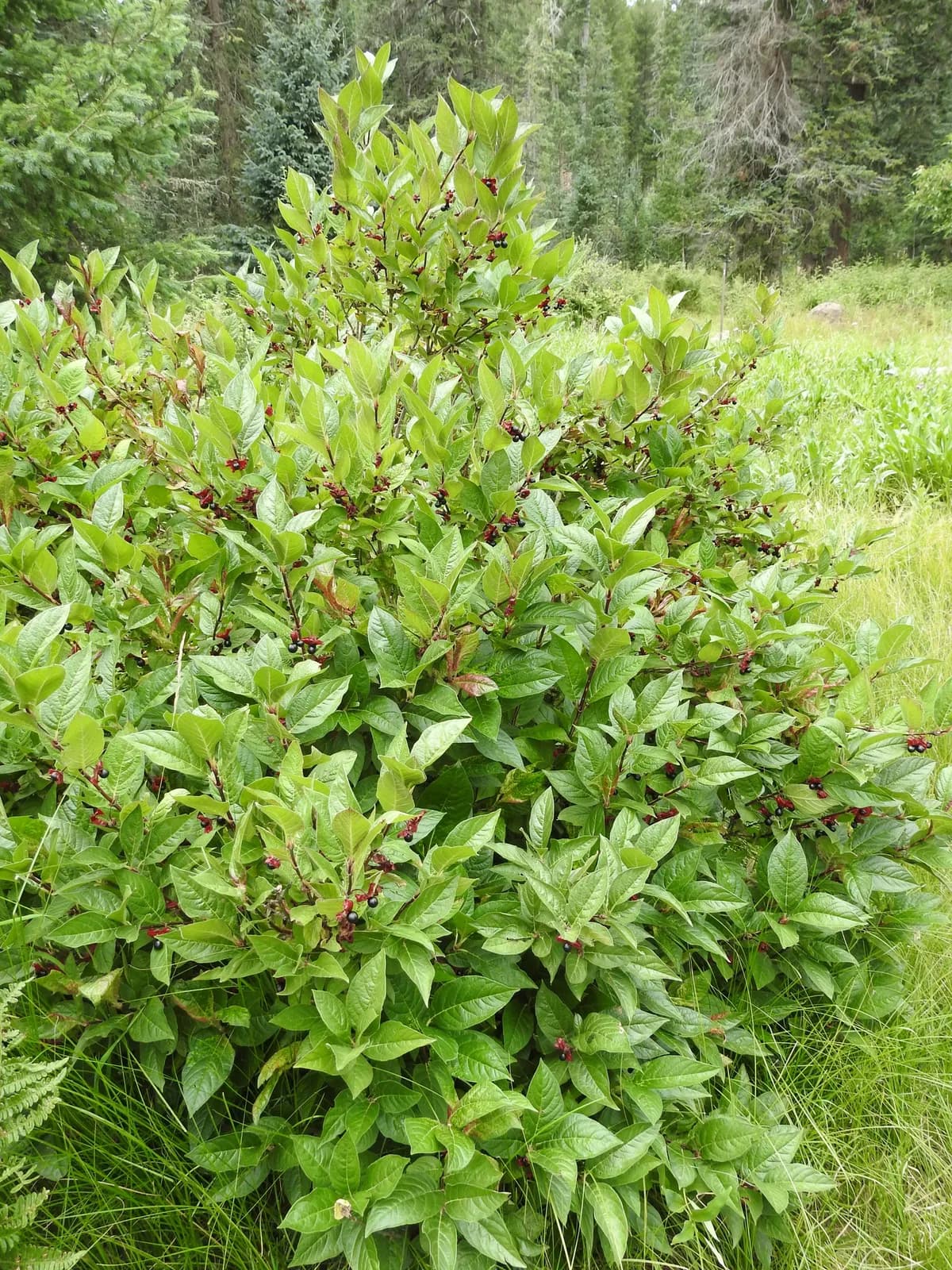
Lonicera involucrata is a deciduous shrub with yellow tubular flowers from May through August, followed by black paired berries. It grows well in moist mountain and streamside sites across the western United States.
California Honeysuckle (Lonicera involucrata) is not flagged as toxic to dogs or cats by Plants For A Future (PFAF) (opens in new tab) (last reviewed 2026-05-21). This verdict does not come from the ASPCA. If your pet shows symptoms after eating any plant, call the ASPCA at (888) 426-4435.
The USDA PLANTS Database (opens in new tab) does not flag California Honeysuckle as toxic to livestock.
Light
part sun
Water
medium
Size
36"–120" H × 36"–120" W
Bloom
May, Jun, Jul, Aug
Native to
AZ, CA, CO, ID and 9 more states
Pollinators
hummingbirds, bees, butterflies
Before you buy
Your city may pay you to plant this
Cities and water utilities offer rebates for replacing lawn with native and water-wise plants. We track 459 programs across 44 states, each with a link to the provider and the date we last checked it.
Find rebates in your areaPicture natives in your own yard
Upload a photo of your yard and Patch Vision shows a rendering of it planted with natives for your region, like California Honeysuckle.


Browse plants for this ecoregion
Honeysuckle is an attractive native shrub with bright yellow flowers nestled in distinctive purple-red bracts. It grows as a medium-sized woody shrub, providing several months of flowering followed by showy black berries. This adaptable plant thrives in partly shaded areas with medium moisture.
Growing California Honeysuckle
Grow California Honeysuckle in part sun and medium water. Mature plants reach 36 to 120 inches tall and spread 36 to 120 inches wide. Expect moderate maintenance to keep it looking intentional in a front yard.
How to care for California Honeysuckle, by region
How to care for California Honeysuckle where it is actually grown: year-round basics plus what to do each season, region by region, with the sources for each.
Care guidance last updated: July 2026
Southern California/Northern Baja Coast (includes Los Angeles, CA)
Year-round
Twinberry honeysuckle is a big, moisture-loving native shrub for the coolest, shadiest, dampest corner of a Los Angeles yard, not a drought bed.
- Site it in the moistest, shadiest corner you have, part shade is ideal
- Give it more water than your other natives, it is a riparian plant and does not go summer-dormant
- Expect a large informal shrub up to about 10 ft that suckers and spreads, give it room
- Let birds have the dark twin berries, they are for wildlife and not for people
- Feed nectar to hummingbirds and bees with its tubular yellow flowers
To read as intentional and avoid a violation letter, plant this big suckering shrub toward the back of the yard as a green backdrop and prune it to a defined shape once a year rather than letting it sprawl over a path or property line.
Fall
Fall, after the first rains, is the prime window to plant or transplant this shrub so roots settle over the cool wet winter.
- Plant now in the dampest, shadiest spot once the first rains arrive
- Water a new planting in well and keep it moist while roots take hold
- Add a thick mulch ring, keeping it a few inches off the stems
- Cut back any dead or crossing stems as growth slows
- Leave spent flowers and any late berries for the birds
When you plant, place it toward the back of the bed so the eventual large informal shrub reads as an intentional green backdrop rather than an overgrown front-yard surprise.
Winter
Winter is the cool wet growing season and the right time to shape this deciduous shrub while it is bare.
- Let winter rain do most of the watering, only add water in a long dry spell
- Prune while it is leafless to control size and shape and to thin crowded stems
- Cut back suckers that are wandering past where you want the shrub
- Refresh mulch to protect roots through the cool months
- Rare coastal frost usually does no harm, no winter cover needed
A dormant-season cutback to a clean defined shape keeps this suckering shrub looking cared for and intentional, which is what keeps it HOA-friendly at the edge of a front yard.
Spring
Spring is peak leaf-out and the start of bloom, so keep the soil damp and let it grow.
- Keep the root zone evenly moist as the last winter rains taper off
- Watch for the first tubular yellow flowers, bloom runs into summer
- Add a few inches of mulch out to the drip line to hold moisture and keep roots cool
- Pull weeds around the base by hand so the shrub is not competing for water
- Skip heavy pruning now, save shaping for the dormant season
Summer
Unlike the drought natives around it, this one wants steady summer water through the hot dry Los Angeles months.
- Water deeply and regularly all summer, do not let it dry out and go crispy
- Check the soil a few inches down, if it is dry give it a slow deep soak
- Keep mulch topped up to slow evaporation during the bone-dry season
- Enjoy the twin dark berries as bird food, leave them for wildlife
- Give afternoon shade if you can, the coastal marine layer helps early summer but inland heat can scorch it
Sources: Calscape (California Native Plant Society), Lonicera involucrata, native range and moist/riparian habitat, USDA PLANTS Database, Lonicera involucrata (LOIN5), lists no toxicity to livestock or horses
In an HOA neighborhood
California Honeysuckle is an HOA-friendly choice. Maintenance level: moderate. Tidiness: 3 out of 5.
Works well in: foundation, mid zone.
- Can appear somewhat informal/wild if not occasionally pruned
- Deciduous nature means seasonal bare branches
- May spread beyond intended boundaries without management
Wildlife value
This honeysuckle provides excellent habitat and food for wildlife. The tubular flowers attract hummingbirds, while bees and butterflies visit for nectar, and birds feed on the dark berries that follow.
Common questions
- When does Lonicera involucrata bloom?
- This shrub typically flowers from May through August, with small yellow tubular blossoms appearing in pairs along the stems.
- What pollinators visit this shrub?
- Hummingbirds, bees, and butterflies are drawn to the tubular yellow flowers of Lonicera involucrata throughout its summer bloom period.
- How much water does this shrub need?
- It grows best with medium to consistently moist soil and is often found near streambanks, seeps, and other damp mountain habitats.
- How much sun does Lonicera involucrata need?
- It performs well in part sun but can also handle brighter, full sun spots or somewhat shadier part shade locations, especially where soil moisture is adequate.
- What does the shrub look like outside of bloom season?
- Lonicera involucrata is a deciduous shrub with an upright, arching form, and it produces small black berries backed by reddish bracts after flowering.
- Is California Honeysuckle toxic to dogs?
- California Honeysuckle is not flagged as toxic to dogs by Plants For A Future (PFAF). This verdict does not come from the ASPCA.
- Is California Honeysuckle toxic to cats?
- California Honeysuckle is not flagged as toxic to cats by Plants For A Future (PFAF). This verdict does not come from the ASPCA.
- Is California Honeysuckle toxic to livestock?
- The USDA PLANTS Database does not flag California Honeysuckle as toxic to livestock.
- Is California Honeysuckle HOA-friendly?
- California Honeysuckle is generally an HOA-friendly choice in the right placement, with moderate maintenance.
These answers were drafted with an AI model from this plant's data. Verify care details with a local expert.
Native range data from the World Checklist of Vascular Plants (Kew). Pollinator and host plant associations compiled from GBIF, iNaturalist, and published ecological literature.
If something looks wrong
Common plant problems, and what to check first
These come up on almost any plant. Each guide lists the likely causes in the order they are worth ruling out, with one thing to check before you act on any of them, and links to the source it came from.
- It is dying right after planting
- Leaves turning yellow
- Wilting even though I watered it
- Brown crispy leaf tips
- Bugs on the plant
Ready to grow California Honeysuckle? Add it to your garden in Pollinator Patch to track it and get season-by-season care guidance.