Canada onion (var. mobilense)
Allium canadense mobilense
Last reviewed: September 2026
Toxicity unknown
Canada onion (var. mobilense) (Allium canadense mobilense) is not listed by the ASPCA Animal Poison Control Center (opens in new tab) or the other sources we check, so we have no verdict for it either way. Absence from those lists is not a clearance. If your pet shows symptoms after eating any plant, call the ASPCA at (888) 426-4435.
Light
full sun
Water
medium
Size
6"–18" H × 3"–8" W
Bloom
Apr, May, Jun
Native to
AR
Pollinators
bees
Before you buy
Your city may pay you to plant this
Cities and water utilities offer rebates for replacing lawn with native and water-wise plants. We track 458 programs across 44 states, each with a link to the provider and the date we last checked it.
Find rebates in your areaBrowse plants for this ecoregion
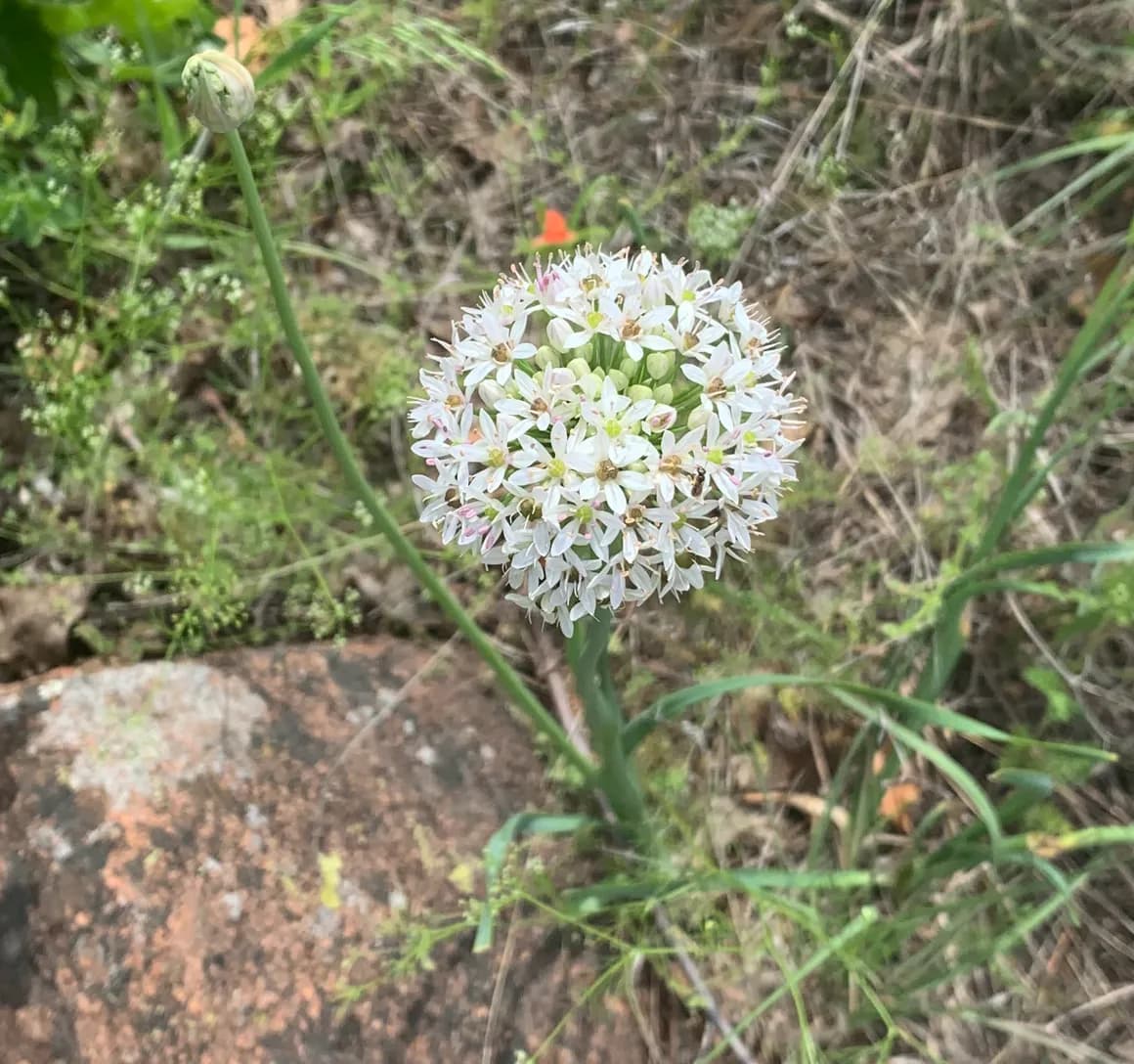
A bulb-forming perennial wildflower in the onion family, producing a rounded cluster of pink to lavender star-shaped flowers atop a slender stalk in spring. Grass-like foliage dies back to the bulb by early summer.
How to care for Canada onion (var. mobilense), by region
How to care for Canada onion (var. mobilense) where it is actually grown: year-round basics plus what to do each season, region by region, with the sources for each.
Care guidance last updated: September 2026
Ouachita Mountains (includes Hot Springs, AR)
Year-round
Meadow garlic (Allium canadense var. mobilense) is native to Arkansas and fits naturally into a Hot Springs area garden as a low-fuss native bulb for sun to light shade.
- Native to Arkansas per the Lady Bird Johnson Wildflower Center, growing in prairies, open woodlands, meadows, and glades, habitat types found in the Ouachita Mountains region around Hot Springs.
- Give it full sun to light shade and well-drained soil. Sandy or gravelly ground is its preference, though it tolerates clay.
- Water lightly to moderately while it is actively growing. Once the bulb is established it handles dry spells well.
- Expect thin, grass-like leaves topped by small clusters of lilac flowers, usually 6 to 20 inches tall, in spring.
- This is a wild onion relative. Treat it like culinary onion and garlic and keep dogs, cats, and horses from grazing on the leaves or bulbs, since Allium species can damage red blood cells in pets.
Its neat clumping habit and short bloom window make it an easy native to tuck into a bed edge without looking wild or overgrown, an HOA-friendly choice for a front bed.
Fall
Fall around Hot Springs is root-growing season for meadow garlic, even though nothing is visible above ground yet.
- Roots begin developing again in fall as the soil cools, ahead of next spring's leaf and flower growth.
- Fall is a good time to plant or transplant dormant bulbs into well-drained, sandy or gravelly soil.
- Keep the area weeded, but do not dig or disturb the soil where bulbs are planted.
- Normal Arkansas fall rainfall is usually enough. Only water during an extended dry spell.
- No pruning or deadheading needed, since the spring foliage already died back months ago.
Fall planting keeps the bed looking intentional through winter dormancy instead of bare.
Winter
Winters around Hot Springs are mild with occasional freezes, and meadow garlic bulbs handle that without extra help.
- The bulb overwinters underground and tolerates the occasional freeze typical of Ouachita Mountain winters.
- No watering needed beyond normal winter rainfall.
- Leave any mulch or leaf litter in place. It is not required, but it does not hurt the dormant bulb.
- Fresh leaf growth typically starts showing again in late winter to early spring, ahead of the April bloom.
- No fertilizer or soil amendment needed while the bulb is dormant.
A quiet, bare winter bed is normal here and does not need explaining to a HOA board, since nothing is supposed to be visible yet.
Spring
Spring is when meadow garlic actually shows itself around Hot Springs, sending up leaves and lilac flowers from roughly April into May or June before fading back down.
- Leaves emerge in late winter to early spring, with flowers opening April into May and sometimes June in the Ouachita Mountains region.
- Keep soil lightly moist while it is actively growing and flowering, then ease off watering as the leaves start to yellow.
- Full sun to light shade both work well in spring, and a bit more shade is fine once nearby trees leaf out overhead.
- No fertilizer needed. Meadow garlic is adapted to lean, sandy or gravelly Arkansas soils.
- Leave the foliage alone until it yellows and dies back on its own, so the bulb can store energy for next year.
A tidy spring bloom that fades quietly by early summer, easy to work around any HOA mowing schedule.
Summer
By summer, meadow garlic around Hot Springs has already finished blooming and gone dormant, so summer care is mostly about leaving the spot alone.
- Foliage yellows and dies back after flowering ends in late spring, and the bulb goes fully dormant underground through the hot, humid Arkansas summer.
- Skip regular watering once it is dormant. Overwatering a dormant bulb in heavy Ouachita clay risks bulb rot.
- Mark the spot if you want to avoid digging there, since nothing will be visible above ground until next spring.
- Late summer into early fall is a good window to plant nursery-grown bulbs or divisions, ahead of fall root growth.
- Let neighboring plants fill in for summer interest, since meadow garlic will not be doing anything visible this season.
Dormant and out of sight by summer, so there is nothing here that reads as unkept to a neighbor or an HOA board.
Sources: Lady Bird Johnson Wildflower Center - Allium canadense var. mobilense, ASPCA Toxic and Non-Toxic Plants - Onion
In an HOA neighborhood
Canada onion (var. mobilense) is an HOA-friendly choice. Maintenance level: low. Tidiness: 3 out of 5.
Works well in: spring bulb bed, border edge, naturalized meadow planting.
- Foliage has an onion scent when bruised or mowed
- Goes dormant by early summer, leaving a gap in the bed unless paired with later-blooming plants
Wildlife value
Spring flowers provide early-season nectar and pollen for native bees.
Common questions
- How much sun does Canada onion (var. mobilense) need?
- Canada onion (var. mobilense) grows best in full sun conditions.
- When does Canada onion (var. mobilense) bloom?
- Canada onion (var. mobilense) blooms in April, May, and June.
- Where is Canada onion (var. mobilense) native?
- Canada onion (var. mobilense) (Allium canadense mobilense) is native to AR, per vouchered herbarium specimen records and regional native plant society lists.
- What pollinators does Canada onion (var. mobilense) attract?
- Canada onion (var. mobilense) draws bees.
- Is Canada onion (var. mobilense) HOA-friendly?
- Canada onion (var. mobilense) is generally an HOA-friendly choice in the right placement, with low maintenance.
Native range data from vouchered herbarium specimen records and regional native plant society lists. Pollinator and host plant associations compiled from GBIF, iNaturalist, and published ecological literature.
If something looks wrong
Common plant problems, and what to check first
These come up on almost any plant. Each guide lists the likely causes in the order they are worth ruling out, with one thing to check before you act on any of them, and links to the source it came from.
- It is dying right after planting
- Leaves turning yellow
- Wilting even though I watered it
- Brown crispy leaf tips
- Bugs on the plant
Ready to grow Canada onion (var. mobilense)? Add it to your garden in Pollinator Patch to track it and get season-by-season care guidance.