Carolina jointgrass
Coelorachis cylindrica
Last reviewed: September 2026
Toxicity unknown
Carolina jointgrass (Coelorachis cylindrica) is not listed by the ASPCA Animal Poison Control Center (opens in new tab) or the other sources we check, so we have no verdict for it either way. Absence from those lists is not a clearance. If your pet shows symptoms after eating any plant, call the ASPCA at (888) 426-4435.
Light
full sun
Water
medium
Size
24"–48" H × 12"–24" W
Bloom
Aug, Sep, Oct
Native to
AR
Before you buy
Your city may pay you to plant this
Cities and water utilities offer rebates for replacing lawn with native and water-wise plants. We track 458 programs across 44 states, each with a link to the provider and the date we last checked it.
Find rebates in your areaBrowse plants for this ecoregion
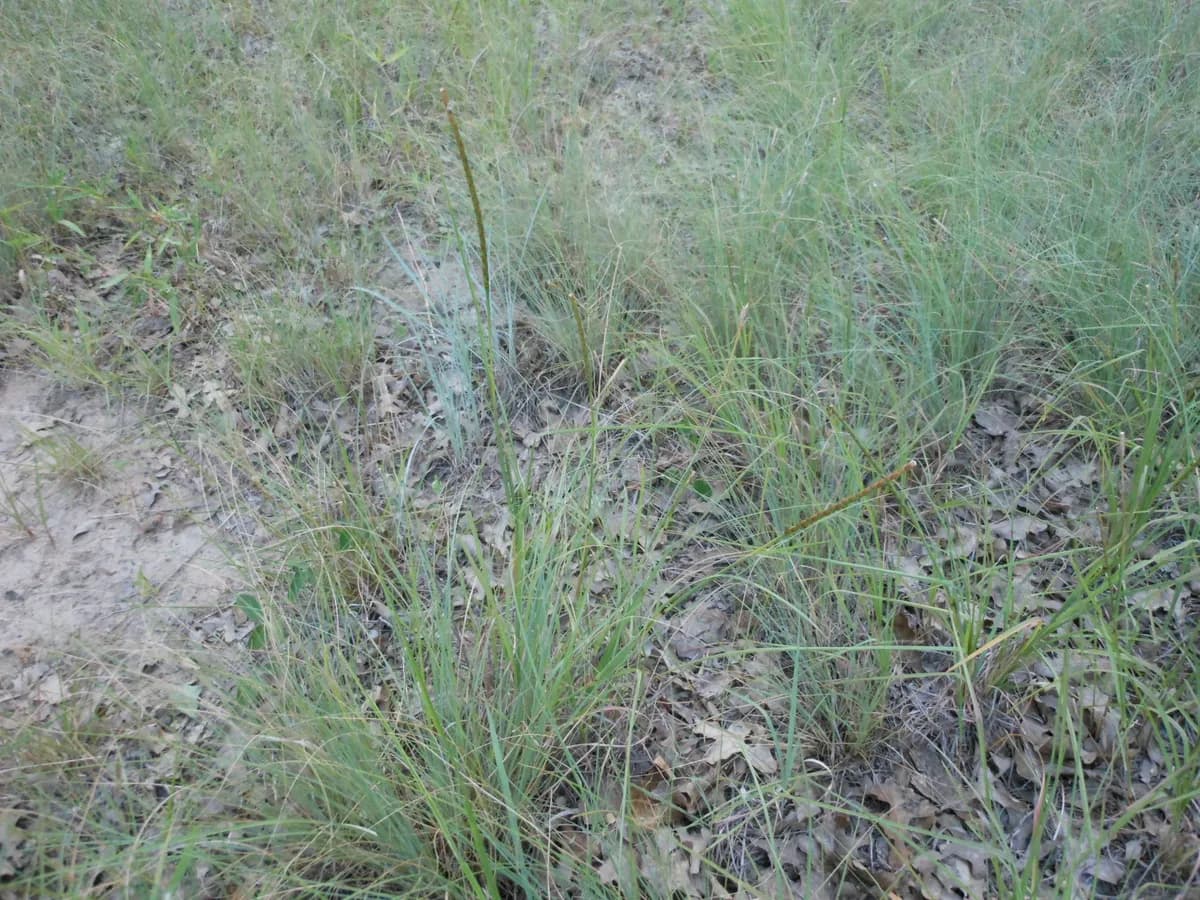
A warm-season perennial bunchgrass with distinctive jointed seed spikes that appear in late summer. Forms upright clumps in open prairies, savannas, and the edges of woodlands on well-drained to moist soils.
How to care for Carolina jointgrass, by region
How to care for Carolina jointgrass where it is actually grown: year-round basics plus what to do each season, region by region, with the sources for each.
Care guidance last updated: September 2026
Ouachita Mountains (includes Hot Springs, AR)
Year-round
Carolina jointgrass is a warm season native grass that does well in Hot Springs area gardens in a sunny to partly shaded spot with average to moist soil.
- This grass appears in Arkansas's documented native flora, including a 2024 University of Arkansas-published assessment of the state's plants and range data from the Lady Bird Johnson Wildflower Center.
- It typically grows 1 to 2 feet tall, though it can reach up to about 4 feet, and spreads slowly by underground rhizomes.
- It blooms with narrow, green flower spikes from June through August.
- It prefers full sun to part shade and moist to average soil, and tolerates short dry spells once its roots are established.
- As a warm season grass, it grows most actively from late spring through summer and goes dormant, turning tan, over winter.
- In the wild it grows in prairies, open woodlands, and along roadsides, so an open sunny bed suits it better than deep shade.
Its moderate height and clumping growth habit read as HOA-friendly in a border bed, especially if the spreading rhizomes are kept inside an edged boundary.
Fall
Fall is when this grass winds down and begins going dormant as nights cool in the Hot Springs area.
- Foliage typically shifts from green to tan or straw colored as temperatures drop toward the area's average first frost in early to mid November.
- Leave the dried foliage standing through fall instead of cutting it back, since the old growth protects the crown over winter and gives birds seed and cover.
- Skip fertilizer and heavy watering in fall, since active growth is already slowing down.
- Once the clump is fully dormant, fall is a reasonable time to divide or transplant it if you want to add it elsewhere in the yard.
- This is also a good time to plan an edged or mowed boundary around the clump, since the rhizomes will spread again next growing season.
Leaving the dried seed heads standing through fall is common cottage garden practice and reads as deliberate rather than neglected.
Winter
Winter is a dormant, low maintenance season for this grass in the Hot Springs area, which falls in USDA hardiness zone 8a.
- Dried tan foliage can be left standing for winter interest and wildlife habitat through most of the season.
- Cut old growth back to a few inches in February, before new spring shoots start, rather than cutting it back in fall.
- This grass is hardy through the Hot Springs area's typical winter lows, generally in the 10 to 15 degree Fahrenheit range.
- No watering or feeding is needed while the plant is dormant.
- No winter covering is needed for an established plant past its first year, even if a hard freeze is forecast.
A single clean cutback in February, rather than a ragged fall trim, keeps the bed looking tended through winter.
Spring
Spring in the Hot Springs area is when this warm season grass wakes from winter dormancy and starts its main growth push.
- New green shoots usually emerge in mid to late spring as soil warms, after the area's average last frost near the end of March.
- If old growth was not already cut back in late winter, trim it down to a few inches before new shoots get tall, since cutting into new growth can set the plant back.
- Watch for weeds crowding young clumps in spring, since this grass fills in more slowly than a lawn grass and open soil around it invites competition.
- Light watering during a dry spring stretch helps new growth along, but avoid letting water stand around the crown.
- Skip heavy fertilizer, since this grass is adapted to lean native Arkansas soils and rich feeding tends to cause weak, floppy growth.
A tidy late winter cutback before spring green up keeps the bed looking maintained rather than overgrown.
Summer
Summer is this grass's peak growth and bloom period through the heat and humidity of a Hot Springs summer.
- Narrow, green jointed flower spikes typically appear from June through August.
- Once established, this grass tolerates the short dry spells common in Arkansas summers and usually does not need extra watering beyond an extended dry stretch.
- Full sun produces the fullest, most upright growth, while part shade tends to make the stems flop.
- No mowing or cutting back is needed in summer, since this is the grass's active growth window.
- Pull any taller weeds or woody seedlings competing for light around the clump by hand rather than spraying close to it.
Full, upright summer growth in a defined bed reads as an intentional planting rather than an overlooked patch.
Sources: Lady Bird Johnson Wildflower Center, Native Plant Database: Coelorachis cylindrica, Witsell et al. 2024, Coefficients of Conservatism for the Vascular Flora of Arkansas (Phytoneuron 2024-46), University of Arkansas Division of Agriculture Extension, Management of native grasses doesn't stop during winter, University of Arkansas Division of Agriculture Extension, To give native grasses a good head start, limit grazing and stay on top of weeds
In an HOA neighborhood
Carolina jointgrass is an HOA-friendly choice. Maintenance level: low. Tidiness: 3 out of 5.
Works well in: border planting, naturalized prairie bed, mixed native grass planting.
- Seed spikes can look unkempt if not cut back in late winter
- Less familiar ornamental grass may need a plant tag for HOA review
Wildlife value
Provides structural cover and seed for ground-feeding birds and insects, and its clumping habit supports small mammals and ground-nesting bees seeking undisturbed grass cover.
Common questions
- How much sun does Carolina jointgrass need?
- Carolina jointgrass grows best in full sun conditions.
- When does Carolina jointgrass bloom?
- Carolina jointgrass blooms in August, September, and October.
- Where is Carolina jointgrass native?
- Carolina jointgrass (Coelorachis cylindrica) is native to AR, per vouchered herbarium specimen records and regional native plant society lists.
- Is Carolina jointgrass HOA-friendly?
- Carolina jointgrass is generally an HOA-friendly choice in the right placement, with low maintenance.
Native range data from vouchered herbarium specimen records and regional native plant society lists. Pollinator and host plant associations compiled from GBIF, iNaturalist, and published ecological literature.
If something looks wrong
Common plant problems, and what to check first
These come up on almost any plant. Each guide lists the likely causes in the order they are worth ruling out, with one thing to check before you act on any of them, and links to the source it came from.
- It is dying right after planting
- Leaves turning yellow
- Wilting even though I watered it
- Brown crispy leaf tips
- Bugs on the plant
Ready to grow Carolina jointgrass? Add it to your garden in Pollinator Patch to track it and get season-by-season care guidance.