Cedar Sage
Salvia roemeriana
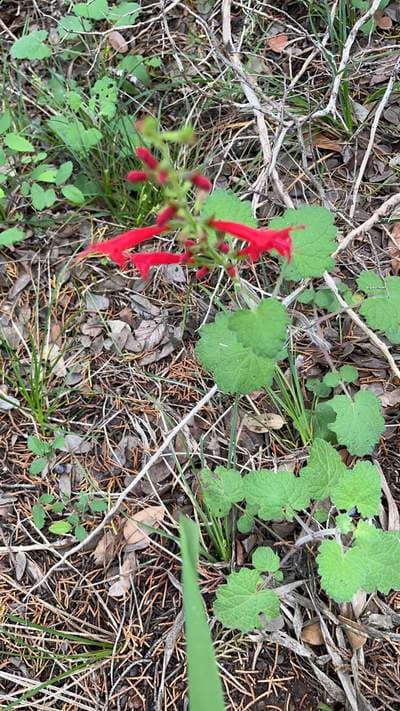
/images/plants/cedar-sage/attribution.json.Light
shade
Water
low
Size
12"–18" H × 12"–18" W
Bloom
Mar, Apr, May, Jun, Jul
Native to
Edwards Plateau, Cross Timbers
Pollinators
hummingbirds, bees
Browse plants for this ecoregion
Cedar Sage is a perennial forb native to Edwards Plateau, Cross Timbers. It grows best in shade with low water needs.
Cedar Sage (Salvia roemeriana) is a low-growing native salvia that thrives in the dappled shade under live oaks, red oaks, and Ashe junipers (the "cedar" trees that give it the common name). It blooms scarlet red tubular flowers from March through July and is dog-safe (Cedar Sage is not on the ASPCA Animal Poison Control Center toxic plant list for dogs or cats).
The plant stays under 18 inches tall, has heart-shaped basal leaves that form a low mound, and reseeds gently to fill in over time. Hummingbirds work the flowers heavily during spring migration. It is one of the few Texas natives that performs well in deep shade where most flowering plants struggle.
Ecoregion notes for Texas. In the Edwards Plateau and Hill Country (alkaline limestone, dappled oak-juniper shade): native and at home. Plant under existing trees, water once a week the first summer, then leave it. In the Cross Timbers (Fort Worth area, sandy-rocky transitional): native; performs in oak shade. In the Blackland Prairie (DFW, Austin, San Antonio metros): not native but works as a landscape plant in shade if soil is amended with limestone gravel. In the Pineywoods: not recommended; too acidic.
Cedar Sage is the answer to "what blooms in shade in a Texas yard?" Pair with Inland Sea Oats and Cedar Sedge for a low-water shade bed under existing trees. For HOA contexts, the tidy mound form and bright spring color read as intentional even though the plant is naturalistic. Selective deadheading after the spring flush extends bloom into early summer.
Bee species data compiled from GBIF, iNaturalist, Discover Life, and the USGS Native Bee Inventory and Monitoring Lab. Plant-pollinator associations informed by published ecological literature.
How to care for Cedar Sage, by region
How to care for Cedar Sage where it is actually grown: year-round basics plus what to do each season, region by region, with the sources for each.
Care guidance last updated: August 2026
Cross Timbers (includes Fort Worth, TX)
Year-round
Cedar Sage is a small native wildflower that likes shade more than most sages, growing under trees and along the shadier north or east side of the house. It stays low and tidy, and its red flowers are one of the best hummingbird draws you can plant in North Texas.
- Give it part sun to light shade, ideally morning sun with afternoon shade, since it naturally grows under juniper and oak canopy
- Plant in well drained soil; it does not tolerate soggy roots
- Space plants 10 to 12 inches apart since it stays under 2 feet tall and wide
- Water to establish the first few months, then let it dry between waterings once roots are in
- Deadhead spent flower stalks to encourage more blooms through the season
Its low, rounded habit and red blooms read as a tended shade bed rather than a wild patch, so it fits neatly under trees or along a foundation planting.
Fall
Fall brings cooler weather and often a second smaller bloom flush, plus it is a good time to tidy the plant before winter.
- Trim any leggy or sprawling stems back by a third in October to keep the clump compact
- Let a few spent flower heads go to seed if you want it to reseed itself in the bed
- Reduce watering as temperatures drop, once every 10 to 14 days is usually enough
- In the sandier soils west of the metro, check for faster drying and water slightly more often than in heavier clay areas
- This is also a good month to divide crowded clumps and move offsets to a new spot
A fall trim keeps the plant from sprawling into walkways or over hardscape edges as growth slows for the year.
Winter
Cedar Sage dies back to a low basal clump in winter and is hardy through North Texas's typical mild winters, though a hard Arctic freeze can knock it back further.
- Leave the dead top growth in place through winter, it protects the crown from cold and can be cut back in late February
- Skip watering except during extended dry, warm winter spells
- Cover the crown with 2 to 3 inches of mulch before any forecast Arctic outbreak
- Cut back any winter-damaged foliage to the base once new growth starts to show in late February or March
- Do not fertilize in winter, wait until spring growth resumes
Leftover dead stalks in a front bed can look neglected to a passing HOA inspector; a light late-February cutback resets the bed before spring growth is visible.
Spring
Spring is Cedar Sage's showtime and the best window to plant it in North Texas, once the last frost has passed in mid March.
- Plant new starts after mid March once frost danger has passed
- Expect the heaviest flush of crimson blooms from March through May
- Top dress with an inch of compost or leaf mulch to hold moisture in the sandier soils west of the metro
- Watch for hummingbirds, cedar sage is one of the earliest nectar sources they use here
- Water twice a week for the first month after planting to help roots establish
Peak spring bloom against green foliage looks like an intentional shade garden bed, a strong front-yard first impression.
Summer
Once established, Cedar Sage is drought tolerant, but the 100 degree stretches of July and August are the hardest test for anything planted this spring, so newer plants still need attention.
- Water once a week during triple digit stretches if the plant was installed this spring or earlier this year
- Established plants (a year or more in the ground) can go two to three weeks without rain in part shade
- Expect blooming to slow to sporadic flushes rather than the spring's full show
- Keep mulch topped up to 2 to 3 inches to buffer soil temperature and hold moisture
- Skip fertilizer in summer heat, it pushes soft growth that struggles in the heat
Sources: Lady Bird Johnson Wildflower Center: Salvia roemeriana, NC State Extension Plant Toolbox: Salvia roemeriana
Edwards Plateau (includes San Antonio, TX)
Year-round
Cedar sage is a small red flowered perennial that grows naturally in the shady leaf litter under juniper and oak trees across the Edwards Plateau, the Hill Country region that San Antonio sits in. It wants shade to part sun, fast draining soil, and not much extra water once it settles in.
- Give it dappled shade or morning sun. Full, all day summer sun in San Antonio can stunt and stress the plant.
- Plant it in fast draining soil. Rocky, limestone based dirt is its natural home, and heavy wet soil can rot the roots.
- Once it is established it needs very little extra water. Water new plants regularly the first season, then ease off.
- Leave a light layer of leaf litter nearby but do not bury the crown. Seedlings need some open ground to come up through.
- The red tubular flowers are a strong draw for hummingbirds and butterflies looking for nectar.
- Common garden sage (Salvia officinalis) is listed as not toxic to dogs, cats, or horses by the ASPCA. Cedar sage (Salvia roemeriana) has not been evaluated as its own species by the ASPCA, so treat that as a good sign, not a guarantee, if a pet nibbles it.
Fall
Fall in San Antonio is a good stretch for cedar sage to finish out its bloom cycle and drop seed for next year, with the first freeze usually not landing until mid to late November.
- Sporadic blooms can continue into early fall before the plant starts winding down for the year.
- Let a few seed spikes mature and drop instead of deadheading everything. That is how new plants show up on their own nearby.
- Fall is a good window to divide or move plants if you need to, before the soil cools off much more.
- Ease off supplemental water once regular fall rain returns to Central Texas.
A fall cleanup pass, cutting back any leggy or tired growth and clearing loose debris, keeps a front facing bed looking neat for HOA-conscious neighbors.
Winter
Cedar sage dies back to the ground in winter around San Antonio and comes back on its own in spring, so there is not much active care needed once cold weather sets in.
- Expect the top growth to die back after a freeze. That is the plant's normal winter pattern, not a sign it died.
- Leave the dead foliage in place through the coldest weeks. It helps protect the crown and roots from harder freezes.
- The species is generally winter hardy down to around zero degrees Fahrenheit, but an unusually hard or long freeze, like the one Central Texas saw in February 2021, can still stress plants beyond the normal dieback.
- Hold off on watering through winter dormancy unless the soil stays bone dry for weeks at a time.
If a dormant brown patch bothers a front facing bed, cutting the dead stems back to a few inches in late winter is fine. Just wait until the hard freezes have passed.
Spring
Spring is when cedar sage puts on its big show in San Antonio gardens, with red blooms often starting in early March and running heavy through April and May, right after the last frost clears.
- Blooms start in early spring and stay heavy for a couple of months before slowing into scattered summer flowers.
- Clear away any thick mat of fallen leaves over the crown in late winter or early spring so new shoots and seedlings can push through.
- Water new transplants regularly this season while roots are still getting established.
- Deadhead spent flower spikes if you want a tidier look, though leaving some lets the plant reseed itself for next year.
Regular deadheading in spring keeps a front bed looking tended, which reads as HOA-friendly if the bed is visible from the street.
Summer
San Antonio summers get hot and dry, and cedar sage handles that fine as long as it has some shade and is not overwatered.
- Blooming slows and gets sporadic through the hottest months. That is the normal pattern, not a sign of trouble.
- Keep it out of all day full sun. Afternoon shade from a tree, fence, or taller shrub helps it get through July and August.
- Water only during long dry stretches. In heavy clay soil, too much water is more likely to hurt this plant than too little.
- Keep mulch a few inches back from the stems so air can move around the base. That helps avoid crown rot during wet spells.
Sources: Lady Bird Johnson Wildflower Center: Salvia roemeriana (Cedar sage), NC State Extension Gardener Plant Toolbox: Salvia roemeriana, ASPCA Toxic and Non-Toxic Plants: Sage (Salvia officinalis, related species in the same genus, not a species-level determination for Salvia roemeriana), Central Texas Gardener: Cedar Sage (community tip)
Texas Blackland Prairies (includes Dallas, TX)
Year-round
Cedar sage is a low shade perennial from the Texas limestone hill country, so in Dallas black clay the whole job is giving it sharp drainage and dappled light.
- It is native to central and west Texas, where it grows in fast draining juniper leaf litter over exposed limestone, not in heavy prairie clay.
- Plant it high. Build a mound or low berm 6 to 10 inches above grade and mix in decomposed granite or pea gravel so water moves through fast.
- Wet feet in slow draining Blackland clay is the number one way to lose this plant. Never put it in a low spot that puddles after a storm.
- Give it dappled shade or morning sun only. Full blasting afternoon sun in Dallas stresses it and stunts it.
- One point in your favor: our clay is alkaline, and this plant likes alkaline limestone soil. No sulfur or acidifying products.
- It stays a tidy clump about 12 to 18 inches tall and wide, so it fits foundation beds, mid zone plantings, and street edge pockets under a tree.
The low, rounded, well behaved clump reads as intentional planting, which makes it an easy HOA-friendly choice for a front bed under a tree.
Fall
Fall rain returns to Dallas, so this is a drainage check season, plus a light tidy and a decision about which seedlings to keep.
- Cedar sage is short lived, so plan on replacements. Let a few volunteer seedlings stay where they come up in the shade.
- It reseeds gently and stays in a clump, so it will not run through your bed the way mint family plants sometimes do.
- Move any keeper seedlings now while soil is warm and rain is steady, and set them high on grit just like the parent.
- Re check drainage before our fall rains. Top up the mound with decomposed granite where it has settled.
- Skip fertilizer. Rich, heavy feeding pushes floppy growth on a plant built for lean limestone soil.
A light fall trim of spent stems and a clean bed edge keeps the planting looking cared for from the street through the dormant months.
Winter
Dallas winters are mild enough that cedar sage usually holds a low rosette of leaves, so winter care is mostly leaving it alone and keeping it dry.
- In zone 8a to 8b it often stays semi evergreen as a low leafy rosette instead of dying all the way back.
- Do not cut it to the ground. Leave the basal leaves and remove only the dead flower stems.
- This is the easiest season to overwater. Turn irrigation off and let winter rain do the work.
- After a hard freeze, wait until spring growth starts before you judge what is dead and trim it.
- Winter is a good time to fix a bad site. If it sat wet all year, rebuild the bed higher with more grit before spring.
Spring
Spring is the main bloom show and the best planting window, but it is also when Dallas rain can drown a plant sitting too low in clay.
- Crimson red flowers start early spring and stay heavy for a couple of months, so this is when it earns its spot.
- If you are planting a new one, do it in early spring on a raised, gritty mound rather than in a hole dug into straight clay.
- Skip supplemental water during our wet spring stretches. Check that the soil dries out an inch down before you add any.
- Watch for standing water after a big storm. If the crown sits in a puddle for hours, lift and replant it higher now, not later.
- Let the flower spikes finish. This is also when seed sets for the volunteers that keep the planting going.
Summer
Through the long Dallas 100 degree run, keep it shaded and water deeply but rarely, because summer overwatering in clay kills more of these than heat does.
- Blooming keeps going on and off through summer, just lighter than the spring flush.
- Afternoon shade is not optional here. A spot under a live oak or on the east side of the house works well.
- Water deeply about every 10 to 14 days in the worst heat, and only if the top two inches are dry. Soggy clay plus heat rots the crown.
- Hummingbirds work the red flowers, so leave the summer blooms alone instead of shearing them off.
- A thin gravel or decomposed granite mulch keeps the crown drier than shredded hardwood does. Keep any mulch off the stems.
- Some leaf droop at 105 degrees is normal. Judge by soil moisture, not by the midday look.
Sources: Lady Bird Johnson Wildflower Center, Salvia roemeriana (Cedar sage), Lady Bird Johnson Wildflower Center expert answer, deciduous behavior of cedar sage
Want these tasks as reminders timed to your yard? Pollinator Patch turns this guidance into a season-by-season care plan for the plants you actually grow.
Before you buy
Your city may pay you to plant this
Cities and water utilities offer rebates for replacing lawn with native and water-wise plants. We track 452 programs across 44 states, each with a link to the provider and the date we last checked it.
Find rebates in your areaIf something looks wrong
Common plant problems, and what to check first
These come up on almost any plant. Each guide lists the likely causes in the order they are worth ruling out, with one thing to check before you act on any of them, and links to the source it came from.
- It is dying right after planting
- Leaves turning yellow
- Wilting even though I watered it
- Brown crispy leaf tips
- Bugs on the plant
Ready to grow Cedar Sage? Add it to your garden in Pollinator Patch to track it and get season-by-season care guidance.
Planning a bed around it? Start a free plan with this plant
Not sure where to start? Take the 2-minute yard quiz