Common Sotol
Dasylirion wheeleri
Last reviewed: September 2026
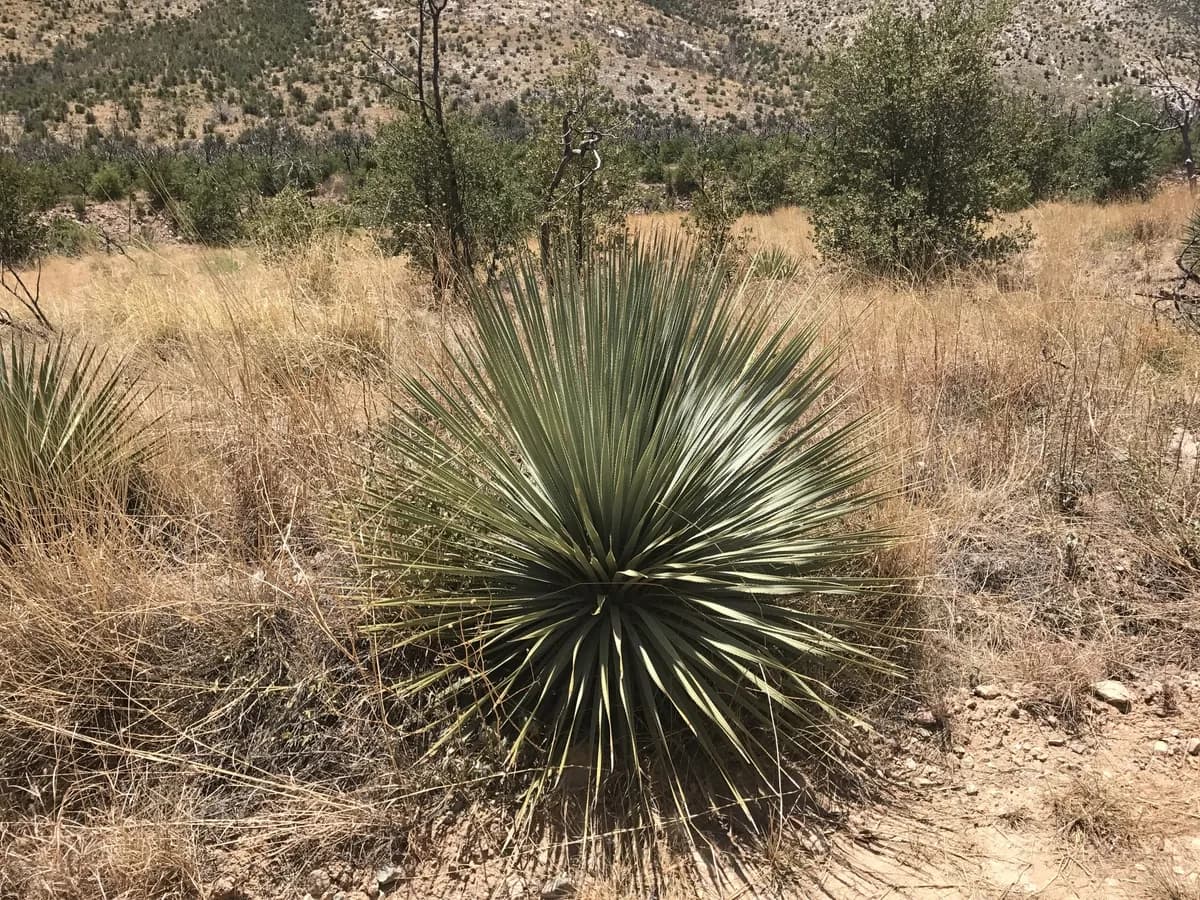
Common sotol is a drought-tolerant, evergreen succulent with a rounded rosette of narrow, saw-edged gray-green leaves. It sends up a tall flowering stalk from June through August in hot, dry Southwestern landscapes.
Toxicity unknown
Common Sotol (Dasylirion wheeleri) is not listed by the ASPCA Animal Poison Control Center (opens in new tab) or the other sources we check, so we have no verdict for it either way. Absence from those lists is not a clearance. If your pet shows symptoms after eating any plant, call the ASPCA at (888) 426-4435.
The USDA PLANTS Database (opens in new tab) does not flag Common Sotol as toxic to livestock.
Light
full sun
Water
low
Size
48"–72" H × 36"–60" W
Bloom
Jun, Jul, Aug
Native to
AZ, NM, TX
Pollinators
butterflies, bees, hummingbirds
Before you buy
Your city may pay you to plant this
Cities and water utilities offer rebates for replacing lawn with native and water-wise plants. We track 452 programs across 44 states, each with a link to the provider and the date we last checked it.
Find rebates in your areaBrowse plants for this ecoregion
Common Sotol forms a dramatic architectural rosette of narrow, blue-green leaves with small teeth along the edges. This drought-tolerant native produces tall flowering spikes in summer that can reach 15 feet, creating a striking focal point in xeriscape gardens.
Growing Common Sotol
Grow Common Sotol in full sun and low water. Mature plants reach 48 to 72 inches tall and spread 36 to 60 inches wide. Expect low maintenance to keep it looking intentional in a front yard.
How to care for Common Sotol, by region
How to care for Common Sotol where it is actually grown: year-round basics plus what to do each season, region by region, with the sources for each.
Care guidance last updated: August 2026
Cross Timbers (includes Fort Worth, TX)
Year-round
Common sotol is a slow growing evergreen succulent that forms a large rounded rosette of arching, saw edged blue green leaves. It needs full sun and very little water once it is established.
- Give it full sun and keep it at least 4 to 5 feet from walkways, driveways, and play areas.
- In heavy black clay soil, plant it high on a slight mound or raised bed with several inches of coarse gravel worked in for drainage; in the sandier soils west of the metro it drains well on its own and needs only light amending, but it will need water more often through its first summer.
- Water deeply but infrequently. Once established (after about one year in the ground), let the soil dry out completely between waterings.
- Growth is very slow, often just an inch or two of new leaf spread a year. Skip fertilizer, since it pushes soft growth that is more likely to rot.
- Mulch with crushed granite or limestone gravel rather than bark or wood mulch, which holds moisture against the base and can lead to crown rot.
The tidy, symmetrical rosette shape reads as an intentional desert style accent rather than an overgrown plant, and its very slow growth keeps that look consistent for years with almost no pruning.
Fall
Fall in North Texas is quiet maintenance season for common sotol. Cooler temperatures are pleasant to work in, but spring, not fall, is still the better window to plant this succulent.
- If the summer flower stalk has dried and turned brown, cut it back to the base by late fall; it will not rebloom that same stalk.
- Remove only fully dried, brown outer leaves at the base and leave any leaf that still shows green.
- Ease off fertilizer and heavy watering as the plant slows down heading into the mild North Texas winter.
- Hold off on new plantings once you get close to the mid November first frost; if a sotol needs to be moved or divided, wait for spring instead.
Cutting the dried flower stalk back to the base once it browns keeps the bed looking tended instead of leaving a tall dead spike through winter.
Winter
Common sotol is evergreen and generally rides out North Texas winters without trouble, but a severe Arctic outbreak can damage leaves on younger plants.
- Established sotol tolerates typical North Texas winter lows into the teens Fahrenheit without protection and stays green through a normal winter.
- Ahead of a forecast hard freeze or Arctic outbreak, cover young or newly planted (under 2 years in the ground) sotol with frost cloth overnight, and remove the cloth once temperatures climb back above freezing.
- Skip pruning and heavy watering in winter; wait until spring to remove any freeze damaged leaves so you can see the full extent of the damage first.
- Leave the crushed stone or gravel base mulch in place through winter; it helps shed water away from the root crown during winter rain.
Because sotol stays evergreen through winter, it keeps a front bed looking maintained and structured even when deciduous plants nearby are bare.
Spring
Spring is the best time to plant common sotol in North Texas, once the mid March last frost has passed and nights stay reliably above freezing.
- Plant between late March and May so roots have time to settle before the hard July and August heat arrives.
- Water new plantings about once a week for the first six to eight weeks, then start tapering off.
- Trim only leaves that show real winter freeze damage, cutting them off at the base rather than shortening the tip; sotol leaves do not regrow once cut.
- On plants mature enough to bloom (often a decade or more old), watch for a tall flower stalk beginning to emerge in late spring.
A freshly planted sotol set inside a clean ring of crushed stone or gravel reads as a deliberate low water feature rather than a bare patch of dirt.
Summer
Established common sotol shrugs off North Texas summer heat and usually needs no supplemental water, but first year plants still need occasional deep soaks during the hardest stretches.
- Established sotol (in the ground over a year) typically needs no extra water even during the 100F plus stretches of July and August; only water if the leaves start to curl or fold inward.
- First year plants still need a slow, deep soak every 10 to 14 days during extended dry spells.
- On mature blooming plants, expect a tall flower stalk, sometimes over 10 feet, with small yellow flowers from June through August. Leave it standing; it does not need staking.
- Do not shear or round off the leaf tips for a neater look. Sotol keeps its natural spiky form, and shearing tears the leaf margins and invites disease.
A blooming flower stalk is a normal seasonal event on a mature plant, not a sign of neglect; leaving it upright through summer keeps the planting looking intentional.
Sources: Lady Bird Johnson Wildflower Center Native Plant Database: Dasylirion wheeleri
Edwards Plateau (includes San Antonio, TX)
Year-round
Common sotol is a slow-growing, spiky desert rosette that does well in San Antonio yards when it gets full sun and soil that drains fast. It is not native to the San Antonio area, it comes from the drier Trans-Pecos and Chihuahuan Desert country farther west in Texas, New Mexico, and Arizona, but it is widely planted around San Antonio as a tough, low-water accent.
- Give it full sun and a raised or well-drained bed. San Antonio's clay soils hold water longer than the rocky, caliche ground sotol grows in naturally, and wet soil around the base causes crown rot.
- Water deeply but infrequently. Once established, sotol needs only occasional deep soaks, even through San Antonio's hot, dry summer stretches.
- Cold hardiness is commonly rated USDA zones 8 to 11, tolerating temperatures down to roughly 10 to 20 degrees F, well within San Antonio's typical winter range.
- Leaf margins carry small curved teeth along the edges. Keep it set back from walkways, patios, and areas pets pass through so no one brushes against it.
- It is not on the ASPCA's toxic plant list for dogs, so the leaf spines are a cut risk to watch for, not a poisoning risk.
Its neat, rounded, gray-green rosette form reads as tidy xeriscape, an HOA-friendly look for a front bed as long as it is placed where the spiny leaf tips will not reach a sidewalk or driveway edge.
Fall
Fall brings milder temperatures and typically more rain than midsummer to San Antonio, making it another good planting and establishment window for sotol.
- September through November is a lower-stress planting window than peak summer, with cooler air and usually more rainfall than the hottest part of the year.
- San Antonio's average first fall freeze falls around Nov. 30, so an established sotol does not need frost protection through most of the season.
- Cut back any spent summer flower stalks once they have dried and browned.
- Taper watering as temperatures drop and the plant's growth slows heading into winter dormancy.
Winter
Winter is San Antonio's dormant season for sotol. The plant needs little to no supplemental water and typically rides out local winter lows without protection.
- San Antonio winters, commonly mapped to USDA zone 8b to 9a, stay within the roughly 10 to 20 degree F range sotol is commonly rated to tolerate, so no covering is needed in an average winter.
- Hold off on extra watering. San Antonio's clay soils retain winter moisture, and combined with the plant's dormancy, added water raises rot risk.
- Skip fertilizing and heavy pruning in winter. Wait until spring to remove any frost-nipped leaf tips.
- In a rare hard freeze colder than that range, some leaf-tip burn is possible even on an established plant, though the crown typically recovers.
Spring
Spring is a good window to plant or divide sotol in San Antonio, once the risk of a late hard freeze has passed and before summer heat sets in.
- San Antonio's average last spring freeze falls around Feb. 23, though freezes have been recorded as late as early April in some years. Wait until the ground has warmed before planting or transplanting.
- Trim only dead or freeze-damaged leaf tips left over from winter. Avoid cutting into the central rosette, where new growth emerges.
- San Antonio tends to get more rain in spring than in the driest part of summer, so double-check the planting site drains fast and does not pool around the base.
- New leaf growth from the center of the rosette is normal this time of year and marks the plant's main active growth period.
Fresh spring growth keeps the rosette's rounded silhouette looking tidy for front-bed edging.
Summer
San Antonio summers run hot and dry, which suits an established sotol well, though a young plant still needs a slower start in its first season.
- San Antonio regularly sees highs in the mid 90s to over 100 degrees F in July and August with little rain. An established sotol handles this with only an occasional deep soak.
- In the first growing season, water more regularly to help roots establish, then taper off as the plant matures into its normal low-water routine.
- Full sun and reflected heat from paving or walls are both fine. This is not a plant that needs afternoon shade in San Antonio's climate.
- Mature plants may send up a tall flower stalk in early to mid summer. Sotol blooms repeatedly year to year rather than dying after flowering, so this is a normal cycle, not a sign of decline.
Sources: Lady Bird Johnson Wildflower Center, Native Plant Database: Dasylirion wheeleri, Native Plant Society of Texas: Dasylirion wheeleri, USDA Forest Service, Fire Effects Information System: Dasylirion wheeleri, ASPCA Toxic and Non-Toxic Plant List, Dogs, Epic Gardening: How to Plant, Grow, and Care for Dasylirion Wheeleri (community tip), KSAT: When does San Antonio and the Hill Country see the first freeze of the season (community tip)
Texas Blackland Prairies (includes Dallas, TX)
Year-round
Common sotol is a slow growing evergreen succulent that forms a large rounded rosette of arching, saw edged blue green leaves. It needs full sun and very little water once it is established.
- Give it full sun and keep it at least 4 to 5 feet from walkways, driveways, and play areas.
- In heavy black clay soil, plant it high on a slight mound or raised bed with several inches of coarse gravel worked in for drainage; in the sandier soils west of the metro it drains well on its own and needs only light amending, but it will need water more often through its first summer.
- Water deeply but infrequently. Once established (after about one year in the ground), let the soil dry out completely between waterings.
- Growth is very slow, often just an inch or two of new leaf spread a year. Skip fertilizer, since it pushes soft growth that is more likely to rot.
- Mulch with crushed granite or limestone gravel rather than bark or wood mulch, which holds moisture against the base and can lead to crown rot.
The tidy, symmetrical rosette shape reads as an intentional desert style accent rather than an overgrown plant, and its very slow growth keeps that look consistent for years with almost no pruning.
Fall
Fall in North Texas is quiet maintenance season for common sotol. Cooler temperatures are pleasant to work in, but spring, not fall, is still the better window to plant this succulent.
- If the summer flower stalk has dried and turned brown, cut it back to the base by late fall; it will not rebloom that same stalk.
- Remove only fully dried, brown outer leaves at the base and leave any leaf that still shows green.
- Ease off fertilizer and heavy watering as the plant slows down heading into the mild North Texas winter.
- Hold off on new plantings once you get close to the mid November first frost; if a sotol needs to be moved or divided, wait for spring instead.
Cutting the dried flower stalk back to the base once it browns keeps the bed looking tended instead of leaving a tall dead spike through winter.
Winter
Common sotol is evergreen and generally rides out North Texas winters without trouble, but a severe Arctic outbreak can damage leaves on younger plants.
- Established sotol tolerates typical North Texas winter lows into the teens Fahrenheit without protection and stays green through a normal winter.
- Ahead of a forecast hard freeze or Arctic outbreak, cover young or newly planted (under 2 years in the ground) sotol with frost cloth overnight, and remove the cloth once temperatures climb back above freezing.
- Skip pruning and heavy watering in winter; wait until spring to remove any freeze damaged leaves so you can see the full extent of the damage first.
- Leave the crushed stone or gravel base mulch in place through winter; it helps shed water away from the root crown during winter rain.
Because sotol stays evergreen through winter, it keeps a front bed looking maintained and structured even when deciduous plants nearby are bare.
Spring
Spring is the best time to plant common sotol in North Texas, once the mid March last frost has passed and nights stay reliably above freezing.
- Plant between late March and May so roots have time to settle before the hard July and August heat arrives.
- Water new plantings about once a week for the first six to eight weeks, then start tapering off.
- Trim only leaves that show real winter freeze damage, cutting them off at the base rather than shortening the tip; sotol leaves do not regrow once cut.
- On plants mature enough to bloom (often a decade or more old), watch for a tall flower stalk beginning to emerge in late spring.
A freshly planted sotol set inside a clean ring of crushed stone or gravel reads as a deliberate low water feature rather than a bare patch of dirt.
Summer
Established common sotol shrugs off North Texas summer heat and usually needs no supplemental water, but first year plants still need occasional deep soaks during the hardest stretches.
- Established sotol (in the ground over a year) typically needs no extra water even during the 100F plus stretches of July and August; only water if the leaves start to curl or fold inward.
- First year plants still need a slow, deep soak every 10 to 14 days during extended dry spells.
- On mature blooming plants, expect a tall flower stalk, sometimes over 10 feet, with small yellow flowers from June through August. Leave it standing; it does not need staking.
- Do not shear or round off the leaf tips for a neater look. Sotol keeps its natural spiky form, and shearing tears the leaf margins and invites disease.
A blooming flower stalk is a normal seasonal event on a mature plant, not a sign of neglect; leaving it upright through summer keeps the planting looking intentional.
Sources: Lady Bird Johnson Wildflower Center Native Plant Database: Dasylirion wheeleri
Want these tasks as reminders timed to your yard? Pollinator Patch turns this guidance into a season-by-season care plan for the plants you actually grow.
In an HOA neighborhood
Common Sotol takes more care to keep looking intentional in a front yard. Maintenance level: low. Consider it for backyard or mid-zone beds rather than the street edge.
Works well in: backyard only.
- Height exceeds typical HOA-friendly range
Wildlife value
Summer blooms attract butterflies, bees, and hummingbirds with nectar-rich flowers. The dense rosette provides shelter for small wildlife and nesting sites for desert birds.
Common questions
- What pollinators visit common sotol flowers?
- During its summer bloom, common sotol's tall flower spikes draw bees, butterflies, and hummingbirds looking for nectar.
- How much water does common sotol need?
- Common sotol is a low-water succulent that does best in dry, fast-draining soil and needs little to no supplemental irrigation once it is established.
- What kind of light does common sotol need?
- Common sotol grows best in full sun, where its rosette of gray-green, spiny-edged leaves stays tight and full.
- Does common sotol lose its leaves in winter?
- No. Common sotol is evergreen and keeps its narrow, toothed leaves year-round in the mild-winter climates where it typically grows.
- How tall does the common sotol flower stalk get?
- The flowering stalk of common sotol can rise well above the leaf rosette, often reaching several feet tall, during its June through August bloom period.
- Is Common Sotol toxic to livestock?
- The USDA PLANTS Database does not flag Common Sotol as toxic to livestock.
- Is Common Sotol HOA-friendly?
- Common Sotol takes more care to look intentional in a front yard. Consider it for backyard or mid-zone beds rather than the street edge.
These answers were drafted with an AI model from this plant's data. Verify care details with a local expert.
Native range data from vouchered herbarium specimen records and regional native plant society lists. Pollinator and host plant associations compiled from GBIF, iNaturalist, and published ecological literature.
If something looks wrong
Common plant problems, and what to check first
These come up on almost any plant. Each guide lists the likely causes in the order they are worth ruling out, with one thing to check before you act on any of them, and links to the source it came from.
- It is dying right after planting
- Leaves turning yellow
- Wilting even though I watered it
- Brown crispy leaf tips
- Bugs on the plant
Ready to grow Common Sotol? Add it to your garden in Pollinator Patch to track it and get season-by-season care guidance.
Planning a bed around it? Start a free plan with this plant
Not sure where to start? Take the 2-minute yard quiz