Cupleaf Penstemon
Penstemon murrayanus
Last reviewed: August 2026
Toxicity unknown
Cupleaf Penstemon (Penstemon murrayanus) is not listed by the ASPCA Animal Poison Control Center (opens in new tab) or the other sources we check, so we have no verdict for it either way. Absence from those lists is not a clearance. If your pet shows symptoms after eating any plant, call the ASPCA at (888) 426-4435.
Light
part sun
Water
low
Size
3"–6" H × 12"–18" W
Bloom
Mar, Apr, May
Native to
AR, LA, OK, TX
Pollinators
butterflies, bees, hummingbirds
Before you buy
Your city may pay you to plant this
Cities and water utilities offer rebates for replacing lawn with native and water-wise plants. We track 452 programs across 44 states, each with a link to the provider and the date we last checked it.
Find rebates in your areaBrowse plants for this ecoregion
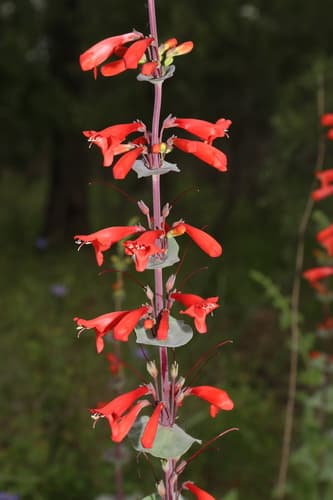
Cupleaf Penstemon is a low-growing native wildflower that forms neat mats of small, cup-shaped leaves. It produces clusters of tubular flowers in spring, typically in shades of pink, purple, or white.
How to care for Cupleaf Penstemon, by region
How to care for Cupleaf Penstemon where it is actually grown: year-round basics plus what to do each season, region by region, with the sources for each.
Care guidance last updated: September 2026
Ouachita Mountains (includes Hot Springs, AR)
Year-round
Baseline care for cupleaf penstemon in the Hot Springs area, no matter the season.
- This is a genuine Arkansas native. The Lady Bird Johnson Wildflower Center lists its range as eastern Texas and adjacent parts of Oklahoma, Arkansas and Louisiana, and it's known from a couple of counties on the Arkansas side.
- Give it full sun to light shade in a spot with sharp drainage. In the wild it grows in sandy, dry soils and does not tolerate wet feet.
- Once it's established, it handles drought well and rarely needs extra water outside of a long dry stretch.
- It grows tall, up to five or six feet, on reddish stems that can flop over in wind or rain. A stake or a spot without pushy, crowding neighbors helps it stay upright.
- The tubular red to orange flowers are a genuine draw for ruby throated hummingbirds and native bees, per the Wildflower Center, so it earns a place in a pollinator bed.
Fall
Fall care for cupleaf penstemon in the Hot Springs area.
- The first fall frost around Hot Springs usually lands somewhere between late October and early November. Once a hard frost blackens the top growth, cut the dead stems back to the low rosette at the base.
- If you'd rather let it self-sow, leave some dropped seed in place instead of raking the bed clean. The Wildflower Center notes this species germinates best after a period of cold, moist conditions, which fall and winter weather naturally provide.
- Drainage matters even more once the weather turns wet and cool. The Cooperative Extension calls out good drainage in winter specifically, so this is the season to check that low spots aren't holding water.
- Established plants don't need supplemental watering in fall unless the season runs unusually dry.
Cutting the frost-blackened stems back to the rosette in fall keeps the bed tidy and HOA-conscious heading into winter.
Winter
Winter care for cupleaf penstemon in the Hot Springs area.
- Hot Springs sits in USDA zone 8a, with typical winter lows in the upper twenties to low thirties Fahrenheit and occasional colder snaps. The basal rosette generally rides this out and stays low and green through a normal winter.
- Skip fertilizing and heavy pruning during dormancy. Wait for new growth to resume in spring before doing anything else to the plant.
- Keep it out of low spots where winter rain sits. The Cooperative Extension specifically flags poor winter drainage as one of the more common ways to lose this plant.
- If seed dropped in fall, winter's cold, damp conditions are exactly what it needs to break dormancy, per the Wildflower Center's propagation notes.
The low, gray-green rosette that persists over winter reads as tidy and HOA-conscious, with no cutting back needed until it regrows in spring.
Spring
Getting cupleaf penstemon through a Hot Springs spring.
- The last spring frost in the Hot Springs area typically falls in early to mid April, so hold off on setting out new plants until then.
- Spring is usually the wettest stretch of the year here. Watch drainage closely. Standing water after a heavy spring rain is harder on this plant than the cold ever was.
- New growth pushes up from the low basal rosette this time of year. Skip heavy fertilizer, since extra nitrogen just encourages the tall stems to flop over more.
- Flowering usually starts in April and runs into early summer, so this is when the display gets going.
Summer
Keeping cupleaf penstemon going through a Hot Springs summer.
- Hot Springs summers run hot and humid, with highs regularly in the low nineties. An established plant handles that fine on rainfall alone, so water only during an extended dry spell.
- Flower spikes keep opening into summer. The tall, reddish stems can flop in wind or heavy rain, so a stake or a spot among sturdier neighbors helps keep it upright.
- Deadheading spent flower spikes keeps the bed looking tended and limits how much seed drops if you don't want it spreading on its own.
- Ruby throated hummingbirds keep visiting the red tubular flowers through summer, per the Wildflower Center, which is one of the best reasons to keep this in a pollinator bed.
Deadheading through summer keeps a front-yard planting looking neat and HOA-conscious while more blooms keep coming.
Sources: Lady Bird Johnson Wildflower Center: Penstemon murrayanus, University of Arkansas Cooperative Extension Service: Scarlet Penstemon
Want these tasks as reminders timed to your yard? Pollinator Patch turns this guidance into a season-by-season care plan for the plants you actually grow.
In an HOA neighborhood
Cupleaf Penstemon is an HOA-friendly choice. Maintenance level: low. Tidiness: 4 out of 5.
Works well in: front yard, foundation, street edge, mid zone.
Wildlife value
This plant attracts butterflies, bees, and hummingbirds during its spring blooming period. Its low water needs and native status make it valuable for supporting local pollinators.
Common questions
- How much sun does Cupleaf Penstemon need?
- Cupleaf Penstemon grows best in part sun conditions.
- When does Cupleaf Penstemon bloom?
- Cupleaf Penstemon blooms in March, April, and May.
- Where is Cupleaf Penstemon native?
- Cupleaf Penstemon (Penstemon murrayanus) is native to AR, LA, OK, TX, per vouchered herbarium specimen records and regional native plant society lists.
- What pollinators does Cupleaf Penstemon attract?
- Cupleaf Penstemon draws butterflies, bees, and hummingbirds.
- Is Cupleaf Penstemon HOA-friendly?
- Cupleaf Penstemon is generally an HOA-friendly choice in the right placement, with low maintenance.
Native range data from vouchered herbarium specimen records and regional native plant society lists. Pollinator and host plant associations compiled from GBIF, iNaturalist, and published ecological literature.
If something looks wrong
Common plant problems, and what to check first
These come up on almost any plant. Each guide lists the likely causes in the order they are worth ruling out, with one thing to check before you act on any of them, and links to the source it came from.
- It is dying right after planting
- Leaves turning yellow
- Wilting even though I watered it
- Brown crispy leaf tips
- Bugs on the plant
Ready to grow Cupleaf Penstemon? Add it to your garden in Pollinator Patch to track it and get season-by-season care guidance.
Planning a bed around it? Start a free plan with this plant
Not sure where to start? Take the 2-minute yard quiz