Damianita
Chrysactinia mexicana
Light
full sun
Water
low
Size
12"–18" H × 12"–24" W
Bloom
Mar, Apr, May, Jun, Jul, Aug, Sep, Oct, Nov
Native to
Edwards Plateau, Trans-Pecos
Pollinators
bees, butterflies
Picture natives in your own yard
Upload a photo of your yard and Patch Vision shows a rendering of it planted with natives for your region, like Damianita.


Browse plants for this ecoregion
Damianita is a perennial shrub native to Edwards Plateau, Trans-Pecos. It grows best in full sun with low water needs.
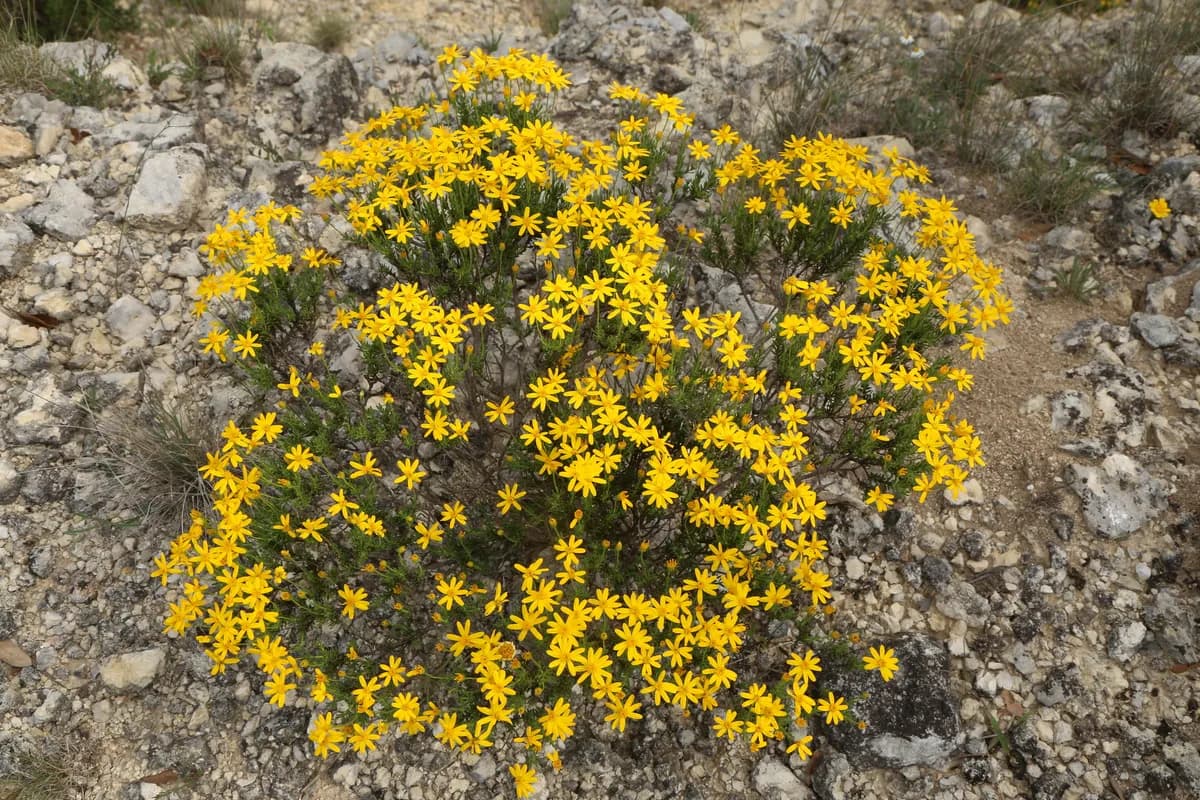
Damianita (Chrysactinia mexicana) is a compact evergreen subshrub from the Edwards Plateau and Trans-Pecos. Yellow daisy-like flowers cover the plant from spring through fall, and the aromatic, needle-like foliage stays on through the winter. The scent when the foliage is brushed is distinctive and pleasant, described variously as sweet, spicy, or resinous. It is one of the lowest-maintenance natives in its native range.
Damianita is not on the ASPCA Animal Poison Control Center toxic plant list for dogs or cats. The plant stays 12-18 inches tall and 12-24 inches wide, making it compact enough for front yards, foundation beds, and street edges. In HOA neighborhoods, the tidy mounding form, evergreen foliage, and nearly continuous yellow flowers make it look like a planted ornamental at all times.
Ecoregion notes for Texas. In the Edwards Plateau and Hill Country (alkaline limestone, rocky, 25-35 inches of rain): native and outstanding. Plant in full sun, never fertilize, and skip irrigation after the first summer. It grows in almost pure rock where other plants fail. In the Trans-Pecos (Chihuahuan Desert margin, hot and alkaline): also native; tolerates more heat and drought than almost any other Texas flowering shrub. In the Blackland Prairie and San Antonio area: not native but commonly used in landscape design; plant in full sun and well-drained alkaline soil, and avoid supplemental fertilizer which causes legginess. East of I-35 in humid conditions: not recommended.
Damianita pairs with Blackfoot Daisy and Prairie Verbena for a low, drought-tough front yard combination that blooms most of the year. Prune lightly in spring after the first flush of flowers to encourage bushiness. Avoid hard pruning into old wood; it does not regenerate well from woody stems. For rock gardens, dry slopes, and decomposed-granite beds, this is one of the most reliable choices in Texas.
Bee species data compiled from GBIF, iNaturalist, Discover Life, and the USGS Native Bee Inventory and Monitoring Lab. Plant-pollinator associations informed by published ecological literature.
How to care for Damianita, by region
How to care for Damianita where it is actually grown: year-round basics plus what to do each season, region by region, with the sources for each.
Care guidance last updated: October 2026
Arizona/New Mexico Mountains (includes Prescott, AZ)
Year-round
Year-round care for damianita around Prescott, AZ: full sun, excellent drainage, little water.
- Plant it in full sun.
- It needs excellent drainage and tolerates poor soil.
- Water needs are low and it is highly drought tolerant.
- It grows up to about 2 feet tall in a mounded form.
- Prune lightly after bloom periods to shape it and keep it compact.
- It blooms mainly in spring, then on and off through summer.
Its low rounded mound stays neat with a light trim after bloom. That reads as a tidy, intentional border shrub.
Sources: Lady Bird Johnson Wildflower Center: Chrysactinia mexicana
Chihuahuan Deserts (includes El Paso, TX)
Year-round
Year-round care for damianita around El Paso, TX: full sun, excellent drainage, little water.
- Plant it in full sun.
- It needs excellent drainage and tolerates poor soil.
- Water needs are low and it is highly drought tolerant.
- It grows up to about 2 feet tall in a mounded form.
- Prune lightly after bloom periods to shape it and keep it compact.
- It blooms mainly in spring, then on and off through summer.
Its low rounded mound stays neat with a light trim after bloom. That reads as a tidy, intentional border shrub.
Sources: Lady Bird Johnson Wildflower Center: Chrysactinia mexicana
Cross Timbers (includes Fort Worth, TX)
Year-round
Damianita is a low, mounding evergreen shrub that thrives on heat, sun and neglect once it settles in, and it struggles fastest when soil stays wet.
- Plant it in full sun, at least 6 to 8 hours of direct light a day, or the mound gets loose and floppy instead of tight.
- Give it sharp drainage above all else. In the sandier loam over clay west of the metro this usually just means an open, unshaded bed, not a low spot where water sits.
- Water deeply but rarely once roots are established, roughly every 2 to 3 weeks with no rain, since overwatering is the most common way this plant is lost.
- Space plants 18 to 24 inches apart so air moves through the foliage and each mound keeps its rounded shape.
- Shear lightly right after the main spring flush to keep the plant tight and full, cutting no more than an inch or two of the tips.
Fall
Damianita keeps blooming into November in North Texas and fall is a good second window to plant it, giving roots the mild months to establish before summer heat returns.
- Plant or transplant Damianita in September or October so it has the mild fall and winter ahead to root in before next summer's heat.
- Keep watering new fall plantings once a week until the first hard freeze, mid November on average, then cut back sharply.
- Give the mound one light shearing in early fall if it has gone loose or leggy from summer growth, keeping the rounded form.
- Leave spent flower stems on established plants through fall. They are not a curb-appeal issue and removing them offers no benefit this late in the season.
A neatly rounded, still-blooming Damianita in October or November stands out as intentional planting against beds that have already gone dormant.
Winter
Damianita is evergreen through a normal North Texas winter and needs almost no care, but a hard Arctic outbreak can burn or kill exposed foliage.
- Stop supplemental watering once the plant is dormant unless the soil has been bone dry for several weeks with no rain.
- Do not prune in winter. Wait until after the coldest weather has passed, since fresh cuts and new growth are more vulnerable to a hard freeze.
- Before a forecast Arctic outbreak (well below freezing for more than a few hours), a light frost cloth over the mound can prevent tip burn on foliage.
- If a freeze browns the foliage, leave it in place until new growth starts in spring rather than cutting it back right away. It often protects the crown underneath.
- This plant is not a larval host plant for butterflies or moths in our data, so there is no seasonal host-plant care to plan around here.
Spring
Spring is planting season for Damianita in North Texas, and it is also when the first flush of small yellow, daisy-like flowers opens.
- Plant new Damianita after the last frost, mid March or later, so roots aren't sitting in cold, wet soil.
- Work in coarse sand or fine gravel at planting time if the bed is heavier or slow to drain, rather than adding compost or richer soil.
- Water new plantings twice a week for the first 4 to 6 weeks to get roots established, then taper off sharply.
- Deadhead spent flower heads by hand or with light shears to encourage more spring bloom, but avoid cutting into the woody base.
- Hold off on fertilizer. This plant is bred for lean, dry soil and rich feeding makes it leggy and open.
A fresh, tightly mounded Damianita in bloom along a bed edge reads as a deliberate, cared-for planting, not an overgrown patch.
Summer
Once established, Damianita is built for the July and August stretch of 100 degree afternoons and weeks without rain, but new plantings still need help through their first summer.
- Established plants (in the ground over a year) usually need no supplemental water beyond a deep soak every 2 to 3 weeks during a dry stretch.
- First-summer plantings need more frequent water, about once a week, especially in the sandier soils west of the metro that drain and dry out faster.
- Skip midday watering. Water early morning so foliage and crown dry out before the heat of the day.
- Watch for a thinned, straw-colored center in older clumps, a sign it is time for a harder fall cutback rather than more water.
- Do not mulch heavily against the stems. A thin gravel mulch is fine, but bark or wood mulch held against the base invites rot in humid spells.
Sources: Lady Bird Johnson Wildflower Center: Chrysactinia mexicana
Texas Blackland Prairies (includes Dallas, TX)
Year-round
Damianita is a tough little evergreen shrub that wants to stay dry. In Dallas the one thing that kills it is wet feet in our heavy black clay, so the whole game is sharp drainage and going easy on the water. Plant it high in a raised or gravel-amended spot in full sun, and once it settles in it mostly takes care of itself.
- Plant in full sun in a raised bed, berm, or spot amended with gravel or decomposed granite so water drains fast and never pools.
- Water sparingly. Let the soil dry out between waterings, and skip watering after normal rain. Overwatering is the number one killer here.
- Shear the whole plant back lightly after each flush of yellow blooms to keep it tidy and rebloooming.
- Never mulch heavy and wet right against the stems in this clay. Use a thin gravel or pea-gravel collar instead so the base stays dry.
Fall
Fall is the best time of all to plant damianita in Dallas. October and November give the roots warm soil and cooler air to settle in before winter, so the plant is far stronger by next summer. Fall rains can be heavy here, which makes sharp drainage even more important for a new planting.
- Plant in October or November, high on a berm or in gravel-amended soil, so the wetter fall weather drains away and never pools around the crown.
- Water a new fall planting lightly once or twice to settle it, then let the natural rain do the rest. Do not keep it damp.
- Give it one last light shear in early fall to shape the mound going into winter, then leave it alone.
- Skip fall fertilizer and skip heavy mulch against the stems. Lean and dry is how this plant likes to head into the cold.
A light early-fall shaping shear leaves a tidy, rounded evergreen mound for the winter months, which reads as intentional and helps avoid a violation letter during the season when most yards look bare.
Winter
Damianita stays evergreen through a Dallas winter, so it keeps its fine green foliage even when most of the yard is brown. Our winters are short and mild with only a few freezes into the low 20s, which this plant handles fine once established. The main winter risk is not cold, it is cold plus soggy clay.
- Do not water in winter unless we hit a long dry warm spell. Cold wet clay is the most dangerous combination for the roots.
- Leave the evergreen foliage alone through winter. It gives you green structure in the front yard when little else is showing.
- Hold any hard cutback until late winter, around February, once the worst freezes have passed, then shear lightly to shape it for spring.
- If a hard freeze nips some tips, wait to prune the damage until that late-winter cleanup rather than cutting during the cold.
Saving the tidy-up shear for late winter means the plant holds a neat green mound all season and gets shaped just before spring growth, which keeps the front yard reading as intentional and helps avoid a violation letter.
Spring
Spring is your second-best planting window in Dallas, right behind fall. March into April is the sweet spot, after hard freezes have passed but before summer heat sets in. This is also when damianita starts its long bloom show, so it is a good time to get plants in and let them root before it turns hot.
- Plant in March or April on a raised or gravel-amended spot so spring rains drain away instead of sitting in the clay.
- Water a new spring planting just enough to keep it from fully drying while roots establish, then back off as the weather warms.
- After the first spring flush of yellow flowers fades, shear the plant back lightly by an inch or two to trigger more blooms.
- Hold off on fertilizer. This plant likes lean soil, and feeding it just makes floppy, rot-prone growth.
A light shear after the spring bloom flush keeps the mound neat and rounded, which reads as intentional care from the curb and helps avoid a violation letter over a shaggy or floppy-looking plant.
Summer
Summer is when damianita shines. Dallas heat and long dry stretches are exactly what it evolved for, so this is the easy season. Your main job is to resist the urge to water it. In heavy clay, a well-meaning summer soaking is what rots the roots, not the heat.
- Water very rarely, only during a truly extended drought, and even then just a slow soak that drains fast. Let it dry out fully in between.
- Do not water on a fixed sprinkler schedule. If a zone runs automatically, cap or exclude the damianita so it does not stay wet.
- Deadhead or lightly shear spent blooms through summer to keep flowers coming and the mound looking crisp.
- Watch for a plant that looks dark, mushy, or collapses at the base. That is rot from too much water, not heat stress, so cut water immediately.
Trimming off spent flower heads through summer keeps the plant looking cared-for rather than weedy from the sidewalk, which reads as intentional and helps avoid a violation letter.
Sources: Lady Bird Johnson Wildflower Center, Chrysactinia mexicana (Damianita), ASPCA Toxic and Non-Toxic Plants database
Before you buy
Your city may pay you to plant this
Cities and water utilities offer rebates for replacing lawn with native and water-wise plants. We track 459 programs across 44 states, each with a link to the provider and the date we last checked it.
Find rebates in your areaIf something looks wrong
Common plant problems, and what to check first
These come up on almost any plant. Each guide lists the likely causes in the order they are worth ruling out, with one thing to check before you act on any of them, and links to the source it came from.
- It is dying right after planting
- Leaves turning yellow
- Wilting even though I watered it
- Brown crispy leaf tips
- Bugs on the plant
Keep reading
Guides that feature this plant
Ready to grow Damianita? Add it to your garden in Pollinator Patch to track it and get season-by-season care guidance.