Depressed shrubverbena
Lantana depressa
Last reviewed: September 2026
Toxicity unknown
Depressed shrubverbena (Lantana depressa) is not listed by the ASPCA Animal Poison Control Center (opens in new tab) or the other sources we check, so we have no verdict for it either way. Absence from those lists is not a clearance. If your pet shows symptoms after eating any plant, call the ASPCA at (888) 426-4435.
Light
full sun
Water
low
Size
12"–24" H × 24"–36" W
Bloom
Mar, Apr, May, Jun, Jul, Aug, Sep, Oct
Native to
FL
Pollinators
butterflies, skippers
Before you buy
Your city may pay you to plant this
Cities and water utilities offer rebates for replacing lawn with native and water-wise plants. We track 452 programs across 44 states, each with a link to the provider and the date we last checked it.
Find rebates in your areaBrowse plants for this ecoregion
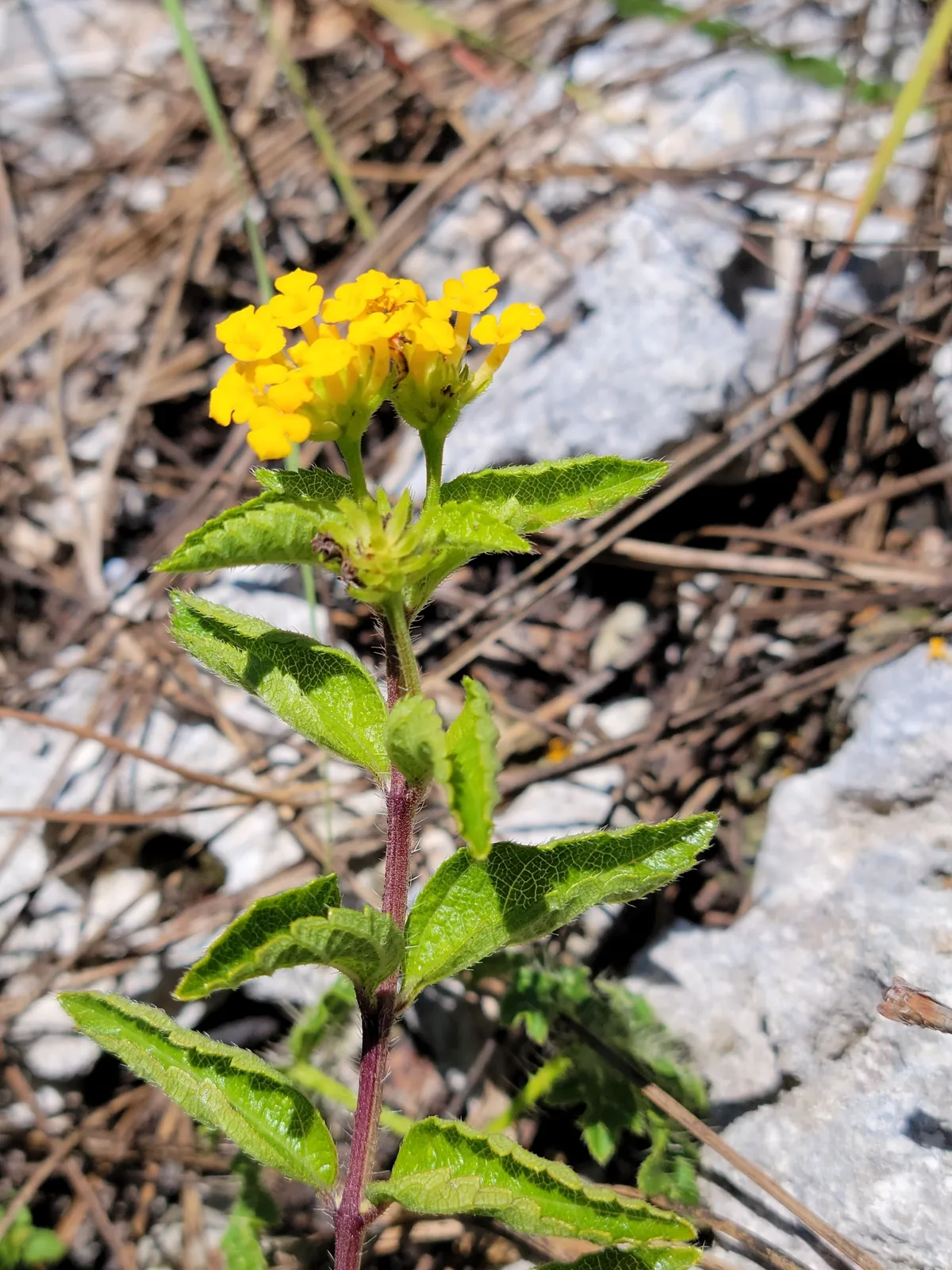
This lantana is a low, spreading evergreen shrub with rough textured leaves and small clusters of yellow to orange flowers that bloom nearly year-round. It grows in pine rockland habitat on well-drained soils.
How to care for Depressed shrubverbena, by region
How to care for Depressed shrubverbena where it is actually grown: year-round basics plus what to do each season, region by region, with the sources for each.
Care guidance last updated: September 2026
Southern Coastal Plain (includes Orlando, FL)
Year-round
This plant is often sold as gold lantana and it is a rare Florida native shrub, but its wild home is pine rockland in Miami-Dade County, hundreds of miles south of Orlando. In Central Florida you are growing a Florida native species as a garden ornamental, not restoring a local wild plant, so care it for the conditions here rather than for its true native habitat.
- Give it full sun, at least six hours a day, and fast-draining sandy or gritty soil. Central Florida's native sandy ground works well as long as the spot does not stay soggy after summer thunderstorms.
- It is a low, spreading shrub, about knee-high and three to four feet wide, so give it room and avoid crowding it against walkways.
- Buy the true species, Lantana depressa var. depressa, from a native plant nursery. Big-box "gold lantana" and "lantana" hybrids sold as landscape lantana are often crossed with the invasive Lantana strigocamara, and growing them nearby can cross-pollinate and contaminate seed from the real species.
- Keep dogs and cats from chewing on the leaves or berries. All lantana, including this species, is on the ASPCA's toxic plant list for dogs, cats, and horses.
Its low, mounding shape stays tidy in a front bed without regular pruning to control height, which reads as an intentional, HOA-friendly planting rather than an overgrown patch.
Fall
Fall in Orlando stays warm through hurricane season's tail end into November, with the first light frosts not typical until deep winter, so this is a good stretch for light shaping before growth slows.
- Do one light shaping trim in early fall to keep the mounded habit tidy, rather than a hard cutback, since heavy pruning this late can push out tender new growth right before any cold snap.
- Rainfall tapers off through fall, so start watering during dry weeks again once the wet season ends, usually by October.
- Ahead of a tropical storm or hurricane watch, secure or remove loose mulch and check that the plant is not sitting in a spot that will flood.
- Flowering slows but does not fully stop, so you may still see some blooms into late fall.
A single light fall shaping keeps the front-bed shape neat going into the slower winter months, which reads as intentional upkeep rather than neglect.
Winter
Winter is the one season where this plant needs real attention in Orlando. It is only hardy to about USDA zone 9b to 10a and Orlando sits right at that edge, with frost possible mainly in January and occasional harder freezes some years.
- Watch the forecast for nights near or below freezing. Water the soil well before a freeze, since moist soil holds more heat overnight than dry soil.
- Cover the plant with a sheet or frost cloth that reaches all the way to the ground on a hard freeze night, and remove or vent the cover the next morning once temperatures rise.
- If cold burns the leaves or blackens stems, leave the damaged growth in place through winter. It helps protect the lower plant, and pruning it off too early can expose live wood to the next cold snap.
- Do not fertilize in winter. Feeding pushes tender new growth that is more likely to be damaged by cold.
Cold-browned stems left in place over winter can look messy from the street. A frost cloth removed promptly each morning keeps the bed looking tended even during a cold snap.
Spring
Spring in Orlando is warm and mostly dry, so this is the best time to plant and to help the shrub bounce back if winter cold knocked it down.
- If a winter freeze browned or killed back the top growth, wait for new leaves to show along the base before cutting away the dead wood, since the plant is likely still alive at the root.
- Water new plantings two to three times a week through spring's dry stretch until roots are established, then taper off.
- Hold off on fertilizer until you see steady new growth, and even then use a light, slow-release feed since this species is adapted to lean, sandy soil.
- Watch for a flush of new flowers as days warm, which draws early-season butterflies.
Summer
Orlando's summer is hot, humid, and rainy, with regular afternoon thunderstorms from June through September, so this plant needs little help from you once it is established.
- Established plants usually need no extra watering during a normal wet season. Only water by hand during a dry stretch of a week or more with no rain.
- Good drainage matters more than usual now. In a spot that puddles after storms, raise the planting area or move the plant, since prolonged wet soil can rot the roots.
- This is peak bloom season, drawing butterflies and other pollinators, so this is a good window to skip deadheading and let the flowers run their course.
- Watch the foliage after heavy, humid stretches for fungal leaf spot, and thin overcrowded stems to improve airflow if you see it.
Sources: Atlas of Florida Plants, Lantana depressa, Lady Bird Johnson Wildflower Center, Lantana depressa, ASPCA, Toxic and Non-toxic Plants: Lantana, UF/IFAS, Winter Plant Protection
Want these tasks as reminders timed to your yard? Pollinator Patch turns this guidance into a season-by-season care plan for the plants you actually grow.
Wildlife value
The long, continuous bloom period makes it an exceptional nectar source for butterflies, and it is used heavily by skippers and small pollinators.
Common questions
- How much sun does Depressed shrubverbena need?
- Depressed shrubverbena grows best in full sun conditions.
- When does Depressed shrubverbena bloom?
- Depressed shrubverbena blooms in March, April, May, June, July, August, September, and October.
- Where is Depressed shrubverbena native?
- Depressed shrubverbena (Lantana depressa) is native to FL, per the World Checklist of Vascular Plants (Kew).
- What pollinators does Depressed shrubverbena attract?
- Depressed shrubverbena draws butterflies and skippers.
Native range data from the World Checklist of Vascular Plants (Kew). Pollinator and host plant associations compiled from GBIF, iNaturalist, and published ecological literature.
If something looks wrong
Common plant problems, and what to check first
These come up on almost any plant. Each guide lists the likely causes in the order they are worth ruling out, with one thing to check before you act on any of them, and links to the source it came from.
- It is dying right after planting
- Leaves turning yellow
- Wilting even though I watered it
- Brown crispy leaf tips
- Bugs on the plant
Ready to grow Depressed shrubverbena? Add it to your garden in Pollinator Patch to track it and get season-by-season care guidance.
Planning a bed around it? Start a free plan with this plant
Not sure where to start? Take the 2-minute yard quiz