Mexican Bird of Paradise
Erythrostemon mexicanus
Last reviewed: September 2026
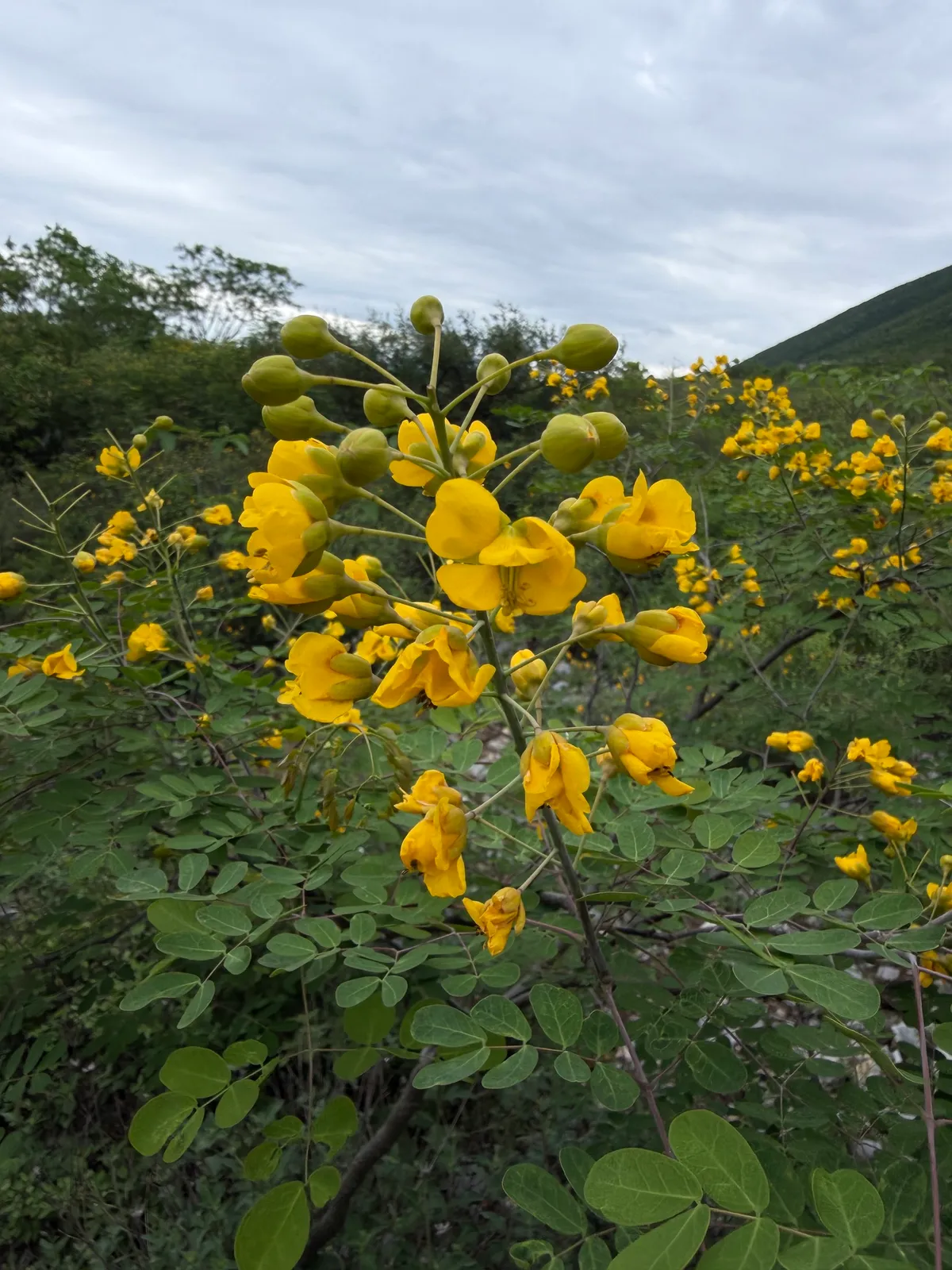
Erythrostemon mexicanus is a low water shrub that thrives in full sun and produces yellow flowers from April through October, doing well in hot dry landscapes such as South Texas.
Toxicity unknown
Mexican Bird of Paradise (Erythrostemon mexicanus) is not listed by the ASPCA Animal Poison Control Center (opens in new tab) or the other sources we check, so we have no verdict for it either way. Absence from those lists is not a clearance. If your pet shows symptoms after eating any plant, call the ASPCA at (888) 426-4435.
Light
full sun
Water
low
Size
96"–180" H × 72"–120" W
Bloom
Apr, May, Jun, Jul, Aug, Sep, Oct
Native to
TX
Pollinators
bees, butterflies, hummingbirds
Before you buy
Your city may pay you to plant this
Cities and water utilities offer rebates for replacing lawn with native and water-wise plants. We track 452 programs across 44 states, each with a link to the provider and the date we last checked it.
Find rebates in your areaBrowse plants for this ecoregion
Mexican Bird of Paradise is a rounded, semi-evergreen shrub or small tree with fine, fern-like foliage and fragrant golden-yellow flower clusters that bloom through the warm months. It holds a naturally structured, upright form and needs little pruning to stay neat. Native to the lower Rio Grande Valley per USDA PLANTS.
Growing Mexican Bird of Paradise
Grow Mexican Bird of Paradise in full sun and low water. Mature plants reach 96 to 180 inches tall and spread 72 to 120 inches wide. Expect low maintenance to keep it looking intentional in a front yard.
In an HOA neighborhood
Mexican Bird of Paradise is an HOA-friendly choice. Maintenance level: low. Tidiness: 4 out of 5.
Works well in: front yard, foundation, street edge.
- Only reliably cold-hardy in the warmest parts of deep South Texas and can freeze back further north.
Wildlife value
Its fragrant golden blooms attract bees, butterflies, and hummingbirds throughout the growing season, per USDA PLANTS records for the species.
Common questions
- When does Mexican Bird of Paradise bloom?
- Erythrostemon mexicanus typically flowers from April through October, with yellow blooms appearing over an extended warm season rather than a single short flush.
- What pollinators visit Mexican Bird of Paradise?
- The flowers of Erythrostemon mexicanus attract bees, butterflies, and hummingbirds throughout its long bloom period.
- How much water does this shrub need?
- Erythrostemon mexicanus is a low water shrub once established and prefers dry to moderately moist, well drained soil rather than regular watering.
- How much sun does Mexican Bird of Paradise need?
- This shrub grows best in full sun and can tolerate some part sun exposure, but flowering is heaviest with direct sunlight most of the day.
- Does Mexican Bird of Paradise lose its leaves in winter?
- Erythrostemon mexicanus is semi-evergreen, holding much of its foliage in mild winters but dropping leaves during colder spells or hard freezes.
- Is Mexican Bird of Paradise HOA-friendly?
- Mexican Bird of Paradise is generally an HOA-friendly choice in the right placement, with low maintenance.
These answers were drafted with an AI model from this plant's data. Verify care details with a local expert.
Native range data from vouchered herbarium specimen records and regional native plant society lists. Pollinator and host plant associations compiled from GBIF, iNaturalist, and published ecological literature.
If something looks wrong
Common plant problems, and what to check first
These come up on almost any plant. Each guide lists the likely causes in the order they are worth ruling out, with one thing to check before you act on any of them, and links to the source it came from.
- It is dying right after planting
- Leaves turning yellow
- Wilting even though I watered it
- Brown crispy leaf tips
- Bugs on the plant
Ready to grow Mexican Bird of Paradise? Add it to your garden in Pollinator Patch to track it and get season-by-season care guidance.
Planning a bed around it? Start a free plan with this plant
Not sure where to start? Take the 2-minute yard quiz