Firecracker penstemon
Penstemon eatonii
Last reviewed: September 2026
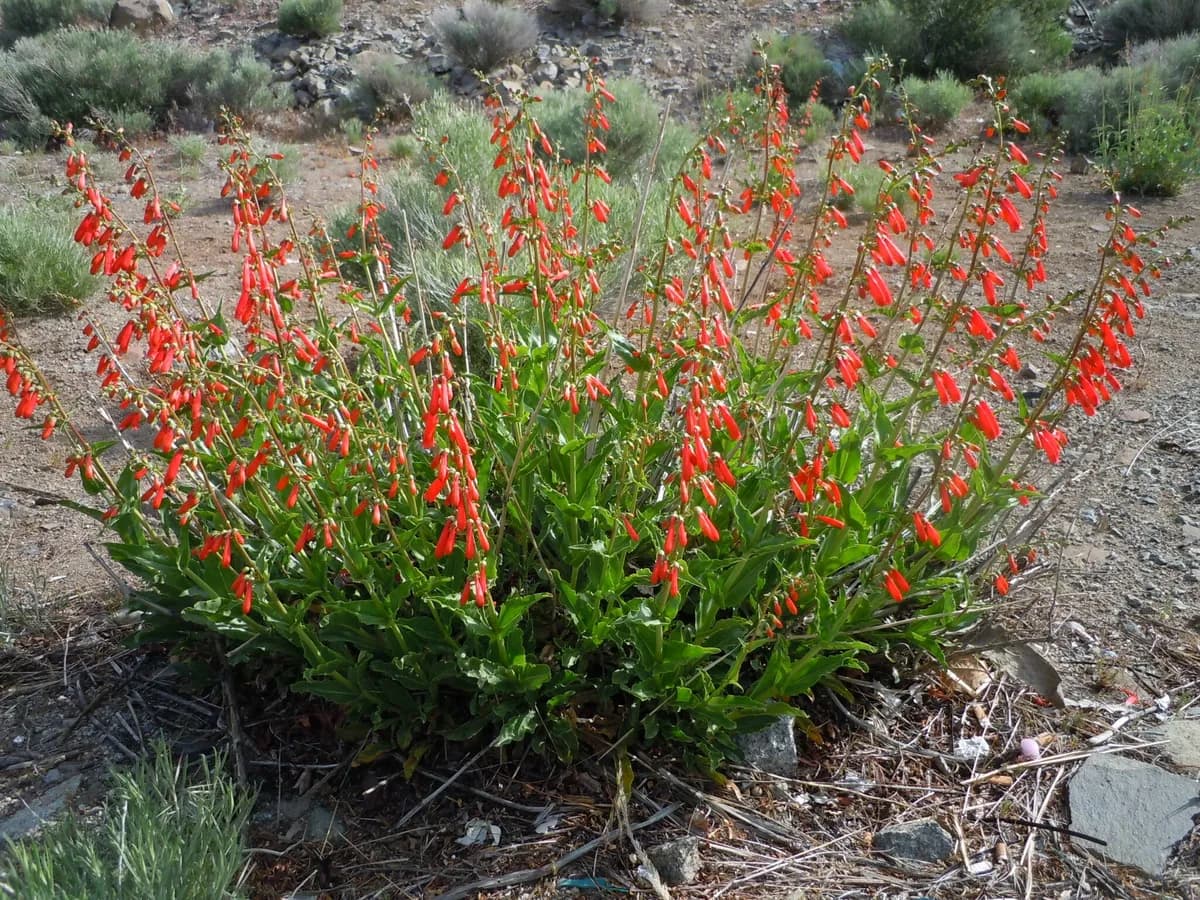
Firecracker penstemon produces tall spikes of tubular red flowers from March through June and thrives in dry, rocky soils on sunny slopes and high desert terrain.
Toxicity unknown
Firecracker penstemon (Penstemon eatonii) is not listed by the ASPCA Animal Poison Control Center (opens in new tab) or the other sources we check, so we have no verdict for it either way. Absence from those lists is not a clearance. If your pet shows symptoms after eating any plant, call the ASPCA at (888) 426-4435.
Light
full sun
Water
low
Size
12"–36" H × 12"–18" W
Bloom
Mar, Apr, May, Jun
Native to
AZ, CA, CO, ID and 4 more states
Pollinators
hummingbirds, bees
Before you buy
Your city may pay you to plant this
Cities and water utilities offer rebates for replacing lawn with native and water-wise plants. We track 459 programs across 44 states, each with a link to the provider and the date we last checked it.
Find rebates in your areaPicture natives in your own yard
Upload a photo of your yard and Patch Vision shows a rendering of it planted with natives for your region, like Firecracker penstemon.


Browse plants for this ecoregion
An evergreen perennial forb forming a basal rosette of gray-green leaves with tall, upright spikes of tubular red flowers in spring. Extremely drought tolerant once established, it performs best in lean, fast-draining soil and full sun, making it a striking vertical accent in a xeric border.
Growing Firecracker penstemon
Grow Firecracker penstemon in full sun and low water. Mature plants reach 12 to 36 inches tall and spread 12 to 18 inches wide. Expect low maintenance to keep it looking intentional in a front yard.
How to care for Firecracker penstemon, by region
How to care for Firecracker penstemon where it is actually grown: year-round basics plus what to do each season, region by region, with the sources for each.
Care guidance last updated: August 2026
Cross Timbers (includes Fort Worth, TX)
Year-round
Firecracker penstemon is a low water, full sun perennial forb grown for tall red flower spikes that draw hummingbirds. It is not native to North Texas but is a well adapted, low maintenance choice for tidy front yard beds.
- Plant in full sun, somewhere that gets at least 6 to 8 hours of direct light a day.
- Sharp drainage matters more than anything else. Heavy black clay or a low spot that stays wet will rot the roots faster than drought will kill the plant.
- Water deeply but infrequently once established. This plant tolerates weeks of dry heat far better than it tolerates wet feet.
- Expect an upright clump 1 to 3 feet tall and 1 to 2 feet wide, with tough, leathery basal leaves that stay low and neat most of the year.
- Treat it as a short lived perennial, often 2 to 4 years. Letting a few seed pods mature in late summer lets it self sow and refill the bed.
Fall
Fall is a quiet season for this plant in North Texas, with growth slowing as it holds its low basal rosette through the cooler months.
- No pruning is needed in fall. Leave the basal foliage in place, it stays semi evergreen and protects the crown through winter.
- If you want more plants, this is a good window to divide an established clump or move self sown seedlings, once temperatures cool in October or November.
- Reduce watering as growth slows. Established plants need little to no supplemental water once fall rains arrive.
- Clear fallen tree leaves off the crown so the base does not stay wet through cooler, damper weeks.
Winter
Firecracker penstemon is cold hardy through North Texas winters and needs little attention beyond keeping its base dry.
- The low basal rosette of leathery leaves persists through winter in USDA zone 8a to 8b. Expect minimal dieback outside of a severe Arctic outbreak.
- Do not cut the plant back in winter. Wait until new growth resumes in late winter or early spring before removing any dead stems.
- Keep the crown out of standing water during winter rains. This is the season heavy clay soils are most likely to stay saturated and cause crown rot.
- No fertilizing or feeding is needed over winter.
Spring
Spring is planting season and the main event for this plant, sending up tall red flower spikes from March into early summer.
- Plant new penstemon from March through April, after the last frost (mid March in North Texas), so roots can establish before summer heat arrives.
- In heavy black clay, set the crown high on a slight mound or work in expanded shale for drainage before planting; in the sandier soils west of the metro, a normal in ground planting works but the plant will need water more often through its first summer.
- Flower spikes emerge March through June. Leave them standing while in bloom, hummingbirds and native bees use them for nectar.
- Skip high nitrogen fertilizer. A lean, gravelly bed produces sturdier stems than a rich one.
The upright red spikes read as an intentional, cared for bed feature during bloom, not a random wildflower patch.
Summer
By midsummer the main bloom flush is fading, and North Texas heat becomes the bigger risk to this plant than anything else.
- Once most flower spikes finish blooming, usually by June, cut the spent stalks back to the basal leaf clump. This keeps the bed tidy and can trigger a smaller rebloom.
- Do not increase watering to compensate for July and August heat. Established plants handle drought far better than soggy soil, and overwatering in clay is the more common way to lose this plant.
- Watch first year plants closely during 100 degree stretches. They have not built a deep root system yet and may need a deep soak every 7 to 10 days if there has been no rain.
- Mulch lightly, 1 to 2 inches, around the base to moderate soil temperature, but keep mulch off the crown itself.
Cutting back spent flower stalks by early summer keeps the bed looking maintained through the hottest months instead of leggy or spent.
Sources: Lady Bird Johnson Wildflower Center, Penstemon eatonii, Ellis County Master Gardeners, Love Your Blackland Soil
Middle Rockies (includes Missoula, MT)
Year-round
Firecracker penstemon is a low, evergreen perennial that stays looking good with lean, fast draining soil and full sun. In Missoula's climate, getting drainage right matters more than anything else. Wet or rich soil is the main way this plant struggles.
- Plant in full sun with sharp drainage. Gritty, gravelly, or sandy soil works best. Avoid heavy clay or any spot where water sits after rain.
- Skip the fertilizer and rich compost. This plant is adapted to low fertility soil, and extra nutrients tend to cause weak, floppy growth.
- Once established, water only during extended dry spells. It handles drought well but does not tolerate soggy roots.
- The basal foliage stays evergreen through winter, so plan for a low green rosette in the bed year round, not just during bloom season.
Its evergreen, low mounding form keeps a tidy look at the front of a bed even when it is not in bloom.
Fall
Fall is mostly about cleanup and getting drainage right before winter. Because this is an evergreen perennial, most of the foliage stays in place.
- Cut back only the dead flower stalks. Leave the low evergreen basal foliage in place, since it carries the plant through winter.
- Taper off watering as temperatures drop. Wet soil going into freeze thaw cycles is harder on this plant than the cold itself.
- Do not fertilize in fall. Tender new growth pushed late in the season is more likely to be damaged by an early freeze.
- Check that fall rain is draining away from the crown and not pooling. It is the same drainage issue that matters in spring.
Winter
Firecracker penstemon is cold hardy well into Missoula's winter range and needs no special winter protection where drainage is good.
- This species is rated hardy through USDA zone 3, so Missoula's typical zone 5 winters are well within its range.
- The low evergreen rosette may look rough or take on a purple tinge in cold weather. That is normal, and it greens back up in spring.
- The bigger winter risk is not cold, it is wet roots. Sharp drainage matters more through winter than a heavy mulch layer or wrap.
- Do not cut the evergreen basal foliage back in winter. It protects the crown and is part of how this plant carries through the cold season.
The evergreen low mound holds some green structure in the bed through winter, unlike plants that die back completely.
Spring
Spring is when new growth picks up and flower stalks start forming. The main risk in Missoula is wet spring soil sitting around the crown from snowmelt and rain.
- Watch drainage closely during spring snowmelt and rain. Standing water around the base is the top cause of root problems in this species.
- Avoid piling mulch against the crown. A thin layer of gravel mulch protects roots without holding moisture against the stems.
- Hold off on fertilizing. New growth on a low fertility native perennial does not need a spring feeding.
- Flower stalks begin to rise as days warm. At Missoula's elevation, bloom often starts later than it would in the warmer, lower elevation parts of this plant's usual growing range.
Summer
Summer is peak bloom for the tall red flower spikes that draw hummingbirds. Established plants need very little supplemental water.
- Let the soil dry between waterings. Established plants are drought tolerant, and overwatering in summer heat is a common way to lose them to root problems.
- Clip spent flower stalks after each bloom flush. Deadheading can encourage another round of bloom and keeps unwanted reseeding in check.
- Tall flower spikes can flop over in wind or after heavy rain. A light stake, or planting among sturdier neighbors, helps keep the display upright.
- Skip summer fertilizer. This plant performs best in lean soil, and extra feeding tends to weaken the stems.
Deadheading spent stalks keeps the bed looking maintained through the peak of the season.
Sources: Firecracker Penstemon in the Landscape, Utah State University Extension, Penstemon eatonii, Lady Bird Johnson Wildflower Center Native Plant Database
Sonoran Basin and Range (includes Palm Springs, CA)
Year-round
Firecracker penstemon is a tough, drought loving perennial with tall red flower spikes that hummingbirds love, but around Palm Springs it is a garden plant working outside its natural comfort zone rather than a true local native.
- Give it full sun to part shade and soil that drains fast, like a sandy or rocky mix. Soggy roots are its biggest enemy, not heat or drought.
- Water deeply but rarely once it is established. Overwatering and heavy fertilizer cause root rot and floppy stems more often than dry soil ever does.
- Expect roughly 2 to 3 foot tall spikes of tubular red flowers in spring and summer. They are a favorite nectar stop for hummingbirds and provide special value to native bees.
- This plant's natural home is higher, cooler desert country, roughly 4,500 to 9,200 feet in California, not the hot low desert floor around Palm Springs. Give it a spot with some afternoon shade rather than expecting it to act like a true low desert native.
- We could not confirm this species is native to the Palm Springs area itself. Treat it as a well adapted garden choice for the region rather than a local native plant.
- Toxicity to pets is undetermined. Firecracker penstemon is not on the ASPCA's toxic plant list, but it is not on their confirmed non-toxic list either, so keep an eye on curious pets and check with your vet if you are ever worried.
Fall
Fall is cleanup and reset time. Cooler weather returns and the plant can catch a second wind before winter.
- Once flowering wraps up, clip the spent flower stalks back. This stops the plant from reseeding everywhere and keeps the front bed tidy.
- Watering can taper off as temperatures drop, matching the plant's naturally low water needs.
- Fall is a good time to check drainage. If summer storms left low spots or compacted soil, fix that before winter rain arrives.
- This is also a fine window to add new firecracker penstemon or divide crowded clumps, since cooler soil is easier on new roots than summer heat.
Cutting back the spent flower stalks in fall keeps the plant from reseeding into the bed and tidies up the front yard look heading into winter.
Winter
Winter is quiet for this plant. Palm Springs rarely freezes hard, so it mostly just needs excellent drainage and very little water.
- The plant is cold hardy well beyond what Palm Springs winters throw at it, so frost is rarely a concern here.
- Keep watering minimal. Winter is the plant's rest period, and wet cold soil is more likely to cause root rot than the cold itself.
- Leave the basal rosette of leaves alone. New spring growth comes from this low clump, so there is no need to cut it back further after the fall cleanup.
- If winter rains are heavy, double check that the planting spot still drains well. Standing water is the real winter risk for this species, not the cold.
Spring
Spring is firecracker penstemon's big show, with red flower spikes opening up and hummingbirds showing up to feed.
- Bloom often starts in April or May in the low desert, a bit earlier than the May through July window seen at higher elevations, so watch for the first red spikes as days warm up.
- Keep watering light but consistent while the plant is actively growing and blooming. Let the soil dry out between waterings.
- Deadhead spent flower spikes as they fade. Removing them encourages more blooms rather than letting the plant go to seed early.
- Skip heavy fertilizer. A lean spring feeding is plenty for a plant that naturally grows in poor, rocky soil.
- Hold off on any pruning beyond deadheading so the plant can put its energy into flowering.
Deadheading the spent flower spikes through spring keeps the bed looking neat without cutting the show of red blooms short.
Summer
Summer in the Coachella Valley is the hardest season for this plant, since it evolved for cooler, higher desert country rather than scorching low desert heat.
- Triple digit heat is stressful for a plant built for higher elevations. Afternoon shade or a spot shielded from the harshest west sun helps it cope.
- It still needs occasional deep watering in extreme heat, but soggy soil during summer heat is a fast way to lose it to root rot.
- Do not fertilize through the hottest stretch. Let the plant coast rather than pushing new growth it cannot support in the heat.
- Flowering usually slows or stops as summer heat peaks. That is normal and not a sign the plant is dying.
- If foliage looks scorched or the plant looks dormant by midsummer, that tracks with a higher elevation species handling low desert heat, and it often bounces back once temperatures ease.
Sources: Calscape: Firecracker Penstemon (Penstemon eatonii), Lady Bird Johnson Wildflower Center: Penstemon eatonii, ASPCA Toxic and Non-Toxic Plants, letter P listing, Utah State University Extension: Firecracker Penstemon in the Landscape
Texas Blackland Prairies (includes Dallas, TX)
Year-round
Firecracker penstemon is a low water, full sun perennial forb grown for tall red flower spikes that draw hummingbirds. It is not native to North Texas but is a well adapted, low maintenance choice for tidy front yard beds.
- Plant in full sun, somewhere that gets at least 6 to 8 hours of direct light a day.
- Sharp drainage matters more than anything else. Heavy black clay or a low spot that stays wet will rot the roots faster than drought will kill the plant.
- Water deeply but infrequently once established. This plant tolerates weeks of dry heat far better than it tolerates wet feet.
- Expect an upright clump 1 to 3 feet tall and 1 to 2 feet wide, with tough, leathery basal leaves that stay low and neat most of the year.
- Treat it as a short lived perennial, often 2 to 4 years. Letting a few seed pods mature in late summer lets it self sow and refill the bed.
Fall
Fall is a quiet season for this plant in North Texas, with growth slowing as it holds its low basal rosette through the cooler months.
- No pruning is needed in fall. Leave the basal foliage in place, it stays semi evergreen and protects the crown through winter.
- If you want more plants, this is a good window to divide an established clump or move self sown seedlings, once temperatures cool in October or November.
- Reduce watering as growth slows. Established plants need little to no supplemental water once fall rains arrive.
- Clear fallen tree leaves off the crown so the base does not stay wet through cooler, damper weeks.
Winter
Firecracker penstemon is cold hardy through North Texas winters and needs little attention beyond keeping its base dry.
- The low basal rosette of leathery leaves persists through winter in USDA zone 8a to 8b. Expect minimal dieback outside of a severe Arctic outbreak.
- Do not cut the plant back in winter. Wait until new growth resumes in late winter or early spring before removing any dead stems.
- Keep the crown out of standing water during winter rains. This is the season heavy clay soils are most likely to stay saturated and cause crown rot.
- No fertilizing or feeding is needed over winter.
Spring
Spring is planting season and the main event for this plant, sending up tall red flower spikes from March into early summer.
- Plant new penstemon from March through April, after the last frost (mid March in North Texas), so roots can establish before summer heat arrives.
- In heavy black clay, set the crown high on a slight mound or work in expanded shale for drainage before planting; in the sandier soils west of the metro, a normal in ground planting works but the plant will need water more often through its first summer.
- Flower spikes emerge March through June. Leave them standing while in bloom, hummingbirds and native bees use them for nectar.
- Skip high nitrogen fertilizer. A lean, gravelly bed produces sturdier stems than a rich one.
The upright red spikes read as an intentional, cared for bed feature during bloom, not a random wildflower patch.
Summer
By midsummer the main bloom flush is fading, and North Texas heat becomes the bigger risk to this plant than anything else.
- Once most flower spikes finish blooming, usually by June, cut the spent stalks back to the basal leaf clump. This keeps the bed tidy and can trigger a smaller rebloom.
- Do not increase watering to compensate for July and August heat. Established plants handle drought far better than soggy soil, and overwatering in clay is the more common way to lose this plant.
- Watch first year plants closely during 100 degree stretches. They have not built a deep root system yet and may need a deep soak every 7 to 10 days if there has been no rain.
- Mulch lightly, 1 to 2 inches, around the base to moderate soil temperature, but keep mulch off the crown itself.
Cutting back spent flower stalks by early summer keeps the bed looking maintained through the hottest months instead of leggy or spent.
Sources: Lady Bird Johnson Wildflower Center, Penstemon eatonii, Ellis County Master Gardeners, Love Your Blackland Soil
In an HOA neighborhood
Firecracker penstemon is an HOA-friendly choice. Maintenance level: low. Tidiness: 4 out of 5.
Works well in: front yard, foundation, street edge, mid zone.
Wildlife value
Its tubular red flowers are a strong early-season nectar source for hummingbirds and bees.
Common questions
- When does Penstemon eatonii bloom?
- Firecracker penstemon typically blooms from March through June, with tall spikes of tubular red flowers opening earliest in warmer, lower-elevation sites.
- What pollinators visit firecracker penstemon?
- The bright red tubular flowers attract hummingbirds as primary pollinators, along with various bee species that visit for nectar and pollen.
- How much water does this plant need?
- Firecracker penstemon is adapted to low water conditions and does best in well-drained soil, tolerating occasional supplemental watering but not consistently wet ground.
- What growing conditions suit firecracker penstemon best?
- This plant grows well in full sun on rocky slopes, dry hillsides, and open woodland edges at moderate to high elevations, where soil drains quickly.
- Does firecracker penstemon keep its leaves in winter?
- Yes, it forms a basal rosette of leaves that generally persists through winter in milder climates, giving it an evergreen habit.
- Is Firecracker penstemon HOA-friendly?
- Firecracker penstemon is generally an HOA-friendly choice in the right placement, with low maintenance.
These answers were drafted with an AI model from this plant's data. Verify care details with a local expert.
Native range data from the World Checklist of Vascular Plants (Kew). Pollinator and host plant associations compiled from GBIF, iNaturalist, and published ecological literature.
If something looks wrong
Common plant problems, and what to check first
These come up on almost any plant. Each guide lists the likely causes in the order they are worth ruling out, with one thing to check before you act on any of them, and links to the source it came from.
- It is dying right after planting
- Leaves turning yellow
- Wilting even though I watered it
- Brown crispy leaf tips
- Bugs on the plant
Ready to grow Firecracker penstemon? Add it to your garden in Pollinator Patch to track it and get season-by-season care guidance.