Garden Tulip
Tulipa gesneriana
Last reviewed: October 2026
Garden Tulip is toxic to dogs and cats.
Listed as toxic by the ASPCA Animal Poison Control Center (opens in new tab) (last reviewed 2026-08-15). If your pet has been exposed, call the ASPCA Animal Poison Control Center at (888) 426-4435 and your veterinarian's emergency line.
Pollinator Patch flags toxic plants so you can choose a pet-safe native alternative for your yard.
Light
full sun
Water
medium
Size
12"–24" H × 4"–8" W
Bloom
Mar, Apr, May
Native alternatives to Garden Tulip
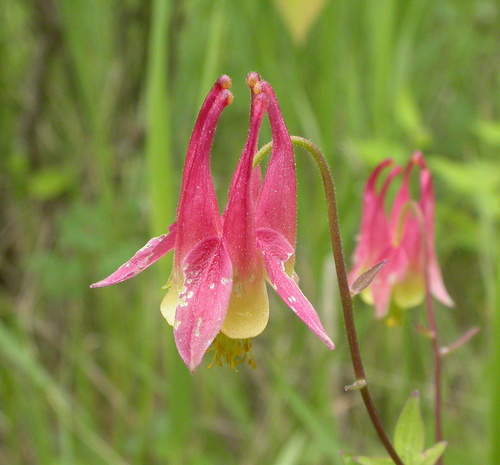
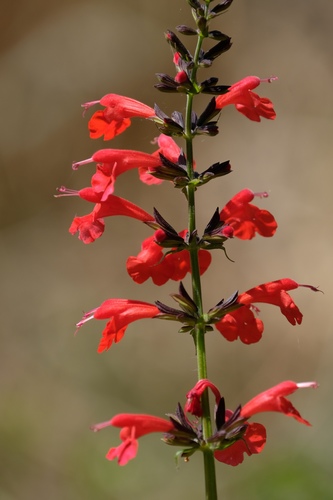
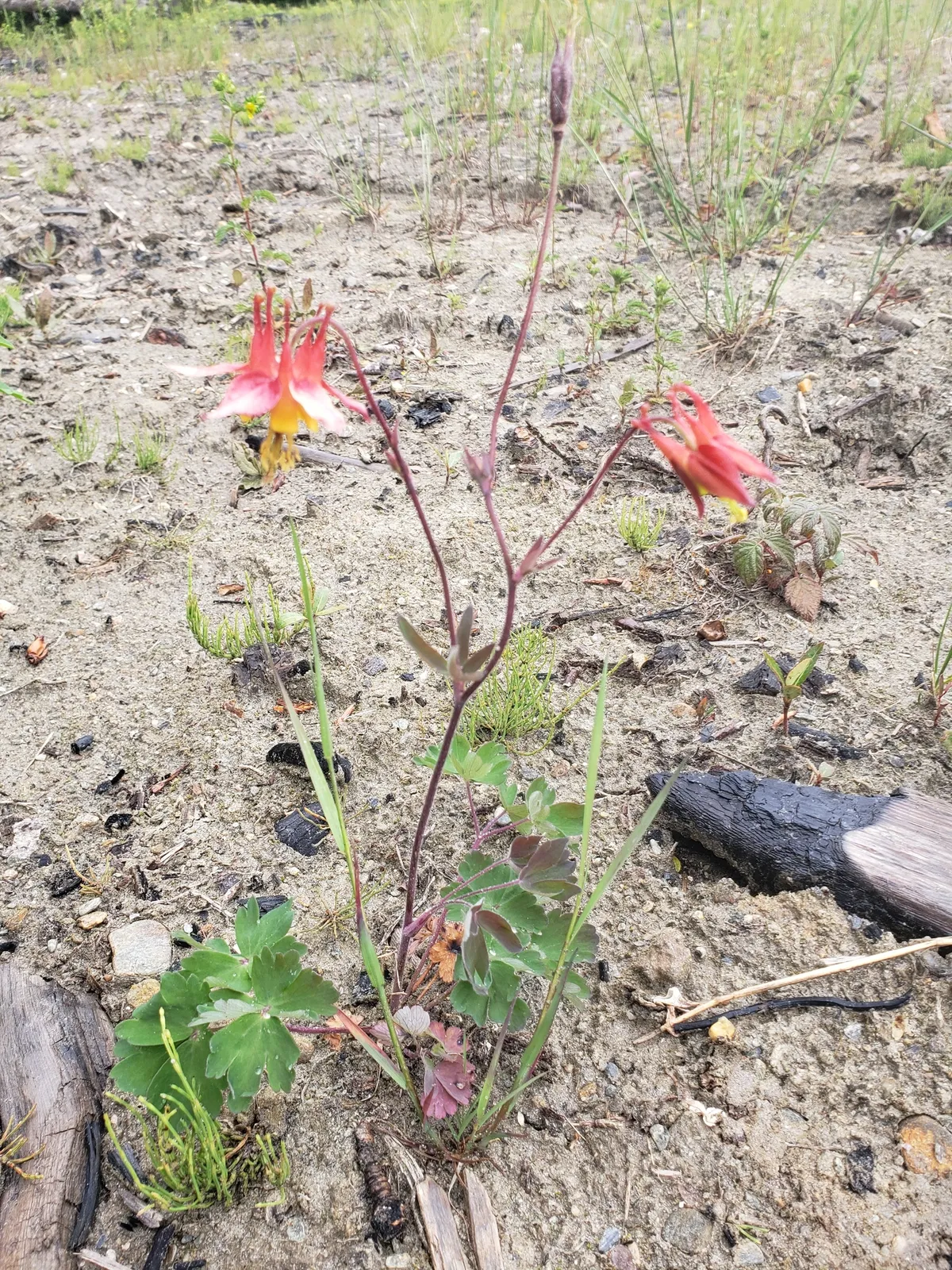
Garden Tulip is not native to the United States. These natives fill a similar role in a planting, matched on bloom season, bloom color and mature size.
Before you buy
Your city may pay you to plant this
Cities and water utilities offer rebates for replacing lawn with native and water-wise plants. We track 460 programs across 44 states, each with a link to the provider and the date we last checked it.
Find rebates in your areaPicture natives in your own yard
Wondering what could grow where Garden Tulip is now? Upload a photo of the spot and Patch Vision shows a rendering of it replanted with natives for your region.


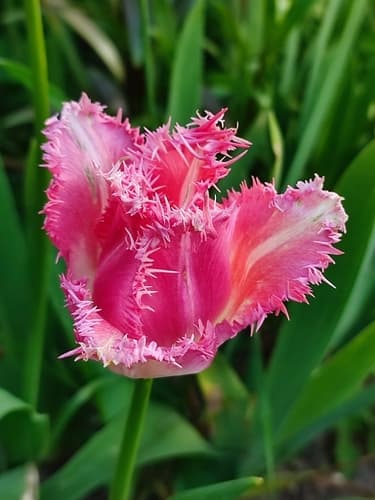
A spring bulb carrying a single upright cup shaped flower on a bare stem. Most garden tulips perform best treated as annuals, since flowering weakens after the first year where winters are mild. Bulbs need a sustained cold period to bloom.
How to care for Garden Tulip, by region
How to care for Garden Tulip where it is actually grown: year-round basics plus what to do each season, region by region, with the sources for each.
Care guidance last updated: September 2026
Central Irregular Plains (includes Kansas City, MO)
Year-round
Tulipa gesneriana, the garden tulip, is not native to the Kansas City area. It originates in western and central Asia and is grown here strictly as an ornamental fall planted bulb.
- Give it well drained soil. Set each bulb about 2 to 3 times as deep as the bulb is tall, and mix bone meal into the hole to help roots form.
- Kansas City's warm spring weather does not give the bulb enough time to store up food for the next year, so MU Extension recommends treating it as a one season planting here and putting in fresh bulbs each fall rather than counting on it to come back.
- The bulb itself is the most toxic part of the plant to dogs and cats, so keep pets from digging up newly planted or stored bulbs.
A tidy row of tulips along a front walk or foundation bed is a common, low key way to add early spring color that reads as intentional to an HOA.
Fall
Fall is planting season for garden tulips in the Kansas City area.
- Plant bulbs in October, spacing them 4 to 8 inches apart and setting them about 2 to 3 times as deep as the bulb is wide.
- Pick firm bulbs without gray soft spots, work bone meal and compost into the bed, and water during a dry fall, but do not let the bed stay soggy.
- Once bulbs are in the ground, add up to 2 inches of mulch, either early in fall while it is still warm or after the first hard frosts once the ground is cold. Tulips can push through a mulch layer that shallow, but a thicker layer can trap heat and get in the way of dormancy.
- The cold that follows planting is doing real work. Bulbs need roughly 10 to 14 weeks of cool soil to form next spring's flower inside the bulb.
Winter
Winter is dormant underground time for planted tulip bulbs in the Kansas City area. There is not much active care to do, mostly protection.
- A mulch layer up to about 2 inches, put down in fall, keeps soil temperature steadier through winter's freeze and thaw cycles and helps stop bulbs from heaving up out of the ground.
- Leave that mulch in place through winter. A dormant bulb bed under mulch does not need regular watering.
- Kansas City winters can still swing between hard freezes and warm spells. If freeze and thaw cycles push a bulb up near the surface, press it back down and re-cover it with mulch.
Spring
Spring is bloom time, and what you do right after flowering decides whether the bulb has any strength left for next year.
- Cut off the spent flower head once petals drop, but leave the stem and all the leaves standing. Removing the flower stops it from wasting energy making seed.
- Do not cut, mow, or tie up the leaves right after bloom. The plant needs those leaves to photosynthesize and rebuild the bulb, and tying leaves up cuts down the light they get.
- While the foliage is still green, apply a light band of an organic bulb fertilizer, or a low nitrogen, higher phosphorus blend like 5-10-5, around the base without letting it touch the leaves.
- Keep the bed watered while the foliage is still green and active. Once the leaves yellow and die back on their own, usually by late June as Kansas City's heat arrives, they can be cut down and removed.
Summer
By summer the show is over. Kansas City's early heat is exactly why garden tulips struggle to come back here.
- MU Extension notes that Missouri's climate warms too early in the season for tulips to store enough food to naturalize, and recommends treating them as an annual here rather than counting on a repeat bloom.
- Once foliage has fully yellowed and died back, most gardeners in the area simply clear out the spent bulbs and beds so summer plants can take that space, then plant new tulip bulbs again in fall.
- If you want to try saving bulbs anyway, wait until the foliage has completely died back before digging, then cure and store them in a cool, dark, dry spot, knowing bloom quality next year is likely to be weaker.
Sources: Go Botany (Native Plant Trust), Tulipa gesneriana species page, University of Missouri Extension, "Tulip history is as colorful as its flowers", ASPCA, Toxic and Non-Toxic Plants: Tulip, University of Missouri Extension, "Care of spring bulbs after flowering", University of Missouri Extension, "Spring flowers shine from bulbs planted in the fall", Ask Extension, "Should I mulch newly planted tulip bed this fall?"
In an HOA neighborhood
Garden Tulip takes more care to keep looking intentional in a front yard. Maintenance level: moderate. Consider it for backyard or mid-zone beds rather than the street edge.
Works well in: front yard, foundation bed, border.
Wildlife value
Grown as an ornamental. Non-native plants support far fewer local insects than a native of similar size, so treat this as garden interest rather than habitat.
Common questions
- How much sun does Garden Tulip need?
- Garden Tulip grows best in full sun conditions.
- When does Garden Tulip bloom?
- Garden Tulip blooms in March, April, and May.
- Is Garden Tulip toxic to dogs?
- Yes. Garden Tulip is listed as toxic to dogs by the ASPCA Animal Poison Control Center (aspca.org). If your pet has been exposed, call the ASPCA Animal Poison Control Center at (888) 426-4435.
- Is Garden Tulip toxic to cats?
- Yes. Garden Tulip is listed as toxic to cats by the ASPCA Animal Poison Control Center (aspca.org). If your cat has been exposed, call the ASPCA Animal Poison Control Center at (888) 426-4435.
- Is Garden Tulip HOA-friendly?
- Garden Tulip takes more care to look intentional in a front yard. Consider it for backyard or mid-zone beds rather than the street edge.
Pollinator and host plant associations compiled from GBIF, iNaturalist, and published ecological literature.
If something looks wrong
Common plant problems, and what to check first
These come up on almost any plant. Each guide lists the likely causes in the order they are worth ruling out, with one thing to check before you act on any of them, and links to the source it came from.
- It is dying right after planting
- Leaves turning yellow
- Wilting even though I watered it
- Brown crispy leaf tips
- Bugs on the plant
Pollinator Patch flags toxic plants like Garden Tulip and shows pet-safe natives for your ecoregion instead.