Scarlet Sage
Salvia coccinea
Last reviewed: August 2026
Salvia coccinea is an upright forb that blooms from March through November across the Gulf Coast and Deep South, drawing hummingbirds, butterflies, and bees. It grows best in full sun with low to medium water once established.
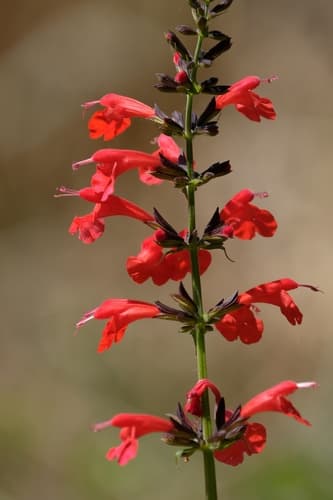
Scarlet Sage (Salvia coccinea) is not on the ASPCA Animal Poison Control Center toxic plant list for dogs or cats (aspca.org (opens in new tab), last reviewed 2026-05-21). If your pet shows symptoms after eating any plant, call the ASPCA at (888) 426-4435.
Light
full sun
Water
low
Size
12"–36" H × 6"–12" W
Bloom
Mar, Apr, May, Jun, Jul, Aug, Sep, Oct, Nov
Native to
AL, FL, GA, LA and 3 more states
Pollinators
butterflies, bees, hummingbirds
Before you buy
Your city may pay you to plant this
Cities and water utilities offer rebates for replacing lawn with native and water-wise plants. We track 452 programs across 44 states, each with a link to the provider and the date we last checked it.
Find rebates in your areaBrowse plants for this ecoregion
Scarlet Sage produces brilliant red tubular flowers nearly year-round, making it one of the longest-blooming native perennials in Texas. This compact plant maintains a neat, upright form and thrives in hot, dry conditions with minimal care.
Growing Scarlet Sage
Grow Scarlet Sage in full sun and low water. Mature plants reach 12 to 36 inches tall and spread 6 to 12 inches wide. Expect low maintenance to keep it looking intentional in a front yard.
How to care for Scarlet Sage, by region
How to care for Scarlet Sage where it is actually grown: year-round basics plus what to do each season, region by region, with the sources for each.
Care guidance last updated: August 2026
Cross Timbers (includes Fort Worth, TX)
Year-round
Scarlet Sage is a native North Texas wildflower that blooms nearly all year and needs very little care once it settles in. It is not on the ASPCA toxic plant list for dogs or cats.
- Plant in full sun; it tolerates poor, lean soil and handles drought well once established.
- In heavy black clay, plant it high on a slight mound or work in compost for drainage; in the sandier soils west of the metro it dries out faster and needs more frequent watering through the first summer.
- Deadhead spent flower spikes through the growing season to keep new blooms coming.
- It self seeds readily, so pull or transplant unwanted seedlings each spring if you want a tidier bed.
- Skip regular fertilizer; rich soil makes it leggy and floppy.
Fall
Fall is Scarlet Sage's second bloom peak in North Texas, with flowers continuing into November until the first hard freeze.
- Keep deadheading through October and early November to extend blooms as temperatures cool.
- Let a few flower spikes go to seed in late fall if you want volunteer plants to fill in next spring.
- Cut plants back to about 6 inches after the first hard freeze (typically mid November), or leave stems standing over winter for seed and shelter.
- Hold off on fall fertilizing; this plant does best in lean soil.
Leaving seed heads or cut stems in an unedged bed can read as unkempt to neighbors; a clean edge line around the bed keeps it looking tended.
Winter
Scarlet Sage dies back to the ground after a hard freeze in North Texas, but the roots are perennial and resprout in spring.
- After a hard freeze blackens the foliage, cut the dead stems back to 4 to 6 inches.
- Leave the cut stems and a layer of mulch over the root zone through winter for some protection during severe Arctic outbreaks.
- No watering is needed during winter dormancy except in extended dry stretches.
- Do not assume the plant is dead from a bare winter bed; new growth typically returns once nights stay above freezing in spring.
A cut back, mulched bed reads as deliberately maintained rather than neglected during the bare winter months.
Spring
Spring is when Scarlet Sage gets going, pushing new growth and starting its long bloom season for North Texas.
- Plant new starts anytime after the last frost (mid March) once the soil has warmed.
- Water new plantings two to three times a week for the first few weeks to help roots establish.
- Pinch back leggy stems by a few inches in April to encourage bushier, fuller growth.
- Watch for volunteer seedlings from last year's plants and thin or transplant them while they are small.
Regular watering and an April pinch back keep new plantings full and even along the bed, which reads as intentional rather than sparse from the street.
Summer
Summer heat is when Scarlet Sage shines, blooming steadily through the hottest weeks with little water once it is established.
- Plants established a full season or more usually need no supplemental water beyond normal rainfall, even during 100F afternoons.
- New plantings from this spring still need a deep soak once or twice a week during July and August dry spells.
- Deadhead spent spikes every one to two weeks to keep flowers coming through the hardest part of summer.
- Skip fertilizer during summer; too much richness makes stems weak and floppy in the heat.
Steady deadheading through summer keeps the bed looking maintained during the season when many other plants go dormant or crispy.
Sources: Lady Bird Johnson Wildflower Center: Salvia coccinea, ASPCA Toxic and Non-Toxic Plants: Texas Sage
Mississippi Alluvial Plain (includes Memphis, TN)
Year-round
Scarlet sage is an easy, long blooming plant for a sunny bed in the Memphis area. It handles heat and humidity well and mainly needs a spot that drains, since our clay and loess soils tend to hold water.
- Give it at least 6 hours of sun. It also does fine with some afternoon shade, which helps through hot, humid summers.
- Work compost into heavy clay before planting, or use a raised bed, so water does not sit around the roots.
- Water it well while it settles in, then cut back to watering during dry spells once it is established.
- Skip heavy fertilizer. Too much nitrogen grows leaves instead of flowers.
- Trim and deadhead every few weeks to keep it bushy and blooming instead of leggy.
- Hummingbirds, bees, and butterflies feed on the tubular red flowers all season.
- Not on the ASPCA toxic plant list for dogs, cats, or horses. Eating a large amount of any plant can still upset a pet's stomach.
Long bloom season and steady hummingbird visits give this an HOA-friendly look out front. Regular deadheading keeps the bed tidy instead of overgrown.
Fall
Fall is when scarlet sage keeps blooming right up to first frost, then the season winds down.
- Blooms continue into fall and typically stop at first frost, which averages November 3 in the Memphis area.
- Let some seed heads stay on the plant in early fall if you want it to reseed for next year.
- Cut back frost killed foliage after the first hard freeze, or leave some standing over winter for seed and shelter, then clean up in late winter.
- This is a good time to collect a few seed heads to share or replant if you want to control where next year's volunteers come up.
A late, tidy fall cutback keeps the bed looking intentional through the off season instead of scraggly.
Winter
Winter is the uncertain season here. Memphis sits right at the cold edge of where this plant can survive outdoors.
- Scarlet sage is reliably winter hardy in USDA zones 8a to 10b. Memphis is 7b to 8a, so winter often kills the top growth and sometimes the whole plant.
- A layer of mulch over the root zone can help a plant get through a mild winter, but do not count on it after a hard freeze.
- Most years, expect it to come back from seed rather than from the same root, especially after a cold winter.
- If a plant does survive, cut back dead stems in late winter once the freeze risk has mostly passed, rather than in fall.
Treat it like a reseeding annual for HOA purposes. It fills the same spot again in spring, so the bed does not sit empty looking over winter.
Spring
Spring is planting and cleanup time. Wait until frost risk has passed before putting new plants in the ground.
- Memphis' average last spring frost is March 30, so hold off planting out until around then unless you can cover plants on a cold night.
- Work compost into clay soil at planting time to help drainage.
- Keep new transplants evenly moist until you see fresh growth, then ease back on watering.
- Self-seeded volunteers from last year often show up in spring. Thin or move them while they are small.
A neat spring planting or thinning pass sets up a tidy, HOA-friendly bed for the rest of the season.
Summer
Summer is peak bloom and peak heat. This is when scarlet sage does its best work for hummingbirds.
- Water during dry stretches for the best bloom. Once established it tolerates some drought, but steady water means more flowers.
- Deadhead and trim lightly through summer to keep new blooms coming and stop the plant from getting leggy.
- Watch for standing water after heavy summer storms, especially in low clay spots. Wet roots are harder on this plant than heat.
- Peak hummingbird activity lines up with peak bloom, so this is a good season to place it where you can watch from a window or porch.
Continuous summer color visible from the street is one of the strongest HOA-friendly points for this plant.
Sources: Salvia coccinea, NC State Extension Plant Toolbox, Salvia coccinea, Native Plants of North America (Lady Bird Johnson Wildflower Center), Toxic and Non-Toxic Plants: Texas Sage, ASPCA, Frost and Freeze Dates, National Weather Service Memphis
Piedmont (includes Atlanta, GA)
Year-round
Scarlet sage establishes fast in Atlanta's humid summers and rewards you with months of hummingbird visits if you resist overwatering it once it's settled in.
- Plant in spring after Atlanta's last frost, usually mid-April, into well-drained soil. Work compost into heavy Piedmont clay so roots don't sit wet.
- Water every 2 to 3 days for the first 4 to 6 weeks while roots establish. After that, water only during dry stretches, since established plants handle Georgia's humid summers on rainfall alone.
- Lay about 2 inches of mulch, pulled back an inch from the stem, to hold moisture through hot spells and buffer winter temperature swings.
- The most common mistake is planting in full afternoon sun through July and August. Atlanta's heat and humidity can scorch it, so give it light afternoon shade or reliable water in a full-sun spot.
- Salvia coccinea is native to Georgia, per the Georgia Native Plant Society, and per the ASPCA it is not on the toxic plant list for dogs, cats, or horses.
Deadhead through the season to keep the front bed looking tended. Left alone too long, Scarlet Sage's informal habit can flop.
Fall
Fall is the second bloom flush in Atlanta before frost, and the best time to let some seed heads mature for next year.
- Keep deadheading into October, since Atlanta's mild fall weather often pushes bloom into November.
- Let a few spent flower spikes go to seed in late fall so the patch self-sows for next spring.
- Hold off on cutting the plant back hard until after a hard frost blackens the foliage.
- Stop fertilizing by early fall to avoid pushing tender new growth into the first freeze.
Winter
Scarlet sage is usually killed back by Atlanta's winter frosts and behaves as an annual or short-lived perennial that regrows from seed.
- Leave frost-killed stems standing through winter instead of cutting to the ground. They offer some cold protection to the crown and shelter for insects.
- In a mild metro Atlanta winter, established plants may resprout from the base, especially in a protected spot, but treat any regrowth as a bonus, not a guarantee.
- Skip fertilizing and heavy watering in winter. Dormant roots don't need it, and wet soil around a freeze can rot the crown.
- Cut back dead growth to a few inches in late winter, just before spring seedlings emerge, to make room for new growth.
Spring
Spring is planting and germination season in Atlanta. Get seedlings in after the last frost and thin volunteer seedlings from last year's plants.
- Direct sow or transplant after Atlanta's last frost date, typically early to mid April.
- Expect self-sown seedlings from last year's plants to pop up around the original clump. Thin them to about 12 to 18 inches apart.
- Pinch young plants once to encourage bushier growth before summer heat sets in.
- Refresh mulch now, before summer humidity arrives, to suppress weeds in Piedmont clay beds.
Summer
Peak bloom season in Atlanta's heat. Deadhead regularly and watch for the humidity-driven leaf issues that come with Southeast summers.
- Deadhead spent flower spikes every week or two to keep hummingbirds visiting through August.
- Water deeply during dry spells, especially in containers, but let the top inch of soil dry between waterings. Soggy clay in Atlanta's summer humidity invites root rot.
- Watch for powdery mildew or leaf spot in muggy, low-airflow spots. Space plants for airflow instead of treating chemically.
- Skip high-nitrogen fertilizer. It produces floppy growth in Georgia's long growing season without more flowers.
Sources: Lady Bird Johnson Wildflower Center: Salvia coccinea (Scarlet Sage), Georgia Native Plant Society: Scarlet Sage (Salvia coccinea), ASPCA: Toxic and Non-Toxic Plants - Scarlet Sage, NC State Extension Gardener Plant Toolbox: Salvia coccinea
Southern Coastal Plain (includes Jacksonville, FL)
Year-round
Scarlet sage is a hummingbird plant that flowers almost nonstop from March into November around Gainesville and Jacksonville, and in most yards here it keeps standing through winter instead of dying outright. The one job that really matters is managing its seed, because it self sows hard in sandy soil and one plant can become a thicket in a single year.
- Native to Florida and found across nearly the whole state, so it is already suited to deep, acidic, fast draining sand.
- Full sun gives the heaviest bloom. Part shade works, but flowering drops off noticeably.
- Plan on 2 to 4 feet tall and 1 to 2 feet wide. Space plants 24 to 36 inches apart.
- Skip rich fertilizer. Lean sand grows a sturdier plant that flops less in summer storms.
- Shear it back by a third to two thirds three or four times a year to keep it dense and blooming.
Because it reseeds so freely, the front yard version of this plant is a defined clump with a clean bed edge, not a drift creeping into the lawn. Thinning volunteers on a schedule is what makes it read intentional instead of neglected.
Fall
Fall is both the best bloom of the year in north Florida and the best time to plant. Hummingbirds moving through in September and October work these flowers hard, so hold off on any heavy cutback until that traffic slows.
- October and November is the planting window. New plants get a whole cool season to root before summer tests them.
- Deadhead spent flower spikes every two weeks if you want fewer volunteers coming up next March.
- Let the last flush set seed if you want free plants and food for small birds through winter.
- Give one light shaping cut in late November, not a hard cut to the ground.
Deadheading through October is the low effort move that keeps a front bed looking tended without taking the plant out of bloom. It also cuts down on next spring's seedling sprawl.
Winter
Most winters here the plant just keeps standing, a little ragged, and starts flowering again in February. When a cold snap into the low 20s browns it out, the fix is to wait rather than reach for the pruners.
- Do not cut it to the ground in December. The standing top growth shields the crown through the next freeze and the seed heads feed birds.
- After a hard freeze, wait until mid February and look for green at the base before you cut anything.
- Cut the old stems down to about 6 inches in mid to late February, once the local last frost date has passed.
- Expect a ring of volunteer seedlings around the base in February. That is how this short lived perennial replaces itself.
If freeze browned stems bother the street view, trim them to one even knee high line instead of leaving them ragged or cutting them to the ground. An even height reads intentional and still leaves the crown covered.
Spring
Spring is the dry stretch in north Florida, not the wet one, so April and May are the months new plants actually need you. Last year's seed comes up thick in March, and thinning those volunteers early is the difference between a tidy bed and a tangle by June.
- Thin March seedlings to one plant every 24 to 36 inches, and move or pull the rest while they are still small.
- Water new plantings about twice a week through the April and May dry season, then taper off.
- Cut winter worn plants back by a third in early March to force branching before the main bloom.
- Hold the fertilizer. Fast soft growth in sand means floppy stems by the time the storms start.
A single March thinning pass plus a crisp spade edge on the bed keeps a self sowing plant from looking like it got loose. Front beds read best when the planting stops at a hard line.
Summer
Daily afternoon storms and dew points near 75 are the real threat here, not the heat. Scarlet sage keeps flowering right through a north Florida summer as long as water drains away fast and air can move through the plant.
- Shut off supplemental watering once the June rains start. Constant wet at the crown is what kills this plant in sand.
- Shear the whole plant back by a third to a half in late June or July when bloom thins out. It reflushes in about two to three weeks.
- Keep 24 inches of open space around each plant so leaves dry out after a storm.
- Cut back or stake anything over 3 feet before a tropical system arrives, since soaked stems snap and splay.
- Do not set out new plants June through August. Wait for the October window.
Sources: Florida Native Plant Society: Salvia coccinea, Lady Bird Johnson Wildflower Center: Salvia coccinea, UF/IFAS EDIS FP519: Salvia coccinea, Scarlet Sage, UF/IFAS Extension Pasco County: Exploring Florida's Natives, Scarlet Sage, Florida Wildflower Foundation: Tropical sage
Texas Blackland Prairies (includes Dallas, TX)
Year-round
Scarlet Sage is a native North Texas wildflower that blooms nearly all year and needs very little care once it settles in. It is not on the ASPCA toxic plant list for dogs or cats.
- Plant in full sun; it tolerates poor, lean soil and handles drought well once established.
- In heavy black clay, plant it high on a slight mound or work in compost for drainage; in the sandier soils west of the metro it dries out faster and needs more frequent watering through the first summer.
- Deadhead spent flower spikes through the growing season to keep new blooms coming.
- It self seeds readily, so pull or transplant unwanted seedlings each spring if you want a tidier bed.
- Skip regular fertilizer; rich soil makes it leggy and floppy.
Fall
Fall is Scarlet Sage's second bloom peak in North Texas, with flowers continuing into November until the first hard freeze.
- Keep deadheading through October and early November to extend blooms as temperatures cool.
- Let a few flower spikes go to seed in late fall if you want volunteer plants to fill in next spring.
- Cut plants back to about 6 inches after the first hard freeze (typically mid November), or leave stems standing over winter for seed and shelter.
- Hold off on fall fertilizing; this plant does best in lean soil.
Leaving seed heads or cut stems in an unedged bed can read as unkempt to neighbors; a clean edge line around the bed keeps it looking tended.
Winter
Scarlet Sage dies back to the ground after a hard freeze in North Texas, but the roots are perennial and resprout in spring.
- After a hard freeze blackens the foliage, cut the dead stems back to 4 to 6 inches.
- Leave the cut stems and a layer of mulch over the root zone through winter for some protection during severe Arctic outbreaks.
- No watering is needed during winter dormancy except in extended dry stretches.
- Do not assume the plant is dead from a bare winter bed; new growth typically returns once nights stay above freezing in spring.
A cut back, mulched bed reads as deliberately maintained rather than neglected during the bare winter months.
Spring
Spring is when Scarlet Sage gets going, pushing new growth and starting its long bloom season for North Texas.
- Plant new starts anytime after the last frost (mid March) once the soil has warmed.
- Water new plantings two to three times a week for the first few weeks to help roots establish.
- Pinch back leggy stems by a few inches in April to encourage bushier, fuller growth.
- Watch for volunteer seedlings from last year's plants and thin or transplant them while they are small.
Regular watering and an April pinch back keep new plantings full and even along the bed, which reads as intentional rather than sparse from the street.
Summer
Summer heat is when Scarlet Sage shines, blooming steadily through the hottest weeks with little water once it is established.
- Plants established a full season or more usually need no supplemental water beyond normal rainfall, even during 100F afternoons.
- New plantings from this spring still need a deep soak once or twice a week during July and August dry spells.
- Deadhead spent spikes every one to two weeks to keep flowers coming through the hardest part of summer.
- Skip fertilizer during summer; too much richness makes stems weak and floppy in the heat.
Steady deadheading through summer keeps the bed looking maintained during the season when many other plants go dormant or crispy.
Sources: Lady Bird Johnson Wildflower Center: Salvia coccinea, ASPCA Toxic and Non-Toxic Plants: Texas Sage
Want these tasks as reminders timed to your yard? Pollinator Patch turns this guidance into a season-by-season care plan for the plants you actually grow.
In an HOA neighborhood
Scarlet Sage is an HOA-friendly choice. Maintenance level: low. Tidiness: 4 out of 5.
Works well in: front yard, foundation, street edge, mid zone.
Wildlife value
The bright red flowers are magnets for hummingbirds and butterflies, while also attracting native bees. This plant provides nectar from spring through late fall, making it valuable for migrating hummingbirds.
Common questions
- How much sun does Salvia coccinea need?
- Salvia coccinea flowers most heavily in full sun but will still grow and bloom in part sun or light part shade, though stems may become leggier and flowering can slow.
- How often should I water Salvia coccinea?
- Once established, this plant handles low water and short dry spells well, though it also tolerates moderate, regular moisture in garden beds without becoming waterlogged if drainage is decent.
- When does Salvia coccinea bloom?
- In warm southeastern states like Florida, Texas, and Louisiana, Salvia coccinea typically flowers from March into November, with blooming slowing once temperatures drop in late fall.
- What pollinators does Salvia coccinea attract?
- The tubular red flowers are visited regularly by hummingbirds and by bees and butterflies, making it a common choice in pollinator and hummingbird gardens throughout the Gulf Coast region.
- Is Salvia coccinea a shrub or a perennial flower?
- It grows as a soft-stemmed forb rather than a woody shrub, forming an upright, bushy clump that can behave as an annual or short-lived perennial depending on winter temperatures.
- Is Scarlet Sage toxic to dogs?
- Scarlet Sage is not on the ASPCA Animal Poison Control Center toxic plant list for dogs (aspca.org).
- Is Scarlet Sage toxic to cats?
- Scarlet Sage is not on the ASPCA Animal Poison Control Center toxic plant list for cats (aspca.org).
- Is Scarlet Sage HOA-friendly?
- Scarlet Sage is generally an HOA-friendly choice in the right placement, with low maintenance.
These answers were drafted with an AI model from this plant's data. Verify care details with a local expert.
Native range data from vouchered herbarium specimen records and regional native plant society lists. Pollinator and host plant associations compiled from GBIF, iNaturalist, and published ecological literature.
If something looks wrong
Common plant problems, and what to check first
These come up on almost any plant. Each guide lists the likely causes in the order they are worth ruling out, with one thing to check before you act on any of them, and links to the source it came from.
- It is dying right after planting
- Leaves turning yellow
- Wilting even though I watered it
- Brown crispy leaf tips
- Bugs on the plant
Ready to grow Scarlet Sage? Add it to your garden in Pollinator Patch to track it and get season-by-season care guidance.
Planning a bed around it? Start a free plan with this plant
Not sure where to start? Take the 2-minute yard quiz