Giant Ironweed
Vernonia gigantea
Last reviewed: October 2026
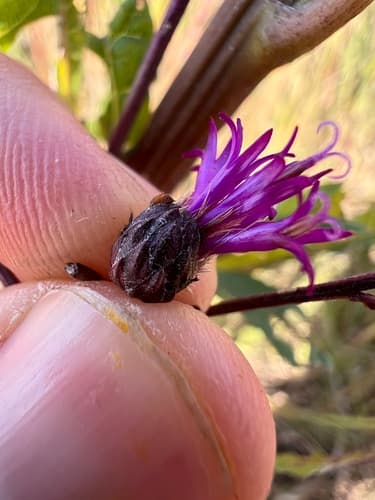
Giant ironweed is a tall, clump-forming forb that produces clusters of deep purple flowers from July through September. It thrives in full sun with consistently moist soil, often found in wet meadows, streambanks, and roadside ditches.
Toxicity unknown
Giant Ironweed (Vernonia gigantea) is not listed by the ASPCA Animal Poison Control Center (opens in new tab) or the other sources we check, so we have no verdict for it either way. Absence from those lists is not a clearance. If your pet shows symptoms after eating any plant, call the ASPCA at (888) 426-4435.
Light
full sun
Water
high
Size
60"–108" H × 24"–36" W
Bloom
Jul, Aug, Sep
Native to
AL, AR, FL, GA and 20 more states
Pollinators
bees, butterflies, moths
Before you buy
Your city may pay you to plant this
Cities and water utilities offer rebates for replacing lawn with native and water-wise plants. We track 460 programs across 44 states, each with a link to the provider and the date we last checked it.
Find rebates in your areaPicture natives in your own yard
Upload a photo of your yard and Patch Vision shows a rendering of it planted with natives for your region, like Giant Ironweed.


Browse plants for this ecoregion
Tall ironweed is a robust, upright perennial in the aster family, prized for its clusters of deep purple-magenta flowers atop sturdy stems from mid to late summer. It naturally occurs in moist meadows, stream banks, and ditches, and works well toward the back of a border where its height provides structure.
Growing Giant Ironweed
Grow Giant Ironweed in full sun and high water. Mature plants reach 60 to 108 inches tall and spread 24 to 36 inches wide. Expect moderate maintenance to keep it looking intentional in a front yard.
How to care for Giant Ironweed, by region
How to care for Giant Ironweed where it is actually grown: year-round basics plus what to do each season, region by region, with the sources for each.
Care guidance last updated: September 2026
Erie Drift Plain (includes Cleveland, OH)
Year-round
Giant ironweed is a big, easygoing native perennial for the Cleveland area, and it can shoot up 5 to 9 feet tall with rose-purple flowers in late summer. It genuinely belongs here since it is native to Ohio and the eastern and central United States. It loves full sun and consistently moist soil, so it is happiest in the low, wet, heavy clay spots that a lot of Cleveland yards have. The purple flowers in July through September are a big late-season nectar stop for butterflies, migrating monarchs, and native bees when little else is blooming. It is not a tidy little front-bed plant, so give it a spot where its height and slightly wild look feel on purpose.
- Give it full sun and soil that stays moist, even wet clay is fine
- Plan for real height, 5 to 9 feet, and give it 2 to 3 feet of spread
- Site it at the back of a border, in a rain garden, or a naturalized wet area
- Leave the July to September blooms up for pollinators before cutting back
- Not on the ASPCA toxic plant list, so it is a low-worry choice around pets
This is a very tall plant, up to 8 or 9 feet, that wants a moist spot and can flop or read a little wild. To keep it HOA-friendly, put it at the back of a border, in a rain garden, or a naturalized wet area rather than a front foundation bed. It may need staking, and cutting it back after bloom helps it read as intentional.
Fall
Early fall is the other good planting window in Cleveland, as long as you get the plant in with enough time for roots to settle before the ground freezes. The flowers finish up and turn into fluffy seed heads that goldfinches and other birds will pick at. This is when you decide how tidy you want it to look, since cutting the tall stems back after bloom keeps the plant reading as intentional rather than wild. If you want it to self-sow or feed birds, you can leave some seed heads standing instead. Fall is also a fine time to divide or move a clump before the hard freeze sets in.
- Plant or divide in early fall so roots settle before the ground freezes
- Cut stems back after bloom to keep it looking intentional, or leave seed heads for birds
- Let some seed heads stand if you want self-sowing or goldfinch food
- Water new fall plantings until the ground freezes
- Mark the spot, since it dies back completely and disappears in winter
Cutting the tall stems back after bloom is the single easiest way to keep this big plant reading as HOA-friendly and cared for through fall. If you prefer to leave seed heads up for birds, keeping the surrounding bed edged and tidy helps the standing stems still look intentional.
Winter
Giant ironweed goes fully dormant through Cleveland's cold winters and vanishes below ground, so there is very little to do. The roots handle zone 6a to 6b cold and heavy Lake Erie snow with no protection, and the deep snow cover actually helps insulate them. The main winter risk here is wet, heavy clay sitting soggy and cold around the crown, so make sure the spot is not a standing puddle in a thaw. If you left the stems standing for birds, you can cut them down anytime before spring growth starts. Otherwise just wait it out, since new shoots will return once the soil warms.
- Do nothing special, the roots are hardy through zone 6a to 6b winters
- Skip winter mulch or protection, deep snow cover is enough
- Make sure the crown is not sitting in a standing winter puddle
- Cut down any standing stems anytime before spring growth begins
- Wait for new shoots to return as the soil warms in spring
Spring
Spring is the main planting window for giant ironweed in Cleveland, once the heavy clay has thawed and drained enough to work. Getting it in the ground in spring gives the roots the whole warm season to settle before the hard freeze comes back. New shoots push up as the soil warms, so this is the time to cut down any old dead stems you left standing over winter. If your soil dries out during a spring dry spell, water it, because this plant really wants steady moisture. This is also the easiest time to divide a big established clump if you want more plants.
- Plant new ironweed in spring once the clay has thawed and drained
- Cut last year's dead stems down to the ground as new growth appears
- Divide crowded established clumps now if you want more plants
- Water during dry spring stretches to keep the soil moist
- Hold off on fertilizer, rich moist soil is usually plenty
Summer
Summer is when giant ironweed does its main growing and then blooms, so it can gain most of its height in just a few months of Cleveland's humid warm weather. Keep the soil consistently moist through the summer, especially during any dry stretch, since this is a high-water plant that dislikes drying out. The purple flowers open in July and run into September, drawing butterflies, migrating monarchs, and native bees to a late-summer feast. If the tall stems start to lean or flop, stake them or plant it among sturdy neighbors that hold it up. You can pinch or cut the stems back by about a third in early summer if you want a shorter, bushier, less floppy plant.
- Keep soil consistently moist all summer, water in dry spells
- Enjoy the July to September purple blooms and the pollinators they draw
- Stake leaning stems or let sturdy neighbors prop them up
- For a shorter, bushier plant, cut stems back by a third in early summer
- Leave the flowers for monarchs and native bees rather than deadheading early
Sources: USDA PLANTS Database, Vernonia gigantea, native to Ohio and eastern and central US, ASPCA Toxic and Non-Toxic Plants, Vernonia not listed as toxic, Xerces Society, giant ironweed special value to native bees and late-season nectar, North Carolina Extension Gardener Plant Toolbox, Vernonia gigantea hardiness and dormancy, Lady Bird Johnson Wildflower Center, Vernonia gigantea seed and fall notes
Mississippi Valley Loess Plains (includes Memphis, TN)
Year-round
Giant ironweed has no native range data in our records for this area, so this guidance covers practical care only for the Memphis area's zone 8a climate.
- Give it full sun to part shade and moist, well drained to occasionally wet soil.
- Expect a tall plant, often 5 to 10 feet, so place it toward the back of a bed or along a fence line.
- It tolerates clay, clay loam, and sandy loam soils and a wide range of soil pH.
- It spreads by rhizomes over time, so give it room or plan to divide it every few years.
- Cut it back by about a third in early summer if you want a shorter, sturdier plant instead of its full height.
Its height and spread make it a back of border plant. Staking or a spring cutback keeps it from flopping into walkways.
Fall
Giant ironweed's purple blooms continue into early fall in the Memphis area, and the plant provides late season nectar as fewer other flowers are in bloom.
- Leave seed heads standing into fall and winter for birds, then cut back in late winter instead.
- Fall is a reasonable time to divide crowded rhizome clumps once flowering finishes.
- No fertilizer is needed heading into fall. Let growth slow naturally.
- Cut back flopping stems after bloom if the look bothers you before frost.
Winter
The plant dies back to the ground with frost in Memphis's mild zone 8a winters and regrows from its rootstock in spring.
- Cut old stems down to a few inches in late winter before new growth starts, or leave standing stems through winter for birds and cut back in late February.
- No winter watering or protection is needed for established plants.
- Divide dormant rhizome clumps in late winter if you want to expand or relocate the planting.
- Check for any rhizome spread beyond the bed edge and trim the roots back if it has wandered.
Spring
New shoots emerge in spring in the Memphis area once the average last frost passes in late March, growing quickly through the humid growing season.
- Cut back last year's dead stems in early spring before new growth crowds them out.
- Divide or thin rhizome clumps in early spring if the patch is spreading further than wanted.
- A light compost top dress in spring supports the plant's fast summer growth, though it rarely needs feeding in decent soil.
- Watch for the plant to fill in quickly. It can outcompete smaller neighbors in a bed.
Summer
Memphis's hot, humid summer is peak growing and bloom season for giant ironweed, which flowers with clusters of deep purple blooms from midsummer on.
- Water during dry spells. It prefers consistently moist soil but tolerates some drought once established.
- Deadhead spent blooms to encourage more flowering through late summer.
- Stake or cut back by a third in early summer if the tall stems are flopping in wind or heavy rain.
- Watch for powdery mildew on leaves in the region's humid stretches.
A midseason cutback or staking keeps the tall stems from leaning over a walkway.
Sources: NC State Extension Gardener Plant Toolbox: Vernonia gigantea, USDA Forest Service: Giant Ironweed, Plant of the Week
In an HOA neighborhood
Giant Ironweed is an HOA-friendly choice in the right placement. Maintenance level: moderate. Tidiness: 2 out of 5.
Works well in: back border, rain garden, naturalized or meadow area.
- Grows quite tall, up to 8 feet, and may need staking or placement behind shorter plants
- Prefers consistently moist soil and may struggle in dry, well-drained front-yard beds
Wildlife value
Tall ironweed's late-summer purple blooms are a strong nectar source for butterflies, including migrating monarchs, and for native bees, per the Xerces Society.
Common questions
- When does giant ironweed bloom?
- Giant ironweed typically flowers from July through September, producing clusters of deep purple to magenta blooms atop tall, upright stems.
- What pollinators visit giant ironweed?
- Bees, butterflies, and moths are frequent visitors to giant ironweed's nectar-rich flower clusters, making it a valuable late-summer forage plant.
- What growing conditions does giant ironweed need?
- It grows best in full sun with consistently moist to wet soil, though it can tolerate somewhat drier conditions once established. It is commonly found along stream edges, wet meadows, and roadside ditches.
- How tall does giant ironweed get?
- This forb is one of the taller members of its genus, often reaching five to eight feet in height by the time it flowers in mid to late summer.
- Is Giant Ironweed HOA-friendly?
- Giant Ironweed is generally an HOA-friendly choice in the right placement, with moderate maintenance.
These answers were drafted with an AI model from this plant's data. Verify care details with a local expert.
Native range data from the World Checklist of Vascular Plants (Kew). Pollinator and host plant associations compiled from GBIF, iNaturalist, and published ecological literature.
If something looks wrong
Common plant problems, and what to check first
These come up on almost any plant. Each guide lists the likely causes in the order they are worth ruling out, with one thing to check before you act on any of them, and links to the source it came from.
- It is dying right after planting
- Leaves turning yellow
- Wilting even though I watered it
- Brown crispy leaf tips
- Bugs on the plant
Ready to grow Giant Ironweed? Add it to your garden in Pollinator Patch to track it and get season-by-season care guidance.