Halberd Leaf Hibiscus
Hibiscus laevis
Last reviewed: October 2026
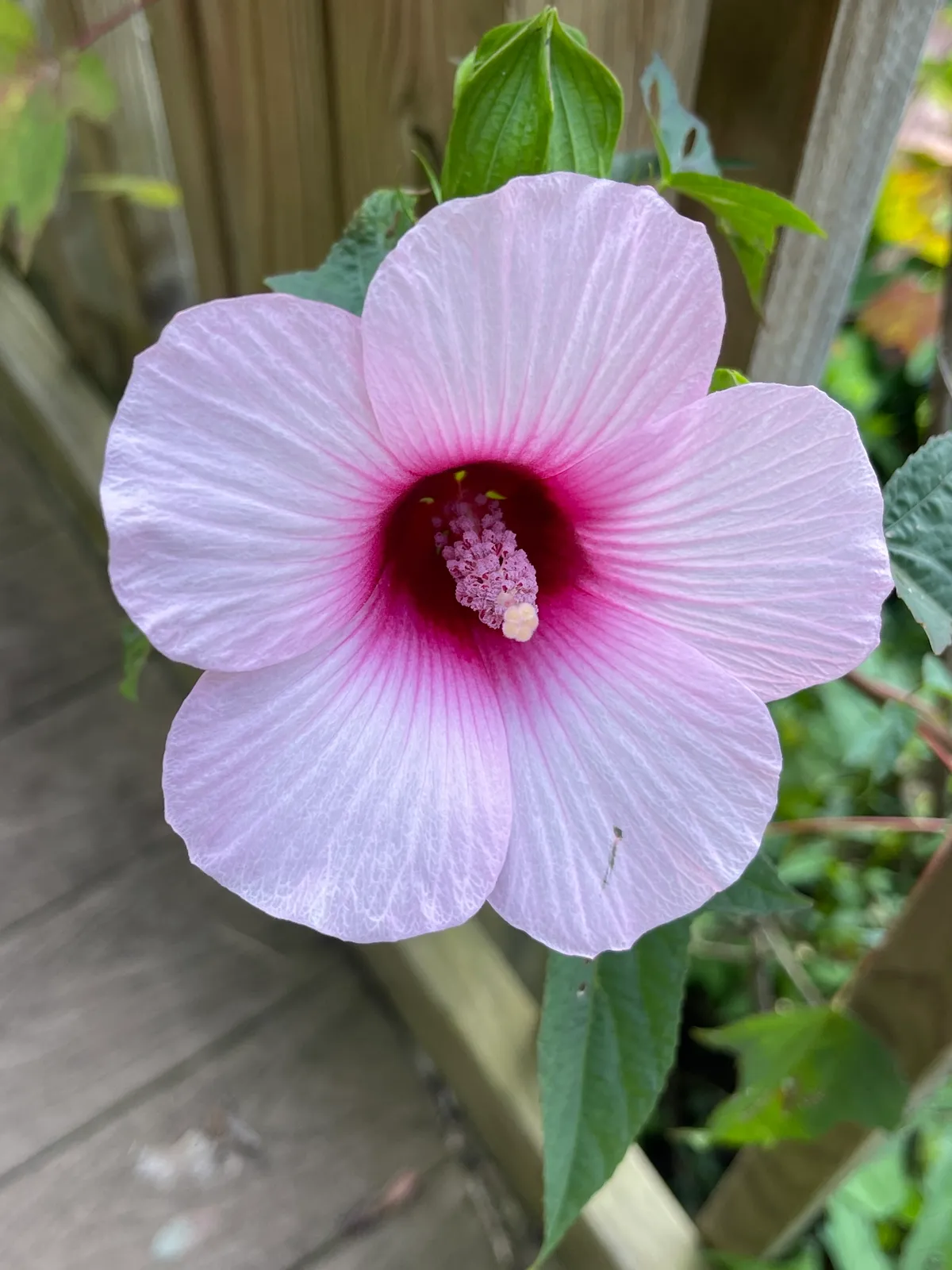
Hibiscus laevis is a wetland forb that blooms from July through September with large pink flowers marked by a deep red throat, thriving in full sun along riverbanks and marsh edges.
Toxicity unknown
Halberd Leaf Hibiscus (Hibiscus laevis) is not listed by the ASPCA Animal Poison Control Center (opens in new tab) or the other sources we check, so we have no verdict for it either way. Absence from those lists is not a clearance. If your pet shows symptoms after eating any plant, call the ASPCA at (888) 426-4435.
The USDA PLANTS Database (opens in new tab) does not flag Halberd Leaf Hibiscus as toxic to livestock.
Light
full sun
Water
medium
Size
60"–72" H × 72"–96" W
Bloom
Jul, Aug, Sep
Native to
AL, AR, FL, GA and 22 more states
Pollinators
bees, butterflies, moths, hummingbirds
Deer
Resistant (per Prairie Moon Nursery)
Before you buy
Your city may pay you to plant this
Cities and water utilities offer rebates for replacing lawn with native and water-wise plants. We track 459 programs across 44 states, each with a link to the provider and the date we last checked it.
Find rebates in your areaPicture natives in your own yard
Upload a photo of your yard and Patch Vision shows a rendering of it planted with natives for your region, like Halberd Leaf Hibiscus.


Browse plants for this ecoregion
Scarlet rose-mallow produces spectacular large red hibiscus flowers up to 6 inches across during summer months. This tall native perennial thrives in moist conditions and creates a dramatic focal point with its showy blooms. The plant dies back completely in winter but returns reliably each spring.
Growing Halberd Leaf Hibiscus
Grow Halberd Leaf Hibiscus in full sun and medium water. Mature plants reach 60 to 72 inches tall and spread 72 to 96 inches wide. Expect moderate maintenance to keep it looking intentional in a front yard.
How to care for Halberd Leaf Hibiscus, by region
How to care for Halberd Leaf Hibiscus where it is actually grown: year-round basics plus what to do each season, region by region, with the sources for each.
Care guidance last updated: September 2026
Northern Piedmont (includes Lancaster, PA)
Year-round
This is a tall wetland perennial that is genuinely native to Pennsylvania, so it is naturally suited to the Lancaster area as long as the soil stays wet enough. It dies back to the ground every winter and returns from the same root each spring, growing 4 to 6 feet tall with big white or pink summer flowers.
- Give it full sun to a little afternoon shade and keep the soil moist to wet all the time. It naturally grows in marshes and along streams and rivers, so it does not like to dry out.
- Plan for a big plant. It can reach 4 to 6 feet tall and 3 to 4 feet wide by late summer, so give it room at the back of a wet bed or rain garden.
- It dies back completely above ground with the first hard frost and grows back from the same root crown each spring, so an empty spot in the bed over winter is normal, not a dead plant.
- Lancaster sits in roughly USDA zone 7a to 7b, well inside the 4a to 9b range this plant can handle, so winter cold on its own is not a concern here.
- Expect large white to pink blooms with a dark red or maroon throat from mid summer into fall. Each flower only lasts one day, then a new one opens the next morning.
Fall
Blooms taper off as fall settles in, and the first hard frost is the cue to cut the plant back for the season.
- Blooms slow down by early to mid fall as days get shorter, heading toward Lancaster's average first frost date around November 1.
- Once a hard frost blackens the leaves and stems, you can cut the plant back close to the ground. This is the same general window used for other hardy hibiscus in the region.
- It is fine to leave the seed pods standing a while for birds or winter texture, just plan to cut everything back before new growth starts in spring.
- Do not stop watering too early. Keep the soil moist through fall until the plant has clearly gone dormant after frost.
- A neat fall cutback near the front of the house reads as a tended bed rather than a dead plant, which is a simple way to avoid a tidiness letter this time of year.
Cutting the frost-killed stems back after the first hard frost keeps the front-yard bed looking intentional and cared for instead of dead, which helps avoid a tidiness complaint going into winter.
Winter
The plant is fully dormant in winter with nothing visible above ground, which is exactly how it is supposed to look until spring.
- Expect bare soil where this plant grows. It dies back completely above ground, and there is nothing to see until new shoots return in late spring.
- No watering is needed once the ground is consistently cold and the plant has gone dormant.
- Do not mistake the empty spot for a dead plant and pull out the root. The crown stays alive underground even though nothing shows above the surface.
- If stems were left standing in fall for winter interest, this is the last stretch to enjoy that look before cutting them back ahead of spring growth.
- A couple inches of mulch over the root area is a reasonable extra step, though this species is already well within Lancaster's roughly 7a to 7b winter hardiness range on its own.
A visible layer of mulch over the bare winter spot signals a cared-for bed rather than an empty, neglected one, which helps if the property gets a winter walk-through.
Spring
Spring is a waiting game with this plant. It is one of the last things in the garden to show new growth, and that is normal, not a sign it died.
- Do not assume it died over winter just because you see nothing by April. Hardy hibiscus like this one are known to be slow to wake up and often will not show new shoots until mid to late May, sometimes into June.
- Once it starts, it grows fast, often adding noticeable new growth within days once the shoots finally break the soil.
- Hold off on digging or disturbing the soil around where it was growing until you actually see new shoots, so you do not cut into the crown by accident.
- Keep the soil consistently moist through spring. This plant does not tolerate drying out, even before it has visibly started growing again.
- If you cut the old dead stems down in fall or winter, spring is when fresh stems will fill back in around that same spot.
Summer
Summer is peak bloom season and the reason to grow this plant. Expect a steady run of large, showy flowers as long as the soil stays wet.
- This is the plant's big show. Large white or pink flowers with a deep maroon or red throat open through mid and late summer, some reaching several inches across.
- Each flower only lasts one day, so do not worry if a bloom looks spent by evening. A new one opens again the next morning through the rest of the season.
- Keep watering. Hot Lancaster summers dry soil out fast, and this plant wants consistently moist to wet conditions the whole season, not just an occasional deep soak.
- Bees, hummingbirds, and butterflies are drawn to the big flowers, so this is a good season to notice pollinator activity around the bed.
- Deadheading is not needed for more blooms since new flowers open daily on their own, but pinching off spent flowers can keep a front-yard bed looking tidier.
Pinching off spent blooms during peak flowering keeps a front-yard bed reading as intentional and tended, which is an easy way to avoid a tidiness complaint while the plant is at its showiest.
Sources: Lady Bird Johnson Wildflower Center: Hibiscus laevis (Halberdleaf rosemallow), Flora of Pennsylvania: Malvaceae (Hibiscus) species checklist, listing Hibiscus laevis as native, NC State Extension Gardener Plant Toolbox: Hibiscus laevis plant profile, Kansas State University Extension (Johnson County): Hardy Hibiscus, on slow spring emergence and rapid growth once started, Old Farmer's Almanac: Frost Dates for Lancaster, PA (community tip), Missouri Botanical Garden PlantFinder: Hibiscus laevis
Piedmont (includes Atlanta, GA)
Year-round
Halberdleaf rosemallow is a tall wetland-edge hibiscus that naturally grows along creek banks and pond edges, so it wants soil that stays damp, not just occasional watering. In the Atlanta area our red clay soil actually helps here because it holds moisture longer than sandy soil, but a new plant still needs regular deep watering through its first summer to grow roots deep enough to ride out dry stretches. Give it the lowest, wettest spot in your yard, close to a downspout, rain garden, or the edge of a pond, and it will reward you with large pink to white blooms all summer. Once it settles in after one full growing season it can handle short dry spells, but it always performs best with steady, even moisture rather than a soak-then-forget routine. Spread 2 to 3 inches of mulch around the base to hold that moisture and keep clay from baking hard in July and August heat, but pull the mulch back a few inches from the stems so they don't sit wet and rot. The biggest mistakes in the metro Atlanta area are putting it somewhere that dries out by midsummer, letting it flop over without support once it reaches 5 to 6 feet, and forgetting that it dies all the way back to the ground every winter and re-sprouts from the crown in spring, so an empty-looking bed in January is normal, not a dead plant.
- Plant it in the lowest, wettest spot you have, near a downspout, rain garden, or pond edge
- Water deeply 2 to 3 times a week the first growing season so roots can push through Atlanta clay
- Mulch 2 to 3 inches around the base, but keep it a few inches off the stems
- Stake it or plant near a fence, since stems can reach 5 to 6 feet and flop in wind
- Expect it to disappear completely in winter and return from the root crown each spring
Fall
As days shorten into September and October, halberdleaf rosemallow keeps blooming into early fall in the Atlanta area before flowering tapers off, and the seed pods that follow the summer flowers begin to ripen and split open. If you want to control where this plant spreads, snip off ripening pods before they open, rather than letting the water-carried seeds wash into a low spot you don't want it in. Fall is also a good, low-stress time to trim back any stems that have flopped or gone ragged, though many people leave the seed heads standing since birds pick at them into winter. Metro Atlanta's first frost usually lands sometime in late October to mid-November, and once that hits, the top growth will blacken and die back on its own, so a full cutback can wait until then. Keep watering through any dry fall stretches until frost, since the plant is still active and drawing up water right up to that point.
- Snip ripening seed pods before they split if you don't want it to self-seed nearby
- Blooms taper off through September and October as days shorten
- Trim ragged or flopped stems now, or leave seed heads standing for winter birds
- Keep watering through dry fall stretches until the first frost, usually late October to mid-November
- Full cutback can wait until frost blackens the top growth
Trimming ragged stems and deciding whether to leave or clear seed heads keeps the fall bed looking intentional and HOA-friendly rather than collapsed.
Winter
Once frost blackens the stems, usually by mid-November in the Atlanta area, halberdleaf rosemallow goes fully dormant and dies back to the ground, and the bed can look completely empty through winter. That is normal for this species, not a sign it died. You can cut the blackened stalks down to a few inches at any point after frost, or leave them standing for winter structure and for birds to pick at the remaining seeds, then clear them out in late winter before spring growth starts. Because the root crown sits at or just below soil level, a light layer of mulch, 2 to 3 inches, over the crown during Atlanta's typically mild but occasionally hard-freezing winters gives it a little extra insulation, especially for a young plant's first winter. There is no need to water through winter dormancy unless the season turns unusually dry, since the plant is not actively growing. Resist the urge to dig in the spot thinking nothing is there, the crown is alive underground and will resprout in spring.
- Cut blackened stalks to a few inches after frost, or leave them standing for winter interest and birds
- Add 2 to 3 inches of mulch over the root crown for extra insulation, especially the first winter
- Skip winter watering unless the season turns unusually dry
- Don't dig in the spot, the crown is alive underground even though nothing shows above
- Clear any remaining old stalks in late winter before spring growth starts
Cutting stalks down to a tidy few inches, rather than leaving a tall dead stand all winter, gives the front bed a neater, HOA-friendly winter silhouette.
Spring
Spring is when halberdleaf rosemallow wakes up from its winter dieback, and in the Atlanta area new growth from the root crown usually shows up sometime in April as the soil warms, often later than most perennials, so don't worry if the spot still looks bare in March. Before new shoots appear, cut back and clear away last year's dried stalks down to a few inches above the ground to make room for fresh growth and to keep the bed looking tidy for the street. Keep the soil consistently moist through spring rains and any dry stretches, since this is when the root system is rebuilding energy for the summer's growth spurt. This is also the best low-stress window to divide an overcrowded clump or move a plant, before it puts on much top growth. Watch new soft growth for aphids, which show up early and can cluster on tender shoots, and hose them off before they build up.
- Cut back last year's dead stalks to a few inches tall before new shoots emerge
- Don't worry if new growth waits until April, it's normal for this species to be a late riser
- Divide crowded clumps or transplant now, before much top growth appears
- Keep soil evenly moist as the crown rebuilds energy for summer
- Check new shoots for aphid clusters and hose them off early
Cutting back last year's dried stalks in early spring keeps the front bed looking tidy and HOA-friendly before new growth fills in.
Summer
Summer is showtime for halberdleaf rosemallow in the Atlanta area, with large pink to white blooms opening from June through September, though each individual flower only lasts a single day before closing for good. Because Atlanta summers bring stretches of heat and humidity with occasional dry spells between thunderstorms, this is the season the plant needs the most consistent water, especially in July and August, when clay soil can crack and pull away from roots if it dries out. Deadheading spent blooms is optional since this plant isn't picky about looks, but removing a few faded flowers can keep the bed looking neater for the street. Watch for Japanese beetles, active in the Atlanta area from late May through August, which chew ragged holes in leaves and flowers, and for powdery mildew, which can show up on foliage during humid, still weeks. The plant can put on a lot of height fast in summer heat, so check that stakes or supports are still holding stems upright after storms.
- Water deeply during hot, dry stretches, especially July and August
- Expect nonstop blooms June through September, each lasting just one day
- Check for Japanese beetle damage on leaves and flowers from late May into August
- Watch for powdery mildew on foliage during humid, still weeks
- Re-check stakes or supports after summer storms, since stems grow fast and tall
Deadheading spent flowers and keeping stems staked upright keeps this tall bloomer looking HOA-friendly from the street rather than sprawling.
Sources: NC State Extension Gardener Plant Toolbox - Hibiscus laevis, Lady Bird Johnson Wildflower Center - Hibiscus laevis (Halberdleaf rosemallow)
Southern Coastal Plain (includes Orlando, FL)
Year-round
Halberdleaf rosemallow (Hibiscus laevis) is a native Florida wetland perennial that grows 4 to 6 feet tall and needs consistently wet to moist soil and full sun to light shade.
- Give it full sun for the best flowers and the least disease. It will take a few hours of afternoon shade but blooms less there.
- Keep the soil consistently moist to wet. This is a wetland plant and it does not like to dry out, especially in central Florida's sandy soil.
- Work compost or other organic matter into the planting area. It prefers rich, organic soil over straight sand.
- Expect it to die back to the ground each winter and come back from the root the following spring. That dieback is normal for this herbaceous perennial, not a sign of trouble.
- It tolerates pruning and reblooms on new growth, so cutting it back does not stop flowering for the season.
- Watch for browsing from deer if your yard borders natural land. Otherwise it has no major insect or disease problems.
At 4 to 6 feet tall, this plant reads as a tall, informal perennial. For an HOA-friendly look, plant it in a defined bed or along a fence line rather than loose in the open lawn, and stake it if wind knocks it over.
Fall
Blooming tapers off into fall and seed pods form. Orlando usually does not see its first frost until December, so the plant often keeps some green growth well into autumn.
- Seed capsules form from around August through October, following behind the season's flowers. Leave some pods on the plant if you want to collect seed to grow more.
- Flowering slows as days shorten, but Orlando's long frost-free season means it can keep some foliage and occasional blooms into November.
- Cut back on supplemental water as fall rainfall drops off. An established plant in naturally moist soil usually does not need extra watering this time of year.
- Hold off on fertilizing. UF/IFAS's Central Florida calendar flags October as the last practical fertilizing window before winter dormancy, and this plant does not need heavy feeding regardless.
- Leave dead stems standing into winter if you can. Hollow perennial stems give native bees and other insects a place to overwinter.
Fading fall foliage and standing seed heads can look untidy to a neighbor's eye. An HOA-friendly compromise is trimming the bed's front edge while leaving the plant's own stems up for winter wildlife habitat.
Winter
Halberdleaf rosemallow dies back to the ground for winter in Orlando. The root survives typical central Florida winters and sends up new growth again in spring.
- Expect the top growth to blacken and die back after the season's first hard frost or freeze, usually sometime in December.
- This dieback is normal for this herbaceous perennial. The root system carries the plant through winter, not the top growth.
- Cut the dead stems back to a few inches above the ground once they have browned, or leave them standing until late winter for insect habitat and cut back right before spring growth starts.
- Central Florida's frost and freeze risk peaks in January and February. UF/IFAS recommends covering tender plants ahead of a predicted frost, though an established rosemallow's root should come back on its own even if top growth is damaged.
- Cut back on watering in winter. This is the dormant season for most Florida landscape plants, and the root does not need much moisture while it is inactive.
A bare, cut-back bed in winter reads as tidy and intentional to most HOA standards. If your association prefers a maintained look year round, cutting stems back in early winter rather than leaving them up is the more HOA-conscious choice.
Spring
In Orlando, spring is when halberdleaf rosemallow comes back from its roots after winter dieback and starts putting on new growth.
- New shoots typically emerge from the base once nights stay reliably above freezing. Orlando's frost risk usually runs into late January or February, so watch for a late cold snap early in spring.
- If you did not cut back last year's dead stems in late winter, do it now before new growth gets tall. Cut old stalks down near ground level.
- Start watering more regularly as the plant leafs out. Central Florida's dry season usually stretches into spring, so do not rely on rain alone yet.
- A light feeding as new growth appears is fine on poor soil, but skip heavy fertilizer. This plant does better with organic matter worked into the soil than with repeated feeding.
- Deer browse tender spring growth, so a low fence or repellent helps if deer are active near your yard.
New spring growth starts low and can look sparse before it fills in. An HOA-conscious option is a clean mulch ring or edge around the bed while it establishes height.
Summer
Summer is peak season for halberdleaf rosemallow in Orlando. It blooms heavily from June through September, right alongside central Florida's rainy season.
- This is the main bloom window. Each flower opens for a single day, so do not worry when blooms drop fast. New ones keep coming through summer.
- Central Florida's regular afternoon thunderstorms usually cover its water needs once the plant is established. Hand water only if you hit a dry stretch of a week or more.
- It handles Orlando's hot, humid summer well and is considered heat tolerant.
- Check your city or county rules before fertilizing in summer. Many central Florida municipalities restrict landscape fertilizer during the June through September rainy season to protect waterways.
- Watch height and wind. At 4 to 6 feet, stems can lean or snap in a strong summer storm. Stake taller plants if needed.
Full summer bloom is this plant's showiest stretch, and its best chance to read as an intentional garden feature rather than an overgrown patch, especially with a stake and a clean bed edge.
Sources: Florida Native Plant Society - Hibiscus laevis, NC State Extension Gardener Plant Toolbox - Hibiscus laevis, UF/IFAS Central Florida Gardening Calendar (EP450)
Western Gulf Coastal Plain (includes Houston, TX)
Year-round
This wetland-loving hibiscus is a genuinely good match for Houston's humid, rainy climate as long as it gets full sun and soil that stays consistently moist.
- This species is documented as native to Gulf Coast ecoregions of Texas, including the Western Gulf Coastal Plain that covers the Houston area, so it is naturally suited to this climate.
- It wants full sun and soil that stays consistently moist to wet. It is not a good fit for a normal dry flower bed.
- A low spot, rain garden, pond edge, or the run-off area at the end of a downspout are all good matches for it in a Houston yard.
- It tolerates Houston's heavy clay soil well, since clay holds moisture that this plant actually wants.
- It comes back as a perennial from the roots each year and is a different plant from tropical hibiscus, which needs winter protection here.
The large, showy blooms read as an intentional ornamental accent rather than an overgrown look, especially planted near a fence line or foundation bed.
Fall
Blooming carries on well into fall, and the plant is done for the year as soon as the first freeze hits.
- Blooming continues into fall, often into November in the Houston area, before the plant dies back.
- The flowers are a nectar source for pollinators, including butterflies, through the fall season.
- Once the first freeze blackens the foliage, the plant is finished for the year. That is normal, not a sign of disease.
- Leave the dead stems standing through fall rather than cutting back right away. They mark where the plant is and shelter overwintering insects.
Late-season blooms keep a front bed from looking bare heading into fall, though the plant will look ragged once the first frost hits.
Winter
This hibiscus goes fully dormant after a hard freeze, and Houston's average winter is not cold enough to worry the roots.
- This hibiscus dies back to the ground after a hard freeze and goes fully dormant for winter, returning from the roots in spring.
- Do not cut the dead stems all the way to the ground right after the freeze. Leave a few inches of stubble so you can find the crown in late winter.
- It is cold hardy well beyond Houston's typical winter lows, so an average Gulf Coast freeze is not a concern for the root system.
- Keep the dormant root zone from drying out completely over winter. This is a wetland plant, and the roots should stay somewhat moist even while dormant.
Spring
This plant is slow to wake up in spring, so patience matters more than action for the first few weeks.
- New shoots emerge from the roots in spring, often later than other perennials. Do not assume it died over winter if you see no growth until April or so.
- Once nights stay reliably above freezing, spring is a good window to plant a new hibiscus laevis or divide an established clump.
- Keep new spring growth consistently moist. Do not let a young plant dry out during a dry spring stretch.
- Watch for aphids on tender new growth. A strong spray of water usually knocks them off without needing anything else.
Summer
Summer is the main bloom season, and the one thing this plant cannot tolerate is drying out.
- Summer is the main bloom season, with large white or pink flowers with a maroon or red throat opening from around May into fall.
- Each individual flower lasts only one day, but the plant keeps producing new ones through summer as long as it stays moist.
- Deadheading spent blooms is optional. It encourages more flowers but is not required for the plant's health.
- Keep the soil evenly moist through Houston's hot summer. This plant will wilt and drop buds if it dries out, unlike most drought-tolerant natives.
Sources: Lady Bird Johnson Wildflower Center - Hibiscus laevis, Native Plant Society of Texas - Hibiscus laevis, Prairie Nursery - Hibiscus laevis, GrowIt BuildIt - Hibiscus laevis Care Guide (community tip)
In an HOA neighborhood
Halberd Leaf Hibiscus is an HOA-friendly choice. Maintenance level: moderate. Tidiness: 4 out of 5.
Works well in: front yard, foundation, street edge, mid zone.
- Dies back completely in winter leaving bare ground
- Requires consistent moisture to prevent wilting
Wildlife value
The large, nectar-rich flowers are magnets for bees, butterflies, and hummingbirds throughout the long blooming season. Seeds also provide food for waterfowl and other birds in fall.
Common questions
- When does Hibiscus laevis bloom?
- Hibiscus laevis typically flowers from July through September, with large pink blooms opening in succession along the stem.
- What kind of habitat does Hibiscus laevis need?
- This forb grows best in consistently moist to wet soil in full sun, such as along riverbanks, ditches, marsh edges, and floodplain meadows.
- What pollinators visit Hibiscus laevis flowers?
- Bees and butterflies are the primary visitors to Hibiscus laevis flowers, drawn to the large blooms for nectar and pollen.
- Does Hibiscus laevis tolerate drought?
- No, it prefers consistently high moisture and does not perform well in dry soil for extended periods.
- Is Halberd Leaf Hibiscus toxic to livestock?
- The USDA PLANTS Database does not flag Halberd Leaf Hibiscus as toxic to livestock.
- Is Halberd Leaf Hibiscus HOA-friendly?
- Halberd Leaf Hibiscus is generally an HOA-friendly choice in the right placement, with moderate maintenance.
These answers were drafted with an AI model from this plant's data. Verify care details with a local expert.
See Halberd Leaf Hibiscus in a real native yard
Halberd Leaf Hibiscus is one of the natives used in these Garden Planner yard designs. Tap any one to see the before and after.
The after image is a Garden Planner preview, generated by an AI image model from the real yard photo. It replants the yard with native plants chosen to fit that yard's ecoregion, sun, and HOA strictness. The finished planting will look different.
Native range data from vouchered herbarium specimen records and regional native plant society lists. Pollinator and host plant associations compiled from GBIF, iNaturalist, and published ecological literature.
If something looks wrong
Common plant problems, and what to check first
These come up on almost any plant. Each guide lists the likely causes in the order they are worth ruling out, with one thing to check before you act on any of them, and links to the source it came from.
- It is dying right after planting
- Leaves turning yellow
- Wilting even though I watered it
- Brown crispy leaf tips
- Bugs on the plant
Ready to grow Halberd Leaf Hibiscus? Add it to your garden in Pollinator Patch to track it and get season-by-season care guidance.