Golden Dewdrop
Duranta erecta
Last reviewed: September 2026
Toxicity unknown
Golden Dewdrop (Duranta erecta) is not listed by the ASPCA Animal Poison Control Center (opens in new tab) or the other sources we check, so we have no verdict for it either way. Absence from those lists is not a clearance. If your pet shows symptoms after eating any plant, call the ASPCA at (888) 426-4435.
Light
full sun
Water
medium
Size
72"–216" H × 72"–144" W
Bloom
May, Jun, Jul, Aug, Sep, Oct
Pollinators
butterflies, hummingbirds
Native alternatives to Golden Dewdrop
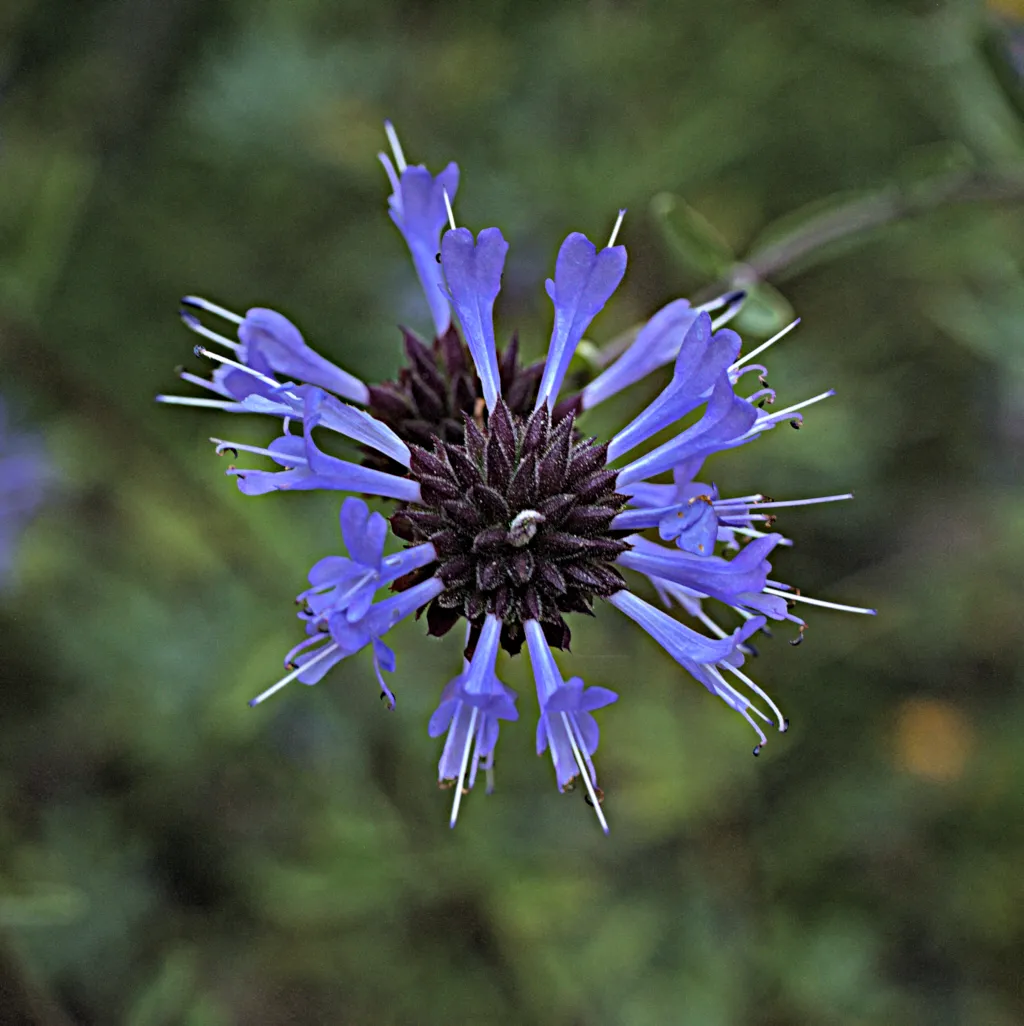
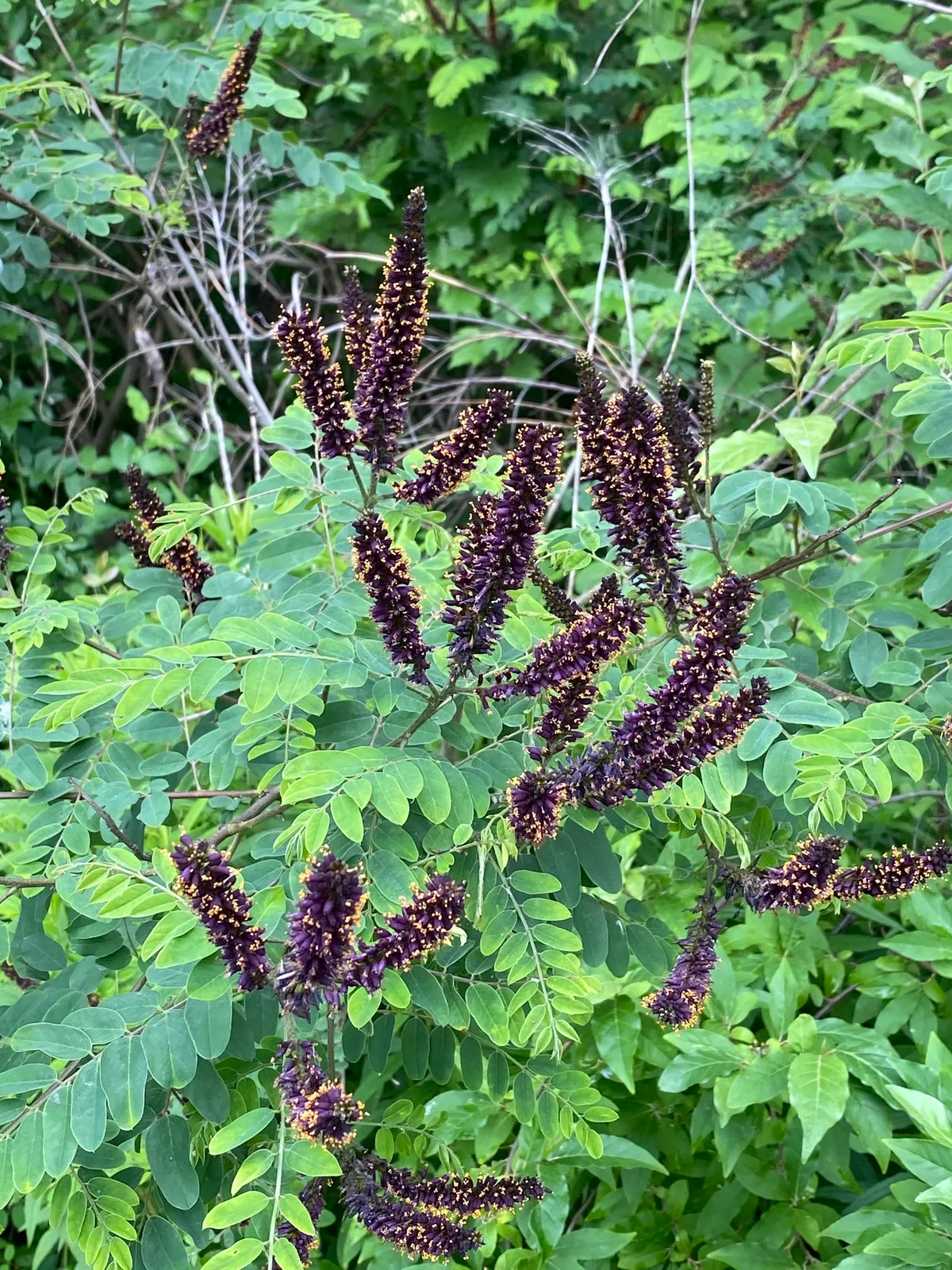
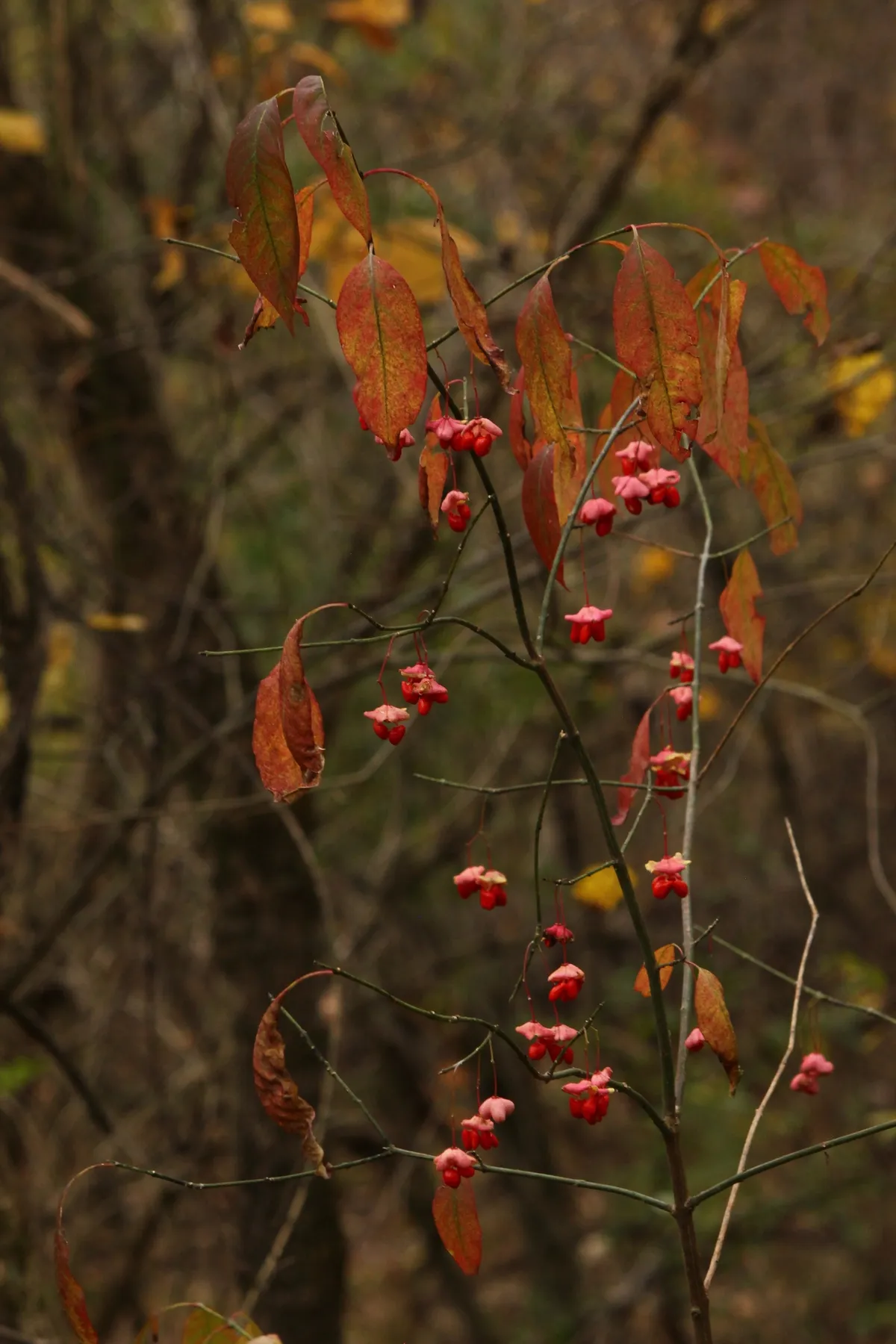
Golden Dewdrop is not native to the United States. These natives fill a similar role in a planting, matched on bloom season, bloom color and mature size.
Before you buy
Your city may pay you to plant this
Cities and water utilities offer rebates for replacing lawn with native and water-wise plants. We track 458 programs across 44 states, each with a link to the provider and the date we last checked it.
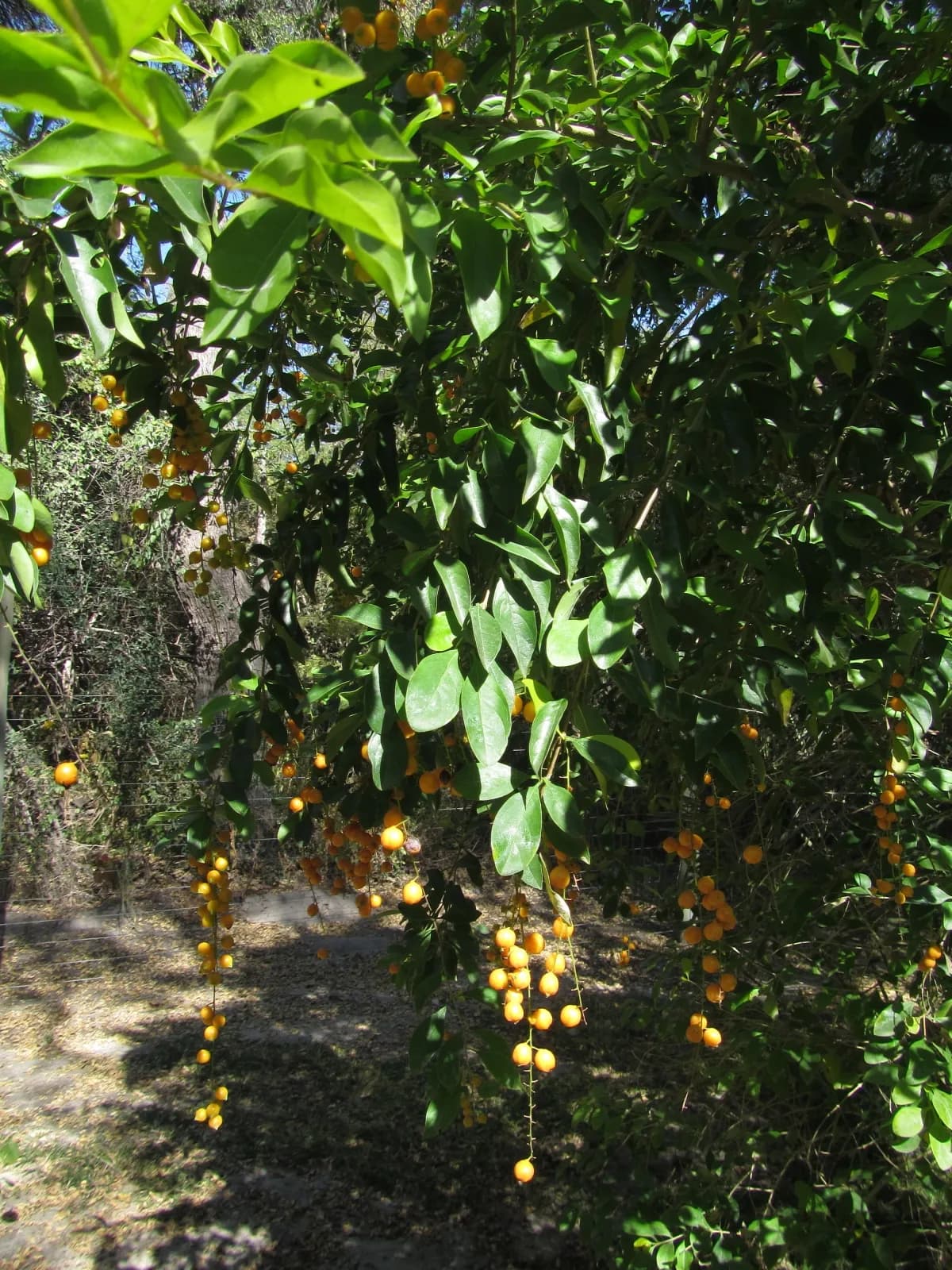
Find rebates in your areaA fast-growing shrub with arching, spreading branches and glossy leaves. Small tubular purple-blue flowers appear in drooping clusters through the warm season, followed by clusters of golden-orange berries.
How to care for Golden Dewdrop, by region
How to care for Golden Dewdrop where it is actually grown: year-round basics plus what to do each season, region by region, with the sources for each.
Care guidance last updated: September 2026
Texas Blackland Prairies (includes Dallas, TX)
Year-round
Pigeonberry, also called Golden Dewdrop or Skyflower, is not native to Texas. It comes from Mexico, the Caribbean, and Central and South America and is grown here purely as a fast-growing ornamental for its clusters of small purple flowers. Around Dallas it sits right at the edge of its cold tolerance, so treat it as a tender shrub rather than a fully hardy one.
- This is an introduced ornamental from Mexico, the Caribbean, and Central and South America, not a Texas native.
- Give it full sun to light afternoon shade and well-drained soil. Once established it handles Dallas summer heat well.
- It is reliably hardy only to about USDA zone 9, so a hard Dallas winter can freeze it to the ground. A spot against a south-facing wall holds heat and improves its odds of staying evergreen.
- The berries and leaves are toxic if eaten and have caused serious poisoning in dogs and cats, including collapse and kidney injury in severe cases. Keep it away from pets and small children.
- It blooms on new growth, so shaping it after a hard freeze or after a bloom flush does not cost you flowers.
Keep it pruned into a tidy rounded shrub or low hedge shape so the fast growth reads as intentional and HOA-friendly rather than sprawling.
Fall
Pigeonberry keeps blooming into fall around Dallas until the first real cold front. Ease off fertilizer and water as growth slows, and let the plant start hardening off before winter.
- Flowering continues into fall until the first hard cold front arrives.
- Stop fertilizing by early fall so new growth has time to harden off before cold weather.
- Golden-orange berries follow the flowers; remember they are toxic if eaten, so keep pets and kids from grazing on them.
- Hold off on major pruning in fall since fresh cuts are more vulnerable to an early freeze.
Winter
Winter is the risk season for Pigeonberry in Dallas. It is only reliably hardy to about zone 9, so a hard freeze commonly kills it back to the ground, though the roots usually survive and it regrows in spring.
- A hard Dallas freeze often kills the top growth; the plant is only reliably hardy to about USDA zone 9.
- If it freezes back, leave the dead wood in place over winter and cut it back to a few inches above the ground once spring growth starts.
- A few inches of mulch over the root zone helps protect the roots through a cold snap.
- A spot against a south-facing wall or near other structures that hold heat improves its odds of staying evergreen.
Spring
Spring is planting and recovery season for Pigeonberry around Dallas. Wait until after the last frost, usually mid-March, before setting out new plants or pruning back winter damage, since a late cold snap can hit tender new growth.
- Wait until after the last expected frost, typically mid-March in Dallas, to plant or to prune hard.
- If it froze back over winter, cut the dead wood down to live tissue once new growth starts low on the plant.
- Water new plants regularly through spring so roots establish before summer heat arrives.
- Watch the forecast for a late cold snap and cover tender new shoots if one is expected.
Summer
Summer is peak bloom for Pigeonberry in the Dallas heat. Established plants take the heat and dry stretches well, and the purple flower clusters draw butterflies and hummingbirds through the season.
- Established plants tolerate Dallas summer heat and short dry spells without much fuss.
- Deep water during extended drought or when leaves start to wilt in the afternoon.
- Deadhead spent flower clusters to keep new blooms coming and the shrub looking tidy.
- Watch for spider mites in hot, dry stretches; a strong hose-down usually knocks them back.
Regular deadheading through summer keeps the shrub looking maintained for street-facing beds.
Sources: Plants of the World Online (Kew), Duranta erecta L., Scanlan et al., Duranta erecta poisoning in nine dogs and a cat, Australian Veterinary Journal, NC State Extension Plant Toolbox, Duranta erecta, Central Texas Gardener, Duranta
In an HOA neighborhood
Golden Dewdrop is an HOA-friendly choice. Maintenance level: moderate. Tidiness: 3 out of 5.
Works well in: hedge, specimen shrub, screening.
- Fast growth needs regular pruning to stay tidy and within bounds
- Berries are toxic if ingested and best avoided near play areas or pet-accessible zones
Wildlife value
Flowers attract butterflies and hummingbirds. The berries and foliage are reported to be toxic if ingested and should be kept away from pets and young children.
Common questions
- How much sun does Golden Dewdrop need?
- Golden Dewdrop grows best in full sun conditions.
- When does Golden Dewdrop bloom?
- Golden Dewdrop blooms in May, June, July, August, September, and October.
- What pollinators does Golden Dewdrop attract?
- Golden Dewdrop draws butterflies and hummingbirds.
- Is Golden Dewdrop HOA-friendly?
- Golden Dewdrop is generally an HOA-friendly choice in the right placement, with moderate maintenance.
Pollinator and host plant associations compiled from GBIF, iNaturalist, and published ecological literature.
If something looks wrong
Common plant problems, and what to check first
These come up on almost any plant. Each guide lists the likely causes in the order they are worth ruling out, with one thing to check before you act on any of them, and links to the source it came from.
- It is dying right after planting
- Leaves turning yellow
- Wilting even though I watered it
- Brown crispy leaf tips
- Bugs on the plant
Ready to grow Golden Dewdrop? Add it to your garden in Pollinator Patch to track it and get season-by-season care guidance.