Greek Milkweed
Asclepias speciosa
Last reviewed: August 2026
Greek milkweed (Asclepias speciosa) is a full sun, low water forb that blooms from June through August in prairies, grasslands, and dry roadside habitats across the western and central United States.
Greek Milkweed is toxic to dogs and cats.
Listed as toxic by the ASPCA Animal Poison Control Center (opens in new tab) (last reviewed 2026-05-21). If your pet has been exposed, call the ASPCA Animal Poison Control Center at (888) 426-4435and your veterinarian's emergency line.
Pollinator Patch flags toxic plants so you can choose a pet-safe native alternative for your yard.
Greek Milkweed is listed as toxic to grazing livestock (cattle, sheep, and goats) at a slight level by the USDA PLANTS Database (opens in new tab). This is a livestock indicator and is separate from pet toxicity.
Light
full sun
Water
low
Size
24"–48" H × 18"–36" W
Bloom
Jun, Jul, Aug
Native to
AZ, CA, CO, IA and 15 more states
Pollinators
bees, butterflies, moths
Before you buy
Your city may pay you to plant this
Cities and water utilities offer rebates for replacing lawn with native and water-wise plants. We track 452 programs across 44 states, each with a link to the provider and the date we last checked it.
Find rebates in your areaBrowse plants for this ecoregion
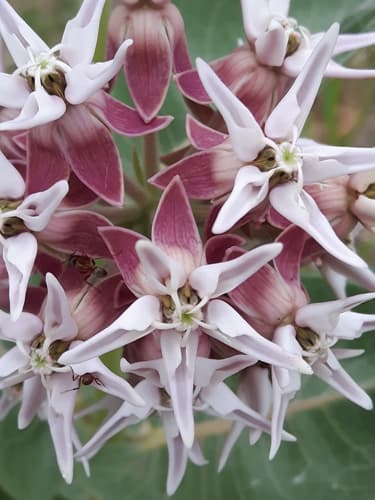
Showy milkweed produces large, fragrant pink flower clusters on tall, sturdy stems from June through August. This native perennial has broad, oval leaves and develops interesting seed pods in fall before going dormant in winter.
Growing Greek Milkweed
Grow Greek Milkweed in full sun and low water. Mature plants reach 24 to 48 inches tall and spread 18 to 36 inches wide. Expect moderate maintenance to keep it looking intentional in a front yard.
How to care for Greek Milkweed, by region
How to care for Greek Milkweed where it is actually grown: year-round basics plus what to do each season, region by region, with the sources for each.
Care guidance last updated: July 2026
Cross Timbers (includes Fort Worth, TX)
Year-round
Showy milkweed is a sun loving perennial that dies back and regrows from its roots each year, and it is the plant monarch caterpillars must have to grow into butterflies.
- Give it full sun, at least 6 hours a day, and well draining soil.
- In the heavier black clay soils in North Texas, plant it high on a slight mound or work in compost so water does not pool at the roots; in the sandier soils west of the metro it drains faster but the plant will need water more often through its first summer.
- It spreads slowly by underground roots over a few years, so give it 2 to 3 feet of open room or plan to divide it later.
- Water deeply about once a week for the first growing season, then only during extended dry spells once it is established.
- Wear gloves when cutting or breaking stems, the milky white sap can irritate skin and eyes and is toxic to dogs, cats, and horses if eaten.
Fall
By fall the flowers give way to warty green seed pods that split open and release seeds on silky white floss, and the first frost, mid November, ends the growing season.
- Let seed pods mature and split on their own in September and October if you want more plants; cut them off before they open if you want to keep the spread under control.
- Cut plants back to about 4 to 6 inches after the first hard freeze in November.
- Skip dividing or transplanting in fall, wait for next spring instead, since North Texas fall planting is better reserved for trees, shrubs, and vines.
- Rake up and compost the dry stems and floss once they turn brown.
Split seed pods release white silky floss that can drift into nearby yards; cutting pods before they fully open keeps the bed tidy through fall.
Winter
Showy milkweed dies back completely in winter and the roots stay dormant underground until spring; North Texas winters are mild with short hard freezes and occasional severe Arctic outbreaks.
- Leave the 4 to 6 inch cut stems in place through winter, the hollow stems can shelter overwintering insects.
- Do not water beyond normal rainfall in winter, the dormant roots do not need it.
- Mark the spot with a plant tag or edging since the bed will look empty until new shoots return in spring.
- A layer of mulch over the root zone helps protect it during a hard Arctic freeze, though established plants tolerate USDA zone 8a to 8b winters without extra protection.
An empty looking bed in winter can read as neglected; a plant tag or clean mulched edge signals it is dormant, not abandoned.
Spring
Spring is the best time to plant showy milkweed in North Texas, and new stems push up slowly from the ground once the soil warms.
- Plant nursery starts after the last frost, mid March, so young roots are not caught by a late freeze.
- New shoots come up slowly and the spot can look bare into April before growth catches up.
- Starting in April, check the undersides of leaves for small yellow orange monarch eggs and tiny striped caterpillars.
- Water twice a week for the first 4 to 6 weeks after planting to help roots establish before summer heat arrives.
New spring growth is a few scattered bare stems for several weeks; a mulch ring around the base signals it is a planted bed, not an empty patch.
Summer
Showy milkweed blooms in rose pink clusters from June through August, and this is when North Texas summer heat tests new plantings the hardest.
- Plants that have been in the ground a full year or more need little to no extra water once summer heat sets in.
- First-summer plants still need a deep soak about once a week during the 100F stretches in July and August, especially in the sandier soils west of the metro.
- Expect monarch caterpillars to strip leaves down to bare stems in July and August, this is normal and the plant regrows.
- Do not spray for the caterpillars eating the leaves, they are the reason to grow the plant.
- Remove spent flower clusters if you want to slow reseeding, or leave them so seed pods can form.
The pink flower clusters read as an intentional planted bed; stripped leaves from monarch caterpillars in late summer can look alarming to neighbors, a small sign noting it is a butterfly host plant heads off questions.
Sources: Lady Bird Johnson Wildflower Center: Asclepias speciosa, ASPCA: Milkweed toxicity, Xerces Society: Milkweed and monarchs
Texas Blackland Prairies (includes Dallas, TX)
Year-round
Showy milkweed is a sun loving perennial that dies back and regrows from its roots each year, and it is the plant monarch caterpillars must have to grow into butterflies.
- Give it full sun, at least 6 hours a day, and well draining soil.
- In the heavier black clay soils in North Texas, plant it high on a slight mound or work in compost so water does not pool at the roots; in the sandier soils west of the metro it drains faster but the plant will need water more often through its first summer.
- It spreads slowly by underground roots over a few years, so give it 2 to 3 feet of open room or plan to divide it later.
- Water deeply about once a week for the first growing season, then only during extended dry spells once it is established.
- Wear gloves when cutting or breaking stems, the milky white sap can irritate skin and eyes and is toxic to dogs, cats, and horses if eaten.
Fall
By fall the flowers give way to warty green seed pods that split open and release seeds on silky white floss, and the first frost, mid November, ends the growing season.
- Let seed pods mature and split on their own in September and October if you want more plants; cut them off before they open if you want to keep the spread under control.
- Cut plants back to about 4 to 6 inches after the first hard freeze in November.
- Skip dividing or transplanting in fall, wait for next spring instead, since North Texas fall planting is better reserved for trees, shrubs, and vines.
- Rake up and compost the dry stems and floss once they turn brown.
Split seed pods release white silky floss that can drift into nearby yards; cutting pods before they fully open keeps the bed tidy through fall.
Winter
Showy milkweed dies back completely in winter and the roots stay dormant underground until spring; North Texas winters are mild with short hard freezes and occasional severe Arctic outbreaks.
- Leave the 4 to 6 inch cut stems in place through winter, the hollow stems can shelter overwintering insects.
- Do not water beyond normal rainfall in winter, the dormant roots do not need it.
- Mark the spot with a plant tag or edging since the bed will look empty until new shoots return in spring.
- A layer of mulch over the root zone helps protect it during a hard Arctic freeze, though established plants tolerate USDA zone 8a to 8b winters without extra protection.
An empty looking bed in winter can read as neglected; a plant tag or clean mulched edge signals it is dormant, not abandoned.
Spring
Spring is the best time to plant showy milkweed in North Texas, and new stems push up slowly from the ground once the soil warms.
- Plant nursery starts after the last frost, mid March, so young roots are not caught by a late freeze.
- New shoots come up slowly and the spot can look bare into April before growth catches up.
- Starting in April, check the undersides of leaves for small yellow orange monarch eggs and tiny striped caterpillars.
- Water twice a week for the first 4 to 6 weeks after planting to help roots establish before summer heat arrives.
New spring growth is a few scattered bare stems for several weeks; a mulch ring around the base signals it is a planted bed, not an empty patch.
Summer
Showy milkweed blooms in rose pink clusters from June through August, and this is when North Texas summer heat tests new plantings the hardest.
- Plants that have been in the ground a full year or more need little to no extra water once summer heat sets in.
- First-summer plants still need a deep soak about once a week during the 100F stretches in July and August, especially in the sandier soils west of the metro.
- Expect monarch caterpillars to strip leaves down to bare stems in July and August, this is normal and the plant regrows.
- Do not spray for the caterpillars eating the leaves, they are the reason to grow the plant.
- Remove spent flower clusters if you want to slow reseeding, or leave them so seed pods can form.
The pink flower clusters read as an intentional planted bed; stripped leaves from monarch caterpillars in late summer can look alarming to neighbors, a small sign noting it is a butterfly host plant heads off questions.
Sources: Lady Bird Johnson Wildflower Center: Asclepias speciosa, ASPCA: Milkweed toxicity, Xerces Society: Milkweed and monarchs
Want these tasks as reminders timed to your yard? Pollinator Patch turns this guidance into a season-by-season care plan for the plants you actually grow.
In an HOA neighborhood
Greek Milkweed takes more care to keep looking intentional in a front yard. Maintenance level: moderate. Consider it for backyard or mid-zone beds rather than the street edge.
Works well in: backyard only.
- Can spread aggressively through underground rhizomes
- Stems and leaves die back to ground level creating bare patches
- May be perceived as too wild or weedy for formal landscapes
Wildlife value
Host plant for monarch butterfly.
Essential host plant for monarch butterfly caterpillars and provides nectar for numerous butterflies, bees, and moths. The flowers are particularly attractive to native long-horned bees and painted lady butterflies.
Common questions
- When does Asclepias speciosa bloom?
- Greek milkweed typically flowers from June through August, producing clusters of star shaped pink blooms.
- What growing conditions does Greek milkweed need?
- It grows best in full sun with low water once established, making it well suited to dry prairies, open grasslands, and roadside sites.
- What pollinators visit Asclepias speciosa?
- Bees, butterflies, and moths regularly visit the flowers of Greek milkweed for nectar.
- Is Greek milkweed a host plant for monarch butterflies?
- Yes, Asclepias speciosa serves as a larval host plant for monarch butterflies, which lay eggs on milkweed species.
- Is Greek Milkweed toxic to dogs?
- Yes. Greek Milkweed is listed as toxic to dogs by the ASPCA Animal Poison Control Center (aspca.org). If your pet has been exposed, call the ASPCA Animal Poison Control Center at (888) 426-4435.
- Is Greek Milkweed toxic to cats?
- Yes. Greek Milkweed is listed as toxic to cats by the ASPCA Animal Poison Control Center (aspca.org). If your cat has been exposed, call the ASPCA Animal Poison Control Center at (888) 426-4435.
- Is Greek Milkweed toxic to livestock?
- Greek Milkweed is listed as toxic to grazing livestock such as cattle, sheep, and goats (slight severity) by the USDA PLANTS Database. This is separate from pet (dog and cat) toxicity.
- Is Greek Milkweed HOA-friendly?
- Greek Milkweed takes more care to look intentional in a front yard. Consider it for backyard or mid-zone beds rather than the street edge.
These answers were drafted with an AI model from this plant's data. Verify care details with a local expert.
Native range data from vouchered herbarium specimen records and regional native plant society lists. Pollinator and host plant associations compiled from GBIF, iNaturalist, and published ecological literature.
If something looks wrong
Common plant problems, and what to check first
These come up on almost any plant. Each guide lists the likely causes in the order they are worth ruling out, with one thing to check before you act on any of them, and links to the source it came from.
- It is dying right after planting
- Leaves turning yellow
- Wilting even though I watered it
- Brown crispy leaf tips
- Bugs on the plant
Pollinator Patch flags toxic plants like Greek Milkweed and shows pet-safe natives for your ecoregion instead.
Planning a bed around it? Start a free plan with this plant
Not sure where to start? Take the 2-minute yard quiz