Henderson's Shooting Star
Dodecatheon hendersonii
Last reviewed: September 2026
Henderson's shooting star produces nodding pink flowers with reflexed petals from March through May, growing in open woodlands and grassy slopes before going dormant in summer.
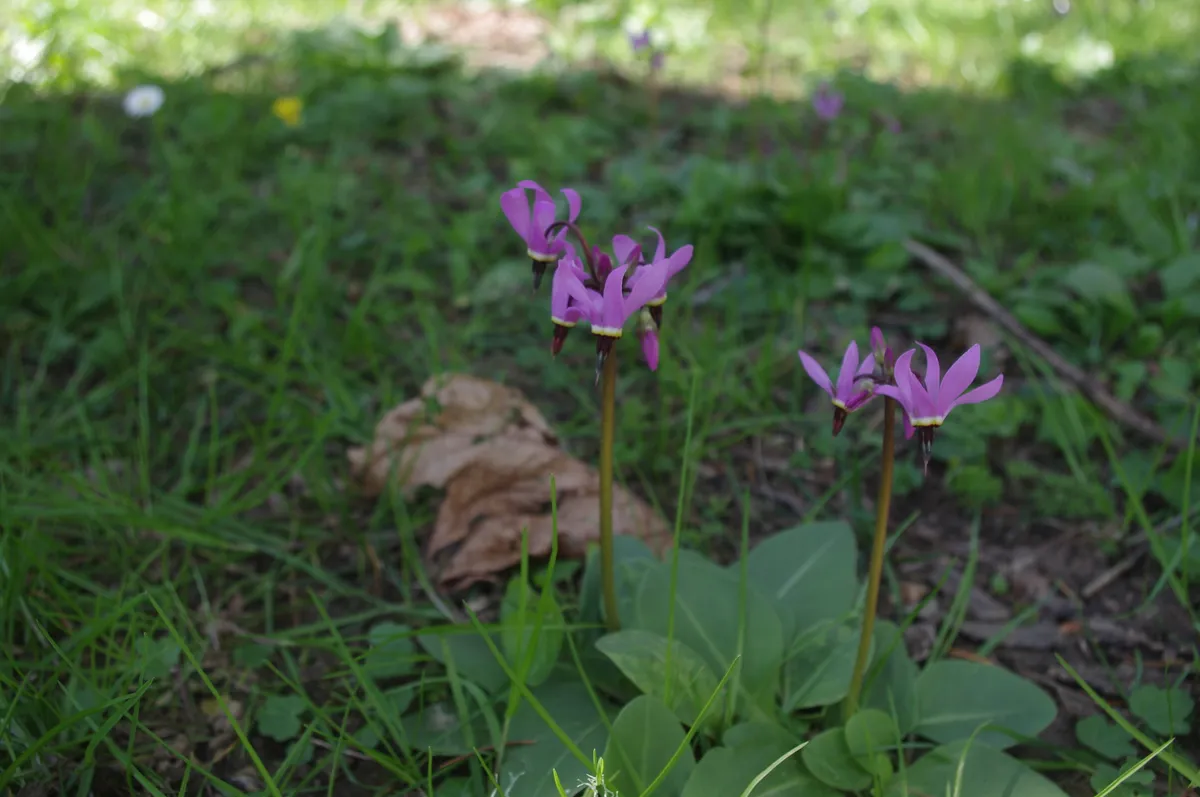
Henderson's Shooting Star (Dodecatheon hendersonii) is not flagged as toxic to dogs or cats by Plants For A Future (PFAF) (opens in new tab) (last reviewed 2026-05-21). This verdict does not come from the ASPCA. If your pet shows symptoms after eating any plant, call the ASPCA at (888) 426-4435.
Light
part sun
Water
low
Size
4"–12" H × 3"–8" W
Bloom
Mar, Apr, May
Native to
CA, OR, WA
Pollinators
bees, butterflies
Before you buy
Your city may pay you to plant this
Cities and water utilities offer rebates for replacing lawn with native and water-wise plants. We track 459 programs across 44 states, each with a link to the provider and the date we last checked it.
Find rebates in your areaPicture natives in your own yard
Upload a photo of your yard and Patch Vision shows a rendering of it planted with natives for your region, like Henderson's Shooting Star.


Browse plants for this ecoregion
Dodecatheon hendersonii (Henderson's shooting star) is a charming spring wildflower with distinctive nodding, magenta to pink flowers held above a basal rosette of leaves. This low-growing perennial blooms early in spring and goes dormant by summer, making it ideal for woodland gardens or partially shaded borders.
Growing Henderson's Shooting Star
Grow Henderson's Shooting Star in part sun and low water. Mature plants reach 4 to 12 inches tall and spread 3 to 8 inches wide. Expect low maintenance to keep it looking intentional in a front yard.
How to care for Henderson's Shooting Star, by region
How to care for Henderson's Shooting Star where it is actually grown: year-round basics plus what to do each season, region by region, with the sources for each.
Care guidance last updated: August 2026
Central California Valley (includes Sacramento, CA)
Year-round
Henderson's shooting star is a small spring wildflower that is genuinely native to the Sacramento area, including the Central Valley grasslands and open woodlands around it. It wants part sun to part shade, soil that drains well, and a clear wet-winter, bone-dry-summer rhythm. It blooms in spring, then the whole plant disappears above ground for summer. That disappearing act is normal dormancy, not the plant dying.
- Give it part sun to part shade, like under deciduous trees or the shadier side of a bed.
- Plant it in soil that drains well. Heavy clay is fine as long as it dries out by summer.
- Water it through the fall, winter and spring rainy season. Once the leaves yellow and vanish in late spring, stop watering that spot completely until fall.
- It's a real Central Valley native for this area, which is why it's worth working around its dry-summer habit instead of fighting it.
Fall
Fall is still dry season in Sacramento, so keep this spot bone dry until the first real rains arrive, usually sometime in October or November.
- Don't water. Wait for natural fall rain to end dormancy on its own.
- Once rain returns and you see the leaf rosette pushing up through the soil, you can top dress lightly with leaf litter or compost.
- There's nothing to cut back this time of year since nothing is above ground yet.
Winter
Winter rains wake Henderson's shooting star back up. The leaf rosette emerges first, then flower stalks follow in late winter heading into spring.
- Let winter rain do the watering. In a normal Sacramento winter, supplemental water usually isn't needed.
- Watch for slug or snail nibbling on the fresh rosette leaves during wet stretches, that's the main pest risk this time of year.
- No pruning or cutback needed. The plant is just getting started for the year.
Spring
Spring is the main event for Henderson's shooting star. Nodding pink to lavender flowers rise on bare stalks above a low rosette of leaves, blooming from mid spring into early summer.
- Keep the soil lightly moist through spring rains, but don't add extra water beyond what falls naturally.
- Let flowers go to seed if you want the patch to slowly spread on its own from year to year.
- When the leaves start yellowing in late spring, that's the plant heading into its normal summer dormancy, not a problem you need to fix.
Summer
By early summer the whole plant disappears above ground here, and that is exactly what it is supposed to do in Sacramento's hot, dry summer. This is the season to leave it alone completely.
- Stop watering that spot entirely once the foliage dies back. Sacramento's dry summer is the exact condition this plant is built for, and extra water during dormancy can rot the underground stem.
- Mark the spot with a small stake or plant tag so you don't accidentally dig into the dormant plant while tending nearby beds.
- If the bare patch bothers you, plant a low, summer-dry companion nearby, like a native bunchgrass, rather than watering the shooting star just to keep it green.
Sources: Calscape (California Native Plant Society) - Primula hendersonii (Mosquito Bills) growing guide
Puget Lowland (includes Seattle, WA)
Year-round
Henderson's shooting star is a small native wildflower right at home in Seattle area gardens. It is a documented native of the Puget Lowland, found in light shade and part sun spots along woodland edges and open meadows. It puts on a short, showy spring bloom and then vanishes underground for the rest of the year, so knowing that pattern up front saves a lot of worry later.
- Plant in part sun to light shade, such as under a deciduous tree or along a fence line
- Use well drained soil, this plant does not like to sit wet through summer
- Expect a low mound of foliage and flower stalks, 4 to 12 inches tall
- Water mainly during active spring growth, cut back once the foliage starts to yellow
- The whole plant disappears above ground after bloom, this is normal and expected, not a sign of trouble
Its low, tidy 4 to 12 inch habit and short spring bloom period make it an easy, HOA-friendly choice for the edge of a front bed.
Fall
Fall stays quiet for Henderson's shooting star. It remains fully dormant underground through the season, with nothing to water, prune, or feed. The main task is leaving the spot undisturbed while other fall garden work happens around it.
- Leave the dormant area alone, no digging or replanting needed there
- Returning fall rain in the Seattle area is normal, no extra watering needed for this plant
- Avoid piling wet leaf litter directly over the marked spot if drainage is already tight
- Good time to plan companion plantings nearby that can fill the visual gap without crowding the dormant crown
If the bed looks bare going into fall cleanup, a light mulch refresh around the marked spot keeps the whole area looking maintained.
Winter
Henderson's shooting star spends winter completely dormant underground, waiting out the mild wet Puget Sound winter. Nothing needs to be done for it this time of year. New growth will not appear again until late winter to early spring.
- No watering, feeding, or digging needed, the plant is resting below ground
- Keep the marked spot clear of foot traffic or heavy mulch that could compact the soil
- Expect the first new leaves to emerge as early as late February in a mild Seattle winter
- Use this dormant window to plan or adjust nearby plantings before spring growth starts
A bare front bed spot through winter is common for a native spring ephemeral. A small plant tag nearby helps it read as planned rather than forgotten.
Spring
Spring is when Henderson's shooting star does all its work. From March through May it sends up leafless stalks topped with reflexed magenta pink flowers rising above a low rosette of leaves. This is the only stretch of the year the plant is visible above ground, so it is the window to enjoy it.
- Keep soil lightly moist during bloom if a stretch of the spring turns dry
- No fertilizer needed, established plants bloom fine in average garden soil
- Deadheading is optional, leaving seed pods in place lets the patch slowly spread
- Watch for leaves starting to yellow in late spring, that is the plant beginning to go dormant, not a problem
The magenta spring flowers read as an intentional, cared for bed, a good look for a visible front yard corner.
Summer
By early summer Henderson's shooting star is gone from view. The foliage yellows, collapses, and disappears completely underground. Gardeners call this summer dormant, meaning resting, not dead. The spot in the bed will look empty from roughly June through the rest of summer.
- Do not dig, till, or plant something new directly on top of the spot, the underground parts are still alive and resting
- Skip watering that exact area on purpose, this plant wants to stay dry once it goes dormant
- Mark the spot with a small tag or stone in spring so it is not forgotten once it disappears
- Light mulch nearby is fine, but keep it off the exact resting crown
An empty looking patch in a front bed can read as neglected to an HOA-conscious neighbor. A small plant marker or a low grower planted nearby keeps the bed looking intentional while this one rests underground.
Sources: Washington Native Plant Society, Primula hendersonii species profile, Burke Herbarium (University of Washington), Primula hendersonii records, Calscape, Primula hendersonii (Mosquito Bills) profile
In an HOA neighborhood
Henderson's Shooting Star is an HOA-friendly choice in the right placement. Maintenance level: low. Tidiness: 3 out of 5.
Works well in: mid zone, foundation.
- Goes dormant in summer, leaving bare spots
- Small size makes it best in grouped plantings
- Not as recognizable as conventional landscape plants
Wildlife value
The unique reflexed petals and pointed center of shooting star flowers attract native bees, especially bumblebees, which can perform buzz pollination to release the pollen. Some butterfly species may also visit the blooms.
Common questions
- When does Henderson's shooting star bloom?
- It flowers in early spring, typically from March through May, then dies back as summer heat arrives.
- What pollinates Henderson's shooting star?
- Bees are the primary pollinators, using a buzz-pollination technique to release pollen from the flower's downward-facing anthers, and butterflies also visit the blooms.
- How much water does this plant need?
- It prefers low water once established and goes dormant in summer, so it does best where it gets moisture in winter and spring but stays dry afterward.
- What light conditions suit Henderson's shooting star?
- It grows best in part sun, such as open woodland edges or grassy areas that get filtered or dappled light during its spring growing season.
- What does Henderson's shooting star look like when it's not blooming?
- After flowering, the low rosette of leaves yellows and dies back, and the plant spends summer and part of fall dormant underground.
- Is Henderson's Shooting Star toxic to dogs?
- Henderson's Shooting Star is not flagged as toxic to dogs by Plants For A Future (PFAF). This verdict does not come from the ASPCA.
- Is Henderson's Shooting Star toxic to cats?
- Henderson's Shooting Star is not flagged as toxic to cats by Plants For A Future (PFAF). This verdict does not come from the ASPCA.
- Is Henderson's Shooting Star HOA-friendly?
- Henderson's Shooting Star is generally an HOA-friendly choice in the right placement, with low maintenance.
These answers were drafted with an AI model from this plant's data. Verify care details with a local expert.
Native range data from the World Checklist of Vascular Plants (Kew). Pollinator and host plant associations compiled from GBIF, iNaturalist, and published ecological literature.
If something looks wrong
Common plant problems, and what to check first
These come up on almost any plant. Each guide lists the likely causes in the order they are worth ruling out, with one thing to check before you act on any of them, and links to the source it came from.
- It is dying right after planting
- Leaves turning yellow
- Wilting even though I watered it
- Brown crispy leaf tips
- Bugs on the plant
Ready to grow Henderson's Shooting Star? Add it to your garden in Pollinator Patch to track it and get season-by-season care guidance.