American Cow-parsnip
Heracleum maximum
Last reviewed: June 2026
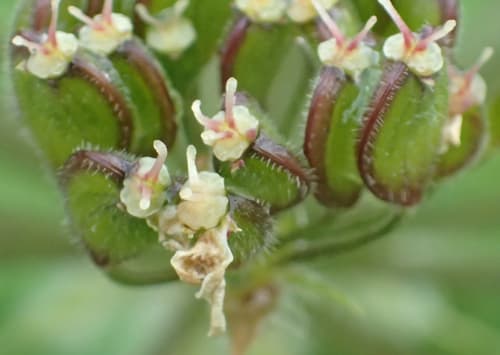
Heracleum maximum (American Cow-parsnip) is a large native forb blooming white flowers in June and July across most US states. This moisture-loving plant attracts bees, beetles, and flies in partial sun to shade conditions.
American Cow-parsnip is toxic to dogs and cats.
Listed as toxic by the ASPCA Animal Poison Control Center (opens in new tab) (last reviewed 2026-05-21). If your pet has been exposed, call the ASPCA Animal Poison Control Center at (888) 426-4435and your veterinarian's emergency line.
Pollinator Patch flags toxic plants so you can choose a pet-safe native alternative for your yard.
American Cow-parsnip is listed as toxic to grazing livestock (cattle, sheep, and goats) at a slight level by the USDA PLANTS Database (opens in new tab). This is a livestock indicator and is separate from pet toxicity.
Light
part sun
Water
medium
Size
36"–96" H × 24"–48" W
Bloom
Jun, Jul
Native to
AZ, CA, CO, CT and 36 more states
Pollinators
bees, beetles, flies
Browse plants for this ecoregion
American cow-parsnip is a large, dramatic native perennial that can reach 8 feet tall with massive umbrella-shaped white flower clusters in summer. This bold architectural plant has huge compound leaves and creates a striking focal point in the landscape. It prefers partial sun and consistent moisture to reach its full impressive size.
Growing American Cow-parsnip
Grow American Cow-parsnip in part sun and medium water. Mature plants reach 36 to 96 inches tall and spread 24 to 48 inches wide. Expect moderate maintenance to keep it looking intentional in a front yard.
In an HOA neighborhood
American Cow-parsnip takes more care to keep looking intentional in a front yard. Maintenance level: moderate. Consider it for backyard or mid-zone beds rather than the street edge.
Works well in: backyard only.
- Extremely large size may appear uncontrolled
- Can look messy when stems die back
- May be confused with invasive giant hogweed
Wildlife value
The large white flower umbels attract diverse pollinators including native bees, beetles, and flies during its June-July bloom period. Its substantial size and abundant nectar make it particularly valuable for supporting pollinator populations.
Common questions
- When does American Cow-parsnip bloom?
- Heracleum maximum typically blooms during June and July, producing large white umbrella-shaped flower clusters.
- What pollinators visit American Cow-parsnip?
- This native plant attracts a diverse range of pollinators including bees, beetles, and flies to its large white flower umbels.
- Where is Heracleum maximum native?
- American Cow-parsnip is native to most US states, from coast to coast including the Pacific Northwest, Rocky Mountains, Great Plains, and Eastern states.
- What growing conditions does American Cow-parsnip prefer?
- This large forb thrives in moist to wet soils and can tolerate full sun to partial shade, often found in meadows, stream banks, and forest edges.
- Is American Cow-parsnip toxic to dogs?
- Yes. American Cow-parsnip is listed as toxic to dogs by the ASPCA Animal Poison Control Center (aspca.org). If your pet has been exposed, call the ASPCA Animal Poison Control Center at (888) 426-4435.
- Is American Cow-parsnip toxic to cats?
- Yes. American Cow-parsnip is listed as toxic to cats by the ASPCA Animal Poison Control Center (aspca.org). If your cat has been exposed, call the ASPCA Animal Poison Control Center at (888) 426-4435.
- Is American Cow-parsnip toxic to livestock?
- American Cow-parsnip is listed as toxic to grazing livestock such as cattle, sheep, and goats (slight severity) by the USDA PLANTS Database. This is separate from pet (dog and cat) toxicity.
- Is American Cow-parsnip HOA-friendly?
- American Cow-parsnip takes more care to look intentional in a front yard. Consider it for backyard or mid-zone beds rather than the street edge.
Native range data from the USDA PLANTS Database and regional native plant society lists. Pollinator and host plant associations compiled from GBIF, iNaturalist, and published ecological literature.
Pollinator Patch flags toxic plants like American Cow-parsnip and shows pet-safe natives for your ecoregion instead.
Not sure where to start? Take the 2-minute yard quiz